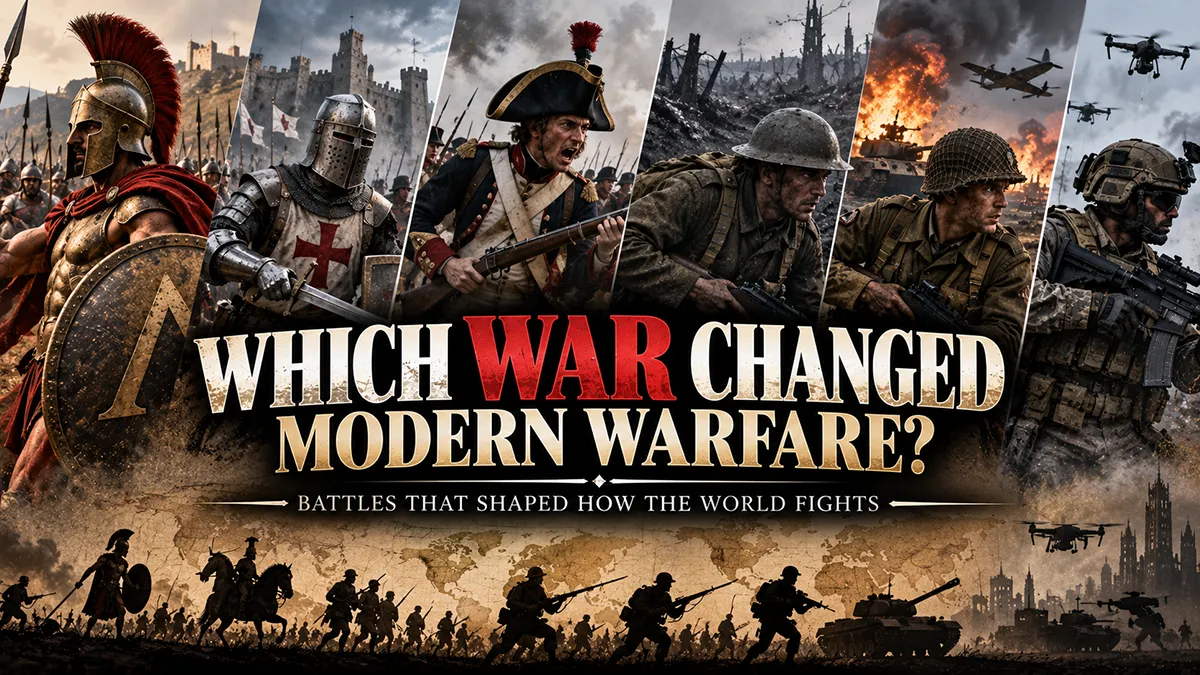
Ask ten history buffs which war changed modern warfare forever, and you’ll probably get ten different answers. Some point to the American Civil War, others to the Franco-Prussian War, and plenty land on World War I.
The truth is messier and more interesting than any single answer, because “modern war” wasn’t invented in one afternoon on one battlefield.
It evolved through a string of brutal, technology-driven conflicts across roughly fifty years, each one adding a piece to the puzzle. This post digs into what “modern war” actually means, which conflicts have the strongest claim to the title, and how the world shifted from horseback charges to trench lines that stretched for hundreds of miles.
TL;DR: World War I is most often credited as the first modern war because it fused industrial-scale weapons, mass mobilization, and static trench frontlines with the older idea of maneuver warfare, permanently changing how nations fight.
What Does “Modern Warfare” Actually Mean?
Before picking a winner, it helps to define the term, because “modern war” isn’t a single fixed moment on a calendar. Historians generally use the modern war definition to describe conflict shaped by industrialization, meaning mass-produced weapons, railroads, telegraphs, and eventually engines and radios replace horses, muskets, and couriers.
It also usually implies total mobilization, where entire national economies and populations are organized around fighting rather than just professional armies clashing on a field.
So what is modern war, in practical terms? It’s warfare defined by long-range firepower, rapid communication, industrial supply chains, and the ability to inflict casualties on a scale earlier centuries simply couldn’t imagine.
It also usually involves a blending of strategy and technology so tightly that generals from fifty years earlier would barely recognize the battlefield. That blend didn’t appear overnight, it built up conflict by conflict.
The Contenders for “First Modern War”
Several wars have a legitimate claim to being the first modern war, and understanding each one shows how warfare changes rarely happen in a single leap. Instead, they stack on top of each other, with each conflict borrowing lessons from the last.
The American Civil War (1861–1865)
Many historians point to the American Civil War, one of the biggest events in American history, as an early, arguably the first modern war, because of how thoroughly it broke from Napoleonic-era tactics.
Rifled muskets gave infantry accurate range far beyond old smoothbore weapons, which made old-fashioned massed frontal charges devastatingly costly. Armies also relied heavily on railroads for supply and troop movement, and the telegraph let commanders coordinate across huge distances in near real time.
By the siege of Petersburg in 1864 and 1865, Union and Confederate soldiers were digging extensive trench networks and using primitive barbed wire obstacles, foreshadowing the Western Front by fifty years. Ironclad warships also debuted in this conflict, changing naval warfare permanently.
It’s a strong case, though the war was still fought by two relatively agrarian economies compared to what came later.
The Franco-Prussian War (1870–1871)
Prussia’s swift, methodical victory over France showcased something new: a professional general staff planning operations with railway timetables and mobilization schedules like a machine.
Breech-loading rifles and steel Krupp artillery gave Prussian forces a decisive technological edge. The war demonstrated that speed of mobilization and industrial weapons production could decide a conflict almost as much as battlefield heroics.
The Russo-Japanese War (1904–1905)
This conflict is often overlooked, but it’s arguably the clearest preview of what World War I would look like. At Port Arthur and Mukden, soldiers faced machine guns, barbed wire, and trench lines years before 1914.
European military observers watched closely, yet many of the war’s lessons about the killing power of modern defense were tragically underestimated when the Great War began.
World War I (1914–1918)
World War I is the conflict most commonly labeled the first modern war in popular history, and for good reason.
It combined everything the previous fifty years had been building toward: mass conscription, industrial weapons production, chemical warfare, aircraft, tanks, and a scale of mechanized killing the world had never witnessed. It’s the conflict where “war modern” stopped being a theory and became an inescapable global reality.
Why World War I Is Usually Called the First Modern War
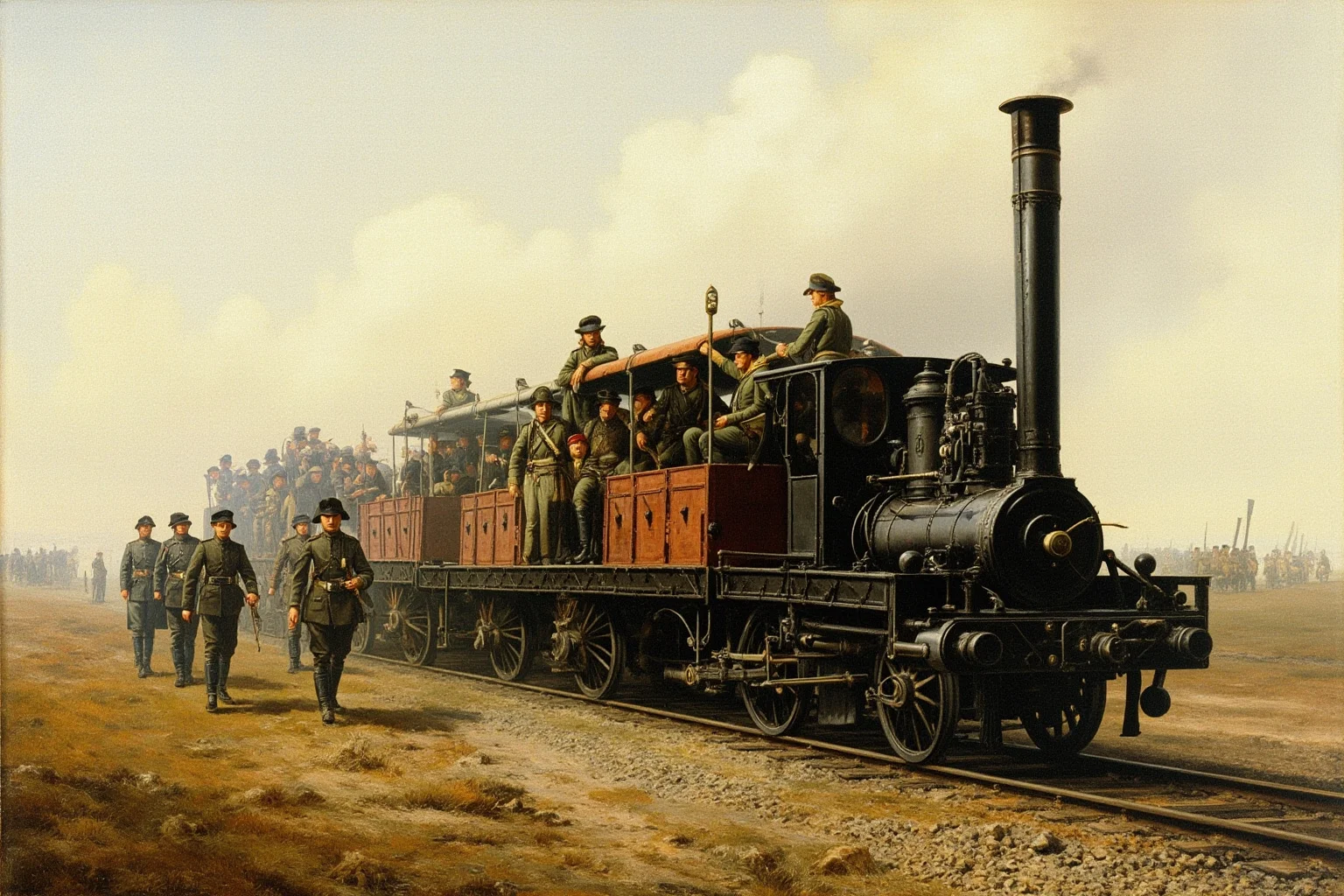
What was the first modern war, if you had to pick just one? Most historians land on World War I, and it’s worth understanding why it edges out the earlier candidates. The scale is one obvious factor, with over 65 million troops mobilized worldwide and industrial economies redirected almost entirely toward the war effort.
Beyond scale, World War I introduced or perfected technologies that defined warfare for the rest of the twentieth century.
Machine guns turned open ground into a killing field, heavy artillery caused the majority of casualties, and poison gas introduced a horrifying new dimension to combat. Tanks and military aircraft, while primitive by later standards, made their combat debut here and never left.
World War I is also the conflict where the shift from open-field maneuver to static frontlines became permanent and globally visible, not just a localized siege like Petersburg. That shift is central to understanding modern war, so it deserves its own closer look.
The Transition Between Maneuver Warfare and Frontlines
One of the most misunderstood aspects of World War I is the transition between maneuver warfare and frontlines, and it actually happened twice, in opposite directions.
In August 1914, the war began as a war of movement. Germany’s Schlieffen Plan called for a fast sweep through Belgium into France, while armies on the Eastern Front also maneuvered across open terrain in classic nineteenth-century style.
That maneuver phase collapsed within months. As armies raced to outflank each other in what’s known as the “Race to the Sea,” they ran out of open flanks to exploit and began digging in instead. By late 1914, a continuous line of trenches stretched roughly 475 miles from the North Sea coast to the Swiss border, and the war of movement effectively froze in place.
This is the moment most people picture when they think of World War I: static frontlines, barbed wire, artillery barrages, and horrific casualties for minimal ground gained.
Machine guns and quick-firing artillery made old-style infantry advances suicidal, while defensive trench networks with layered obstacles made breakthroughs extremely difficult to achieve or exploit.
The second half of that transition is less well known but just as important. By 1918, armies on both sides had developed new tactics, including German infiltration “storm trooper” units and Allied combined-arms assaults using tanks, aircraft, and artillery working together.
These innovations gradually restored mobility to the battlefield, and the war ended with a return to more fluid, maneuver-based fighting in its final months.
So the transition wasn’t a one-way street from maneuver to trenches. It was maneuver, then stalemate, then a hard-won return to maneuver through new technology and tactics. That full cycle is a big part of why World War I is treated as such a pivotal hinge point in military history.
The Technologies That Rewired the Battlefield
Several inventions and adaptations turned World War I into the first true modern war, and it’s worth naming them directly. Machine guns could fire hundreds of rounds per minute, making open assaults across no-man’s-land catastrophically costly for attackers. Artillery, meanwhile, caused the majority of wartime casualties and could devastate positions from miles away.
Chemical weapons, first used at scale by Germany in 1915 at Ypres, added a new category of horror that led to international bans still referenced in law today.
Tanks appeared on the battlefield starting in 1916 at the Somme, offering a partial answer to trench stalemates even though early models were slow and unreliable. Military aircraft evolved from reconnaissance tools into fighters and bombers within just a few years, previewing the air power that would dominate later conflicts.
Communication technology mattered just as much as weapons. Telephones, and later radio, allowed commanders to coordinate movements across huge fronts, while railways kept millions of troops supplied with food, ammunition, and reinforcements, a logistical story detailed in the evolution of World War I rations.
None of these tools were entirely new by 1918, but World War I is where they were combined and scaled up into a genuinely industrial way of fighting.
How These Warfare Changes Shaped World War II and Beyond
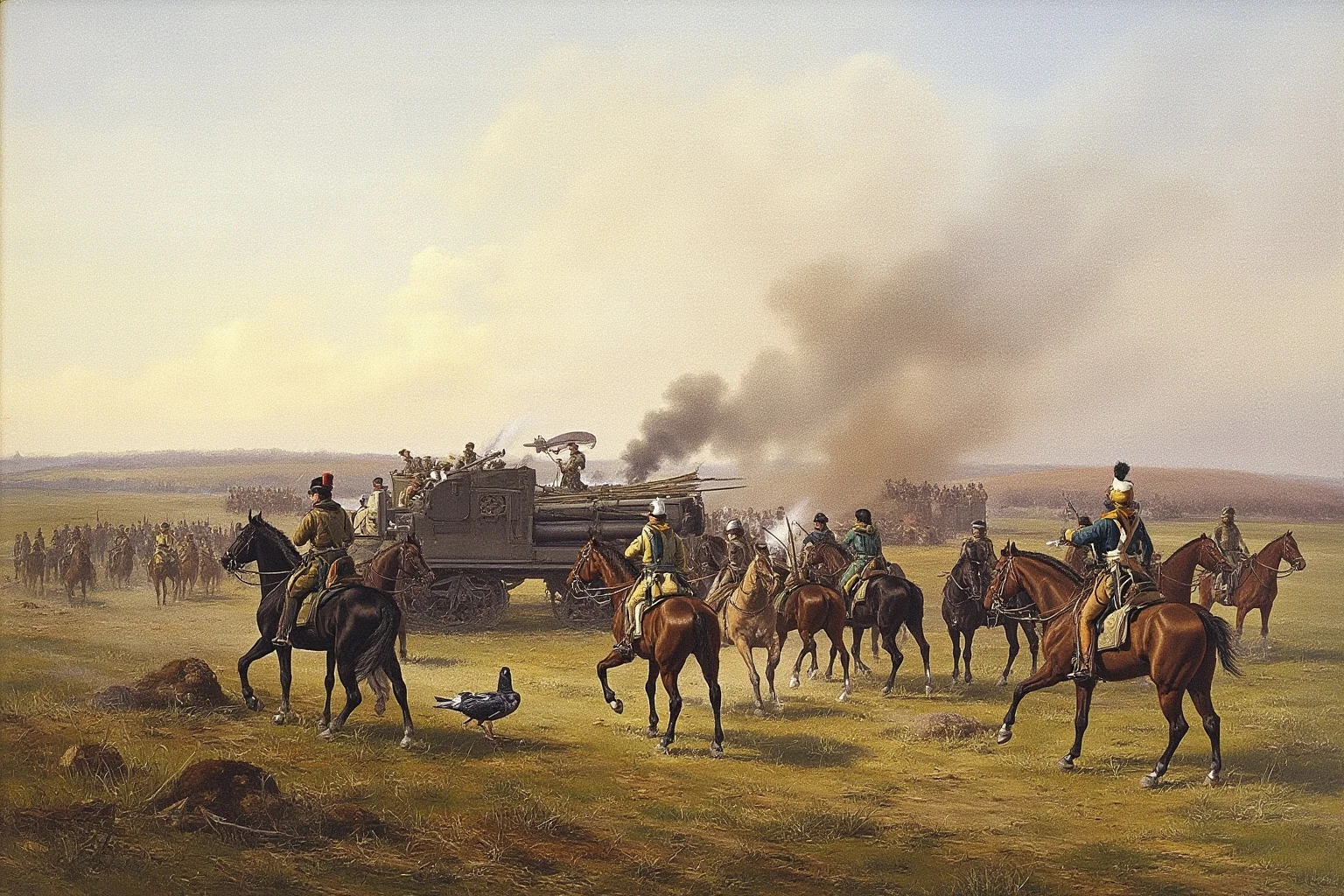
The warfare changes pioneered or perfected in World War I didn’t disappear when the armistice was signed in 1918. Instead, they became the foundation for World War II strategy, especially the German concept of Blitzkrieg, which combined tanks, aircraft, and radio-coordinated infantry to avoid repeating the trench stalemates of the earlier war. In many ways, Blitzkrieg was a direct answer to the 1918 lessons about combined-arms maneuver.
Nuclear weapons, developed and used at the end of World War II, added an entirely new layer to modern war definition discussions, since they made total destruction possible on a scale even industrial artillery couldn’t match.
The Cold War that followed introduced new modern warfare concepts again, including nuclear deterrence, proxy wars, and eventually cyber and information warfare. Each era added its own chapter, but the industrial, mechanized template from World War I remained recognizable underneath it all.
Today’s conflicts still show traces of that same evolution, from drone warfare to satellite reconnaissance to precision-guided munitions. Even so, military historians consistently trace the roots of these modern war concepts back to the trenches and factories of 1914 to 1918.
Is “Modern War” Still the Right Term? Modern Warism and the Language of Conflict
Outside strict military history, the phrase “war” gets used in plenty of metaphorical ways, and it’s worth addressing that briefly since people search for it.
Some writers use a term like “modern warism” loosely to describe cultures or ideologies that treat conflict, competition, or aggression as a default lens for viewing everyday life. This isn’t a formally established academic term with one fixed definition, so it’s worth treating any specific claims about it with some caution.
Similarly, the phrase “modern life is a war” shows up often in self-help writing, business commentary, and social media, usually as a metaphor for competitive pressure rather than an actual military claim.
It’s an understandable turn of phrase, since deadlines, economic pressure, and constant connectivity can feel relentless. But it’s a rhetorical device, not a historical or military classification, and it shouldn’t be confused with the actual military history discussed above.
Understanding the real history of modern war, from the American Civil War’s trenches to World War I’s technological leap, gives useful context for why these metaphors resonate.
Real modern warfare was defined by industrial killing power and mass mobilization, and that historical weight is probably part of why the metaphor feels so strong when people borrow it for everyday struggles.
Final Thoughts
There’s no single afternoon when warfare flipped a switch from old to modern, and that’s honestly the more accurate story. The American Civil War, the Franco-Prussian War, and the Russo-Japanese War all previewed pieces of what was coming, from trenches to rapid mobilization to machine-gun defenses.
World War I is where those pieces fused into something undeniably new, complete with a dramatic transition from maneuver warfare into static frontlines and eventually back again by 1918.
That cycle, of open movement collapsing into stalemate and then technology forcing movement to return, is one of the most important turning points in military history.
It shaped how World War II was fought, and its fingerprints are still visible in how modern militaries think about mobility, firepower, and technology today. Whichever war you personally credit with “changing everything,” the honest answer is that modern warfare was built gradually, war by war, lesson by costly lesson.
Frequently Asked Questions
What is modern war, exactly?
Modern war generally refers to conflict shaped by industrialization, including mass-produced weapons, railroads, telegraphs or radio, and full national mobilization of economies and populations. It's less about a single date and more about a style of fighting that emerged gradually between the mid-1800s and World War I.
What was the first modern war?
There's no single agreed-upon answer, since the American Civil War, the Franco-Prussian War, and the Russo-Japanese War all show early modern features like trenches, railroads, and rapid-fire weapons. World War I is most commonly cited as the first true modern war because it combined all of these elements on a global, industrial scale.
What defines the transition between maneuver warfare and frontlines in World War I?
In 1914, the war began as a fast-moving conflict with armies attempting flanking maneuvers across open ground. Once those flanking attempts failed during the 'Race to the Sea,' both sides dug in, creating continuous static trench frontlines from the North Sea to Switzerland. By 1918, new combined-arms tactics using tanks, aircraft, and infiltration infantry helped restore mobility, completing a rare full-circle transition from maneuver to stalemate and back to maneuver.
How is modern war definition different from older definitions of warfare?
Older warfare relied heavily on smaller professional armies, close-range weapons, and limited communication between commanders. Modern war definitions emphasize industrial-scale weapons production, mass conscription, long-range firepower, and rapid communication technology that allow armies to fight and coordinate across huge distances and populations.
Is ‘modern life is a war’ a historical term?
No, that phrase is typically used as a metaphor in self-help or motivational writing rather than as a term from military history. It reflects how people describe stress and competitive pressure in everyday life, borrowing the emotional weight of real historical warfare rather than referring to an actual documented conflict.
Why do people spell it ‘moder war’ when searching online?
This is almost always a simple typo or autocomplete variation of 'modern war' rather than a distinct historical term. If you're researching the topic, the standard and historically accurate term to use is 'modern war' or 'modern warfare.'

Alex Warren
Related Articles