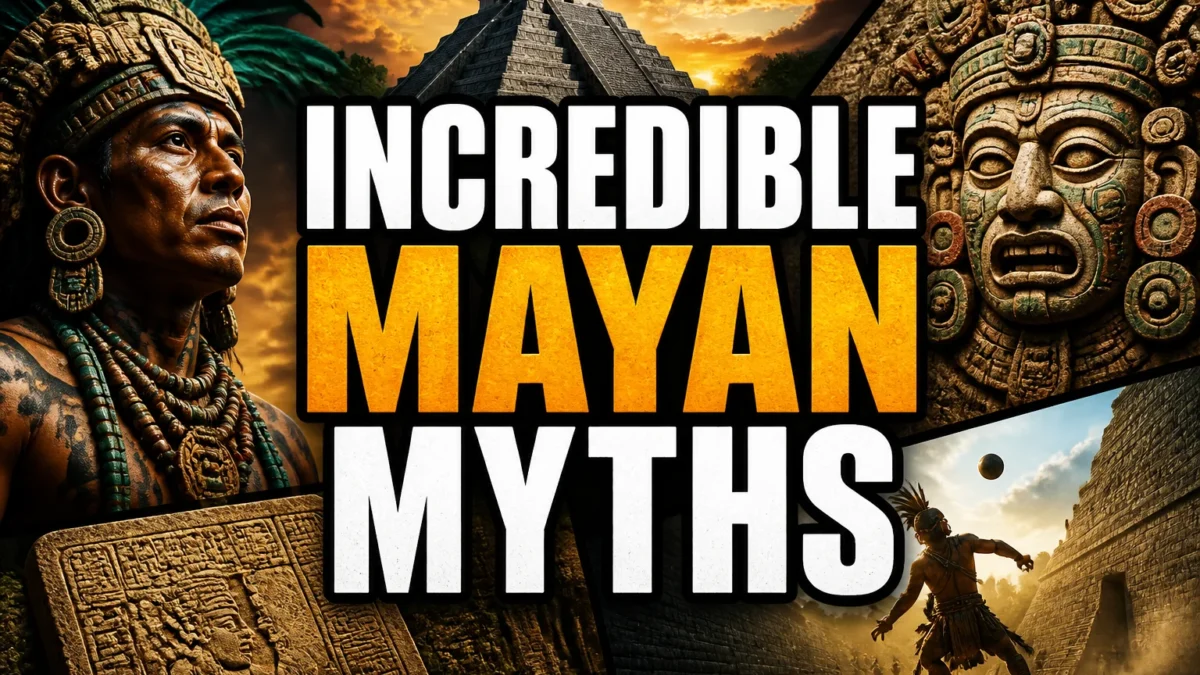
When people talk about the mysterious Maya, they usually mention pyramids, calendars, or jungle cities. Yet the Maya also left behind a huge body of stories that explain creation, rain, war, love, and death. Many of these Mayan legends still circulate in Guatemala, Belize, southern Mexico, and Honduras today.
The best-known source is the Popol Vuh, a K'iche' Maya book written down after Spanish contact, but oral tradition preserved far more. Some characters such as the Xtabay and the aluxes remain part of daily folklore. This post introduces twenty remarkable Maya myths that deserve more attention.
TL;DR: The Maya told brilliant, layered stories about creation, gods, tricksters, and survival that still shape communities today.
The Roots of Maya Storytelling
Maya myths are not a single unified canon. They come from different periods, languages, and regions, including highland K'iche' narratives and Yucatec Maya oral traditions. The Popol Vuh, recorded in the 16th century, is the most famous written source, but it reflects much older beliefs.
Colonial-era documents such as the Books of Chilam Balam and later folklore collections also preserve important stories. Because these tales were transmitted orally for centuries, multiple versions often exist. Historians and anthropologists treat them as cultural memory rather than literal history.
20 Incredible Mayan Myths Everyone Should Hear
The list below moves from famous Popol Vuh episodes to regional Yucatec legends. Each entry is presented in the general form most commonly recorded, but variations exist. The goal is to show how Maya storytelling connected daily life with gods, landscapes, and moral warnings.
1. The Hero Twins and the Lords of Xibalba
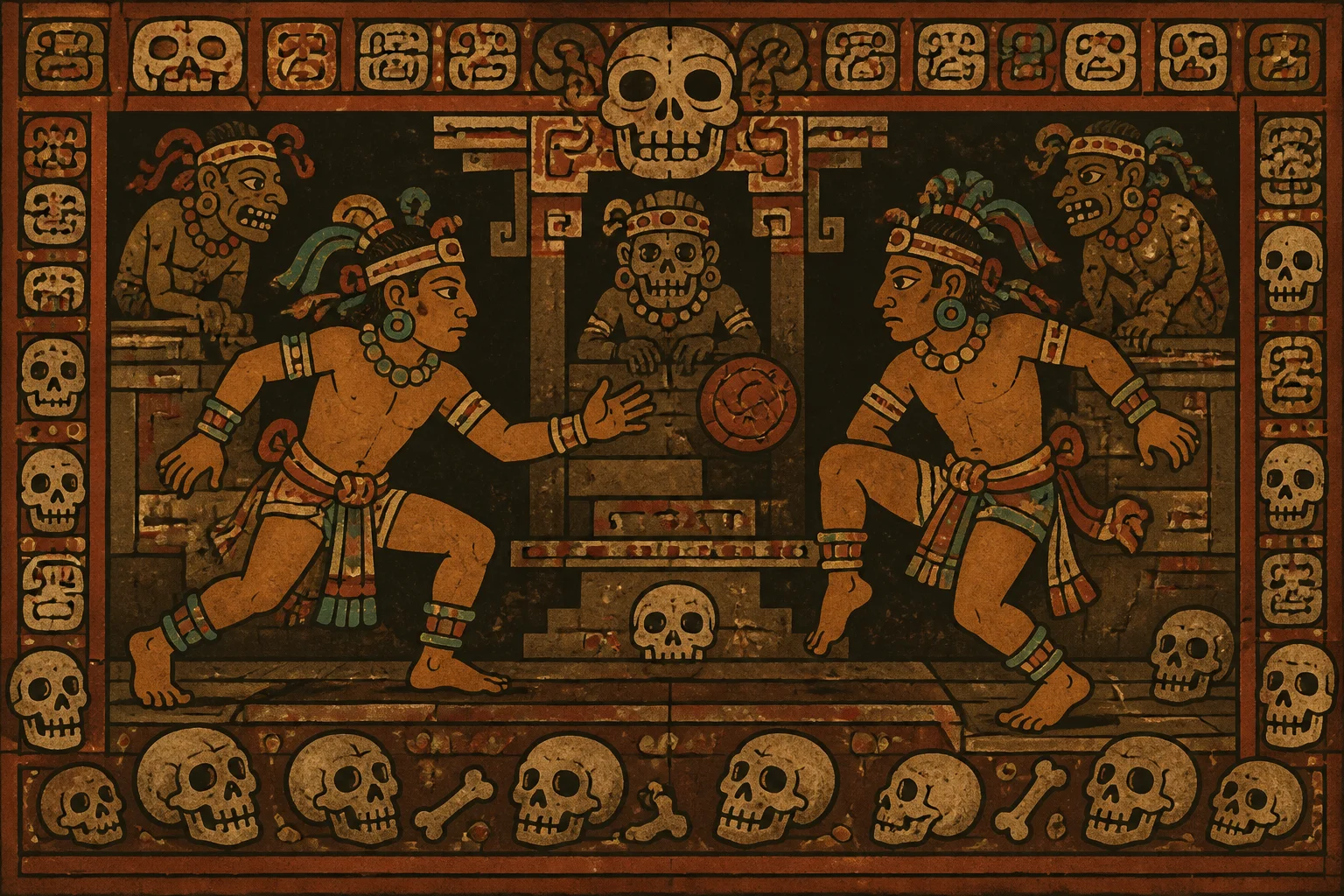
The Popol Vuh's central epic follows Hunahpu and Xbalanque, twin brothers who are invited to the underworld of Xibalba after their ballgame disturbs its lords. The lords try to defeat them with deadly houses, darkness, and trials. The twins use trickery and transformation to survive each challenge.
Eventually they allow themselves to be killed and burned, only to return as traveling tricksters and then defeat the lords of Xibalba. This story is one of the richest Mayan legends about sacrifice, rebirth, and cunning. It was likely performed and retold long before Spanish missionaries transcribed it.
The Popol Vuh survived in a K'iche' manuscript transcribed with Latin characters in the colonial period. It remains one of the most complete indigenous narratives from the Americas, often called a masterpiece of world literature.
2. The Creation of Humans from Maize
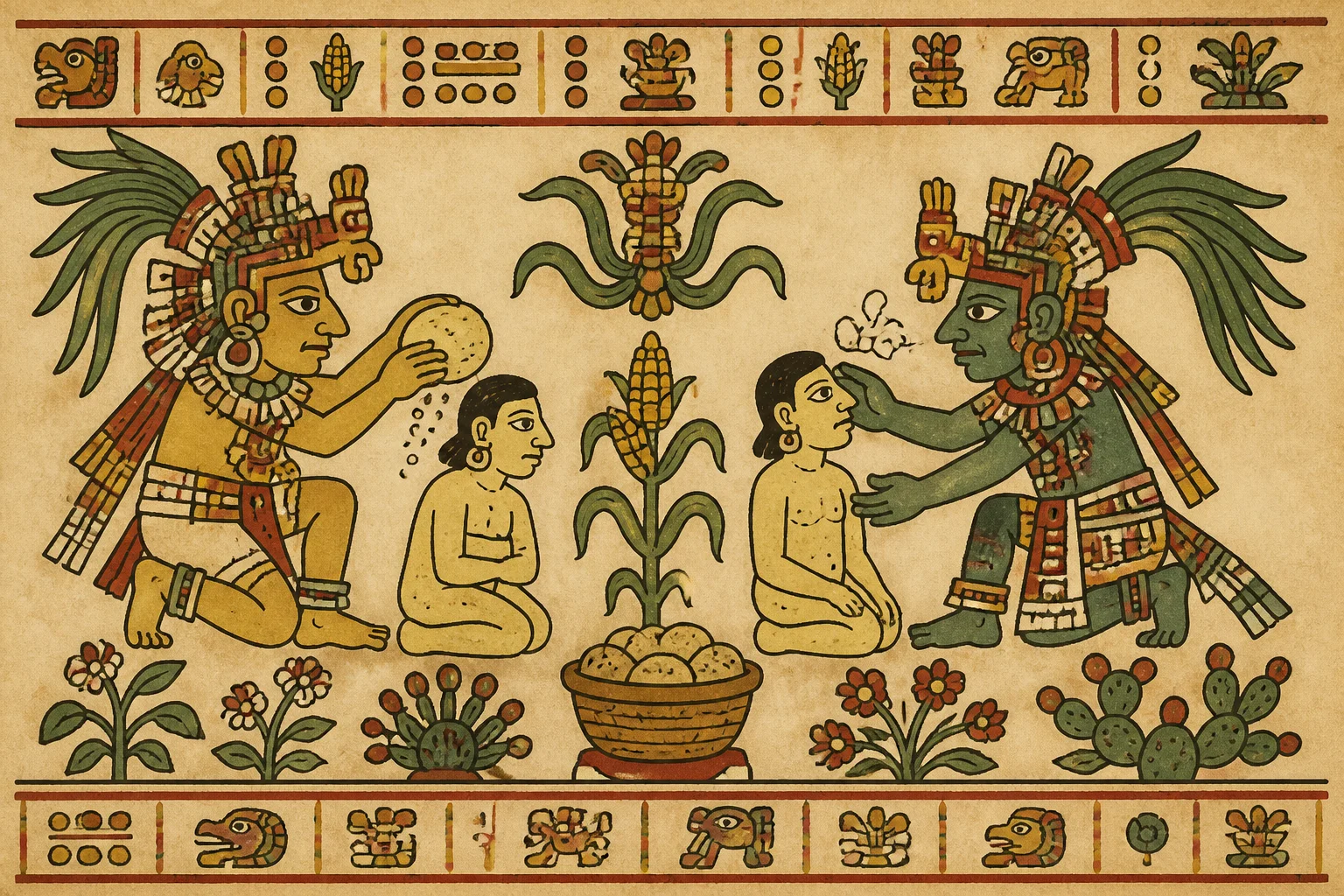
According to the Popol Vuh, the gods first tried to make people from mud and then from wood, but both attempts failed. The wooden people lacked hearts, minds, and proper speech, so the gods destroyed them. Finally the gods created the first successful humans from maize dough mixed with water.
This origin explains why corn remained the center of Maya agriculture and ritual life. In many Maya communities, people still speak of humans as made from corn. The story is more than a myth; it ties identity directly to the crop that sustained Mesoamerica.
Maize rituals still mark planting and harvest cycles in many Maya communities. The Popol Vuh's account turns agriculture into sacred history rather than a simple food supply.
3. Vucub Caquix, the Arrogant Seven Macaw
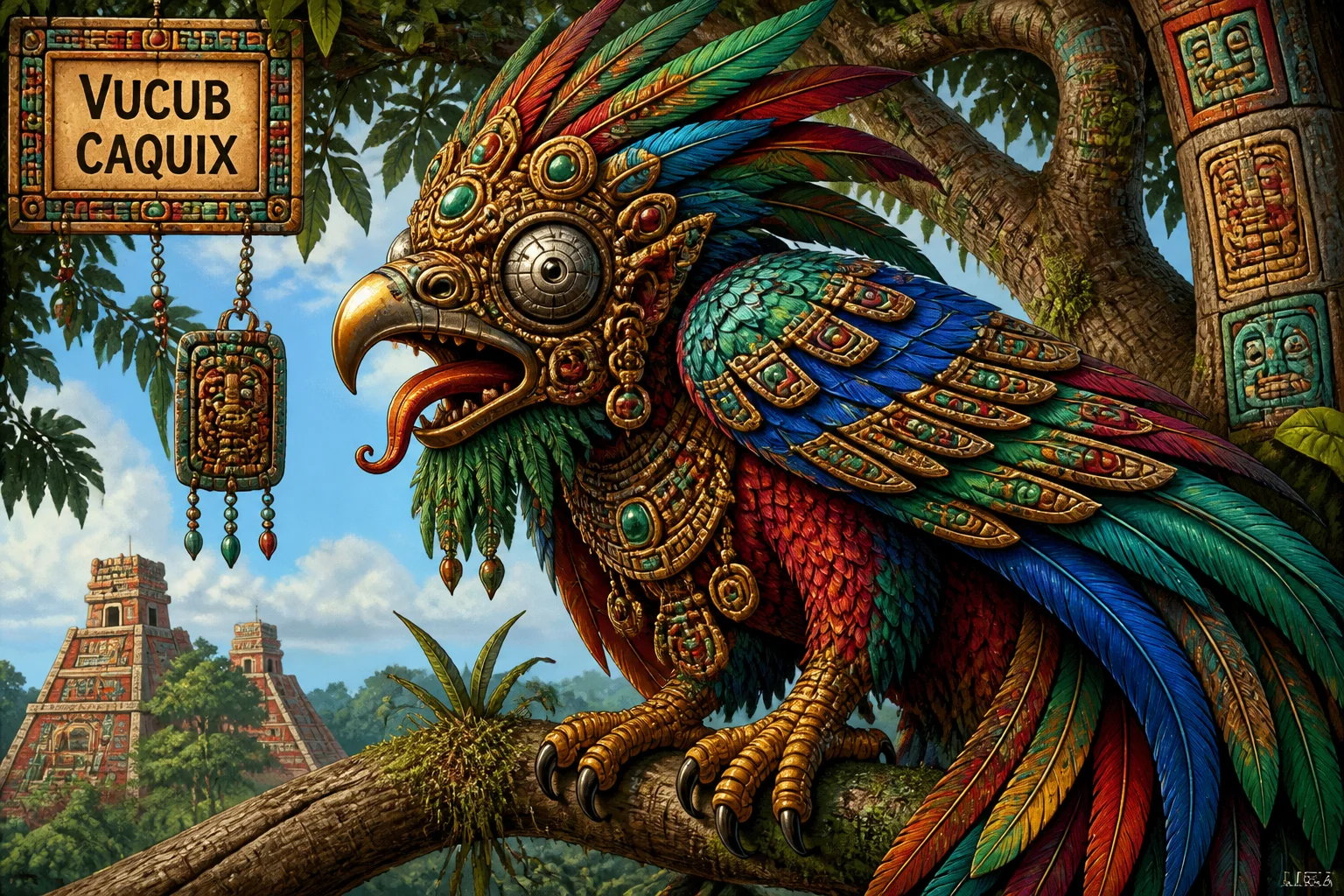
Before the current creation, a brilliant bird demon named Vucub Caquix claimed to be the sun and the moon. His glittering feathers, jewels, and metal eyes made him dangerously proud. The Hero Twins shot him with a blowgun and tore away his ornaments.
The defeat of Seven Macaw matters because he represents false authority and inflated ego. His plunge from the tree also explains why macaws are colorful but no longer dominate the sky. In the Popol Vuh, this episode sets the stage for the twins' larger mission.
Some scholars also see astronomical symbolism in the story, but readings differ. The core moral point, that false brilliance cannot stand, remains clear.
4. Hun Hunahpu and the Maize God's Sacrifice
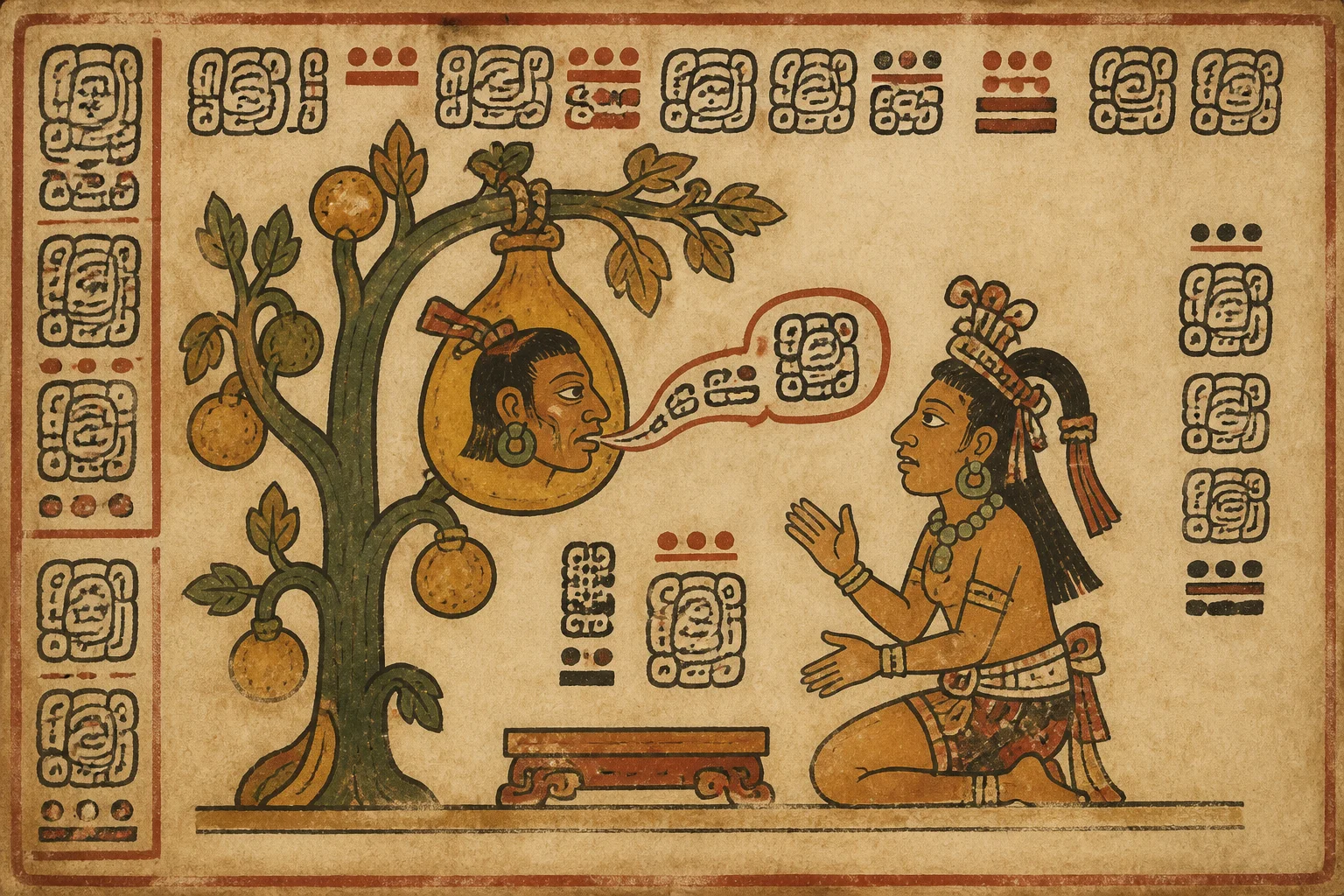
The father and uncle of the Hero Twins, Hun Hunahpu and Vucub Hunahpu, were skilled ballplayers. The lords of Xibalba summoned them underground, defeated them, and hung Hun Hunahpu's head in a calabash tree. There the head spit into the hand of the maiden Xquic, who later gave birth to the Hero Twins.
This strange image is widely read as a maize-god cycle of death and regrowth. Seed heads appear to die, yet they produce the next harvest. The story connects ballgame sacrifice with the fertility of corn and the survival of the family line.
Classic Maya art sometimes shows a maize god emerging from a turtle-shell or seed form. These images may echo the same sacrifice-and-rebirth pattern found in the Popol Vuh.
5. The Xtabay and the Ceiba Tree
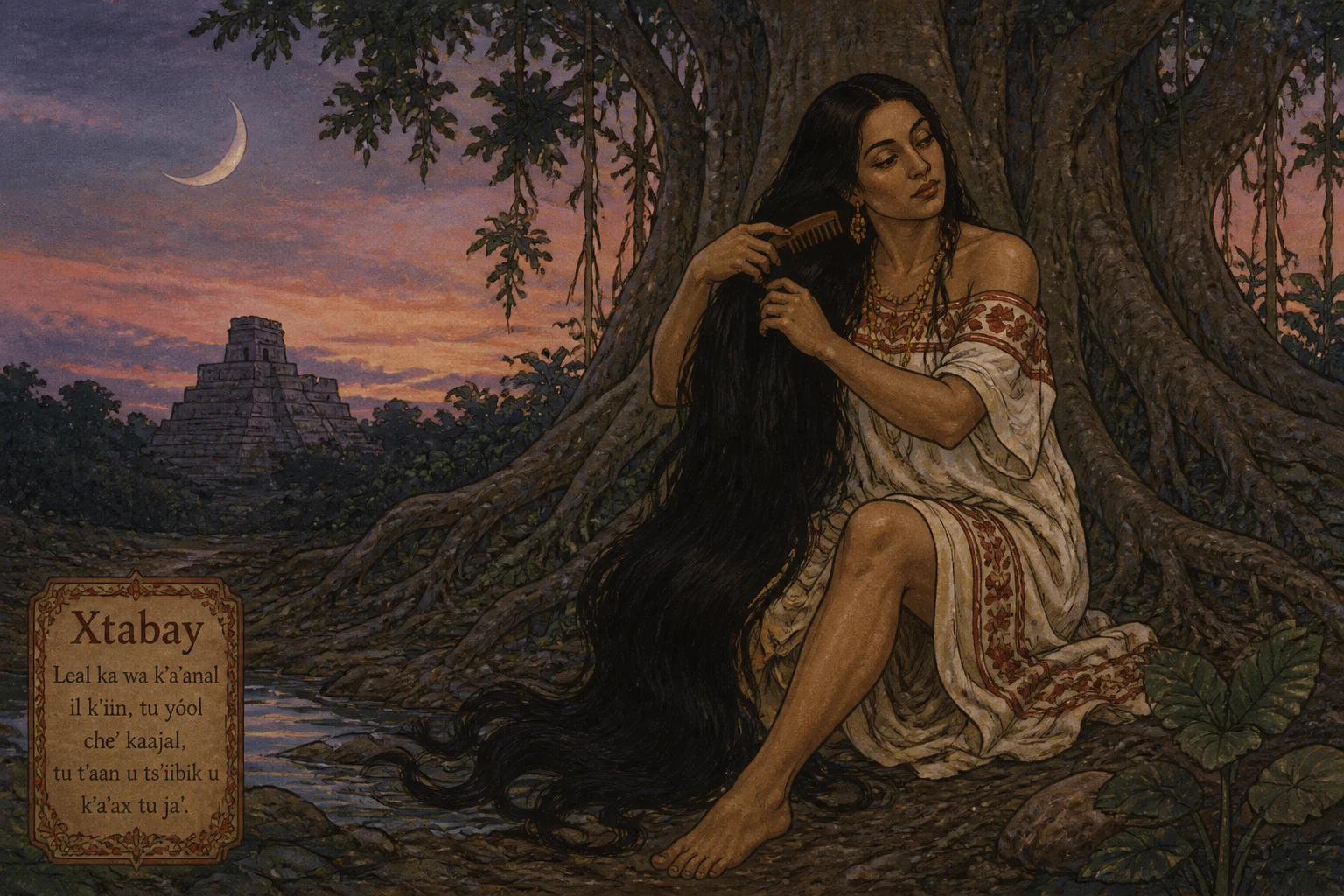
In Yucatec folklore, the Xtabay is a seductive spirit associated with the towering ceiba tree. She appears as a beautiful woman, often combs her long hair, and lures men deeper into the forest. Those who follow her may become lost, lose their reason, or even die.
The legend functions as a warning about temptation, alcohol, and dangerous desire in rural communities. Some versions describe her as a woman who was punished or transformed after a tragic life. She remains one of the most discussed characters in regional Maya folklore.
Colonial Christian teachings later added moral layers, but the core forest-spirit character is older. Today the Xtabay still appears in local storytelling and even pop-culture retellings.
6. Aluxes, the Small Guardians of the Milpa
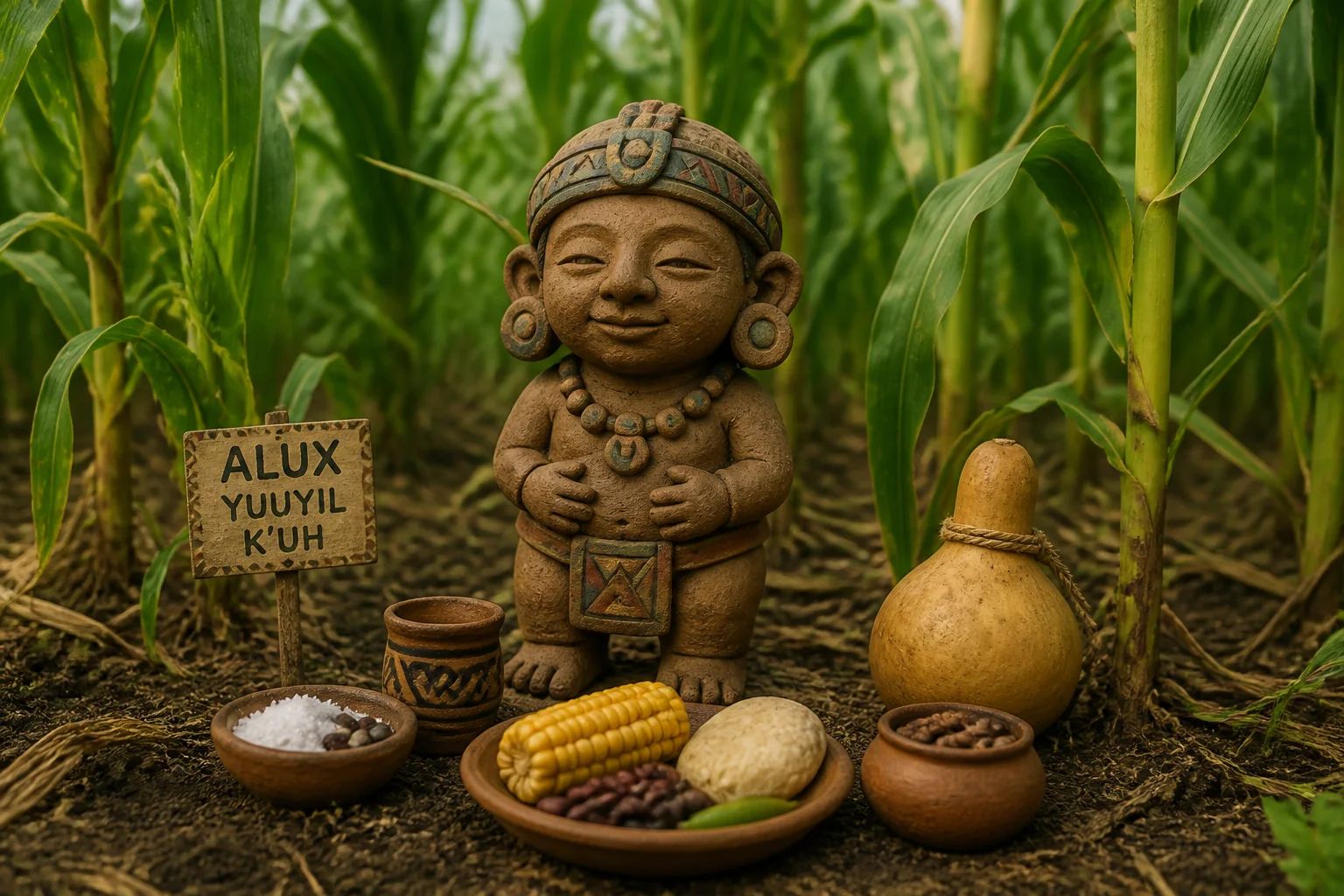
Aluxes are small, clay or stone beings that farmers traditionally place around milpas, fields, and properties. They protect crops and buildings in exchange for offerings of food, tobacco, or posoll. When respected, they can bring good luck and watch over the land.
If a family stops making offerings, aluxes may become mischievous or destructive. Belief in these guardians persists in parts of the Yucatán Peninsula, where people still warn children not to disturb certain piles of stones. They show how daily labor and spiritual obligation blended in Maya life.
The alux idea likely grew from older beliefs in guardian spirits tied to particular places. It also gave farmers a way to enforce respect for boundaries, storage, and inherited land.
7. Chaneques, the Forest Tricksters
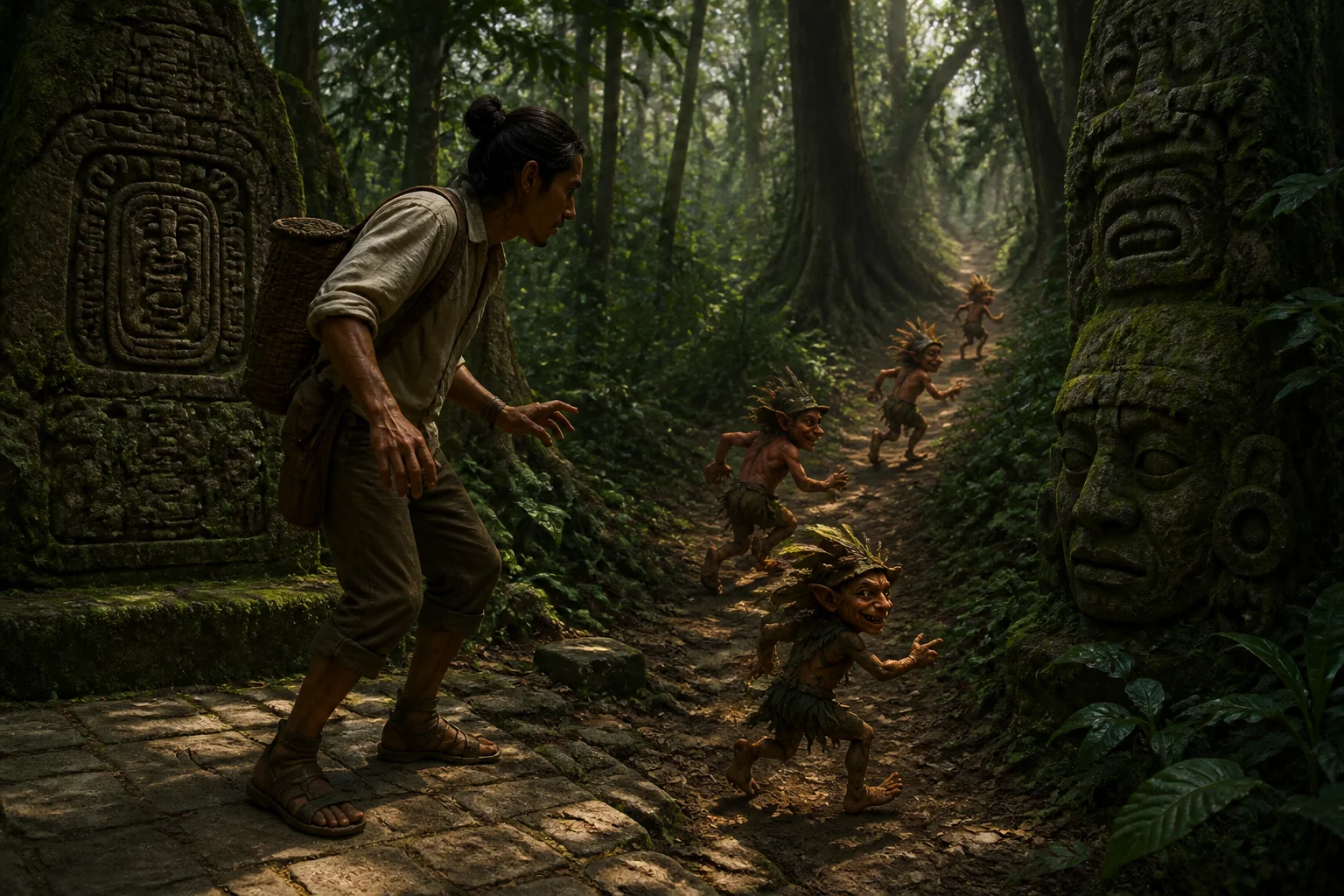
Chaneques are small spirit tricksters from several Mexican and Maya-influenced traditions. They are said to guard forests, rivers, and animals, and they delight in confusing travelers. People often explain sudden disorientation or lost paths as chaneque mischief.
In some stories, chaneques can steal a person's soul or shadow, causing illness or bad dreams. Rituals and prayers are used to win back what was taken. Although they resemble aluxes, chaneques are usually wilder and more closely tied to uncultivated land.
Scholars group chaneques with a broad family of small nature spirits across Mesoamerica. Their stories vary by town, showing the creativity of regional oral tradition.
8. The Bacabs and the Four Directions
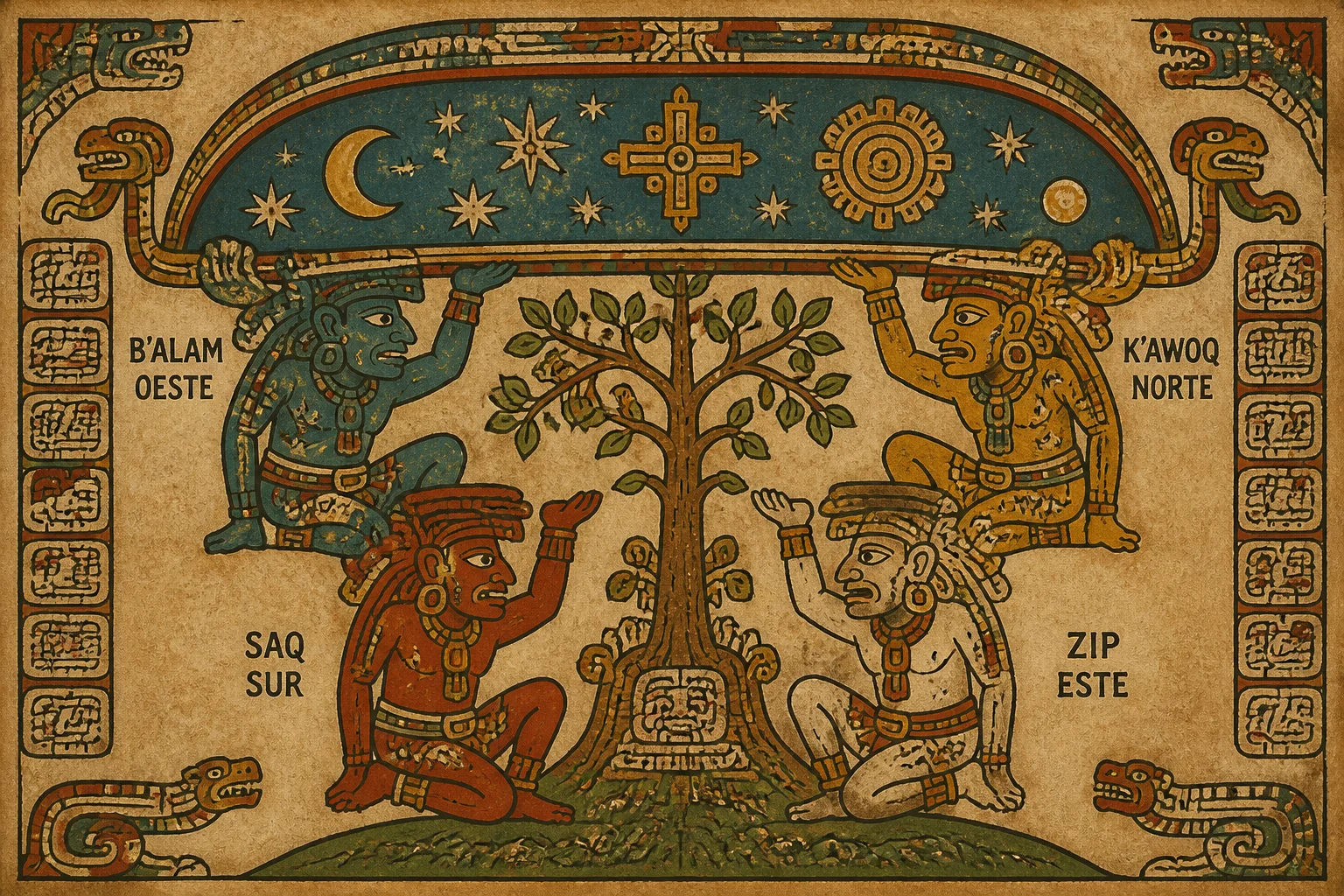
Maya cosmology places four gods, called Bacabs, at the four corners of the world. They hold up the sky and stand watch over the east, west, north, and south. Each Bacab is linked with a color, a tree, and a set of days in the calendar.
Colonial sources mention the Bacabs in connection with floods, sky-bearers, and healing chants. Their presence shows how the Maya mapped order onto space and time. Rather than being distant myths, these directional beings shaped everyday rituals and architecture.
World trees and colored directions appear in Maya art and in later colonial descriptions. This structure gave priests and rulers a way to organize rituals and sacred geography.
9. Ixchel, the Moon and the Rainbow
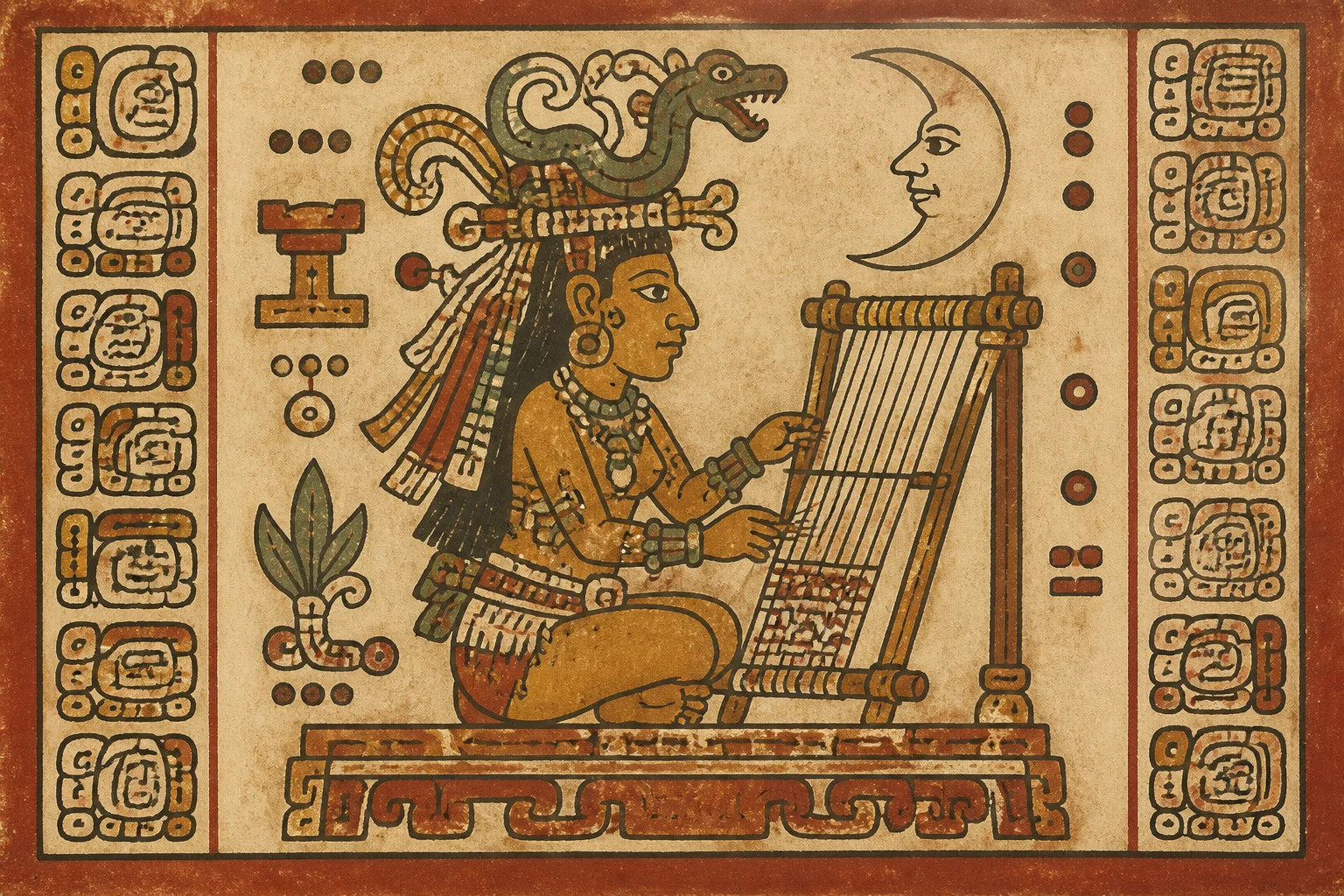
Ixchel is widely described as a moon goddess associated with weaving, medicine, fertility, and childbirth. She appears in the Dresden Codex and in stories from the Yucatán Peninsula, often with a serpent on her head or a weaving loom. Some accounts make her the consort of Itzamná, a creator god.
She also has a dangerous side linked to the rainbow, which in some Maya traditions is a bringer of illness. Pilgrims once traveled to her shrine on Cozumel, according to early colonial reports. The layered image of Ixchel shows that Maya deities rarely represented only one force.
Modern writers sometimes simplify Ixchel as only a mother goddess. The historical record is richer and more ambiguous, mixing creation, destruction, and healing.
10. Kukulkan, the Feathered Serpent
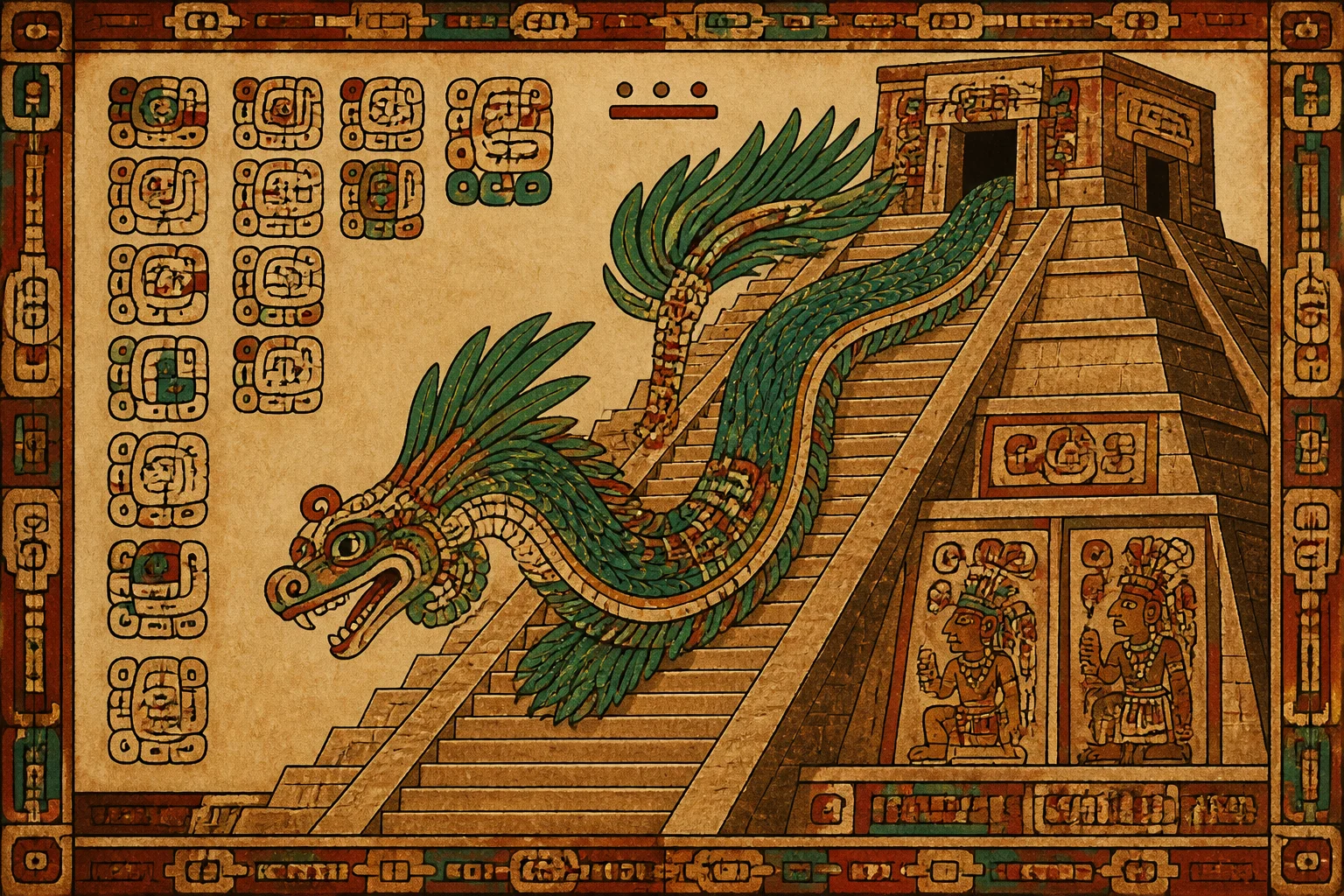
Kukulkan, the Yucatec Maya name for the Feathered Serpent, is associated with wind, storms, authority, and the planet Venus. He is related to the central Mexican Quetzalcoatl, but Maya traditions gave him their own royal and ritual meanings. At Chichen Itza, the great pyramid of El Castillo aligns with equinox shadows that resemble a serpent moving down the stairway.
Archaeologists debate how intentionally the equinox effect was designed, so it is best described as a possible deliberate effect rather than absolute fact. What is clear is that feathered-serpent imagery was central to Maya elite art and architecture. Kukulkan combined cosmic power with political legitimacy.
Pilgrims and tourists now visit Chichen Itza to see the serpent shadow at the equinox. The ancient city's original rituals were complex and cannot be reduced to a single solar effect.
11. Chaac and the Rain Dwarfs
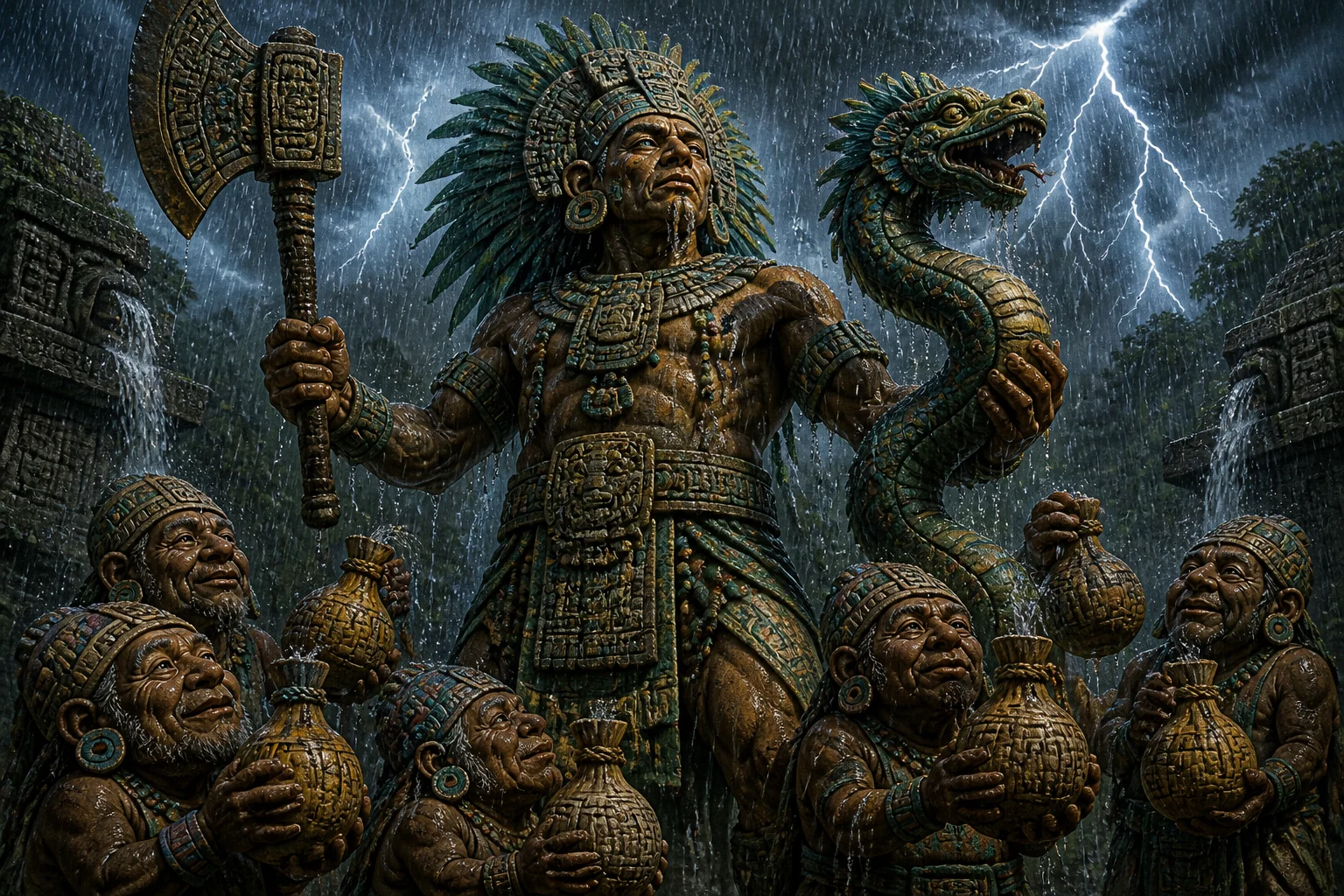
Chaac is the Maya rain god, usually shown with a long nose, an axe, and lightning serpents. He was believed to split the clouds with his axe so rain could fall. Farmers depended on Chaac for maize, and many ceremonies were directed toward him.
Some Yucatec Maya legends say Chaac is helped by small rain dwarfs or chacs who gather water in gourds. These helpers explain sudden local showers and the rumble of thunder. Rain gods were not distant figures; they were tied to cenotes, caves, and seasonal survival.
Puuc-style buildings in Yucatán are filled with Chaac masks, showing his prominence in dry limestone country. His legends made the onset of rain a sacred event.
12. Ah Puch, the God of Death
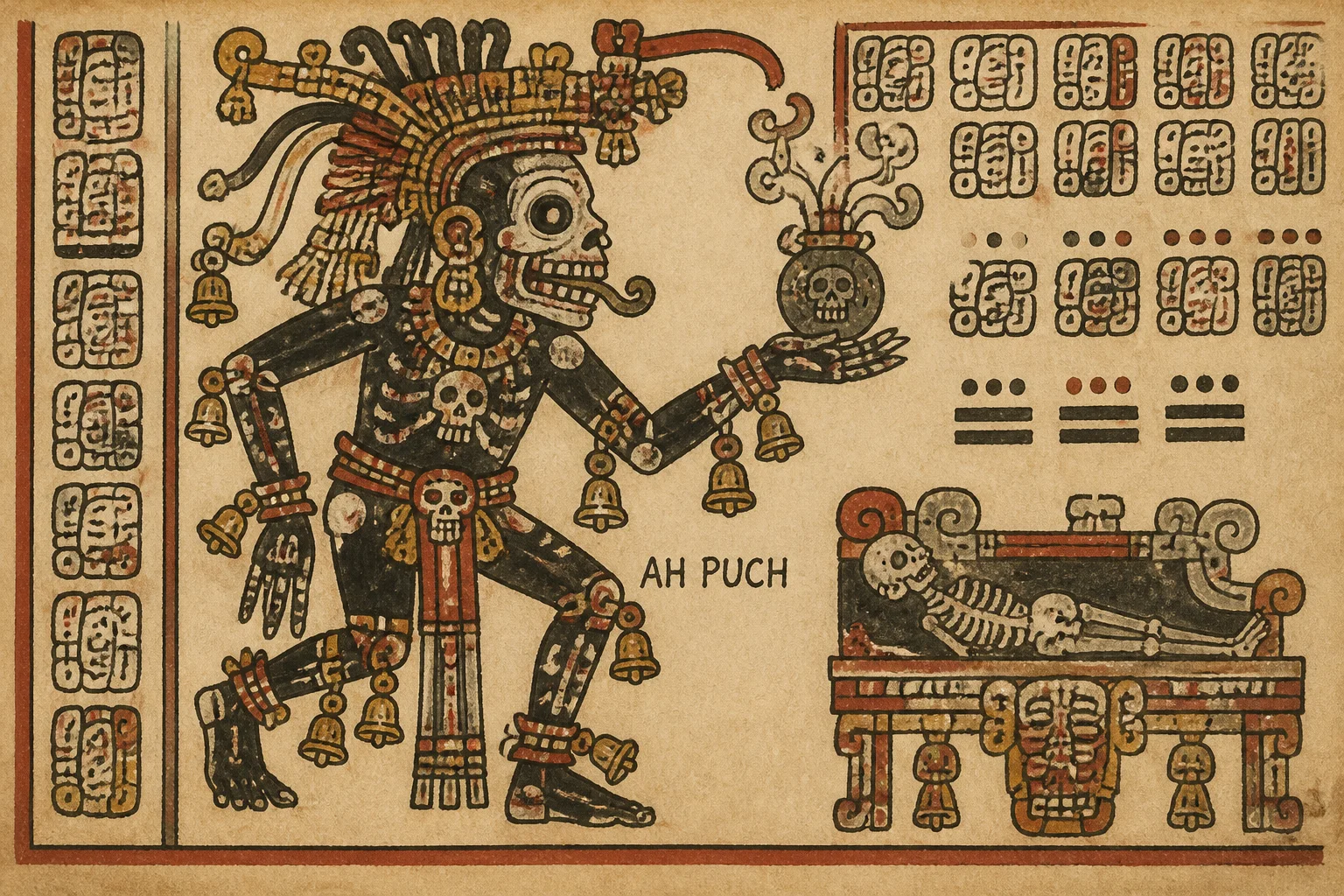
Ah Puch, also called Yum Cimil or Kisin in some traditions, is a skeletal god of death and the underworld. He often appears with bells, bones, and dark body paint in colonial descriptions and codices. Death gods in Maya thought could be fearsome, but they were also part of the natural cycle.
Ah Puch was not exactly a devil in the European sense. He ruled over one destination for the dead and was sometimes associated with disease and sudden death. In modern folklore, the name is sometimes used to frighten children or explain unexplained noises.
Maya death gods were part of a wider system of souls and afterlives. Not every deceased person went to the same place, and ritual could shape the journey.
13. Buluc Chabtan, the God of War and Sudden Death
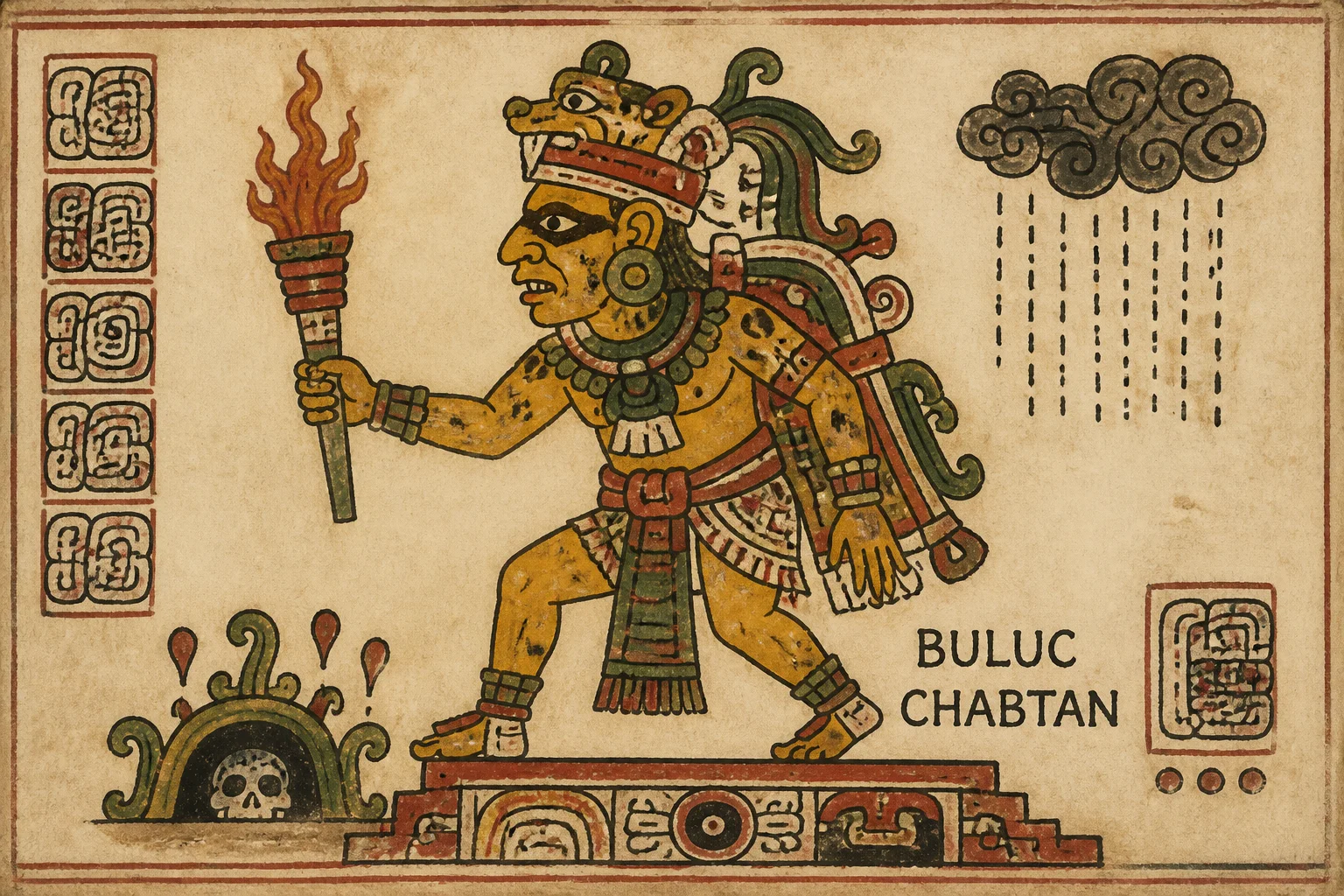
Buluc Chabtan appears in Maya sources as a god of war, violence, and sudden death. He is often depicted with a dark line or slash around his eye and may carry a torch or weapon. Sacrificial acts and battlefield deaths were placed under his influence.
Unlike some mythic heroes, Buluc Chabtan personifies the destructive side of conflict. He reminds modern readers that Maya warfare was heavily ritualized and linked to religious obligations. This god appears less often than Chaac or Ixchel, but his specific domain makes him memorable.
Colonial dictionaries and codices identify Buluc Chabtan as one of several hostile forces in Maya cosmology. He was not a ruler's private god, but a public reminder of war's cost.
14. The First Four Men and Their Wives
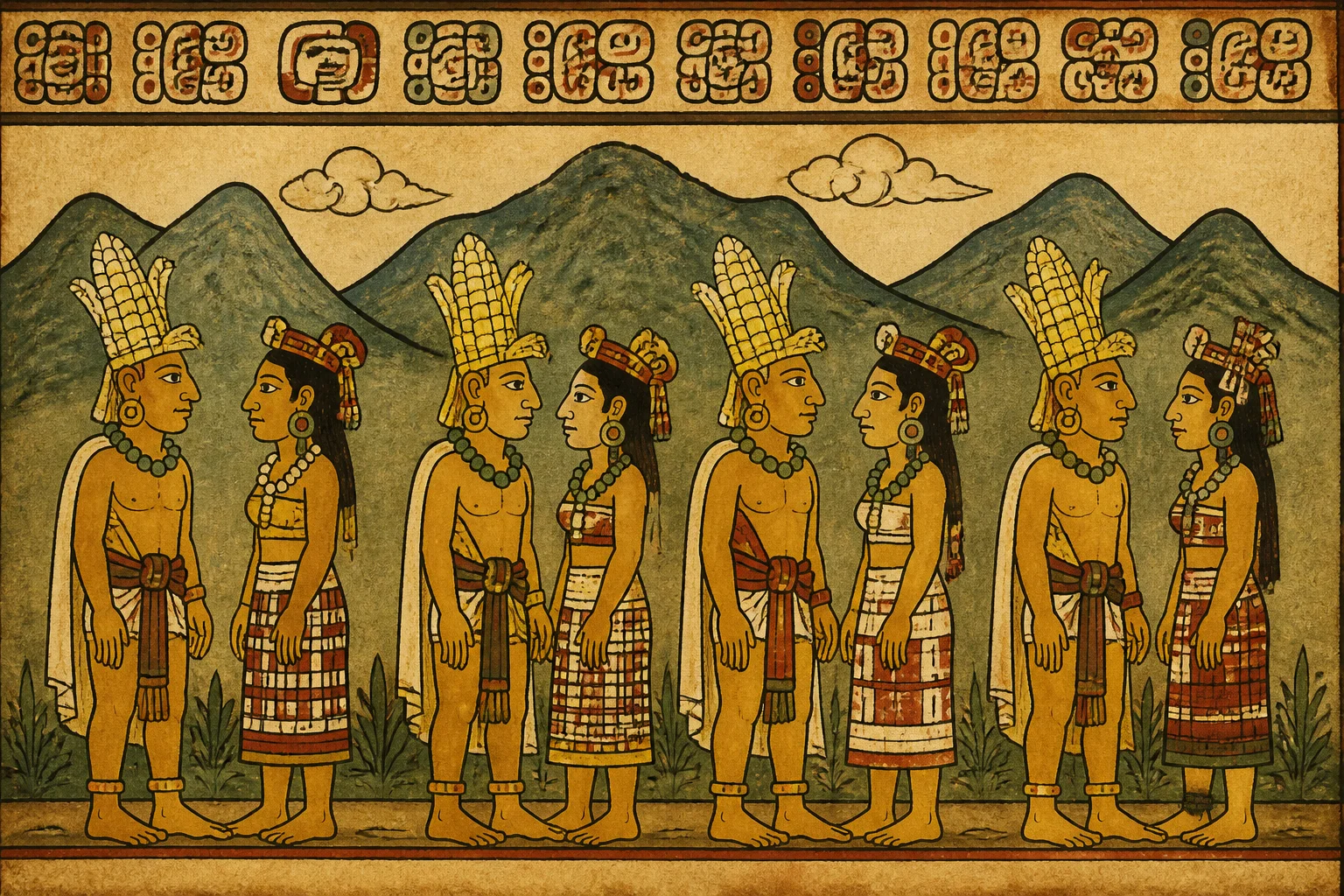
After the gods made humans from maize, the Popol Vuh names the first four men: Balam-Qitze, Balam-Aqab, Mahucutah, and Iqi-Balam. They were wise, faithful, and able to see everything across the earth and sky. The gods realized this total vision made them too godlike and deliberately blurred their sight.
The same narrative says the first wives were created while the men slept, founding the main K'iche' lineages. This part of the story explains why humans have limited knowledge and why lineage mattered in highland Maya society. It is both a creation tale and a charter for social order.
The blurred vision of the first men explains why humans now require faith and ritual. It also places proper humility at the center of Maya political and spiritual thought.
15. Zipacna and the Four Hundred Boys
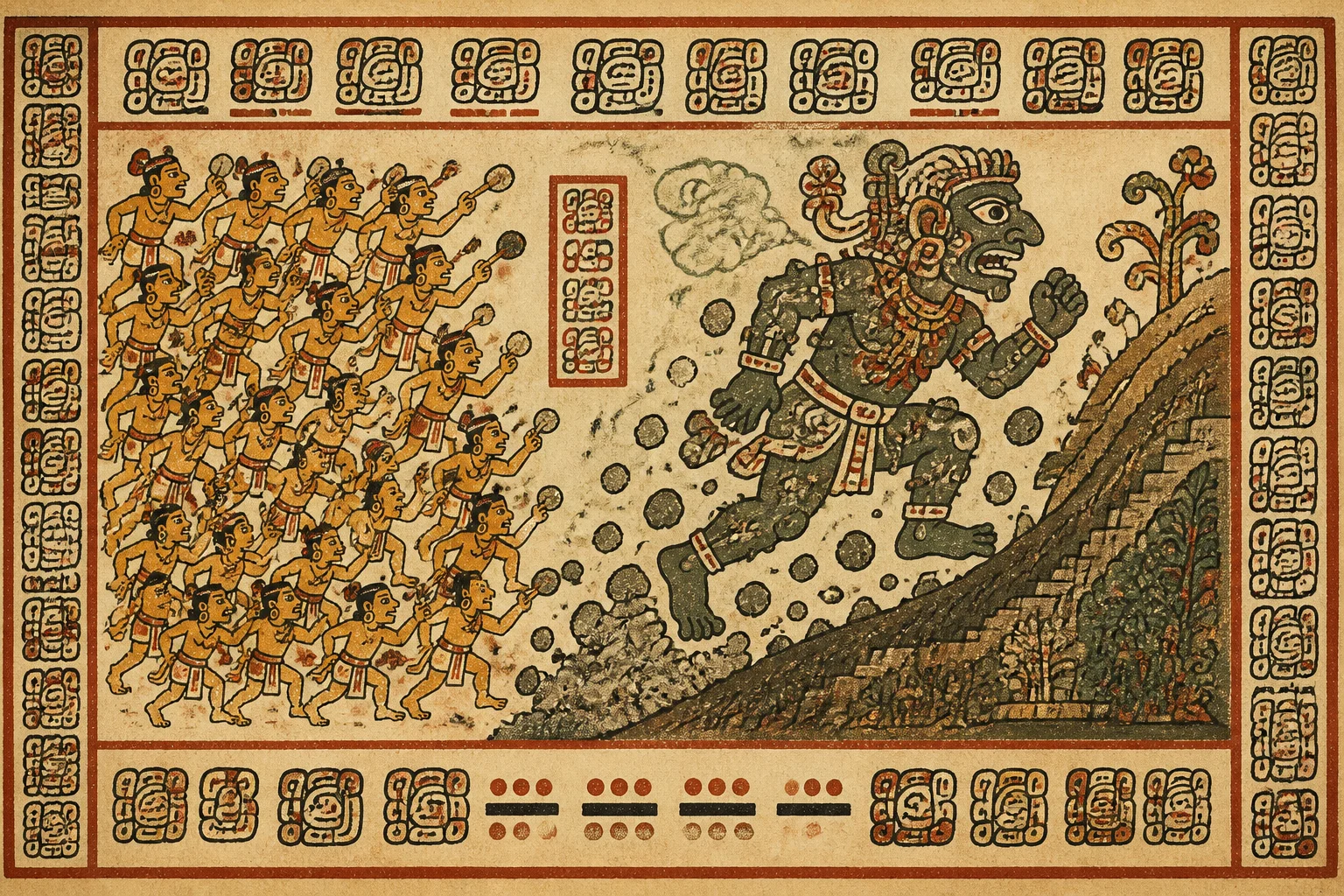
Zipacna, a boastful son of Vucub Caquix, claimed to be the maker of mountains. According to the Popol Vuh, the Four Hundred Boys asked him to help move a great log, then plotted to crush him. He escaped and brought the structure down on them instead.
The Hero Twins later defeated Zipacna by luring him toward a fake crab under a mountain, where he was crushed. The tale warns against both arrogance and murderous plots. It also provides a mythic explanation for how mountains and great stones came to be.
The episode is violent and strange, but its themes are consistent with the Popol Vuh's larger message. Overreaching power eventually collapses, while cleverness and cooperation endure.
16. Cabrakan, the Earthquake Maker
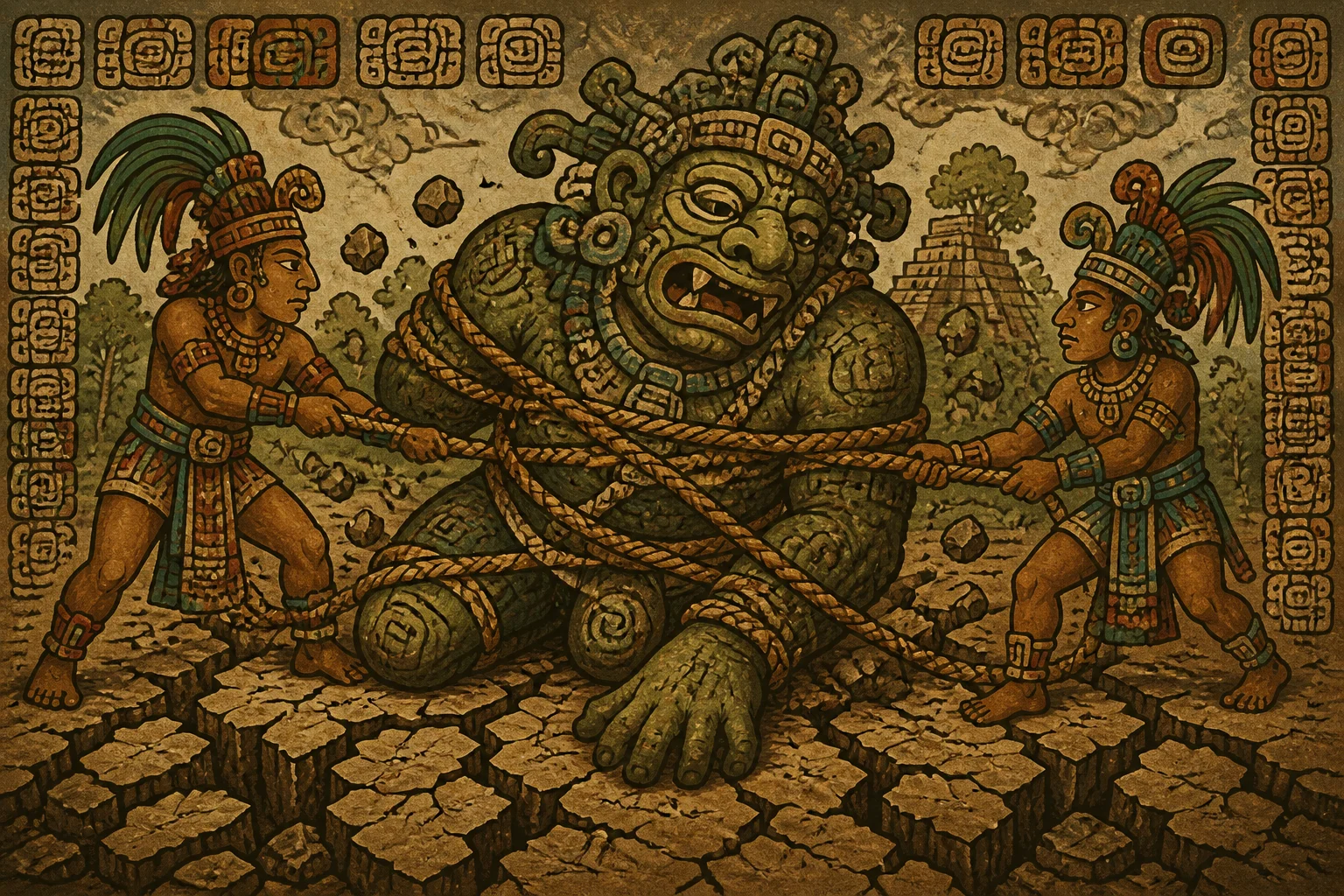
Cabrakan, another son of Vucub Caquix, boasted that he could flatten mountains with his feet. His pride made him a threat to the stability of the earth. The Hero Twins sought him out and offered him a specially prepared bird, which weakened him.
In the Popol Vuh, the twins then bound Cabrakan so he could no longer destroy the land. His story explains earthquakes as the result of a powerful being who must remain restrained. Like his brother Zipacna, Cabrakan shows how the twins defeated chaos before the present creation could flourish.
In an earthquake-prone region, stories about ground-shaking beings carried practical fear and explanation. They also gave communities a narrative for rebuilding after real seismic events.
17. The Dwarf of Uxmal
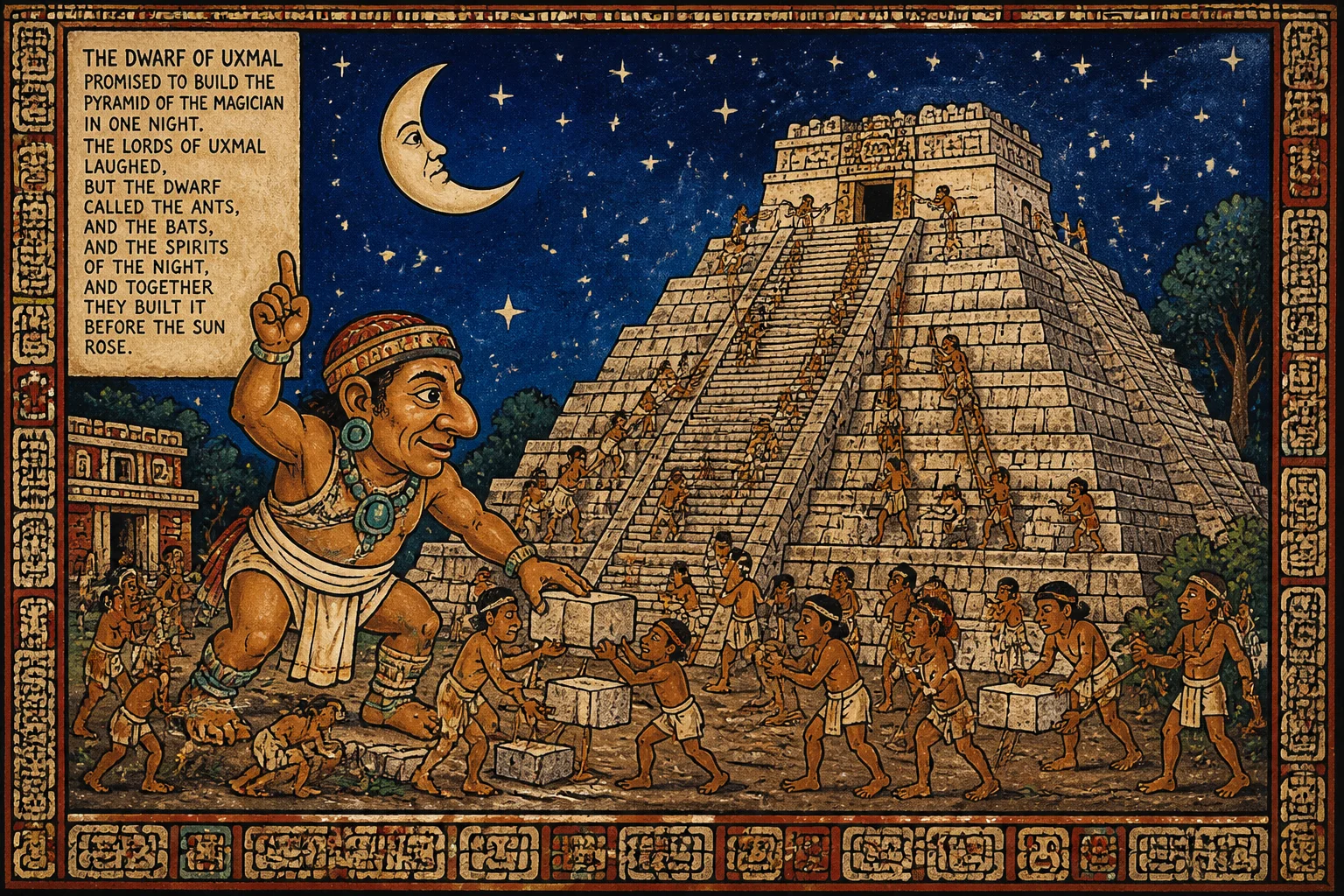
Yucatec legend tells of an old witch who found or hatched a dwarf from an egg and raised him as her son. The dwarf challenged the ruler of Uxmal to a test and somehow won the throne. Different versions say he built the great Pyramid of the Magician in a single night.
Archaeologists date Uxmal's buildings to the Late Classic and Terminal Classic periods, so the legend is not a literal construction history. Yet it preserves a folk memory of the site's powerful rulers and ceremonial importance. The story remains a favorite way to explain the pyramid's unusual shape.
The Dwarf of Uxmal blends folklore with a real archaeological site. It is a good example of how later generations explained monumental ruins they inherited but did not build.
18. The Sacred Cenote and the Rain God's Doorway
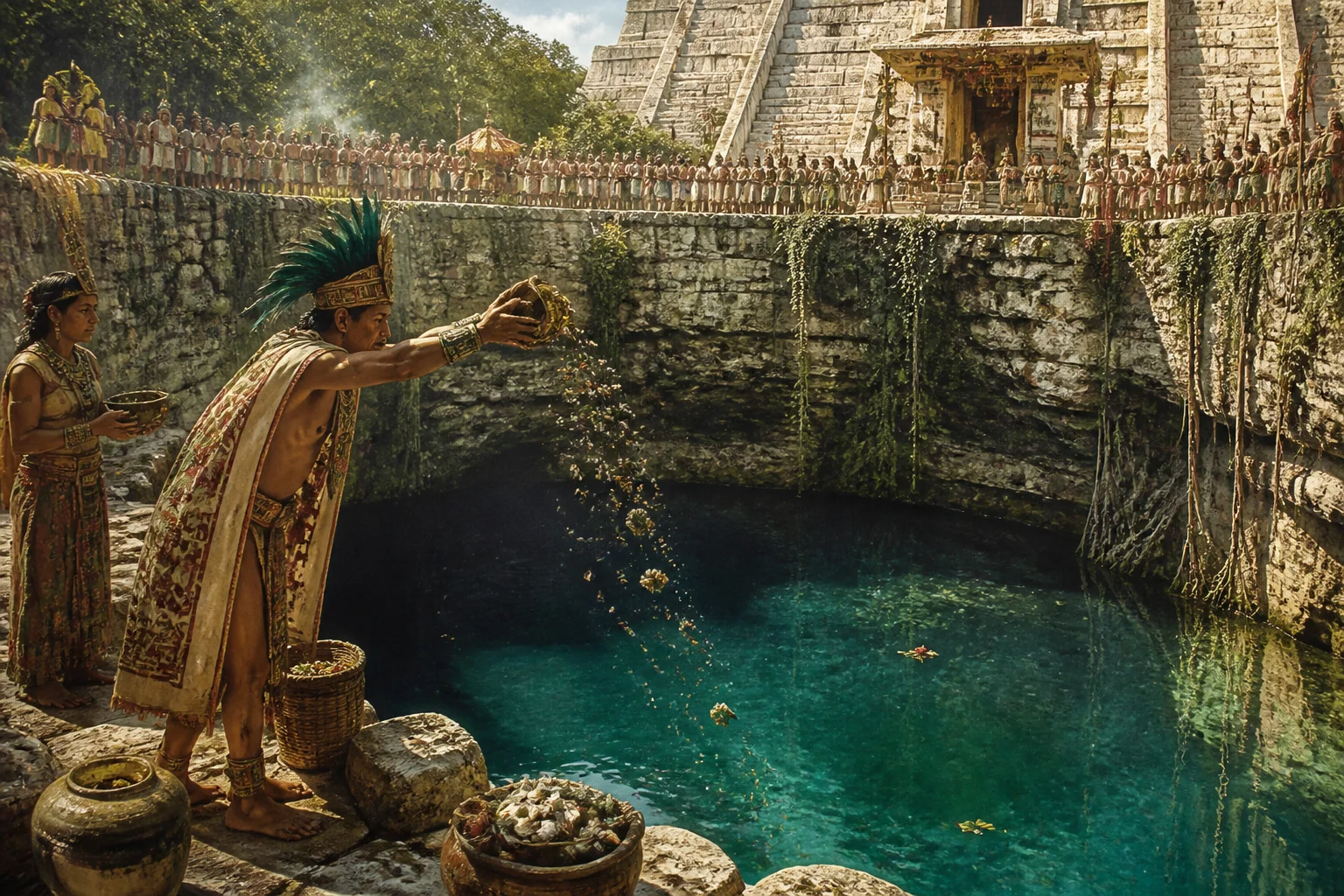
At Chichen Itza, a large natural sinkhole known as the Sacred Cenote was treated as a portal to the rain god and other water forces. Colonial reports and archaeology confirm that offerings, gold, pottery, and human remains were thrown into the water. The cenote was likely a pilgrimage destination for Yucatec Maya communities.
Myth and history overlap here, because the exact rituals can never be fully reconstructed. Still, the finds support the idea that the Maya saw cenotes as living thresholds to the underworld and sky water. This is a case where archaeology has given material weight to old legends.
Objects recovered from the Sacred Cenote include gold, jade, textiles, and human remains, though water conditions limit preservation. These discoveries show that the legend reflected real ritual practice.
19. The Possum Who Brought Fire
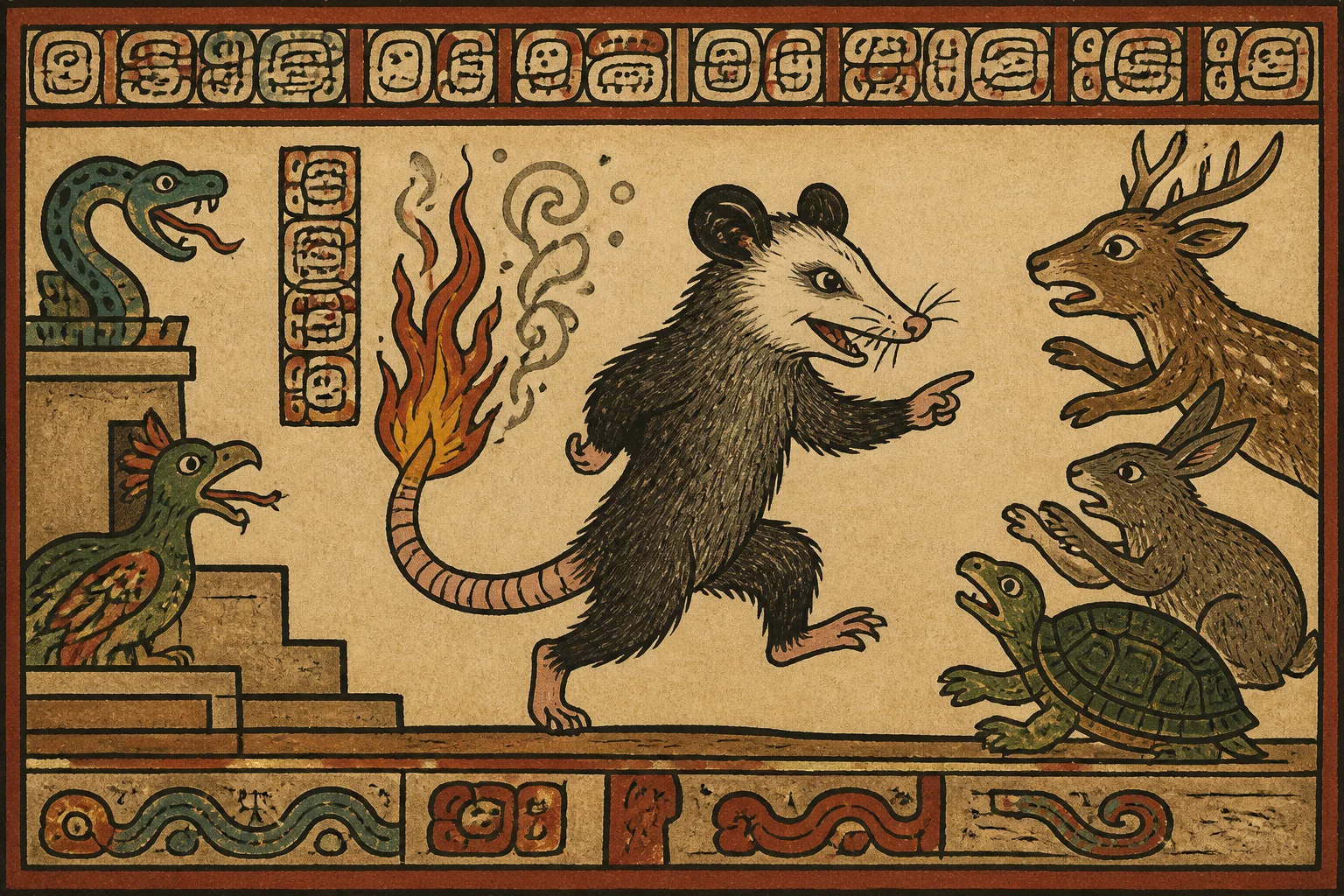
Several Mesoamerican traditions include a possum or opossum who steals fire for humanity. In some Maya versions, the possum grabs a burning ember from the underworld or from a guarded hearth and carries it back, losing the hair on its tail. This explains why possums have bare tails.
The story belongs to a wider family of animal-trickster myths that portray small creatures as brave and clever. It also highlights fire as a precious cultural gift rather than a simple technology. Such tales were told in homes and fields, not only in grand ceremonies.
Possums appear in myths from Mexico to Central America, so this story is part of a shared regional tradition. It gives a small animal a heroic role and a physical souvenir of the deed.
20. Sac Nicte and Canek
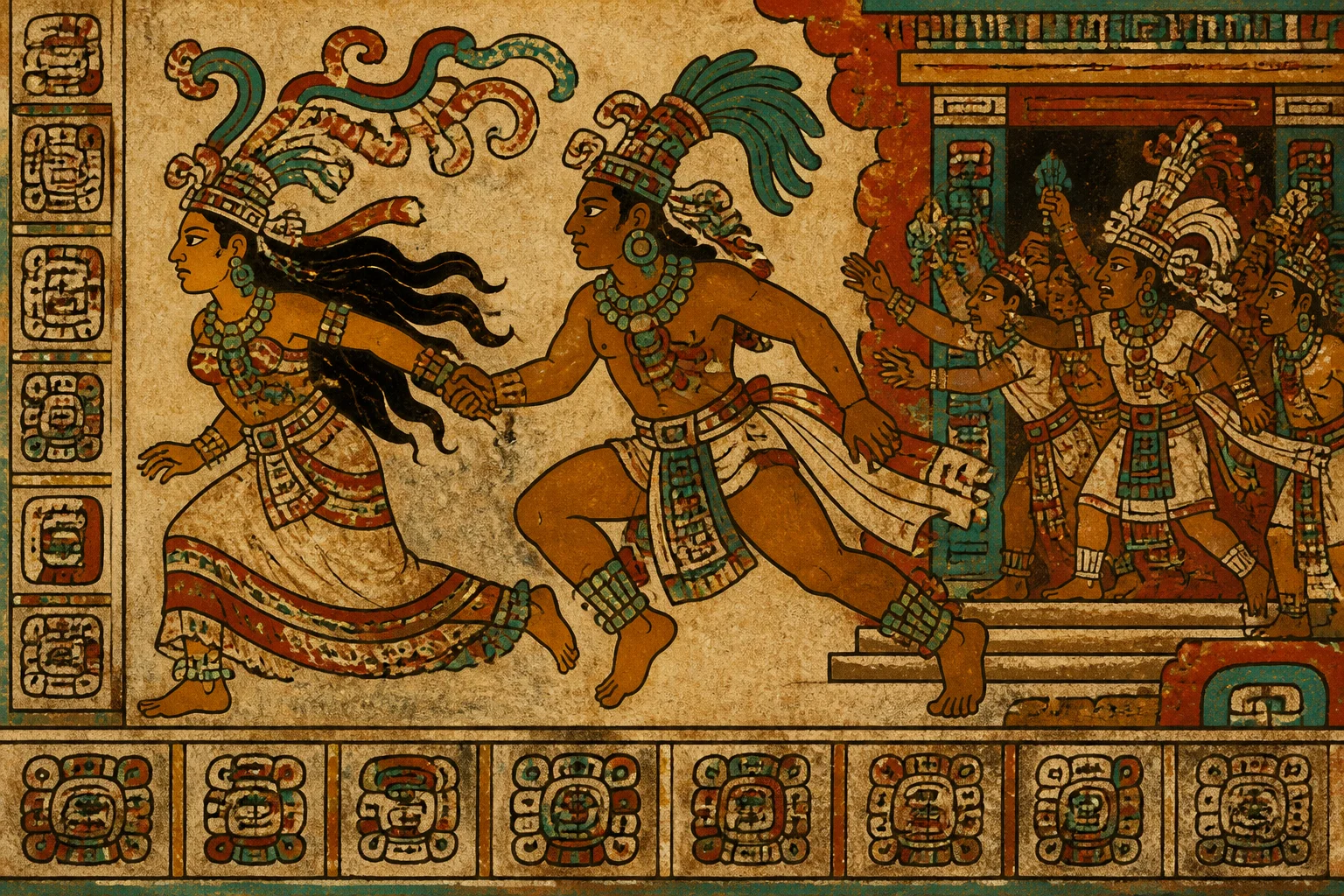
A legendary story from the northern Yucatán involves Princess Sac Nicte of Mayapan and Prince Canek of Chichen Itza. In the most common version, Sac Nicte is promised to another man, but Canek arrives during her wedding and carries her away. The rivalry that follows is said to have contributed to the fall of Mayapan.
Historians treat the tale as a blend of dynastic memory and later storytelling, not a reliable chronicle of events. Still, it persists because it explains political collapse through human passion. It also shows that Maya legends could be as dramatic as any court romance.
Some versions make Sac Nicte the cause of a war that reshaped northern Yucatan. Others treat her as a symbol of forbidden love, which is why details shift from teller to teller.
Why These Mayan Legends Still Matter
These stories are not dusty relics. They continue to shape identity, morality, and community in Maya-speaking regions, even where they have been blended with Christian or modern influences. Elders still use tales of aluxes, the Xtabay, and rain gods to teach caution and respect.
Reading them carefully also corrects old stereotypes about the mysterious Maya as a vanished or unknowable people. The myths reveal complex literature, humor, astronomy, and social commentary. They deserve the same serious attention as Greek, Norse, or Mesopotamian traditions.
Frequently Asked Questions
What is ‘Xtabay Maya and the Three’?
The phrase 'Xtabay Maya and the Three' is a modern search wording rather than the title of a single ancient text. It most likely refers to the Yucatec Maya spirit called the Xtabay, whose legend is built around seduction, the ceiba tree, and dangerous desire. There is no widely attested canonical Maya story in which she is one of exactly three named figures.
Is the Popol Vuh a Maya Bible or something different?
The Popol Vuh is a K'iche' Maya sacred narrative rather than a single scripture like the Bible. It was written down after Spanish contact but preserves older creation stories, hero tales, and lineage histories. Scholars read it as a literary and cultural source, not a literal historical record.
Who is Buluc Chabtan in Maya mythology?
Buluc Chabtan is a Maya god of war, violence, and sudden death. He appears in codex-style imagery and is often linked with sacrificial warfare. He represents the destructive power that Maya rulers invoked in ritual conflict, not a hero or moral role model.
Are Mayan legends still told today?
Yes, many Mayan legends are still told in Guatemala, Belize, Honduras, and southern Mexico. Stories about aluxes, the Xtabay, rain spirits, and local heroes remain part of everyday oral tradition. Some have blended with Catholic and modern elements, which is normal for living folklore.
What is the difference between Maya myth and historical fact?
Maya myths explain origins, values, and cosmic forces, but they are not straightforward historical records. Some legends contain names and places that align with archaeology, while others are symbolic or moral tales. Historians use multiple lines of evidence, including inscriptions, archaeology, and colonial documents, to evaluate them.

Alex Warren
Related Articles