

Long before shopping malls and online carts, ancient economies pulsed with life in open squares, riverside stalls, and covered lanes packed with merchants shouting prices.
The ancient market wasn’t just a place to buy grain or cloth. It was where politics happened, gossip spread, gods were honored, and entire civilizations measured their wealth and reach.
From the Athenian agora to the caravan bazaars of the Silk Road, marketplaces reveal how differently — and how similarly — ancient societies organized commerce.
Some relied on coinage, others on barter or weighed silver. Some markets were tightly regulated by government officials, while others were sprawling, chaotic, and largely self-policed.
TL;DR: Ancient markets and bazaars, from the Greek agora to the Aztec market of Tlatelolco, were the true engines of ancient trading, shaping currency, law, culture, and daily life across nearly every ancient civilization.
What Made an Ancient Market Different From a Modern One?
An ancient market rarely looked like a single building with fixed shops. More often it was an open plaza, a riverbank, or a stretch of road where sellers set up temporary stalls on fixed days or seasons. Permanence came later, as cities built covered halls and dedicated market districts.
Ancient trading also blurred lines that we now keep separate. A market square could double as a courtroom, a place for public announcements, a religious gathering spot, and a venue for political debate, all within the same day. Understanding that overlap is key to understanding why markets mattered so much to ancient economies.
1. The Athenian Agora: Greece’s Marketplace of Ideas and Goods
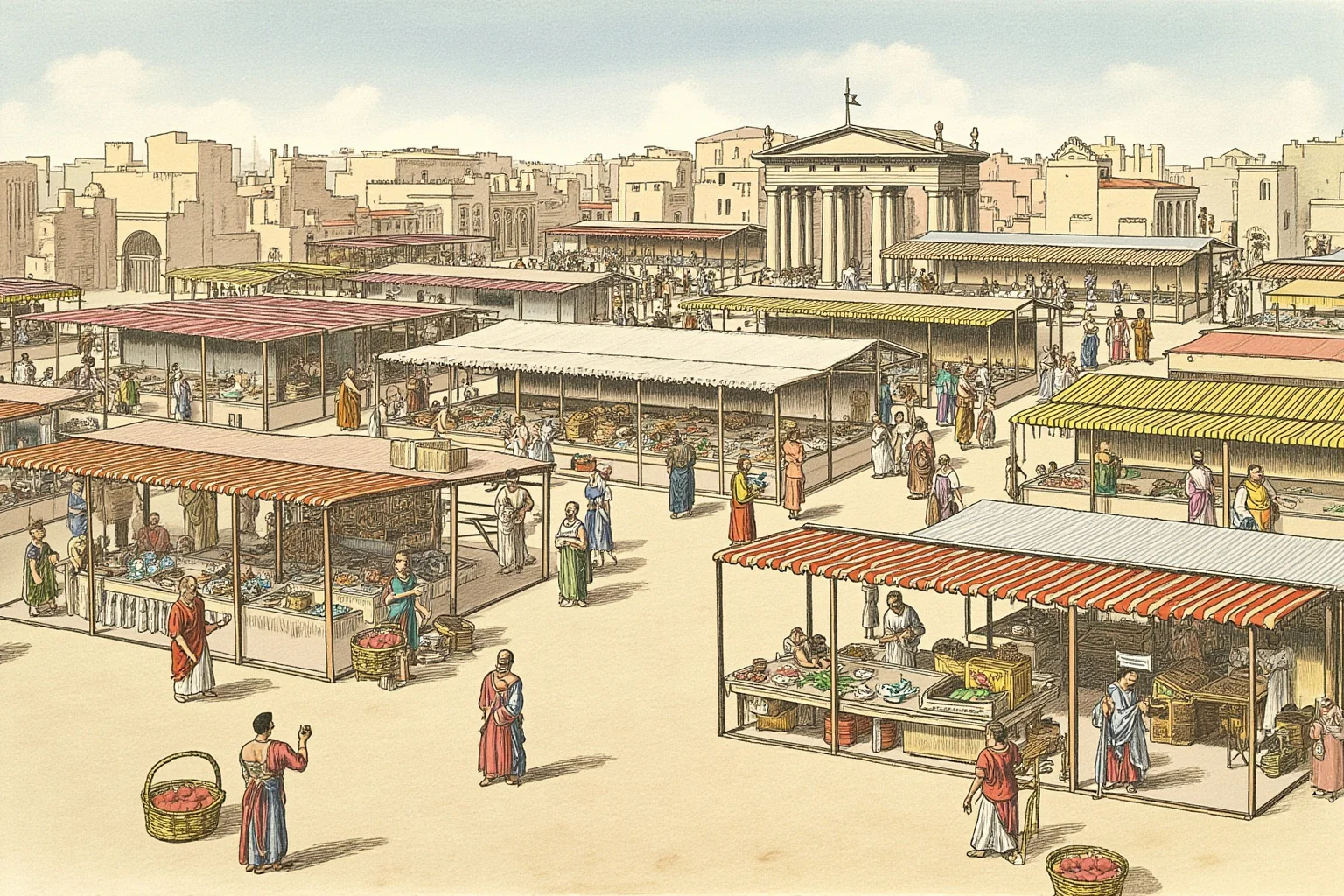
When people picture markets in ancient Greece, the Athenian agora usually comes to mind first, and for good reason. It sat at the center of civic life, ringed by temples, government buildings, and covered walkways called stoas where merchants sold everything from olive oil to pottery.
Markets in ancient Greece were about far more than commerce. Philosophers like Socrates reportedly spent time in the agora talking with citizens, and it was also where assemblies gathered and public notices were posted.
Contrary to a common myth, the Greek agora was not lawless. Officials called agoranomoi inspected weights, measures, and the quality of goods sold, an early example of consumer protection in ancient trading.
2. The Roman Forum and the Macellum
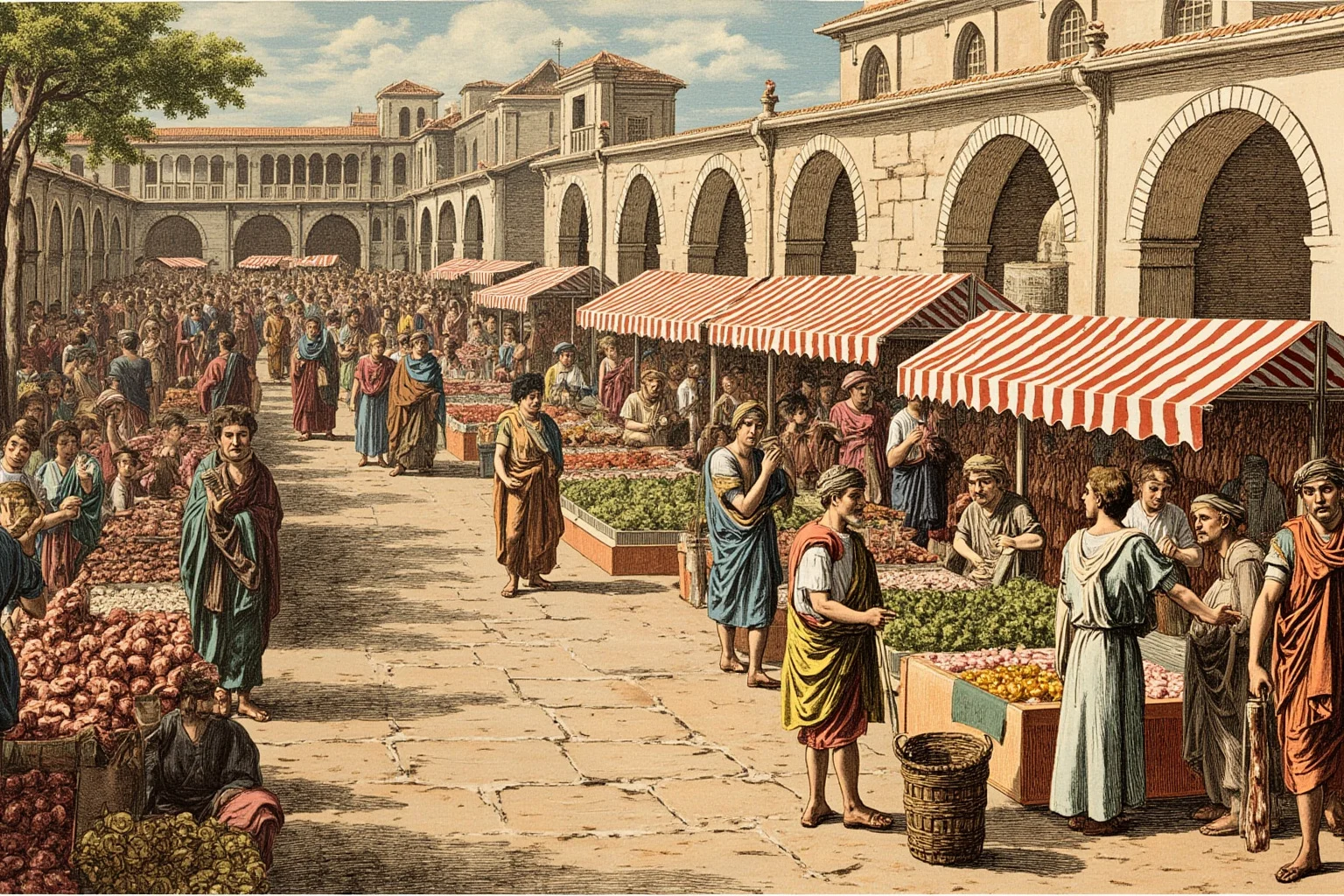
Rome is often remembered for its Forum, the grand civic center, but everyday shopping usually happened at a separate building called the macellum. This was a dedicated food market, often circular or square, with stalls for meat, fish, and produce arranged around a central courtyard.
One of the most impressive examples of ancient market architecture is Trajan’s Market in Rome, built in the early second century CE under the architect Apollodorus of Damascus. It’s sometimes called one of the world’s earliest shopping-mall-style complexes, with multiple levels of shops and offices.
Roman law also took market regulation seriously, with officials called aediles overseeing prices, sanitation, and fair dealing in public markets across the empire.
3. Mesopotamian Marketplaces and the Birth of Written Trade Records
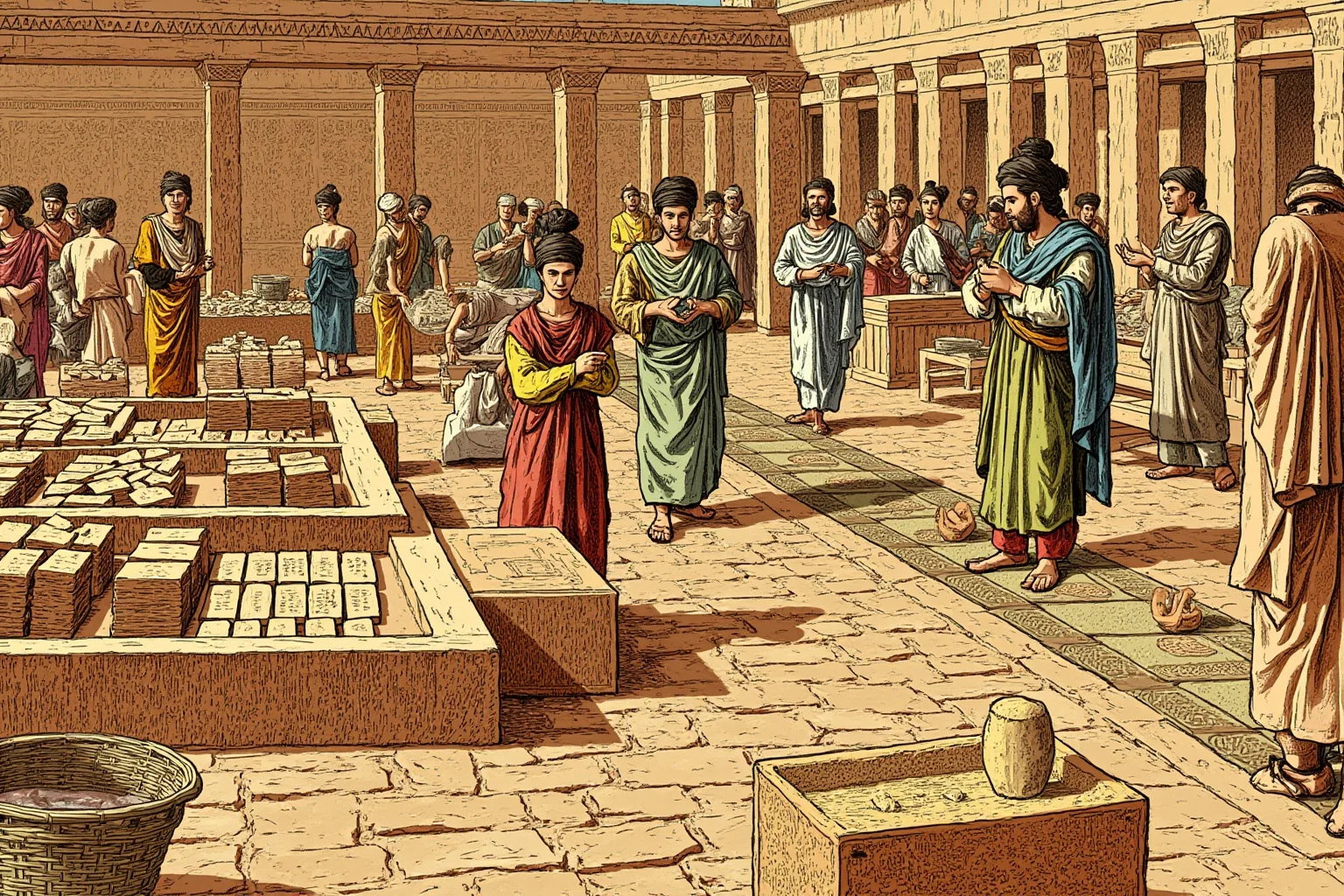
Some of the very earliest evidence of organized trading comes from Mesopotamia, where Sumerian cities like Uruk left behind clay tablets recording transactions as far back as the late fourth millennium BCE. These weren’t casual scribbles; they were detailed accounts of goods, quantities, and obligations.
The famous Code of Hammurabi, dating to around the eighteenth century BCE in Babylon, included rules about prices, wages, and fair dealing in trade. This shows just how early ancient governments recognized the need to regulate markets to keep commerce functioning smoothly.
4. Egyptian Riverside Trade and the Barter Economy
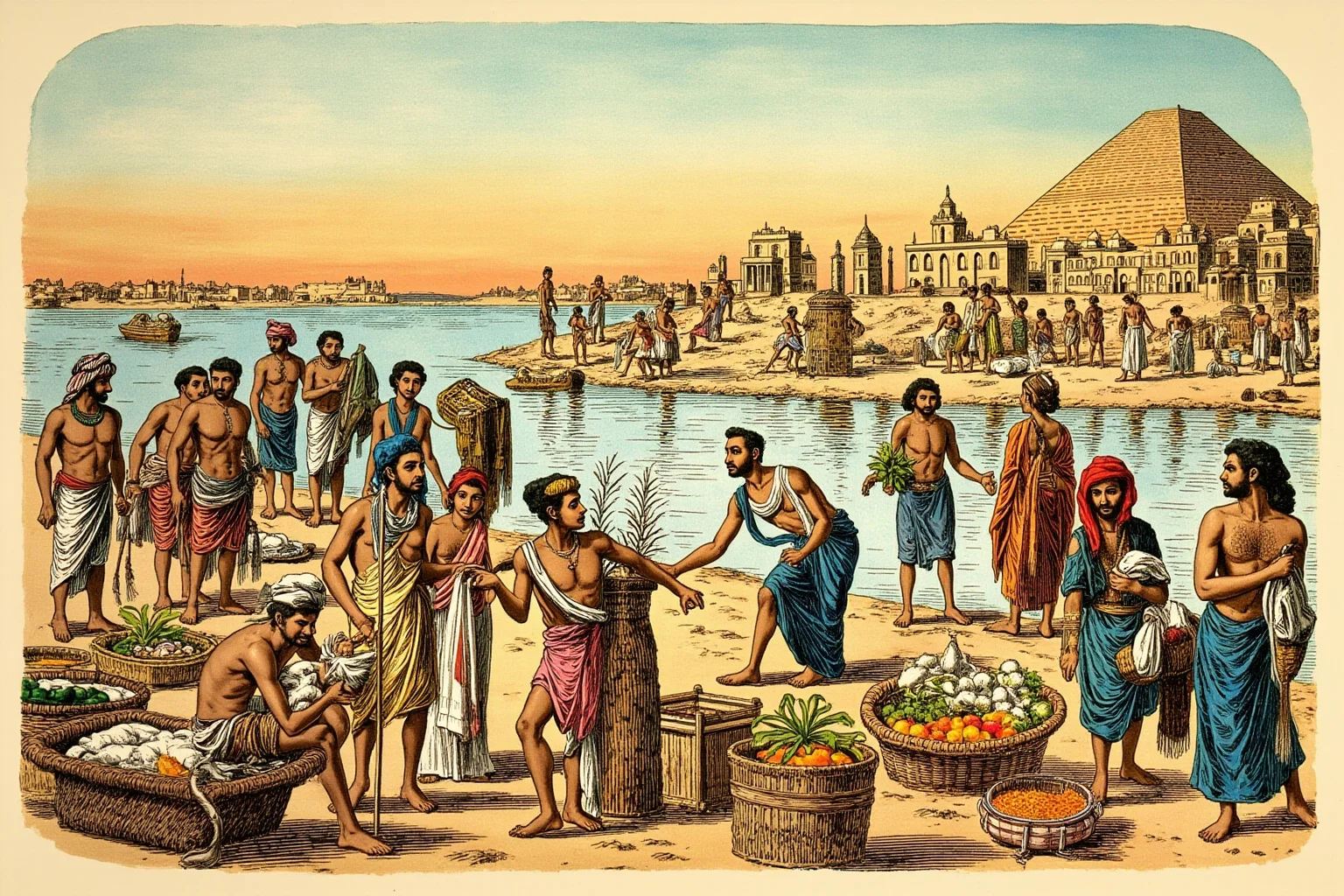
Ancient Egypt ran largely on barter for most of its early history, with the Nile River serving as its main commercial highway. Goods were valued using a standard unit called the deben, a weight of copper, silver, or gold, even though actual deben coins didn’t exist for most of Egyptian history.
Markets tended to cluster near temples and riverbanks, where farmers, fishermen, and craftsmen exchanged grain, linen, and pottery. Coinage arrived relatively late to Egypt, becoming more common only after Persian and then Greek influence during the Ptolemaic period.
5. Phoenician Trade Networks and Mediterranean Bazaars
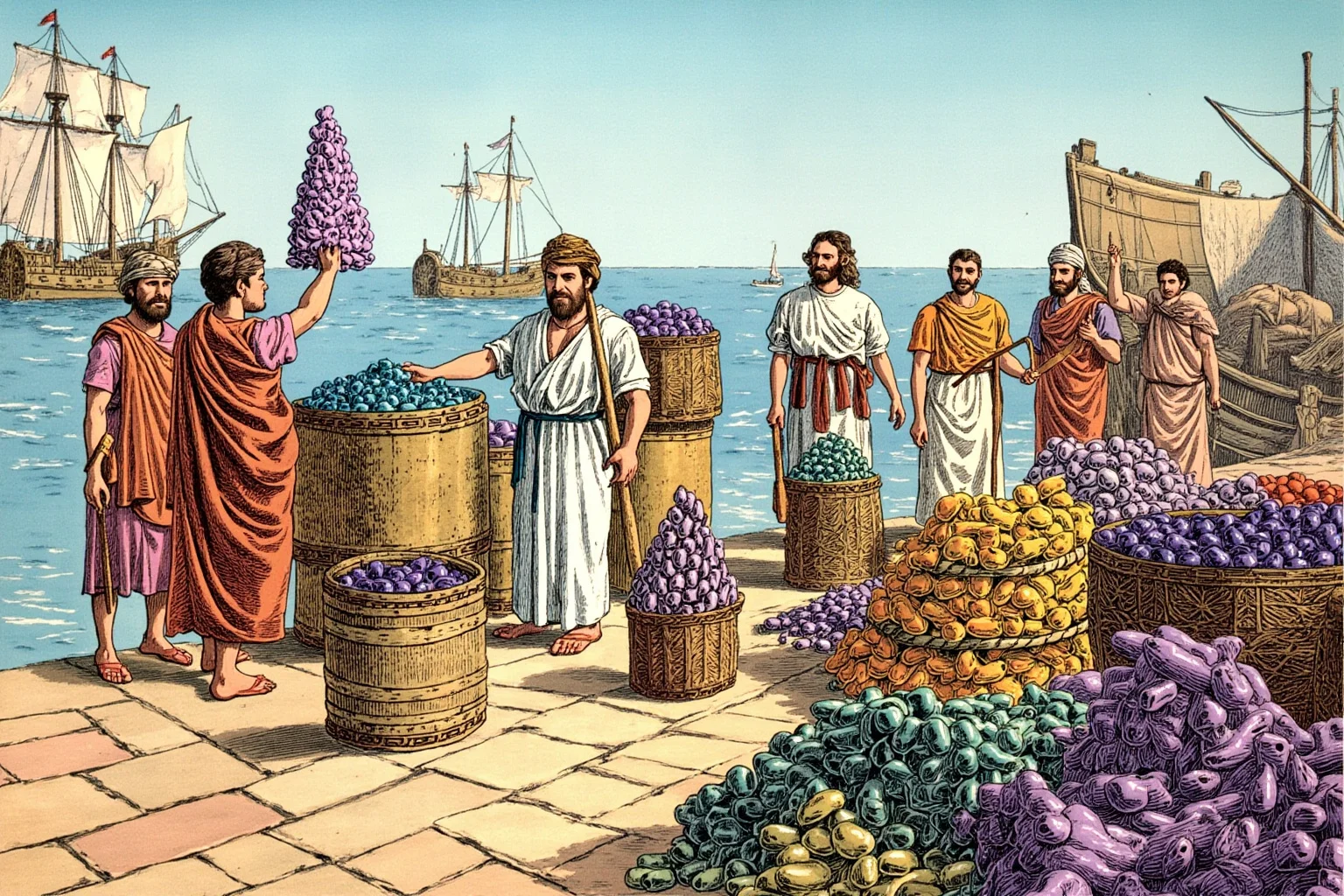
The Phoenicians, based in cities like Tyre and Sidon, built one of the ancient world’s most impressive trading networks by sea rather than land. Their ships carried purple dye, cedar wood, glass, and metals across the Mediterranean, connecting markets from the Levant to Spain.
Wherever Phoenician traders settled, they established coastal outposts that functioned as bazaars linking distant economies together. Carthage, their most famous colony, would go on to become a Mediterranean trading power in its own right.
6. Silk Road Bazaars Connecting East and West
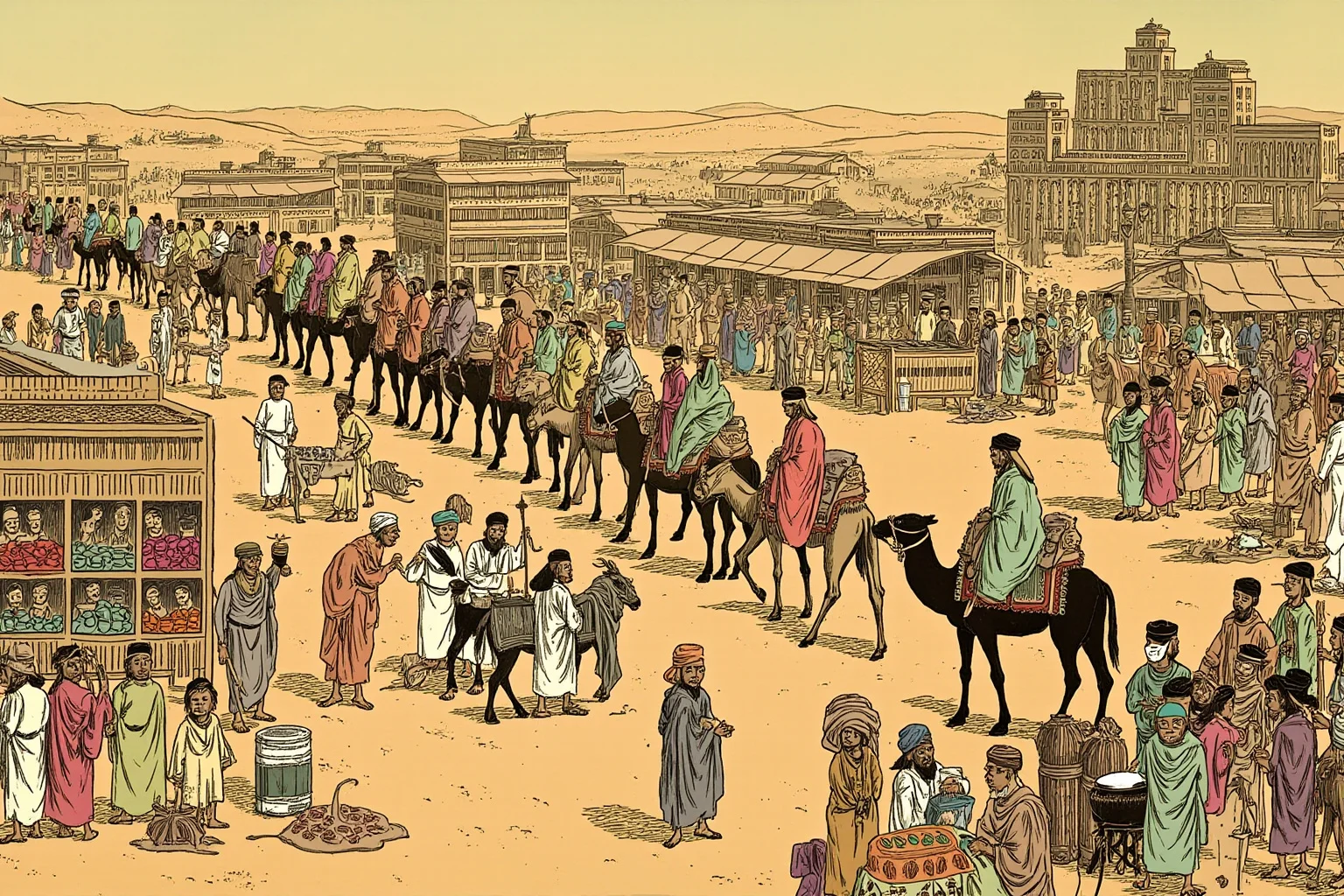
The network we now call the Silk Road began taking shape during China’s Han Dynasty, around the second century BCE, linking Chinese silk producers to markets across Central Asia, Persia, and eventually Rome. Along these routes, bustling bazaars sprang up in cities like Samarkand and Kashgar.
These bazaars weren’t just about silk. Spices, precious stones, glassware, paper, and ideas about religion, art, and science traveled alongside the goods, making the Silk Road as much a cultural exchange as an economic one.
It’s worth noting that many of the grandest Silk Road bazaar buildings we picture today were built or expanded in later medieval centuries, even though the trade routes themselves have ancient roots.
7. Persian Markets and the Origins of the Word “Bazaar”
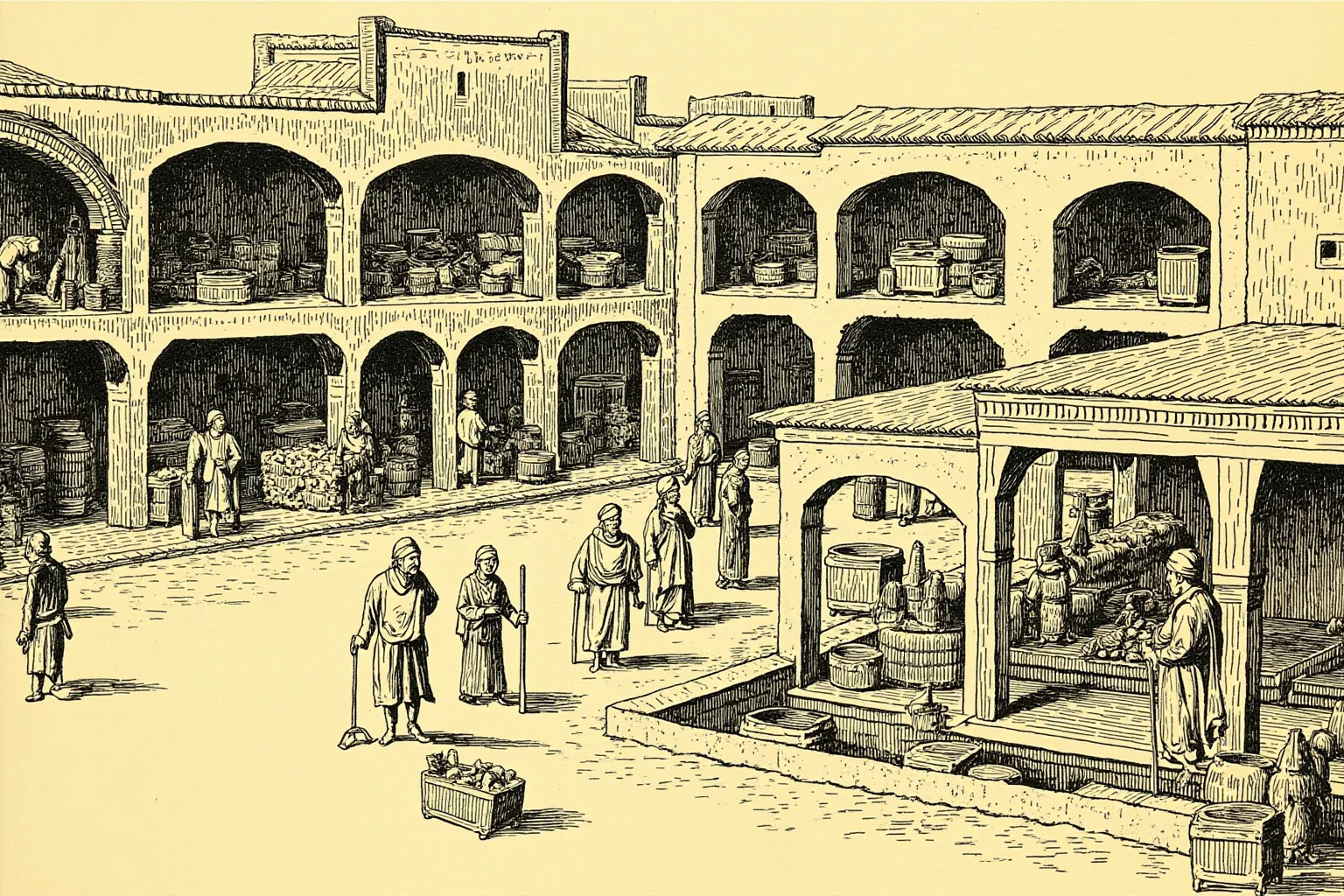
The word bazaar itself comes from the Persian “bāzār,” and organized marketplaces were a major feature of Achaemenid Persia from around the sixth century BCE onward. Persian royal roads, built to move messengers and armies quickly, also helped merchants move goods between provincial markets.
While some of the most famous covered bazaars, like those in Istanbul or Tehran, took their current form in later Ottoman or Islamic periods, they carry forward a marketplace tradition that stretches back to ancient Persian trading customs.
8. Markets and Ports of the Ancient Indian Subcontinent
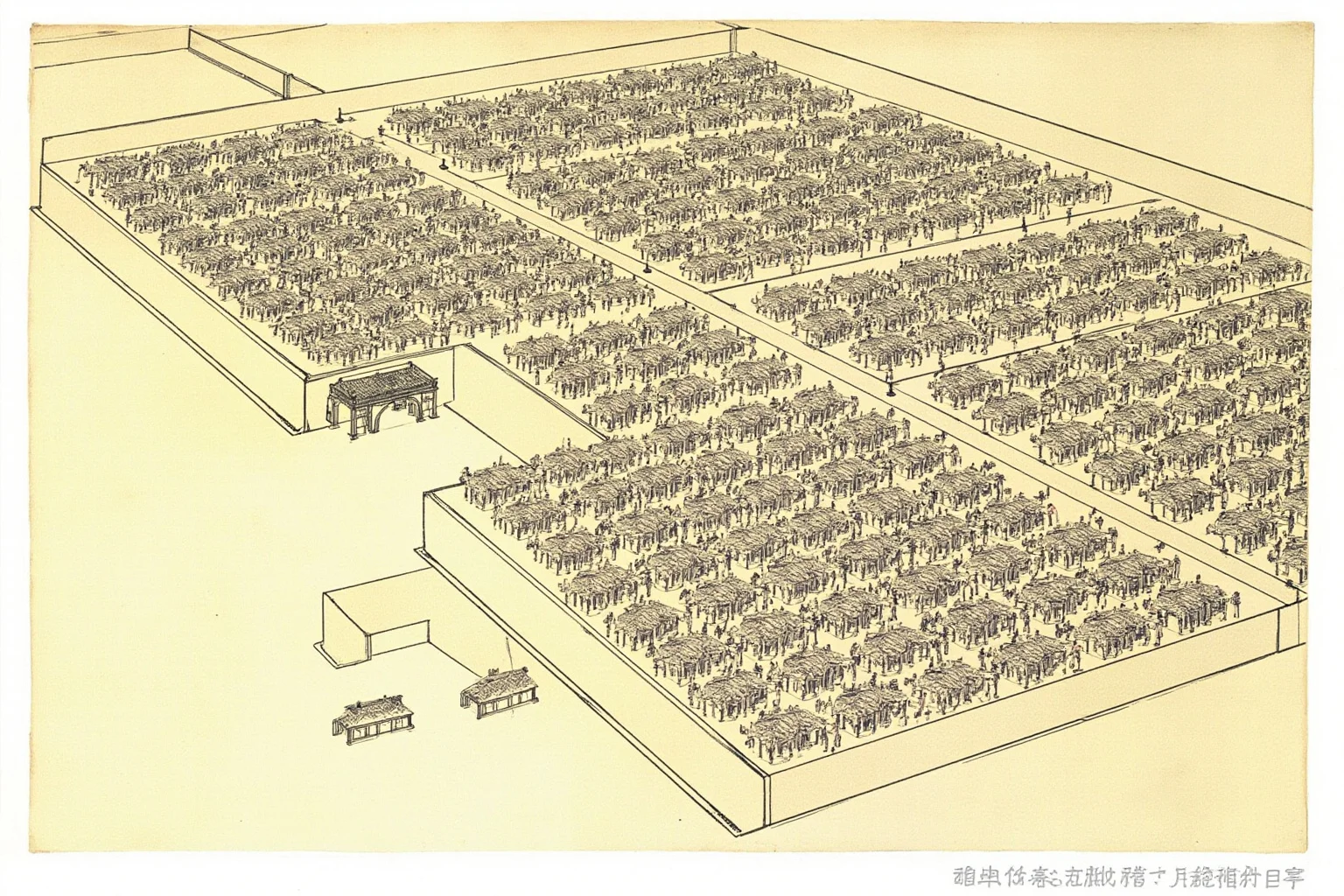
Archaeological evidence from Indus Valley cities like Mohenjo-daro and Harappa, dating back over four thousand years, includes standardized weights and trade seals, suggesting organized commercial activity even before written records survive. This points to some of the earliest structured ancient trading systems in South Asia.
Later, ports like Muziris on India’s southwest coast became crucial hubs connecting Indian pepper, gems, and textiles with Roman markets, as described in Roman-era trade documents such as the Periplus of the Erythraean Sea.
9. China’s State-Regulated Marketplaces
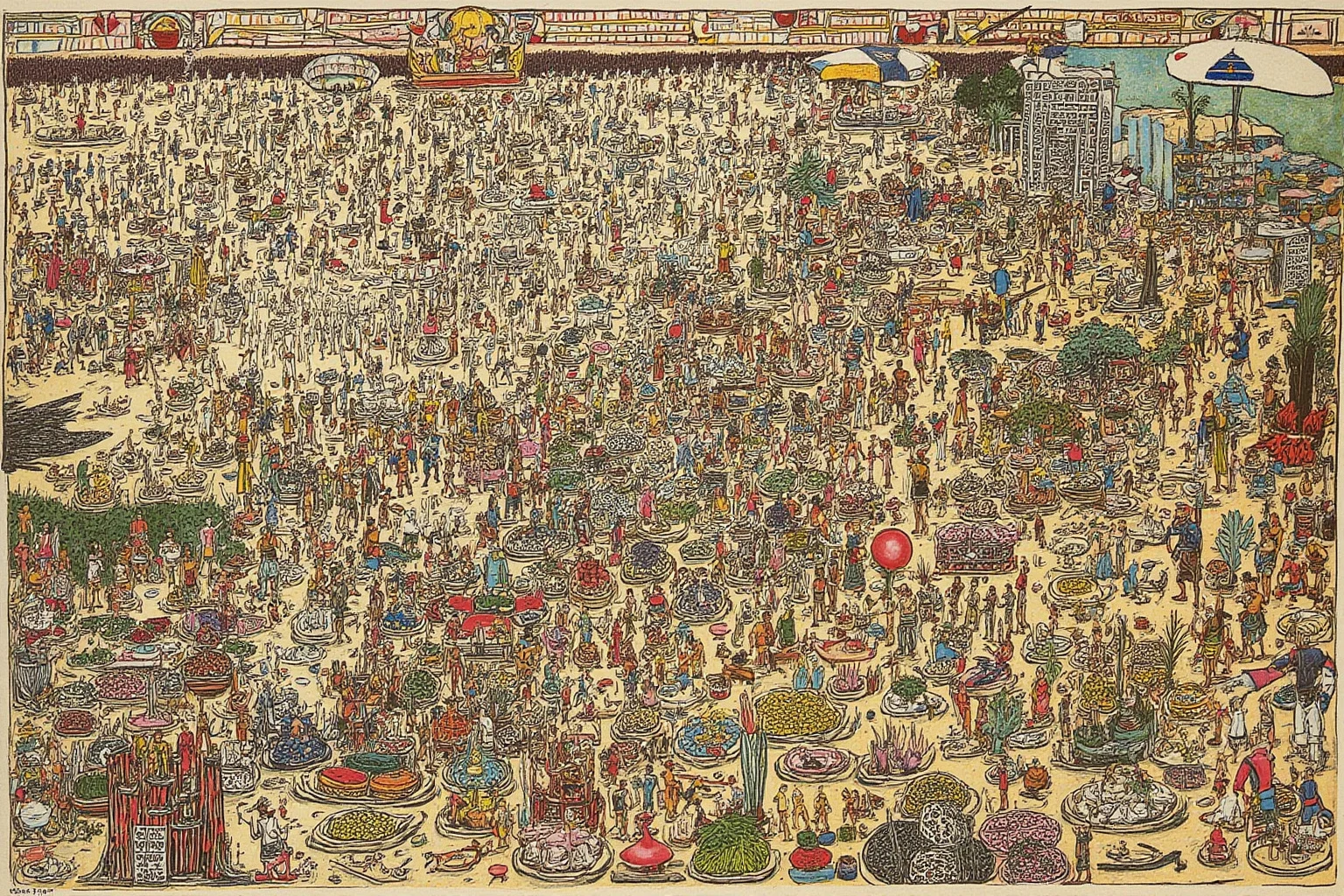
During the Han Dynasty, Chinese cities organized commerce into designated market wards, often walled off from residential areas and closed at set hours. Government officials supervised these markets closely, setting rules on pricing and even taxing certain goods.
This level of state involvement contrasts with the more loosely regulated agora of ancient Greece, showing how differently ancient economies balanced government control against free trading.
10. Tlatelolco: The Aztec Market That Astonished Europeans
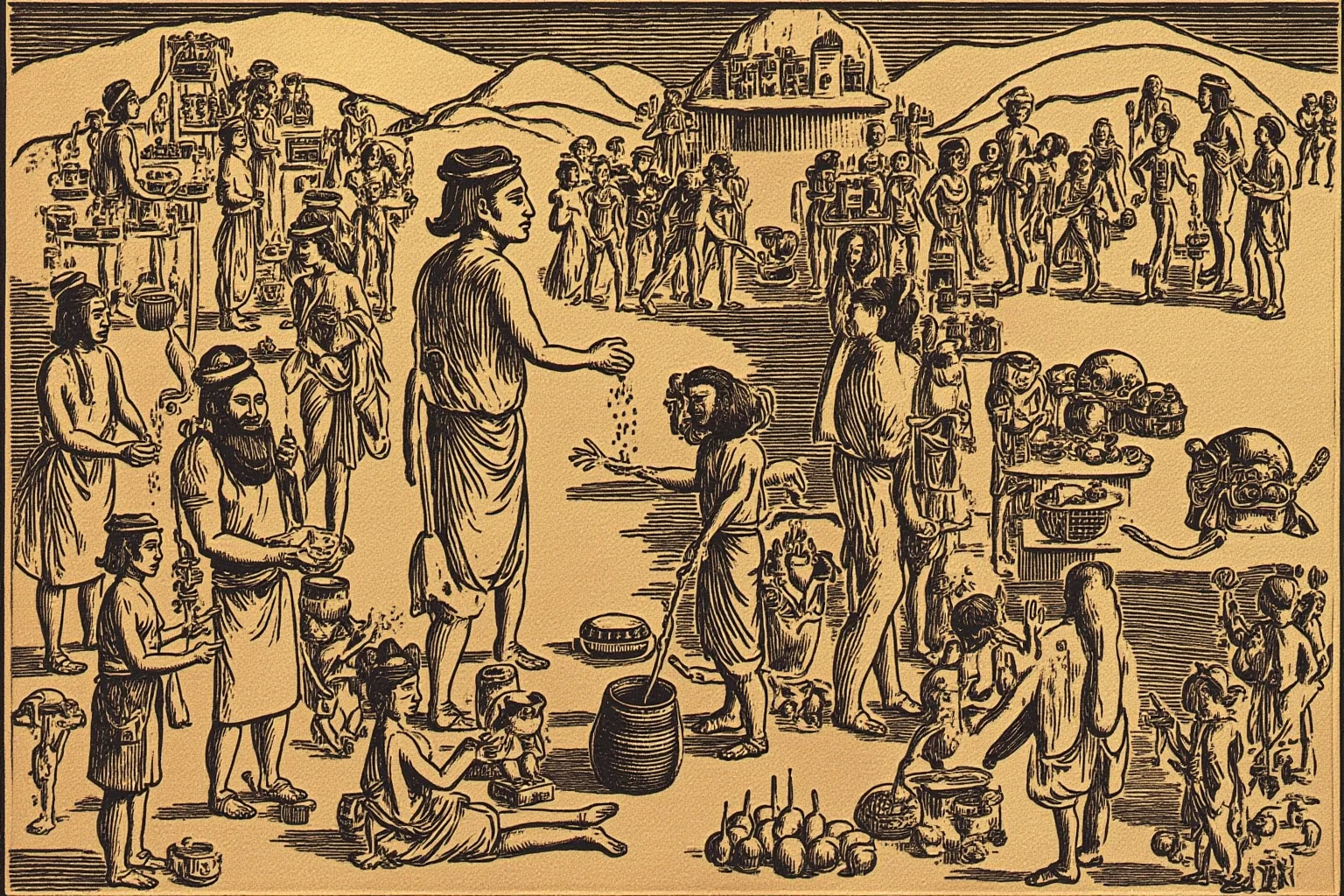
When Spanish conquistador Bernal Díaz del Castillo described the market at Tlatelolco in the early sixteenth century, he claimed it drew tens of thousands of visitors daily and sold everything from gold and feathers to food and slaves. While later accounts should always be read with some caution given the era’s biases, archaeological and historical evidence does confirm Tlatelolco was an enormous and highly organized marketplace.
The Aztecs used cacao beans as a form of currency alongside barter, and specialized officials patrolled the market to settle disputes and enforce fair pricing, echoing the regulatory role of Greek agoranomoi half a world away.
11. Maya Marketplaces: A Myth Worth Busting
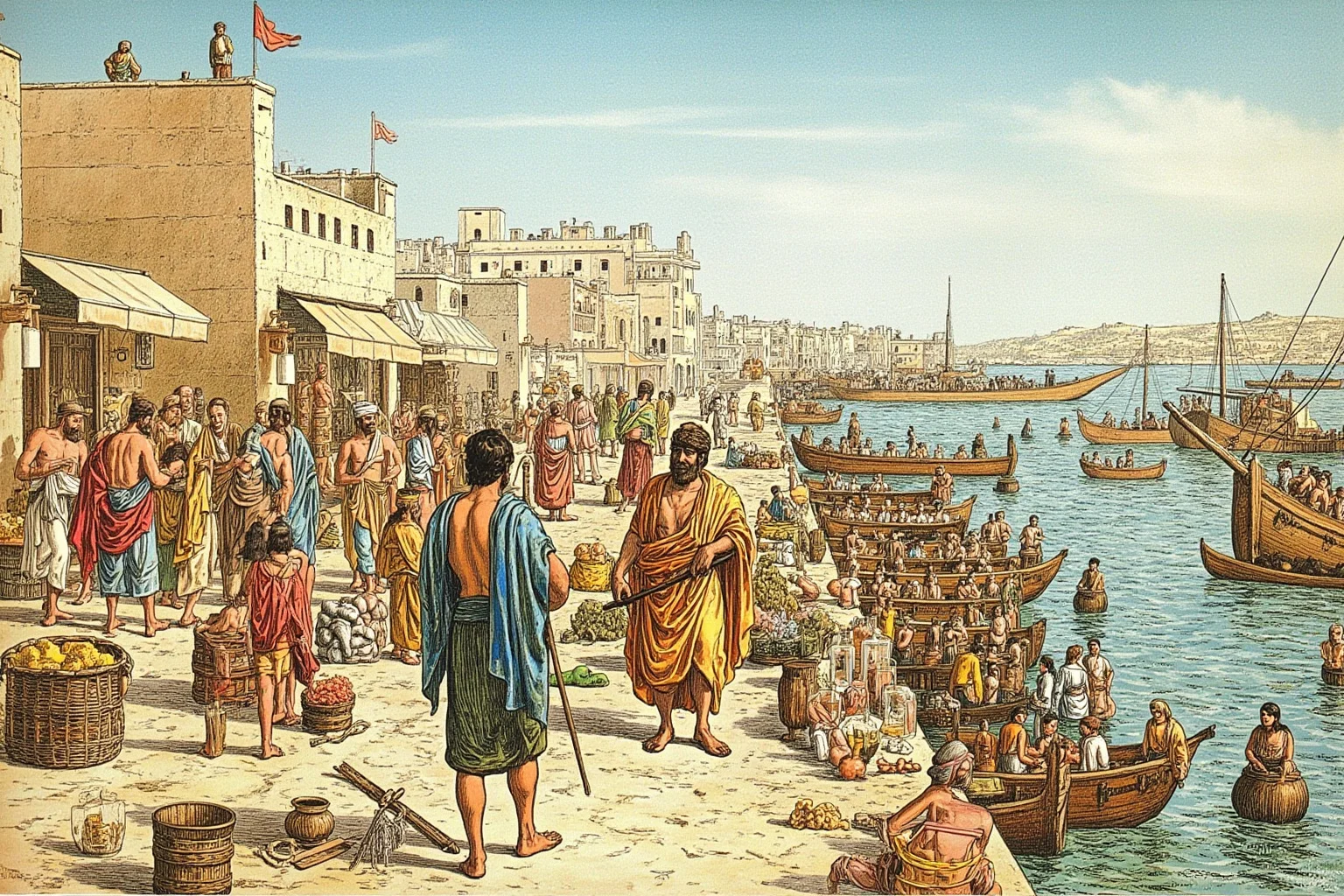
For decades, many historians assumed the ancient Maya lacked formal marketplaces, relying instead on tribute and elite-controlled redistribution. More recent archaeological work at sites like Chunchucmil in Mexico has challenged that view, uncovering evidence of organized marketplace areas with goods like obsidian and ceramics.
This is a great example of how ancient market history keeps evolving. What was once presented as settled fact has been revised as archaeologists find new evidence on the ground.
12. Carthage and the Western Mediterranean Trade Web
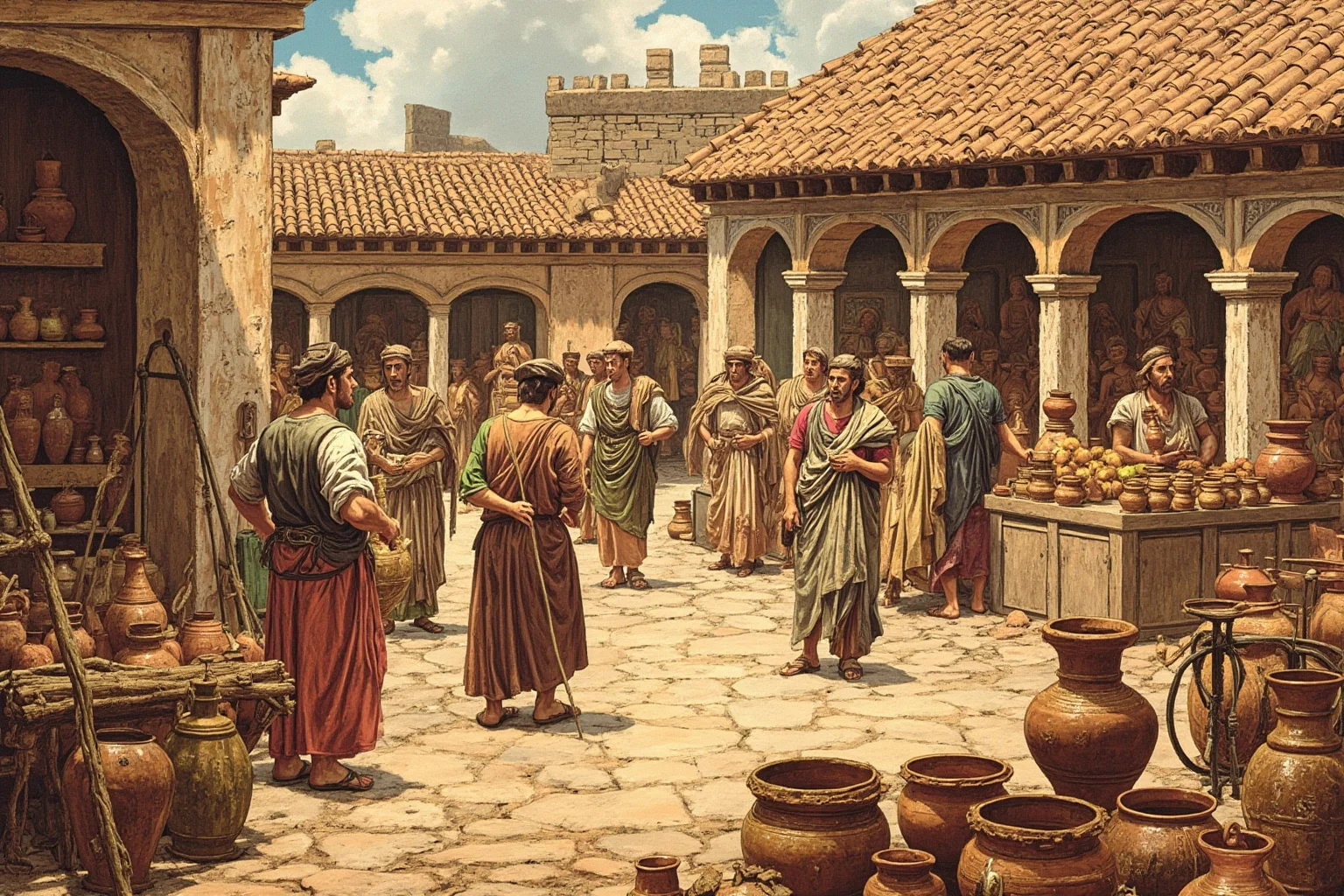
Built originally as a Phoenician colony, Carthage grew into a trading superpower that dominated the western Mediterranean before its wars with Rome. Carthaginian merchants reportedly traded for tin as far away as Britain, feeding demand for bronze production across the ancient world.
Carthage’s markets combined goods from Africa, Iberia, and the wider Mediterranean, making it one of antiquity’s great commercial crossroads until its destruction by Rome in 146 BCE.
13. Etruscan Markets Before Rome’s Rise
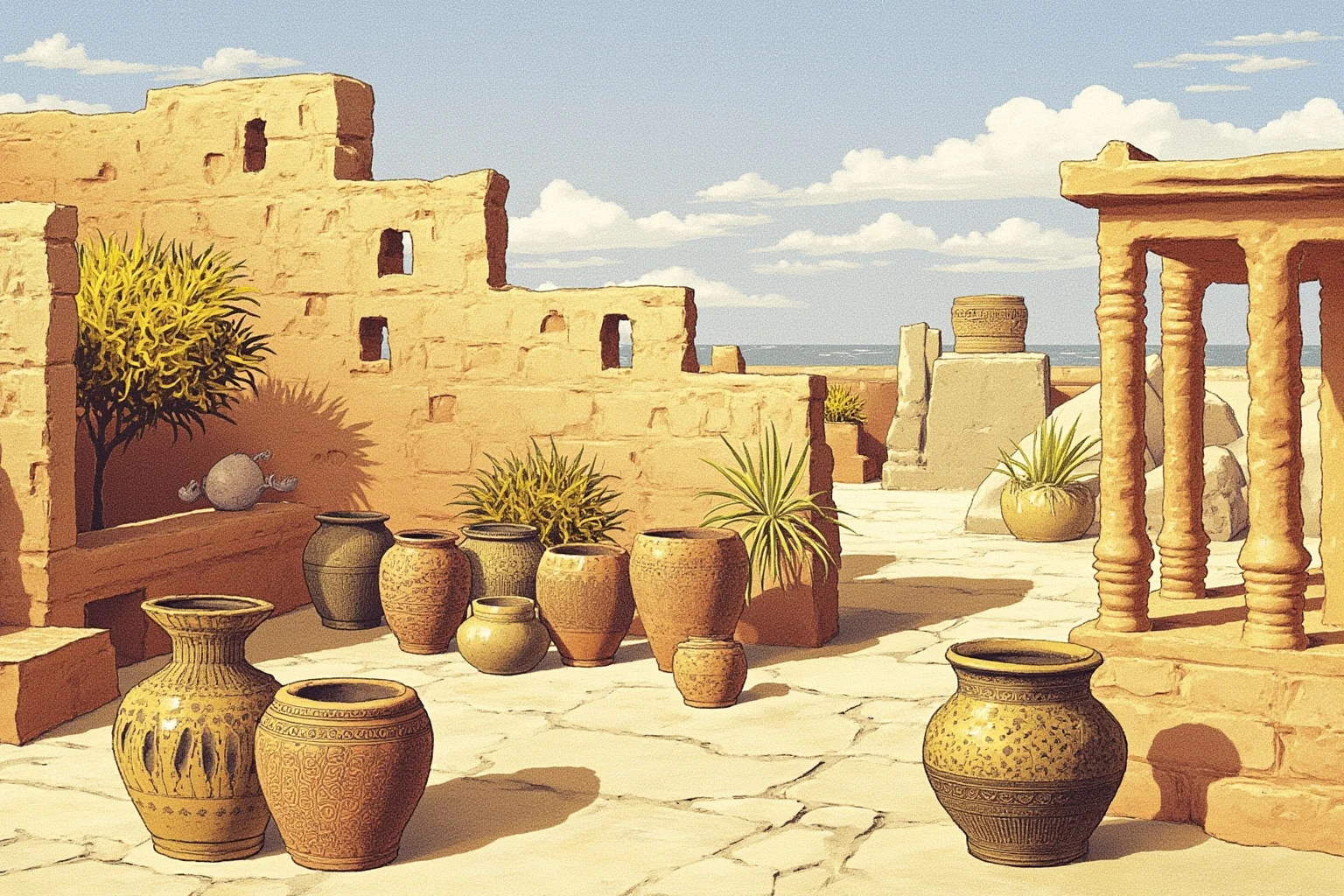
Before Rome became the dominant power in Italy, the Etruscan civilization ran a sophisticated network of city-states with active trade in metalwork, pottery, and wine. Etruscan markets connected inland Italy to Greek and Phoenician traders arriving by sea.
Many early Roman commercial customs, including aspects of coinage and market regulation, were shaped by this earlier Etruscan trading culture, even though Rome would eventually eclipse and absorb its neighbor.
14. Minoan and Mycenaean Trade Hubs
On Bronze Age Crete, the Minoan civilization ran a trade-focused economy that connected the Aegean with Egypt and the Near East, exporting pottery, olive oil, and crafted goods. Palace complexes like Knossos likely served as centers of redistribution rather than open public markets in the later Greek sense.
The Mycenaeans who followed left behind Linear B tablets recording detailed inventories of goods and labor, giving historians a rare window into a highly organized, palace-controlled ancient economy centuries before the classical Greek agora emerged.
15. Petra and the Nabataean Incense Trade
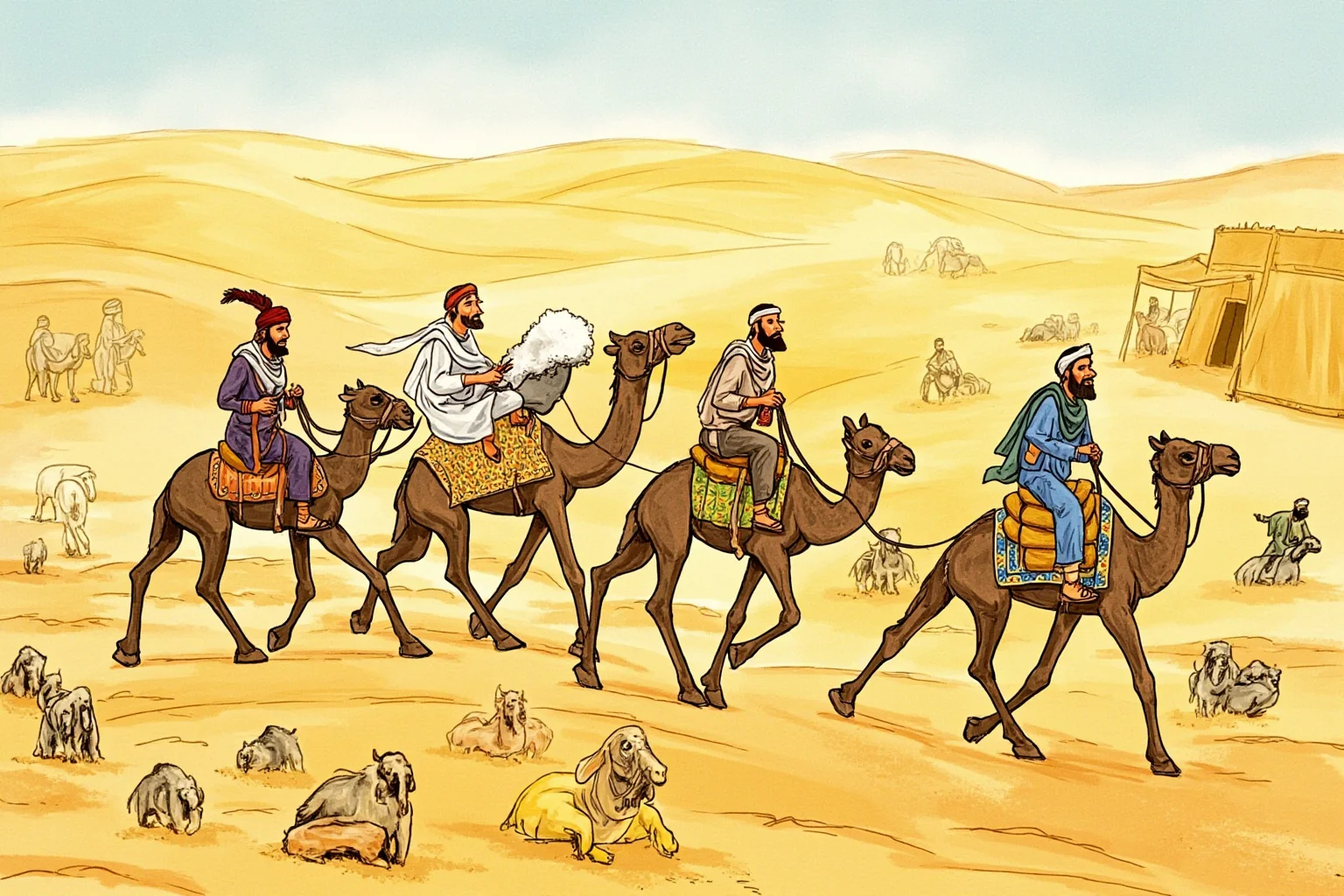
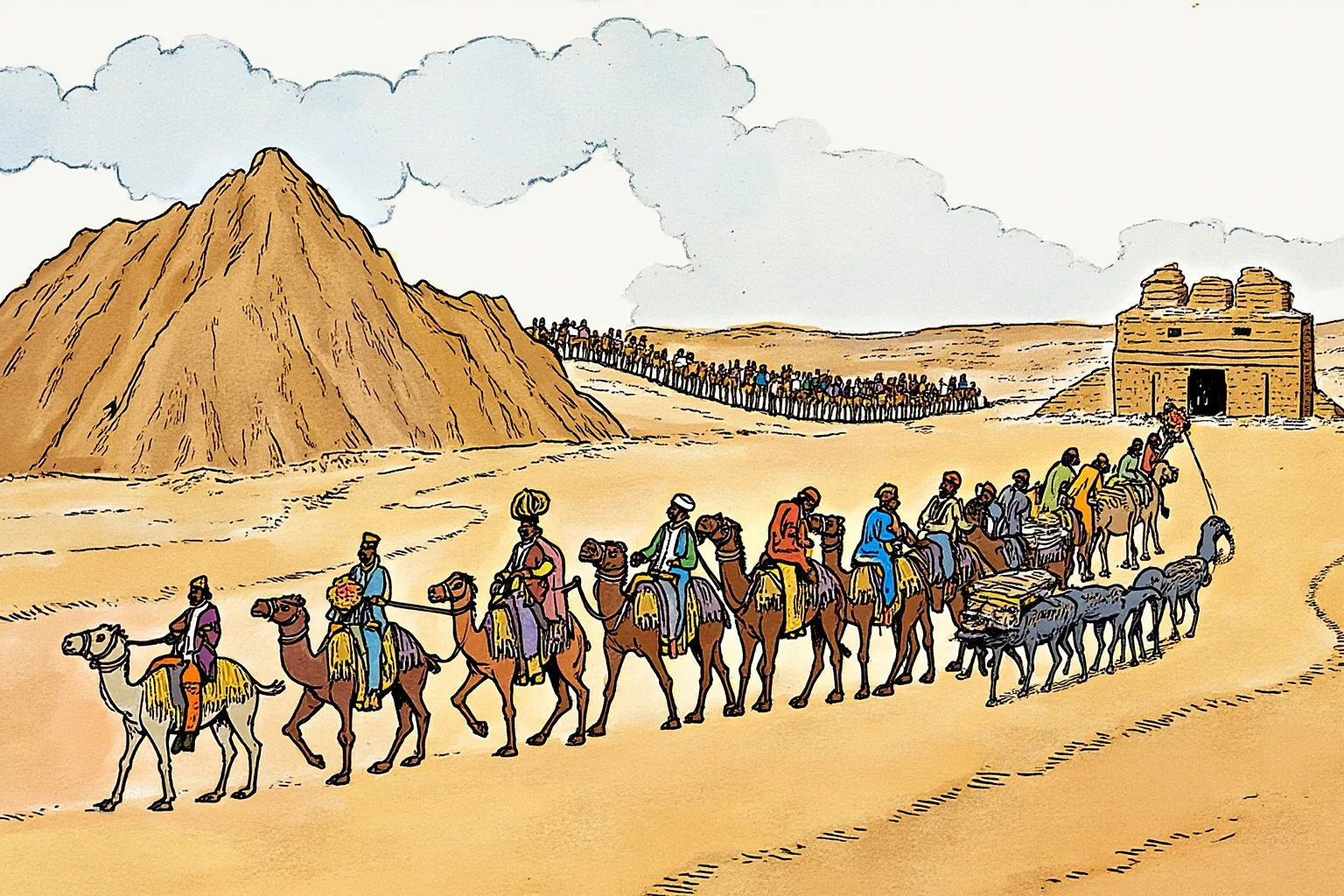
The Nabataeans built the stunning city of Petra, carved into desert cliffs in modern Jordan, largely on the wealth generated by controlling caravan routes carrying frankincense and myrrh from southern Arabia to Mediterranean markets. Petra functioned as a critical waypoint bazaar where goods changed hands, taxes were collected, and caravans rested.
This incense trade shows how valuable a single category of goods could be in shaping an entire ancient economy, turning a desert city into one of the ancient world’s wealthiest trading centers.
16. Trans-Saharan Trade and West African Markets
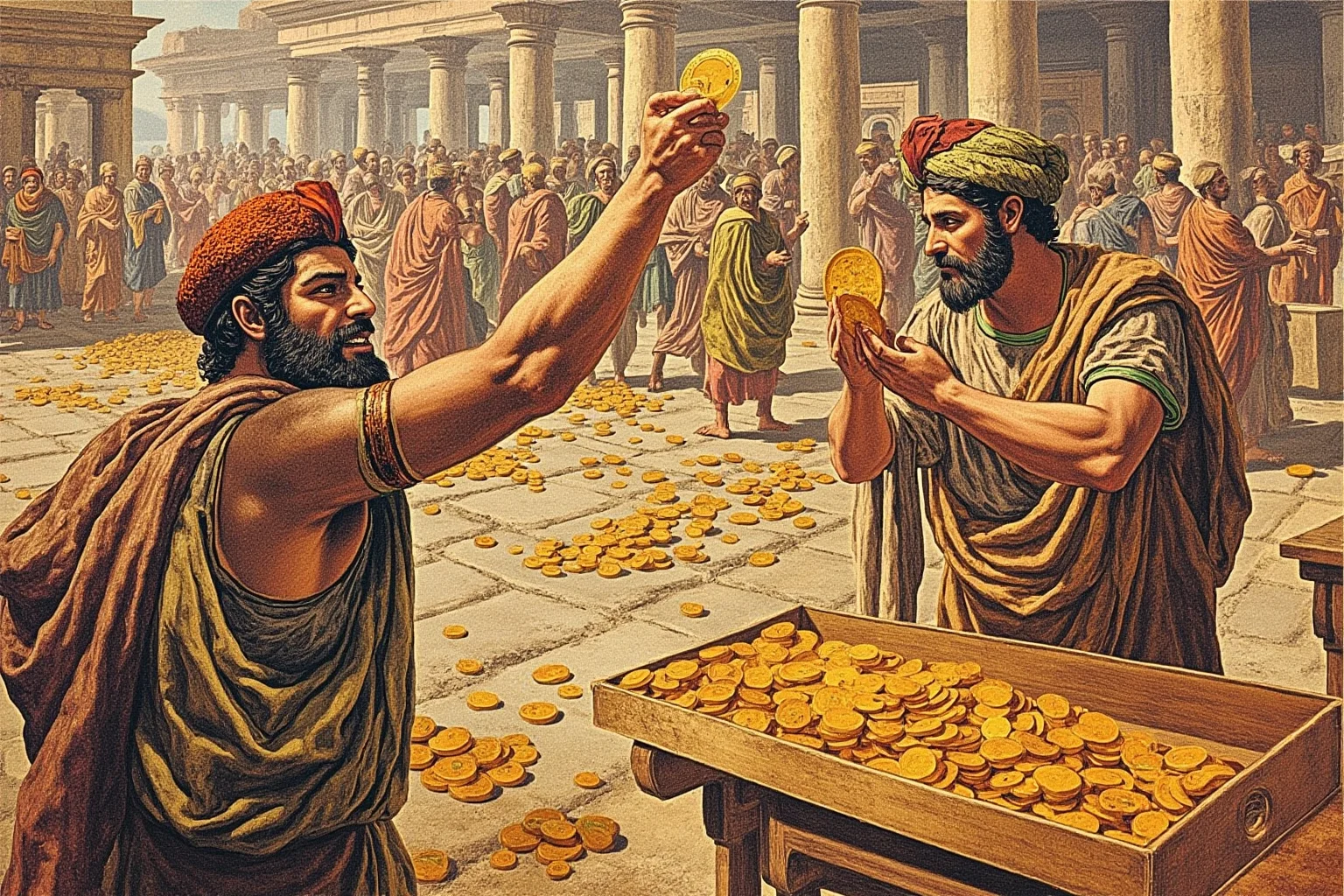
Trade across the Sahara has ancient roots, with Berber traders using early caravan routes well before the camel’s wider adoption made journeys more efficient, likely by around the third century CE. Gold, salt, and later goods moved along these networks, feeding markets on both sides of the desert.
While the most famous trans-Saharan trading cities, like Timbuktu, reached their peak in the medieval period rather than antiquity, they built on trading traditions that stretch back to earlier African commercial networks.
17. Lydia and the Invention of Coinage
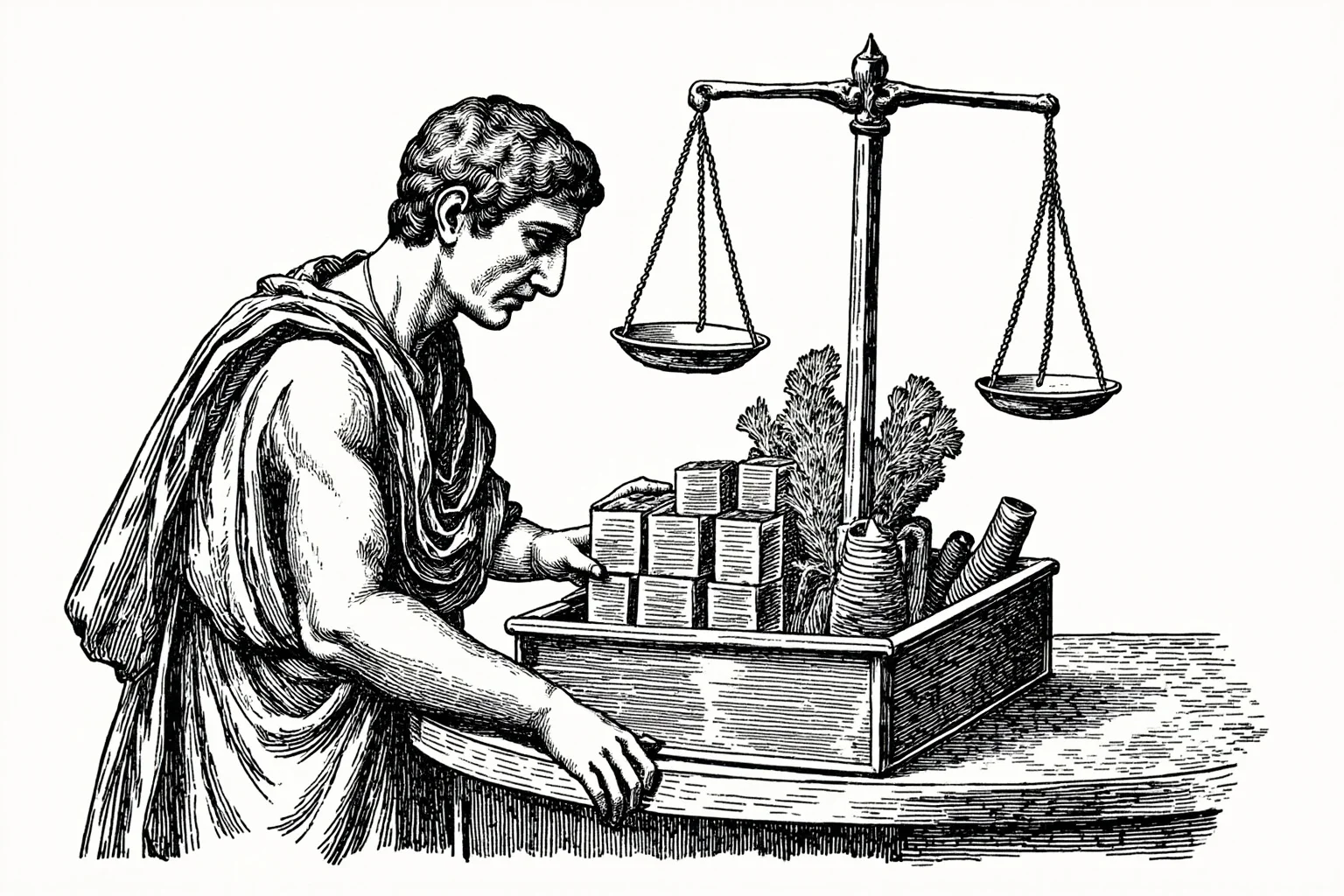
One of the biggest turning points for ancient trading happened in the kingdom of Lydia, in what’s now western Turkey, where the earliest known coins were minted from electrum around the seventh century BCE. This innovation, later refined by King Croesus, made market transactions faster and more reliable than pure barter.
Coinage spread quickly to Greek city-states and beyond, transforming how ancient markets operated and making it far easier to compare prices, pay taxes, and accumulate wealth.
18. Agoranomoi and the First Consumer Protection Laws
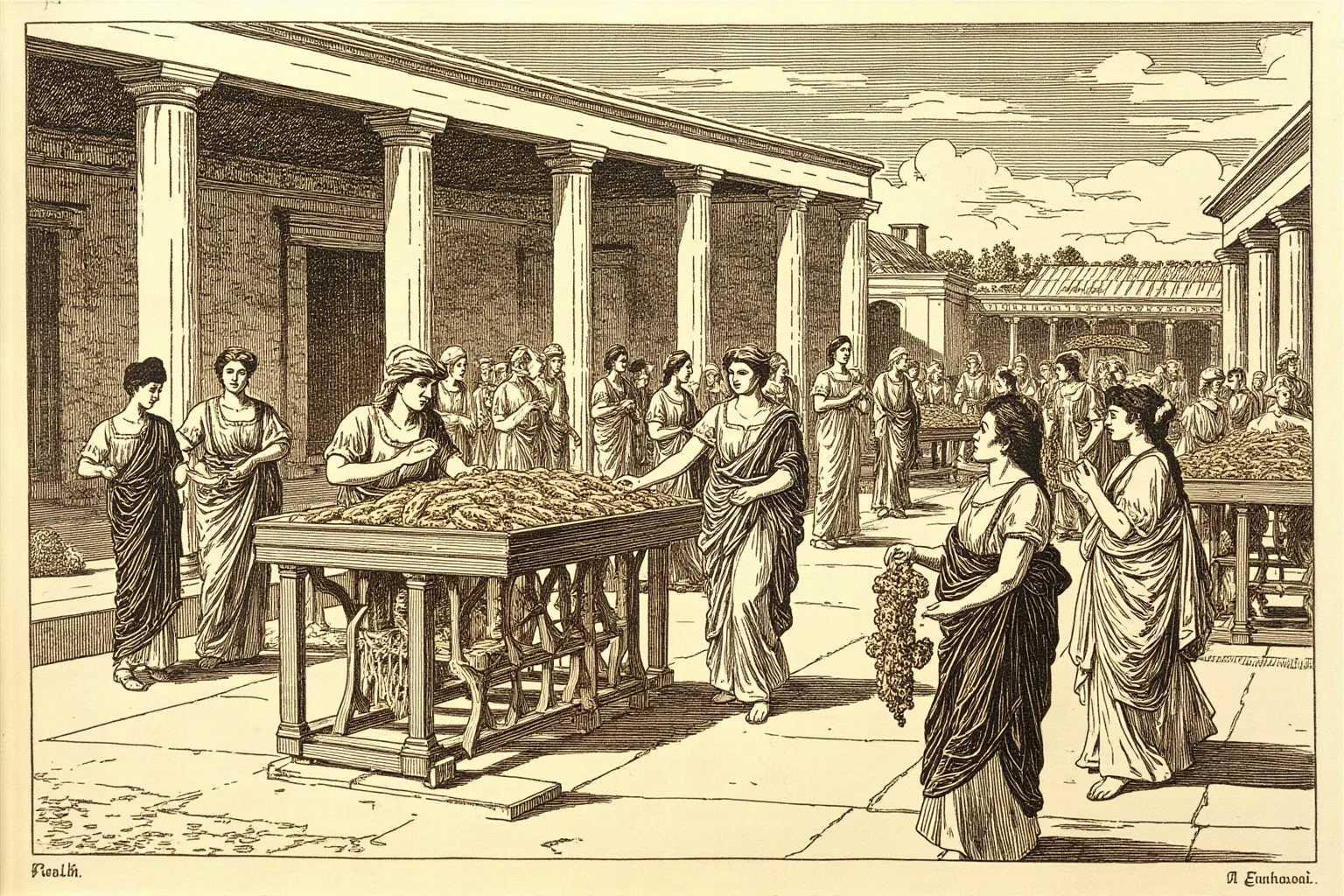
Greek city-states appointed officials known as agoranomoi to oversee their markets, checking that scales were accurate and goods weren’t spoiled or misrepresented. This system offers a useful myth-busting reminder that ancient markets weren’t a chaotic free-for-all.
Roman aediles performed a similar role, and evidence from Mesopotamian law codes shows comparable concerns about honest dealing stretching back even further. Fair trading standards, it turns out, are far from a modern invention.
19. Women, Slaves, and Labor in Ancient Marketplaces
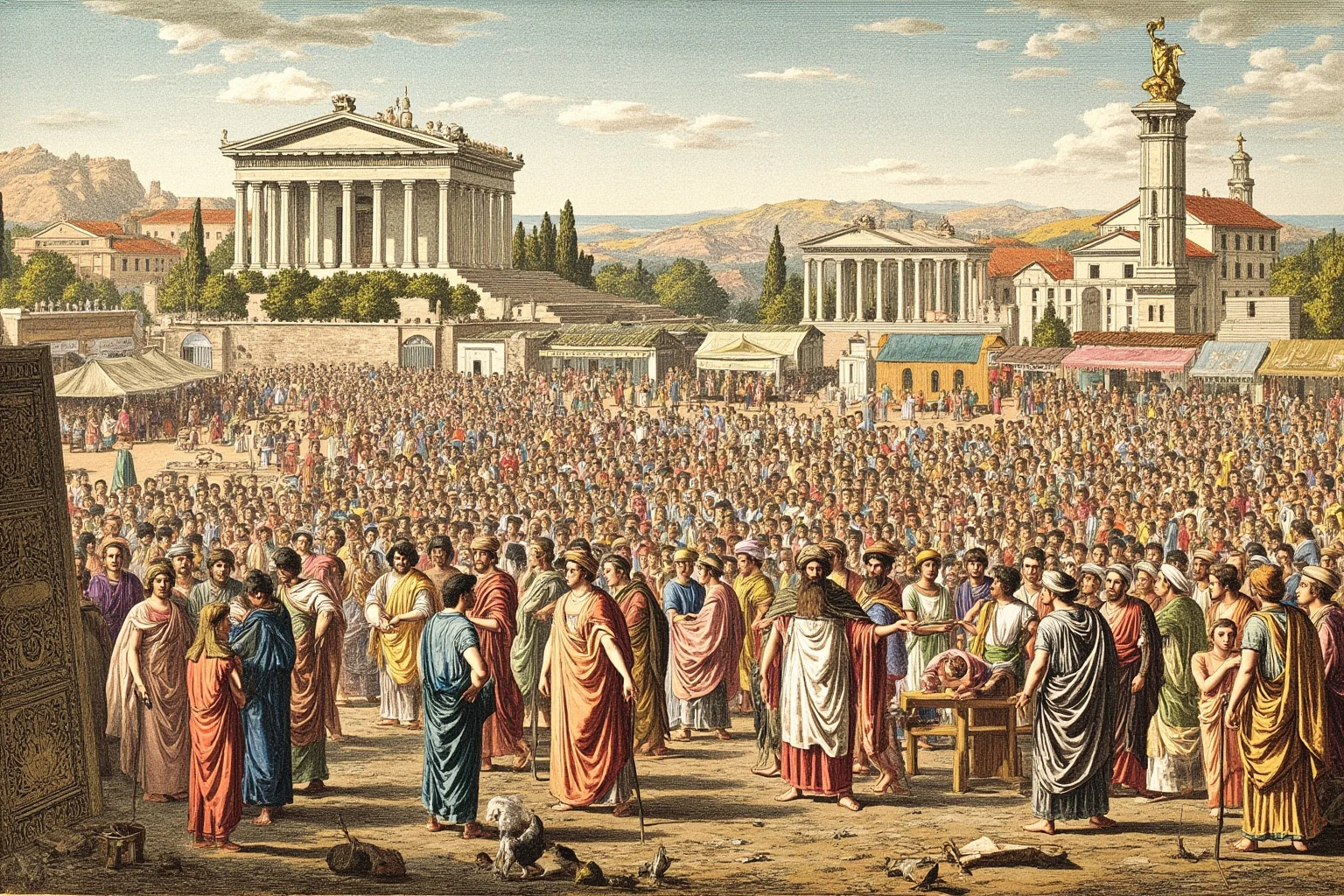
Ancient marketplaces depended on a wide range of workers, and women were often visible as sellers of goods like bread, garlands, and fish in Greek comedic plays and legal texts. This doesn’t mean marketplaces were free of the era’s steep social inequalities.
Slave markets were also a grim but well-documented feature of ancient trading, with the island of Delos becoming notorious in the Hellenistic and Roman periods as a major hub for the slave trade. Any honest account of ancient market history has to include this uncomfortable reality alongside the more colorful stories of spice and silk.
20. Religious Festivals and Fixed Market Days
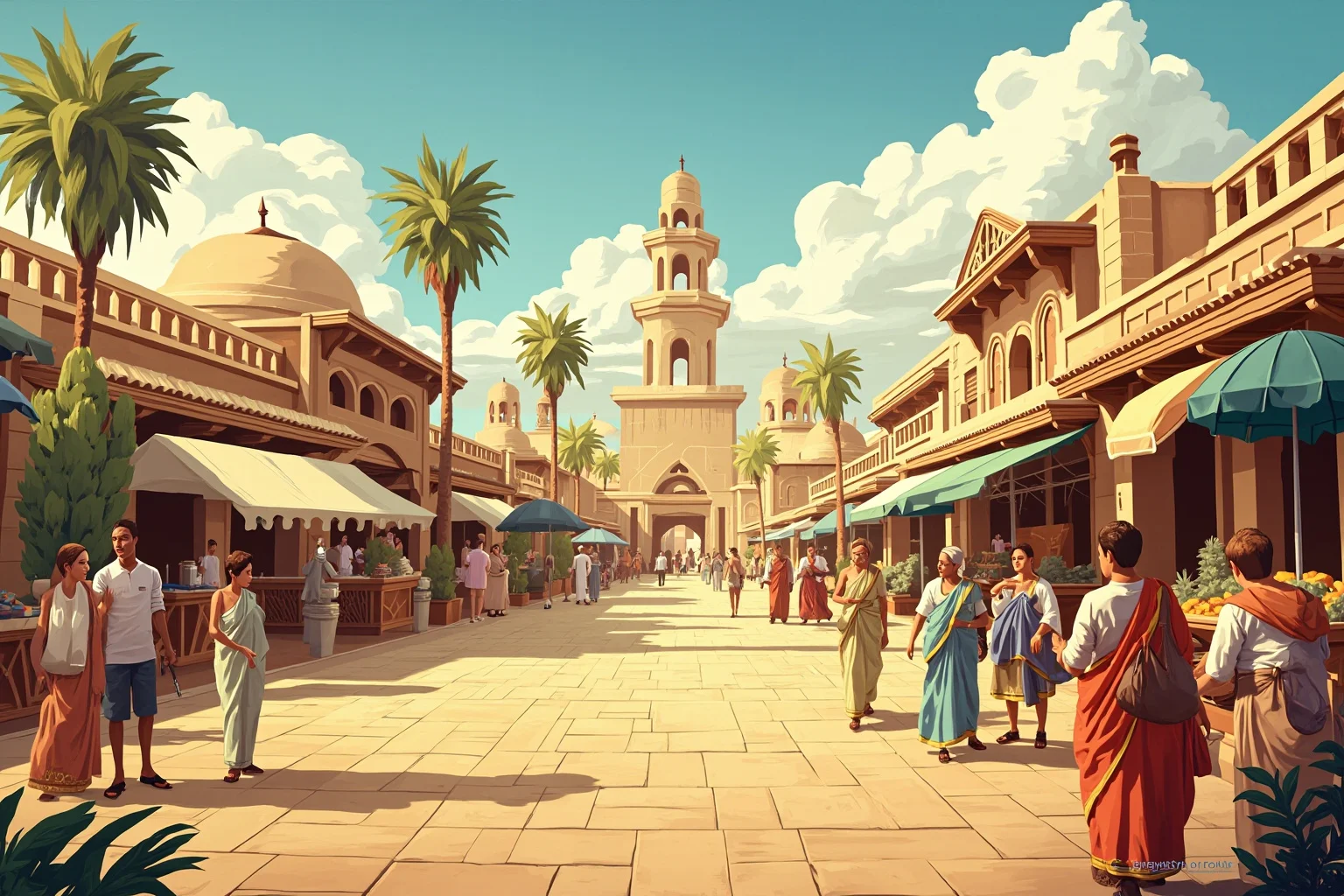
Many ancient markets didn’t run every single day but instead followed a calendar tied to religious festivals or agricultural cycles. In Athens, certain market activities picked up around festivals like the Panathenaea, when crowds gathered for both worship and shopping.
This rhythm shows how deeply ancient trading was woven into religious and civic life, rather than existing as a separate, purely economic sphere the way we might think of commerce today.
21. The Lasting Legacy of Ancient Markets and Bazaars
Modern farmers markets, shopping arcades, and even online marketplaces owe a conceptual debt to these ancient systems of exchange. The idea of a regulated public space where buyers and sellers meet, prices are negotiated, and officials ensure fair dealing, traces back thousands of years across multiple, often unconnected civilizations.
What’s striking is how independently these ideas developed. Athens, Tenochtitlan, and Han Dynasty China never traded directly with each other, yet all arrived at surprisingly similar solutions for organizing commerce, regulating quality, and turning marketplaces into social hubs.
The Marketplace as Civilization’s Common Thread
Looking across these ancient markets and bazaars, a pattern emerges that says something bigger about human nature. Wherever people settled and produced a surplus, they built spaces to trade it, and wherever they traded, they eventually built rules to keep that trading fair.
Ancient trading wasn’t a footnote to history; it was often the very reason cities grew, roads were built, and distant cultures came into contact at all. The bazaar and the agora, in their many local forms, were where ancient economies actually happened, day after ordinary day.
Frequently Asked Questions
What were markets in ancient Greece really like?
Markets in ancient Greece centered on the agora, an open public square that served as a marketplace, meeting place, and civic center all at once. Vendors sold food, pottery, and crafted goods, while officials called agoranomoi checked weights and measures to keep trading honest.
What is considered the oldest known ancient market?
It's hard to name a single 'first' market, but some of the earliest written evidence of organized trade comes from Sumerian Mesopotamia, where clay tablets from cities like Uruk record transactions dating back to the late fourth millennium BCE.
What’s the difference between a market and a bazaar?
The terms overlap heavily, but 'bazaar' specifically derives from the Persian word 'bāzār' and often refers to a covered or dense network of market stalls, common historically in Persian, Central Asian, and later Ottoman trading cities. 'Market' is a broader English term that can describe any organized space for buying and selling.
Did people in ancient markets use money?
It depended on the time and place. Early ancient trading often relied on barter or weighed metals, but coinage, first minted in Lydia around the seventh century BCE, spread widely and made market transactions much simpler across Greece, Rome, and beyond.
What kinds of goods were sold in ancient marketplaces?
Ancient markets typically sold food staples like grain, oil, wine, and fish, alongside pottery, textiles, metalwork, and livestock. Larger trading hubs also dealt in luxury goods such as silk, incense, dyes, and precious stones, and unfortunately in some regions, enslaved people as well.

Alex Warren
Related Articles





