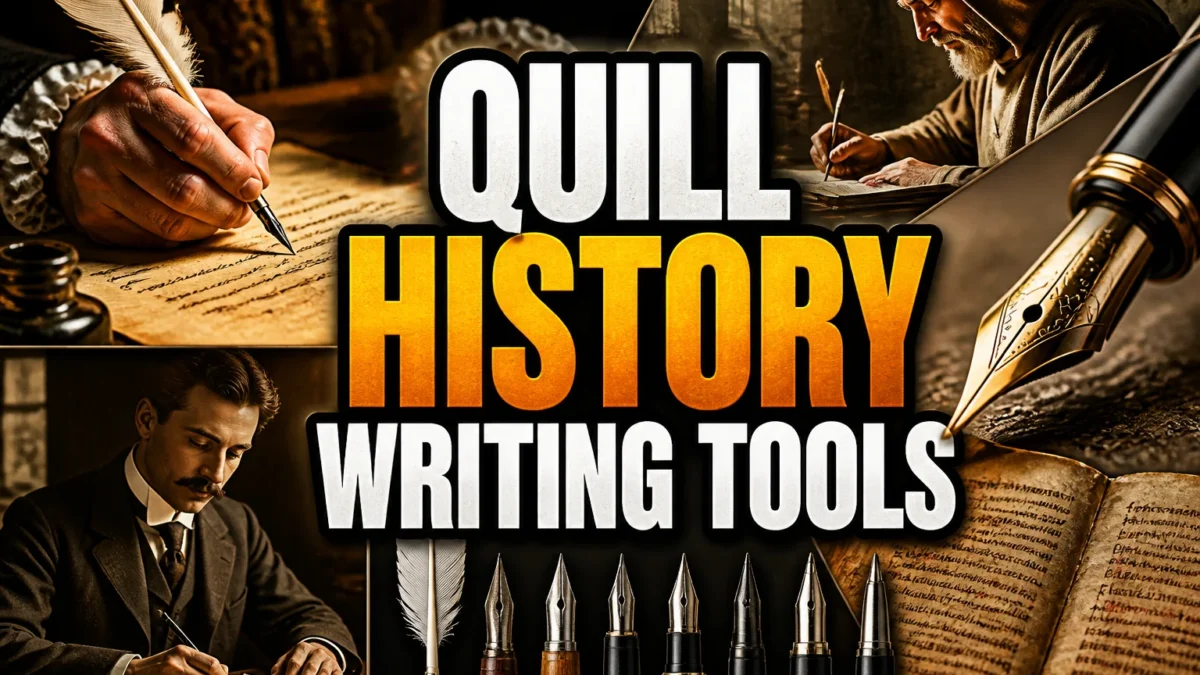
Most histories of writing focus on alphabets, manuscripts, and famous authors. But the physical tools that made those documents possible are just as revealing. A quill pen, a clay tablet stylus, and a metal nib all show how people worked, traveled, and thought.
The phrase 'the lost tools of writing' sounds like a mystery, but it describes something real. Many old writing implements disappeared from daily use as technology changed. This guide follows the history of writing instruments from ancient writing tools to the ballpoint pen and beyond.
TL;DR: The history of writing instruments runs from clay styluses and reed pens through the quill pen to fountain, ballpoint, and digital tools, and many so-called lost tools of writing still survive in changed forms.
Why Writing Utensils Matter More Than the Alphabet
The history of writing utensils is easy to overlook because the results survive more often than the tools. A clay tablet can be dated and displayed, but the reed stylus that marked it was often discarded. That imbalance gives us a skewed picture of daily life.
Early scribes knew that the right tool changed speed, legibility, and even the shape of letters. A chisel creates different forms than a brush, and a quill behaves differently from a steel nib. Studying old writing implements is therefore a way to study practical technology, not just handwriting.
Ancient Writing Tools: Clay, Reed, and Chisel
The oldest writing systems emerged in Mesopotamia and Egypt, where ancient writing tools were shaped by local materials. Mesopotamian scribes pressed a reed stylus into wet clay to create cuneiform signs. The stylus often had a triangular tip, producing wedge-shaped marks.
Egyptian scribes wrote on papyrus and stone with tools ranging from chisels to reed brushes. For ink-based writing, they used a reed pen cut to hold a small reservoir of pigment. These reeds are among the earliest examples of a true pen.
In East Asia, brush writing developed alongside ink and paper, while Roman schoolboys practiced on wax tablets with a metal or bone stylus. The flat end could erase mistakes, and the tablet could be reused. These tools were not primitive; they were highly adapted to their materials and needs.
Reed Pens and the First Ink Writing
Reed pens bridge the gap between chisels and quills. A reed pen is made from a hollow plant stem, cut at an angle and split to hold ink. They were common in Egypt, Greece, Rome, and the Islamic world.
Because reeds are rigid, they produce sharp, clean strokes but wear down quickly. Scribes often kept several reed pens ready and recut them as they became blunt. The Latin word calamus could mean reed or pen, showing how closely material and tool were linked.
A Short History of the Quill Pen
Quill history begins in the early medieval period, when feather pens became more common in Europe. The earliest clear references to quill pens often appear in seventh-century Christian texts, though the transition from reed to feather was gradual. Goose feathers became preferred because they are large, strong, and easy to cut.
By the Middle Ages, the quill was the dominant writing instrument for manuscripts, charters, and letters. Swan feathers were rarer and prized for high-status work. The history of the quill pen is not a single invention with one inventor; it was a practical adaptation of a bird feather's hollow shaft.
Quills remained dominant in Europe for more than a thousand years. They survived because they were cheap, replaceable, and capable of fine calligraphic strokes. Even the rise of printing did not eliminate handwriting for letters, accounts, and legal documents.
How a Feather Becomes a Writing Tool
A fresh feather is not ready to write. Quills were usually cured by hardening the shaft, often through soaking, heating, or resting the feathers in sand. The exact method varied by workshop and region.
The scribe then cut the quill with a small penknife. A precise cut created the nib, and a short slit helped control ink flow. Different feathers created different effects, from fine crow quills to everyday goose quills.
Tools That Supported the Quill
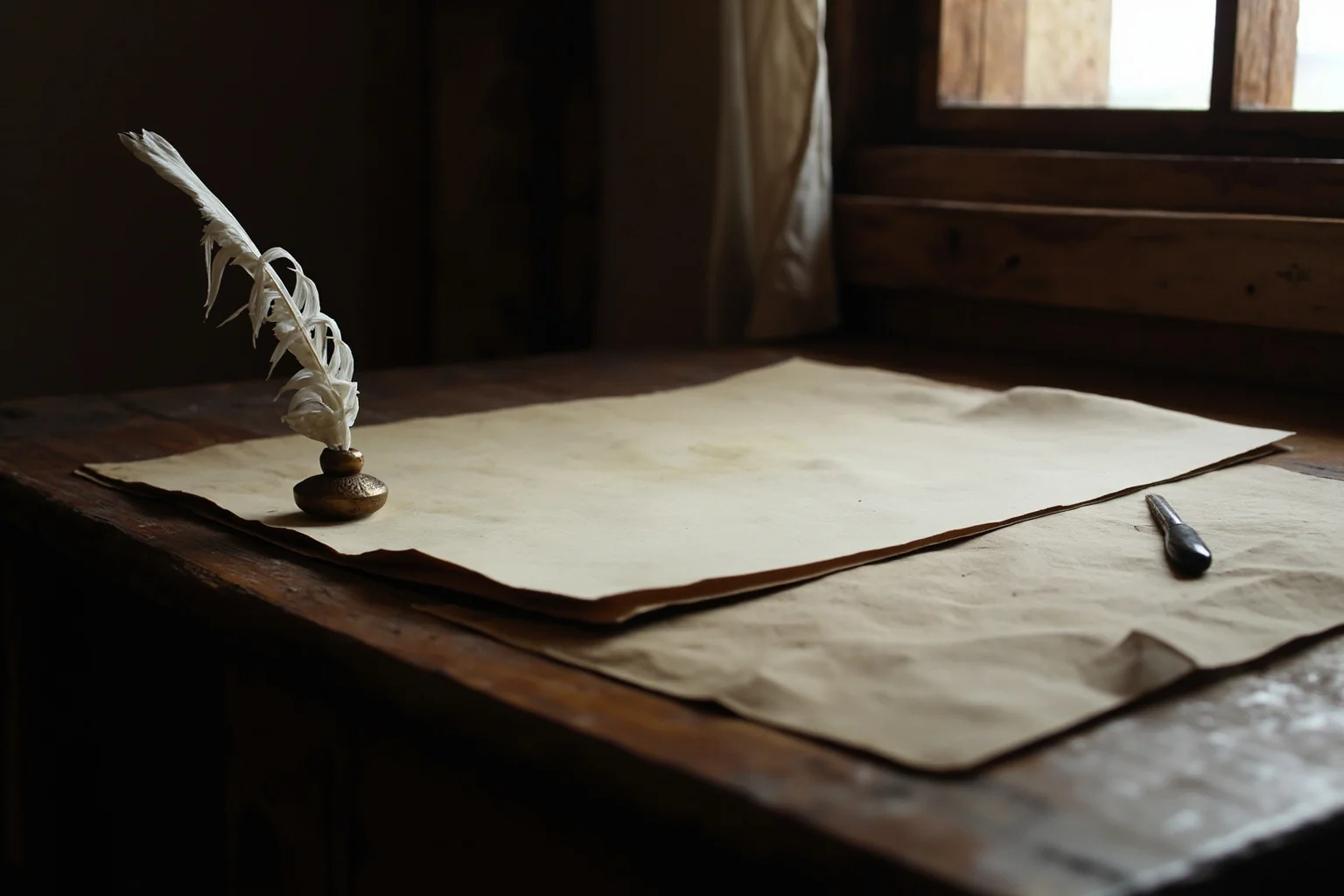
Quills did not work alone. A typical writing desk included a penknife, inkwell, pounce pot or sand shaker, blotting paper, and sometimes a traveling penner case. These supporting objects are now among the most recognizable old writing implements.
Pounce was used to prepare or dust a page, and sand could help dry fresh ink. Because ink was often acidic, scribes recut quills constantly. A dull quill produced ragged strokes and blots.
The Hidden Downsides of the Quill
Quills were flexible and expressive, but they softened quickly, required frequent recutting, and were sensitive to humidity and pressure. A heavy hand could splatter ink or snap the nib. Poorly cut quills produced poor writing.
By the eighteenth century, the quest for a longer-lasting nib intensified. Inventors experimented with metal nibs, but early examples were stiff, corrosive, or expensive. The quill's decline was slow because replacing it required better materials and cheaper manufacturing.
The Metal Nib and the Slow End of the Quill
The steel pen nib became practical in the nineteenth century through mass production. By the 1820s and 1830s, Birmingham and other industrial centers produced cheap, interchangeable nibs. Writers no longer needed to recut a feather every few lines.
Metal nibs were more consistent and longer-lasting than quills. Some calligraphers still prefer quills or reed pens for their flexibility and historical feel. The shift to metal was about convenience and standardization, not an overnight improvement in every type of writing.
Types of Writing Utensils Through History
When we list types of writing utensils, it helps to separate them by material and mechanism. Early tools include the stylus, chisel, reed pen, and brush, while later categories include the quill, dip pen, fountain pen, ballpoint, rollerball, felt-tip, and digital stylus.
Each category solved a different problem. The stylus pressed symbols into soft clay or wax, the brush painted characters, and the dip pen carried ink to paper through a nib. Not every tool was a pen; chalk, graphite, typewriter keys, and touchscreens also belong to the broader history.
The Lost Tools of Writing: What Disappeared and What Survives
The phrase 'the lost tools of writing' does not refer to a single secret set. It usually describes supporting objects that vanished from desks, such as quill knives, pounce pots, sand shakers, wax tablets, and writing slopes.
Some lost tools survive in specialized crafts. Calligraphers still use penknives and quills, and conservators still make ink from traditional recipes. Museums and historical manuals describe them in detail, so they are retired rather than truly lost.
A Quick Word About Quill in Pop Culture
Searches for quill history sometimes intersect with pop culture, especially Peter Quill from Marvel's Guardians of the Galaxy. In the Marvel Cinematic Universe, Peter Quill is from Missouri. The surname Quill is a family name, not a reference to a writing feather.
Still, the character's name shows how deeply the quill is embedded in English. Words and names linked to tools often outlive the tools themselves. That is worth remembering when you see 'quill' in fiction, brand names, or family names.
How to Spot and Appreciate Vintage Writing Tools
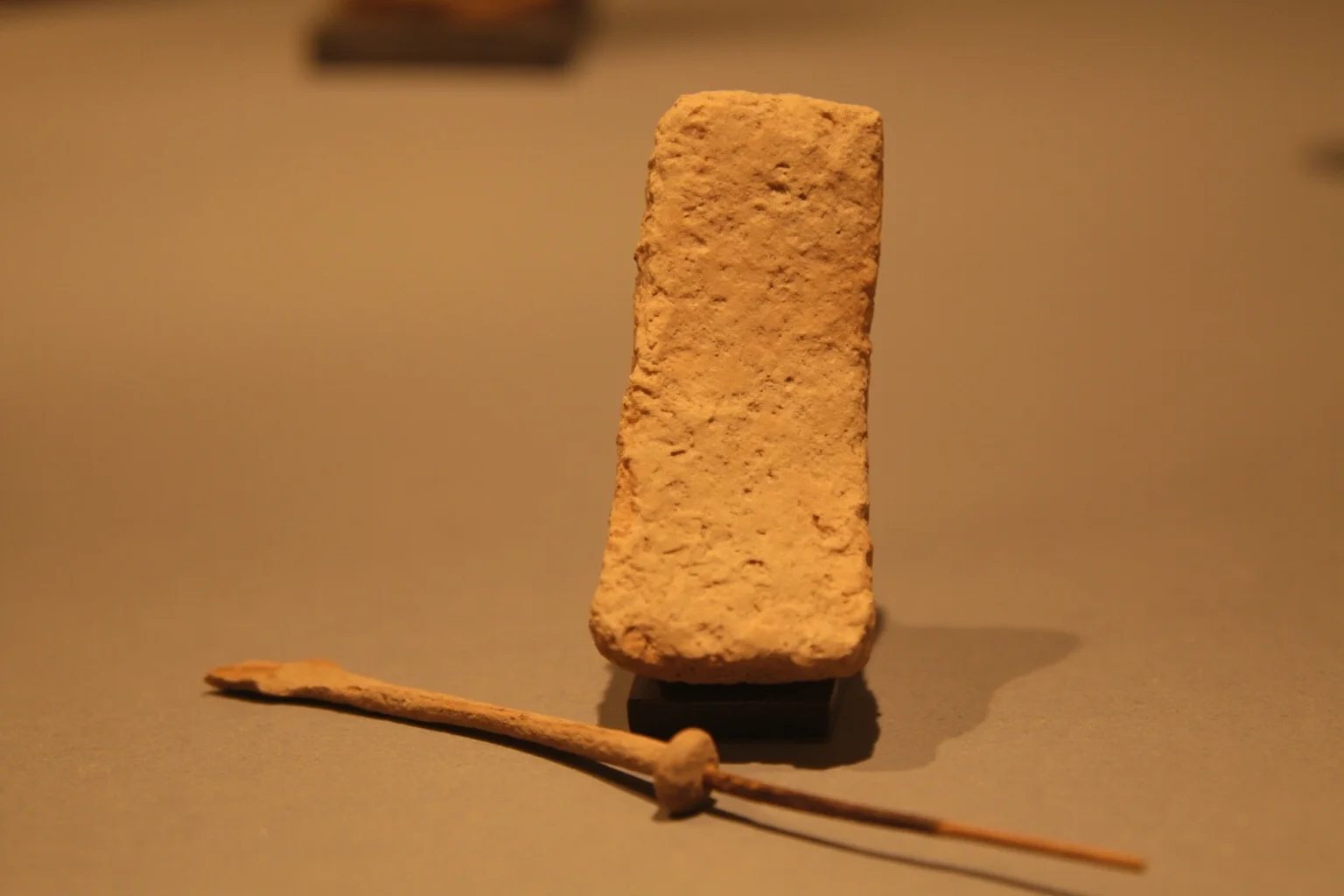
Identifying old writing implements can be tricky because many resemble household objects. A bone stylus looks like a toothpick, and a quill knife may look like a small penknife. Context and material are the best clues.
Real quills usually show cut marks near the nib, and old reed pens may have ink staining. Antique tools should be handled carefully, especially feathers and paper. If you are unsure, consult a museum catalog or a reputable collector guide.
The Fountain Pen Brings Ink Inside
Fountain pens were not a single invention. Early designs tried to hold ink in a barrel, but they often leaked or failed. Practical fountain pens emerged in the nineteenth and early twentieth centuries as materials improved.
The key innovation was a controlled feed that let ink flow smoothly to the nib. Even after ballpoints arrived, fountain pens retained loyal users because they offer line variation and personal character. The fountain pen remains an important step in the history of writing utensils.
The Ballpoint Pen Changes Everything
The modern ballpoint pen has roots in nineteenth-century patents, but reliable designs arrived in the 1930s and were popularized during the 1940s. The ball at the tip rotates as it moves, transferring viscous ink to paper and reducing leaks and smudges.
Ballpoints were cheap, durable, and could write at different angles. They spread quickly after World War II and became the default pen for schools, offices, and homes. The quill and dip pen could not compete with that convenience.
Rollerball, Gel, Felt-Tip, and Digital Styluses
Rollerball and gel pens use water-based or gel inks with a ball mechanism, combining smooth ink flow with ballpoint convenience. Felt-tip pens and markers use porous tips to deliver ink. These are all modern descendants of the idea that a controlled point should deliver pigment to a surface.
Digital styluses return to the idea of a pointed tool for writing, but they record pressure, angle, and motion instead of leaving ink. Voice input and keyboards are part of the broader history, but they are not writing instruments in the traditional sense. The persistent appeal of a pen or stylus shows that handwriting still matters.
From Wax Tablets to Paper: Writing Surfaces Changed the Tools
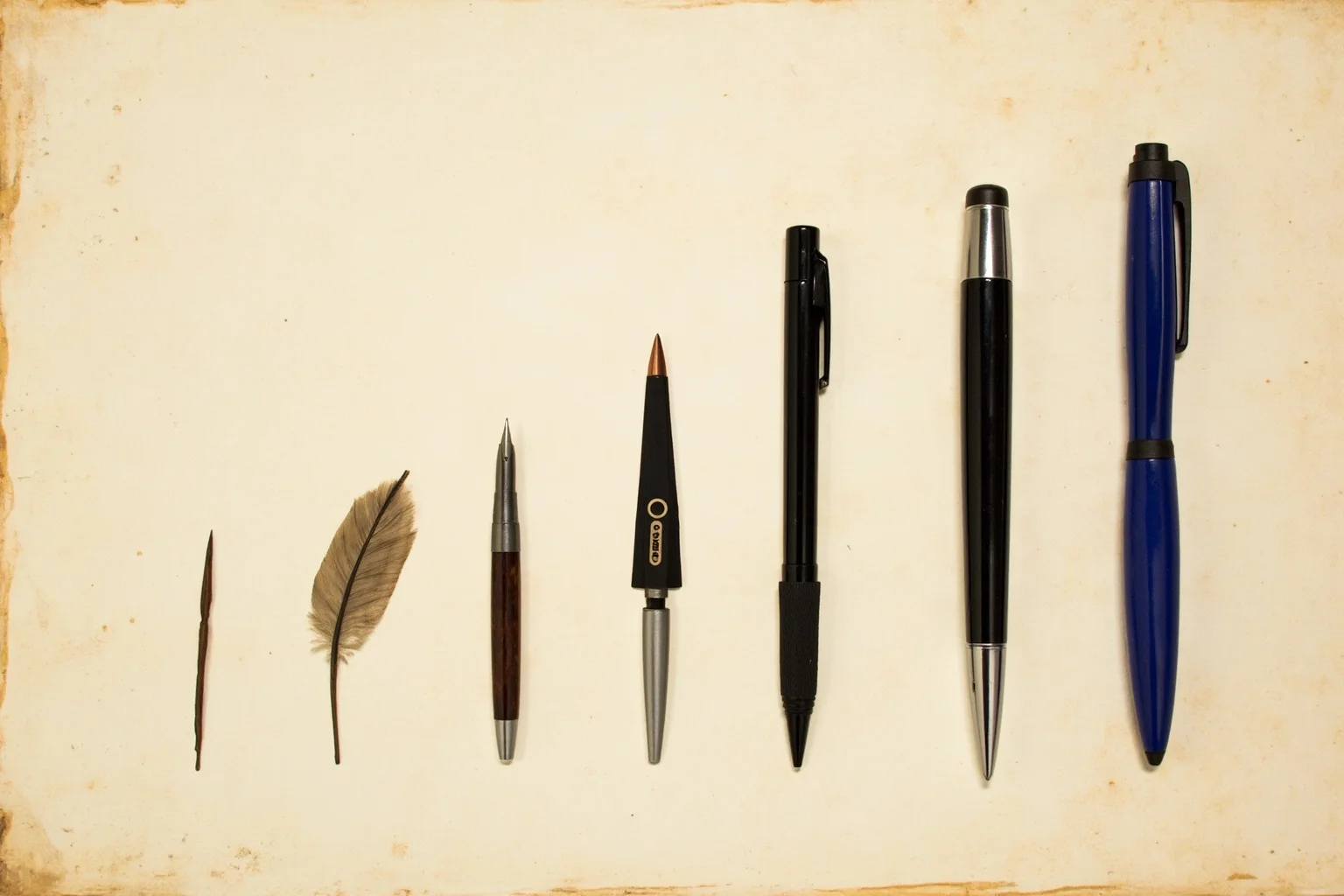
Writing tools cannot be understood apart from their surfaces. A stylus works on clay or wax, a quill works best on parchment or paper, and a ballpoint works on many surfaces. As writing materials changed, instruments changed alongside them.
Papyrus favored brush and reed pens because the surface could handle liquid ink. Parchment encouraged careful quill strokes, while cheap wood-pulp paper helped make steel dip pens practical. Modern paper is abrasive compared with parchment, which is one reason metal nibs replaced quills.
The Everyday Economics of Old Writing Implements
One reason quills lasted so long was economic. Feathers were a byproduct of poultry farming, and a skilled scribe could make a usable pen in minutes. Metal nibs only won when industrial production made them cheap enough to compete.
Ink and paper were often more expensive than the pen itself. That is why old writing implements include economy tools like slate pencils, which allowed students to practice without wasting paper or ink. The famous penknife survives today in names and pocket tools.
Writing Tools in the Islamic World and Asia
The history of writing utensils is not only European. Islamic scribes used reed pens and developed precise nib-cutting techniques for Arabic scripts. The angle of the cut influenced thick and thin strokes in calligraphy.
In China and Japan, brushes dominated, and calligraphers classified brush types by hair, stiffness, and shape. The brush was not a primitive quill substitute; it was a sophisticated instrument with its own history. The quill was a regional star, not a global constant.
Why the Quill Still Matters
The quill is often treated as a romantic symbol of the past. That misses the practical reasons for its success: it was cheap, available, and expressive. It matched the materials and scripts of its time.
Studying quill history teaches us to look at material culture, not just famous texts. Modern calligraphers and hobbyists still cut quills and reed pens to understand historical writing firsthand. Reconstructed tools offer clues that photographs cannot reveal.
Common Myths About Early Writing Tools
One common myth is that everyone in the past wrote with a quill. In reality, wax tablets, metal styluses, pencils, chalk, and brushes all shared the long history of writing. The quill was common in some times and places, but never universal.
Another myth is that old writing implements were always slower or worse. For their intended materials and scripts, reed pens and quills were highly effective. The real history is messy, with overlapping tools and regional differences.
Conclusion: Retiring Old Tools Without Losing Them
The history of writing instruments is not a simple replacement story. Each tool added options, and many so-called lost tools of writing still survive among artists, calligraphers, and historians. They are less lost than retired from everyday use.
From a Mesopotamian reed stylus to a modern digital pen, the underlying need has not changed: people want to capture language in a durable form. Next time you pick up a ballpoint or a smartphone stylus, remember the quill that wrote letters, complaints, poems, and ledgers for centuries.
Frequently Asked Questions
What are the lost tools of writing?
The lost tools of writing are the everyday tools that once supported handwriting but are no longer common, such as quill pens, quill knives, pounce pots, sand shakers, wax tablets, writing slopes, and reed pens. They were not literally lost; most survive in museums and are still used by some calligraphers and historians.
Where is Peter Quill from, and does the name refer to quill pens?
In the Marvel Cinematic Universe, Peter Quill, also known as Star-Lord, is from Missouri. The surname Quill is unrelated to feather pens; it is simply a family name, though it shares the same English word.
What is the history of the quill pen?
Quill pens became the main writing instrument in medieval Europe by the seventh century and dominated until the nineteenth century. They were made from cured bird feathers, usually goose, cut and slit at the tip to hold and release ink.
What are the oldest writing utensils?
The oldest writing utensils include reed styluses used to press cuneiform into clay in ancient Mesopotamia, and reed pens or brushes used for ink in ancient Egypt. Wax tablets with metal or bone styluses were also common in Greece and Rome.
What types of writing utensils are there?
Broadly, there are styluses, chisels, reeds, brushes, quills, dip pens, fountain pens, ballpoints, rollerballs, gel pens, felt-tips, and digital styluses. Each type serves different surfaces, inks, and writing styles.

Alex Warren
Related Articles