
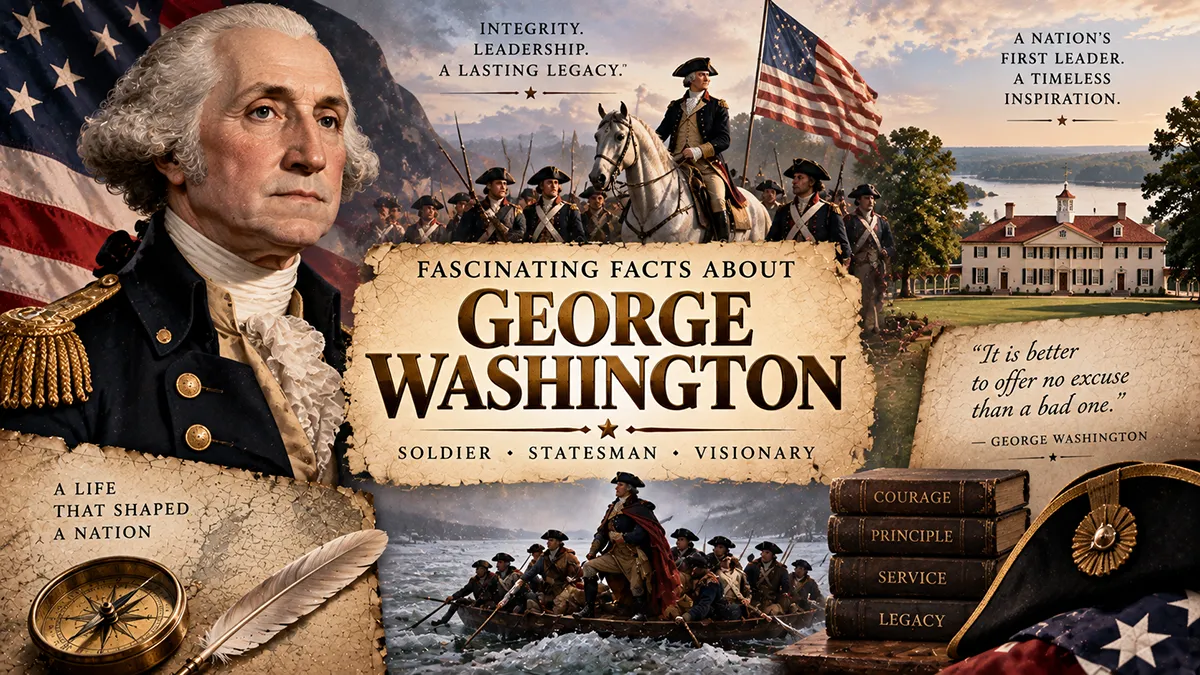
George Washington is one of those historical figures everyone thinks they know. He’s on the dollar bill, the quarter, and a mountain in South Dakota, so his face is practically wallpaper in American life, making him one of the most recognized historical figures of all time.
But behind the marble statues and schoolbook legends is a far more interesting, more human story than most people realize.
In this guide, we’re separating the well-documented history from the myths that have stuck around for two centuries. Whether you’re a student cramming for a test, a trivia night captain, or just curious why this one Virginia farmer became the face of a nation, you’ll find the answers here.
TL;DR: George Washington earned his lasting fame not from any single battle or speech, but from repeatedly choosing to give up power—as army commander, convention president, and two-term president—setting the precedent that made American democracy possible.
Why Is George Washington Famous?
George Washington is famous for three overlapping roles: commander of the Continental Army during the American Revolution, president of the Constitutional Convention, and the first President of the United States. Each role gave him the chance to seize enormous personal power, and each time he chose to hand it back instead.
That pattern is really why George Washington is important to understand, not just memorize. In an era when successful revolutionary generals usually became dictators or kings, Washington’s decision to walk away set a standard that shaped how Americans think about leadership to this day. It’s also the answer to “what is George Washington most known for”—not one achievement, but a career built on restraint.
Quick Facts About George Washington
Before diving into the full list, here are the basic facts about George Washington that anchor everything else.
- Born: February 22, 1732, in Westmoreland County, Virginia
- Died: December 14, 1799, at Mount Vernon, Virginia
- Presidency: 1789–1797 (first U.S. president, two terms)
- Military role: Commander-in-Chief of the Continental Army, 1775–1783
- Spouse: Martha Dandridge Custis Washington
- Home: Mount Vernon plantation, Virginia
With that framework in place, let’s get into the details—including a few surprises.
26 Facts About George Washington
This list blends the essential, the fun, and the genuinely unusual. It covers his military career, his presidency, his personal life, and a few stubborn myths that deserve a second look.
1. He Was America’s First President—Chosen Unanimously
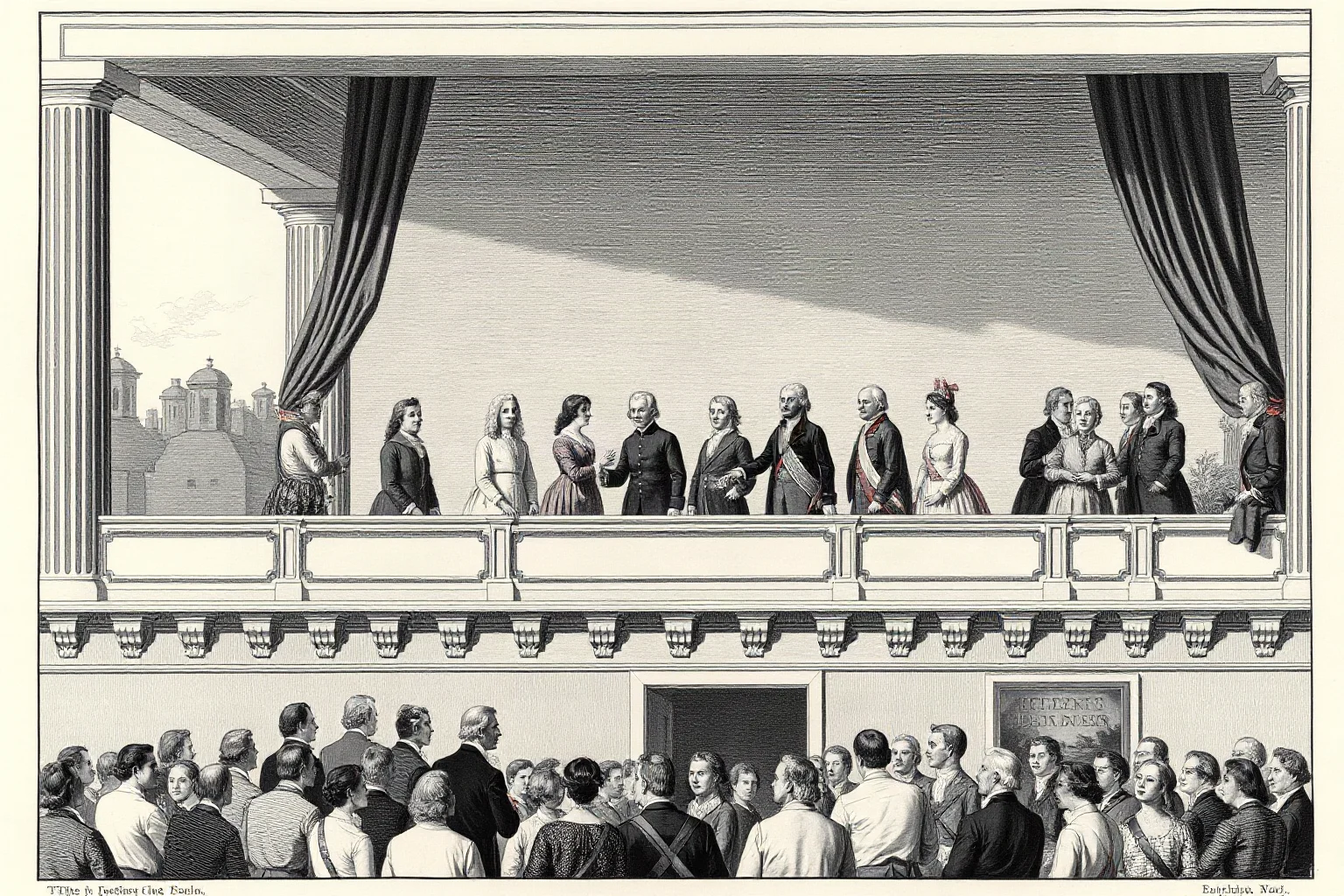
George Washington took the oath of office on April 30, 1789, in New York City, which briefly served as the nation’s capital. The Electoral College chose him without a single dissenting vote, a feat no other president has matched.
He was reelected in 1792, again receiving every electoral vote cast. That level of consensus reflected less about political agreement and more about how much the fragile new nation needed a unifying figure everyone already trusted.
2. The Cherry Tree Story Is a Myth
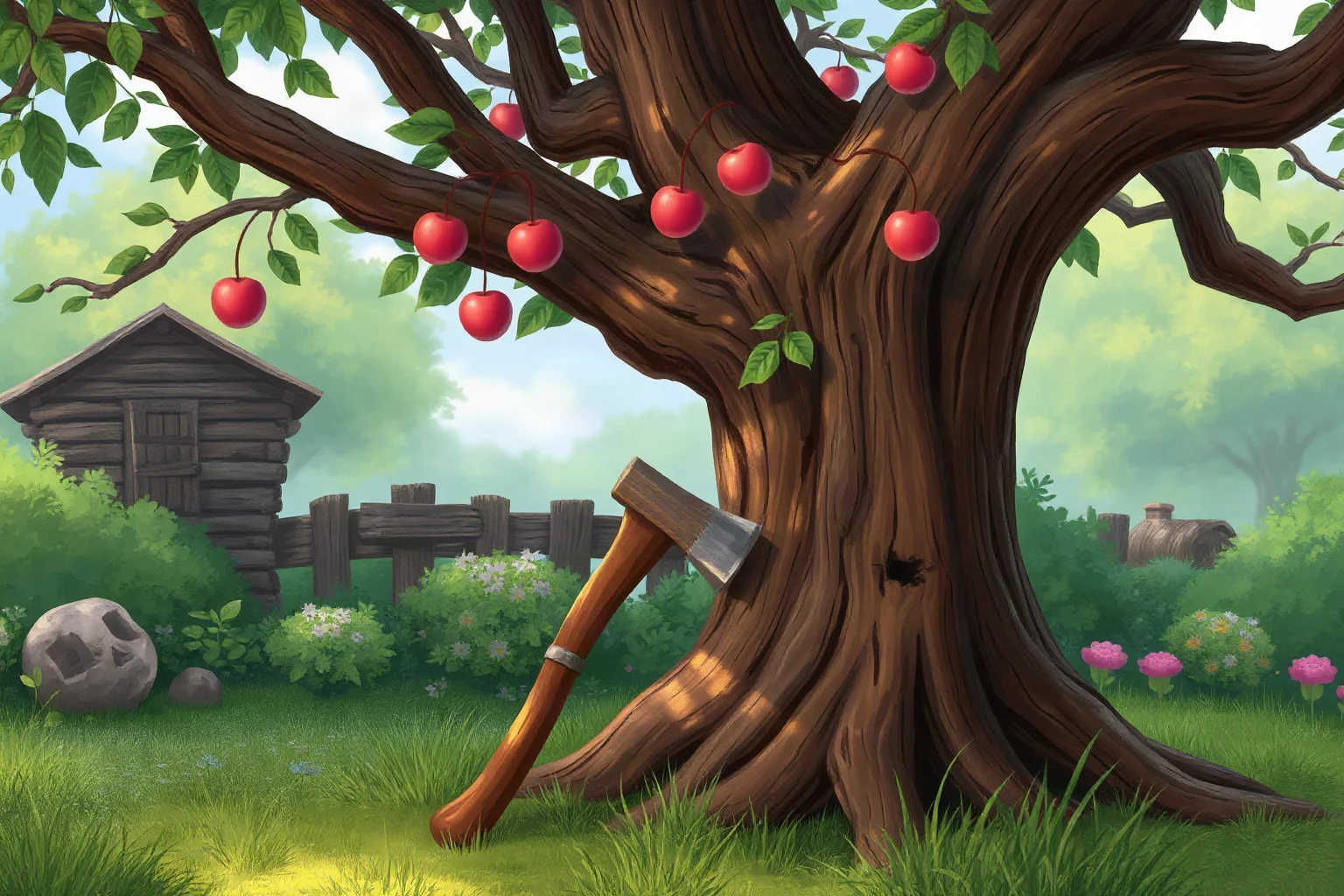
One of the most repeated fun facts about President George Washington is also one of the least true. The tale of young George chopping down his father’s cherry tree and confessing with “I cannot tell a lie” first appeared in an 1806 biography by Mason Locke Weems, decades after Washington’s boyhood.
Weems had a habit of inventing morally instructive anecdotes to sell books, and historians have found no earlier evidence the event happened. It’s a great story about honesty, but it belongs in the folklore column, not the facts column—much like many other amazing quotes attributed to legendary historical figures that don’t hold up to scrutiny.
3. He Never Actually Lived in the White House
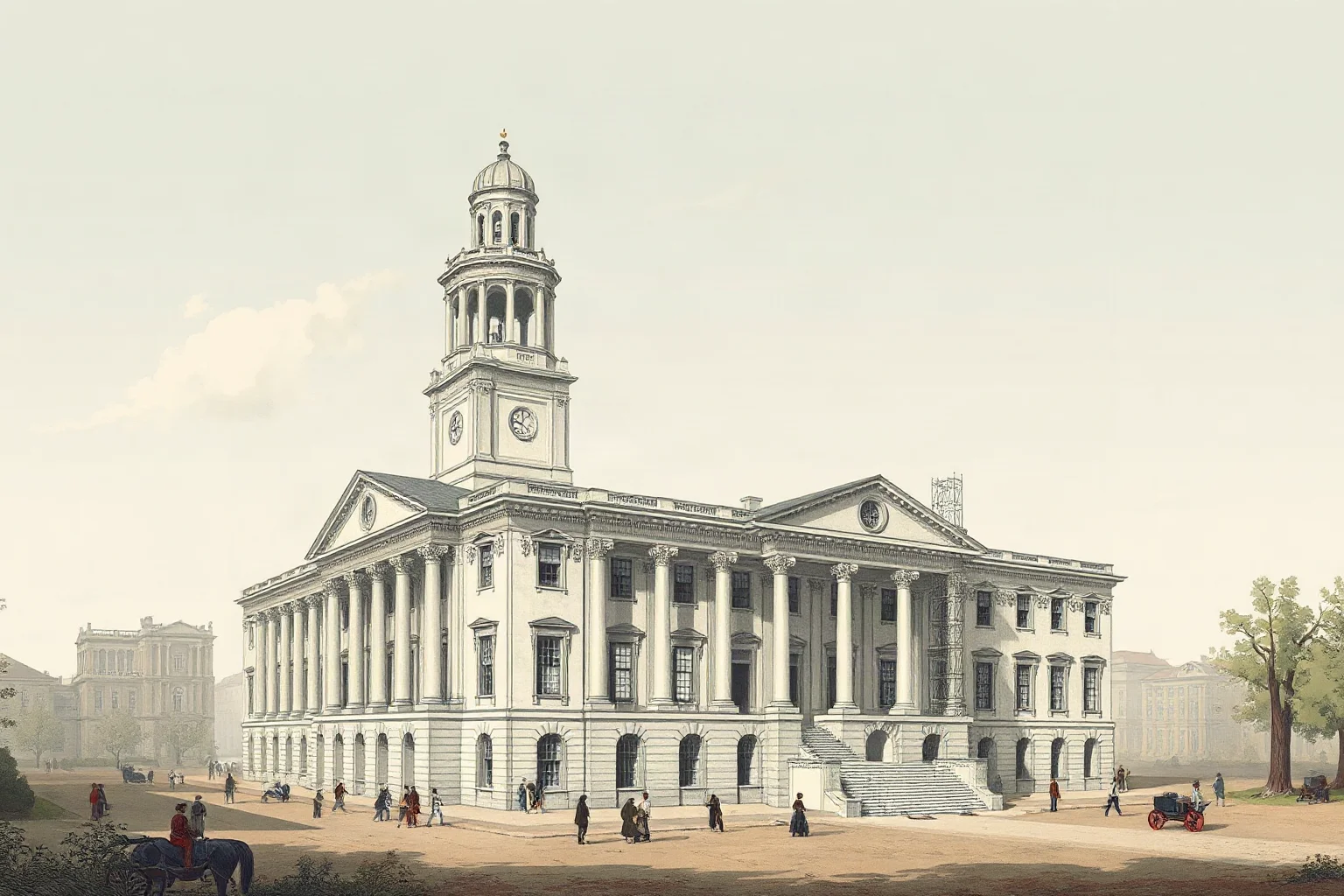
It’s a surprisingly common mix-up, but Washington never spent a night in the White House. Construction on the building didn’t finish until 1800, a year after his death, and John Adams became its first presidential resident.
During his presidency, Washington lived in New York City and later Philadelphia, which served as temporary capitals while Washington, D.C. was being built. Fittingly, the future capital city was named in his honor while he was still alive.
4. His Famous “Wooden Teeth” Weren’t Wood
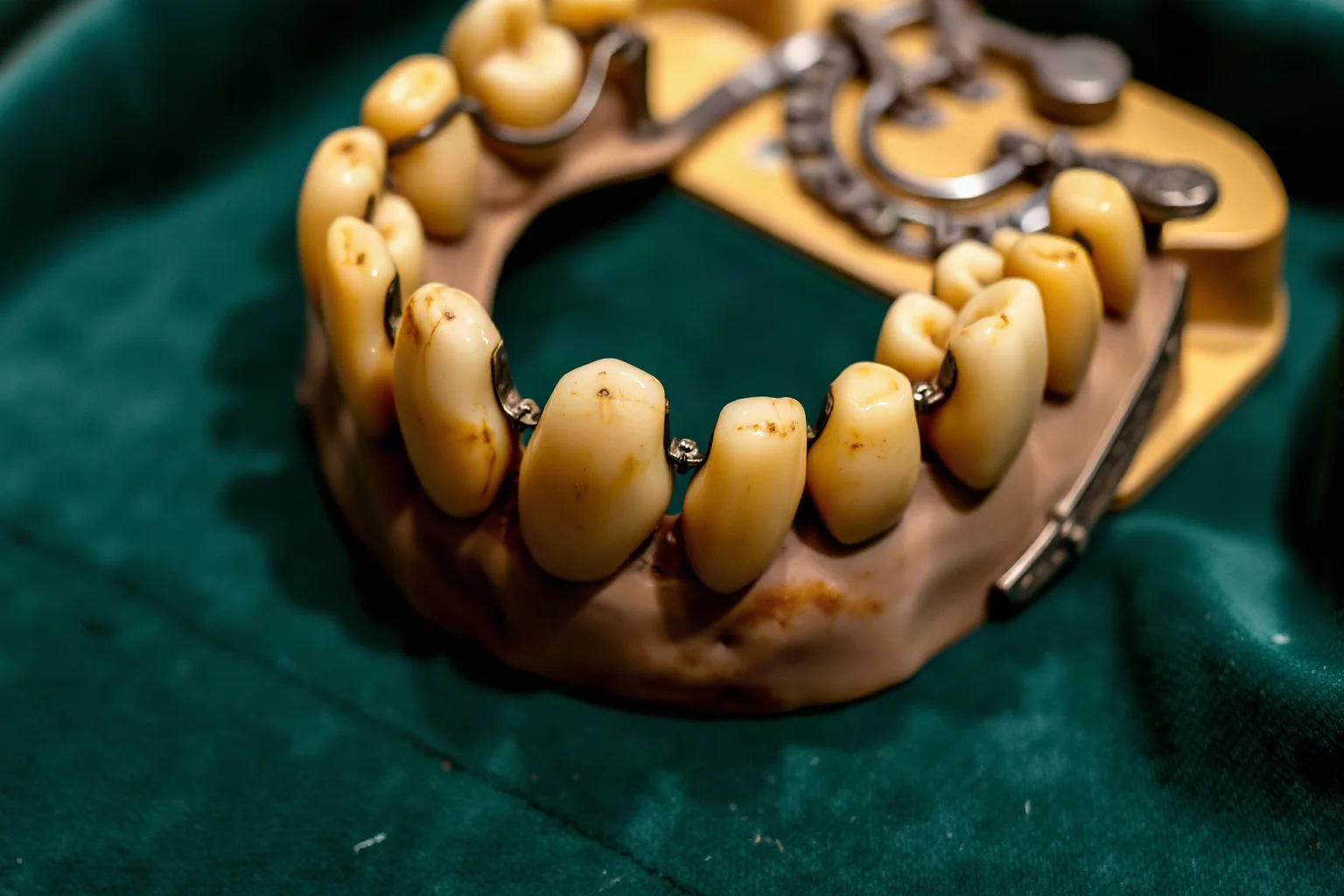
Another widely believed myth is that Washington wore wooden dentures. In reality, his several sets of false teeth were made from materials like ivory, gold, lead, and even teeth pulled from cows, horses, and enslaved people at Mount Vernon.
Washington suffered from severe dental problems for most of his adult life and had lost nearly all his natural teeth by the time he became president. The ivory in his dentures likely stained over time, which may be where the “wood” rumor originated.
5. He Trained as a Surveyor Before Becoming a Soldier
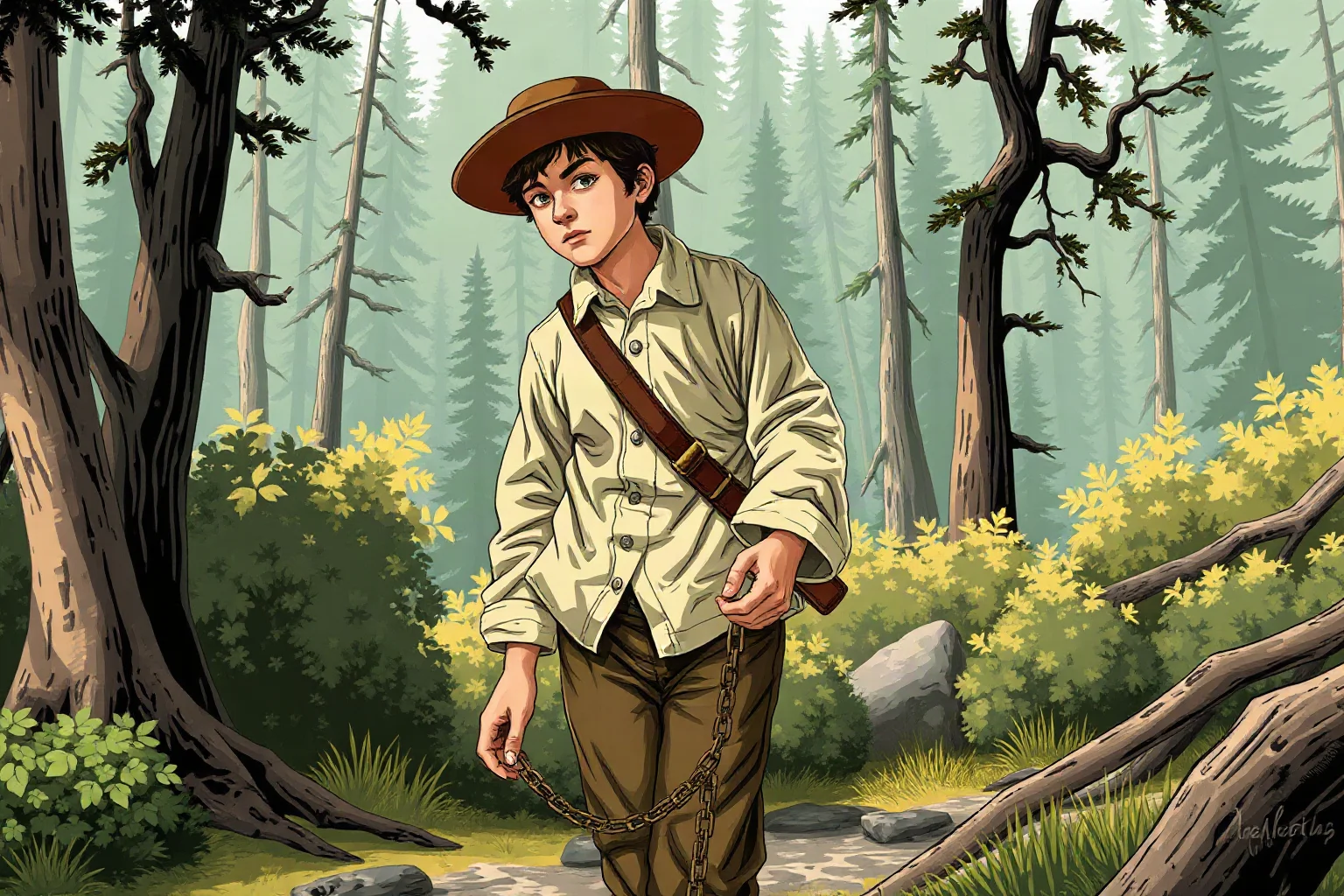
Long before he picked up a sword, Washington picked up a surveying chain. At just 17 years old, he was appointed the official surveyor of Culpeper County, Virginia, mapping frontier land for wealthy landowners.
This early career gave him firsthand knowledge of the Virginia backcountry and taught him discipline, math, and land economics. It also helped him personally acquire significant property later in life.
6. He Survived Several Near-Death Experiences in the French and Indian War
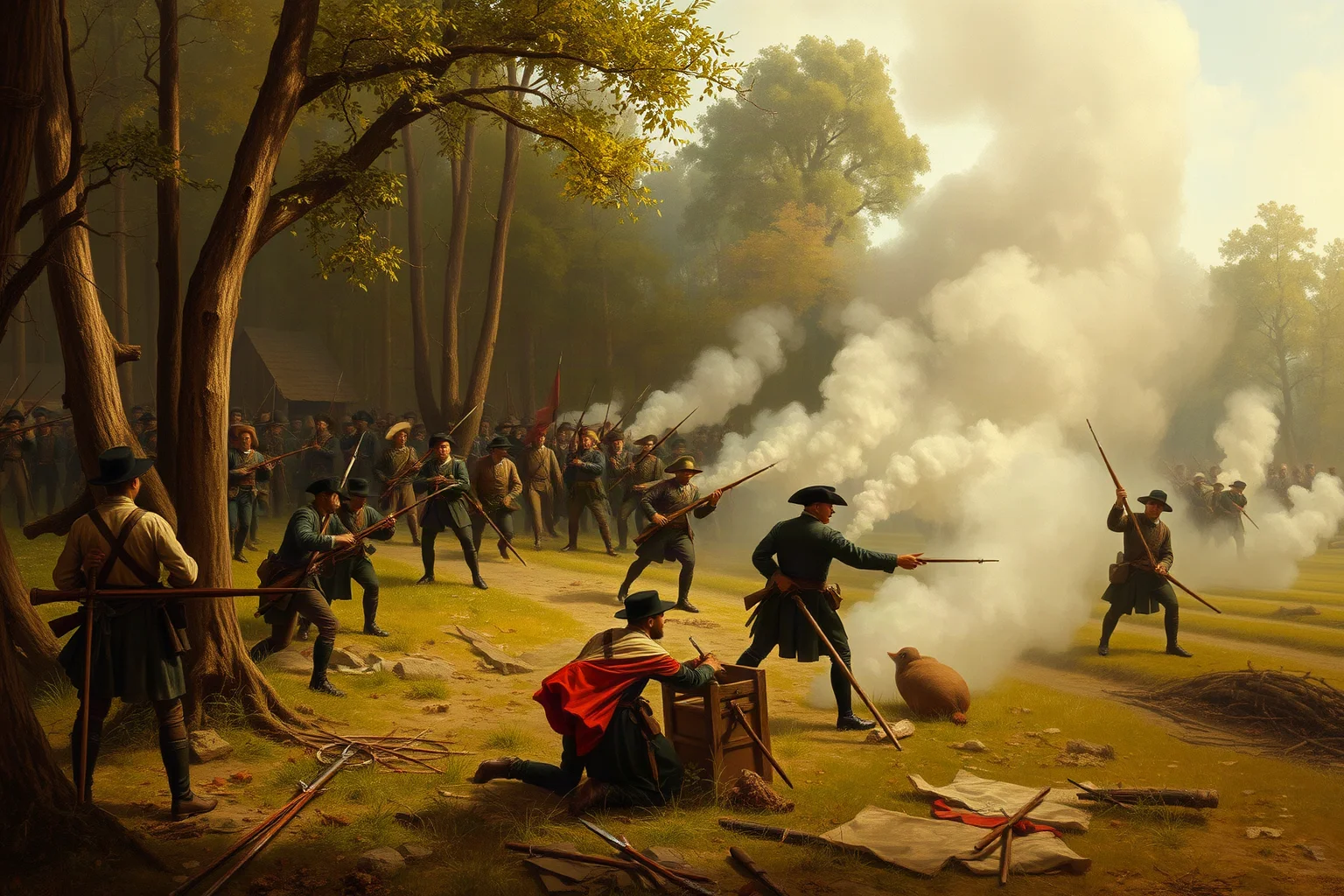
As a young British colonial officer in the 1750s, Washington fought in the French and Indian War, including the disastrous Braddock expedition of 1755. He reportedly had bullet holes through his coat and hat, and several horses were shot out from under him.
These brushes with death didn’t just make good stories later—they taught him hard lessons about battlefield leadership, supply lines, and the limits of European-style warfare on American terrain. Those lessons proved invaluable two decades later.
7. Congress Chose Him to Lead the Continental Army in 1775
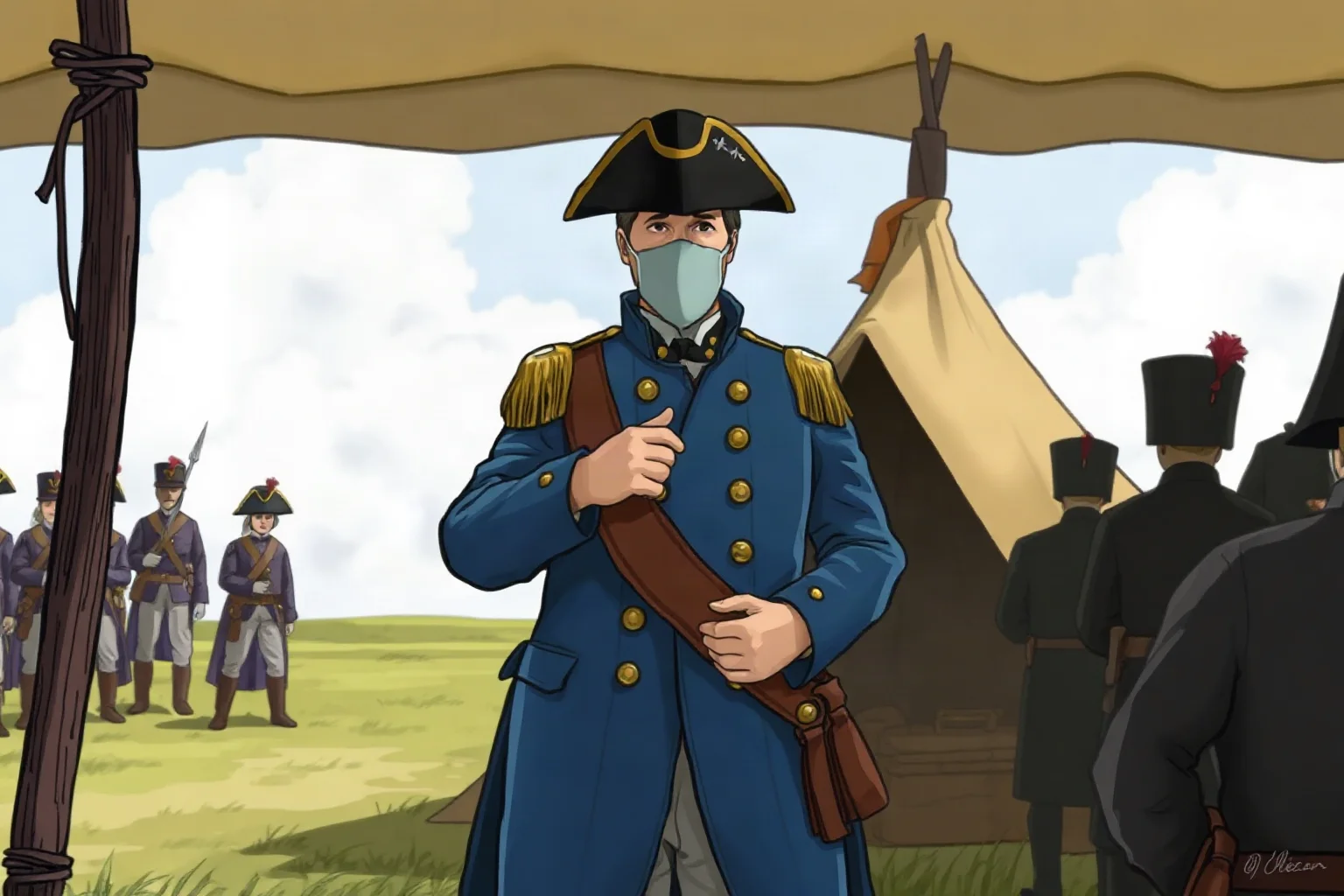
When the American Revolution broke out, the Continental Congress needed a commander who could unite colonies with very different interests. Washington, a Virginian with military experience and a reputation for integrity, was appointed Commander-in-Chief in June 1775.
Notably, he had never commanded an army of that size before and had no formal military academy training. His leadership style relied more on persistence, discipline, and political savvy than on tactical genius alone.
8. His Delaware River Crossing Turned the War Around
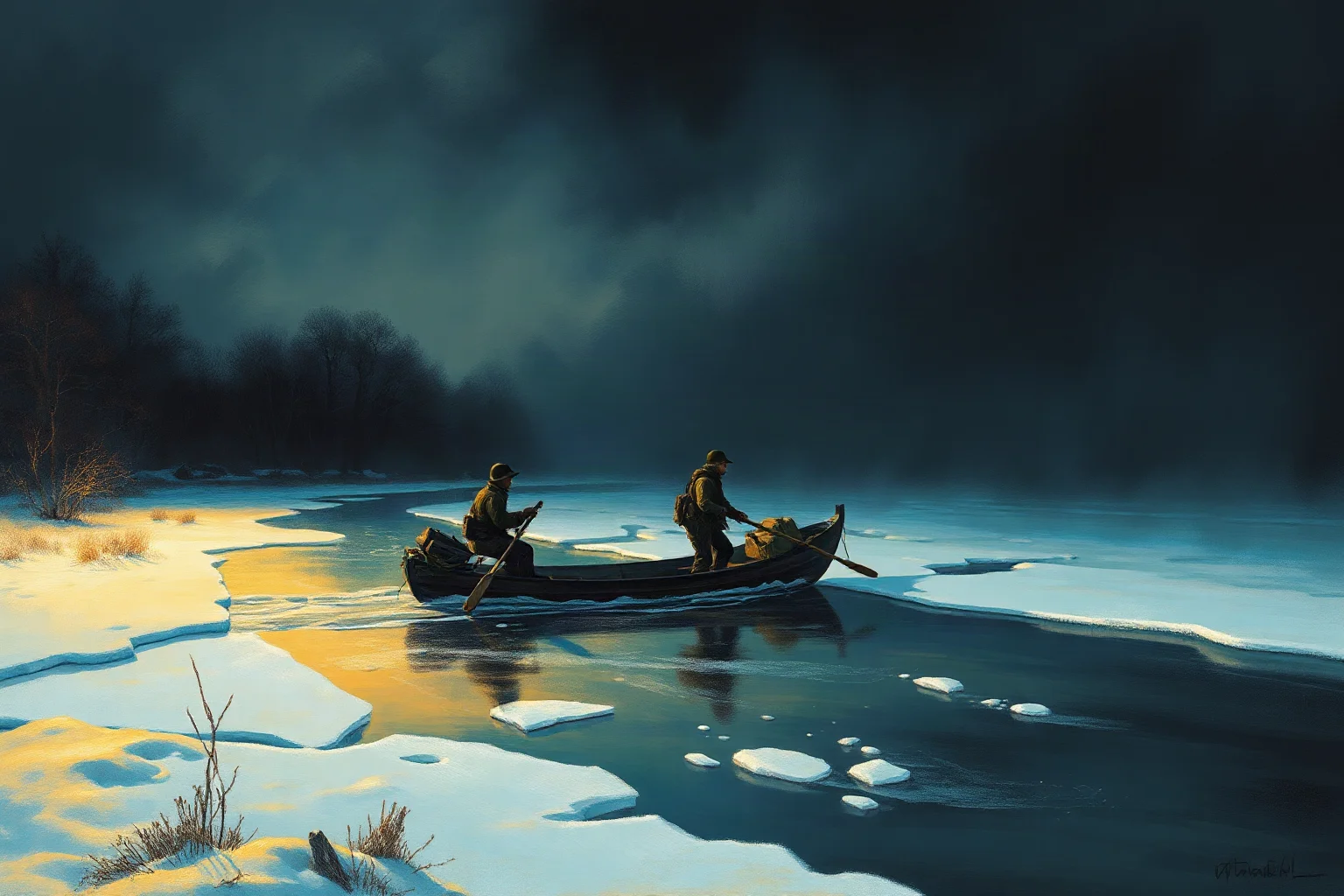
On the night of December 25, 1776, Washington led roughly 2,400 troops across the icy Delaware River for a surprise attack on Trenton, New Jersey. The mission came after a string of demoralizing defeats that had many colonists ready to give up on independence.
The resulting victory at Trenton, followed quickly by another win at Princeton, revived American morale at a critical moment. It’s one of the most reproduced images in American art for a reason.
9. He Held the Army Together Through the Brutal Winter at Valley Forge
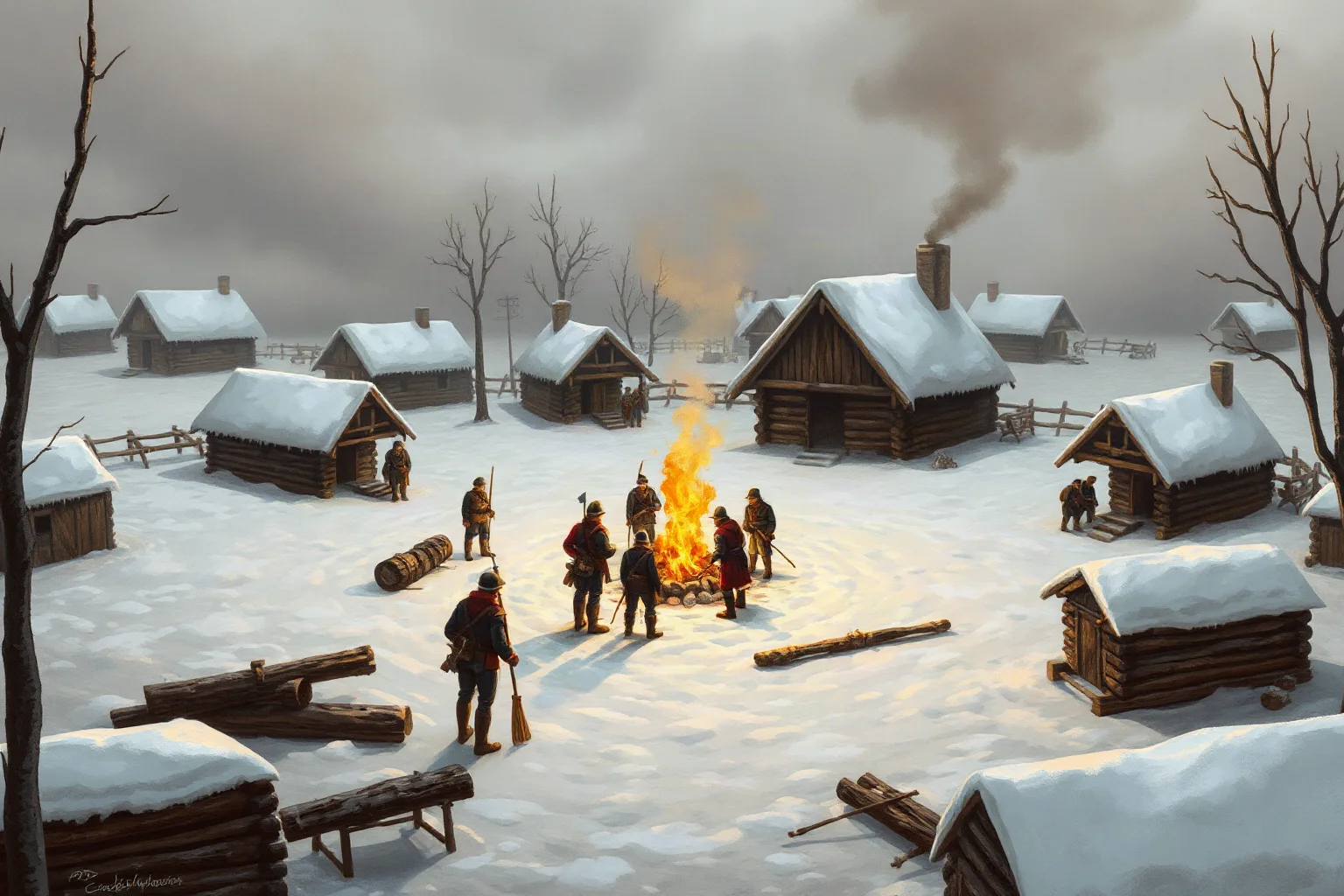
During the winter of 1777–1778, Washington’s troops camped at Valley Forge, Pennsylvania, facing starvation, disease, and freezing conditions with little support from Congress. Roughly 2,000 soldiers died that winter from illness and exposure.
Despite the suffering, Washington kept the army from dissolving and used the time to implement stricter training under Prussian officer Baron von Steuben. The Continental Army that emerged in spring was noticeably more disciplined than the one that arrived.
10. He Was Offered Kingly Power—and Refused It
After the war, some officers and even ordinary citizens suggested Washington should become a monarch or military dictator, given the chaos of the new government. He firmly rejected these suggestions, reportedly finding the idea distasteful.
In 1783, he resigned his military commission to Congress in Annapolis, Maryland, voluntarily giving up command of the army he had led for eight years. This single act shocked European observers who had never seen a victorious general simply walk away from power.
11. He Presided Over the Constitutional Convention
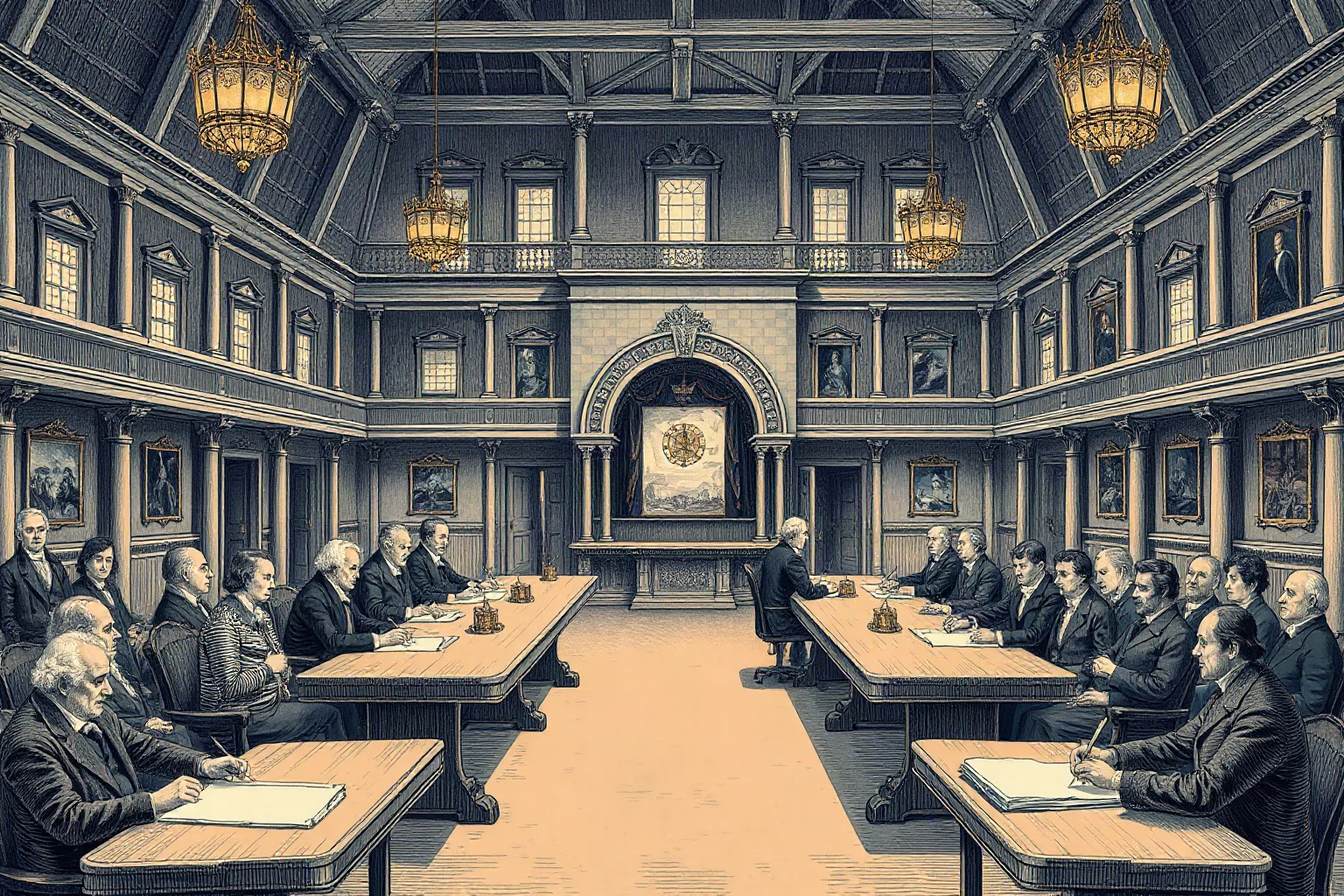
In 1787, Washington was elected president of the Constitutional Convention in Philadelphia, where delegates hammered out the U.S. Constitution. He said little during the actual debates, preferring to let others argue the details.
His presence, however, lent enormous credibility to the entire process. Many historians agree that other states were more willing to trust the new Constitution simply because Washington had put his name behind it.
12. He Set the Two-Term Precedent
After serving two terms as president, Washington declined to run for a third, even though nothing in the Constitution at the time prevented it. This voluntary retirement established an unwritten rule that most presidents followed for over 150 years.
That tradition wasn’t written into law until the 22nd Amendment was ratified in 1951, formally limiting presidents to two terms. Washington’s choice essentially previewed that rule by more than a century and a half.
13. He Built the First Presidential Cabinet
There’s no mention of a “cabinet” in the Constitution, so Washington had to invent the concept from scratch. He appointed Thomas Jefferson as Secretary of State, Alexander Hamilton as Secretary of the Treasury, and Henry Knox as Secretary of War, creating the model that presidents still use today.
Managing Jefferson and Hamilton, who disagreed on nearly everything, was itself a diplomatic achievement. Their rivalry foreshadowed the emergence of America’s first political parties.
14. He Gave the Shortest Inaugural Address in History
Washington’s second inaugural address, delivered in 1793, contains just 135 words—still the shortest in presidential history. Compare that to some modern addresses running well over 2,000 words, and it’s a striking contrast in style.
His brevity fit his general approach to leadership: he preferred action and steady example over long speeches. It’s a small but genuinely fun fact about President George Washington that surprises a lot of trivia fans.
15. He Had No Biological Children
Washington married Martha Dandridge Custis, a wealthy widow, in 1759. He never had biological children of his own but helped raise Martha’s two surviving children from her first marriage, John Parke “Jacky” Custis and Martha “Patsy” Custis.
He later helped raise two of Martha’s grandchildren as well, after Jacky died young. Despite having no direct descendants, Washington is often called the “Father of His Country” for his role in founding the nation itself.
16. Mount Vernon Was His Lifelong Passion Project
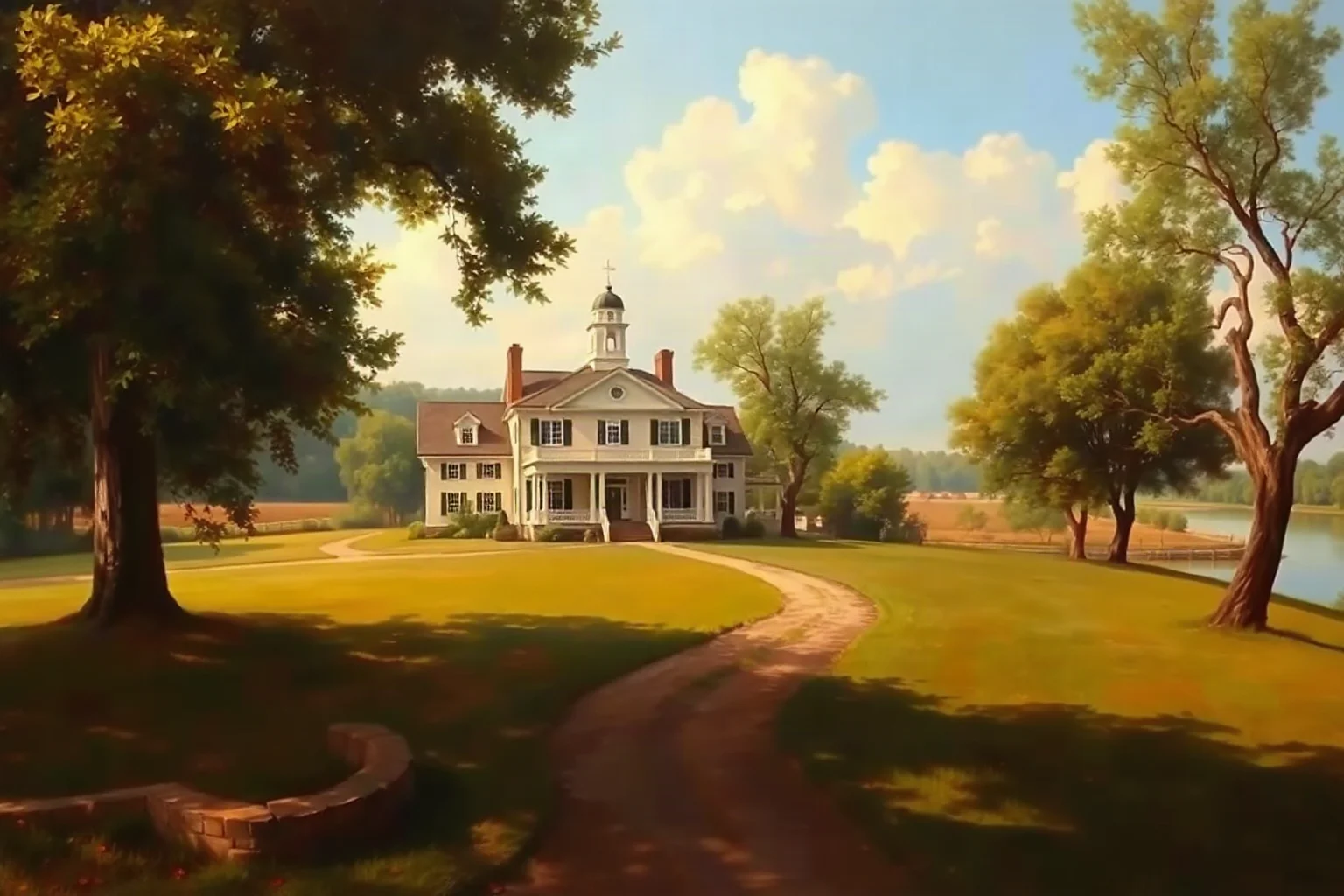
Washington inherited Mount Vernon and spent decades expanding both the mansion and its farmland along the Potomac River. He experimented constantly with crop rotation, moving away from tobacco toward wheat, and became one of the country’s most successful mule breeders.
He reportedly considered himself a farmer first and a soldier or statesman second. Letters from his presidency show he was often more preoccupied with Mount Vernon’s crops than with news from the capital.
17. He Enslaved More Than 300 People at Mount Vernon
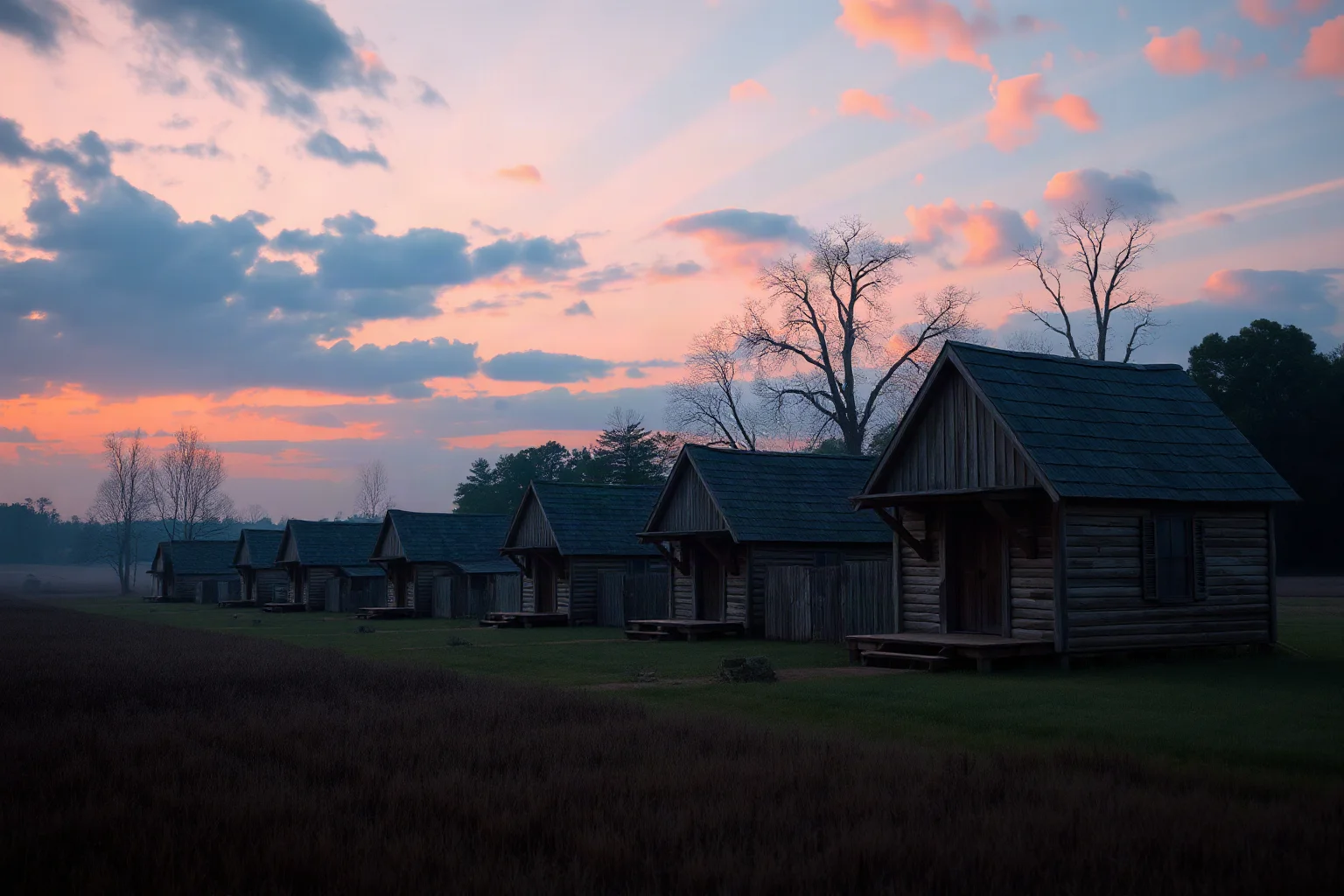
Any honest account of Washington’s life has to include the fact that he was a slaveholder for most of his life, ultimately holding more than 300 enslaved people at Mount Vernon by the time of his death. This is an essential and uncomfortable part of his biography, not a footnote.
His views on slavery shifted somewhat over his lifetime, influenced by the ideals of the Revolution, but he continued to rely on enslaved labor throughout his presidency. Historians generally agree his actions never matched the full weight of his private doubts.
18. He Freed the Enslaved People He Held—But Only After His Death
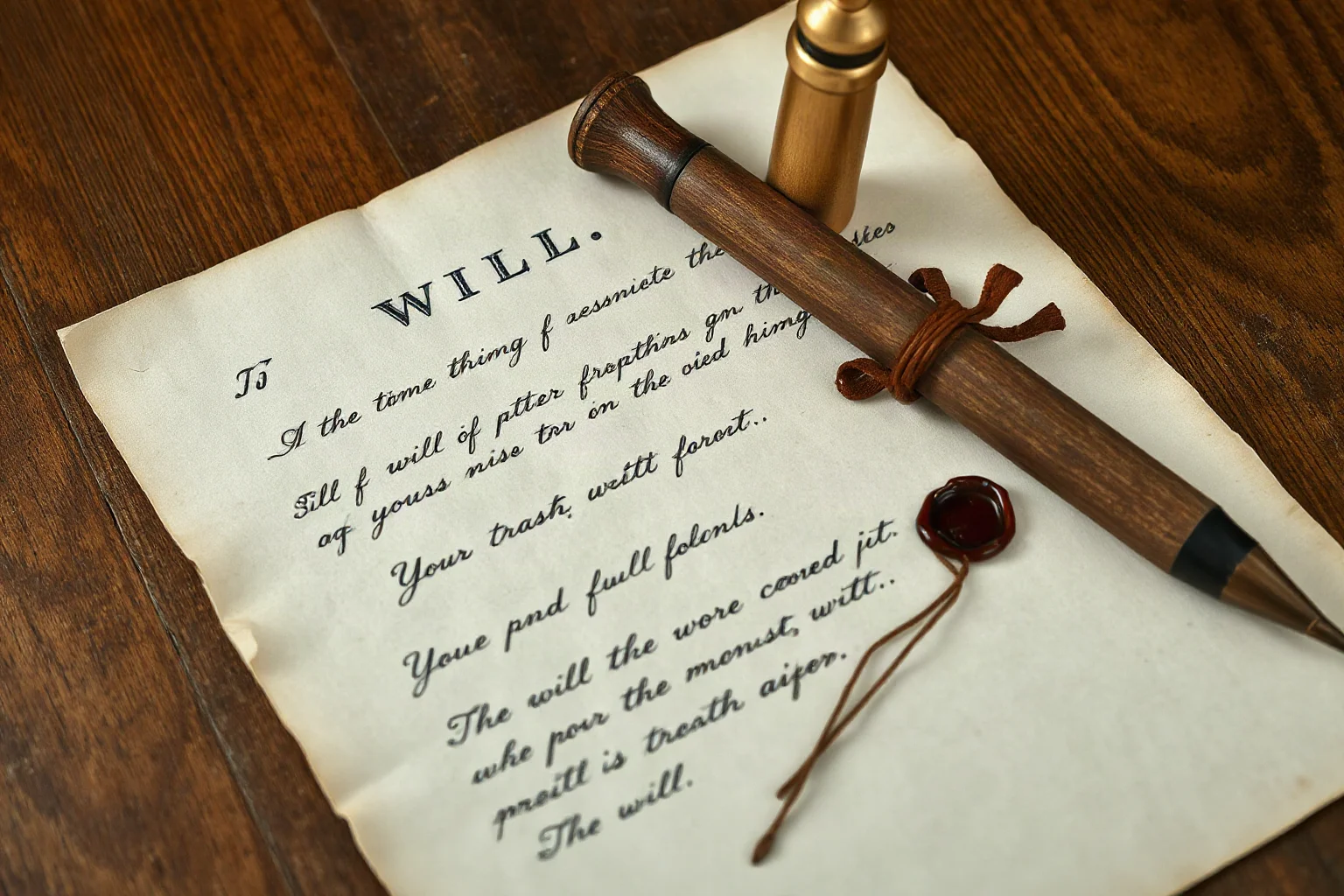
In his 1799 will, Washington ordered that the enslaved people he personally owned be freed after Martha’s death, making him the only one of the Founding Fathers among the early presidents to free his enslaved workers this way. Martha actually freed them earlier, in 1801, reportedly out of fear for her own safety.
It’s worth noting this provision only applied to the people Washington owned outright. Many others at Mount Vernon were legally tied to the Custis estate and were not freed by his will at all.
19. He Was Famously Reserved and Dignified in Person
Contemporaries frequently described Washington as tall for his era at roughly 6 feet 2 inches—modest compared to some of the tallest people in history, but towering among his contemporaries—physically imposing, and unusually self-controlled. He rarely showed strong emotion in public and was known for careful, measured speech rather than fiery oratory.
This reserved personality helped project an image of stability during a chaotic period of nation-building. People who met him often came away describing his presence more than his words.
20. He Never Attended College
Unlike founders such as Jefferson or Hamilton, Washington had a relatively limited formal education, likely ending around age 15. He never attended college, learning much of what he knew through practical experience, wide reading, and mentorship from older relatives and military officers.
He was self-conscious about this gap for much of his life and worked to compensate through careful study of military strategy, agriculture, and government. It didn’t stop him from becoming one of the most respected leaders of his generation.
21. Dental Pain Shaped His Public Image
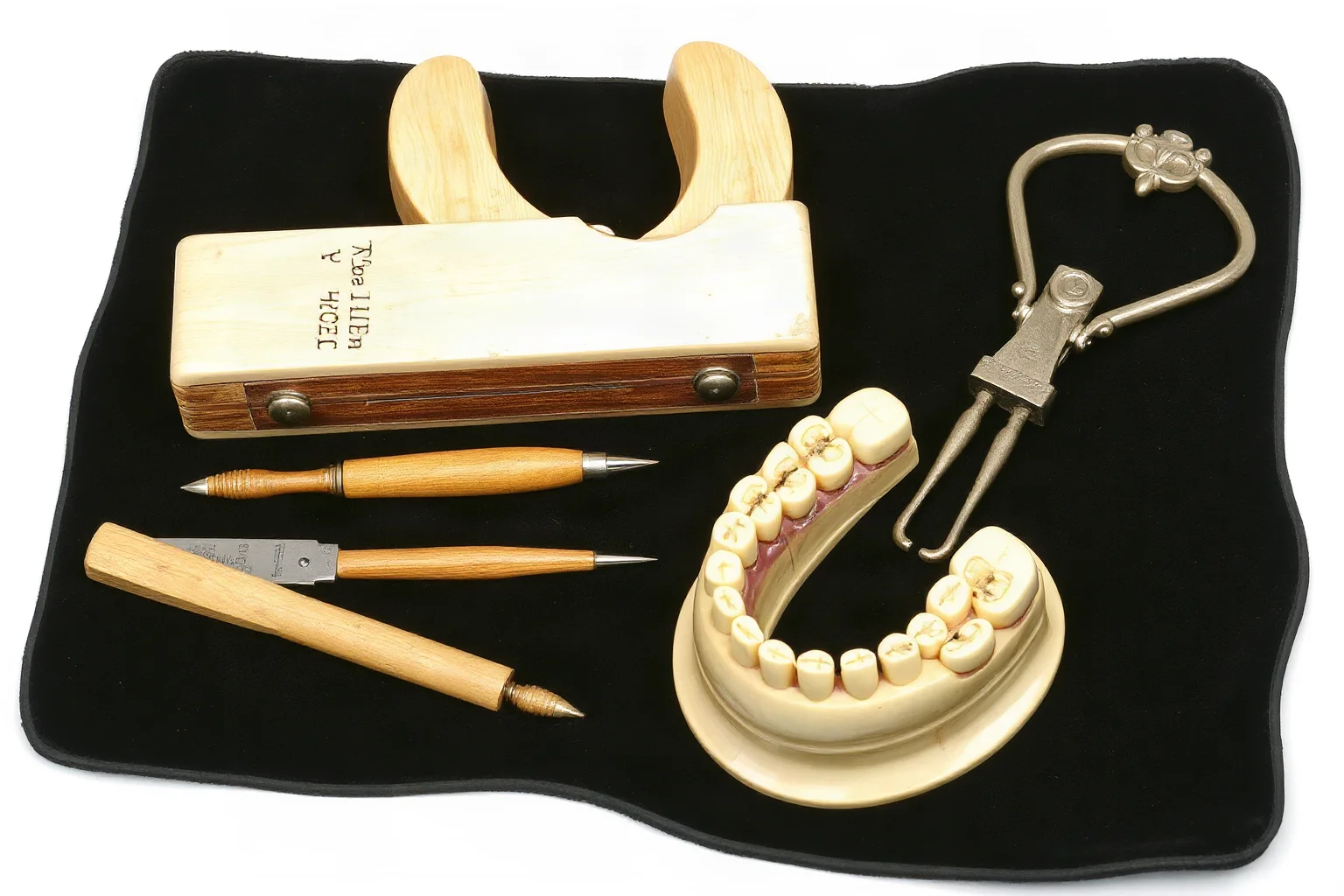
Washington’s decades-long struggle with tooth loss and painful dentures wasn’t just personal misery—it visibly affected his public appearance. Portraits from his presidency, including the one used on the dollar bill, show a noticeably fuller jaw due to the dentures he wore.
Some accounts suggest his dental pain made him speak less in public settings, reinforcing his already reserved demeanor. It’s an unusual fact about George Washington that connects his health directly to how history remembers his face.
22. He Issued the First National Thanksgiving Proclamation

In 1789, Washington issued a proclamation calling for a national day of thanksgiving on November 26 of that year, thanking God for the successful conclusion of the Revolution and the new Constitution. It wasn’t an annual holiday yet, and Thanksgiving didn’t become a fixed national tradition until Abraham Lincoln’s proclamation in 1863.
Still, Washington’s proclamation is considered a foundational moment in the holiday’s history. It’s a detail many people miss when tracing Thanksgiving back through American history.
23. He Kept the Young Nation Out of European Wars
When war broke out between Britain and France in the early 1790s, Washington issued the Neutrality Proclamation of 1793, declaring the United States would not take sides. This was a deeply important and controversial decision for president, since many Americans felt loyalty to France after its help during the Revolution.
Washington judged, correctly, that the fragile young country couldn’t survive being dragged into a European war. This decision is one of the clearest answers to “describe two important things George Washington did as president,” alongside building the first cabinet.
24. His Farewell Address Warned About Political Parties
In 1796, as he prepared to leave office, Washington published his Farewell Address, a written statement rather than a spoken speech. In it, he warned against the dangers of political factionalism and permanent foreign alliances.
Ironically, political parties had already begun forming inside his own cabinet between Hamilton and Jefferson’s factions. His warning is still quoted regularly in modern debates about partisanship in American politics.
25. He Died From a Rapid Illness, Not Old Age
Washington died on December 14, 1799, less than 48 hours after first showing symptoms of a severe throat infection, likely epiglottitis. Historians believe the aggressive medical treatments of the time, including extensive bloodletting, may have worsened his condition rather than helping it.
He was 67 years old, a respectable age for the era but not particularly old by today’s standards. His sudden death shocked the nation he had helped build barely a decade earlier.
26. His Legacy Is Everywhere in American Life
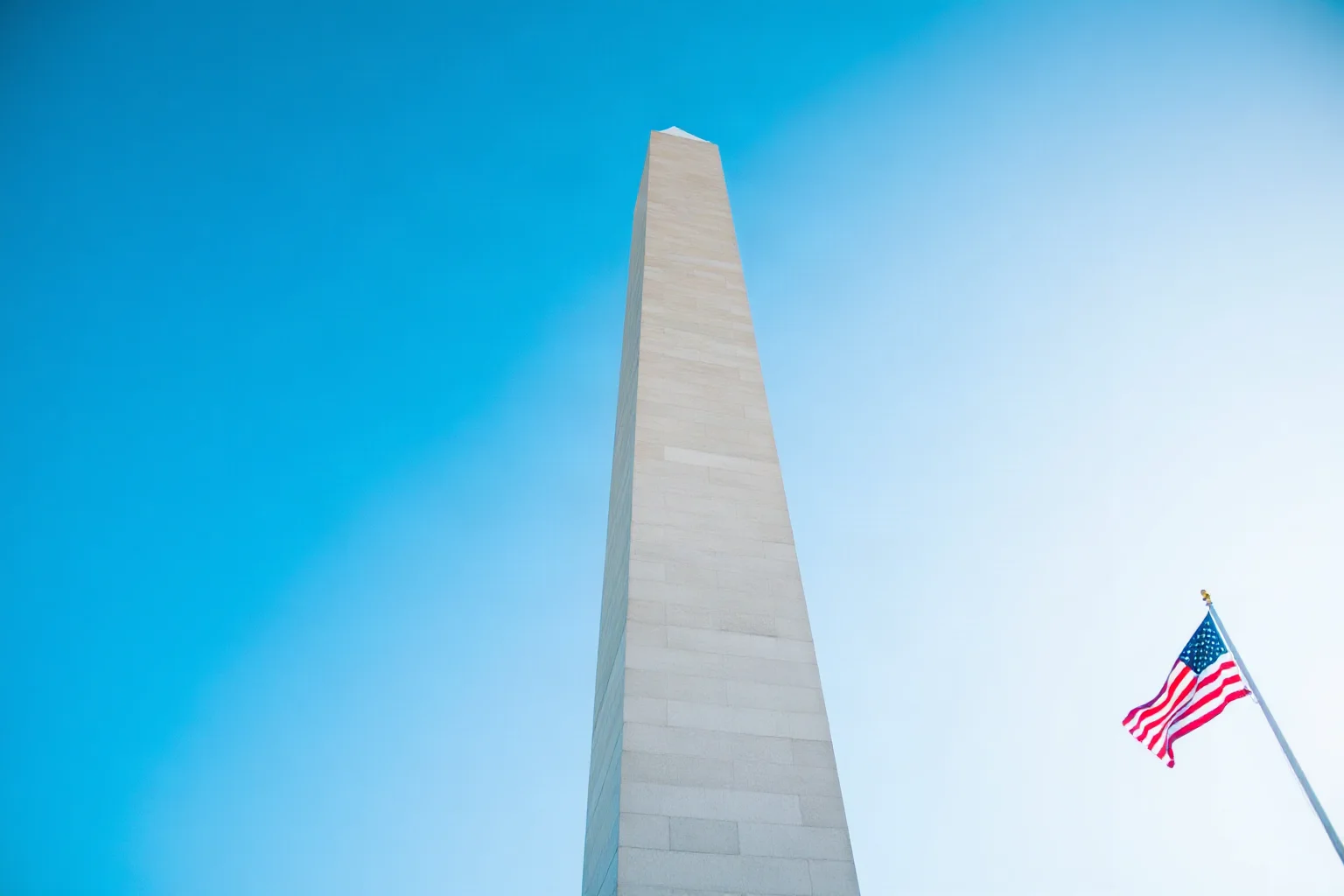
From the nation’s capital to the state of Washington, Mount Rushmore, the Washington Monument, and his portrait on both the one-dollar bill and the quarter, few historical figures are as physically embedded in a country’s landscape and currency. Presidents Day, observed in February, grew out of the earlier tradition of celebrating his birthday.
Beyond monuments, his real legacy is procedural: peaceful transitions of power, civilian control of the military, and a president who answers to term limits and law rather than personal ambition. That’s the importance of George Washington in a single sentence—not a perfect man, but a leader who chose to build a system bigger than himself.
The Bigger Picture: What Made Washington Different
It’s tempting to reduce Washington to a list of dates and trivia, but the throughline across all these facts is consistency of character. He kept choosing to relinquish power at moments when almost any other leader in history would have grabbed more of it.
That pattern—not any single battle or speech—is what earned him the trust of a deeply divided, brand-new country. It’s also why, more than two centuries later, historians and casual readers alike keep coming back to ask what made him tick.
Final Thoughts
George Washington’s real story is more complicated and more interesting than the cherry tree myth ever suggested. He was a self-taught surveyor turned reluctant revolutionary, a slaveholder who eventually freed those he enslaved, and a leader who became powerful mainly by refusing to hold onto power longer than necessary.
Understanding these facts about George Washington—the admirable parts and the difficult parts alike—gives a far richer picture than any monument can offer. That complexity is exactly why he remains one of the most studied figures in American history.
Frequently Asked Questions
What are some interesting facts about George Washington?
George Washington was unanimously elected president twice, never lived in the White House, trained as a land surveyor before becoming a soldier, and freed the people he personally enslaved in his will. He also gave the shortest presidential inaugural address in history, at just 135 words.
Why is George Washington famous?
Washington is famous for commanding the Continental Army to victory in the American Revolution, presiding over the Constitutional Convention, and serving as the first U.S. president. He's especially remembered for voluntarily giving up power multiple times, setting precedents that shaped American democracy.
What is George Washington most known for?
He's most known for being the first President of the United States and for leading the Continental Army during the Revolutionary War. Beyond those titles, he's remembered for setting the precedent of a peaceful, voluntary transfer of presidential power.
Why is George Washington important to American history?
Washington's importance comes from the precedents he set rather than any single achievement: a two-term limit, civilian control of the military, and a functioning cabinet system. His willingness to relinquish power helped establish trust in the new republic at a fragile moment.
What are two important things George Washington did as president?
As president, Washington established the first presidential cabinet, appointing figures like Jefferson and Hamilton to lead executive departments. He also issued the Neutrality Proclamation of 1793, keeping the young United States out of the war between Britain and France.
What was George Washington’s personality like?
Contemporaries described Washington as tall, physically imposing, and notably reserved, with careful, measured speech rather than dramatic oratory. He was known for self-discipline and a calm public presence, which helped project stability during a turbulent period.
What’s a good George Washington trivia question to ask?
A fun one: how many words were in Washington's second inaugural address? The answer is just 135 words, making it the shortest inaugural address by any U.S. president in history.

Alex Warren
Related Articles