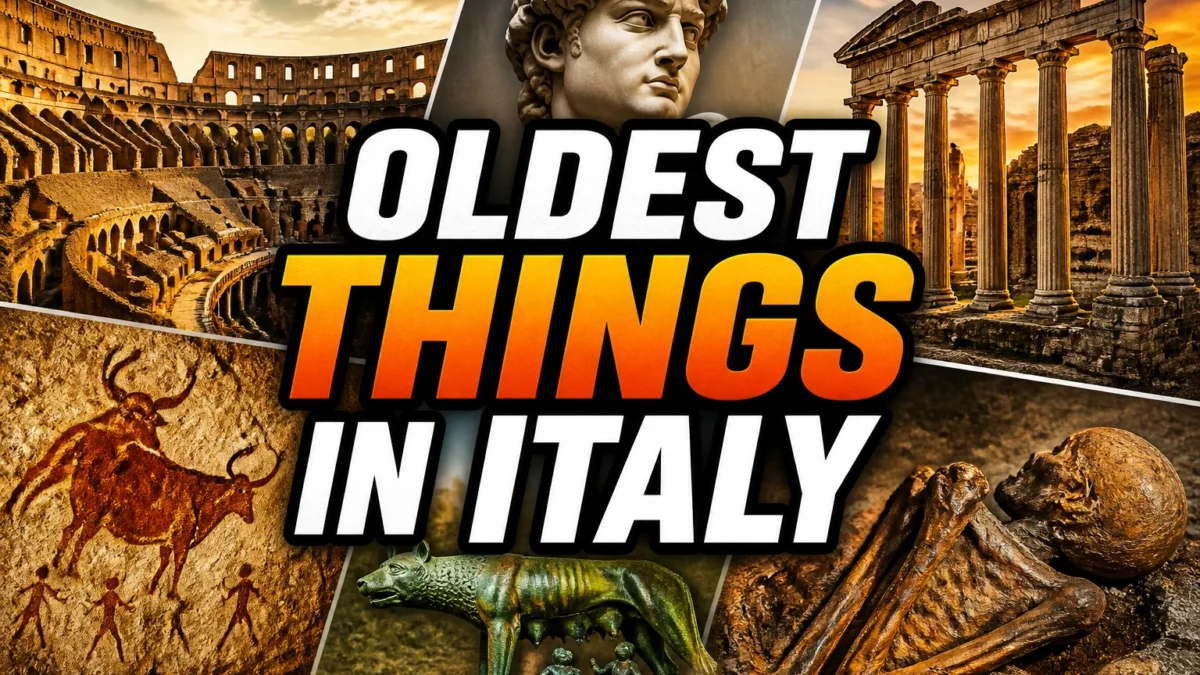
Most visitors come to Italy for the Renaissance, the food, and the Roman ruins. But the story of this peninsula is far older than the Colosseum or the Sistine Chapel. The artifacts of Italy reach back hundreds of thousands of years, long before Rome was even a village.
Some of these objects sit in museum cases, while others are still embedded in caves, river terraces, and stone walls. This list moves from the deepest prehistory to the early centuries of Rome. It includes human fossils, carved figurines, rock-cut tombs, and the earliest experiments in monumental architecture.
TL;DR: Italy's oldest wonders span roughly 850,000 years, from chipped-stone tools and Neanderthal remains to Etruscan tombs and Rome's first sewers.
How Italy's Oldest Dates Are Estimated
Most dates here come from radiocarbon dating, thermoluminescence, paleomagnetic analysis, or stratigraphy. Each method measures time differently, so ages are often expressed as ranges, not exact calendar years. That is especially true for the very oldest items.
Archaeologists also revise dates as new techniques emerge. When you see 'roughly' or 'around' in this list, treat it as a scientific estimate rather than a fixed birth certificate. The uncertainty is part of what makes Italian archaeology so active.
Deep Prehistory: Tools and Hominins
This section covers the deepest past, from the first peopling of the peninsula to the age of Neanderthals. The stars are stone tools, hominin fossils, and caves that preserve early human activity.
1. Monte Poggiolo's Chipped Stone Tools (Around 850,000 Years Old)

Among the oldest known artifacts from Italy are simple flint pebbles and flakes from Monte Poggiolo, near Forlì in Emilia-Romagna. Paleomagnetic dating places the site roughly 850,000 years ago, during the Lower Paleolithic. That makes these tools among the earliest evidence of hominin activity in Europe.
They are not flashy; many look like broken rocks. That is exactly why they matter, because they show early hominins were already working stone on the Italian peninsula. The materials are studied and occasionally displayed in Emilia-Romagna's archaeological collections.
2. Isernia La Pineta's Butchered Bone Assemblage (Around 700,000 Years Old)
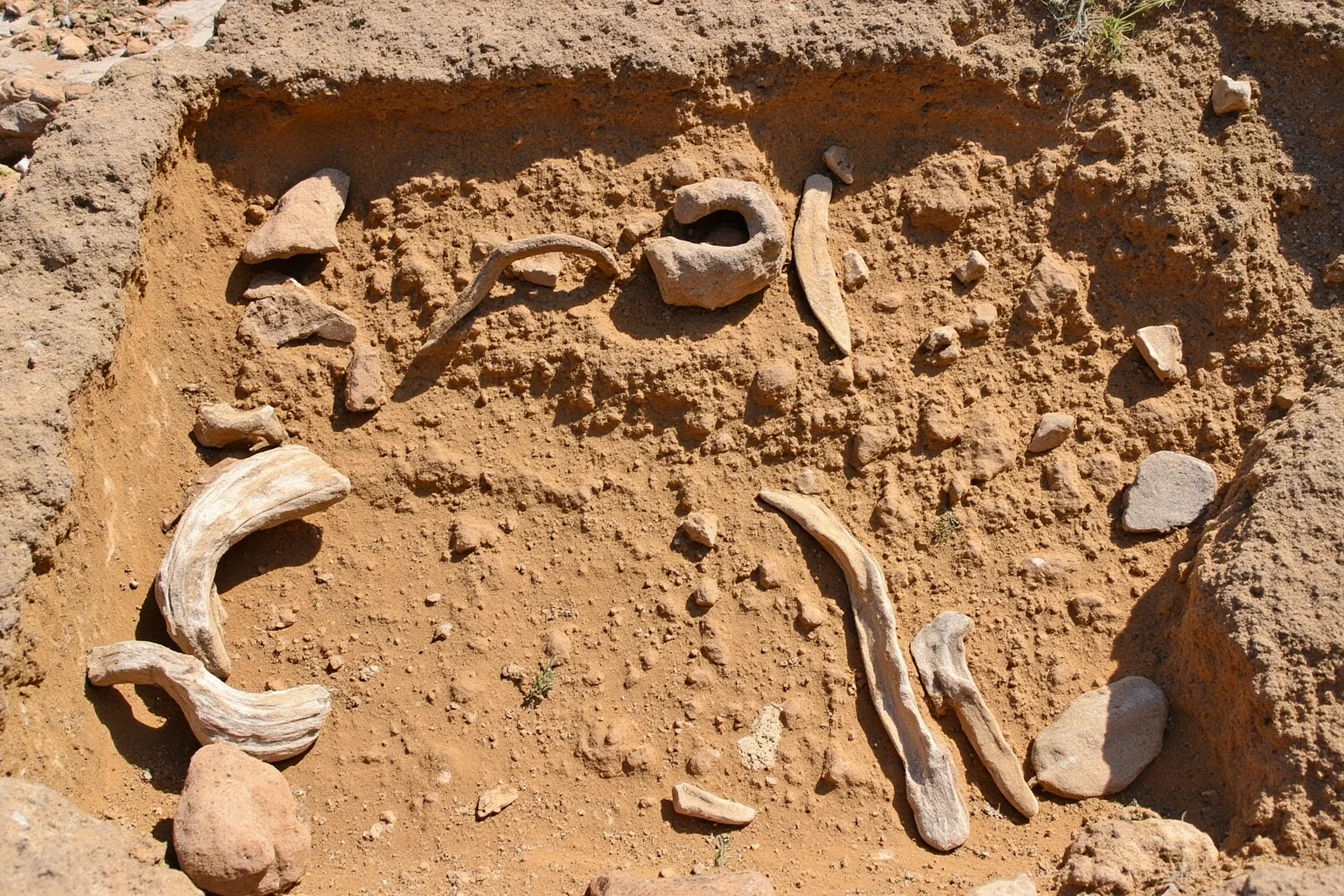
Isernia La Pineta, in the Molise region, is an open-air site dated to about 700,000 years ago. Excavations there have uncovered thousands of stone tools mixed with the butchered bones of bison, elephant, and rhinoceros. The sheer volume of material makes it one of Europe's most important Lower Paleolithic localities.
Unlike Monte Poggiolo, this site preserves a wider picture of how early hominins processed animal carcasses. A dedicated museum near the excavation lets visitors see the layers of tools and bones in context. It is a rare chance to stand inside a landscape of human activity that old.
3. The Ceprano Man Skullcap (Roughly 400,000 to 500,000 Years Old)
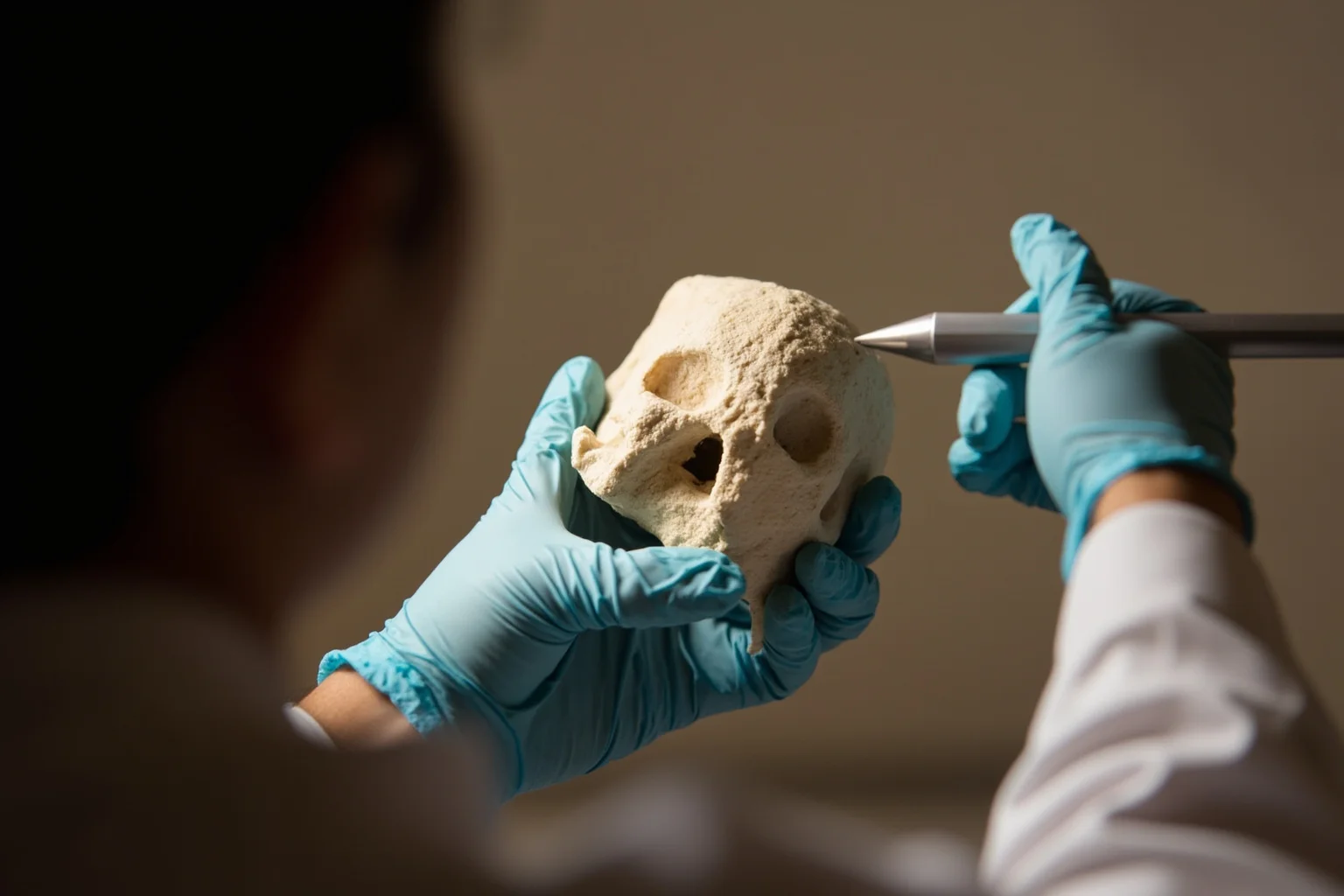
Ceprano Man is a hominin skullcap found in 1994 near Ceprano, south of Rome. Most researchers place it in the Middle Pleistocene, roughly 400,000 to 500,000 years old. Its classification has shifted over the years, with some linking it to Homo heidelbergensis or an early human population.
Because the fossil is a partial skull, experts still debate exactly where it fits in the human family tree. That uncertainty is a good reminder that early Italian prehistory is still being written. Casts appear in Italian anthropology collections, while the original remains in scientific custody.
4. Altamura Man's Neanderthal Skeleton (Roughly 130,000 to 170,000 Years Old)
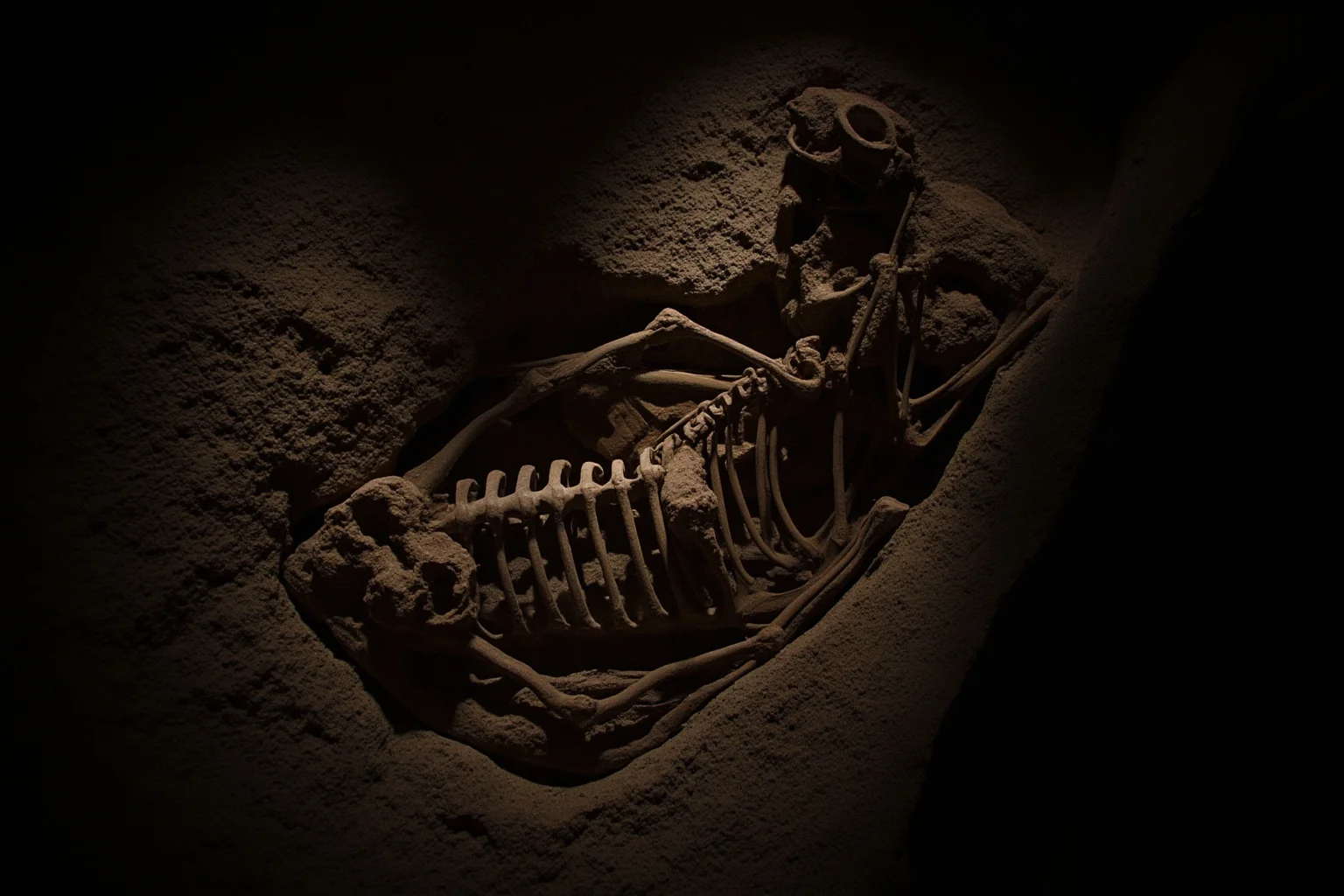
Deep inside a karst cave near Altamura in Puglia, a nearly complete Neanderthal skeleton sits fused to the rock. Altamura Man, discovered in 1993, is usually dated between about 130,000 and 170,000 years old. It is one of the most complete Neanderthal individuals ever found.
The original skeleton has been kept in place inside the cave to preserve delicate bone and mineral deposits. Visitors cannot enter the fragile chamber, but the nearby archaeological museum in Altamura explains the discovery and displays related materials. It is a haunting reminder that some Italian artifacts remain part of the landscape.
5. The Guattari Cave Neanderthal Remains (Around 50,000 to 60,000 Years Old)
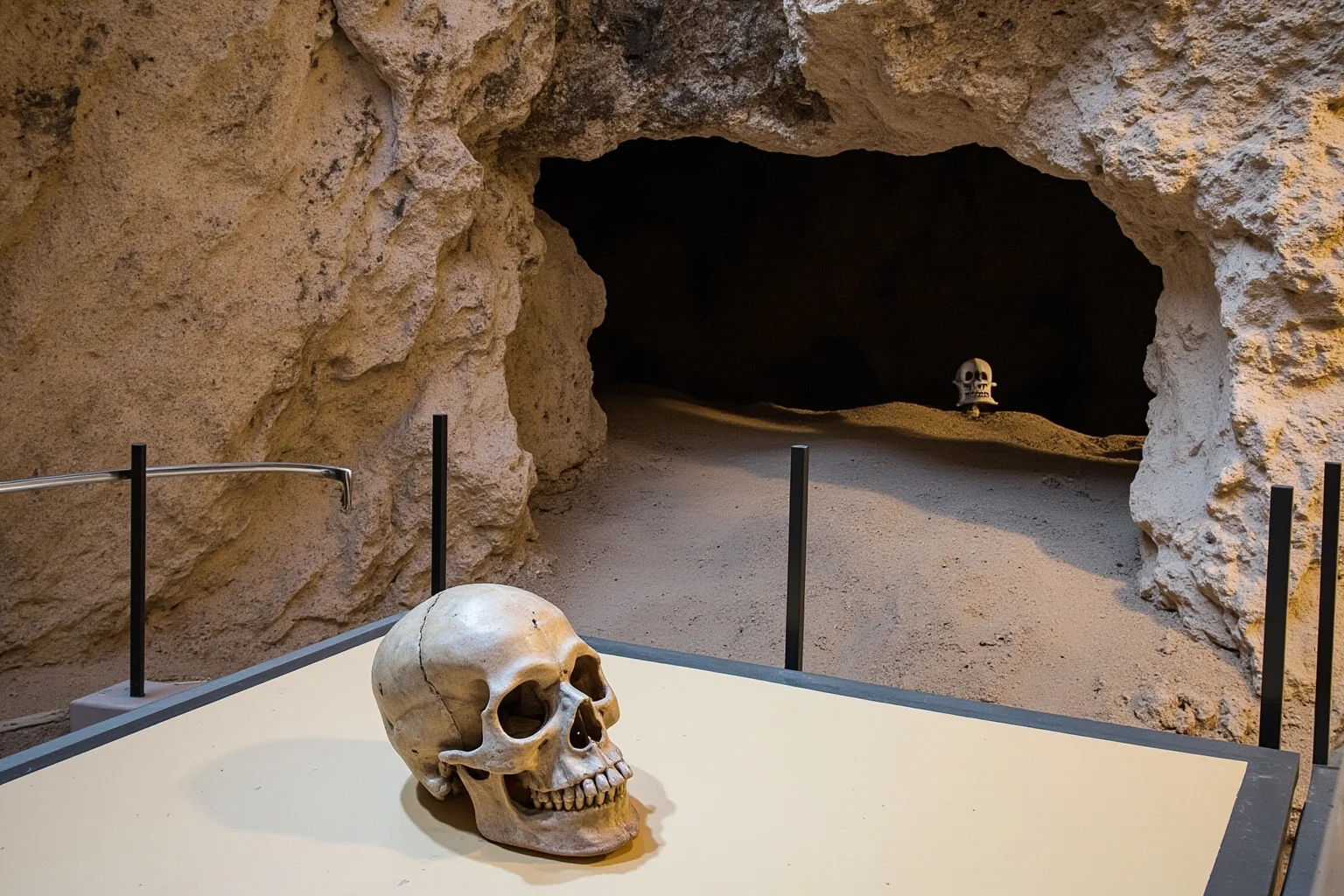
The Guattari Cave on Monte Circeo, Lazio, became famous in 1939 when workers found a Neanderthal skull. Later excavations revealed additional Neanderthal bones and hyena-damaged remains, with ages clustering around 50,000 to 60,000. The cave sits on a dramatic coastal headland tied to myths about the sorceress Circe.
The skull's damaged base once fueled dramatic stories about ritual cannibalism. Researchers now suggest natural processes and animal scavenging are more likely explanations. It is a useful myth-busting moment from the deep past, and replicas and displays tell the story at local museums.
Ice Age Art and Burials
By the Upper Paleolithic, around 40,000 years ago, people in Italy were not just making tools. They were decorating stone, burying their dead with care, and carving small figures.
6. Fumane Cave's Painted Stone Fragments (Around 41,000 to 38,000 Years Old)
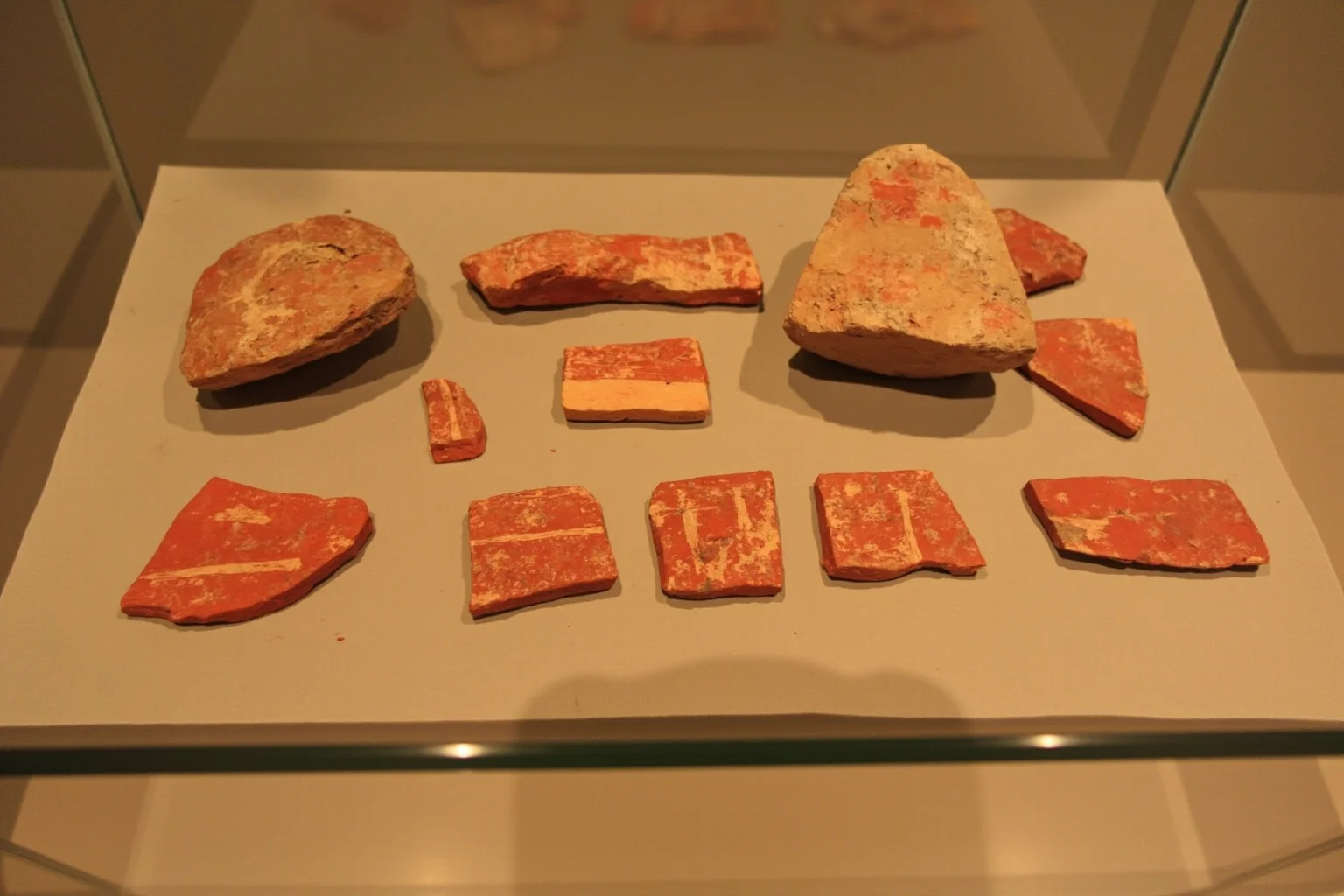
Fumane Cave in the Veneto foothills has produced small stone fragments painted with red ochre, some showing animal or geometric forms. These finds come from layers dated between about 41,000 and 38,000 years old. If the dating and interpretation hold, they are among the oldest painted art in Europe.
The fragments are small enough to hold in your hand, which is why archaeologists call them portable art. They may have been part of a broader artistic tradition we can barely see today because so much has decayed. The cave is a research site, and key finds surface in regional archaeological exhibitions.
7. The Arene Candide Burial (Around 28,000 Years Old)
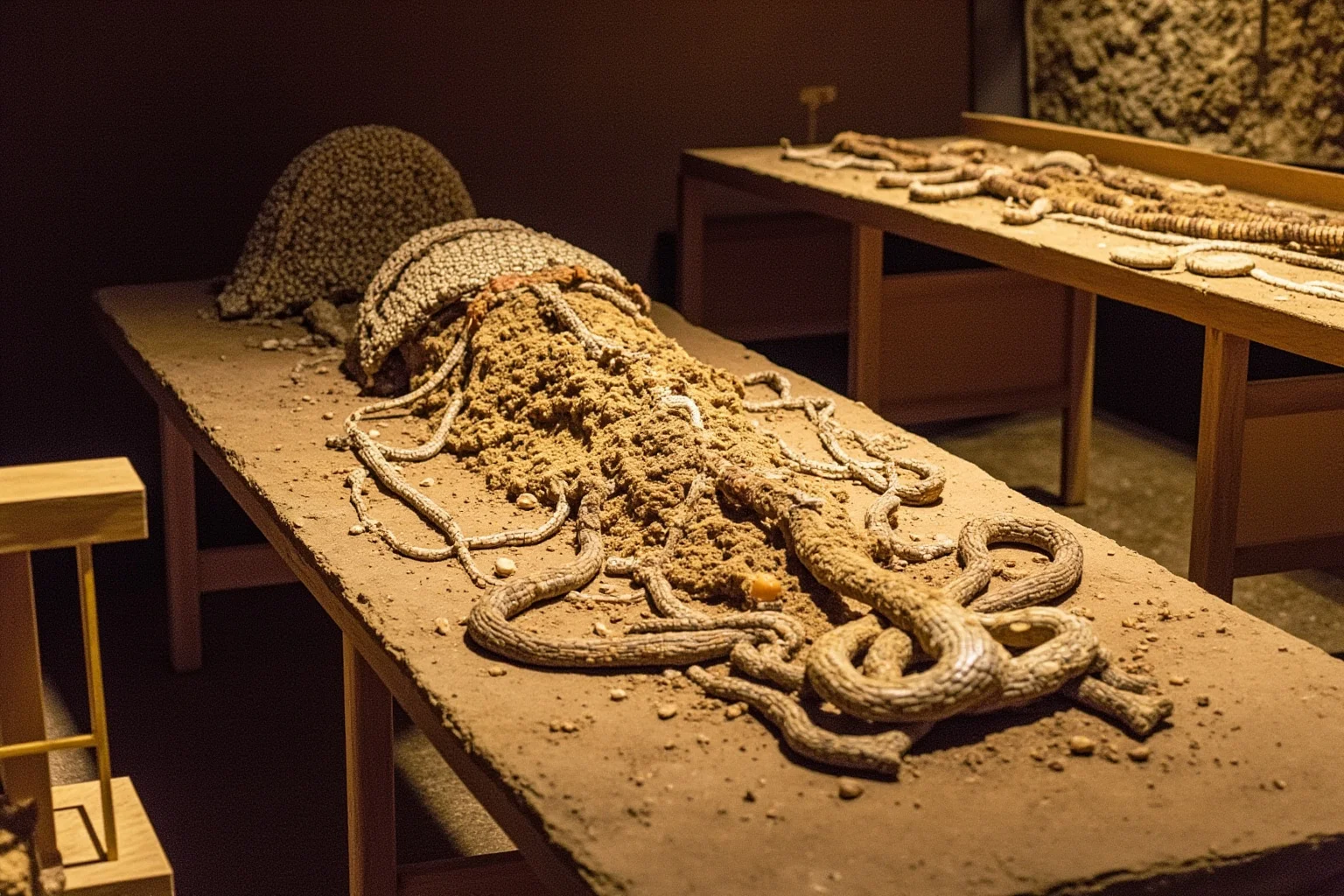
At the Arene Candide cave near Finale Ligure, a young male was buried roughly 28,000 years ago with a cap of shell beads, deer-tooth pendants, and ivory ornaments. He is sometimes nicknamed the 'Prince' of Arene Candide, though the title is modern, not an ancient status marker. The grave is one of the richest Upper Paleolithic burials in Italy.
The burial shows that people on the Italian coast were gathering shells and crafting personal ornaments long before writing. The local archaeological museum in Finale Ligure presents the story of the cave and its burials. It turns a narrow coastal site into a window on Ice Age identity.
8. The Venus of Savignano (Around 20,000 to 25,000 Years Old)
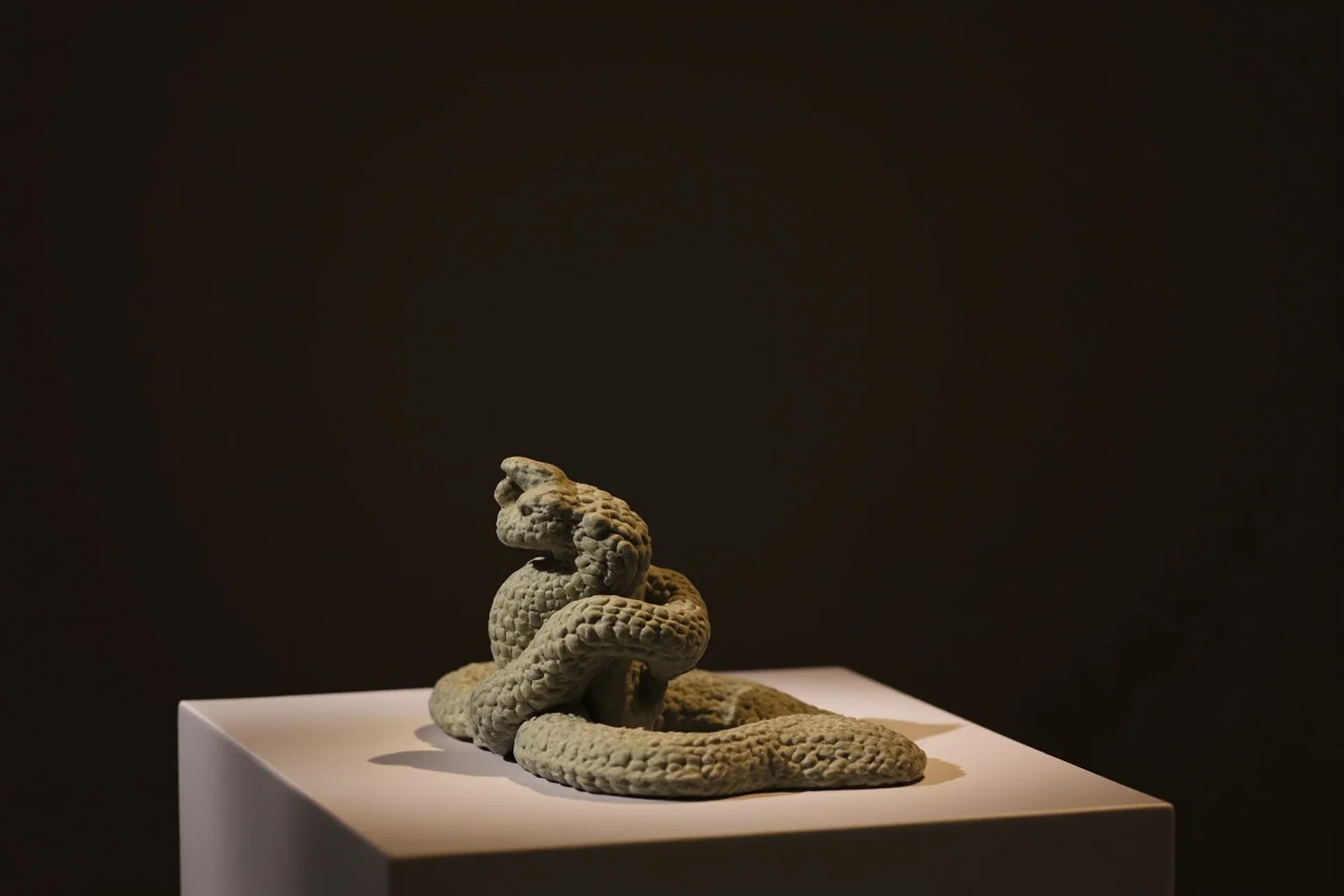
The Venus of Savignano is a serpentine figurine about 22 centimeters tall, found near Modena in Emilia-Romagna. It is usually dated to the Upper Paleolithic, perhaps 20,000 to 25,000 years old. Unlike many small carved figures, this one is unusually large and carefully polished.
Its exaggerated female forms connect it to a wider family of Paleolithic Venus figurines found across Europe. The original is part of the prehistoric collections in Rome's Museo delle Civiltà. Seeing it up close is a reminder that sculpture in Italy began well before marble.
9. The Grimaldi Venuses of Balzi Rossi (Around 24,000 to 19,000 Years Old)
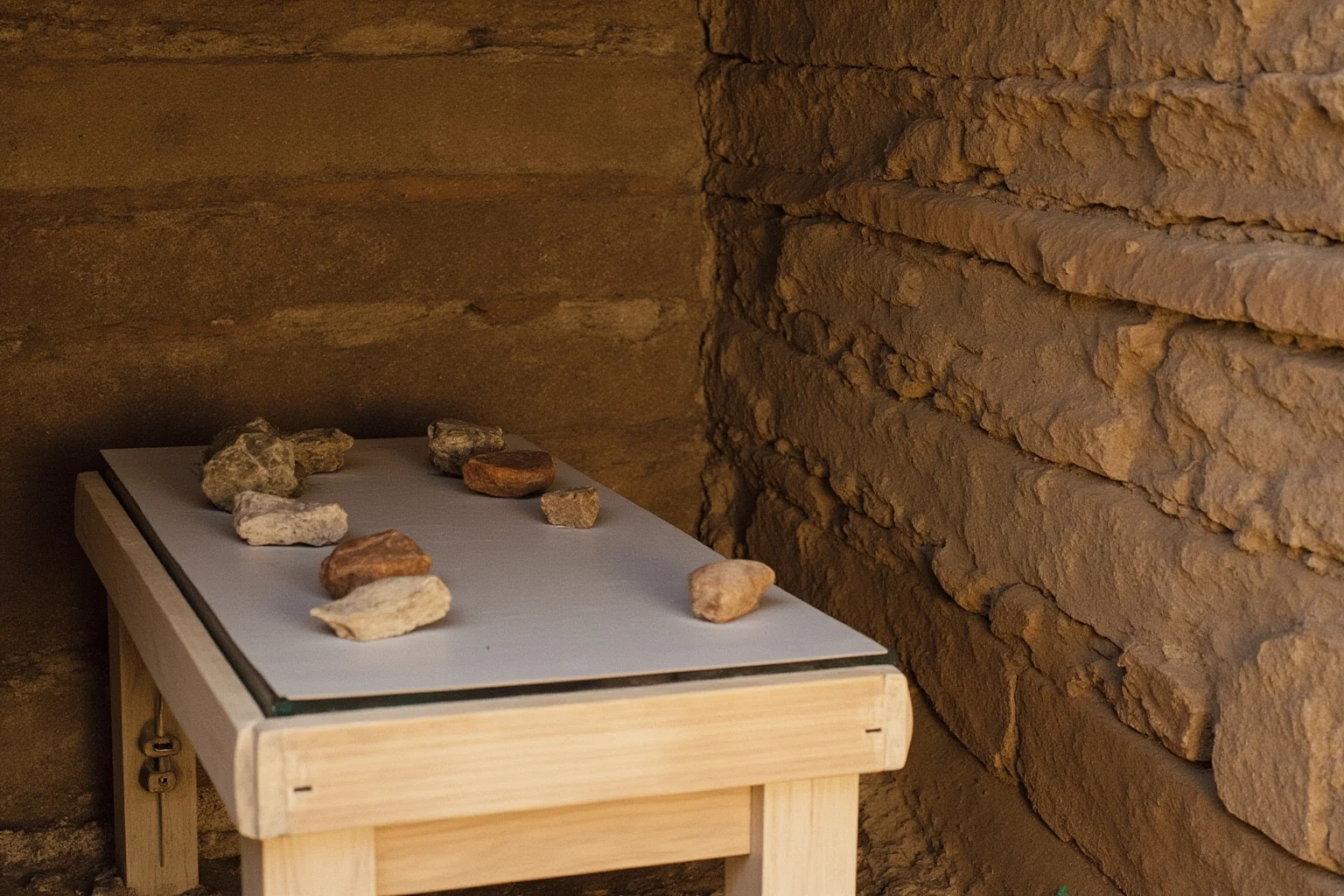
The Balzi Rossi cliffs near Ventimiglia, on the Ligurian border with France, hide a network of caves that produced a series of small female figurines. The so-called Grimaldi Venuses are carved from stone, ivory, or bone and date roughly between 24,000 and 19,000 years ago. They vary widely in shape, from slender to highly stylized.
Many of these delicate artifacts from Italy's caves are displayed at the Balzi Rossi archaeological museum right next to the site. Others entered collections across Europe during the early days of archaeology. They remain central to debates about fertility, identity, and what this ancient art meant.
10. Paglicci Cave's Paleolithic Burials (Around 24,000 to 20,000 Years Old)
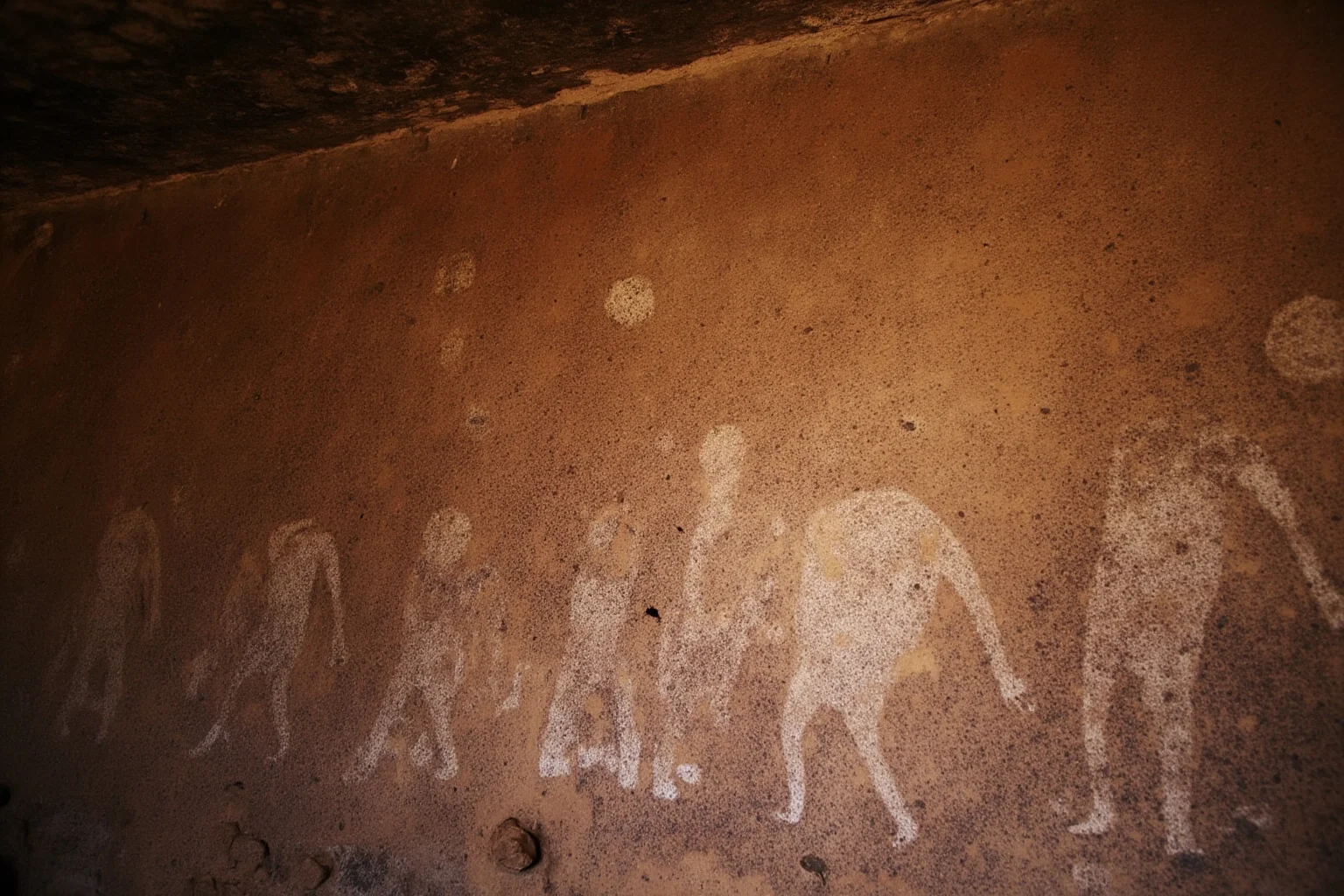
Paglicci Cave, on the Gargano promontory in Puglia, has yielded human burials, engraved stones, and rich Paleolithic layers. Two burials of young individuals, often described as adolescents, are dated to around 24,000 to 20,000 years ago. The cave also preserves rare traces of ochre and portable art.
These burials are significant because human remains from this period are not common in Italy. The cave's sequence helps archaeologists trace how people lived, hunted, and buried their dead during the Ice Age. Finds from Paglicci appear in regional collections and occasionally in dedicated exhibitions.
11. The Addaura Cave Engravings (Around 10,000 to 8,000 BCE)
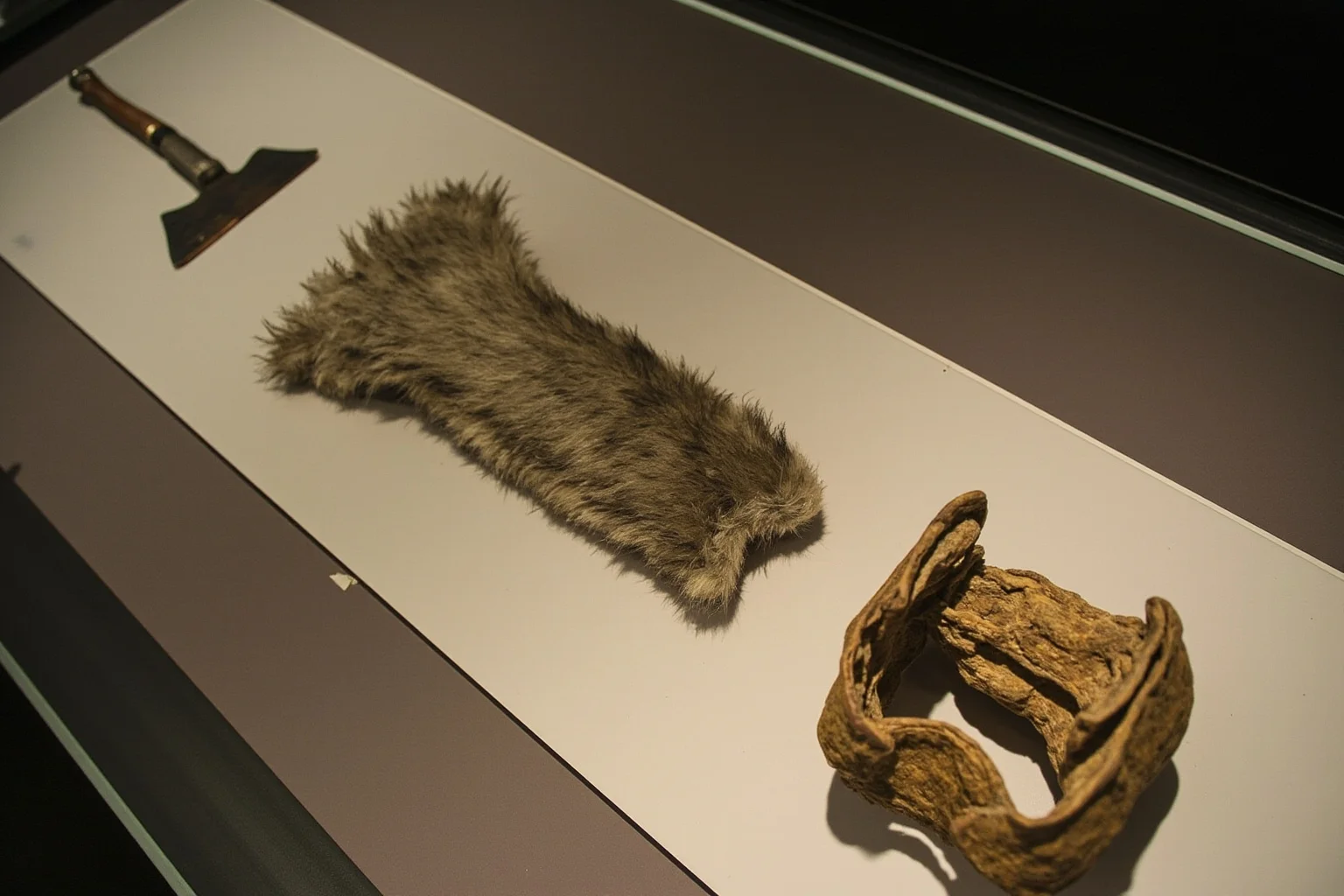
On the slopes of Monte Pellegrino above Palermo, the Addaura Cave contains engraved scenes of human and animal figures. The carvings date to the late Epigravettian, roughly 10,000 to 8,000 BCE. Some panels appear to show a group of figures surrounding a central person, which has inspired endless interpretation.
Because the original rock is fragile and not always accessible, Palermo's archaeological museum presents casts and visual documentation. The engravings are a vivid reminder that Sicily was part of Italy's deep art history from the start. They also show how much meaning can be packed into a few scratched lines.
Neolithic, Copper, and Bronze Age Built Wonders
After the Ice Age, Italy's communities began settling down, herding animals, and building structures meant to last. This section crosses the shift from farming villages to the first monumental stone towers.
12. Ötzi the Iceman and His Copper Age Kit (Around 3300 BCE)
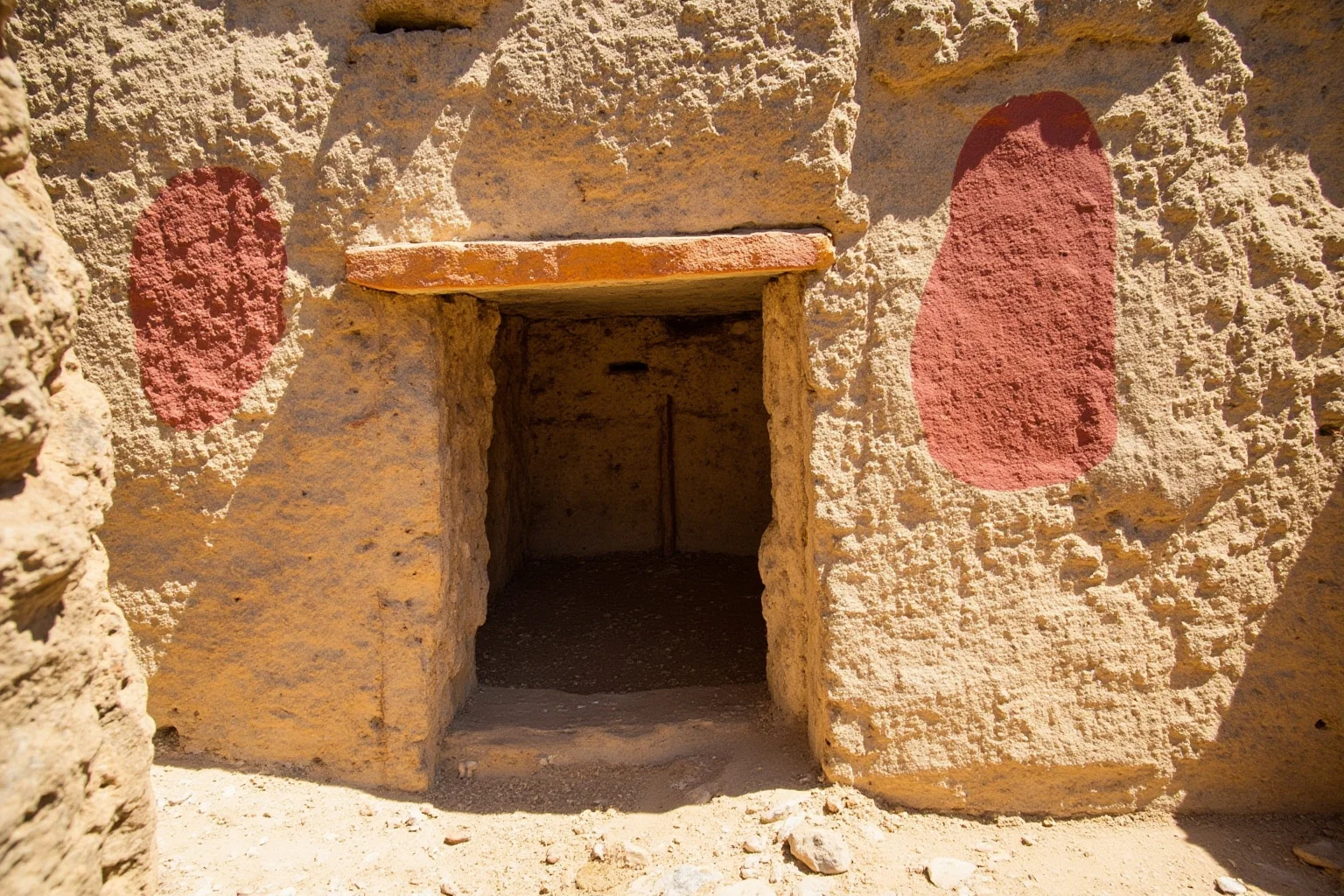
Ötzi the Iceman is not a building, but he is one of Italy's most extraordinary archaeological discoveries and one of the oldest preserved human bodies in Europe. Found in 1991 in the Alps near the Italy-Austria border, he dates to about 3300 BCE, the Copper Age. His body was preserved naturally by ice for more than five thousand years.
Ötzi's equipment includes a copper-bladed axe, a bow, arrows, clothing, and birch-bark containers. He lies in a climate-controlled viewing room at the South Tyrol Museum of Archaeology in Bolzano. The museum displays both the mummy and the artifacts recovered with him, making it one of the most intimate encounters with prehistory in Italy.
13. The Domus de Janas Rock-Cut Tombs (Around 4000 to 2700 BCE)
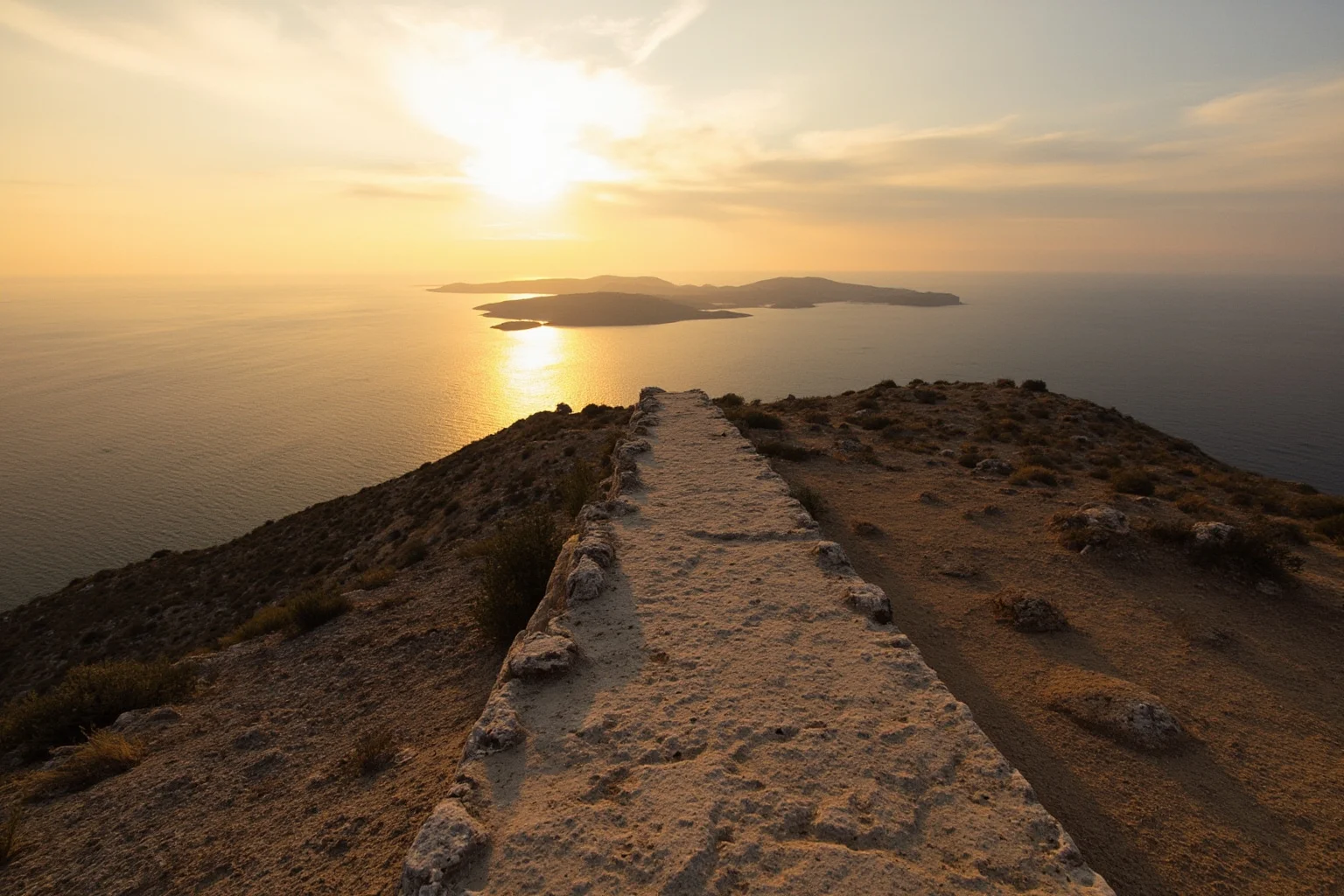
The domus de janas, or 'fairy houses,' are rock-cut tombs built in Sardinia from around 4000 to 2700 BCE. They are carved directly into limestone and often mimic the chambers of the living. Some of the finest examples, like Sant'Andrea Priu and Anghelu Ruju, let visitors walk into spaces over five thousand years old.
These tombs show that Neolithic Sardinians invested enormous effort in their dead. They also preserve traces of red paint, false doors, and carved horns, though many surfaces have weathered. They count among the oldest standing architecture in Italy that a visitor can still enter.
14. Monte d'Accoddi's Prehistoric Platform Mound (Around 4000 BCE)
Monte d'Accoddi, near Sassari in Sardinia, is a truncated pyramidal platform that resembles a stepped ziggurat. It was built and rebuilt during the fourth millennium BCE, making it roughly six thousand years old. Its form is so unusual in the Mediterranean that scholars still debate what rituals took place there.
Approaching the monument along its long ramp feels surprisingly monumental for the Neolithic. The site also includes a menhir, altar-like stones, and traces of surrounding settlement. It is one of the clearest examples of monumental construction in prehistoric Italy.
15. Nuraghe Su Nuraxi (Built Around 1500 BCE)
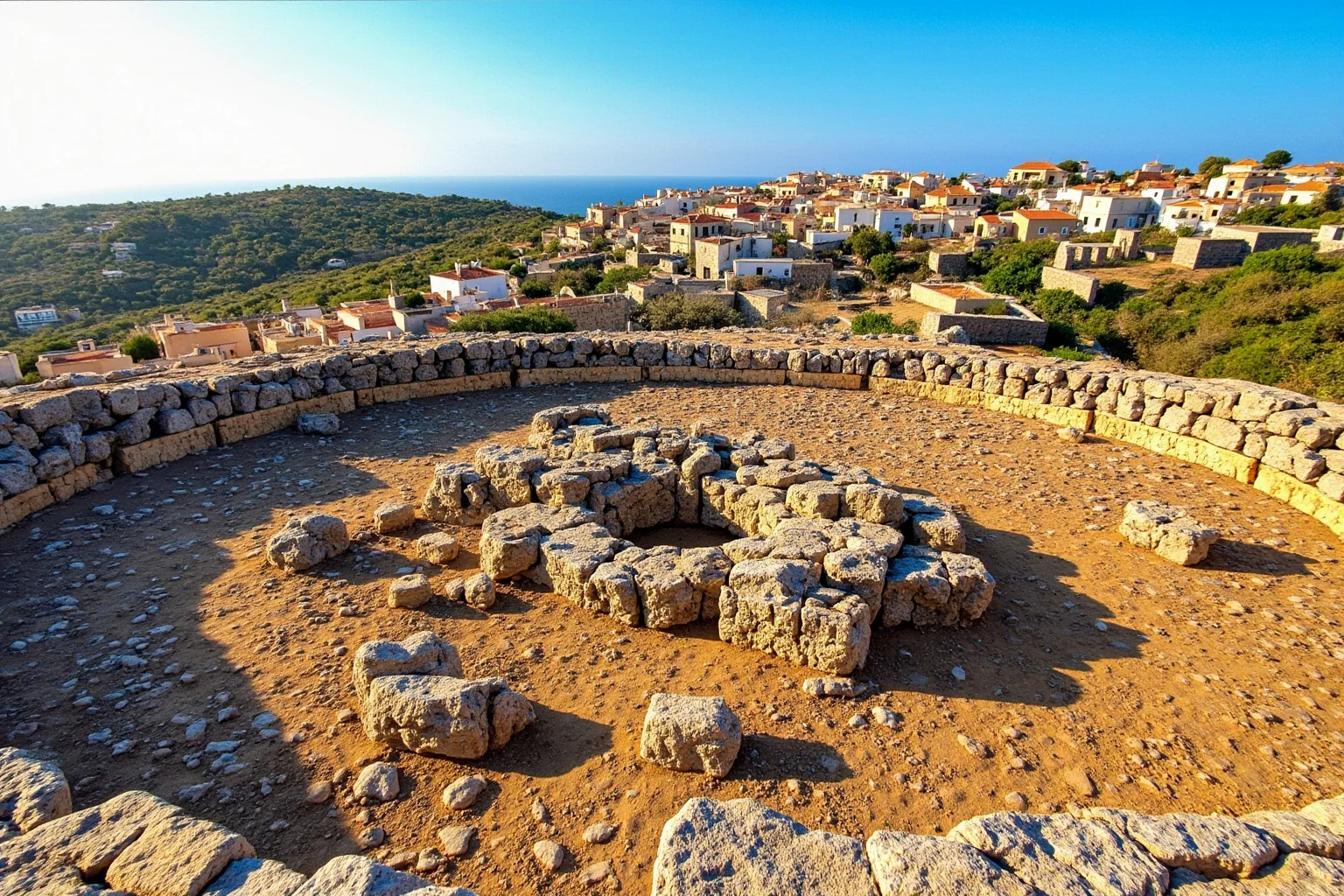
Su Nuraxi near Barumini is the most famous of Sardinia's thousands of nuraghi, the dry-stone tower complexes that define the island's Bronze Age. The central tower was built around 1500 BCE, with later defensive walls and a village added around it. It has been a UNESCO World Heritage Site since 1997.
Climbing through its stone corridors and beehive chambers offers a direct sense of Bronze Age engineering. The surrounding village shows how people lived, stored food, and defended themselves. Unlike many ruins, Su Nuraxi still feels like a fortress, not just a foundation.
Etruscan, Greek, and Early Roman Survivors
By the first millennium BCE, Italy was home to a mosaic of cultures, from Etruscans and Greek settlers to the early Romans. The objects and structures below are younger than the prehistoric wonders above, but they are still among the oldest of their kind.
16. The Etruscan Tomb of the Ducks (Around 680 BCE)
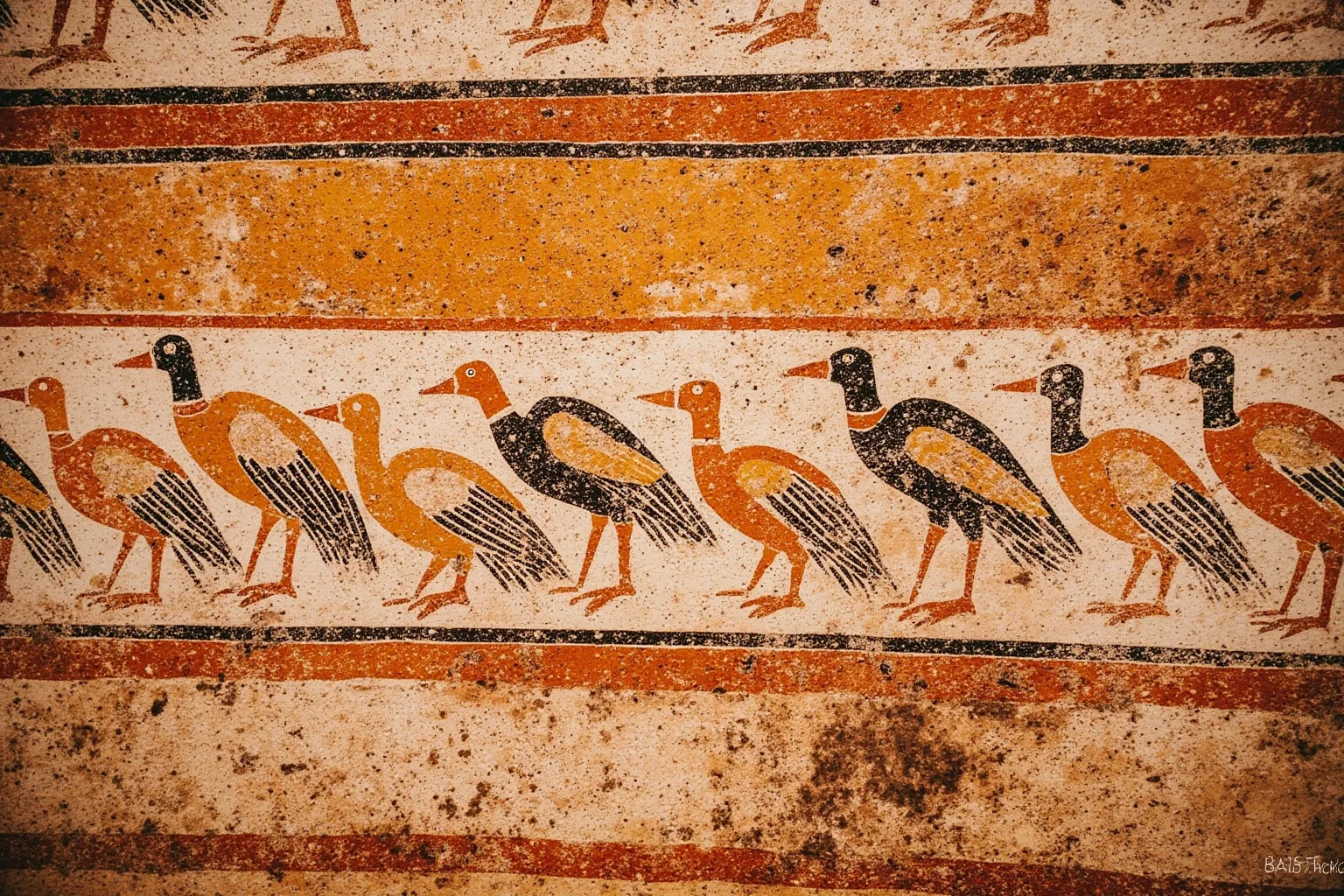
The Etruscan Tomb of the Ducks at Veii, near Rome, dates to around 680 BCE. Its name comes from the painted frieze of water birds walking in a line, one of the earliest examples of Etruscan tomb painting. The tomb's simple chamber shows how Etruscan elites began decorating burial spaces with colorful imagery.
The site is not always open to casual visitors, so check access before you go. Its imagery appears in many Etruscan art collections and publications. It marks the moment when tomb painting in central Italy was taking shape, centuries before Rome dominated the region.
17. The Lapis Niger Inscription (Around 570 to 550 BCE)
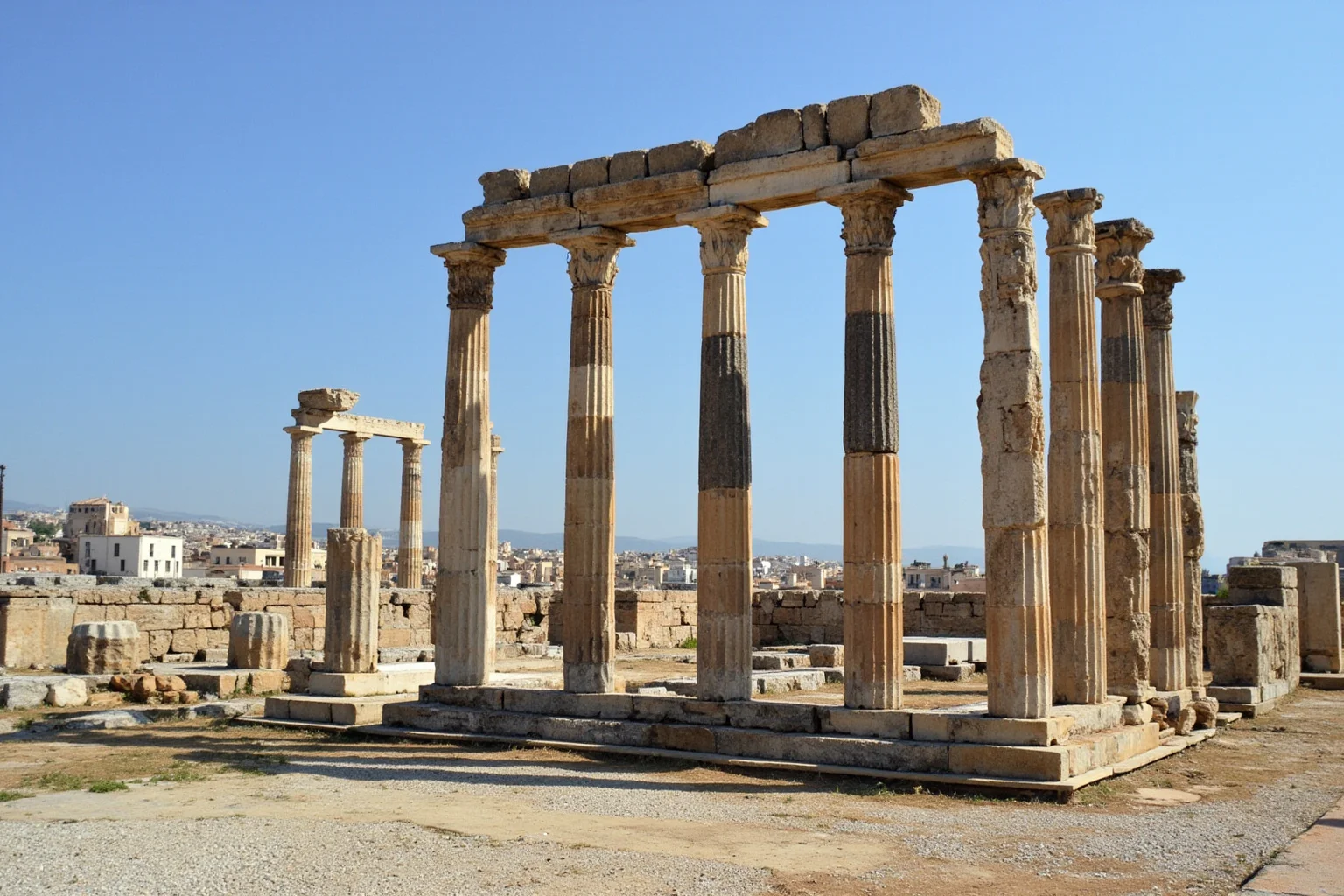
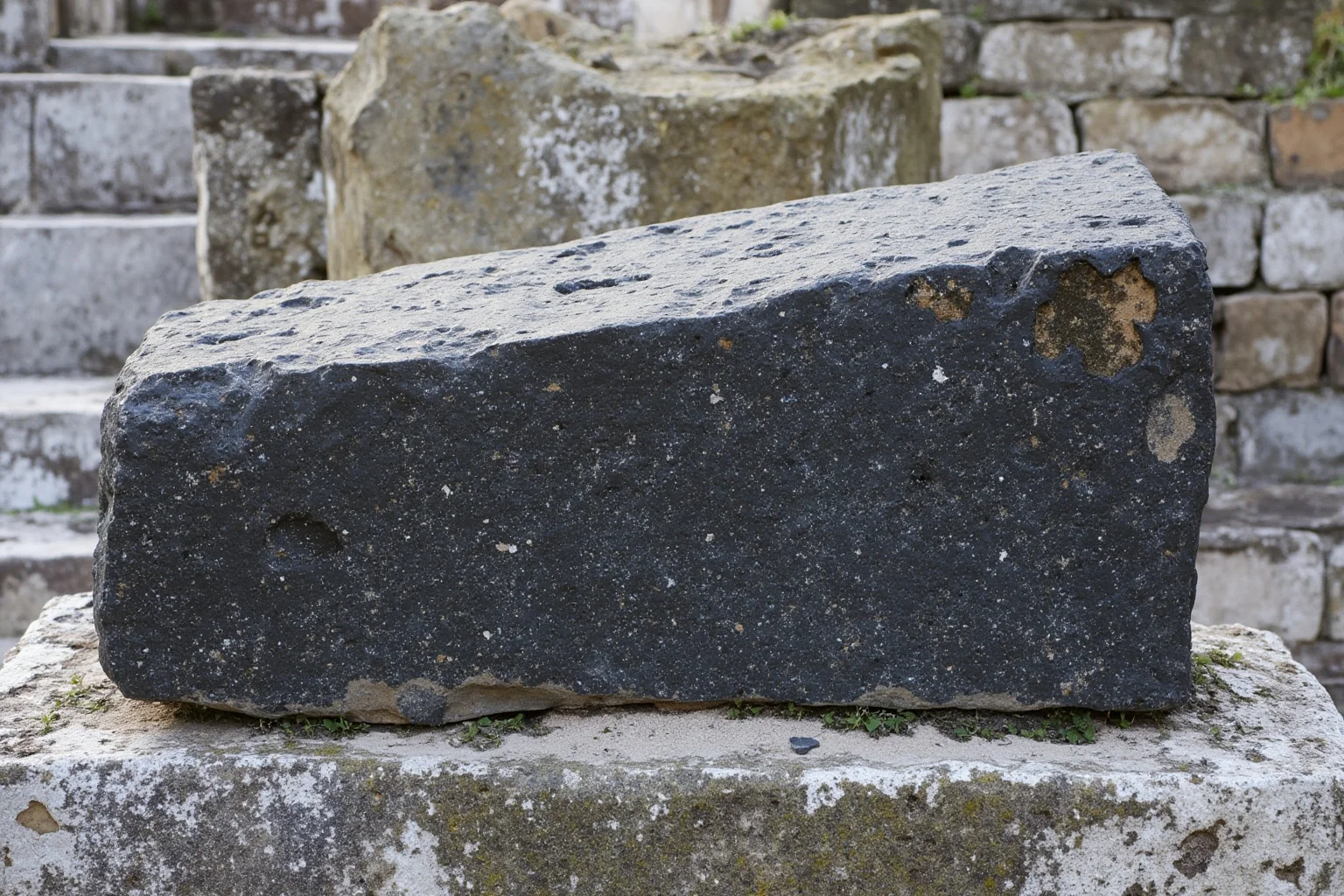
In the Roman Forum, a dark stone pavement covers an underground sanctuary and inscribed stone block called the Lapis Niger. The inscription is often described as one of the oldest surviving Latin texts, dating to around 570 to 550 BCE. It is fragmentary and not fully understood, but it clearly has a ritual or legal character.
Visitors to the Forum can see the protected area, though the original inscription is fragile. The stone is a direct link to Rome's earliest state formation and its first experiments with writing public rules. It is also a reminder that the Forum was sacred long before the marble temples arrived.
18. The Temple of Apollo at Syracuse (Around 565 BCE)
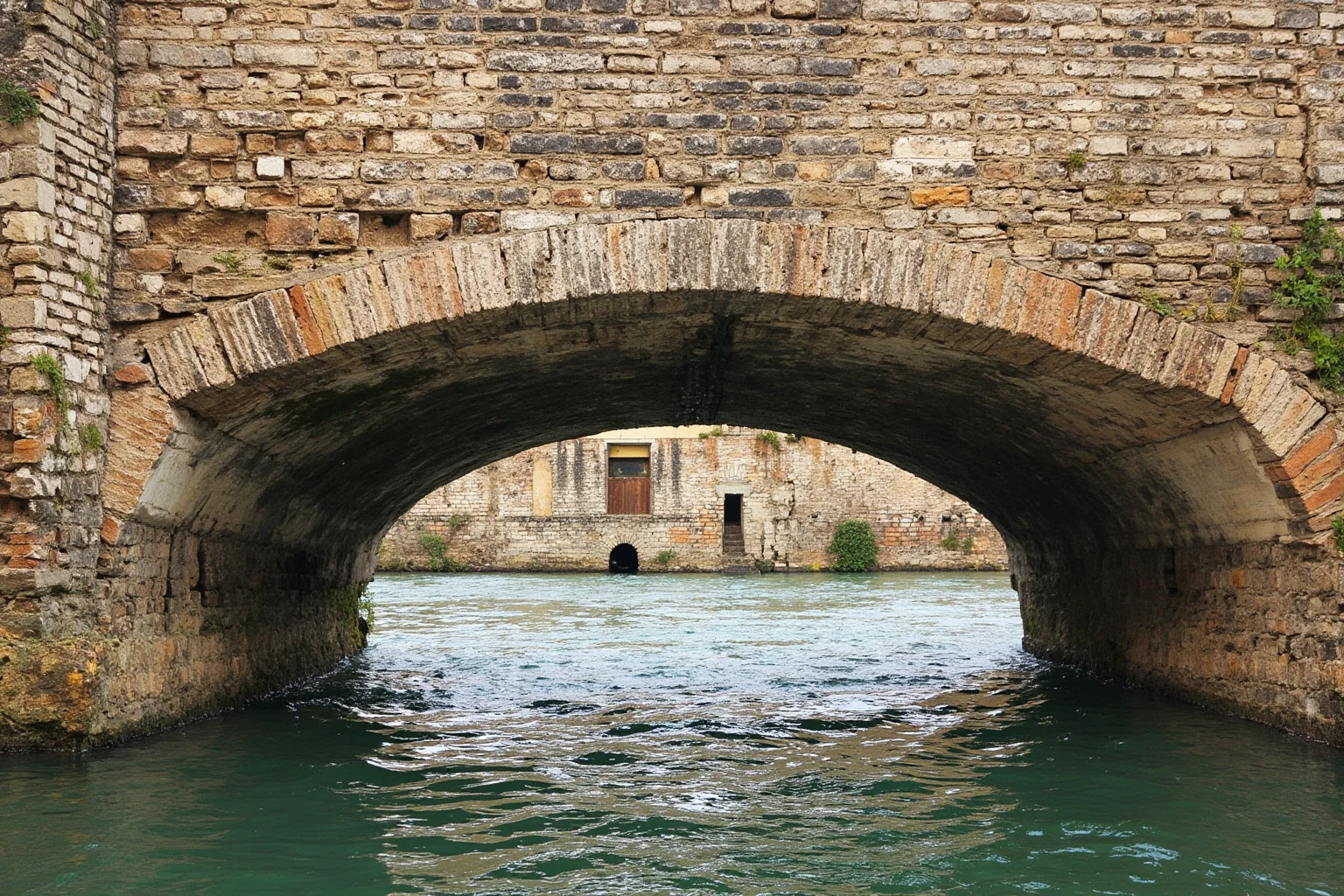
The Greek Temple of Apollo in Syracuse, Sicily, was built around 565 BCE. It is one of the earliest major Doric temples built by Greek settlers in the western Mediterranean. Its surviving columns and foundations sit at the entrance to Ortigia, the historic island heart of Syracuse.
Over the centuries, the temple was converted into a Byzantine church, then a mosque, and later a Norman church. That layering of cultures makes it a compact history of Sicily in one building. The remains are visible in the open air, so you can visit them at any hour.
19. The Cloaca Maxima (Sixth Century BCE)
The Cloaca Maxima in Rome began as an open drainage channel in the sixth century BCE and later became the city's great sewer. It was traditionally associated with the Etruscan-born king Tarquinius Priscus, though the archaeology is complex. Parts of its ancient outflow still drain into the Tiber River today.
The most visible section is the large stone arch where it empties near the Forum Boarium. It proves that early Rome was organized enough to manage water at a citywide scale. That kind of infrastructure was just as important as armies and temples in building Roman power.
20. The Apollo of Veii (Around 510 BCE)
The Apollo of Veii is a large painted terracotta statue made around 510 BCE for an Etruscan temple at Portonaccio. It depicts the god striding forward, and it was likely placed high on the temple roof as part of a mythological scene. The statue is now in the Museo Nazionale Etrusco di Villa Giulia in Rome.
Its colors and lifelike movement shatter the myth that ancient sculpture was always plain white marble. The statue was originally part of a group that included Heracles and a deer, assembled as a narrative in terracotta. It is one of the most important Etruscan artworks ever recovered from Italy.
Myths Worth Unlearning Along the Way
One common myth is that everything important in Italy starts with the Romans. In truth, the peninsula was already full of art, burial grounds, and monumental architecture thousands of years before Rome became a power. Sardinia's Bronze Age towers and the Paleolithic burials in Liguria and Puglia make that clear.
Another myth is that old stone tools and cave paintings cannot be 'real' artifacts because they look simple. Archaeologists treat such finds as precise evidence of problem-solving, planning, and symbolic behavior. The oldest things on this list are not primitive doodles; they are early technology.
Repatriation: When Italian Artefacts Come Home
For centuries, tomb robbers, foreign collectors, and early excavators removed vast numbers of artifacts from Italy. Many ended up in foreign museums or private hands, often with little documentation about where they were found. Today, Italy works with international law enforcement to track and recover looted pieces.
The global trade in Italy artifacts has long mixed legitimate collecting with looting. One widely reported case involved 337 artifacts returned to Italy after investigations into antiquities trafficking. The recovered material typically includes painted vases, bronze figurines, coins, and other Italian artefacts spanning Etruscan, Greek, and Roman periods.
Looted objects often lose the details of their original tomb, temple, or settlement. Repatriation is not only about national pride; it is about recovering the archaeological information that makes artifacts meaningful. Museums increasingly emphasize provenience and ethical collecting, which changes how the world buys and displays Italian artifacts.
Where to See the Oldest Artifacts of Italy
You do not need to be an archaeologist to see these old objects. Museums in Rome, Bolzano, Finale Ligure, Palermo, and Sardinia bring the finds close, often near the original sites. Many ruins, like Su Nuraxi, the Temple of Apollo, and the Cloaca Maxima, are open-air visitor routes.
If you plan a longer trip, think regionally rather than trying to see all twenty in one week. Northern Italy is strong for Paleolithic caves and Ötzi, while Sardinia is the place for Neolithic and Bronze Age stone monuments. Rome and Sicily hold the younger but still ancient Etruscan, Greek, and Roman survivors.
Always check current access before visiting caves or tombs, because fragile sites close for conservation or research. Some original objects are replaced by casts, especially in deep-prehistory displays. The cast still tells the same story without putting the original Italian artifact at risk.
Why Italy Feels Like a Land of Wonders
Italy's oldest things are not all behind glass or ropes. Many are still embedded in caves, fields, and city streets, which means a walk through Rome, Sardinia, or Sicily can feel like crossing time. The country's archaeological layers make it hard to say where history begins and daily life ends.
From an 850,000-year-old flint tool to a painted Etruscan god, each Italian artifact is a small archive of human choices. The dates may shift as science improves, but the wonder does not. Italy earns its nickname as a land of wonders by keeping so many of its oldest stories close at hand.
Frequently Asked Questions
What is the story behind the 337 artifacts returned to Italy?
The 337 artifacts returned to Italy came from international investigations into antiquities trafficking and looting. The items typically include Etruscan, Greek, and Roman pottery, bronze figurines, coins, and other Italian artefacts. Italian authorities work with foreign law enforcement to identify the objects and bring them back, often displaying them in repatriation exhibitions.
What is the oldest artifact ever found in Italy?
The oldest widely accepted artifacts from Italy are chipped flint tools from Monte Poggiolo, estimated to be around 850,000 years old. Some older claims at sites like Pirro Nord are still debated, which is why archaeologists often say 'among the oldest' rather than 'the first.' These simple tools show that hominins were active on the peninsula much earlier than the Romans or Etruscans.
Can you visit Ötzi the Iceman in Italy?
Yes, Ötzi the Iceman is displayed at the South Tyrol Museum of Archaeology in Bolzano. Visitors can see his preserved body in a climate-controlled viewing room along with the clothing, tools, and equipment found with him. The museum is one of the best places in Italy to see a complete Copper Age individual and his artifacts from Italy.

Alex Warren
Related Articles