


History loves an underdog. Long before modern sports fans coined phrases like “the comeback kid,” kings, generals, revolutionaries, and entire nations were writing the original playbook for bouncing back from total ruin.
Some of these comebacks were built on genuine grit and strategy, while others owe more to luck, timing, or myths that grew taller with each retelling.
In this rundown, we’re separating the well-documented turnarounds from the exaggerated legends, so you get the real story behind some of the greatest comeback stories ever recorded.
Whether you’re after political resurrections, military reversals, or personal reinventions, this list covers the moments that still get cited whenever someone needs proof that defeat isn’t always final.
TL;DR: History’s greatest comebacks—from Churchill’s wartime rise to Japan’s postwar economic miracle—show that dramatic recoveries are real, but they’re almost always messier and less mythical than the legend suggests.
What Actually Counts as a Great Comeback?
Not every recovery deserves a spot among the greatest comebacks of all time. A true historical comeback usually involves a documented low point, a clear and verifiable turnaround, and lasting consequences that historians can point to rather than just a feel-good rumor.
Many popular comeback stories get inflated over the centuries, with failures exaggerated or successes oversimplified into a single dramatic moment. We’ve tried to flag where that happens throughout this list, because a good myth-busting history post owes its readers the nuance, not just the highlight reel.
With that in mind, here are 22 of the best comeback stories from across world history, ranging from ancient Rome to the twentieth century.
1. Winston Churchill: From Wilderness Years to Wartime Leader

During the 1930s, Churchill spent nearly a decade sidelined from British government, dismissed by many colleagues as a relic obsessed with a German threat few wanted to acknowledge. His warnings about Hitler’s rearmament were largely ignored, and his political career looked finished.
Then came 1940, when Churchill became Prime Minister just as France fell and Britain stood almost alone against Nazi Germany. It’s worth noting he didn’t win the war single-handedly, and he was voted out of office in 1945 almost immediately after victory in Europe, only to return as PM again in 1951, a comeback within a comeback.
2. Napoleon Bonaparte’s Hundred Days

Exiled to the small island of Elba in 1814 after his defeat in the Napoleonic Wars, Napoleon—one of history’s greatest military leaders—seemed done as a political force. In February 1815, he escaped, landed in France, and marched toward Paris as troops sent to stop him defected to his side instead, letting him reclaim power almost without a shot fired.
It’s genuinely one of the boldest comebacks in history, but it’s also a reminder that comebacks aren’t always permanent triumphs. Napoleon’s return lasted barely 100 days before his final defeat at Waterloo and a second, harsher exile to St Helena, where he died in 1821.
3. Ulysses S. Grant: Failed Farmer to Union General
Before the Civil War, Grant struggled through a string of failed ventures, including farming, real estate, and a stint clerking at his family’s leather goods store. Some contemporaries dismissed him as a washed-up former officer with a drinking problem, though historians note that claim was likely exaggerated by political rivals.
When the Civil War began, Grant reenlisted in relative obscurity and rose rapidly through the ranks. By 1864 he commanded all Union armies, and by 1869 he was President of the United States.
4. Abraham Lincoln: Setbacks on the Road to the White House

Lincoln lost his first bid for state legislature in 1832, failed in business shortly after, and lost Senate races in both 1855 and 1858. Popular internet lists often exaggerate the exact number of his defeats, but the genuine setbacks were real and well documented.
Despite that string of losses, Lincoln won the presidency in 1860 and went on to lead the country through the Civil War and the abolition of slavery. It remains one of the most cited examples whenever people discuss the greatest comeback in history within American politics.
5. Nelson Mandela: 27 Years in Prison to President

Mandela was imprisoned in 1962 and spent 27 years behind bars, much of it on Robben Island, while the anti-apartheid African National Congress he belonged to was officially banned. For decades, his release seemed politically unlikely, let alone a path to national leadership.
He was freed in 1990 as apartheid began to crumble under domestic and international pressure, and in 1994 he became South Africa’s first Black president in the country’s first fully democratic election. His emphasis on reconciliation rather than retribution is often cited as what made the transition remarkable rather than merely dramatic.
6. Charles de Gaulle: From Exile to Liberator of France

When France fell to Nazi Germany in 1940, de Gaulle was a relatively junior general who fled to London, where he declared himself leader of the “Free French” with little more than a radio broadcast and sheer will. Many in France initially had no idea who he was.
By 1944 he was leading the liberation of Paris, and after a political wilderness period in the 1950s, he returned to found France’s Fifth Republic in 1958, serving as its first president. Few figures illustrate a two-stage comeback quite like de Gaulle.
7. Theodore Roosevelt: Sickly Child to Rough Rider President

Roosevelt was a frail, asthmatic child who transformed himself through a punishing regimen of exercise and outdoor living, eventually becoming a war hero with the Rough Riders in the Spanish-American War. That physical reinvention became the foundation for a political career.
He became president in 1901 after William McKinley’s assassination, and after leaving office he attempted a political comeback in 1912 under the Progressive “Bull Moose” banner. He survived an assassination attempt on the campaign trail that year, famously insisting on delivering a scheduled speech afterward, though he ultimately lost that particular race.
8. Robert the Bruce: Fugitive King to Bannockburn

After early military defeats and excommunication by the Pope for killing a rival in a church, Robert the Bruce spent time as a hunted fugitive in Scotland, according to tradition even hiding in caves. The famous legend of him watching a spider persistently rebuild its web is a popular story, but it’s unverified folklore rather than confirmed history.
What is well documented is his military reorganization, which culminated in a decisive victory over English forces at the Battle of Bannockburn in 1314. Scottish independence was formally recognized by England in 1328, cementing one of medieval Europe’s great comeback stories.
9. George Washington: From Near-Collapse to Yorktown

In 1776, Washington’s Continental Army was in disastrous shape, retreating repeatedly from British forces around New York and shrinking through desertion and expiring enlistments. Some historians argue the revolutionary cause came close to collapsing entirely that winter.
Washington’s surprise crossing of the Delaware River and the victory at Trenton on Christmas night helped revive morale and enlistment. The war eventually turned decisively in the Americans’ favor with the siege of Yorktown in 1781, securing independence.
10. Julius Caesar: From Captured by Pirates to Rome’s Master

As a young man, Caesar was captured by Mediterranean pirates and held for ransom, an episode that could easily have ended his career before it began. He also spent years deep in debt as he clawed his way up Rome’s political ladder.
His military campaigns in Gaul and subsequent victory in Rome’s civil war eventually made him the dominant figure in Roman politics, cementing his place among the greatest rulers in ancient history. His assassination in 44 BC cut his rule short, but the political shift he set in motion led directly to the rise of the Roman Empire under his successors.
11. Queen Elizabeth I: From the Tower to Gloriana

Before becoming queen, Elizabeth was imprisoned in the Tower of London under suspicion of plotting against her half-sister, Queen Mary I, a charge that could easily have led to her execution. For a time, her survival itself was genuinely uncertain.
When Mary died in 1558, Elizabeth ascended to the throne and went on to rule for 45 years, becoming one of history’s most powerful women as she presided over the defeat of the Spanish Armada and a cultural flourishing later nicknamed the Elizabethan Golden Age. Few royal comebacks carry higher personal stakes than starting from a prison cell.
12. Frederick the Great and the Miracle of the House of Brandenburg
By 1762, during the Seven Years’ War, Prussia under Frederick the Great was nearly surrounded by hostile powers, its resources exhausted and Berlin itself occupied at one point. Frederick reportedly considered the war essentially lost.
The sudden death of Russia’s Empress Elizabeth and the accession of Tsar Peter III, an admirer of Frederick, led Russia to withdraw from the coalition against Prussia almost overnight. Historians are careful to note this rescue, dubbed the “Miracle of the House of Brandenburg,” owed as much to political luck as to Frederick’s military skill.
13. Empress Wu Zetian: Concubine to Sole Ruler of China

Wu Zetian entered the imperial palace as a low-ranking concubine and, after the emperor’s death, was sent to a Buddhist convent, a path that typically ended political ambitions for women in that era. Her return to the palace as a consort to the next emperor defied those expectations.
Through a combination of political maneuvering and ruthlessness, she eventually became the only woman in Chinese history to rule in her own right as emperor, reigning from 690 to 705 AD—a rise that puts her among history’s most powerful women. Her reign remains a heavily debated chapter of Tang dynasty history, with later court chroniclers often painting her in harsh terms.
14. Toussaint Louverture: From Enslavement to Revolutionary General

Born enslaved in the French colony of Saint-Domingue, Toussaint Louverture joined the slave uprising that began in 1791 and rose to become its most prominent military and political leader. Under his command, formerly enslaved forces defeated Spanish, British, and French armies at various points.
He was eventually captured through French treachery and died in a French prison in 1803, so he never saw the outcome of his efforts firsthand. Saint-Domingue nonetheless became the independent nation of Haiti in 1804, making his rise one of history’s most consequential comeback stories even though it ended in personal tragedy.
15. Franklin D. Roosevelt: Polio to the Presidency

FDR was paralyzed from the waist down by polio in 1921, and many observers at the time assumed his political career was over. He largely concealed the full extent of his paralysis from the public throughout his later career, a fact historians have examined extensively.
He returned to elected office as Governor of New York in 1928 and won the presidency in 1932, going on to be elected four times while leading the country through the Great Depression and most of World War II. His personal recovery and his political comeback are often discussed as two closely linked stories.
16. Konrad Adenauer: From Nazi Prisoner to Chancellor
Adenauer was removed from his position as mayor of Cologne by the Nazis in 1933 and was briefly imprisoned more than once during the Third Reich, living under close surveillance for years. His political future under Hitler’s regime looked essentially nonexistent.
After World War II, he became the first Chancellor of West Germany in 1949 and guided the country’s reintegration into Western Europe during its remarkable postwar recovery. He’s frequently credited as one of the key architects of modern German democracy.
17. Mark Twain: Bankruptcy to Literary Redemption

By 1894, Mark Twain was financially ruined after pouring money into a failed automatic typesetting machine and other bad investments, leaving him deeply in debt. It was a stunning fall for one of America’s most celebrated authors.
Rather than declare bankruptcy and walk away, Twain embarked on a grueling worldwide lecture tour and used the proceeds to repay his creditors in full by around 1898. It’s one of the great personal comeback stories among history’s most influential writers, built entirely on stubborn hard work rather than any single lucky break.
18. Richard Nixon: From Political Obituary to the Presidency
After losing the 1960 presidential election to John F. Kennedy and then losing the 1962 California governor’s race, Nixon held a bitter press conference many interpreted as his political farewell. Commentators widely wrote him off as finished.
Nixon rebuilt his career through the mid-1960s and won the presidency in 1968. It’s worth noting this particular comeback wasn’t a permanent redemption story, since his presidency later ended in resignation in 1974 amid the Watergate scandal.
19. Bill Clinton: The Original “Comeback Kid”
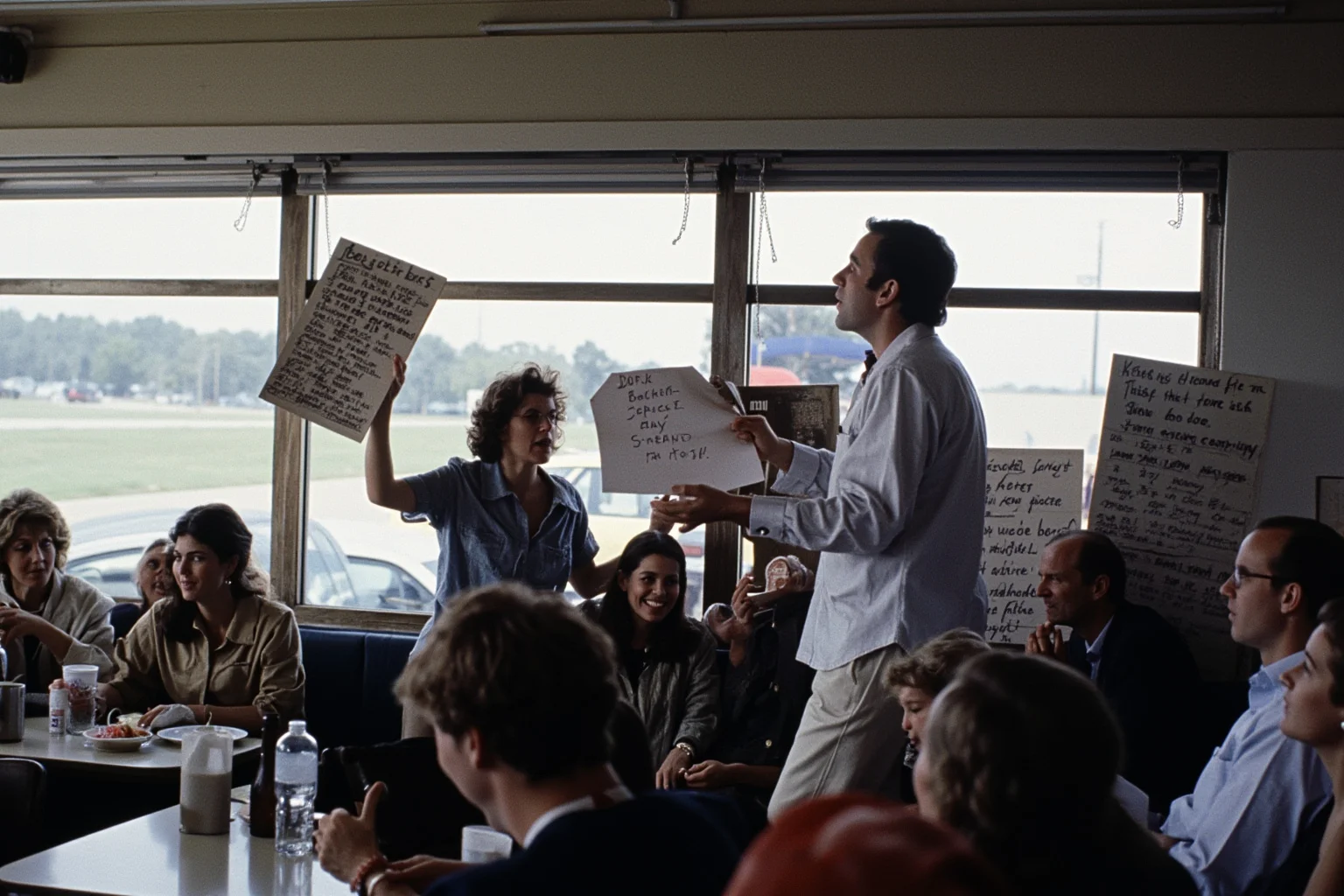
During the 1992 Democratic primary, Bill Clinton’s campaign was nearly derailed by public allegations involving Gennifer Flowers, and he finished a distant second in the New Hampshire primary. Many pundits considered his candidacy effectively over before it had really begun.
Instead, his campaign framed the strong second-place finish as a triumph, and Clinton earned the nickname “the Comeback Kid,” a phrase that stuck through his general election win that November. The label has since become political shorthand any time a candidate rebounds from apparent disaster.
20. Japan’s Postwar Economic Miracle

By 1945, Japan’s cities were devastated by firebombing and the atomic bombings of Hiroshima and Nagasaki, and its economy had essentially collapsed alongside its military defeat. Recovery seemed like the work of generations, not years.
With American postwar support, aggressive industrial policy, and a strong emphasis on education and manufacturing, Japan had become the world’s second-largest economy by the late 1960s. It remains one of the most frequently cited national-level comeback stories of the twentieth century.
21. West Germany’s Wirtschaftswunder
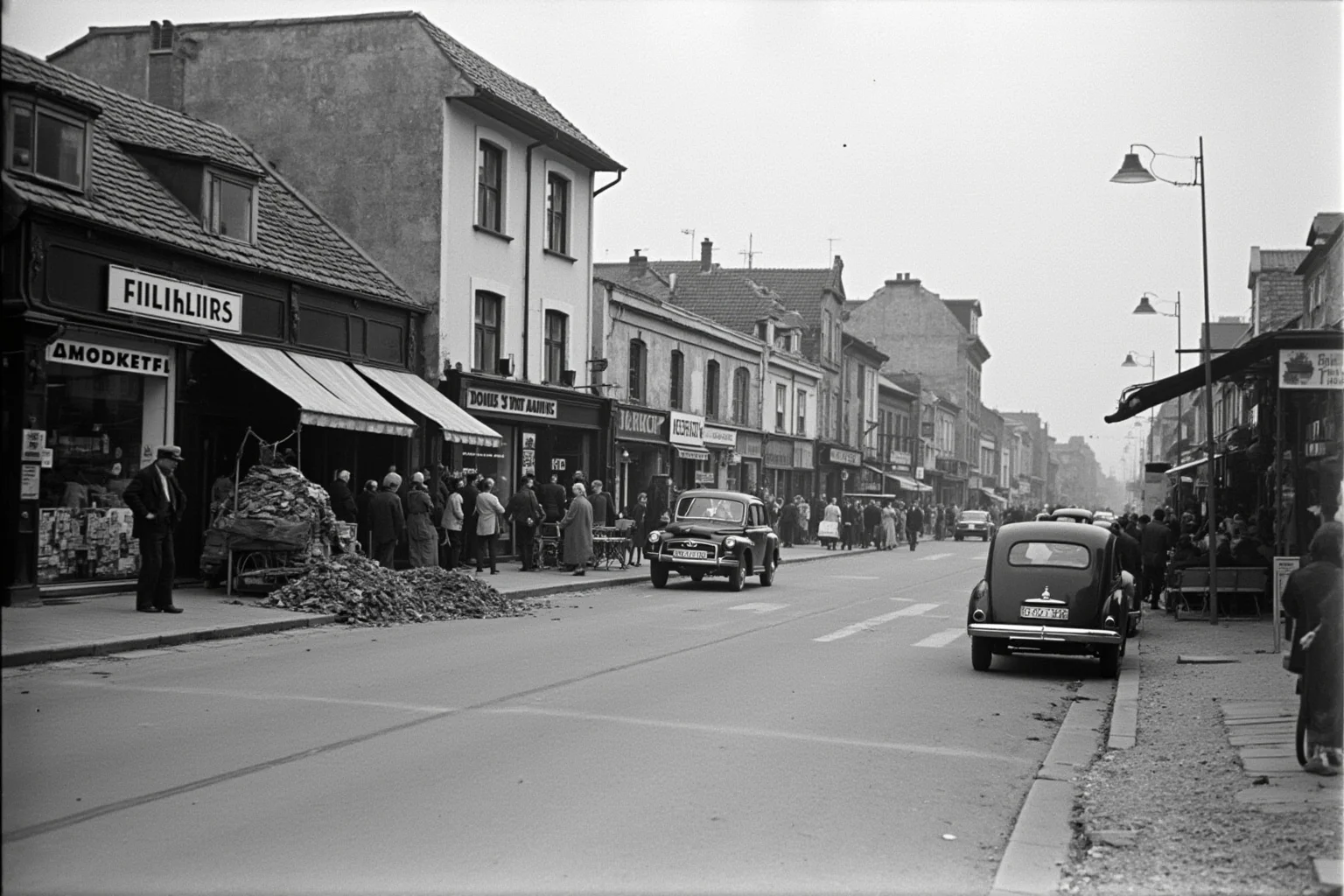
At the end of World War II, Germany was a divided, bombed-out nation facing severe food and housing shortages, with much of its industrial base destroyed. Few observers in 1945 expected a quick recovery, let alone a booming economy.
A 1948 currency reform, combined with Marshall Plan aid and rapid industrial rebuilding, fueled what Germans call the “Wirtschaftswunder,” or economic miracle, transforming West Germany into one of Europe’s strongest economies within roughly a decade. It stands alongside Japan’s recovery as one of the greatest comebacks of all time on a national scale.
22. The US Navy at Midway: Turning the Tide of the Pacific War

After the attack on Pearl Harbor in December 1941, the US Pacific Fleet was badly crippled, and Japan held the initiative across the Pacific for the following months. American naval power in the region looked seriously outmatched.
Just six months later, at the Battle of Midway in June 1942, American forces sank four Japanese aircraft carriers and decisively shifted the balance of naval power in the Pacific. Historians widely regard it as one of the most consequential military turnarounds of the entire war.
What These Stories Have in Common
Looking across two thousand years of setbacks and recoveries, a few patterns keep showing up in the best comeback stories on record. Most involve a genuine, well-documented low point rather than a manufactured crisis, and most involve years of unglamorous rebuilding rather than one single dramatic twist.
It’s also worth remembering that not every comeback stayed a comeback forever. Napoleon, Nixon, and even Robert the Bruce’s Scotland all faced further struggles after their big turnarounds, which is a useful reminder that history rarely wraps things up as neatly as the highlight reel suggests.
Final Thoughts on History’s Greatest Comebacks
What makes these comeback stories endure isn’t just the drama of the fall, but the discipline and circumstance involved in the climb back. Some depended on individual willpower, others on sheer luck or shifting alliances, and a few on the collective effort of entire nations rebuilding from rubble.
Taken together, they offer a grounded, historically accurate answer to anyone wondering whether real recovery from serious defeat is actually possible. It clearly is, though the record shows it’s almost always harder, slower, and less mythical than the legend eventually makes it sound.
Frequently Asked Questions
What is the greatest comeback in history?
There's no single agreed-upon answer, since "greatest" depends on whether you weigh personal, political, military, or national recoveries most heavily. Commonly cited contenders include Winston Churchill's rise from the political wilderness to wartime leadership, Nelson Mandela's path from 27 years in prison to South Africa's presidency, and the US Navy's turnaround at the Battle of Midway just six months after Pearl Harbor.
What makes a historical comeback story different from ordinary resilience?
A true comeback story usually involves a well-documented low point followed by a clear, verifiable turnaround with lasting consequences, not just quiet perseverance. Ordinary resilience can happen without a dramatic public collapse, while comeback stories tend to be defined by visible failure followed by an equally visible reversal.
Are famous comeback stories in history sometimes exaggerated?
Yes, quite often. Figures like Abraham Lincoln and Robert the Bruce have had their setbacks and struggles inflated or embellished over time, including popular but unverified legends like the spider-and-web story attached to Robert the Bruce. It's worth checking the documented record before treating every dramatic detail as settled fact.
Can entire nations, not just individuals, have comeback stories?
Absolutely, and some of the best comeback stories in modern history involve whole countries rather than single people. Japan's and West Germany's rapid postwar economic recoveries after the devastation of World War II are among the most frequently studied examples of national-level turnarounds.
What’s an example of a political comeback in history?
Bill Clinton's 1992 campaign is a well-known modern example, earning him the nickname "the Comeback Kid" after rebounding from scandal and a poor early primary result to win the presidency. Richard Nixon's return from a widely assumed political obituary in 1962 to the presidency in 1968 is another frequently cited case, though his story later took a very different turn with his 1974 resignation.
Why do people find comeback stories from history so compelling?
Comeback stories resonate because they offer real, documented proof that setbacks aren't always permanent, even at the highest levels of power. They also tend to be more relatable than stories of uninterrupted success, since almost everyone has experienced some form of failure they hoped to recover from.

Alex Warren
Related Articles





