

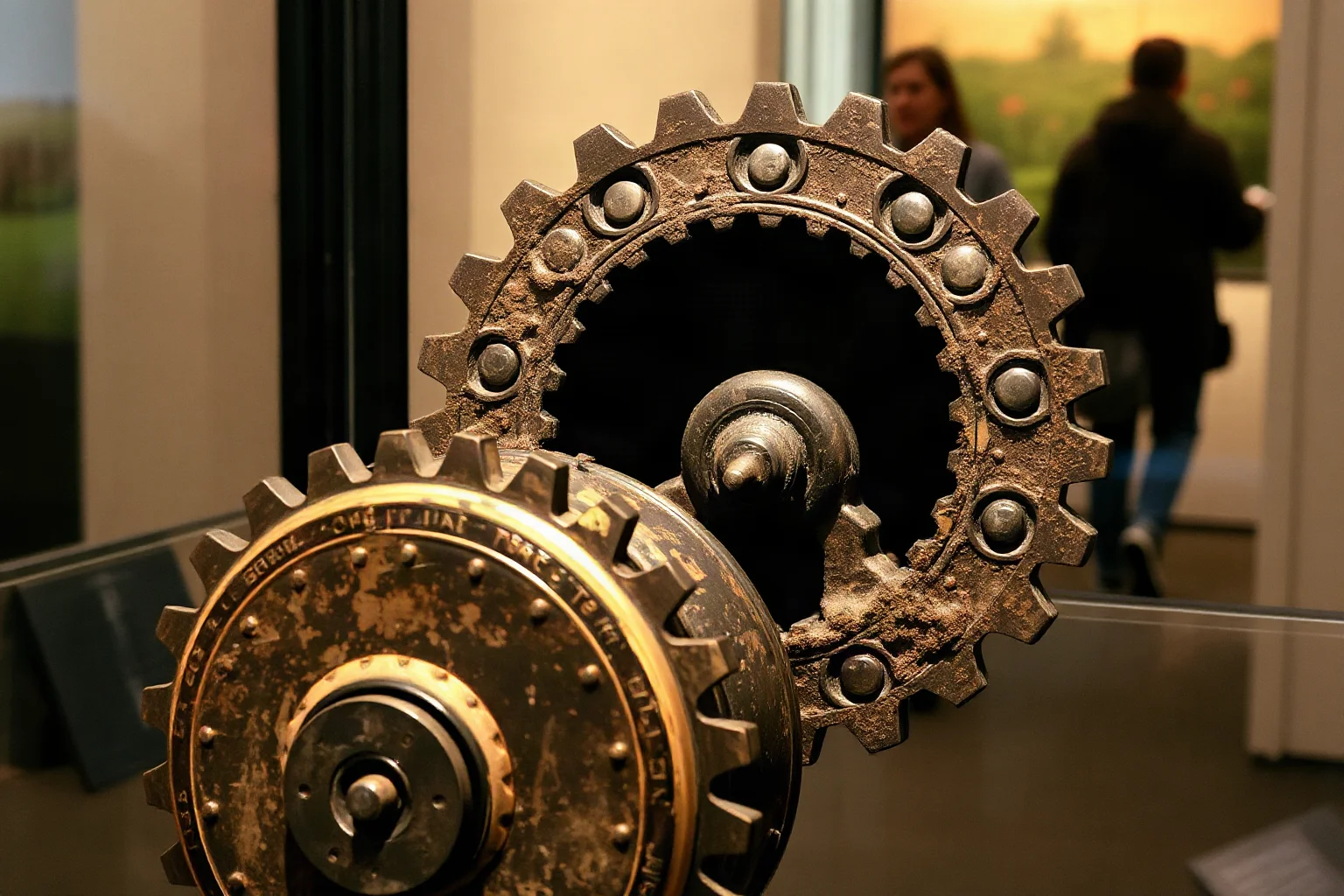
Imagine pulling a lump of corroded bronze out of the sea, only to discover centuries later that it's essentially an ancient computer. That's the real story of the Antikythera mechanism, one of the strangest and most debated objects to survive from the ancient world. It looks like a rusted clump of gears at first glance, but inside it lies a level of mechanical sophistication that shouldn't have existed for another 1,000 years.
This device has inspired documentaries, academic feuds, and more than a few wild internet theories. Some of it is spelled a dozen different ways online too, from "antikithera mechanism" to "anticathera mechanism" to "anikythera mechanism," all pointing to the same remarkable artifact. Let's separate what we actually know from what's just speculation, and walk through the real history of this ancient marvel.
TL;DR: The Antikythera mechanism was an ancient Greek geared device, likely built around the 2nd century BCE, used to track astronomical cycles, predict eclipses, and follow the calendar — making it the closest thing the ancient world had to a mechanical computer.
What Is the Antikythera Mechanism?
The Antikythera mechanism is a hand-powered bronze device from ancient Greece that used an intricate system of interlocking gears to model the movements of the sun, moon, and possibly the planets. It's roughly the size of a large book or a thick shoebox, though almost all of it has corroded and fragmented over the past two thousand years. What survives today is 82 separate fragments, housed at the National Archaeological Museum in Athens.
What makes it remarkable isn't its size or its materials, but its complexity. Researchers have identified at least 30 surviving bronze gears within the fragments, some with teeth just a few millimeters apart. No other device with this level of mechanical intricacy is known to have existed in the ancient world, and nothing comparable would appear again for well over a thousand years.
It's often called the world's first analog computer, though that phrase should be taken with a grain of historical context. It didn't calculate in the way a modern computer does. Instead, it modeled astronomical relationships mechanically, turning gear rotations into accurate predictions about the sky.
The Discovery: A Shipwreck Off Antikythera
The device gets its name from where it was found: a shipwreck near the small Greek island of Antikythera, located between Crete and the Greek mainland. Sponge divers discovered the wreck in 1900 and began recovering artifacts the following year, in 1901, under the direction of the Greek government and archaeologist Valerios Stais.
The wreck itself was a Roman-era cargo ship, likely dating to sometime in the 1st century BCE, loaded with luxury goods, bronze and marble statues, glassware, and coins. Among that haul was an unremarkable-looking lump of corroded bronze that almost went unnoticed. Stais is credited with first recognizing that it contained gear wheels, an observation that took real insight given how encrusted and fragmented the object was.
For decades after its discovery, the mechanism sat in museum storage without anyone fully grasping what it was. It wasn't until X-ray and imaging technology advanced significantly in the mid-20th century that researchers began to understand just how sophisticated it really was.
Antikythera Mechanism History: Piecing Together a Timeline
Dating the mechanism precisely has proven difficult, since it wasn't found with a helpful label attached. Most researchers place its construction somewhere in the 2nd century BCE, though some estimates stretch slightly earlier or later within a range from roughly 200 to 60 BCE. The ship that carried it is believed to have sunk sometime around 70 to 60 BCE, based on coins and pottery recovered from the wreck.
That timeline puts the device squarely in the Hellenistic period, an era when Greek astronomy, mathematics, and engineering were advancing rapidly. Scholars like Hipparchus of Rhodes were making detailed studies of lunar motion around this same time, and some researchers believe his astronomical work may be connected to the calculations built into the mechanism. That link is a reasonable hypothesis rather than a confirmed fact, since no direct evidence ties Hipparchus personally to the device.
Modern study of the Antikythera mechanism's history really began in earnest in the 1970s, when physicist Derek de Solla Price used X-ray imaging to map its internal gear structure. That research was taken much further in the 2000s and 2010s by the Antikythera Mechanism Research Project, an international team that used high-resolution CT scanning to read inscriptions and gear counts that had been invisible for centuries.
What Did the Device Actually Look Like?
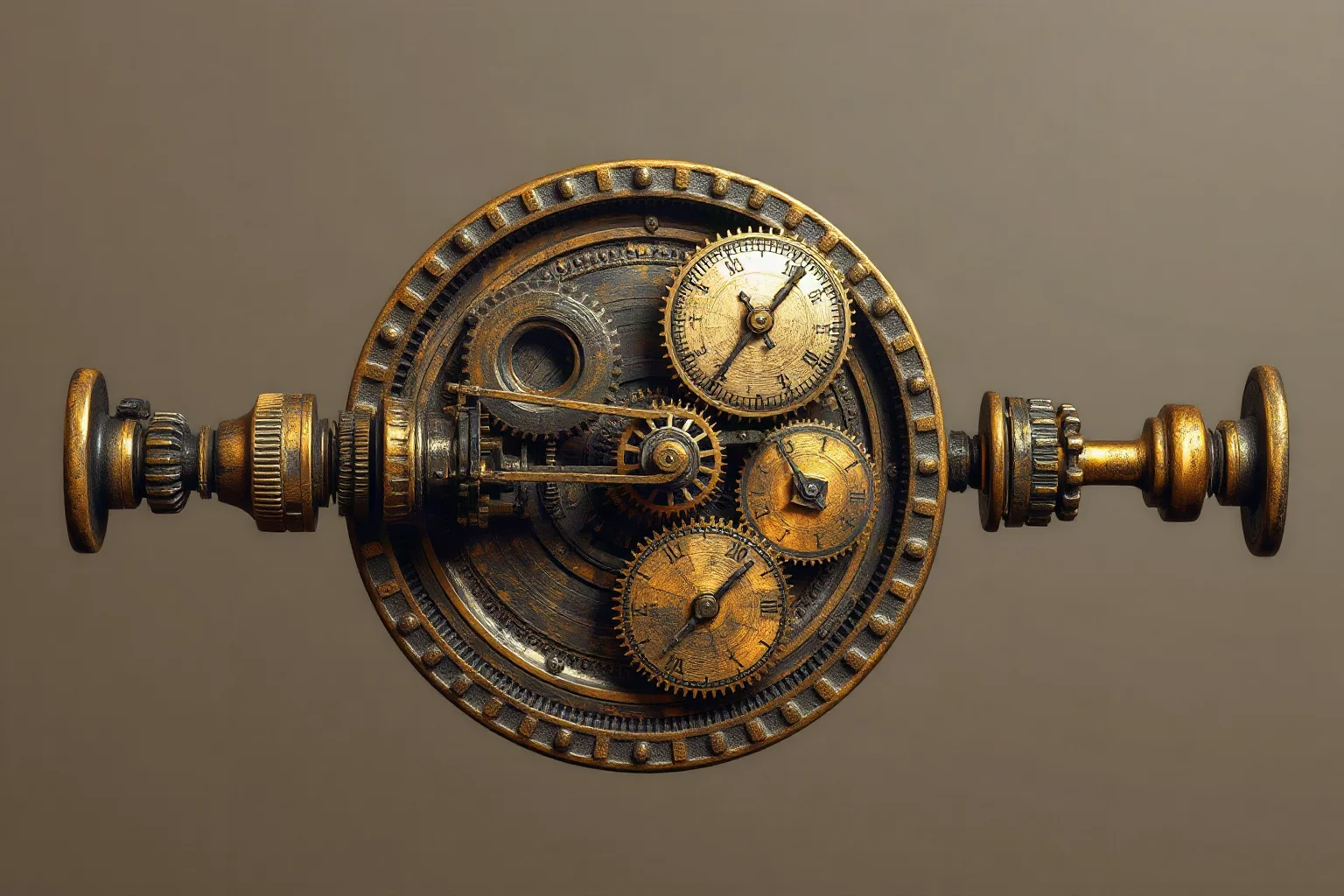
Based on the surviving fragments and reconstructions, the mechanism was housed in a wooden case roughly the size of a large shoebox, with bronze dial faces on the front and back. The front dial likely displayed the position of the sun and moon against the zodiac and the Egyptian calendar, while the back featured two spiral dials tracking longer astronomical and calendar cycles.
A hand crank on the side turned the internal gear train, which caused pointers on the dials to move at different rates, mimicking the actual motion of celestial bodies. Tiny inscriptions covering the device, some barely legible even under modern imaging, functioned like an instruction manual, describing what different dials and pointers represented.
It's worth noting that no complete version has ever been found. Everything we know about its full appearance comes from careful reconstruction work based on the 82 surviving fragments, gear tooth counts, and inscriptions, combined with a fair amount of educated engineering inference.
How the Antikythera Mechanism Works
At its core, the mechanism is a system of gears that translates a single input, the turning of a hand crank, into multiple outputs moving at different, mathematically precise speeds. Each gear's number of teeth was chosen deliberately to match known astronomical ratios, such as the relationship between the solar year and the lunar month.
One of its most celebrated features is a mechanism for modeling the moon's variable speed across the sky, achieved using a clever pin-and-slot gear design that produces a non-uniform rotation. This mirrors what's called the moon's anomaly, the fact that it appears to speed up and slow down slightly during its orbit due to its elliptical path. Building that kind of mechanical nuance into a gear train, over two thousand years before modern engineering tools existed, is a huge part of why the device is so celebrated.
The back-facing spiral dials tracked longer cycles. One followed the 19-year Metonic cycle, used to reconcile lunar months with the solar year for calendar purposes, while the other tracked the Saros cycle, an 18-year, 11-day period tied to the recurrence of solar and lunar eclipses. A smaller dial is believed to have tracked the four-year cycle of the Panhellenic games, including the Olympics, which is a small but fascinating clue about how deeply astronomy and civic life were intertwined in the ancient Greek world.
What Was the Antikythera Mechanism Used For?
So what was the Antikythera mechanism used for, practically speaking? The short answer is astronomical and calendrical prediction. It let its user turn a crank and see, on a given date, where the sun and moon would appear against the zodiac, what phase the moon was in, and whether an eclipse might be due.
It also helped reconcile different calendar systems, which mattered a great deal in the ancient Mediterranean world since Greek city-states, Egyptian institutions, and religious festival calendars didn't always align neatly. Being able to mechanically track the Metonic cycle made it easier to keep lunar and solar calendars in sync without laborious manual recalculation.
There's also a case to be made that the Antikythera mechanism's purpose extended into cultural and even religious territory. Predicting eclipses and tracking festival cycles like the Olympic games suggests it may have served ceremonial or educational functions, not just practical timekeeping. It could plausibly have been a teaching tool, a high-status curiosity, or a functional astronomical reference used by a scholar, priest, or wealthy patron who wanted a working model of the heavens on their desk.
What it almost certainly wasn't is a navigational tool. Despite being found on a ship, its calendar and eclipse-focused design doesn't match what would have been useful for maritime navigation in that era.
Who Built the Antikythera Mechanism?
This is one of the biggest open questions, and honestly, we don't know for certain. No maker's signature survives, and no ancient text explicitly describes this specific object. Researchers have proposed connections to the island of Rhodes, a major center of astronomy and engineering in the Hellenistic period, partly because ancient writers described similar geared devices being built there.
The Roman writer Cicero, writing in the 1st century BCE, mentioned a bronze device built by Archimedes that modeled the motions of the sun, moon, and planets, and later owned by his friend Posidonius. That's an intriguing historical parallel, but it's important to be careful here: there is no solid evidence that the Antikythera mechanism itself was built by Archimedes, who died decades before the ship is believed to have sunk. It's more accurate to say Cicero's account shows that this general type of geared astronomical device existed in Greek workshops of the era, not that we've identified this exact device's maker.
Most historians today describe the creator as an unknown Greek craftsman or workshop, likely operating within a tradition of astronomical instrument-making centered in places like Rhodes or Corinth. It's a case where the object itself has survived far better than any record of the person who made it.
Myths, Misconceptions, and Wild Theories

Given how strange and advanced the mechanism looks, it's no surprise it has attracted some far-fetched theories over the years. It's occasionally lumped into "ancient aliens" style claims, or described as proof of lost advanced civilizations. It's worth being direct about this: there is no credible archaeological or historical evidence supporting either idea.
What the mechanism actually represents is something arguably more interesting than a mystery involving aliens. It's proof that ancient Hellenistic engineers and astronomers had reached a level of gear-based mechanical sophistication that historians hadn't fully appreciated until the device was studied closely. It fits within known Greek achievements in astronomy, mathematics, and mechanics, rather than sitting outside of them.
Another common misconception is that it functioned like a clock, telling the time of day. It didn't track hours or days in that sense. Instead, it modeled longer astronomical and calendar cycles, which is a very different kind of "timekeeping" than what a clock does.
It's also sometimes assumed to be one-of-a-kind in the ancient world, a total fluke. Ancient literary references, including Cicero's account of Archimedes' device, suggest that geared astronomical instruments may have existed more broadly among skilled Greek craftsmen. The Antikythera mechanism is simply the only one that happens to have survived, even in fragmentary form.
Why the Antikythera Mechanism Still Matters Today
Beyond its historical curiosity, the mechanism has reshaped how historians think about ancient technology. Before its gear structure was fully understood, most historians assumed complex geared machinery didn't appear until medieval European clockmaking, roughly 1,000 to 1,400 years later. The mechanism forced a serious rethink of that timeline.
It also highlights just how much ancient technological knowledge has simply been lost to time. Wood, leather, and most metals don't survive well over two thousand years, and it's likely that other sophisticated devices from the ancient world existed and simply didn't survive a shipwreck, a museum shelf, and modern scientific scrutiny the way this one did. That's a humbling thought for anyone studying ancient history.
Today, researchers continue to study the fragments using CT scanning, 3D modeling, and reflectance imaging to read inscriptions that are otherwise invisible to the naked eye. Multiple research teams and hobbyist engineers have also built working physical and digital reconstructions, which have helped confirm and refine theories about how the gear train actually functioned.
Where Is the Antikythera Mechanism Now?
The surviving fragments are held at the National Archaeological Museum in Athens, Greece, where they've been studied and displayed for decades. Visitors can see the original fragments alongside models and reconstructions that help illustrate how the complete device likely worked. It remains one of the museum's most visited and discussed exhibits, drawing both historians and curious travelers.
Ongoing marine archaeology at the original shipwreck site off Antikythera has continued periodically since the early 1900s, including more recent expeditions using modern diving and imaging technology. Researchers hope that further fragments, or even additional artifacts related to the device, might still be recovered from the wreck.
Final Thoughts
The Antikythera mechanism endures as one of history's great reminders that ancient people were not simply waiting around for modernity to arrive. They were building precise, thoughtful, mathematically-informed technology of their own, using tools and materials available to them at the time. Whether it was used for teaching, ceremony, or personal astronomical study, it represents real ingenuity rather than mystery for mystery's sake.
It's easy to see why it gets described with almost mythical language, and why so many spelling variations of its name circulate online, from "antikitera mechanism" to "anitkythera mechanism." But the real story doesn't need embellishment. A corroded lump of bronze pulled from a Roman shipwreck turned out to be a window into just how far ancient Greek science and engineering had actually come.
Frequently Asked Questions
What is the Antikythera mechanism?
The Antikythera mechanism is an ancient Greek geared bronze device, likely built in the 2nd century BCE, that modeled astronomical cycles like the position of the sun and moon, lunar phases, and eclipse timing. It's often called the world's first analog computer because of its complex gear train, though it worked mechanically rather than through calculation like a modern computer.
What was the Antikythera mechanism used for?
It was most likely used to track astronomical and calendrical cycles, including the position of the sun and moon against the zodiac, lunar phases, eclipse prediction, and reconciling lunar and solar calendars. Some researchers also believe it may have tracked the four-year cycle of the Panhellenic games, suggesting a cultural or ceremonial use alongside its scientific function.
Who built the Antikythera mechanism?
No one knows for certain who built it, since it carries no maker's signature and isn't explicitly described in surviving ancient texts. Many historians associate it with a tradition of astronomical instrument-making linked to the island of Rhodes, though claims connecting it directly to Archimedes are not supported by solid evidence.
How old is the Antikythera mechanism?
Most researchers date its construction to somewhere in the 2nd century BCE, with the shipwreck that carried it sinking around 70 to 60 BCE. That makes the device roughly 2,000 to 2,200 years old.
Where was the Antikythera mechanism found?
It was recovered from a Roman-era shipwreck near the Greek island of Antikythera, discovered by sponge divers in 1900 and excavated starting in 1901. The wreck also contained statues, glassware, and coins, and is now believed to date to the 1st century BCE.
Is the Antikythera mechanism proof of ancient aliens or a lost advanced civilization?
No, there is no credible archaeological evidence supporting alien or lost-civilization theories about the device. It fits within known Hellenistic Greek advances in astronomy, mathematics, and mechanical engineering, rather than sitting outside of them.
Where is the Antikythera mechanism today?
The surviving fragments are housed at the National Archaeological Museum in Athens, Greece, where they are displayed alongside scholarly reconstructions of the full device.

Alex Warren
Related Articles