

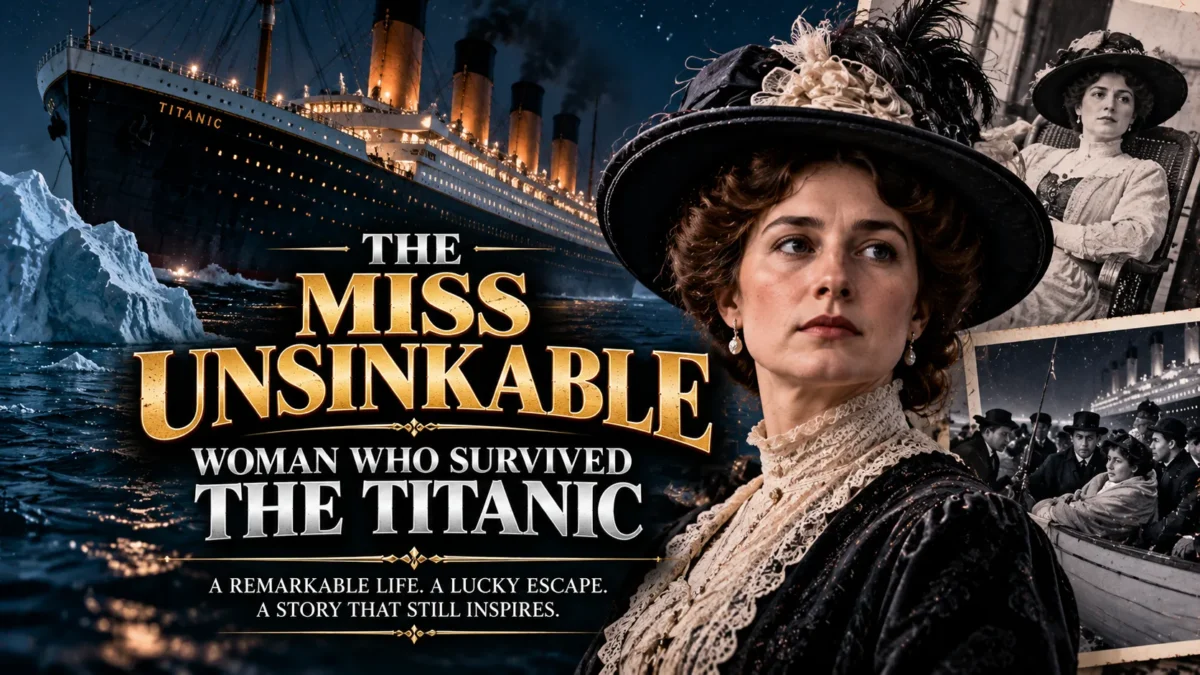
Most people who lived through one major shipwreck would never want to set foot on a boat again. Violet Jessop lived through three of them, including the most famous maritime disaster in history, and kept going back to sea anyway.
Her story has earned her a nickname that sounds almost too dramatic to be real: Miss Unsinkable. But who was she, what actually happened to her, and how much of the legend holds up to scrutiny? Let’s separate the documented history from the embellishments that have crept in over the past century.
TL;DR: Violet Jessop, an Irish-Argentine ocean liner stewardess, survived the 1911 RMS Olympic collision, the 1912 Titanic sinking, and the 1916 Britannic disaster, earning her the enduring nickname “Miss Unsinkable.”
Who Was Miss Unsinkable?
Miss Unsinkable is the nickname historians and writers gave to Violet Constance Jessop, a stewardess and nurse who worked aboard ocean liners in the early twentieth century. She is remembered because she was present for three separate shipboard disasters involving vessels from the same shipping line, including the sinking of the RMS Titanic in 1912.
Jessop was not a passenger of leisure or a famous name of her era. She was a working-class crew member who depended on her job at sea to support her family. That detail matters, because it means she had little choice about whether to keep sailing after each disaster; going back to work often meant going back onto a ship.
Her nickname didn’t necessarily circulate during her own lifetime in the way modern readers might assume. It’s a label that gained popularity later, through retrospective books, documentaries, and internet retellings of her extraordinary career.
That doesn’t make the underlying facts less remarkable, but it’s worth noting that “Miss Unsinkable” is a posthumous shorthand rather than a title she was widely known by while she lived.
Early Life: From Argentina to the Atlantic
Violet Jessop was born on October 2, 1887, in Bahía Blanca, Argentina, to Irish immigrant parents. Her father worked as a sheep farmer, and Violet was the eldest of nine children, though only six survived past infancy. Childhood illness nearly killed her too; she reportedly contracted tuberculosis as a young girl and was given a grim prognosis, which she defied.
After her father’s death, the Jessop family relocated to England. Money was tight, and when Violet’s mother became too ill to continue working as a stewardess herself, a teenage Violet stepped in to help support her siblings. She took a position as a stewardess with the Royal Mail Line before later moving to the White Star Line, the company that would carry her into history.
Stewardessing in this era was demanding and far from glamorous. Women in these roles cleaned cabins, attended to first-class passengers, worked long hours, and were often required to appear older and less attractive to be considered for hire, since shipping lines worried about impropriety with male officers and passengers. Jessop reportedly dressed plainly and downplayed her appearance just to get the job.
Ship Accident Number One: The RMS Olympic Collision (1911)
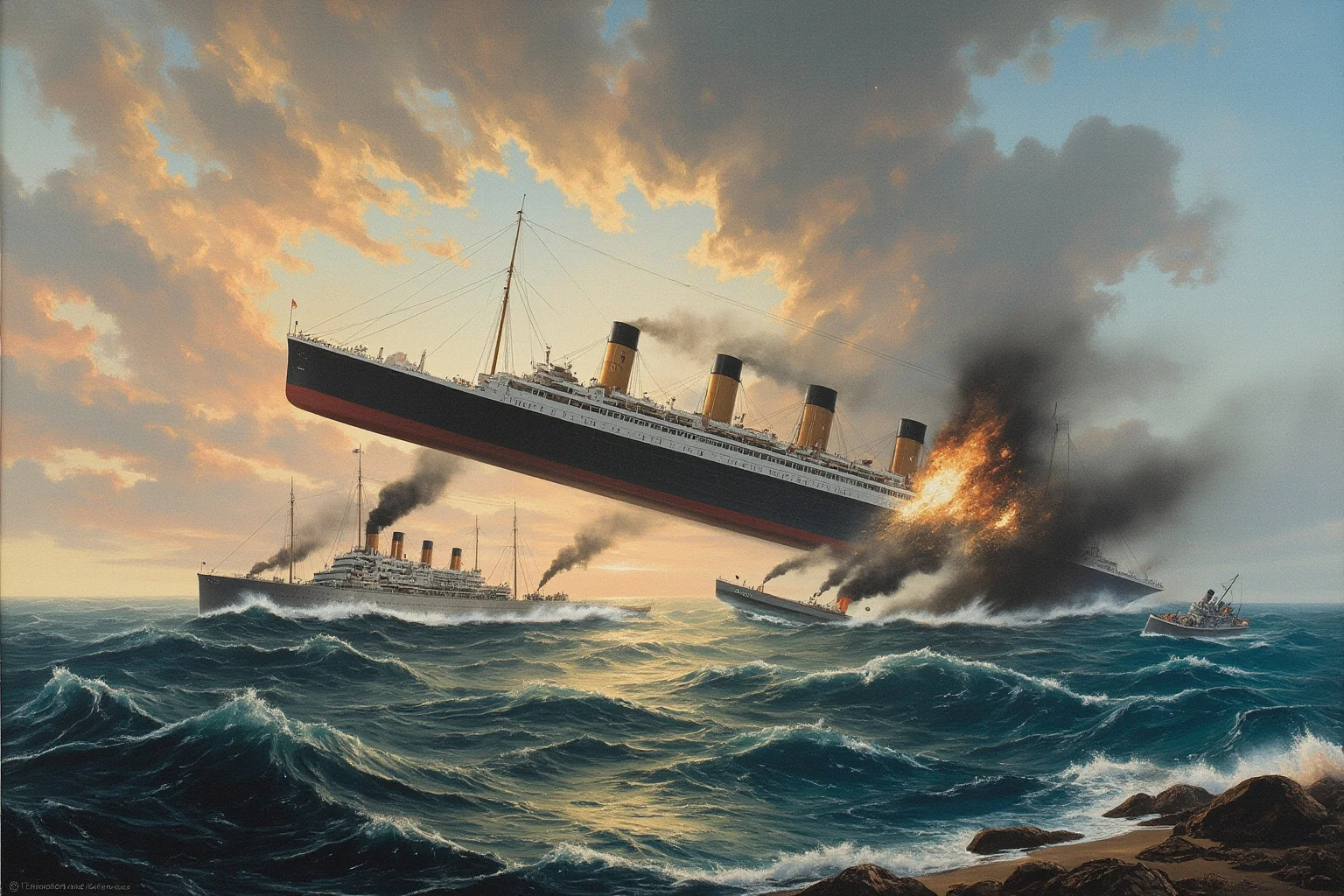
Before the Titanic ever set sail, Violet Jessop was working aboard its sister ship, the RMS Olympic. On September 20, 1911, the Olympic collided with a British warship, HMS Hawke, near the Isle of Wight while both vessels were underway.
The collision tore a significant hole in the Olympic’s hull below the waterline and damaged the warship as well. Remarkably, there were no deaths, and the Olympic was able to return to port under its own power. Still, the accident was serious enough to raise real questions about ship safety and the physics of large vessels traveling near smaller ones in tight waters.
This incident is often overlooked in popular retellings of Jessop’s story, overshadowed by what came next. But it’s an important piece of the puzzle: it means Jessop had already experienced a major shipboard emergency before she ever boarded the Titanic. She had already seen firsthand how quickly routine life at sea could turn into crisis.
Ship Accident Number Two: The Sinking of the RMS Titanic (1912)
In 1912, Violet Jessop transferred to the Titanic, the Olympic’s newer and even more luxurious sister ship, again working as a stewardess. On the night of April 14 into the early hours of April 15, the Titanic struck an iceberg in the North Atlantic and began taking on water rapidly.
Jessop later described being ordered up on deck to help reassure and guide passengers, many of whom did not initially believe the situation was serious. She was eventually placed into Lifeboat 16, one of the boats that successfully launched before the ship went down. More than 1,500 people died that night, making it one of the deadliest peacetime maritime disasters in history.
One detail from her account has become especially famous: Jessop wrote that as her lifeboat was being lowered, a crew member handed her an infant to hold. According to her later memoir, she cared for the baby until they reached the rescue ship, the RMS Carpathia, where the child was reportedly returned to its mother. This story is touching, and it’s part of what has fueled the legend around her, but it’s worth noting it comes primarily from Jessop’s own recollections, written years afterward, and details in various retellings differ slightly. It should be treated as her personal account rather than an independently verified, documented event.
What is well documented is that Jessop survived the Titanic sinking and was among the roughly 700 survivors picked up by the Carpathia. She returned to England changed but, notably, not deterred from continuing her career at sea.
Ship Accident Number Three: The Britannic Disaster (1916)
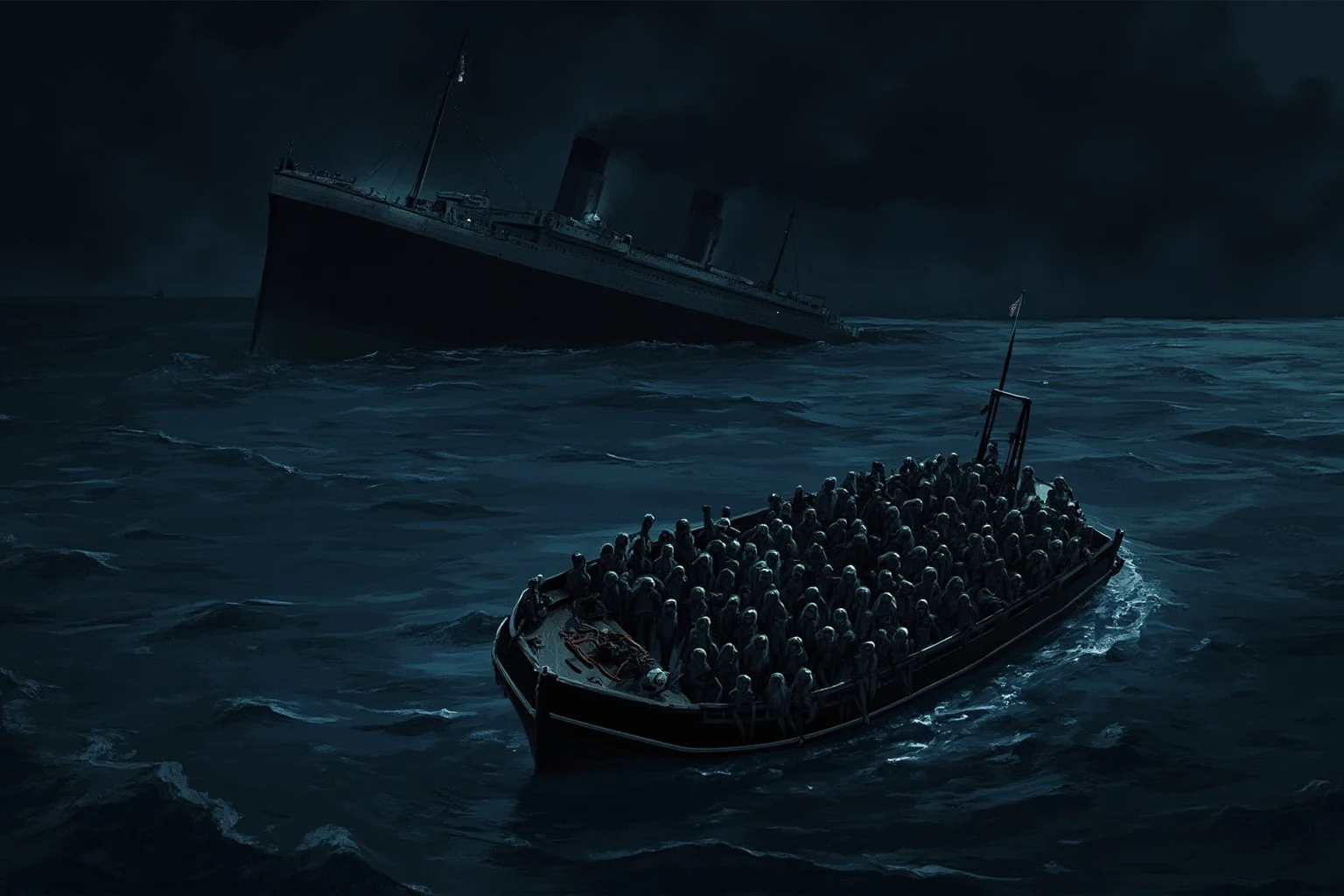
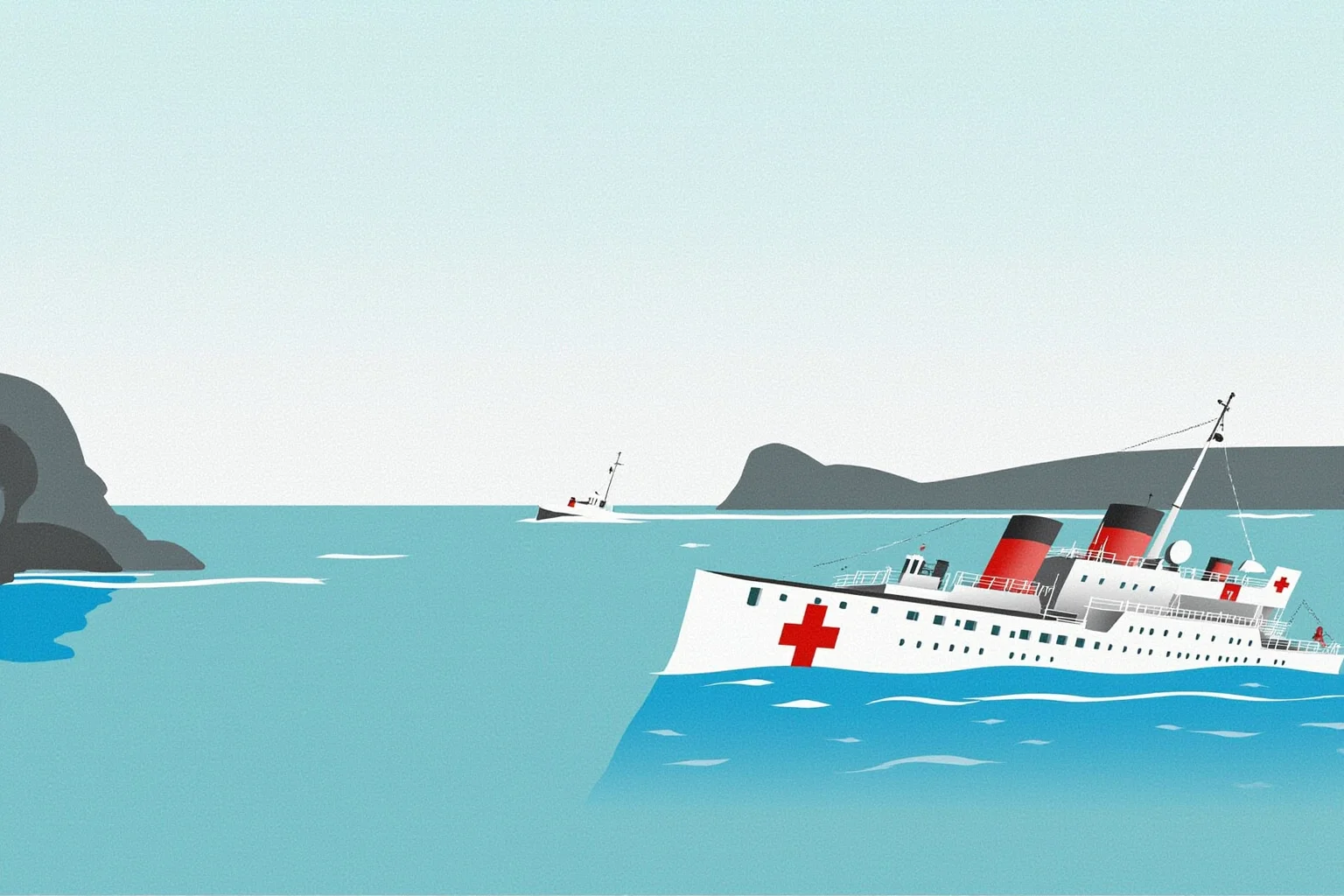
When the First World War broke out, the Titanic’s other sister ship, the Britannic, was requisitioned and converted into a hospital ship, HMHS Britannic, used to transport wounded soldiers. Violet Jessop joined the British Red Cross and served as a nurse aboard the very ship built as part of the same trio as the Olympic and Titanic.
On November 21, 1916, the Britannic struck a mine (or, by some accounts, may have been torpedoed, though a mine is the generally accepted cause) in the Aegean Sea near the Greek island of Kea. The ship sank in under an hour, far faster than the Titanic had, though thanks to better lifeboat provisions and lessons learned since 1912, the death toll was much lower, with around 30 people losing their lives out of over 1,000 aboard.
Jessop’s escape from the Britannic was harrowing in its own right. She reportedly jumped from the sinking ship into the water and was struck on the head, an injury she attributed to being pulled beneath the ship’s keel by suction from the wreck. She survived, though she later said she didn’t seek medical attention for years and only discovered she had actually fractured her skull when a doctor examined an old head injury much later in life.
Life After Three Disasters
Remarkably, Violet Jessop did not give up life at sea after surviving three separate shipboard emergencies. She continued working as a stewardess for various shipping lines for decades, including a return to the White Star Line and later Red Star Line.
She eventually retired from her seafaring career around 1950, after roughly 40 years spent working aboard ocean liners. She settled into a quieter life in Great Ashfield, Suffolk, England, where she kept chickens and lived far from the ocean that had defined her working life.
Jessop passed away on May 5, 1971, at the age of 83. For most of her later life, she wasn’t a public celebrity; her extraordinary history at sea was known mainly to those close to her and to maritime history enthusiasts.
Separating Fact From Legend
Much of what we know about Violet Jessop’s personal experiences comes from a memoir she wrote later in life. It was edited by maritime historian John Maxtone-Graham and published posthumously in 1997 under the title “Titanic Survivor.” Because this is largely a single first-person source written well after the events, historians treat some specific anecdotes, like exact dialogue or the fate of the baby she held, as personal recollection rather than fully corroborated historical record.
That said, the core facts are well supported by ship manifests, crew records, and independent survivor accounts: Jessop really did work aboard the Olympic during its collision, the Titanic during its sinking, and the Britannic during its wartime loss. Three separate disasters involving three sister ships from the same shipping line is an extraordinary and verifiable coincidence, even setting aside embellished details.
It’s also worth gently debunking a common exaggeration found in some online retellings: Jessop was not the only crew member to survive multiple White Star Line disasters, and she wasn’t necessarily unique in surviving the Titanic and returning to sea. What made her exceptional was the specific trio of ships and disasters she experienced, and the fact that she left behind a detailed written account of all three.
Why She’s Called “Miss Unsinkable”
The nickname “Miss Unsinkable” is a fairly modern label, used in books, documentaries, and articles that revisit her story for new audiences. It plays on the tragic irony of the Titanic itself, which was infamously marketed and perceived as “practically unsinkable” before it sank on its maiden voyage.
Applying that same word to Jessop, a woman who survived not just the Titanic but two other major shipping accidents, is a clever bit of historical wordplay. It captures the almost unbelievable nature of her personal history in a single, memorable phrase.
It’s important for readers researching “who is Miss Unsinkable” to understand that this was not a title bestowed on her by the press during her working life, at least not in any widely documented way. It’s best understood as a retrospective nickname that has stuck because it fits so well.
Miss Unsinkable’s Legacy in Pop Culture and History

Violet Jessop’s story has found a second life in the internet era, where lists of “incredible survival stories” frequently feature her alongside other remarkable figures, from roundups of history’s most powerful women to profiles of Helen Keller and her own extraordinary achievements. She has been referenced in documentaries about the Titanic and its sister ships, and her memoir remains a valuable firsthand source for historians studying the experience of crew members during these disasters.
Her story also offers a useful corrective to popular imagination about the Titanic, which tends to focus heavily on wealthy first-class passengers. Jessop represents the experience of working-class crew, the people who kept the ship running and who, in many cases, prioritized helping passengers over saving themselves.
Beyond the disasters themselves, her four decades at sea reflect a broader, less dramatic kind of resilience. Most of her working life wasn’t spent surviving shipwrecks; it was spent doing the routine, physically demanding work of a stewardess, decade after decade, disaster or no disaster.
The Bigger Picture: Ships, Sisters, and Tragic Symmetry
Part of what makes Violet Jessop’s story so compelling to historians is the symmetry of the three ships involved. The Olympic, Titanic, and Britannic were all Olympic-class ocean liners built by the same shipyard for the same company, sharing nearly identical designs. Jessop’s presence across incidents involving all three creates a strange, unified narrative thread running through the White Star Line’s most turbulent years.
This is also a reminder of how dangerous early twentieth-century sea travel could be, even for the most advanced and celebrated ships of the era. Between a collision, an iceberg strike, and a wartime mine, these three sister ships collectively illustrate just how many ways things could go wrong at sea before modern navigation, radar, and safety regulations existed.
Jessop’s survival across all three incidents wasn’t due to any special power, of course. It was a mix of circumstance, quick action, and, frankly, luck, the same combination that determined survival for so many others aboard those ships, for better or worse.
Final Thoughts on Miss Unsinkable
Violet Jessop’s life reads like something out of an implausible novel, yet it’s grounded in real historical events that can be traced through crew records, survivor testimony, and her own written recollections. She wasn’t seeking fame or courting danger; she was a working woman who needed her job and happened to be present for three of the most significant maritime disasters of her time.
The nickname Miss Unsinkable captures the astonishing outline of her story, even if it wasn’t a name she carried during her working years. What’s left behind is a genuinely remarkable case study in survival, resilience, and the often-overlooked experiences of ship’s crew during disasters that history tends to remember through the eyes of famous passengers instead.
Whether you first heard about her through a documentary, a listicle, or a passing mention in a Titanic-related search, Violet Jessop’s story holds up under closer historical examination. That’s rarer than you might think for a legend this dramatic, and it’s exactly why her story continues to resurface more than a century later.
Frequently Asked Questions
Who is Miss Unsinkable?
Miss Unsinkable is the nickname given to Violet Jessop, an Irish-Argentine ocean liner stewardess and nurse who survived three separate maritime disasters in the early 20th century: the 1911 RMS Olympic collision, the 1912 sinking of the RMS Titanic, and the 1916 sinking of the HMHS Britannic.
Who was the lady that survived the Titanic and is known as Miss Unsinkable?
The lady known as Miss Unsinkable was Violet Jessop, a White Star Line stewardess who was working aboard the Titanic on the night it struck an iceberg in April 1912. She escaped in Lifeboat 16 and was later rescued by the RMS Carpathia.
What woman survived the Titanic and other ship disasters?
The woman who survived the Titanic along with two other ship disasters was Violet Jessop. She also survived the 1911 collision of the RMS Olympic and the 1916 sinking of the hospital ship HMHS Britannic during World War I.
Did Violet Jessop really survive three shipwrecks?
Yes, historical crew records and her own memoir confirm she was aboard the RMS Olympic during its 1911 collision, the RMS Titanic during its 1912 sinking, and the HMHS Britannic during its 1916 sinking, surviving all three incidents.
Was Violet Jessop a passenger or crew member on the Titanic?
Violet Jessop was a crew member, not a passenger. She worked as a stewardess aboard the Titanic, responsible for assisting passengers, and this role placed her on deck helping others during the evacuation.
Is the story about Miss Unsinkable holding a baby on the Titanic true?
This story comes primarily from Violet Jessop's own posthumously published memoir, in which she describes being handed an infant while boarding a lifeboat. Because it relies mainly on her personal recollection written years later, historians treat it as her account rather than a fully independently verified event.
Why is Violet Jessop called Miss Unsinkable?
The nickname plays on the fact that the Titanic was famously promoted as 'unsinkable' before it sank, while Violet Jessop herself survived that disaster and two others. The label is largely a modern, retrospective nickname rather than one she was widely known by during her lifetime.

Alex Warren
Related Articles





