
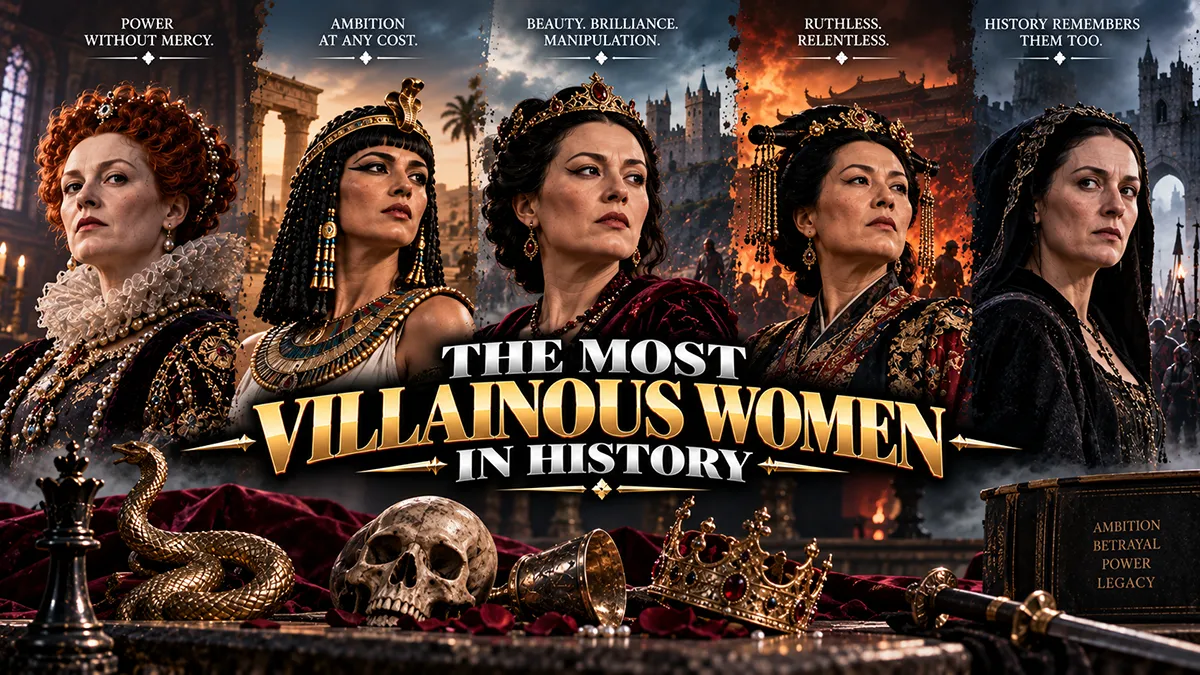
History loves a good villain, and it turns out some of the most fascinating, terrifying, and controversial figures ever recorded happen to be women.
From poison-obsessed queens to serial killers, cult leaders, and empresses who ruled through fear, the list of infamous women in history is long, strange, and often more complicated than the legends suggest.
This post rounds up 22 of the most notorious women in history, mixing genuinely documented crimes with figures whose reputations were shaped as much by propaganda and gossip as by fact.
Along the way, we’ll flag where the historical record is solid and where it’s murky, exaggerated, or flat-out invented by rivals and chroniclers with an axe to grind.
TL;DR: History’s most villainous women range from documented mass murderers to queens and empresses whose “evil” reputations were largely manufactured by political enemies and sensationalist writers.
What Makes a Woman “Villainous” in History?
Before diving into the list, it’s worth asking what actually earns someone a spot among history’s scariest women — the same question worth asking about the worst people who ever lived more broadly, regardless of gender.
Some names below committed verifiable, well-documented atrocities — murder, torture, mass violence — with court records, forensic evidence, or eyewitness testimony to back it up.
Others are villainous mostly by reputation. Ancient and medieval sources were often written by political enemies, and a scorned rival or threatened dynasty had every incentive to paint a powerful woman as a monster.
Many so-called famous female villains in history were really just women who held power in eras that didn’t expect them to have any.
That’s the myth-busting thread running through this whole list: some of these women were genuinely dangerous, some were unfairly demonized, and a few sit somewhere in between. We’ll call out which is which as we go.
1. Elizabeth Báthory — The Blood Countess
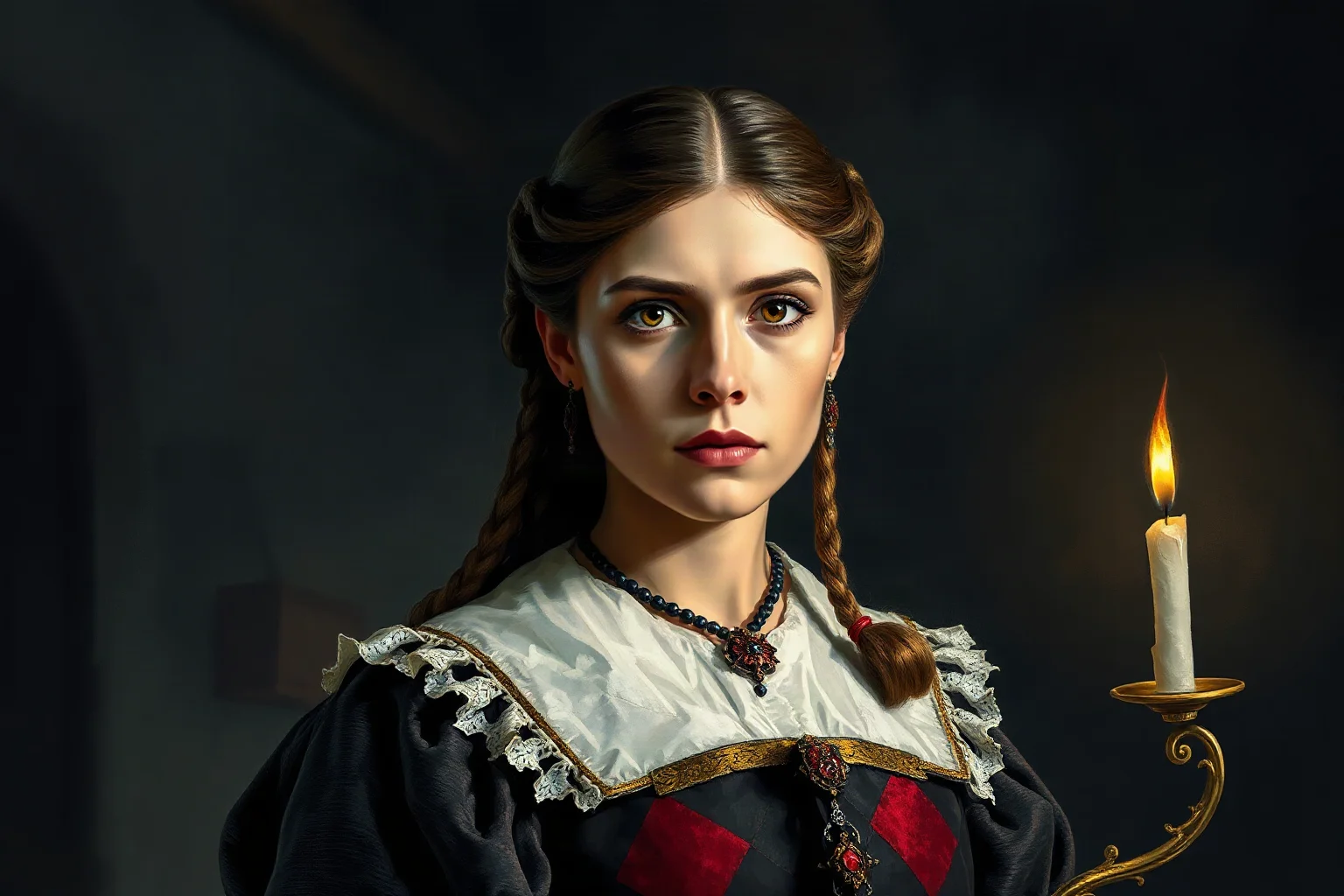
Erzsébet Báthory, a Hungarian countess who died in 1614, is often cited as one of the most prolific female serial killers in history. She was accused of torturing and killing dozens, possibly hundreds, of young servant girls at her castle estates.
The historical record here is genuinely murky. Báthory was arrested and confined without a full public trial, and some historians argue her fabulous wealth and land holdings made her a convenient target for political enemies, including the Hungarian crown, which owed her family money. Whatever the true body count, her legend cemented her as one of the earliest and most enduring lady villain names in European folklore.
2. Ilse Koch — The Bitch of Buchenwald
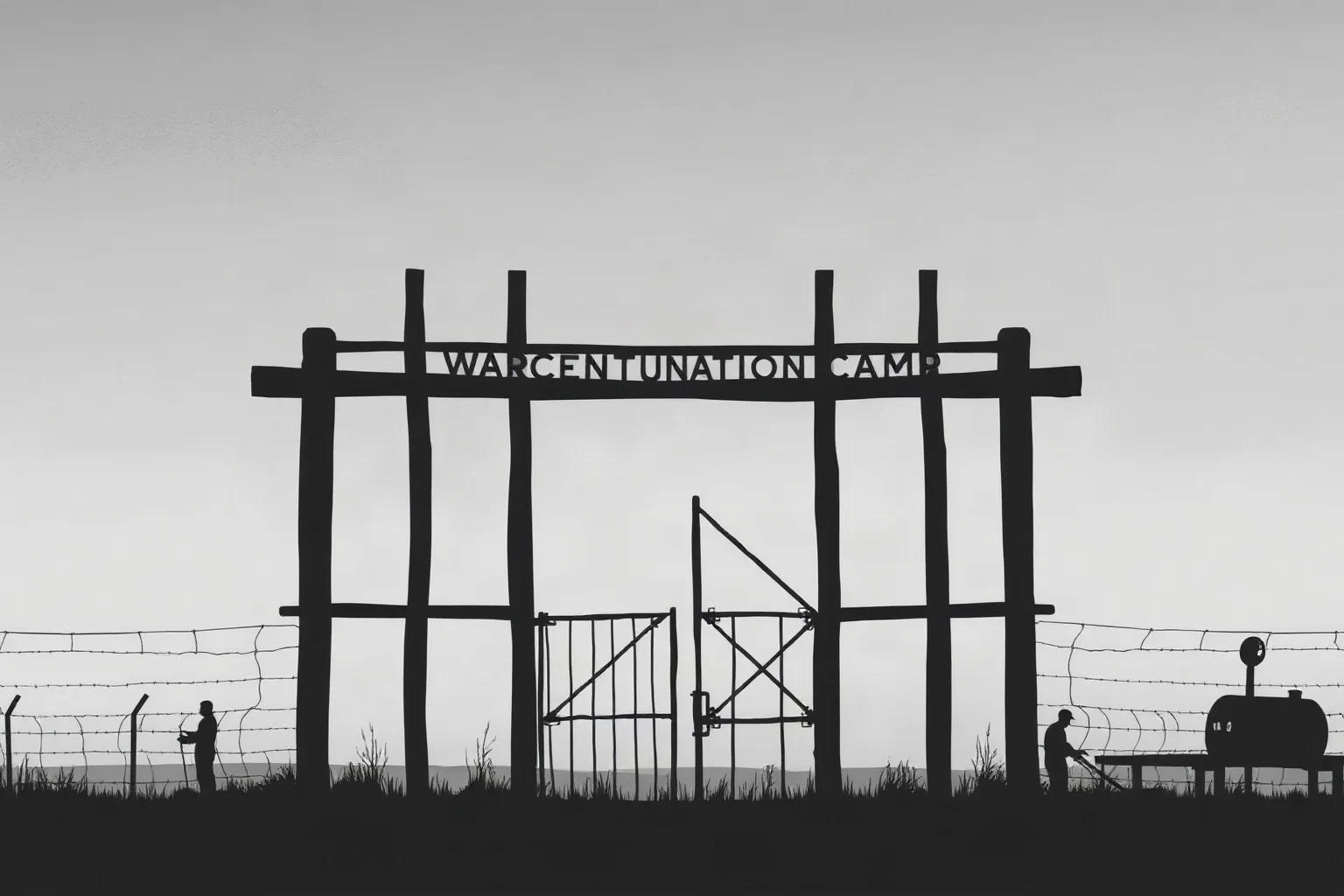
Ilse Koch was the wife of the commandant at Buchenwald concentration camp during the Nazi era, and she was convicted after World War II of participating in atrocities against prisoners. Testimony at her trials described extreme cruelty, though some of the most sensational wartime rumors about her, including specific claims about lampshades made from human skin, were never conclusively proven in later investigations.
She was retried by a German court in 1951 and sentenced to life imprisonment, where she died in 1967. Koch remains one of the most infamous women associated with the Holocaust, a reminder that villainy in the twentieth century was often bureaucratic and institutional rather than mythical.
3. Irma Grese — The Hyena of Auschwitz

Irma Grese served as a guard at Auschwitz and Bergen-Belsen, and survivor testimony describes her as taking active, personal pleasure in cruelty toward prisoners. She was tried at the Belsen Trial in 1945, convicted of crimes against humanity, and executed later that year at just 22 years old.
Unlike some names on this list, Grese’s case rests on extensive eyewitness testimony from Holocaust survivors, not later legend-building. She’s frequently named among the scariest women in real, documented history precisely because so little doubt surrounds what she did.
4. Empress Wu Zetian
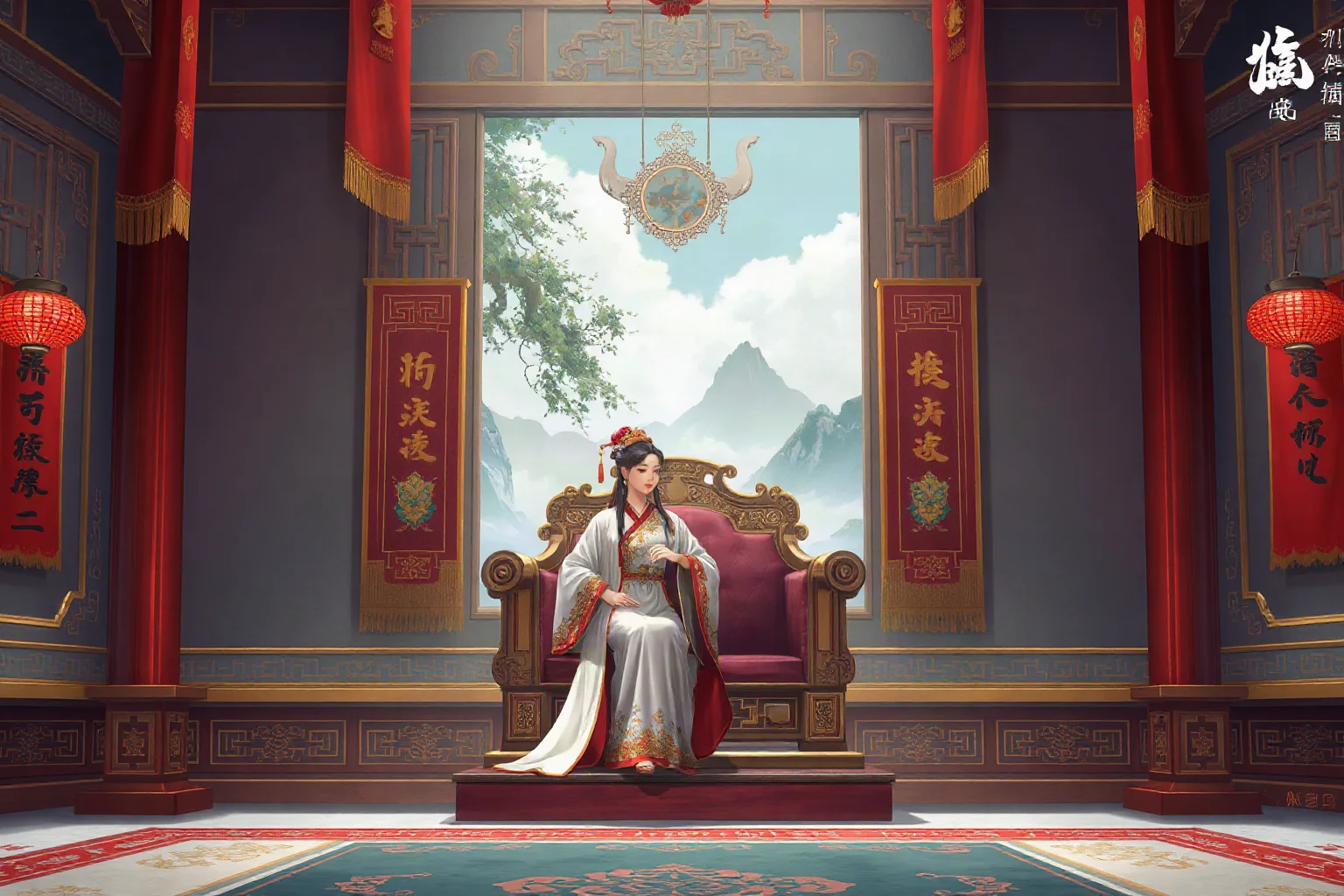
Wu Zetian became the only woman to rule China as emperor in her own right, reigning during the Tang dynasty in the 7th century. Court histories written by male officials after her death accused her of murdering rivals, including allegations against her own children, though many historians now treat these claims with caution given who was writing them and why.
What’s certain is that she was a shrewd, effective ruler who expanded the examination system and centralized power in ways later dynasties preserved. Her reputation as ruthless may be partly earned and partly the predictable fate of any woman who wielded that much authority in a Confucian court.
5. Empress Ranavalona I of Madagascar

Ranavalona I ruled Madagascar from 1828 to 1861 and is remembered for brutal policies aimed at resisting European colonial and missionary influence, including executions and forced labor that killed enormous numbers of her own subjects. Contemporary European accounts, often written by missionaries she expelled, labeled her a monster, though modern historians also recognize her as a nationalist leader who successfully kept Madagascar independent longer than most African and Indian Ocean states.
Her story shows how “villain” and “resistance leader” can describe the same person depending on who’s telling the story. The human cost of her policies was real and well documented, even as her motives were more complex than pure cruelty.
6. Livia Drusilla — Rome’s Poisoner Queen?
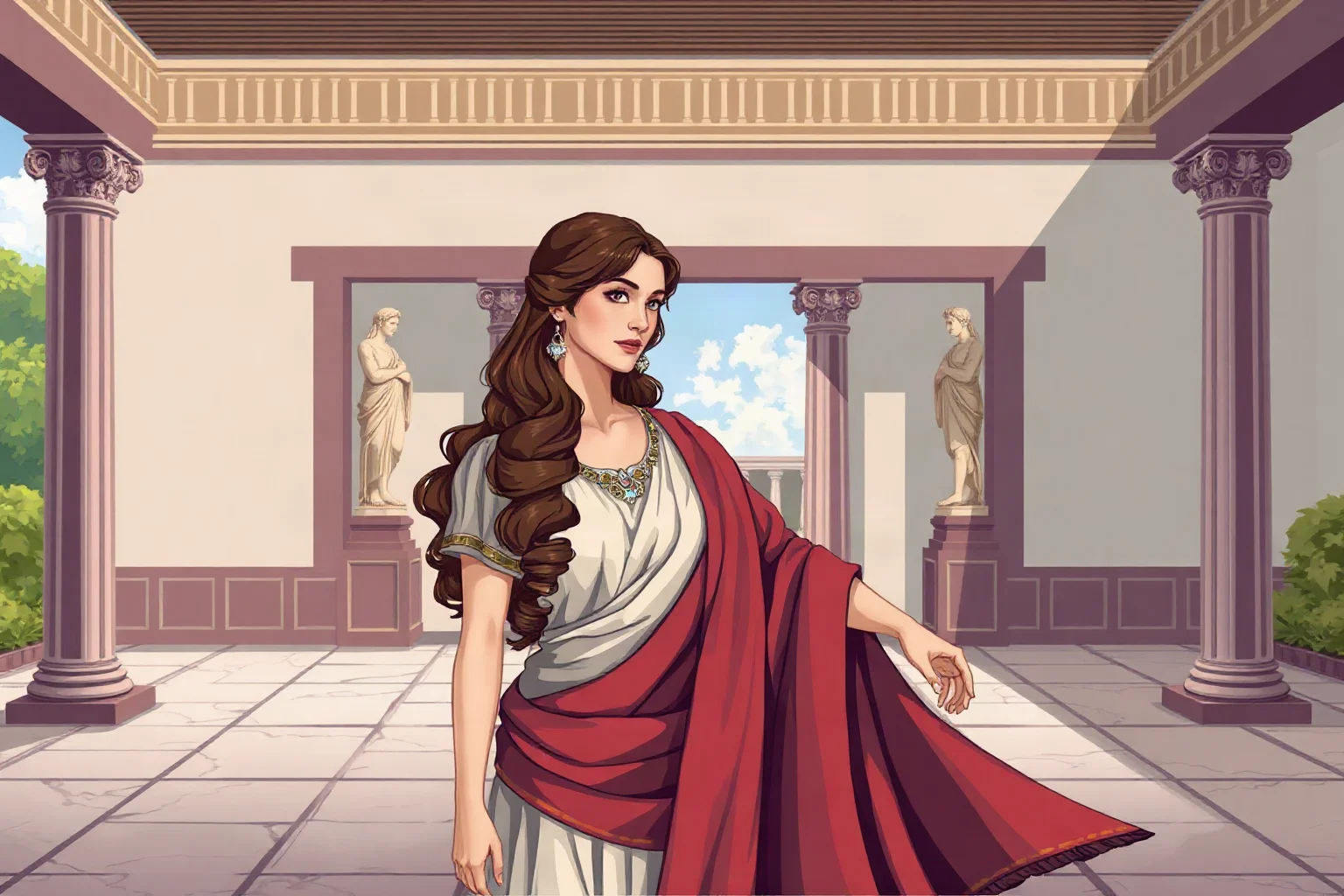
Livia, wife of the Roman emperor Augustus, was accused by ancient historians like Tacitus of poisoning rivals to clear the succession path for her son Tiberius. These accusations came decades after her death, from writers working in a genre that loved scandal and had no forensic evidence to offer.
Modern historians largely view Livia as a savvy political operator rather than a confirmed poisoner. She’s a textbook example of how ancient Rome turned powerful women into villains almost by default, especially in later dramatizations like the novel and TV series “I, Claudius.”
7. Valeria Messalina

Messalina, the third wife of Emperor Claudius, was portrayed by Roman writers as wildly promiscuous and politically murderous, allegedly orchestrating the deaths of perceived rivals. She was eventually executed in 48 AD after being implicated in a plot against Claudius, though the salacious details of her personal life come almost entirely from hostile sources writing after her death.
Historians today treat much of her scandalous reputation skeptically, noting that accusations of sexual excess were a common way Roman writers discredited powerful women. Her name still shows up whenever people search for history’s most scandalous women, fair or not.
8. Catherine de’ Medici — The Poison Queen of France
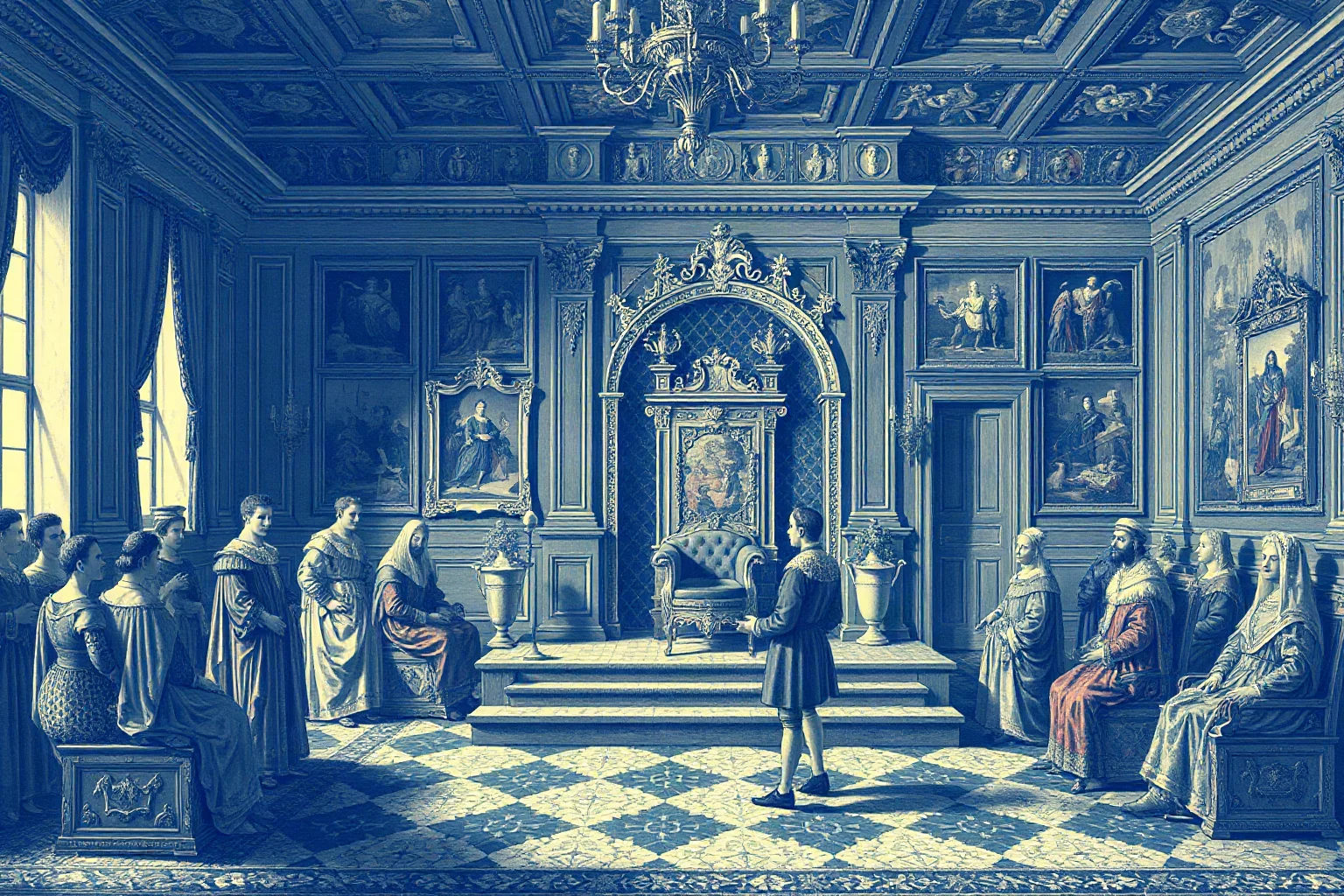
Catherine de’ Medici, queen consort and later regent of France in the 16th century, has long been rumored to have used poison to eliminate political enemies. There’s little solid documentary evidence for most specific poisoning claims, but she was undeniably ruthless in defending the French crown during the brutal Wars of Religion.
She’s most directly tied to the St. Bartholomew’s Day Massacre of 1572, in which thousands of Huguenots were killed, an event she’s widely believed to have helped orchestrate. That alone secures her place among history’s genuinely infamous women, regardless of the poison legends.
9. Delphine LaLaurie — New Orleans’ House of Horrors

Madame Delphine LaLaurie was a New Orleans socialite whose horrific abuse of enslaved people in her household was exposed after a fire at her mansion in 1834. Rescuers reportedly found evidence of severe, sustained torture, and the discovery caused public outrage so intense that she fled the city and reportedly never returned.
Unlike many legendary villains, LaLaurie’s case is grounded in contemporary newspaper accounts and witness statements from the time. Her mansion still stands in the French Quarter today, and her name remains one of the most chilling in American history.
10. Mary Mallon — “Typhoid Mary”
Mary Mallon was an Irish-born cook in early 20th-century New York who unknowingly carried typhoid fever and infected dozens of people while showing no symptoms herself. Public health officials forcibly quarantined her for years, and newspapers turned her into arguably the most hated woman in America at the time, despite the fact that she never intended to hurt anyone.
Her case raises real ethical questions about how society treats people, especially women, blamed for spreading disease. She’s less a villain in the moral sense and more a cautionary tale about public fear outrunning nuance.
11. Lizzie Borden

Lizzie Borden was accused of murdering her father and stepmother with an axe in Fall River, Massachusetts, in 1892, a crime immortalized in the well-known children’s rhyme. She was tried and ultimately acquitted, and no one else was ever convicted of the killings.
Despite the acquittal, public opinion largely convicted her in the court of gossip, and she remains one of the most famous unsolved true-crime cases involving a woman in American history. Her story is a reminder that infamy doesn’t require a guilty verdict, just a sensational trial.
12. Belle Gunness — The Black Widow of La Porte

Belle Gunness ran a farm in Indiana in the early 1900s where numerous suitors and hired hands disappeared after answering her matrimonial newspaper ads. Investigators eventually uncovered multiple bodies buried on her property, making her one of America’s most prolific documented female serial killers.
Gunness herself vanished after a suspicious house fire in 1908, and it was never conclusively proven whether she died in the blaze or escaped. Her case remains genuinely unresolved, unlike many tidier legends on this list.
13. Ma Barker

Kate “Ma” Barker was long portrayed by the FBI as the criminal mastermind behind her sons’ Depression-era gang, the Barker-Karpis gang, which committed robberies, kidnappings, and murders across the Midwest. She died in a 1935 shootout with federal agents alongside her son Fred.
Later historians have questioned how much Ma actually ran the operation versus how much the FBI inflated her role to justify killing her, an unarmed older woman, during the raid. Her case is a good example of how law enforcement narratives can shape a villain’s legend after the fact.
14. Myra Hindley — The Moors Murderer

Myra Hindley, along with her partner Ian Brady, was convicted in 1966 of murdering children in what became known as the Moors murders in England. The case remains one of the most infamous in British criminal history, and Hindley was widely branded the most evil woman in Britain by tabloid press at the time.
Unlike many entries here, this case rests on solid forensic and testimonial evidence presented at trial. Hindley died in prison in 2002, having never been released despite several parole attempts.
15. Aileen Wuornos

Aileen Wuornos was convicted of murdering multiple men in Florida in the late 1980s and early 1990s, claiming most were killed in self-defense during her work as a sex worker. She was sentenced to death and executed in 2002, and her case sparked ongoing debate about her mental health history and the abuse she experienced before the killings.
Wuornos is frequently cited in true-crime discussions of scariest women in modern history, though her story also complicates simple villain narratives. Courts ultimately rejected her self-defense claims for most of the murders, but the broader context of her life remains part of the historical record worth examining.
16. Griselda Blanco — The Cocaine Godmother

Griselda Blanco was a Colombian drug trafficker who built a major cocaine distribution network in Miami during the 1970s and 1980s, allegedly ordering dozens of murders tied to the drug trade. She was convicted on drug trafficking charges and served time in US prisons before being deported to Colombia, where she was assassinated in 2012.
Law enforcement and journalists documented much of her criminal empire in real time, making her one of the more thoroughly verified entries on this list. She’s often named among the most dangerous women in organized crime history, alongside the most notorious gangsters of the 20th century.
17. Jiang Qing — Madame Mao
Jiang Qing, the fourth wife of Chinese leader Mao Zedong, played a central role in launching and directing the Cultural Revolution starting in 1966, a campaign that led to widespread persecution, violence, and deaths across China. She was part of the “Gang of Four,” tried after Mao’s death, and sentenced to death with a two-year reprieve, later commuted to life imprisonment.
Her case is unusually well documented through Chinese Communist Party records and later trial testimony. She remains one of the most notorious women in 20th-century political history, tied directly to a documented humanitarian catastrophe.
18. Cleopatra VII — Rome’s Propaganda Villain

Cleopatra, the last active ruler of the Ptolemaic Kingdom of Egypt, was cast as a scheming seductress by Roman writers like Octavian’s propagandists during his power struggle with Mark Antony. Roman sources needed a villain to justify war against Antony, and a foreign queen accused of corrupting a Roman general fit perfectly.
In reality, Cleopatra was a highly educated ruler fluent in multiple languages who navigated Rome’s expanding power with real political skill, earning her a permanent spot among history’s most powerful women. She’s a prime example of how a woman’s ambition got rebranded as villainy by the people she threatened.
19. Marie Antoinette — The Myth of “Let Them Eat Cake”

Marie Antoinette, queen of France before and during the French Revolution, is famous for a callous quote about the poor she almost certainly never said, first attributed to a generic “great princess” decades before she was even queen. Revolutionary pamphleteers used her as a symbol of royal excess to build public rage against the monarchy.
She was executed by guillotine in 1793, a real and severe fate, but much of what people “know” about her cruelty is exaggerated propaganda from a revolution that needed a villain. Her case remains one of history’s clearest examples of reputation outpacing fact.
20. Anne Boleyn — The “Witch” Queen
Anne Boleyn, second wife of England’s Henry VIII, was executed in 1536 on charges of adultery, incest, and treason, accusations most historians today consider fabricated to give Henry legal grounds for a new marriage. Contemporary rumors also whispered that she used witchcraft to seduce the king, a common smear against inconvenient women in the period.
No credible evidence supports the charges brought against her, and her trial is now widely viewed as a politically engineered execution. She’s less a genuine villain than one of history’s most famous victims of a villain-making machine.
21. Bloody Mary — Mary I of England
Mary I of England earned her grim nickname for ordering the burning of roughly 280 Protestant dissenters during her attempt to restore Catholicism as England’s state religion in the 1550s. These executions are well documented in contemporary records, including the martyrologist John Foxe’s accounts, making this one of the more factually grounded entries on the list.
Her reputation solidified quickly and permanently, especially since Protestant England ultimately won the long religious struggle and got to write the history books. Still, the persecutions themselves were real, not legend.
22. Catherine the Great — Rumors vs. Reality

Catherine the Great ruled Russia as empress from 1762 to 1796 and remains one of history’s most recognized figures, remembered for major political and cultural achievements, yet she’s persistently associated with a lurid, almost certainly false rumor about the cause of her death involving a horse. That story appears to have originated as a political smear from critics uncomfortable with a powerful, sexually autonomous female ruler.
Historians have thoroughly debunked the rumor, noting she died of a stroke. Her case is a useful closing example of how quickly a woman’s real accomplishments get buried under invented scandal once she’s no longer around to correct the record.
Villains, Victims, or Both? The Real Story
Looking back across this list, a pattern emerges pretty quickly. Some women here, like Irma Grese, Ilse Koch, and Griselda Blanco, committed documented, verifiable atrocities with clear evidence behind them.
Others, like Anne Boleyn, Marie Antoinette, and Livia, were villainized largely by political enemies who needed a scapegoat and knew a powerful woman made an easy target. Cleopatra and Catherine the Great fall into a similar bucket, punished by history’s rumor mill for wielding influence in eras uncomfortable with women holding real power.
That mix is really the point of putting together a list like this. “Villainous women in history” isn’t one single category, it’s a spectrum running from genuinely dangerous criminals to unfairly maligned rulers, with plenty of gray area in between. The next time you come across a shocking historical claim about a notorious woman, it’s always worth asking who wrote it down, and why.
Frequently Asked Questions
Who is considered among the evilest women in history?
Names frequently cited include Ilse Koch and Irma Grese, both convicted of Holocaust-era crimes with strong documentary evidence, alongside serial killers like Belle Gunness and Aileen Wuornos. It's worth noting that some other 'evil women' from history, like Elizabeth Báthory or Anne Boleyn, have reputations built partly on rumor, propaganda, or politically motivated trials rather than solid proof.
Who is often called the most hated woman in the world?
The title has been applied to many figures depending on the era, from Mary Mallon ('Typhoid Mary') in early 1900s America to various modern public figures blamed for scandals or crises. It's a subjective, time-specific label rather than an official historical designation, and it often reflects public panic as much as documented wrongdoing.
What makes a woman ‘villainous’ in historical accounts?
Genuine villainy usually involves documented crimes like murder, torture, or large-scale political violence, backed by trial records, forensic evidence, or credible eyewitness testimony. In many historical cases, though, women were branded villains largely through propaganda, rumor, or hostile chroniclers threatened by their power, which is why myth-busting matters when studying this topic.
Were any so-called female villains actually misunderstood or falsely accused?
Yes, several women on lists like this were victims of politically motivated smear campaigns rather than proven criminals. Anne Boleyn's treason charges are now considered fabricated, and Marie Antoinette's infamous 'let them eat cake' quote was never actually said by her, showing how legend can eclipse historical fact.
Is ‘I’ll Become the Villainess Who Goes Down in History’ based on real history?
No, it's a popular Japanese light novel and anime series about a woman reincarnated into a romance video game as its scheming antagonist. It's a work of fiction inspired by the 'villainess' trope common in isekai and otome-game stories, not a retelling of any real historical figure's life.
Are there ‘good’ female villains in history, or were they all purely evil?
Many historical women labeled villains, like Empress Ranavalona I or Empress Wu Zetian, are better understood as complex rulers who made brutal choices within genuine political struggles, rather than cartoonishly evil figures. History rarely offers pure villains; most 'bad women' in the historical record are shaped by real ambition, real constraints, and, sometimes, real injustice done to them by the people writing the story.

Alex Warren
Related Articles