

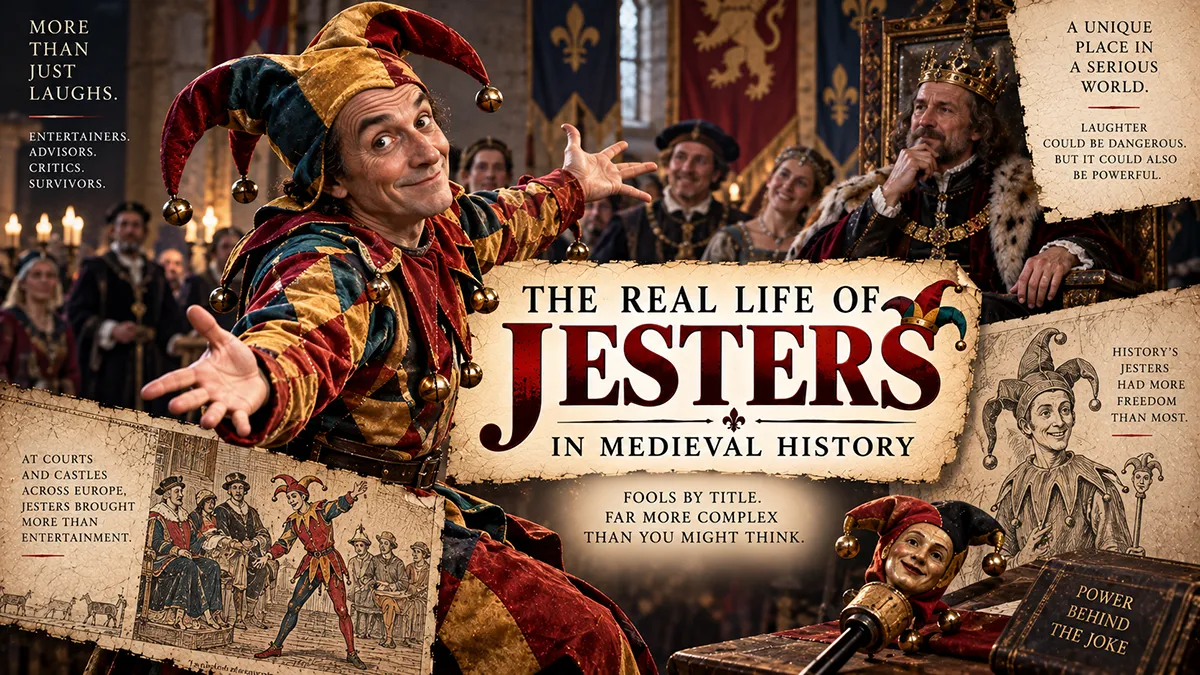
Picture a medieval castle hall lit by torches, a king brooding on his throne, and a figure in a cap with bells dancing between the tables, cracking jokes nobody else would dare say aloud.
That image comes from centuries of paintings, plays, and Hollywood films, but how much of it is actually true? The real story of the medieval jester is stranger, darker, and more fascinating than the cartoon version most of us grew up with.
This guide separates the documented history from the legend, looking at where jesters came from, what their jobs really involved, and why kings and queens across Europe kept them close.
TL;DR: Medieval jesters were real, professionally skilled entertainers (and sometimes exploited individuals) who used comedy, music, and a unique social license called “jester’s privilege” to entertain and occasionally advise Europe’s most powerful rulers.
What Were Jesters, Really?
A jester, also called a court fool, was a professional entertainer employed by a royal or noble household to provide amusement through comedy, music, storytelling, and physical performance.
The word “jester” comes from the Old French “gestour,” meaning someone who tells tales of heroic deeds, which later blended with the idea of the “fool” figure common across medieval Europe.
Contrary to the cartoonish stereotype, a good jester needed real skill. They were often musicians, acrobats, satirists, and quick-witted improvisers rolled into one, and the best of them became trusted fixtures of royal courts for decades.
Where Did Jesters Originate?
The history of jesters stretches back long before the Middle Ages. Ancient Egyptian pharaohs are recorded employing dwarfs and people with disabilities as entertainers and companions, and similar roles appear in the courts of ancient China, where performers known for wit and satire served emperors as early as the Zhou dynasty.
Ancient Rome had the “balatro,” a Latin term for a jester, buffoon, or clown-like entertainer hired to amuse dinner guests. This is where the modern word “balatrones” traces its roots, and it’s also the inspiration behind the name of the popular card game Balatro, which borrows the old Latin term for its jester-card theme.
Aztec rulers in Mesoamerica reportedly kept performers with dwarfism or physical differences for entertainment as well, showing that this role existed independently across many cultures. So while medieval Europe perfected the jester as we picture it today, the concept of a court fool is genuinely global and ancient.
Were Jesters Real? Separating Fact from Fiction
Yes, jesters were real, and this is one of the most searched questions about them because pop culture has blurred the line between fact and folklore.
Historical records, royal account books, and household payrolls from medieval and Renaissance Europe list jesters by name alongside cooks, guards, and clerks.
They were paid employees, sometimes quite well paid, and their presence is documented in royal expense records across England, France, Spain, and Central Europe.
What’s murkier is the legend that grew around individual jesters. Many popular jester stories were exaggerated or invented generations later, so while the profession is well documented, not every colorful anecdote attached to a famous jester’s name should be taken as literal historical fact.
Jesters in the Middle Ages: When Were They Most Popular?
Jesters in medieval times reached their peak roughly between the 12th and 17th centuries, spanning the High Middle Ages through the early modern period. Royal courts across England, France, Germany, Poland, and Italy all employed jesters during this stretch, and the role remained prestigious well into the Tudor and Renaissance eras.
The practice began to fade in the 1600s and 1700s as court culture shifted toward more formal entertainment like theater, opera, and structured comedy. By the 18th century, the dedicated royal jester had largely disappeared from most European courts, replaced by professional actors, satirists, and playwrights.
What Did Jesters Actually Do?
So what did jesters do on a typical day at court? Their core job was entertainment, but that covered a surprisingly wide range of skills. A working jester might juggle, sing, play instruments, tell riddles, perform acrobatics, do impressions, and deliver biting political satire, sometimes all in the same evening.
Jesters also served as a kind of social pressure valve. Feasts, negotiations, and long court ceremonies could grow tense, and a skilled fool knew how to defuse the mood with a well-timed joke or a mocking song aimed at a pompous visiting nobleman.
Some jesters went further, acting almost as informal advisors. Because they could say things directly that a courtier never could, a clever fool sometimes used comedy to sneak honest feedback past a ruler’s ego, though historians caution against overstating how often this actually shaped real policy.
The Royal Jester’s Job Description
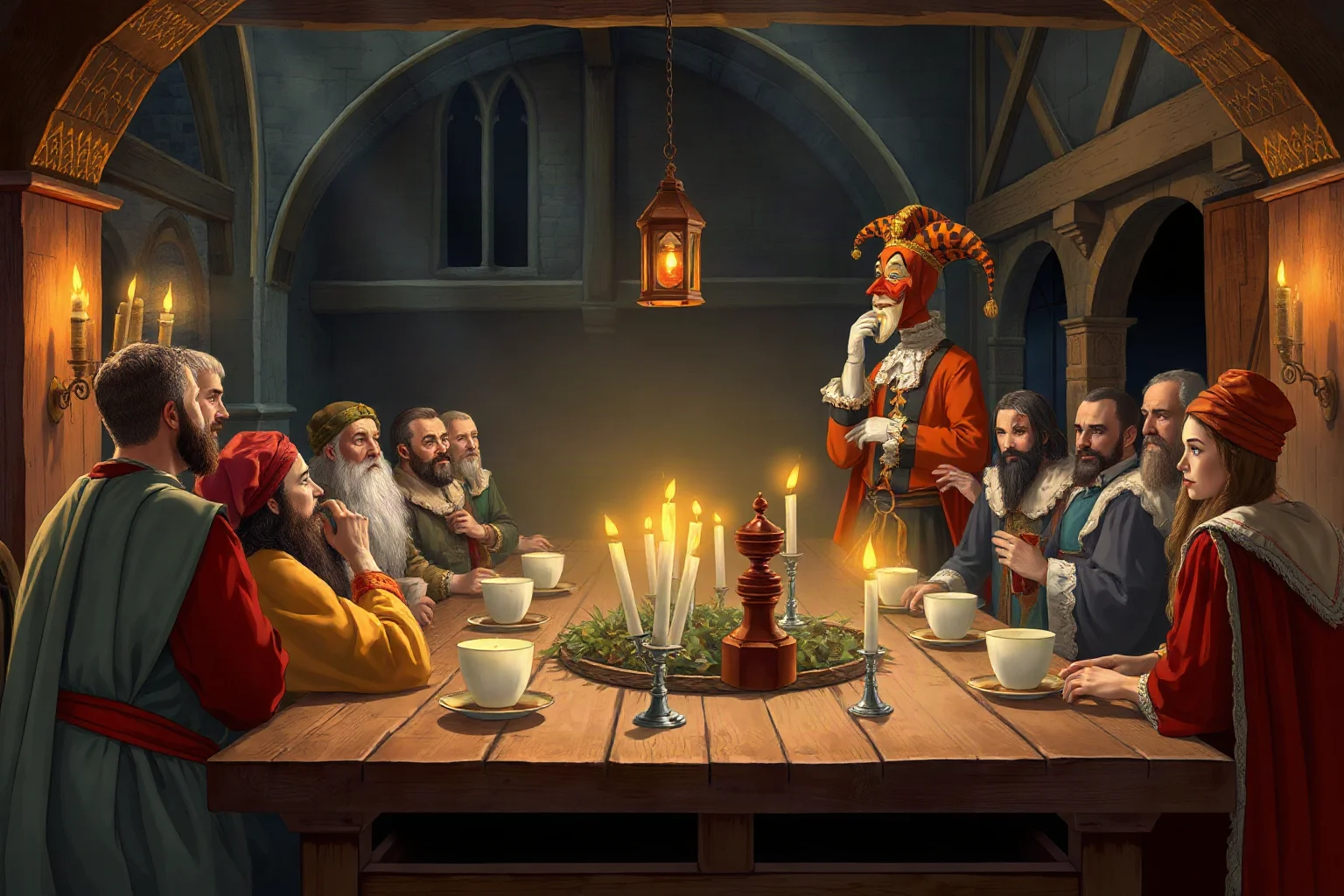
A royal jester served the monarch personally and often traveled with the court, performing at banquets, diplomatic visits, and state occasions. Employment records from various royal households show jesters receiving salaries, clothing allowances, and even property, confirming they held a genuine professional position rather than an informal or accidental one.
Historians generally split jesters into two rough categories: “natural fools” and “licensed fools.” A natural fool was typically a person with a developmental or physical disability who was kept at court largely for amusement value, a practice modern readers rightly find troubling by today’s ethical standards.
A licensed fool, by contrast, was a deliberate performer, someone who trained in wit, music, and timing the way an actor trains today. This distinction matters because it shows the jester’s role wasn’t one single thing, but a spectrum ranging from genuine exploitation to genuinely respected craftsmanship.
Did Jesters Wear Makeup? Costume and Appearance Explained
One of the most common questions is whether medieval jesters wore makeup like modern clowns, and the honest answer is: probably not in the way people imagine. There’s little solid historical evidence of jesters using the white greasepaint associated with 19th and 20th century circus clowns, since that painted-face look developed much later as a separate performance tradition.
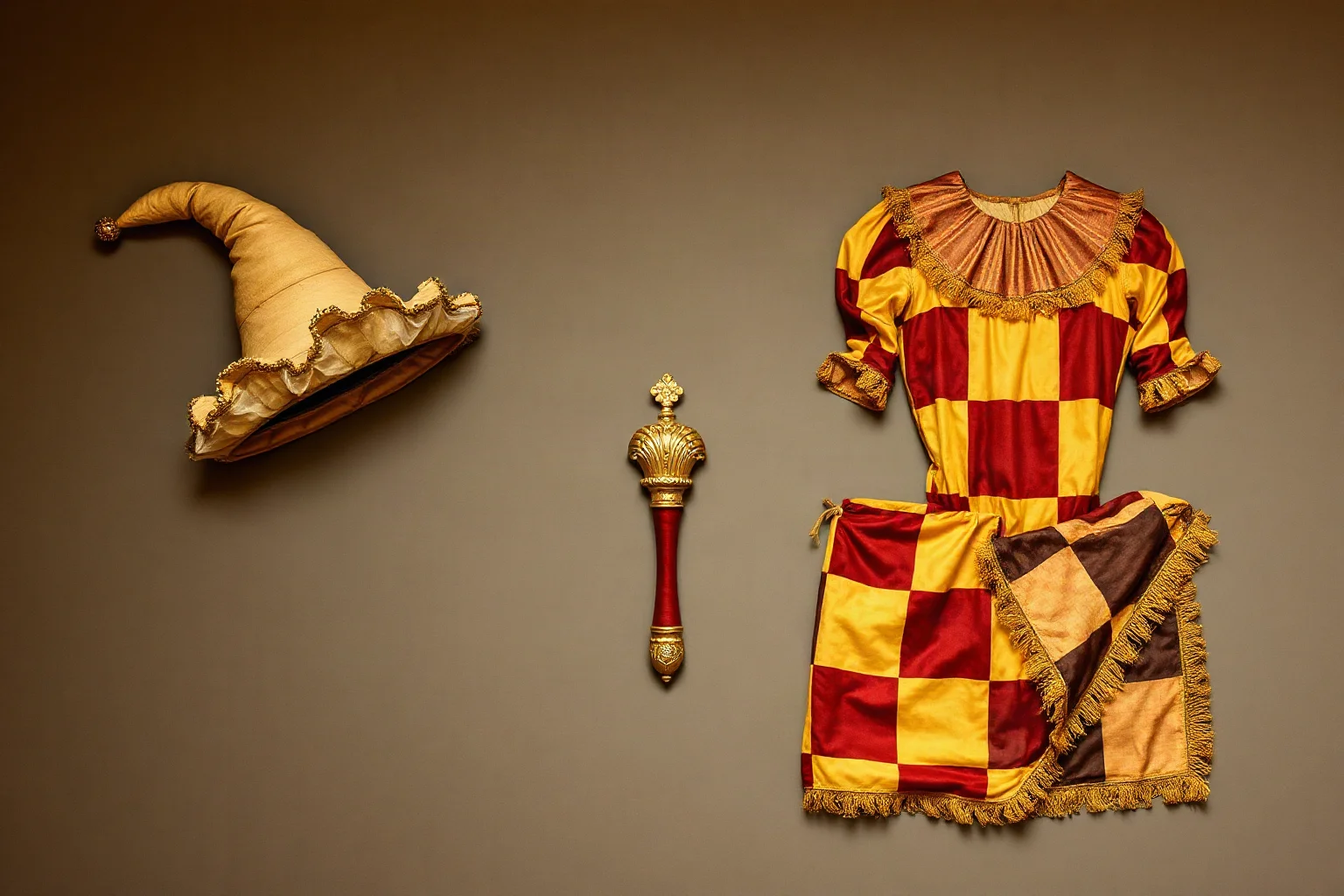
What jesters definitely wore was distinctive clothing known as “motley,” a parti-colored outfit combining contrasting fabrics, often in bright colors like red, yellow, and green. The classic cap featured donkey ears or a cockscomb shape topped with bells, and many jesters carried a “marotte,” a small mock scepter topped with a carved fool’s head, used as both a comedic prop and a visual badge of office.
This costume wasn’t just decoration. It instantly signaled to everyone in the room that this person operated under different social rules than anyone else present, which brings us to the most famous jester concept of all.
Jester’s Privilege: Licensed to Mock the Powerful
Jester’s privilege refers to the unusual social and sometimes informal legal protection that let court fools mock, criticize, and satirize even the most powerful people in the room without facing punishment. A jester could say things to a king’s face that would get a nobleman imprisoned or executed, because the fool’s role was understood to exist outside normal court etiquette.
This wasn’t an official written law in most cases, but rather a widely accepted custom that rulers chose to honor, partly because a jester who mocked everyone equally reinforced the idea that the king was gracious enough to tolerate criticism. It also gave rulers a useful outlet, since hearing blunt truths wrapped in comedy was sometimes safer than hearing them delivered seriously by a rival noble.
The term has since been borrowed by modern legal and political commentary, sometimes called “jesters immunity,” to describe the idea that satire and comedy deserve more protection than straightforward political speech. It’s worth noting this protection wasn’t absolute even in medieval times, and there are historical accounts of fools who pushed too far and faced real consequences, a risk that would have been far graver under many of history’s most evil dictators, where mocking a ruler was rarely tolerated at all.
Famous Jesters Who Actually Existed
Several real historical figures held the job of court jester, and their documented careers help separate fact from folklore. Unlike many of history’s most recognized historical figures, these court entertainers rarely make it into mainstream retellings of the era, despite being just as real. Here are some of the most well recorded examples from medieval and early modern Europe.
Will Somers
Will Somers served as court jester to King Henry VIII of England during the 16th century and is one of the best documented English jesters, appearing in period portraits and household records. He reportedly remained a trusted companion to Henry through the king’s later, more volatile years, which speaks to the genuine personal bond some jesters built with their rulers.
Stańczyk
Stańczyk was court jester to several Polish kings in the 16th century, most notably associated with King Sigismund I. He became a celebrated figure in later Polish art and literature as a symbol of wisdom hidden behind comedy, often depicted as the one person at court who truly understood the political dangers facing the kingdom.
Triboulet
Triboulet served the French courts of both Louis XII and Francis I in the early 16th century and became one of the most legendary names in French jester history. Many colorful stories about his sharp tongue and near escapes from royal anger have been passed down, though historians note that some of these anecdotes were likely embellished long after his lifetime.
Rahere
Rahere was a jester in the court of King Henry I of England in the early 12th century, making him one of the earliest named jesters in English history. He later founded St Bartholomew’s Priory and Hospital in London in 1123, a remarkable career shift from court entertainer to religious founder that shows jesters weren’t limited to a single life path.
John Scogin
John Scogin is traditionally linked to the court of King Edward IV of England in the 15th century, though much of what’s known about him comes from a jest-book published after his death, blending real biography with folklore. This is a common pattern with famous historical figures whose legend grew over time, similar to how the real story of Joan of Arc has had to be separated from centuries of myth, where genuine employment records mix with popular legend over the following centuries.
What Do Jesters Symbolize?
Beyond their entertainment value, jesters came to symbolize the idea that truth and wisdom can hide inside foolishness, in much the same way the history of the Grim Reaper shows how an abstract concept like death got wrapped into a single symbolic figure. In literature and art, the “wise fool” archetype uses comedy as a vehicle for honesty, a theme that shows up famously in Shakespeare’s plays, where fool characters often speak the sharpest truths in the entire story.
Jesters also symbolize the fragile line between power and humility. A ruler who kept a jester close was, in a sense, publicly agreeing to be mocked occasionally, which functioned as a small but visible check on absolute authority.
Why Did Kings Have Jesters?
Kings and nobles kept jesters for practical reasons beyond simple amusement. Court life was often tense, filled with political maneuvering, tedious ceremony, and constant public scrutiny, and a skilled jester provided genuine relief from that pressure through humor and music.
Jesters also served a subtler political function. A ruler could use a jester’s jokes to test public opinion, deliver an awkward message indirectly, or simply demonstrate confidence by showing they could laugh at themselves in front of foreign dignitaries.
What Were Clowns Called in Medieval Times?
Medieval Europe didn’t really use the word “clown” the way we do today, since that term became common later, largely tied to circus and theatrical traditions. Instead, comedic performers were called fools, jesters, or fools of the court, and the word “clown” only started referring to a distinct comedic stage character around the 16th and 17th centuries in English theater.
Jesters in Media and Modern Pop Culture
The jester’s image never really left popular culture, even after the real profession faded from royal courts. Playing cards still feature the Joker, a design directly descended from the jester figure, and countless films, video games, and fantasy novels use the “court fool” archetype as a wildcard character who is often wiser than they appear.
The jester theme even shows up in unexpected corners of modern entertainment. Fan-created “Fakemon” designs sometimes riff on jester imagery for trickster-type creatures, and games like Grand Theft Auto V include a vehicle called the Dinka Jester, whose real-world design inspiration draws loosely from classic sports cars rather than any actual medieval connection. These references show how deeply the jester symbol has been absorbed into modern design and storytelling, far beyond its original historical context.
Do Jesters Still Exist Today?
In the strict medieval sense of a salaried royal fool living at court, no, that profession essentially disappeared by the 18th century. But the spirit of the jester absolutely lives on through modern comedians, satirists, circus performers, and Renaissance festival entertainers who deliberately recreate the costume and character for historical reenactment and entertainment.
Some cultural and ceremonial traditions have also kept fool-like figures alive in a symbolic form, and stand-up comedy is often described by historians and critics as the closest modern equivalent to the jester’s old role of speaking uncomfortable truths through humor. So while the job title is gone, the function the jester once served is arguably more widespread today than ever.
Separating the Myths from the Real History
Much of what people “know” about jesters comes from later romanticized retellings, Victorian-era paintings, and Hollywood films rather than solid medieval sources. The reality was messier: some jesters were genuinely gifted performers with real influence, while others were vulnerable people exploited for entertainment, and most historical anecdotes about specific jesters were recorded or embellished well after the fact.
Understanding jesters honestly means holding both truths at once. The role produced real wit, real music, and a real social safety valve inside rigid medieval hierarchies, but it also reflected the era’s often cruel treatment of disability and difference.
Final Thoughts on the Real Jester
The medieval jester was far more than a bell-capped punchline. They were working professionals, sometimes celebrated artists, and occasionally the only person in the room brave enough to tell a king an uncomfortable truth wrapped in a joke. Their legacy still echoes through comedy, theater, and even the playing cards in your pocket.
Next time you see a jester in a movie or a deck of cards, you’ll know the real history behind the motley and the bells runs far deeper than the stereotype suggests.
Frequently Asked Questions
What were jesters in the medieval times?
Jesters in the medieval times were professional entertainers employed by kings, queens, and nobles to provide comedy, music, storytelling, and satire at court. They were paid members of the royal household, ranging from skilled comedic performers to, in some troubling cases, exploited individuals with disabilities kept purely for amusement.
Were jesters real, or are they mostly legend?
Jesters were genuinely real and are documented in royal payroll records, household accounts, and portraits across medieval and Renaissance Europe. However, many popular stories about specific famous jesters were exaggerated or added later, so the profession is factual even though some individual anecdotes are more folklore than history.
What did jesters do in medieval times?
Medieval jesters entertained through juggling, music, acrobatics, riddles, impressions, and satirical commentary on court life and politics. Some also acted as informal advisors, using comedy to deliver blunt observations that a regular courtier would never have been allowed to say directly to a ruler.
What is jester’s privilege?
Jester's privilege, sometimes called jester's immunity, was the informal social custom allowing court fools to mock and criticize even the most powerful nobles and rulers without facing punishment. It wasn't usually a formal written law, but a widely respected tradition that gave jesters unusual freedom of speech within the royal court.
Did jesters wear makeup?
There's little solid historical evidence that medieval jesters wore white face paint or makeup the way modern circus clowns do. Instead, they were identified by distinctive costumes called motley, along with a belled cap and a mock scepter known as a marotte.
Do jesters still exist today?
The formal royal jester position largely disappeared by the 18th century, but the role's spirit survives in modern comedians, satirists, and Renaissance-fair performers. Many historians consider stand-up comedy the closest modern equivalent to the jester's traditional job of speaking hard truths through humor.
Why did kings have jesters?
Kings kept jesters for genuine entertainment value, but also because a skilled fool relieved tension during long ceremonies, offered indirect political commentary, and let a ruler appear gracious by tolerating good-natured mockery in public.
When did jesters exist and when were they most popular?
Jesters existed in various forms since ancient Egypt, China, and Rome, but the classic medieval European jester was most popular roughly from the 12th through the 17th centuries. Their popularity declined through the 1600s and 1700s as court entertainment shifted toward formal theater and satire.

Alex Warren
Related Articles