

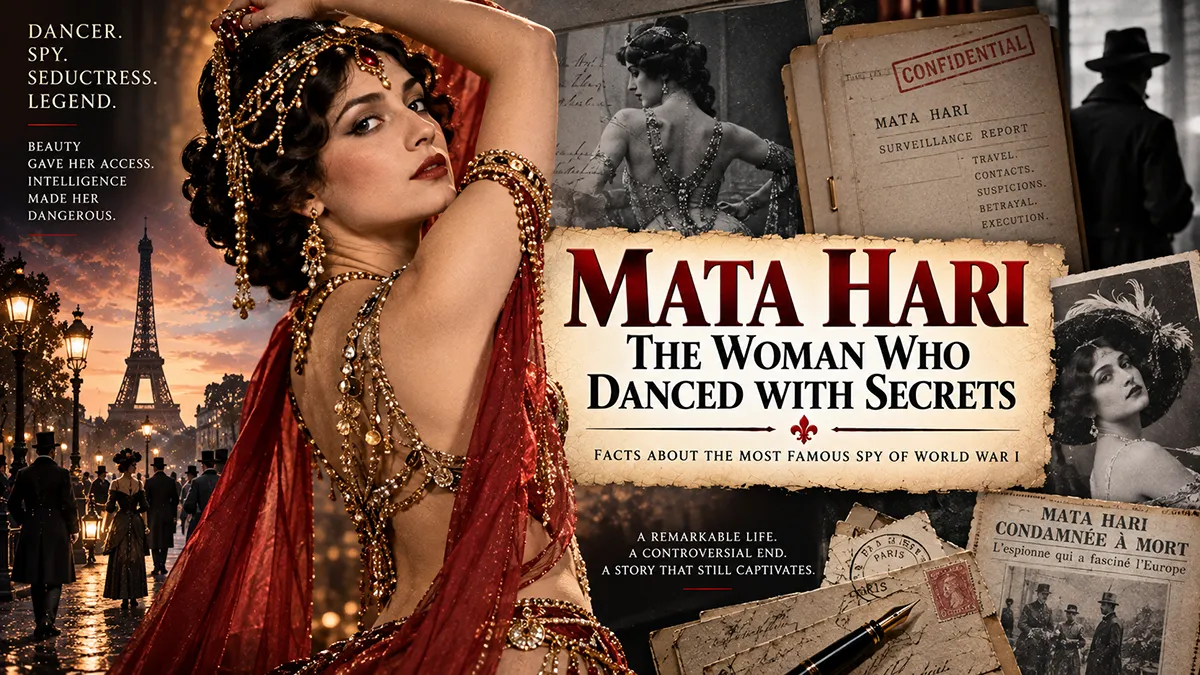
Few figures from World War I sound like they stepped out of a novel, but Mata Hari really did live a story stranger than fiction.
She was a Dutch woman who reinvented herself as an exotic dancer in Paris, moved through the salons and bedrooms of Europe’s elite, and was ultimately executed by the French as a German spy — even though historians still argue about how much of that story holds up.
Her name has become shorthand for “seductive double agent,” but the real Margaretha Zelle was far more complicated than the myth that grew around her.
This guide separates verified history from legend, much like similar myth-busting looks at figures such as Ivan the Terrible and Saint Patrick, and answers the questions people search for most: what does Mata Hari actually mean, how did she die, and was she really a spy at all?
TL;DR: Mata Hari was a Dutch-born exotic dancer named Margaretha Zelle who was convicted of espionage by France and executed in 1917, though many historians now believe the evidence against her was thin and that she was as much a scapegoat as a spy.
Mata Hari at a Glance
Before diving into the full list of facts, here’s a quick snapshot of who she was. Think of this as the short version, for anyone skimming a “Mata Hari wiki” style summary before reading further.
- Real name: Margaretha Geertruida Zelle (later Margaretha Zelle MacLeod)
- Born: August 7, 1876, in Leeuwarden, Netherlands
- Died: October 15, 1917 (age 41), executed near Paris, France
- Known for: Exotic dance performances in Belle Époque Paris and a 1917 conviction for espionage during WWI
- Nationality: Dutch
What Does “Mata Hari” Mean?
The phrase mata hari comes from Malay and Indonesian, the languages spoken across the Dutch East Indies, where Margaretha lived for several years as a young wife. “Mata” means eye, and “hari” means day, so mata hari literally translates to “eye of the day.” In everyday Malay and Indonesian, it’s simply the word for the sun, and it’s usually written as one word, matahari.
That’s also why so many people search for matahari, matahari wikipedia, or what is matahari — the word existed long before the spy did, and it still means “sun” in modern Indonesian and Malay. Margaretha borrowed it as a stage name because of its exotic, sun-drenched imagery, not because it had any secret meaning tied to espionage.
Interestingly, a very similar-sounding phrase, mata hati, is a completely different Malay and Indonesian idiom. It means something closer to “eye of the heart,” often used to describe conscience or inner intuition. The two phrases, mata hari and mata hati, are easy to mix up (hence searches for matahati and mata hati), but they don’t share a meaning — one is the sun, the other is a figure of speech for the heart’s judgment.
Because her stage name has been transliterated and misremembered so many times over the past century, you’ll also see search variations like mata har, mat hari, marta hari, maya hari, marahari, and mada hari. All of these refer to the same historical woman; they’re simply common misspellings that have picked up search volume of their own.
The Facts: 25 Things You Should Know About Mata Hari
With the naming confusion cleared up, here’s the real, documented story of Margaretha Zelle — from her difficult childhood to her infamous trial — organized as 25 essential facts.
1. Her Real Name Was Margaretha Geertruida Zelle
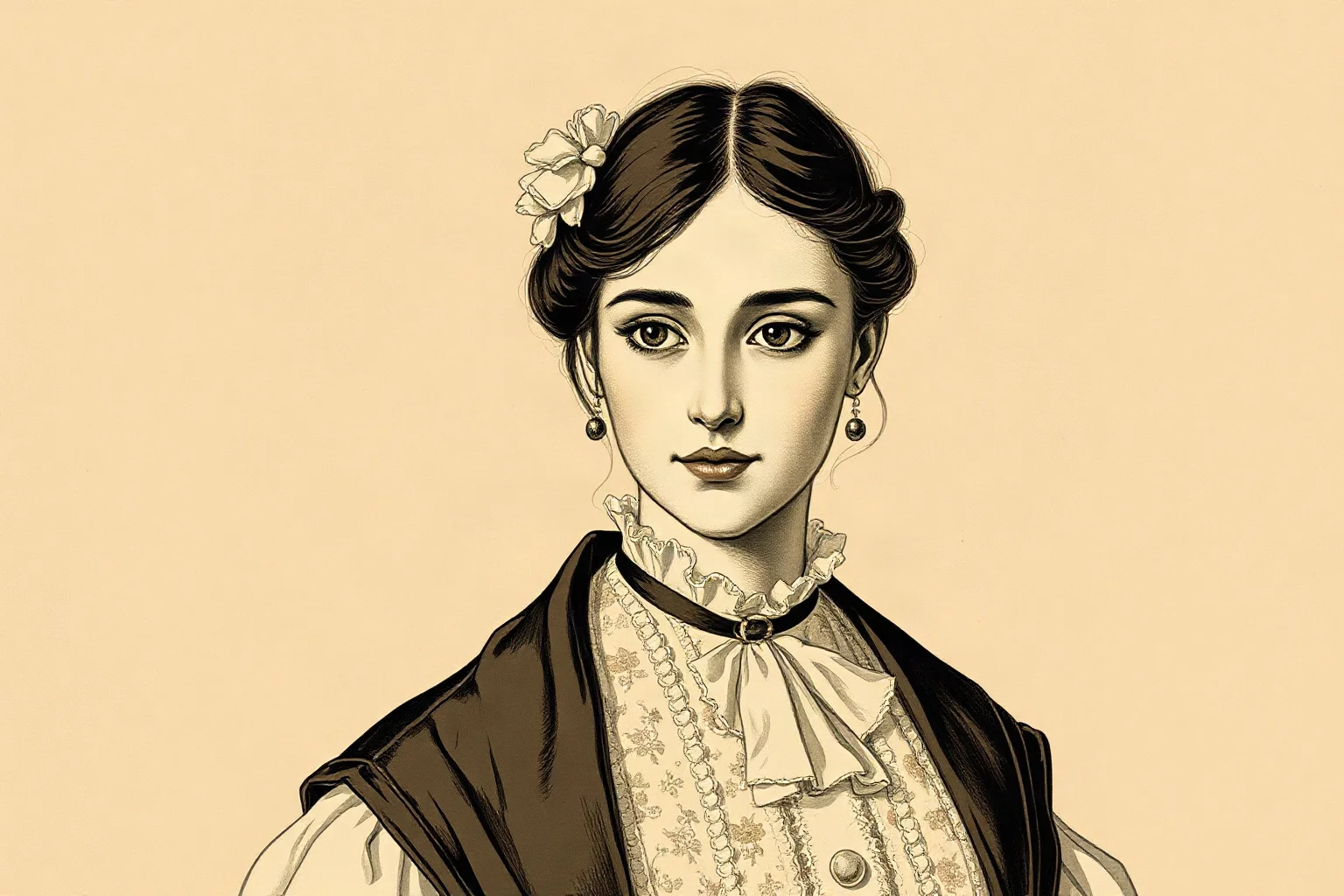
Mata Hari was a stage name, not a birth name. She was born Margaretha Geertruida Zelle, and after her marriage she was legally known as Margaretha Zelle MacLeod. The glamorous persona came much later, invented for a Paris stage rather than given to her at birth.
2. She Was Born in the Netherlands, Not Asia

Despite the exotic backstory she later invented, Margaretha was born on August 7, 1876, in Leeuwarden, a city in the northern Netherlands. She had no Asian heritage at all. Her later claims of being born in Java or descended from Indian temple dancers were entirely fabricated for effect.
3. Her Childhood Started Comfortably, Then Fell Apart

Her father, Adam Zelle, ran a successful hat and clothing shop and briefly gave the family a wealthy lifestyle. He later invested poorly in oil stocks and went bankrupt, and her parents’ marriage collapsed soon after. Her mother died when Margaretha was still a teenager, scattering the family among various relatives.
4. She Married a Much Older Military Officer

At 18, Margaretha answered a newspaper advertisement placed by Rudolf MacLeod, a Dutch colonial army officer roughly two decades her senior. The two married in 1895, and the marriage would later prove deeply unhappy, marked by his drinking and reported abuse. It nonetheless changed the entire direction of her life.
5. She Lived in the Dutch East Indies

After marrying, Margaretha moved with her husband to the Dutch East Indies, in present-day Indonesia. It was here that she encountered local Malay language and culture, including the phrase that would later become her stage name. This period is essential to understanding where “mata hari” the name actually came from.
6. She Suffered the Loss of a Child
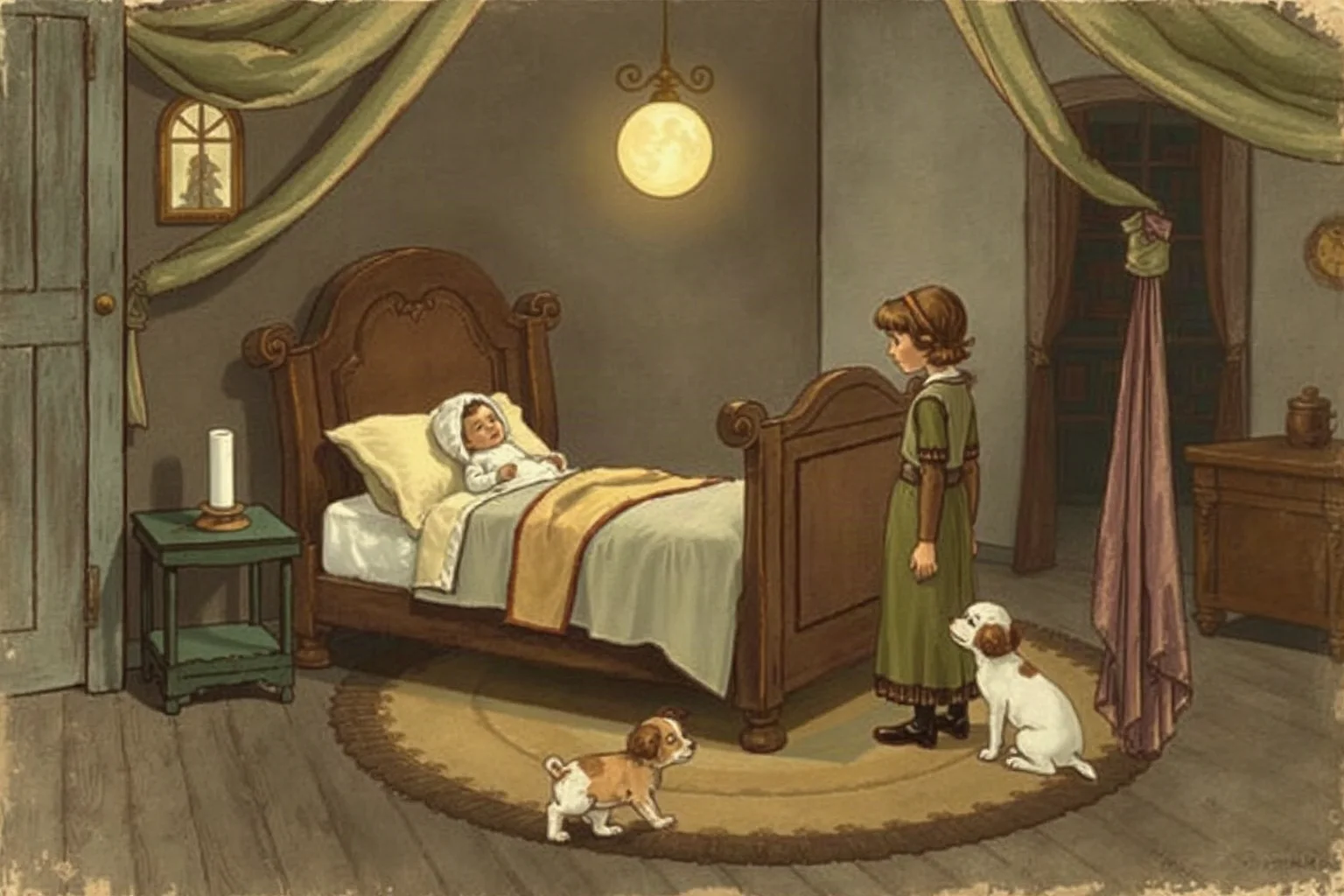
Margaretha had two children with Rudolf MacLeod, a son named Norman and a daughter named Jeanne Louise, nicknamed Non. Norman died in early childhood under tragic and disputed circumstances tied to illness within the household. It was a devastating loss that shadowed the rest of her personal life.
7. Her Marriage Ended in Divorce

The MacLeod marriage deteriorated over years of conflict, and the couple eventually divorced in the early 1900s. Margaretha left the marriage with very little financial security and no clear path forward. It was this uncertainty that eventually pushed her toward Paris.
8. She Reinvented Herself in Paris

Margaretha arrived in Paris around 1903 with almost nothing, working odd jobs including as a circus rider before finding her footing. Paris at the time was a magnet for performers experimenting with “exotic” imagery drawn from colonial fascination with Asia. She saw an opportunity and built an entirely new identity to seize it.
9. Mata Hari Made Her Debut in 1905

Her breakout performance came in March 1905 at the Musée Guimet, a Paris museum devoted to Asian art. Dancing under the name Mata Hari, she presented herself as a sacred temple dancer performing spiritual, sensual choreography. Parisian high society was captivated almost overnight.
10. She Invented an Entire Fictional Backstory
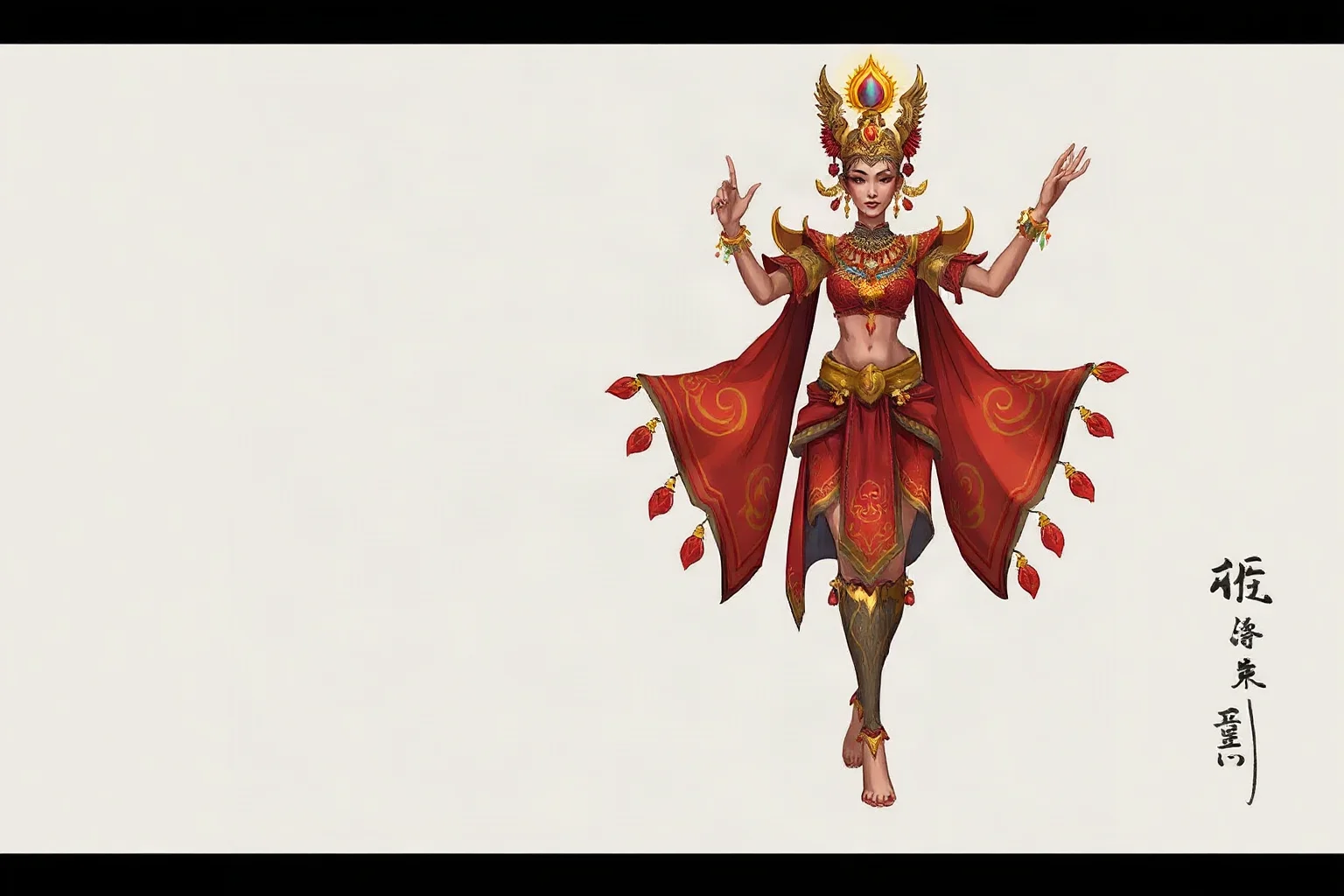
To make the act convincing, Mata Hari claimed to be a princess or priestess born in Java, trained since childhood in sacred Hindu temple dance. None of this was true, but it fit perfectly with the era’s Orientalist fascination with the “mysterious East.” Audiences rarely questioned it, and for years the fabrication went largely unchallenged.
11. Her Dancing Blended Fantasy With Real Influences
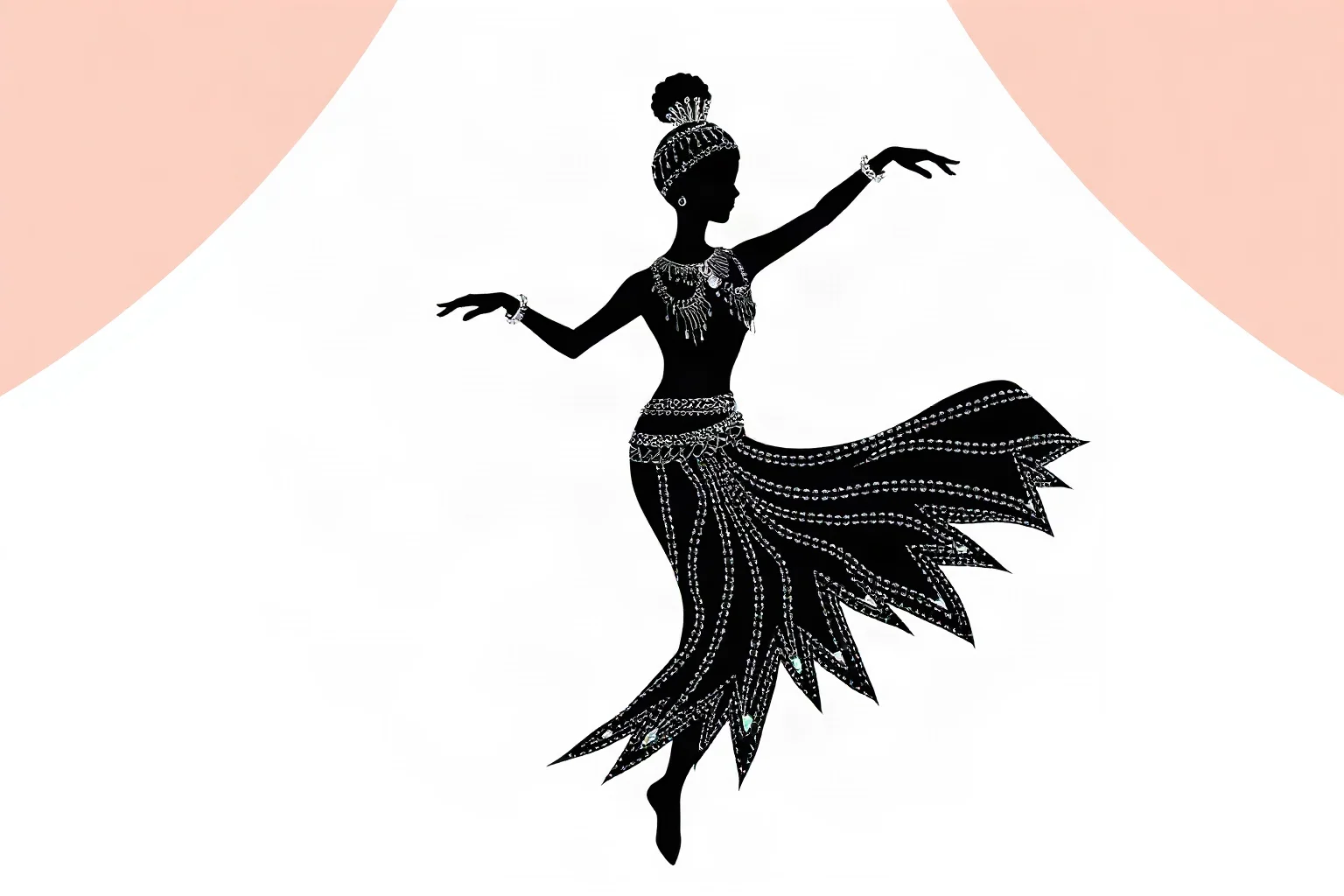
Mata Hari dancing drew loosely on Javanese and Indian temple traditions she had genuinely observed while living in the Dutch East Indies, filtered through her own theatrical imagination. It wasn’t authentic in an academic sense, but it was original enough to feel new to Parisian audiences. The performances mixed real cultural fragments with pure invention.
12. She Became a Sensation Among Europe’s Elite
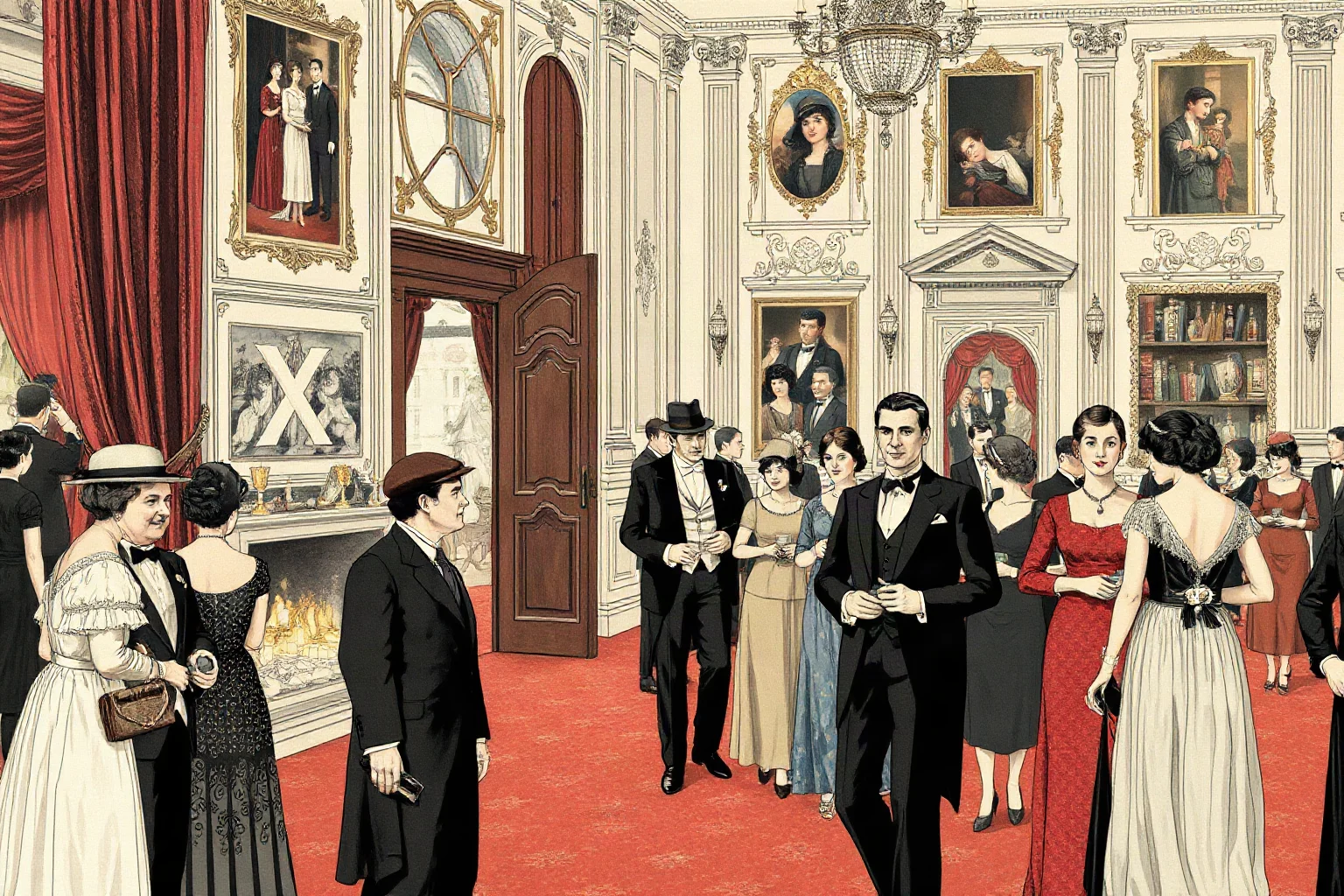
Within a couple of years, Mata Hari was performing in exclusive Parisian salons, private mansions, and prestigious venues for wealthy patrons, diplomats, and military officers. She moved in circles most performers never touched, dining and traveling with some of the continent’s most influential men. Her fame quickly spread beyond France into Germany, Spain, and beyond.
13. Her Costumes Were Considered Scandalous
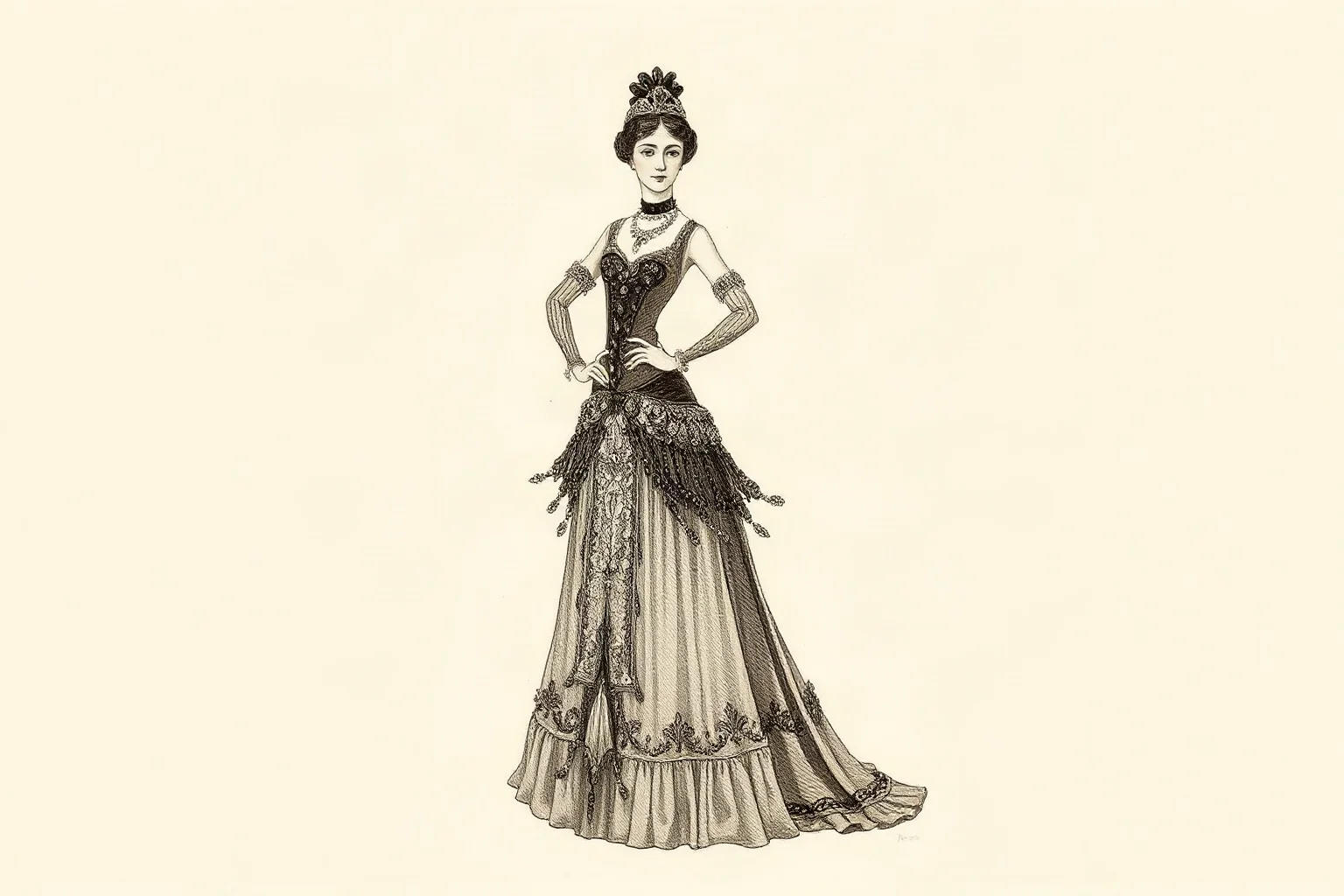
Mata Hari’s performances featured jeweled bras, sheer fabrics, and body-skimming costumes that were considered daring, even shocking, for the era. She was sometimes described as performing nearly nude, which only fueled her notoriety. Newspapers and gossip columns loved her precisely because she pushed against the boundaries of respectable Belle Époque society.
14. She Had Numerous Affairs With Powerful Men
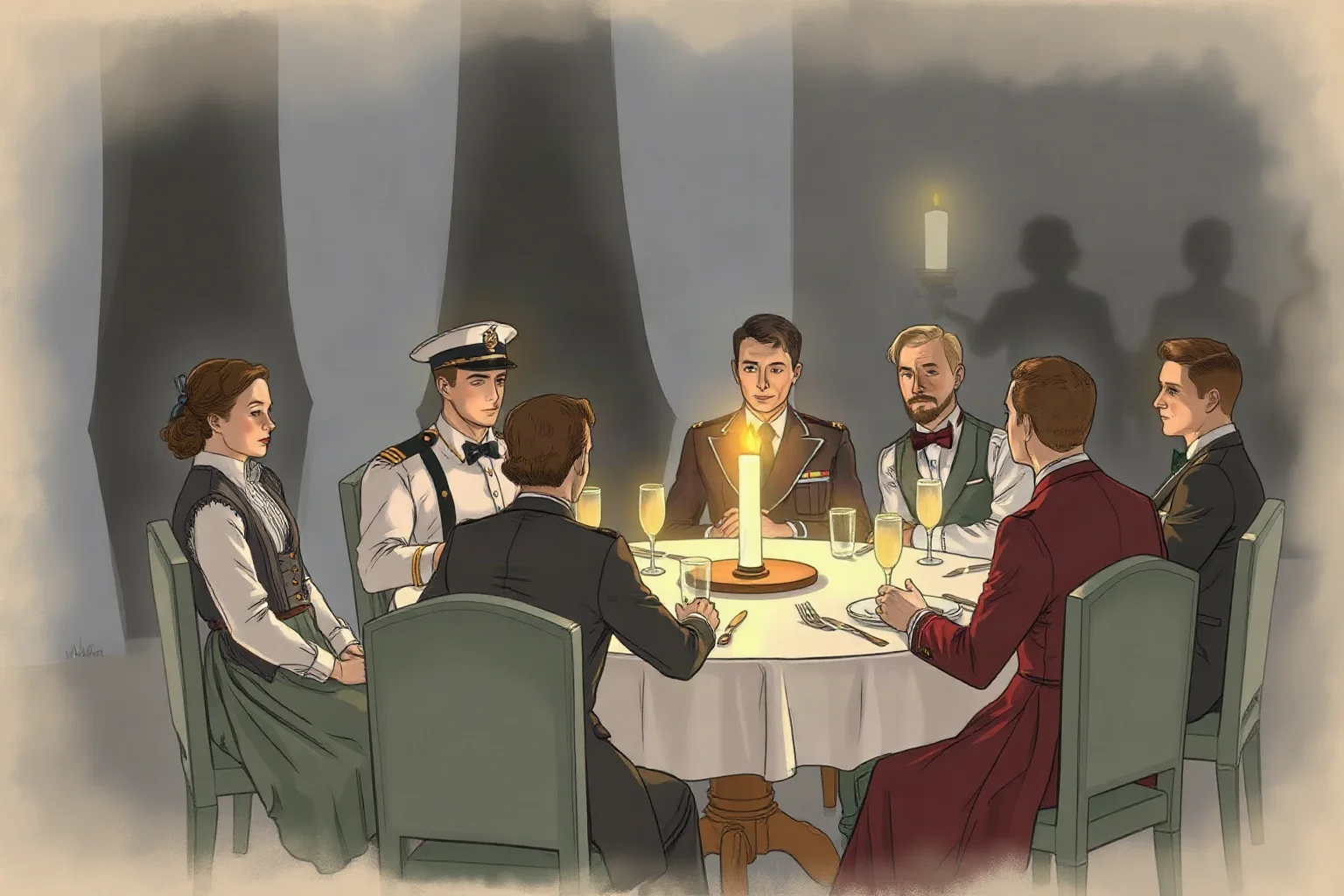
Over the following decade, Mata Hari became known for relationships with military officers, aristocrats, businessmen, and politicians across several countries. These connections gave her financial support as her dancing career eventually declined. They also, fatefully, gave her the kind of international access that would later look deeply suspicious.
15. World War I Changed Everything for Her

When war broke out in 1914, Mata Hari’s lifestyle of border-crossing travel and relationships with military men in multiple countries suddenly seemed less glamorous and far more dangerous. As a Dutch citizen, she came from a neutral country, which let her travel more freely than most, but this freedom made French and British intelligence deeply suspicious of her. Wartime paranoia was rising fast, and she fit the profile of someone worth watching.
16. She Was Allegedly Recruited by German Intelligence

According to French investigators, Mata Hari was recruited by German intelligence and given the code name H-21. Exactly what, if anything, she actually did for Germany remains disputed among historians. Some believe she took German money without providing meaningful intelligence in return.
17. She May Have Also Worked for the French

At the same time, some accounts suggest Mata Hari approached French intelligence, the Deuxième Bureau, offering to work as a spy for France instead. If true, this would make her less a committed German agent and more an opportunist trying to profit from both sides during wartime chaos. This ambiguity is a major reason historians still debate her true loyalties.
18. She Was Arrested in a Paris Hotel

French authorities arrested Mata Hari on February 13, 1917, at the Hotel Elysee Palace in Paris. She was accused of espionage on behalf of Germany, allegedly responsible for intelligence that contributed to Allied military losses. It was the beginning of the end for her.
19. The Case Against Her Relied on Intercepted Messages

A key piece of evidence was a German radio message, allegedly decoded by French intelligence, that referenced an agent designated H-21. Investigators claimed this proved Mata Hari’s guilt as a German operative. However, some historians have since questioned whether the message was genuine intelligence or a setup designed to entrap her.
20. She Was Tried by a French Military Tribunal

Mata Hari’s trial took place in July 1917, conducted by a French military court rather than a civilian one, which limited her legal protections — not unlike the military tribunal that, centuries earlier, condemned Joan of Arc for very different alleged crimes. The proceedings moved quickly, and much of the evidence presented was circumstantial rather than conclusively documented. Wartime France, desperate for someone to blame for battlefield failures, was in no mood for leniency.
21. She Was Convicted and Sentenced to Death

The tribunal found Mata Hari guilty of espionage and sentenced her to death, a verdict that shocked parts of Parisian society who had once adored her. Her defense argued the evidence was weak and largely built on assumption rather than proof. The court was unmoved, and the sentence stood.
22. Why Was Mata Hari Executed? The Answer Is Still Debated

Officially, Mata Hari was executed for passing military secrets to Germany, information that French prosecutors claimed contributed to the deaths of Allied soldiers. In practice, much of the case rested on her international love affairs and border-crossing lifestyle rather than hard proof of specific betrayals. Many historians today argue she was executed as much for scandal and wartime scapegoating as for confirmed espionage.
23. She Was Executed by Firing Squad in 1917

Mata Hari was executed on October 15, 1917, at the Vincennes military fortress outside Paris. She was 41 years old at the time of her death, which directly answers one of the most searched questions about her: how old was Mata Hari when she died. Her execution remains one of the most famous in the history of wartime espionage cases.
24. The Kiss-Blowing Legend Isn’t Verified

One of the most repeated stories claims Mata Hari refused a blindfold and blew a kiss to the firing squad moments before her death. It’s a striking image, and it has appeared in countless retellings, but there is no reliable contemporary documentation confirming it actually happened. It’s best treated as popular legend rather than verified fact.
25. Her Body Went Unclaimed, and Her Head Later Vanished

No family member came forward to claim Mata Hari’s body after her execution, so it was reportedly used for anatomical study, as was sometimes practiced at the time. Her head was said to have been preserved and kept at a Paris museum collection for decades afterward. When museum staff went looking for it many years later, it was reportedly discovered missing, adding one final unsolved mystery to her story.
The Legacy of Mata Hari
Mata Hari’s story didn’t end with her execution; if anything, it grew larger afterward. She became the template for the glamorous, dangerous “femme fatale spy” trope that later shaped novels, films, and television for the next century. A famous 1931 film starring Greta Garbo cemented this image in popular culture, even though it took enormous liberties with the actual history.
Modern historians have taken a much more careful look at her case. When French archives related to her trial were declassified in 1985, researchers found the evidence against her thinner than wartime prosecutors had claimed. Many now argue she was less a criminal mastermind and more a convenient target during a moment when France desperately needed a symbol of wartime betrayal to blame.
Whatever the full truth, Mata Hari remains one of the most recognizable names from World War I, over a century after her death. Her story sits at the uneasy intersection of performance, prejudice, and propaganda, which is exactly why it still fascinates people searching her name today. Separating the woman from the myth doesn’t make her story less dramatic; if anything, the real history is more compelling than the legend.
Frequently Asked Questions
What is the meaning of Mata Hari?
The meaning of Mata Hari comes from Malay and Indonesian, where "mata" means eye and "hari" means day. Put together, mata hari literally translates to "eye of the day," which is the everyday word for "sun" in Indonesian and Malay. Margaretha Zelle adopted it as her stage name because of its exotic imagery, not because it had any hidden spy-related meaning.
How old was Mata Hari when she died?
Mata Hari was 41 years old when she died. She was born on August 7, 1876, and executed on October 15, 1917, meaning she had just passed her 41st birthday two months before her death.
What was Mata Hari’s cause of death?
Mata Hari died by execution, specifically by firing squad, carried out by French military authorities on October 15, 1917, at the Vincennes fortress outside Paris. She had been convicted of espionage against France during World War I.
Why was Mata Hari executed?
Mata Hari was executed after a French military tribunal convicted her of spying for Germany, allegedly passing along military information that contributed to Allied casualties. However, much of the evidence was circumstantial, and many historians today believe wartime paranoia and her scandalous reputation played as large a role in her conviction as any proven espionage.
Was Mata Hari a real spy or just a scapegoat?
This is still debated among historians. She likely accepted money from German intelligence and may have offered information to French intelligence as well, but there's little solid proof she passed along anything that genuinely damaged Allied forces. Many modern historians view her as more of a wartime scapegoat than a master spy.
What was Mata Hari’s real name?
Her real name was Margaretha Geertruida Zelle. After her marriage to Dutch colonial officer Rudolf MacLeod, she was legally known as Margaretha Zelle MacLeod, before later inventing the stage name Mata Hari for her dancing career in Paris.
Is Matahari a real word, and what does it mean?
Yes, matahari is a genuine Malay and Indonesian word meaning "sun," formed from "mata" (eye) and "hari" (day). It's a common everyday word in those languages and existed long before it was adopted as a stage name.

Alex Warren
Related Articles