

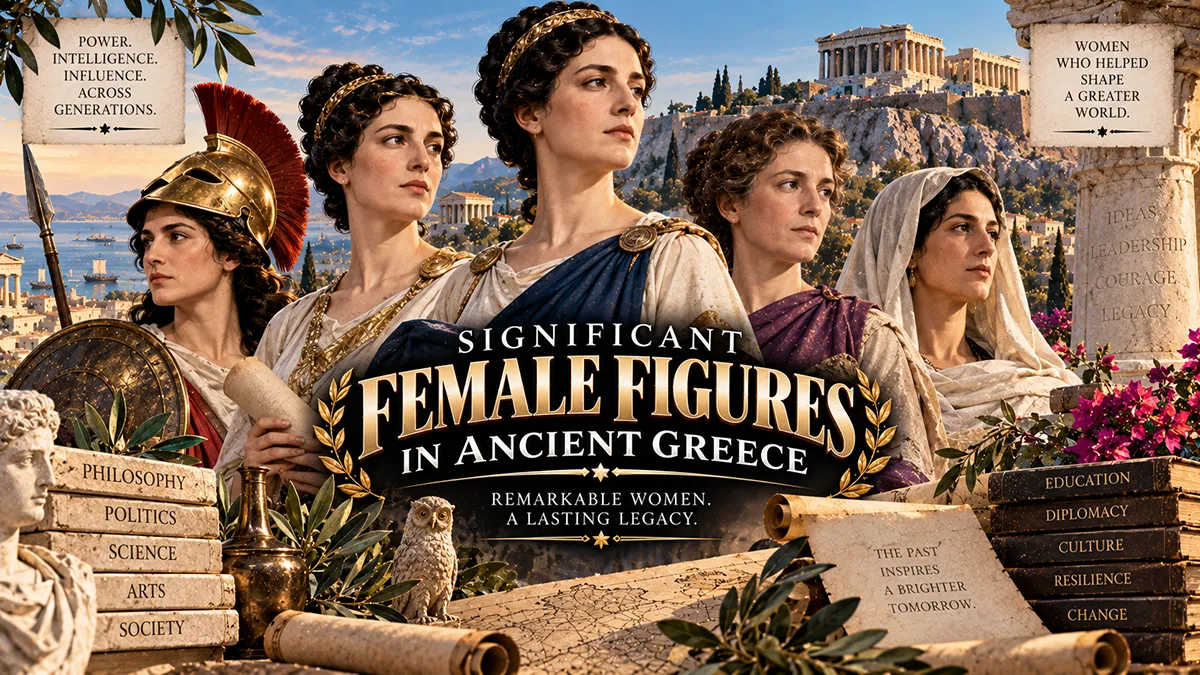
Ask most people to picture ancient Greece and they’ll probably think of marble temples, bearded philosophers, and legendary warriors like Achilles. That image leaves out roughly half the story.
Behind the statues and scrolls were real Greek women who wrote poetry, ran philosophy schools, and won Olympic honors, alongside an entire pantheon of goddesses, queens, and warriors who shaped the mythology that still echoes through pop culture today, standing shoulder to shoulder with history’s most powerful women.
This list blends both worlds: verified historical figures and the legendary women of Greek mythology. Some names you’ll recognize instantly. Others deserve to be far better known than they currently are.
TL;DR: From real trailblazers like Sappho and Aspasia to legendary icons like Athena and Medea, the women of ancient Greece—both historical and mythological—shaped a civilization whose ideas about power, beauty, and defiance still resonate today.
What Was Life Really Like for Women in Ancient Greece?
It’s tempting to talk about “ancient Greek women” as one single group, but daily life varied enormously depending on city-state, class, and era. An Athenian woman, for instance, had far fewer legal rights than a Spartan woman. Athenian citizen women couldn’t vote, own significant property, or represent themselves in court, and their world was largely centered on the household.
Sparta was a notable exception. Spartan women could own land, receive physical education, and speak with more social freedom, partly because Spartan society prized strong mothers for producing strong soldiers. This is part of why figures like Gorgo and Cynisca stand out so clearly in the historical record compared to their Athenian counterparts.
Enslaved women and non-citizen women, meanwhile, had even fewer protections than free citizen women, and their stories are far less documented. Most of what survives about women’s lives in ancient Greece was also written by men, which means a lot of nuance and everyday reality has simply been lost. Keep that filter in mind as you read through the names below.
Real Historical Women Who Shaped Ancient Greece
These women left an actual mark on record, poetry, philosophy, or Olympic history, even in a society that rarely made space for them.
1. Sappho of Lesbos
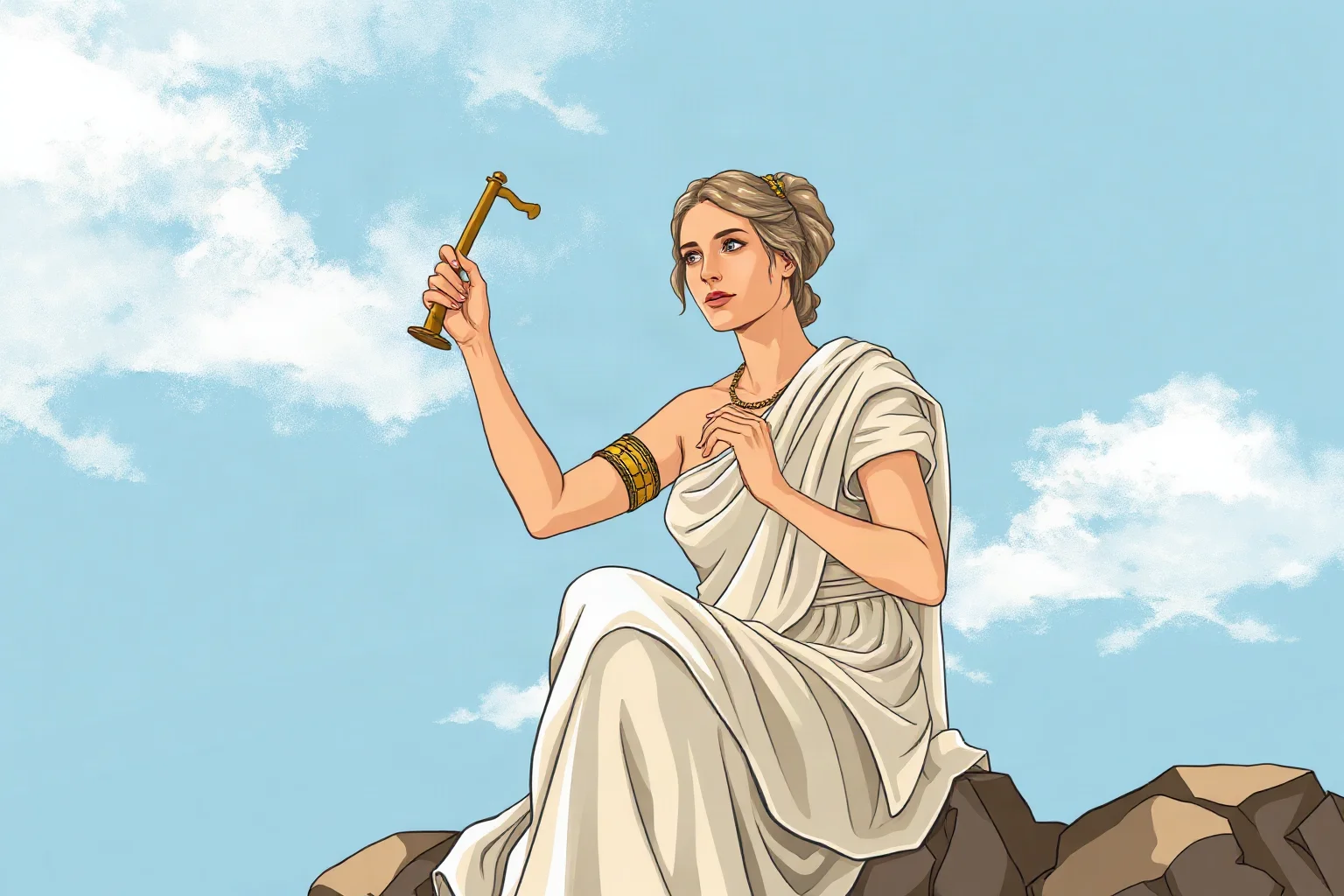
Sappho is one of antiquity’s most celebrated poets, known for intensely personal lyric poetry about love, longing, and female relationships. Her work was influential enough that the term “sapphic” derives directly from her name and home island.
Born around 630 BCE on Lesbos, only fragments of her original poetry survive today. Ancient admirers reportedly held her in such high regard that some later writers referred to her as a kind of “tenth muse,” a striking honor in a male-dominated literary tradition.
2. Aspasia of Miletus
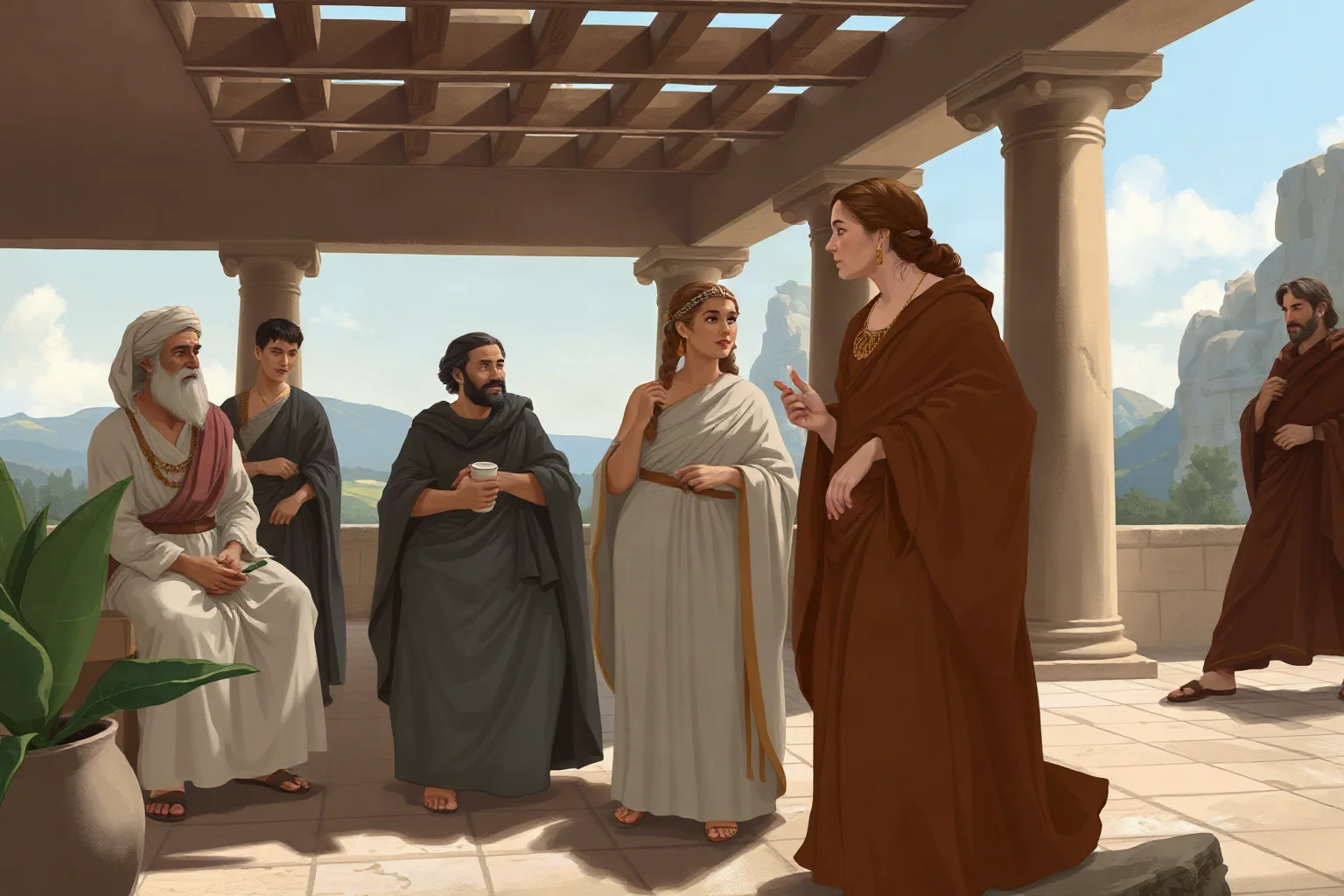
Aspasia was the intellectual companion of the Athenian statesman Pericles and a fixture in Athens’s philosophical circles during the city’s golden age. She was reportedly skilled in rhetoric and discussion, at a time when women were excluded from formal education and public speech.
Because she was foreign-born, Aspasia never gained Athenian citizenship despite her influence. Much of what we know about her comes from writers like Plato and Plutarch, so historians treat some details of her life as debated rather than fully settled.
3. Agnodice
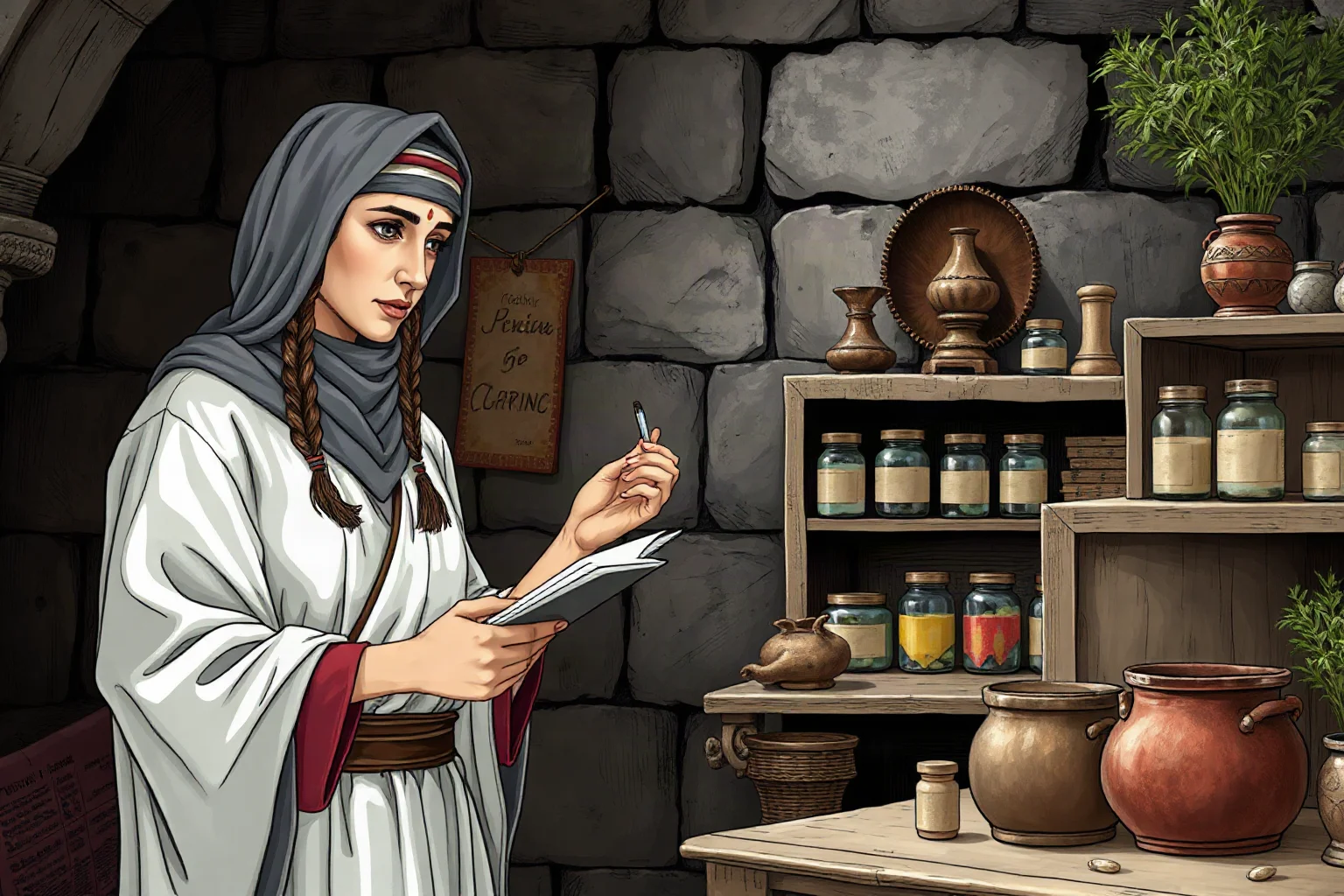
According to a story recorded centuries later by the Roman writer Hyginus, Agnodice disguised herself as a man in order to study and practice medicine in Athens, since women were barred from the profession. She reportedly became known for treating women who preferred a doctor who understood their conditions firsthand.
Because the account comes from long after she supposedly lived, historians treat her story partly as legend. Even so, it’s a powerful illustration of the real barriers ancient Greek women faced in professional life.
4. Hipparchia of Maroneia
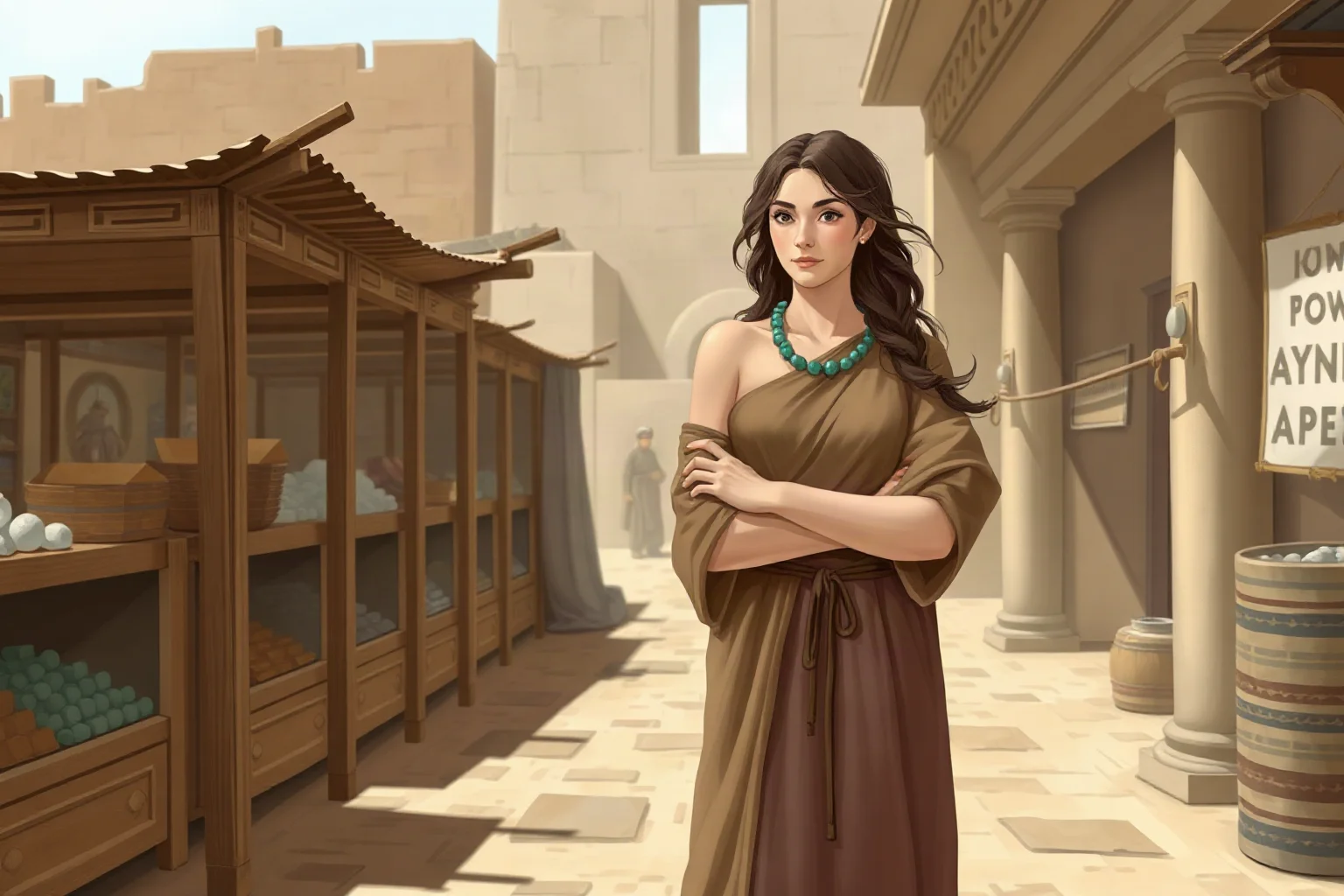
Hipparchia was a rare female philosopher who joined the Cynic school and lived openly alongside her husband, the philosopher Crates, rejecting conventional dress, property, and social norms of the time. This alone made her a striking figure in a culture that expected women to remain out of public philosophical life.
Her story is documented by the later biographer Diogenes Laërtius. It stands as one of the few detailed records we have of a woman actively practicing philosophy in the ancient Greek world.
5. Gorgo, Queen of Sparta
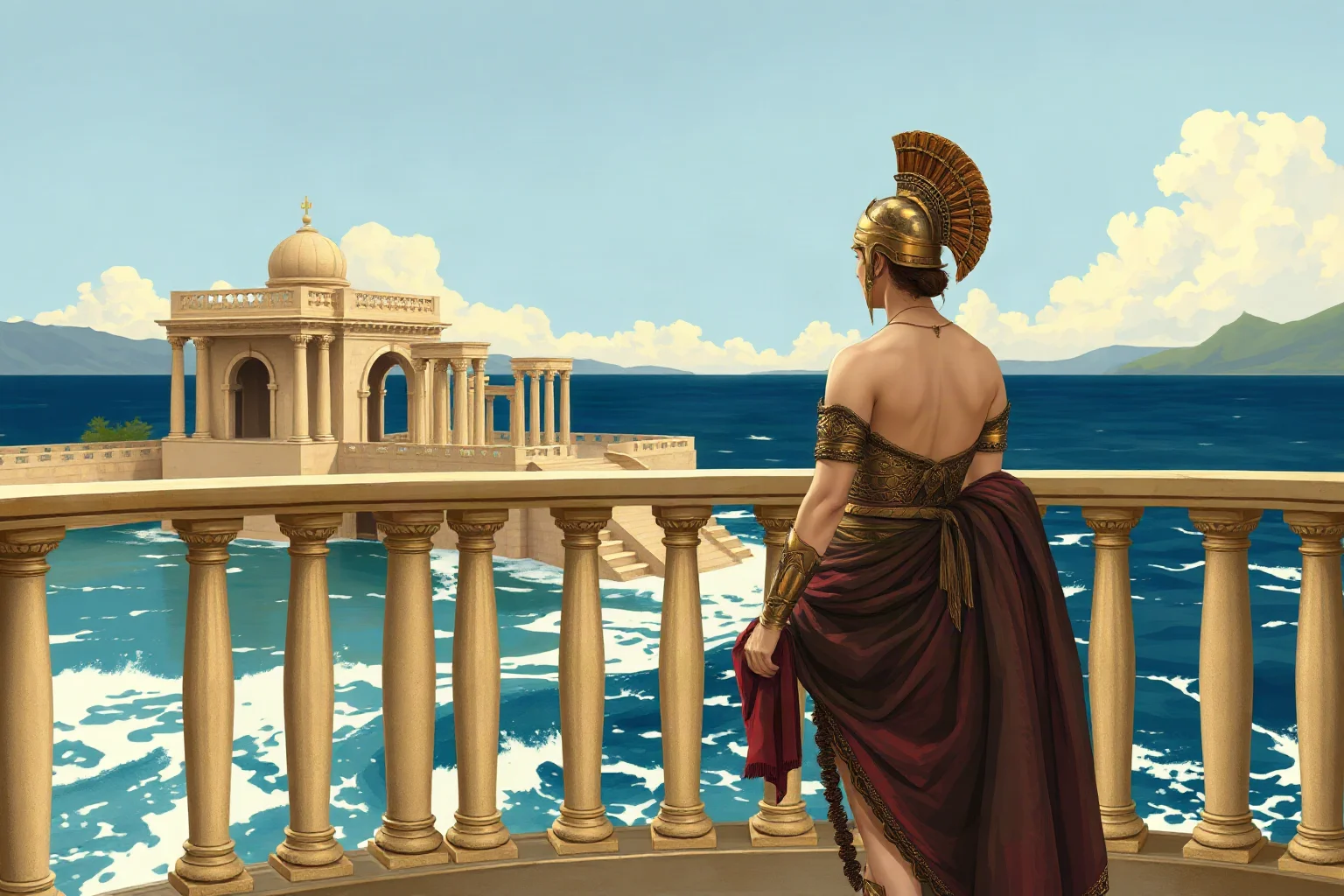
Gorgo, daughter of King Cleomenes I and wife of King Leonidas, appears in Herodotus’s Histories as remarkably sharp politically. She’s credited with decoding a secret message warning of an impending Persian attack, a rare moment of a woman’s political judgment being explicitly recorded by an ancient historian.
She’s also associated with a famous line preserved in Plutarch’s writings: when asked why Spartan women were the only ones who ruled men, she’s said to have replied it was because they were the only ones who gave birth to real men. Whether verbatim or embellished, the quote reflects Sparta’s distinct attitude toward female authority.
6. Cynisca of Sparta
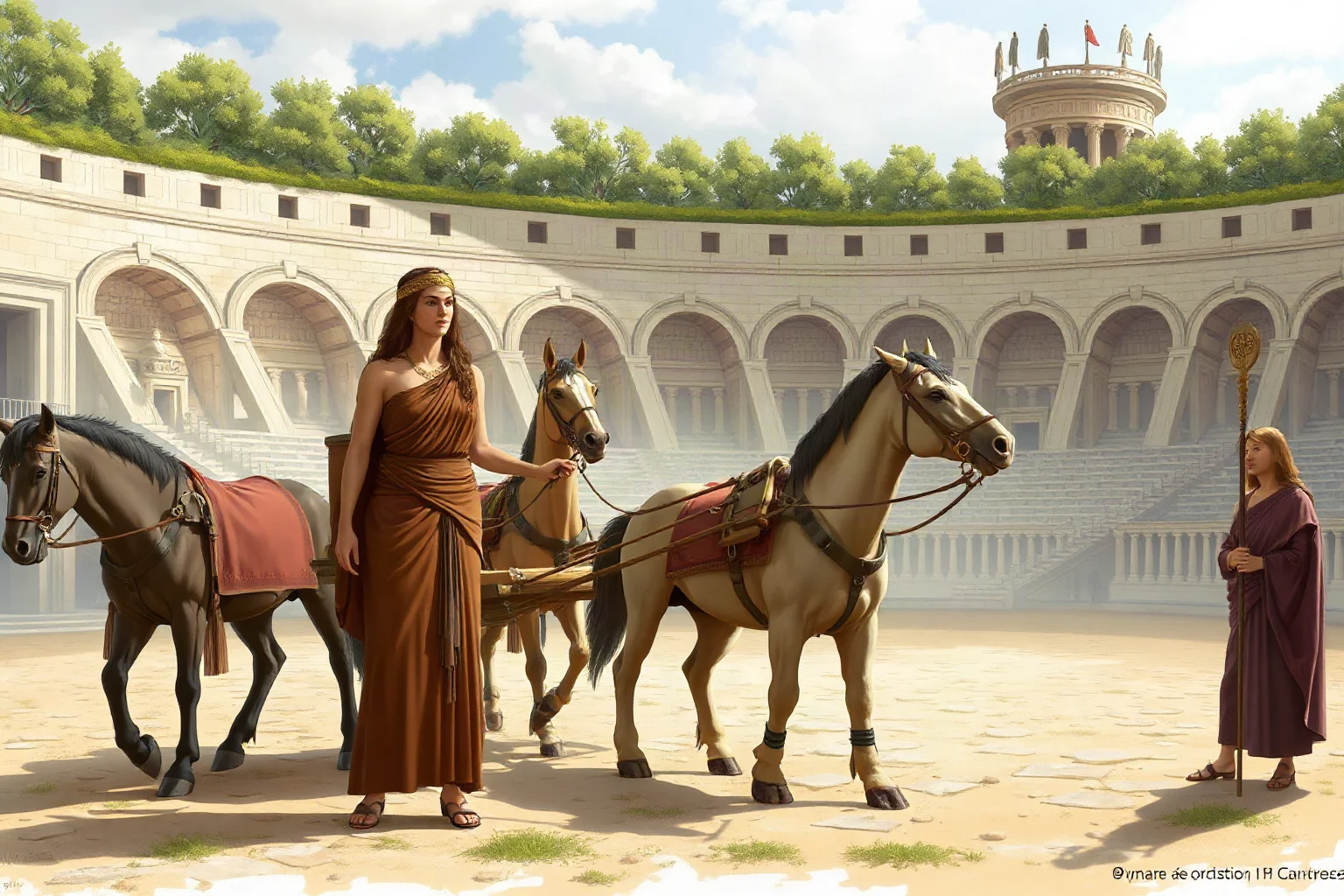
Cynisca made history as the first woman to win at the ancient Olympic Games, though not as a competing athlete. As the owner and trainer of a winning chariot team around 396 BCE, she claimed victory under rules that credited owners rather than drivers.
Her win was significant enough to be commemorated with a monument at Olympia. Later female chariot owners followed the precedent she set in one of the only Olympic categories open to women’s involvement at all.
7. Arete of Cyrene
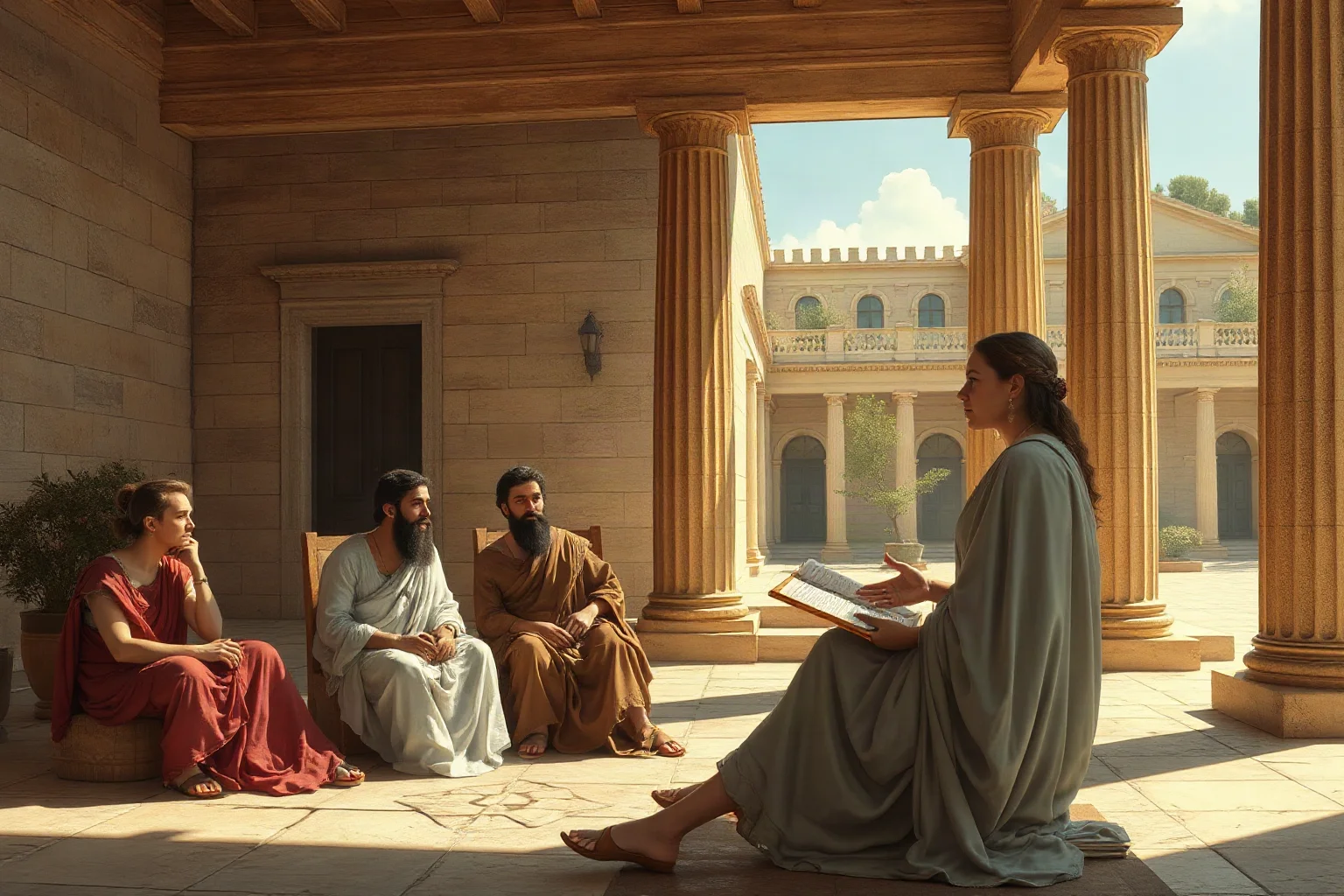
Arete was the daughter of the philosopher Aristippus, founder of the Cyrenaic school of philosophy. Ancient sources suggest she continued running her father’s school after his death, reportedly teaching students that included her own son.
Little of her original writing survives, and much of what we know comes from brief, later references. Historians treat her biography with appropriate caution as a result.
8. Theano
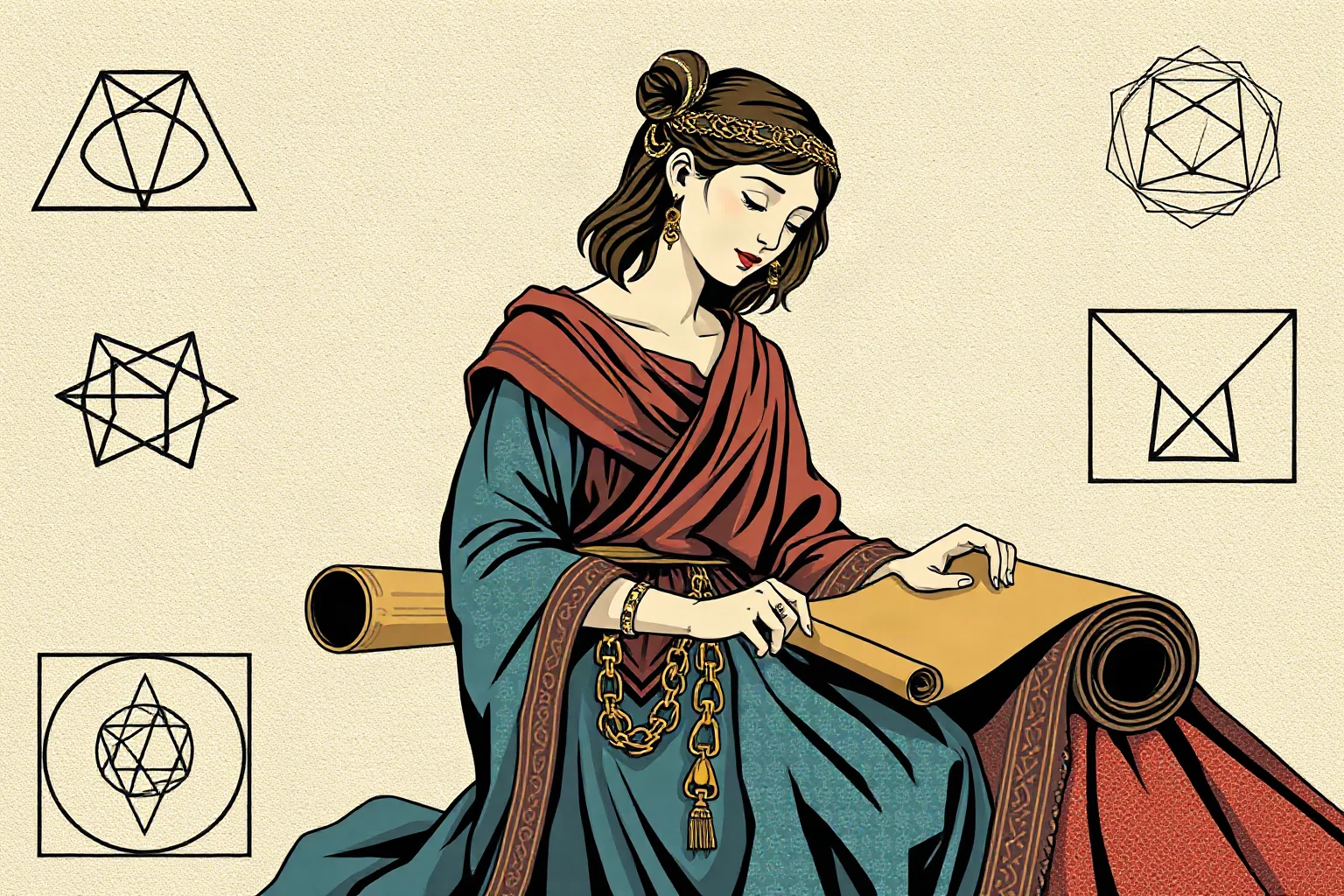
Theano is associated with the Pythagorean school of philosophy and mathematics, remembered in later tradition for writings on ethics, numbers, and the natural world. Ancient sources describe her variously as the wife, student, or intellectual partner of Pythagoras himself.
The inconsistency across sources says as much about ancient record-keeping as it does about her. Women’s exact roles were often blurred or simplified by the male historians who wrote about them generations later.
9. Diotima of Mantinea

Diotima appears in Plato’s Symposium as the source of Socrates’s philosophy of love, or Eros. Scholars still debate whether she was a real historical figure or a literary device Plato invented to make a philosophical point.
Either way, she represents a rare instance in classical Greek literature where a woman is explicitly credited as the origin of major philosophical wisdom. That alone makes her worth remembering.
10. Olympias of Macedon
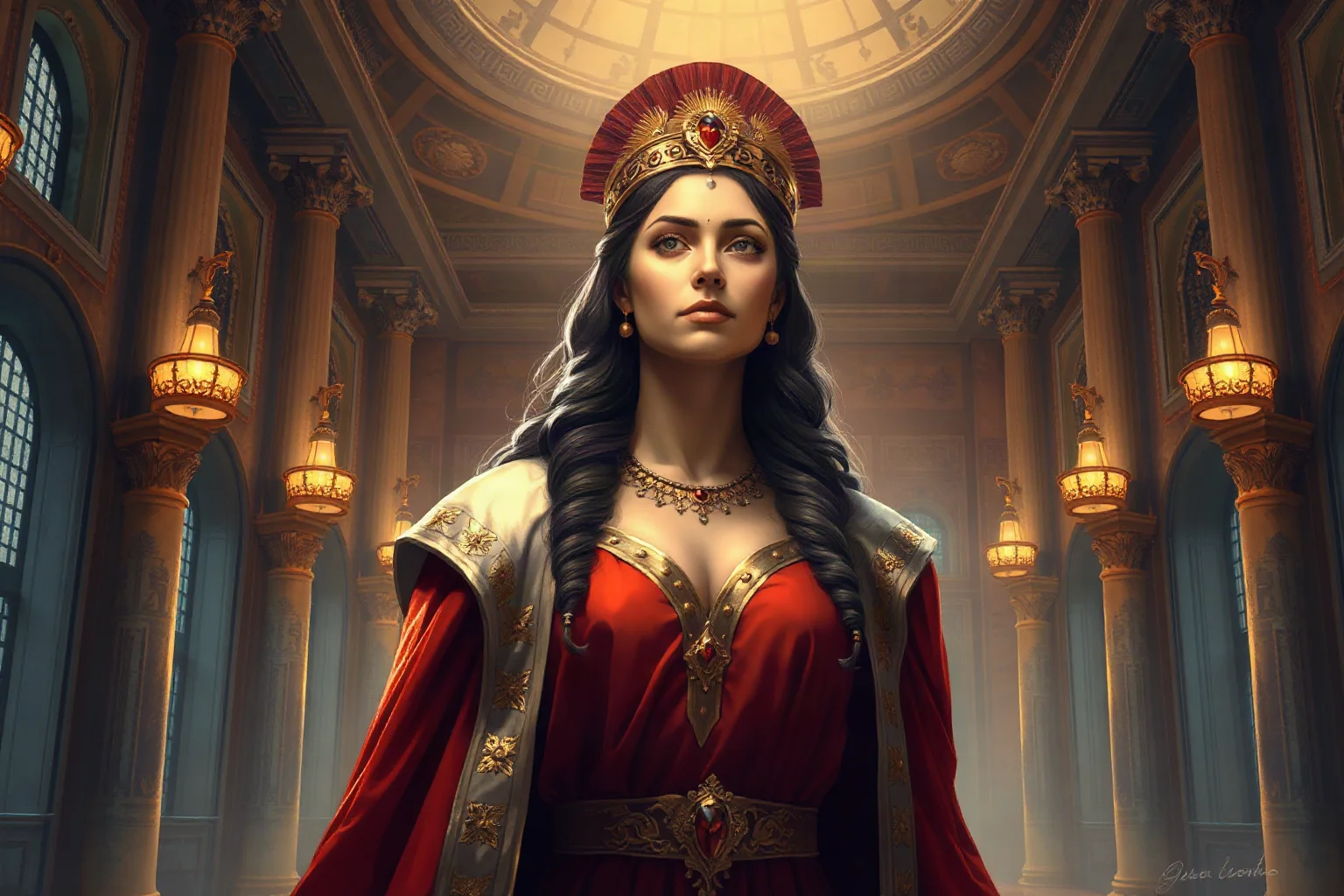
Olympias was the fiercely political mother of Alexander the Great, deeply involved in Macedonian court intrigue both before and after her son’s rise to power. Ancient historians describe her navigating power struggles that would have destroyed less determined figures.
Surviving accounts portray her with a mix of admiration and open hostility. That tension says a lot about how uncomfortable ancient writers were with women who held real political power.
Legendary Women of Greek Mythology
Beyond the historical record, Greek mythology is full of goddesses, queens, and mortal women whose stories have shaped Western storytelling for nearly three thousand years. These figures were never real people, but they reveal a lot about how ancient Greek culture imagined womanhood, power, and danger.
11. Athena
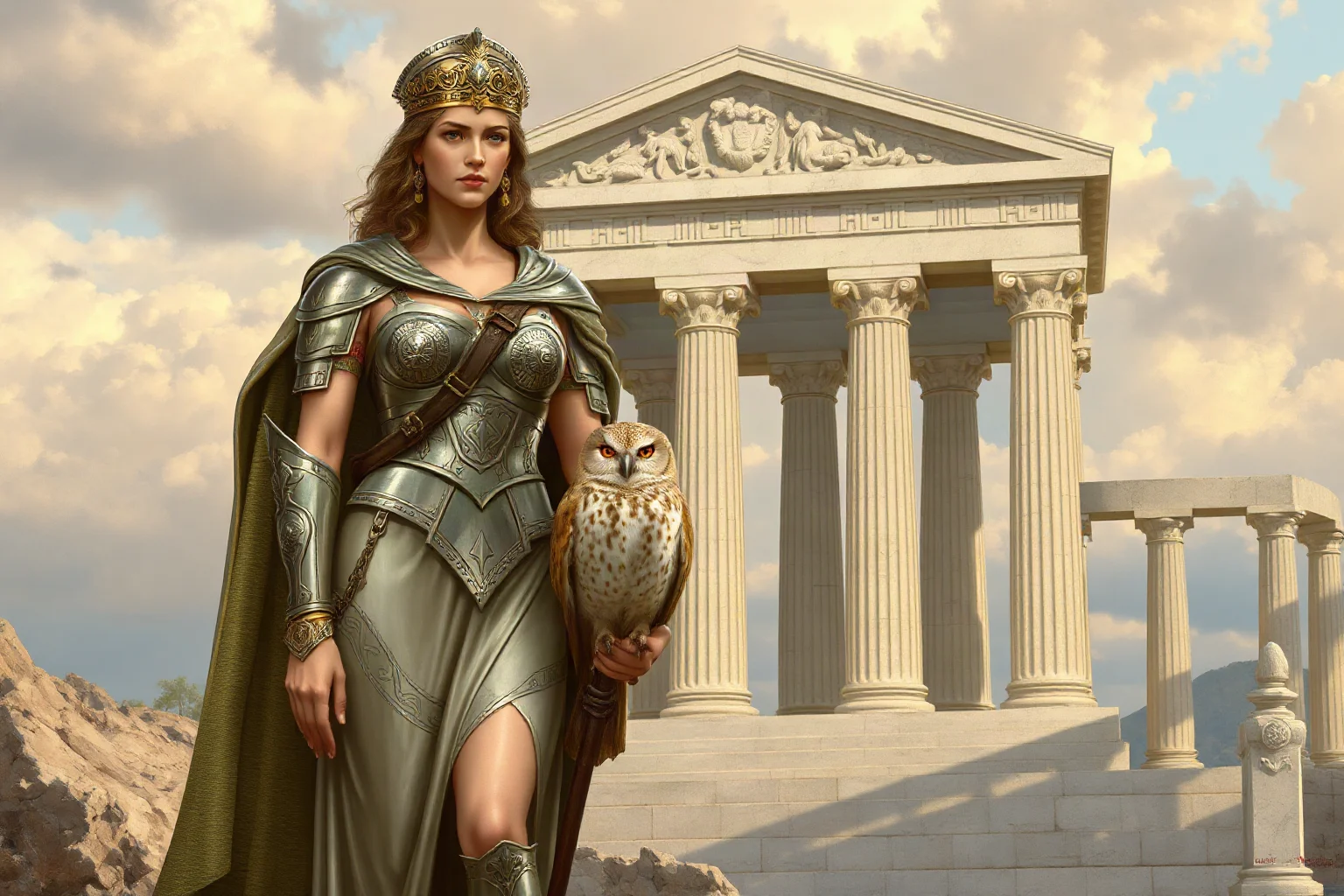
Athena, goddess of wisdom and strategic warfare, was said to have sprung fully grown from Zeus’s head. As patron deity of Athens, she lent her name to the city and was worshipped as a protector of crafts, reason, and calculated strength over brute force.
She’s frequently portrayed as one of the most level-headed Olympians, favoring cunning strategy in myths involving heroes like Odysseus and Perseus. Her Parthenon temple remains one of the most iconic structures from the ancient world.
12. Aphrodite
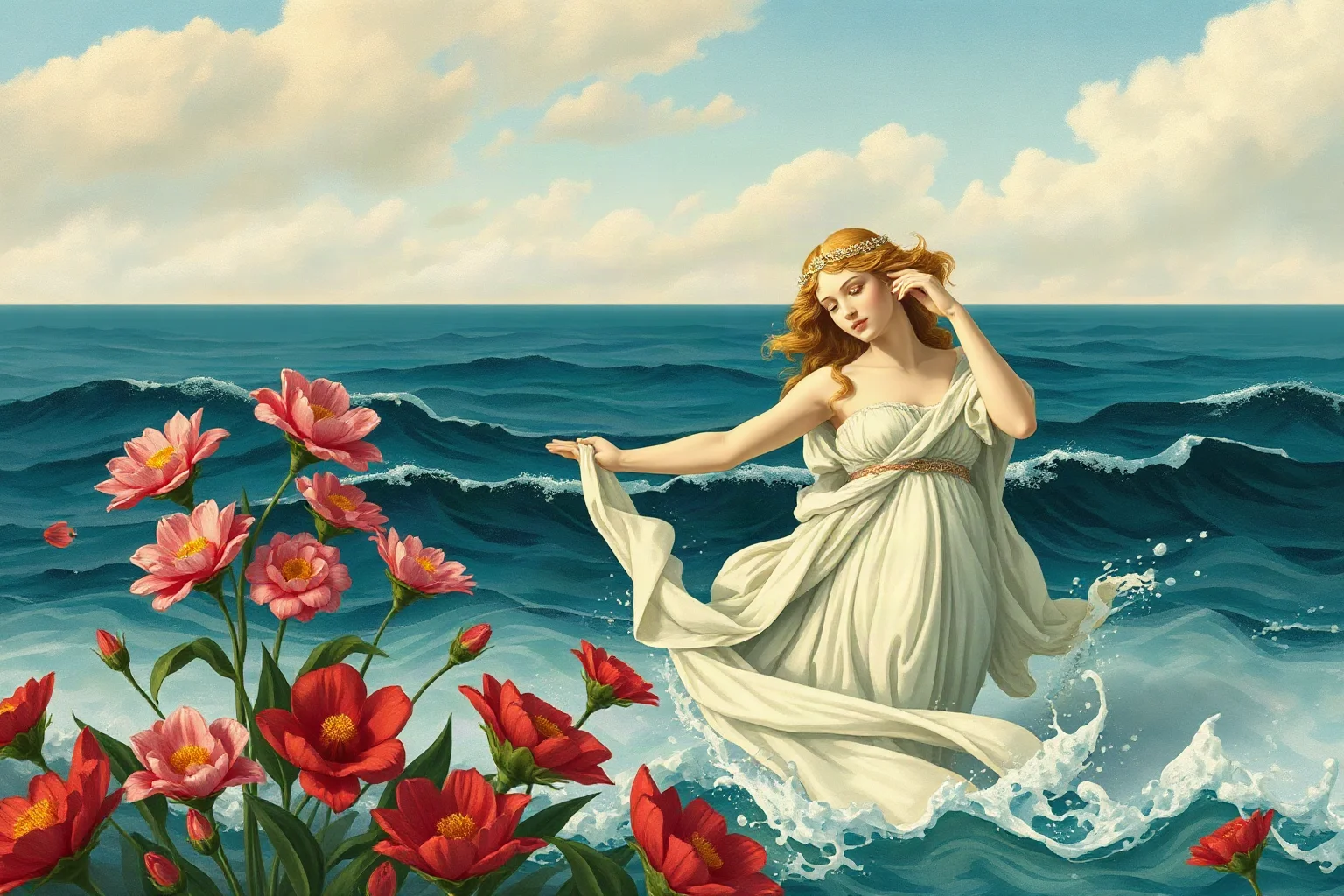
Aphrodite, goddess of love, beauty, and desire, has different origin stories depending on the source. Hesiod’s Theogony describes her rising from sea foam, while Homer names her a daughter of Zeus.
She’s central to the mythic origins of the Trojan War through the Judgment of Paris. Ancient Greeks associated her with both irresistible attraction and real danger, a reminder that beauty in Greek myth was rarely just decorative.
13. Hera

Hera, queen of the Olympian gods and goddess of marriage, was Zeus’s wife and frequent adversary within their own household. Many surviving myths show her reacting with jealousy and retribution toward Zeus’s numerous affairs and their consequences.
She was widely worshipped, particularly at major sanctuaries in Argos and Samos. Her myths reflect an ancient ideal of marital loyalty that stood in sharp, often painful contrast with her husband’s behavior.
14. Demeter

Demeter, goddess of grain and the harvest, is best known for her grief after her daughter Persephone was abducted by Hades. Ancient Greeks used her sorrow and eventual reunion to explain the arrival of the seasons.
She was central to the Eleusinian Mysteries, one of ancient Greece’s most important religious traditions. Initiates kept the specific rituals secret, so much of what happened remains genuinely unknown even to modern historians.
15. Artemis

Artemis, goddess of the hunt, wild animals, and the moon, was fiercely independent and sworn to remain unmarried among the Olympians. Her myths repeatedly emphasize self-sufficiency and a refusal to be controlled by male gods or mortals.
Despite her own vow of chastity, she was also worshipped as a protector of young women and those in childbirth. That range shows how much responsibility a single goddess could carry in Greek religious life.
16. Hestia
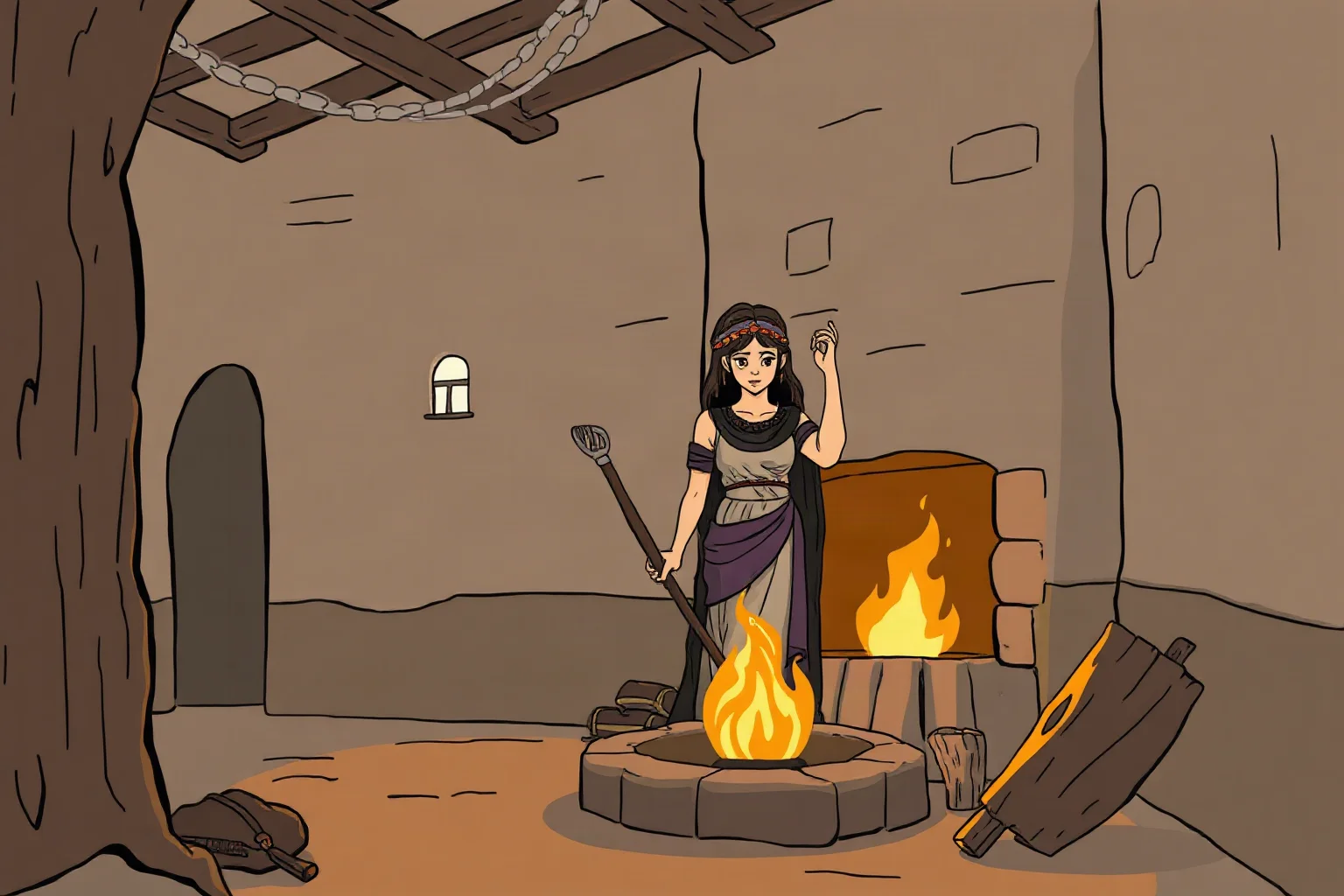
Hestia, goddess of the hearth and home, has fewer dramatic myths than her Olympian siblings, but her role was arguably just as essential to daily worship. Every household and city in ancient Greece kept a hearth fire symbolically connected to her.
Her quiet, constant presence contrasts with the more chaotic stories surrounding gods like Zeus or Ares. She represents the domestic stability that underpinned so much of ancient Greek social life.
17. Persephone

Persephone, daughter of Demeter and Zeus, was abducted by Hades and taken to rule the underworld as his queen. Her seasonal return to the surface world was tied by ancient Greeks to the arrival of spring.
The myth raises uncomfortable questions for modern readers, and ancient versions themselves vary in how much agency she’s given. Some later interpretations emphasize her eventual authority as underworld queen rather than framing her purely as a victim.
18. Pandora
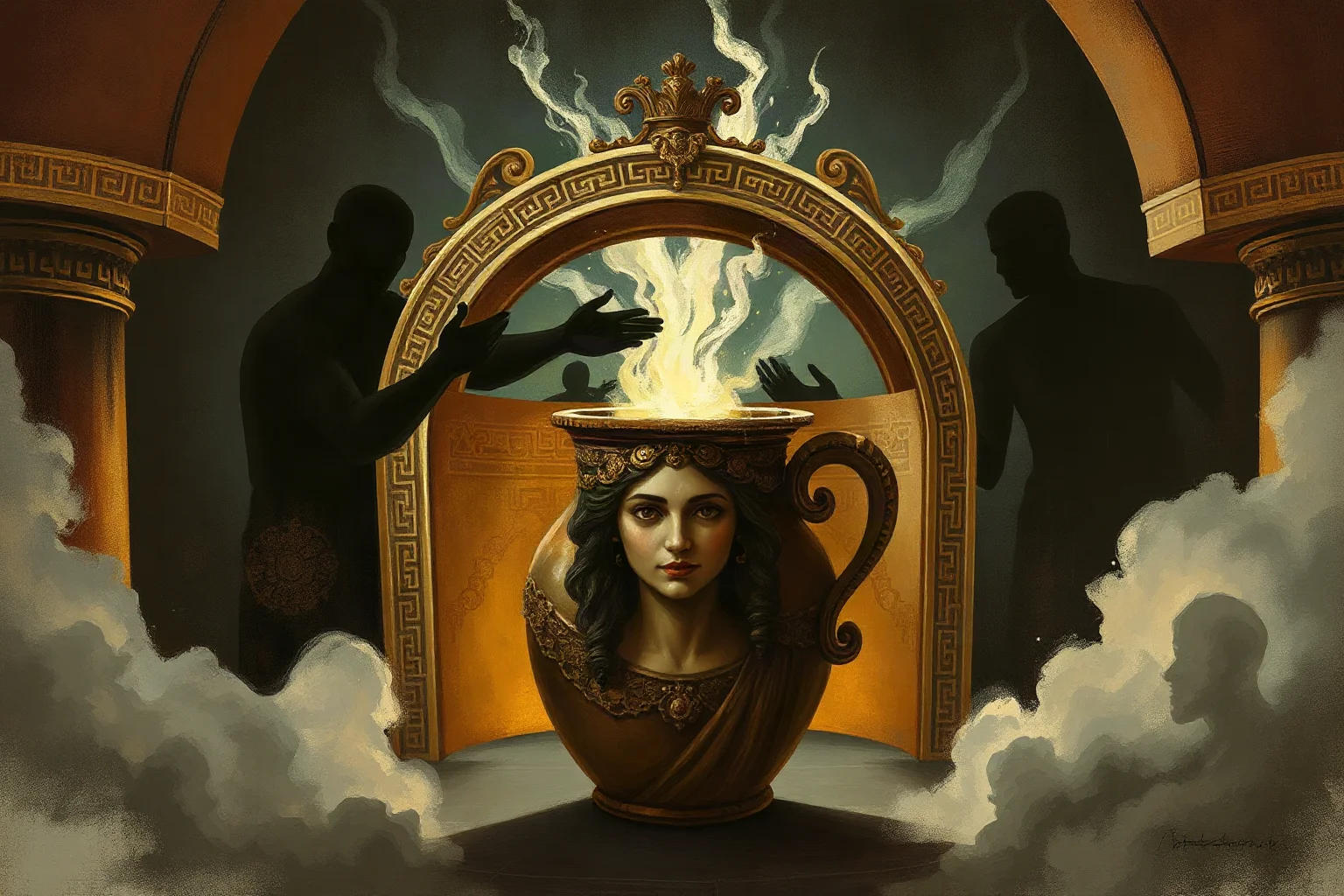
According to the poet Hesiod, Pandora was the first mortal woman, crafted by the gods and given a sealed jar—often mistranslated in later retellings as a “box”—containing the world’s hardships. Her curiosity led her to open it, releasing suffering into the world.
As one of the earliest named women in Greek mythology, her story has been read very differently across history. Some ancient and modern interpreters view it as an unfair blame narrative placed on the first woman in the tradition.
19. Helen of Troy

Helen, said in myth to be a daughter of Zeus and Leda, was renowned as one of the most recognized figures in the ancient world for her beauty. Her departure to Troy with the prince Paris is traditionally blamed for triggering the decade-long Trojan War.
Homer’s Iliad and Odyssey portray her with more depth than “beautiful troublemaker” alone. Both poems show her wrestling with guilt, homesickness, and awareness of the legend already forming around her.
20. Penelope

Penelope, wife of Odysseus in Homer’s Odyssey, is famous for delaying a house full of unwanted suitors for years by unraveling her weaving each night after claiming she needed to finish it first. Her patience became a defining symbol of marital loyalty in Greek storytelling.
Modern readers, though, increasingly highlight her cleverness rather than just her patience. The weaving trick was a genuinely resourceful strategy, not passive waiting.
21. Medea

Medea, a princess and sorceress from Colchis, helped the hero Jason obtain the Golden Fleece before he later betrayed her for another marriage, according to myth. Her powers and intelligence made her one of the most formidable figures in the Argonaut legends.
Euripides’s tragedy Medea dramatizes her extreme, violent response to that betrayal. She remains one of the most debated female characters in Greek mythology precisely because her story resists easy moral judgment.
22. Clytemnestra

Clytemnestra, queen of Mycenae and wife of Agamemnon, killed her husband upon his return from the Trojan War in revenge for sacrificing their daughter Iphigenia to the gods years earlier. Her act sets off a chain of retribution that dominates Greek tragedy.
She’s the central figure of Aeschylus’s Oresteia trilogy, one of the foundational works of Western drama. Her story explores justice, vengeance, and power within a single royal family across generations.
23. Antigone

Antigone, daughter of Oedipus, defied a royal decree in order to give her brother Polynices proper burial rites, choosing family duty and religious law over civic authority. Sophocles’s tragedy named after her dramatizes the fatal consequences of that decision.
Her story is often cited as one of literature’s earliest explorations of civil disobedience. As a princess of Thebes willing to die for her principles, she remains one of Greek tragedy’s most quietly powerful figures.
24. Cassandra
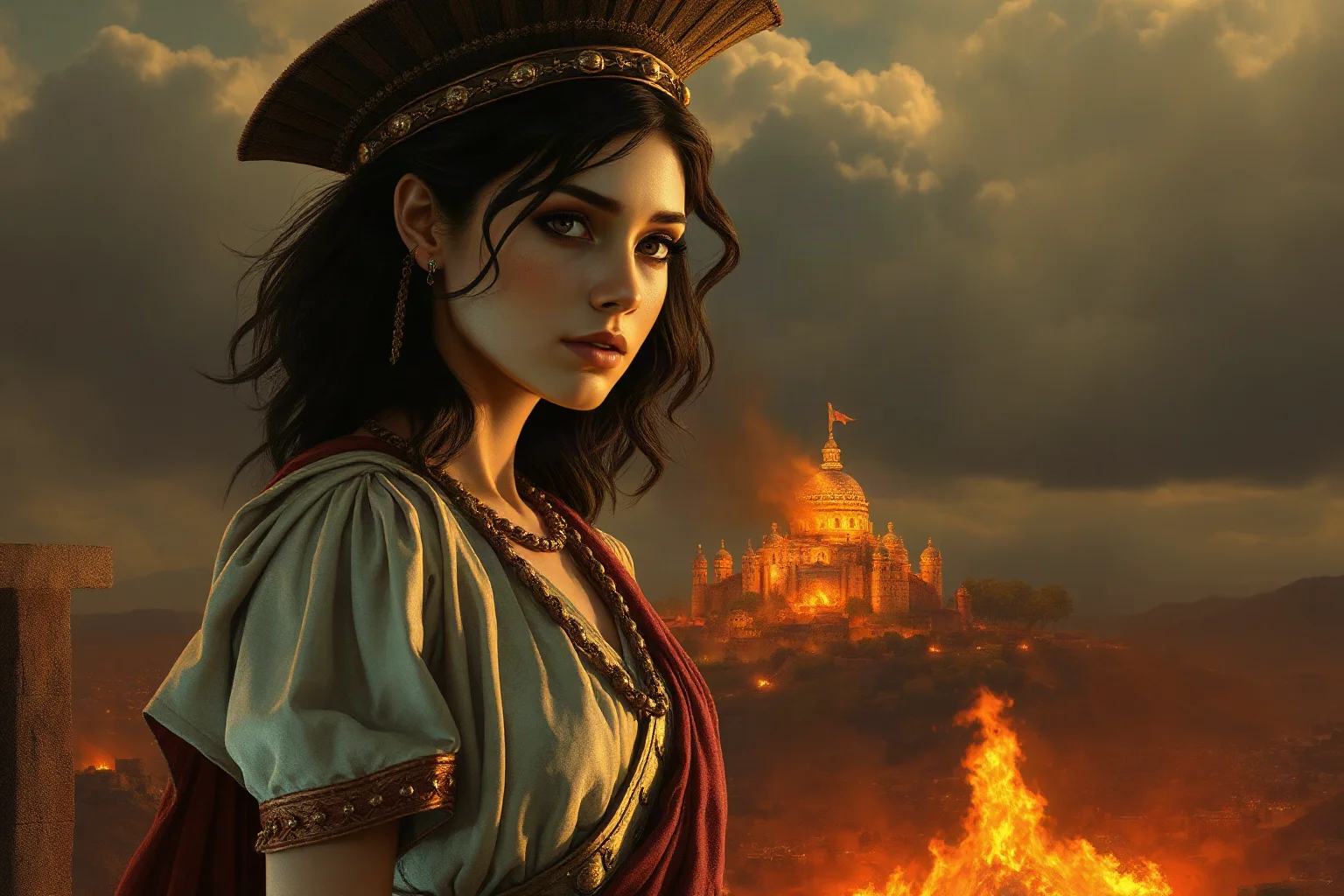
Cassandra, a Trojan princess, was granted the gift of prophecy by Apollo but cursed so that no one would ever believe her warnings, including her accurate predictions about the fall of Troy. Her foresight became a source of torment rather than protection.
Her story is frequently cited today as an early symbol of women’s voices being dismissed even when they’re proven right. The term “Cassandra complex” in modern psychology traces directly back to her myth.
25. Hippolyta and the Amazons
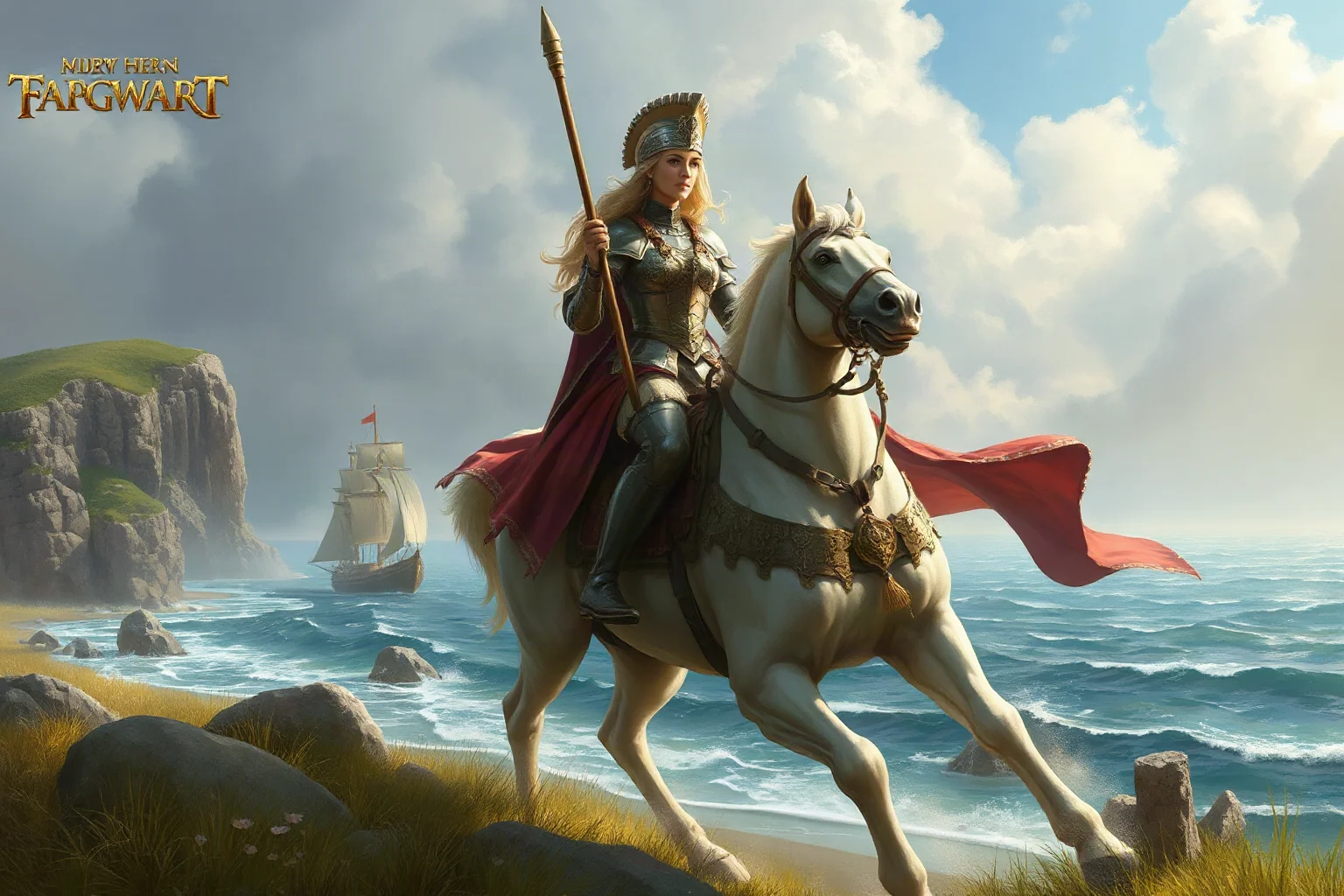
Hippolyta ruled as queen of the Amazons, a legendary nation of female warriors said to live along the Black Sea in Greek mythology. She appears in myths involving both Heracles and Theseus, usually tied to conflict or, in some versions, marriage.
While the Amazons themselves are considered legendary rather than historical, some archaeological discoveries of armed women buried on the steppes north of the Black Sea have fueled ongoing scholarly discussion. Historians remain cautious about drawing a direct line between those burials and the Greek myth itself.
Why These Women Still Matter Today
Taken together, these twenty-five figures show just how wide the range of “women in ancient Greece” really was. Some were real people working within—and sometimes around—serious legal and social restrictions. Others were entirely mythological, yet still shaped how an entire civilization thought about love, loyalty, defiance, and power.
Modern retellings in books, films, and games continue to draw on both groups, often blending historical fact with mythological imagination. Understanding the difference between the two, and appreciating each on its own terms, gives a far richer picture of ancient Greece than the marble-and-philosophers version most of us grew up with.
Frequently Asked Questions
What were the ancient women of Greece really like?
The ancient women of Greece varied a lot depending on city-state, class, and time period. Athenian citizen women had limited legal rights and spent much of their lives centered on the household, while Spartan women had more freedom to own property and receive physical education. Enslaved and non-citizen women had far fewer protections, and their individual stories are much less documented in surviving sources.
What was the role of women in ancient Greece?
In most Greek city-states, women's roles centered on managing the household, raising children, and participating in religious festivals, since they typically couldn't vote, hold public office, or own significant property. Sparta was a notable exception, giving women more legal and physical independence. Some individual women still managed to gain influence through wealth, intellect, or royal connections, as figures like Aspasia and Gorgo show.
Who is considered the first woman in Greek mythology?
Pandora is generally considered the first mortal woman in Greek mythology, according to the poet Hesiod. The gods created her and gave her a sealed jar containing the world's hardships, which she opened out of curiosity, releasing suffering into the world according to the myth.
What did ancient Greek women actually look like?
There's no single answer, since ancient Greece included many regions and ethnic backgrounds, and physical appearance varied widely just as it does today. Greek art, like sculpture and pottery, often idealized certain features to represent beauty or divinity, but these artistic conventions shouldn't be mistaken for an accurate record of how real women actually looked.
Were there real female heroes in ancient Greece, or just myths?
Both existed. Historical figures like Sappho, Cynisca, and Hipparchia achieved real, documented accomplishments in poetry, athletics, and philosophy. Meanwhile, mythological figures like Athena, Medea, and Antigone were legendary characters who never actually existed but still shaped Greek cultural values around courage and defiance.
What are some famous names of women in Greek mythology?
Well-known names include Athena, Aphrodite, Hera, Demeter, Artemis, Persephone, Pandora, Helen, Penelope, Medea, Clytemnestra, Antigone, and Cassandra. These names span goddesses, mortal heroines, and tragic figures found throughout Greek myth and drama.

Alex Warren
Related Articles