

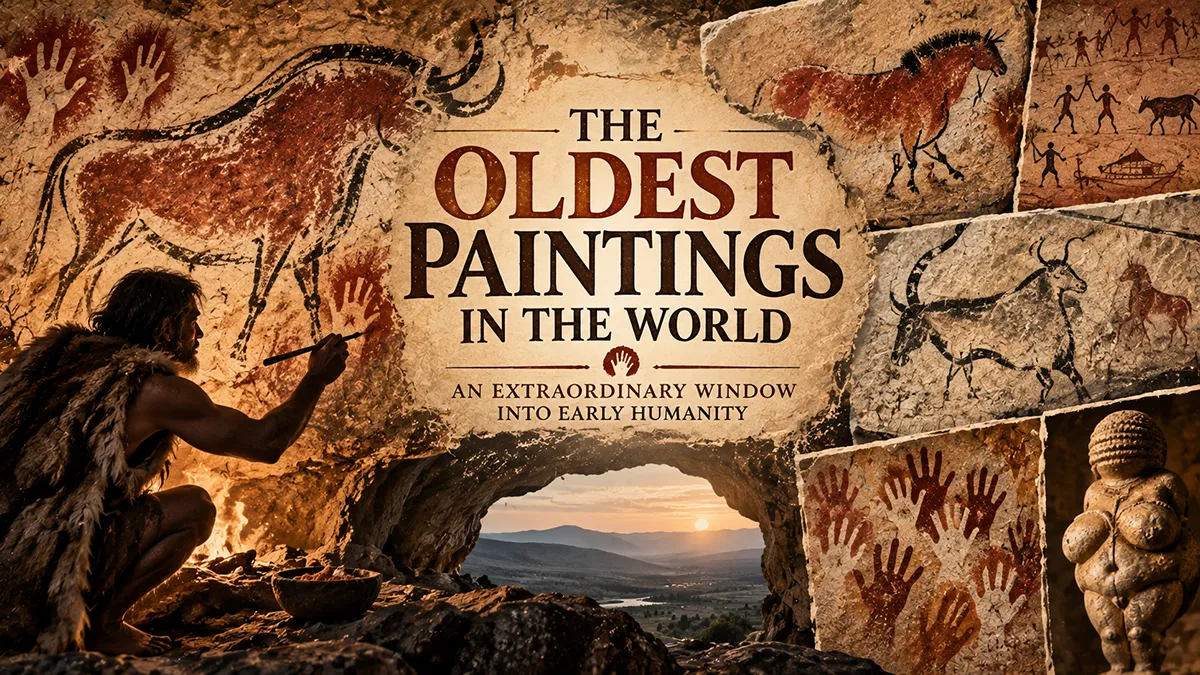
Long before canvas, paint tubes, or even settled villages, humans were already covering rock walls, stones, and shells with color and meaning.
The story of the oldest art in the world isn’t a single tidy timeline — it’s a moving target, constantly rewritten as archaeologists develop better dating techniques and find new sites in places once overlooked, like Indonesia and southern Africa.
This list pulls together the paintings and painted objects that current science genuinely supports as among the oldest known, while being upfront about which claims are still debated. Some entries are famous, like Lascaux and Altamira. Others, like a scratched piece of ochre from a South African cave, will surprise you.
TL;DR: The oldest confirmed art in the world dates back roughly 45,000–73,000 years, and it wasn’t made in France — it was made in Africa, Indonesia, and possibly by Neanderthals in Spain.
What Actually Counts as the Oldest Painting?
Before diving into the list, it helps to separate a few overlapping ideas that get flattened into “oldest art” in casual conversation. There’s the oldest evidence of symbolic behavior (like deliberately shaping or engraving pigment), the oldest figurative painting (an actual recognizable image, like an animal), and the oldest painting on canvas or cloth, which is a much more recent invention.
Each of those has a different “winner,” and mixing them up is where a lot of the confusion — and misinformation — online comes from. This list moves roughly in chronological order, from the earliest pigment use to the first true canvas-adjacent paintings, so you can see how the definition of “painting” itself evolved over tens of thousands of years.
How Scientists Date Art This Old
Cave paintings don’t come with a signature and a date. Researchers rely on a few key methods: radiocarbon dating of charcoal pigment, uranium-thorium dating of the mineral crusts (calcite) that form over paintings, and stylistic or stratigraphic comparison with dated layers nearby.
Uranium-thorium dating has been especially revolutionary. It doesn’t date the pigment itself, but the calcite that grew on top of it afterward, giving a minimum age for the art underneath. This method is exactly why some Spanish cave paintings once thought to be 20,000 years old are now argued to be more than 60,000 years old — old enough that Homo sapiens may not have even been in Europe yet.
1. The Blombos Cave Ochre Engraving (South Africa)
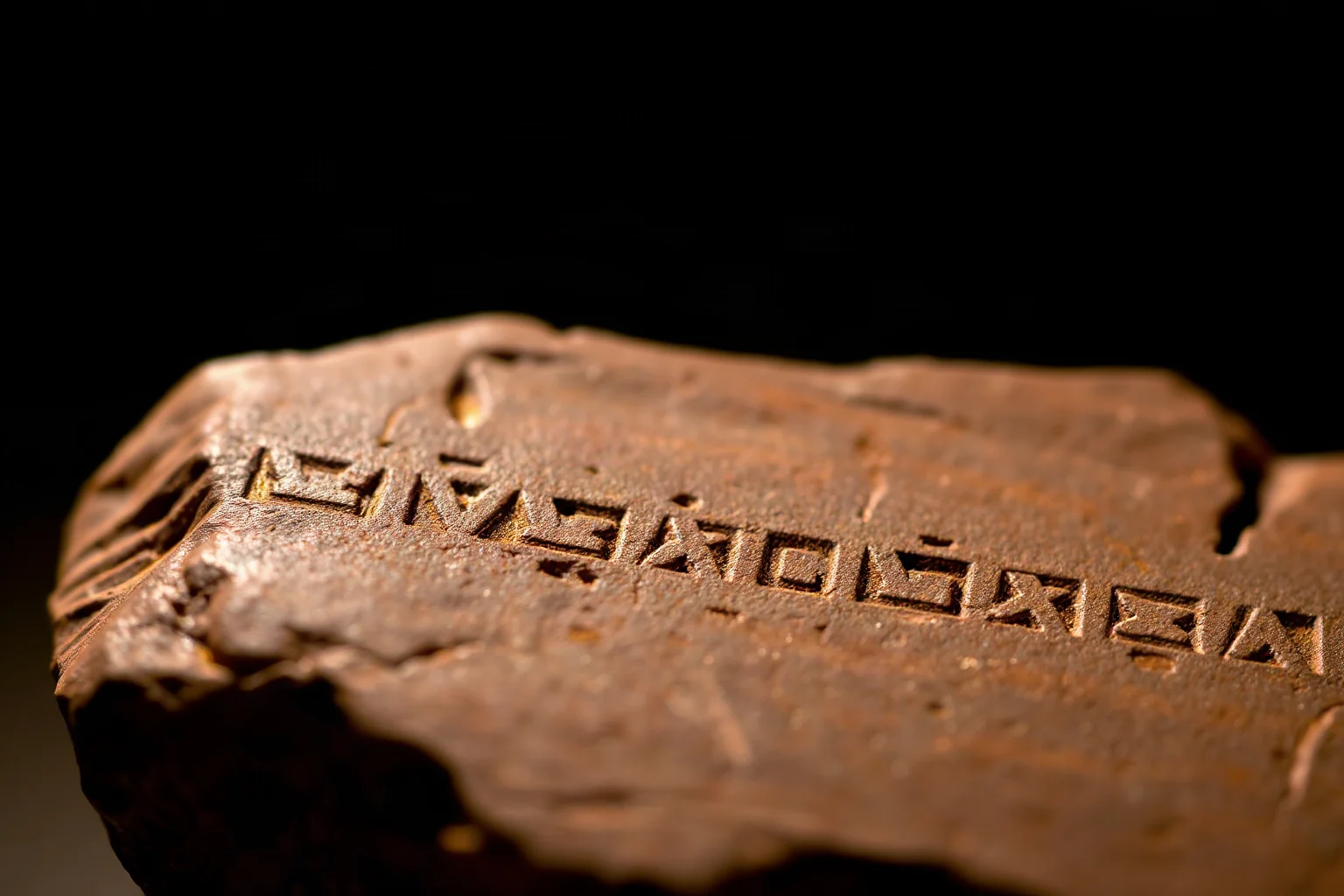
Discovered in a cave along South Africa’s southern coast, this small piece of ochre is engraved with a deliberate cross-hatched pattern, and it’s often ranked among the most incredible artifacts ever uncovered. It’s dated to roughly 73,000 years ago, making it one of the earliest known examples of intentional, abstract mark-making by humans.
It isn’t a painting in the traditional sense — there’s no figure, no scene. But most archaeologists consider it powerful evidence that symbolic drawing existed in Africa tens of thousands of years before the famous cave art of Europe.
2. Cave of Ardales Red Pigment Marks (Spain)
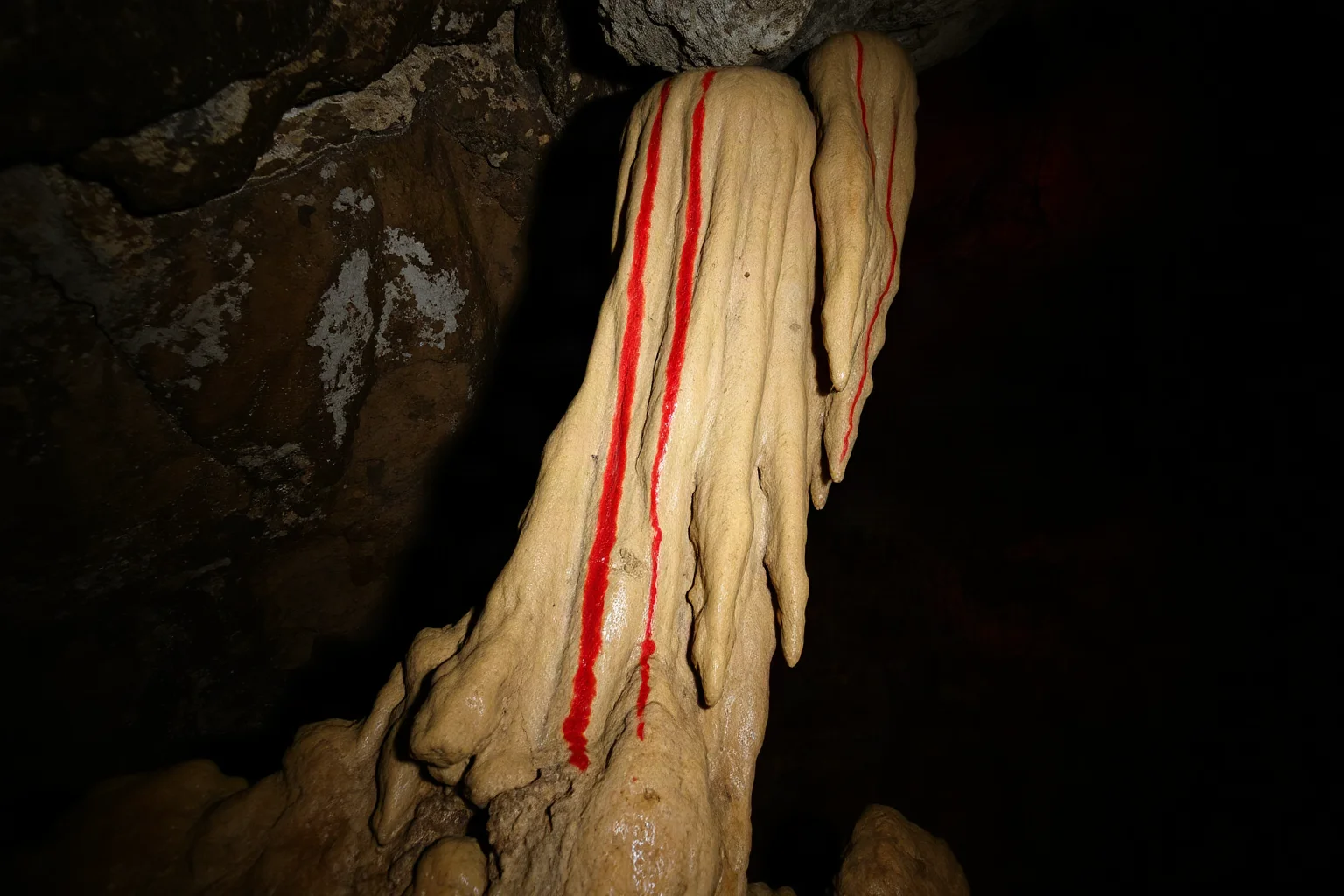
Deep inside this cave near Málaga, Spain, red ochre pigment coats a stalagmite formation in a way that researchers argue was deliberate rather than accidental. Uranium-thorium dating on the mineral crusts places the pigment application at more than 65,000 years old.
That date predates the arrival of Homo sapiens in the region, leading the research team to attribute it to Neanderthals. It’s a genuinely contested claim, but it’s taken seriously in peer-reviewed literature.
3. La Pasiega Cave Ladder Symbol (Spain)
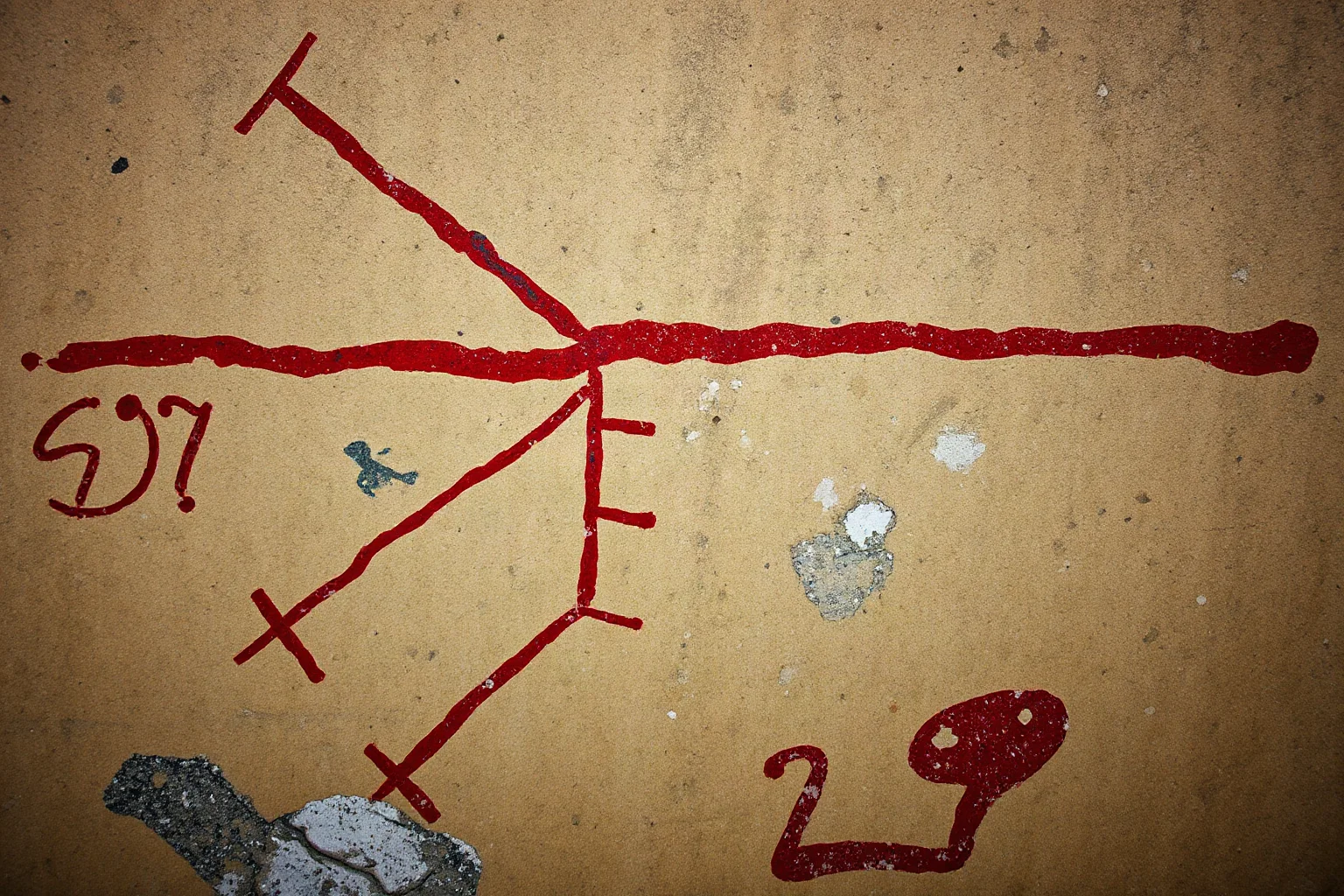
Inside La Pasiega, part of the same UNESCO-listed cave system as Altamira, a red ladder-shaped symbol made of horizontal and vertical lines has been dated to more than 64,000 years old using the same uranium-thorium approach. Like Ardales, this predates modern humans in the area.
Some specialists have pushed back on the dating method’s reliability for this particular site, so it’s fair to call this one of the more debated “oldest paintings” claims rather than settled fact. Still, it’s regularly cited as candidate evidence for Neanderthal symbolic art.
4. Maltravieso Cave Hand Stencils (Spain)
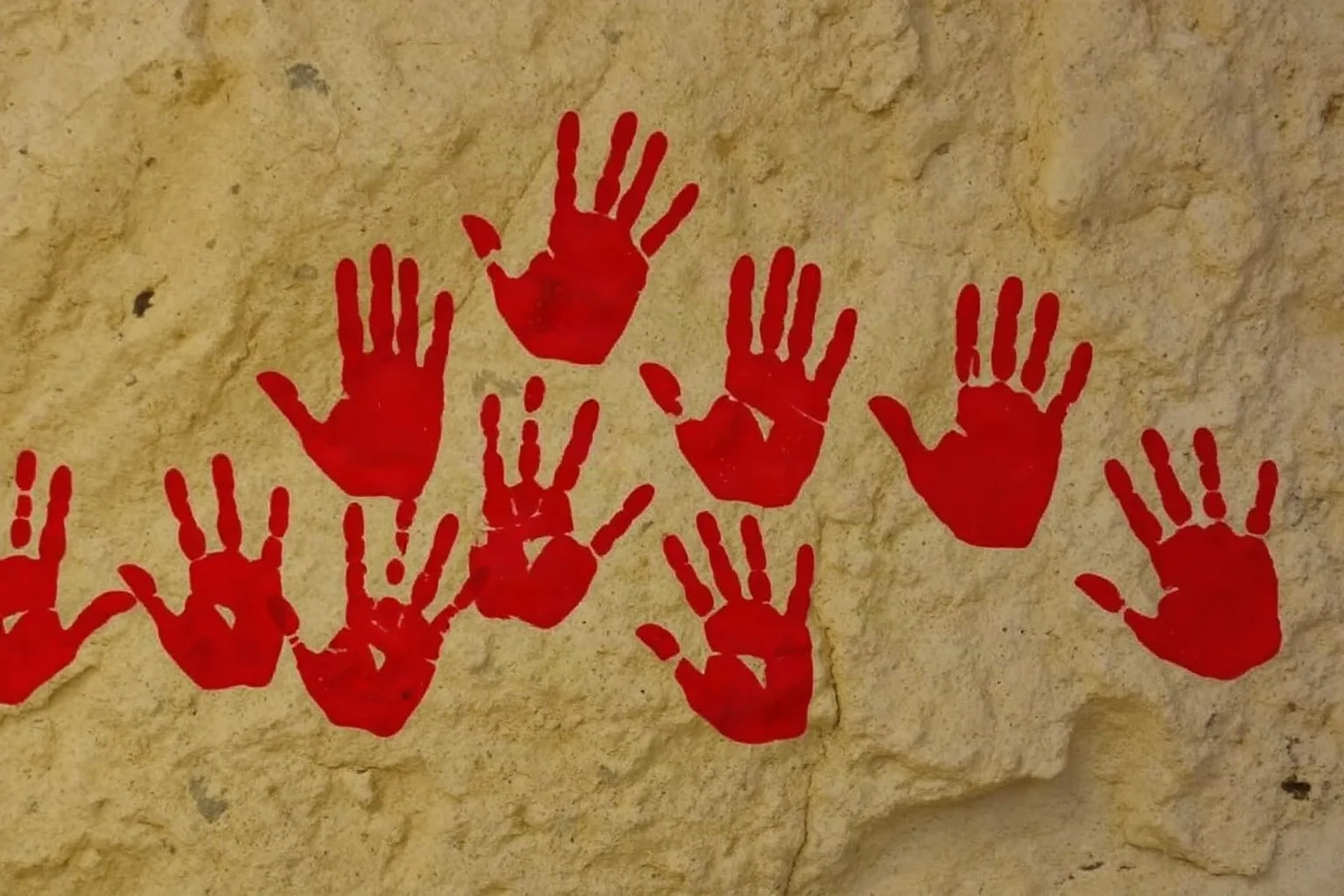
Maltravieso Cave in western Spain contains dozens of hand stencils made by blowing or spraying pigment around a hand pressed to the wall. One particular stencil has been dated to more than 66,000 years old, again pointing to Neanderthal authorship rather than Homo sapiens.
Hand stencils are found across cave art traditions worldwide, from Spain to Indonesia to Argentina, making them one of the most universal early art forms humans (and possibly our close relatives) ever produced.
5. Leang Tedongnge Warty Pig Painting (Sulawesi, Indonesia)

On the Indonesian island of Sulawesi, a life-sized painting of a Sulawesi warty pig was found in a remote limestone cave only accessible by foot through rice fields. Uranium-series dating of a calcite deposit on top of the painting shows it is at least 45,500 years old.
This makes it one of the oldest surviving examples of figurative art anywhere in the world — a recognizable animal, not just an abstract mark. It’s a strong reminder that early human creativity was not confined to Europe.
6. Leang Bulu’ Sipong 4 Hunting Scene (Sulawesi, Indonesia)
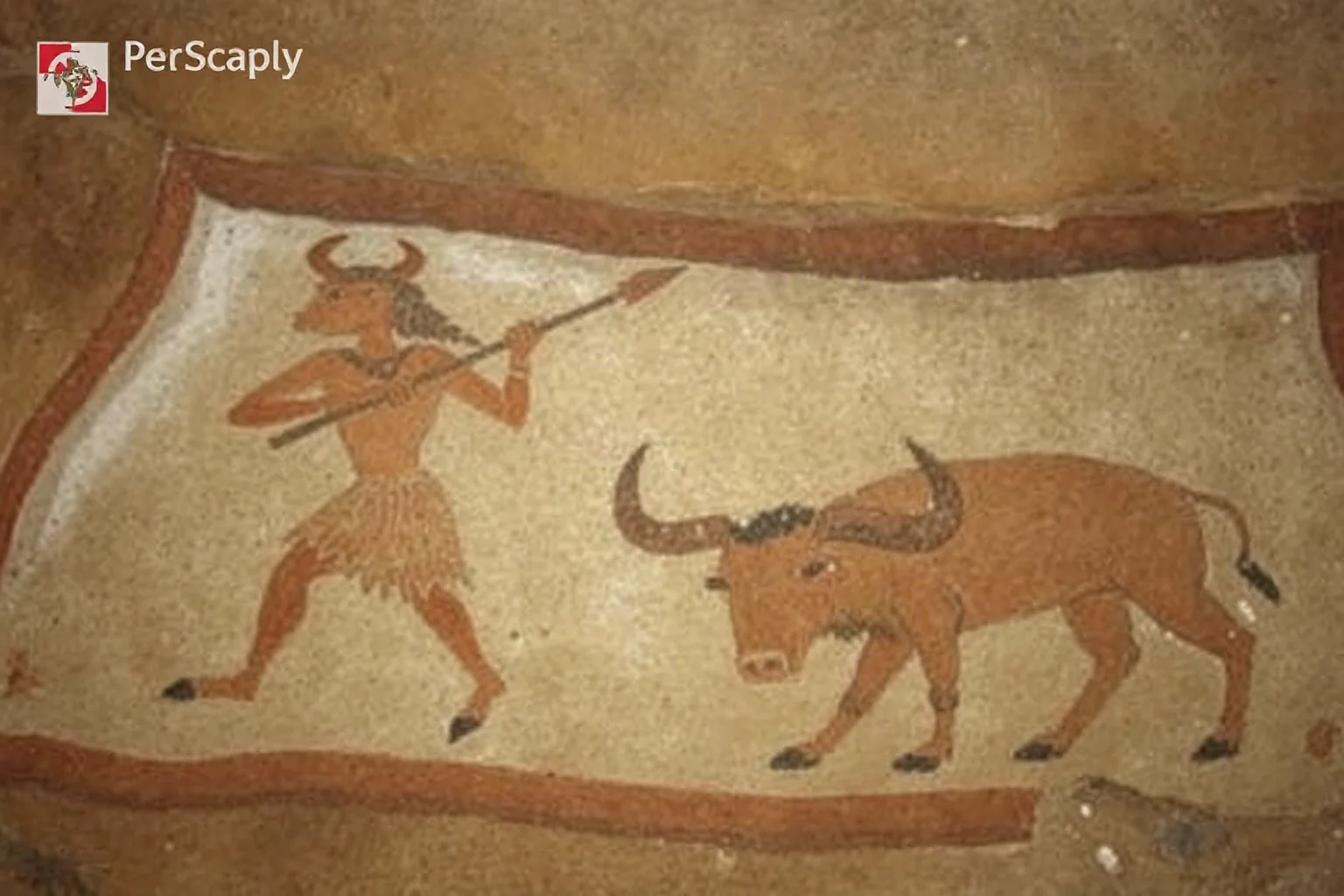
Also in Sulawesi, this cave contains what researchers describe as the oldest known narrative scene in art history: therianthropes (part-human, part-animal figures) apparently hunting wild pigs and dwarf buffalo. It has been dated to at least 43,900 years old.
What makes this site remarkable isn’t just its age but its complexity — it isn’t a single animal or handprint, but a composed scene suggesting storytelling, which many archaeologists consider a major cognitive milestone.
7. Lubang Jeriji Saléh Cave Art (Borneo, Indonesia)
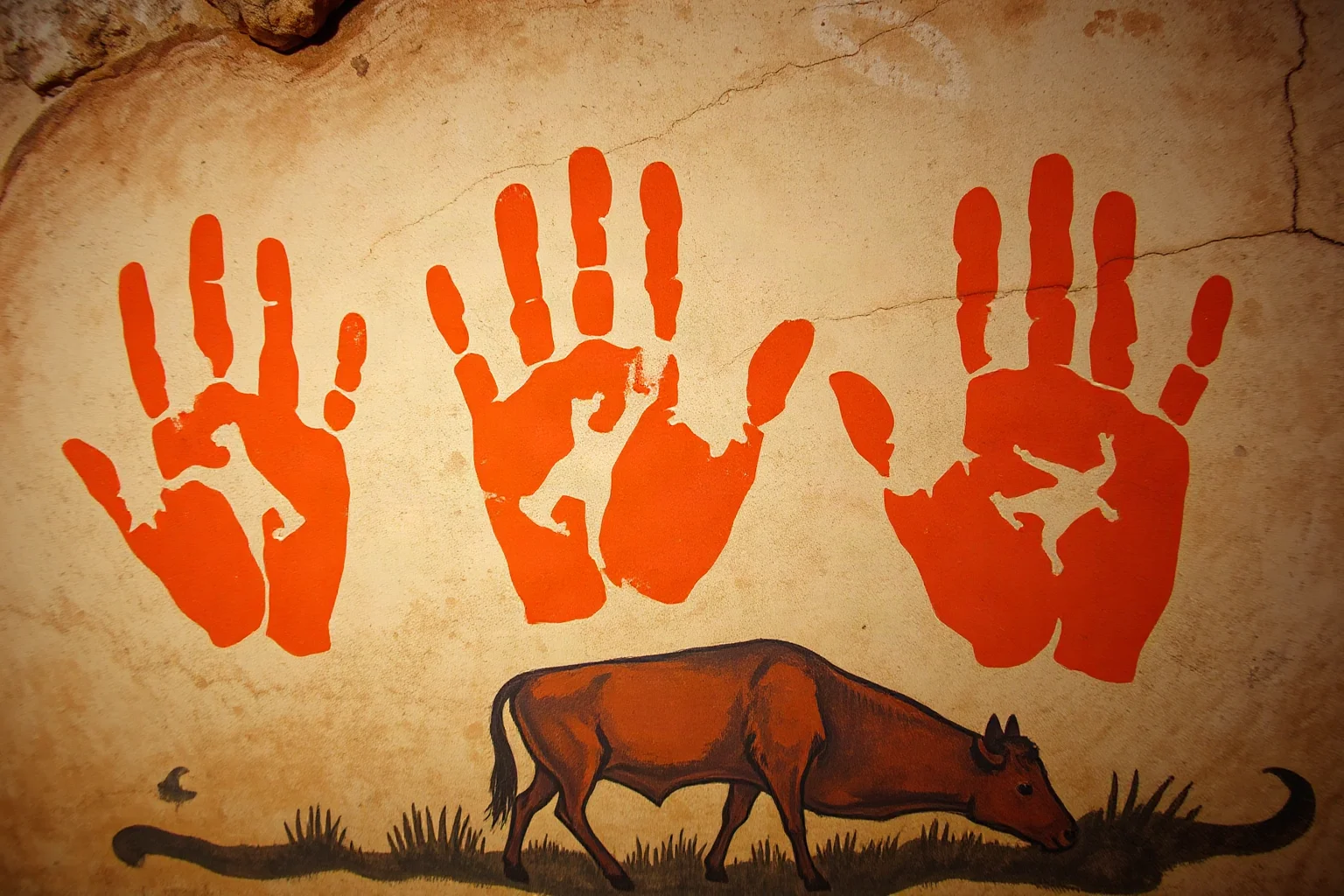
In a remote limestone cave in Indonesian Borneo, an animal painting, likely depicting a wild cow, has been dated to at least 40,000 years old using uranium-series methods. Reddish-orange hand stencils nearby appear to be even more recent additions layered on top over thousands of years.
This site shows that cave art in the region wasn’t a single event but an evolving tradition, with different pigments and styles added across many generations.
8. El Castillo Cave Red Disk (Spain)

For years, a simple red disk painted on the wall of El Castillo Cave in northern Spain held the title of oldest cave art in Europe. Dated to around 40,800 years old, it consists of a faded red circular shape made by blowing pigment onto the rock.
It’s a humble image compared to the dramatic animals at Lascaux, but its age made headlines when it was dated in 2012, and it remains a key data point in debates about when symbolic art began in Europe.
9. Chauvet-Pont-d’Arc Cave (France)
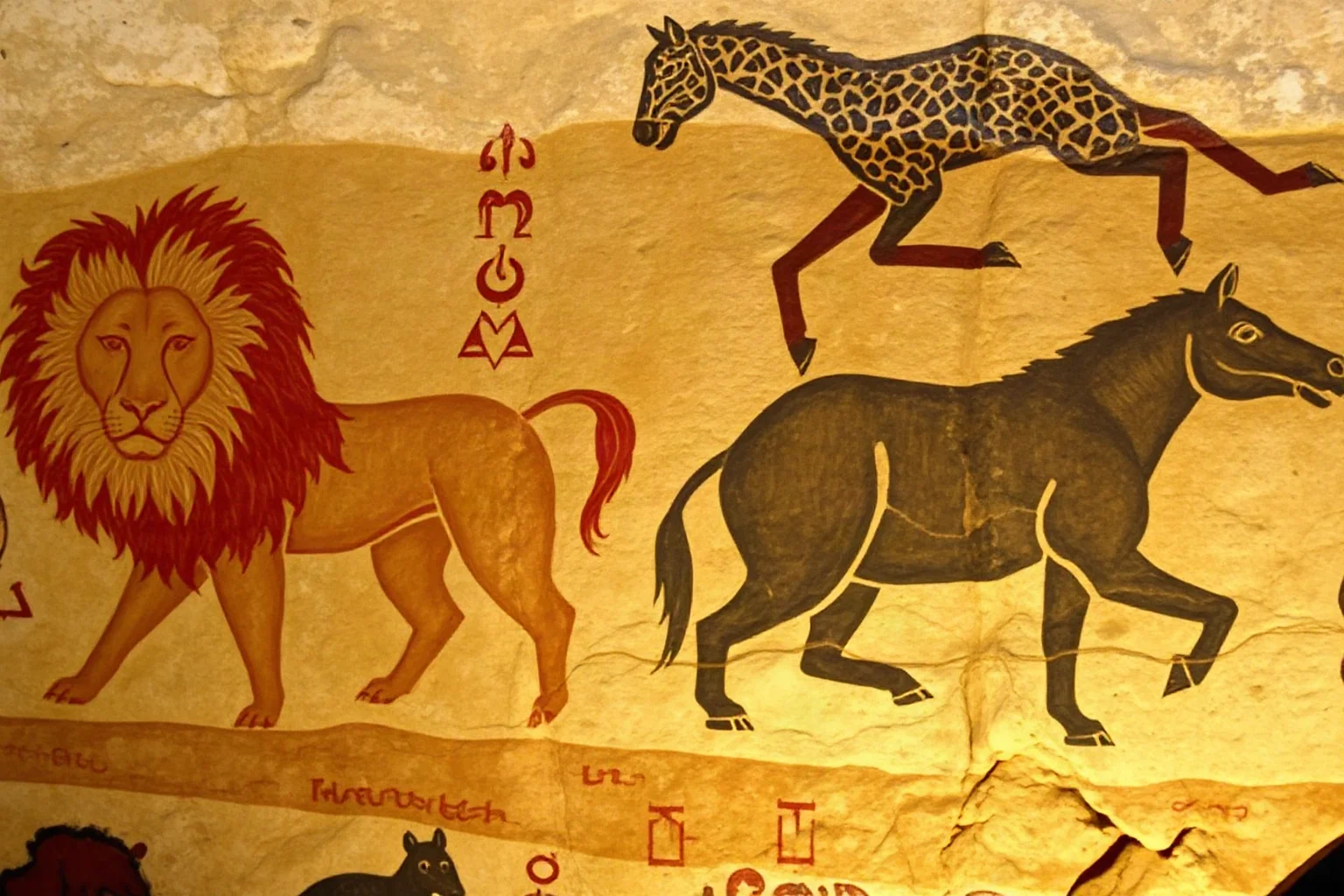
Chauvet Cave in southern France is home to some of the most sophisticated Ice Age paintings ever found: lions, rhinoceroses, horses, and bears rendered with shading, perspective, and movement. Radiocarbon dating puts the art at roughly 36,000 years old.
Discovered in 1994 and sealed off by a rockfall for millennia, Chauvet’s paintings are so technically accomplished that they upended earlier assumptions that cave art evolved slowly and simply over time. It’s now a UNESCO World Heritage Site, though the actual cave is closed to the public to preserve it.
10. Fumane Cave Painted Stone (Italy)
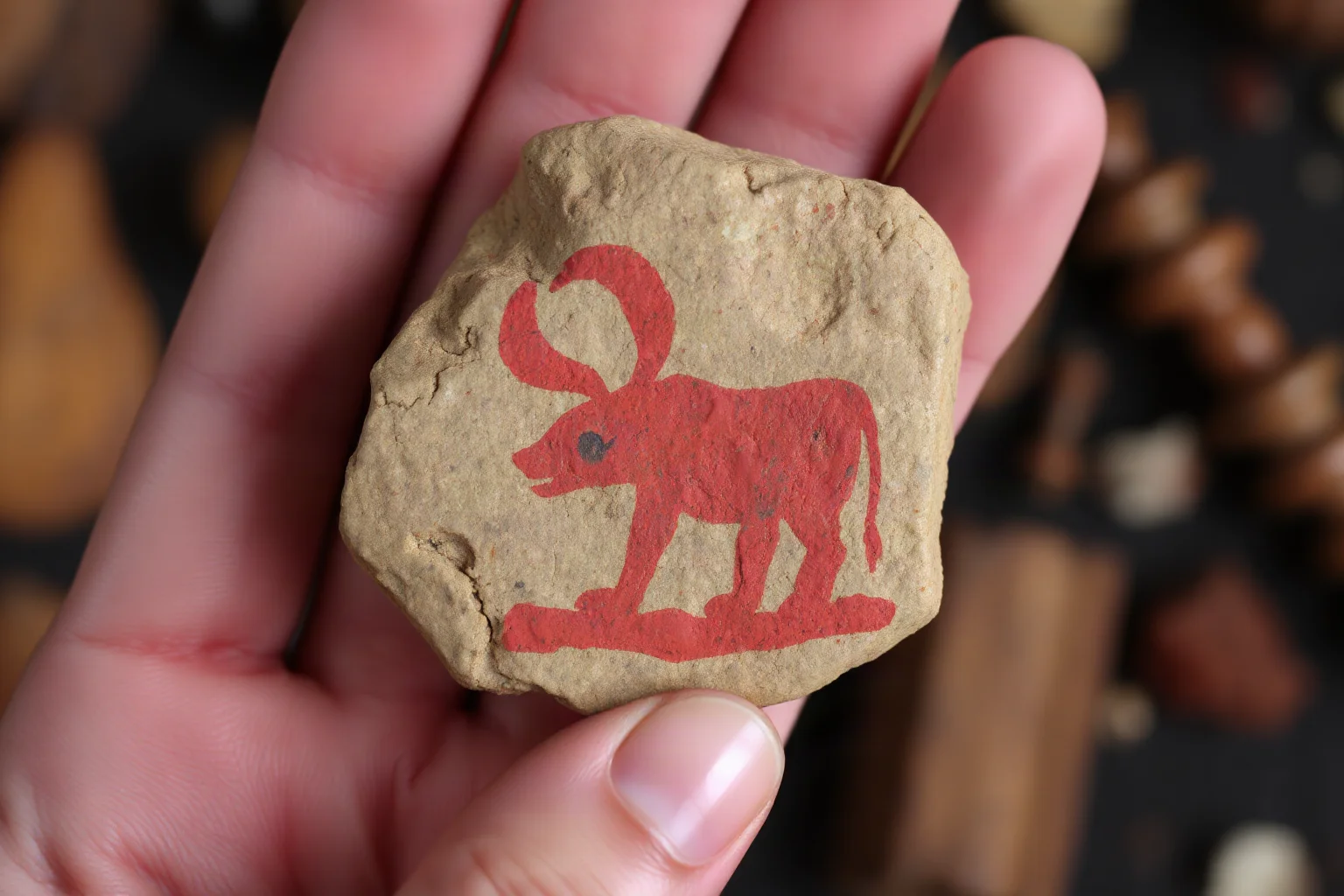
In northern Italy, archaeologists recovered a small stone slab painted with a red figure that some interpret as a horned animal or shamanic figure. Estimates place it between roughly 35,000 and 41,000 years old, making it one of the oldest painted objects in Europe.
Unlike a wall painting, this piece was portable — it could be carried, handled, and possibly used in rituals, offering a different window into how early art functioned in daily life.
11. Coliboaia Cave (Romania)
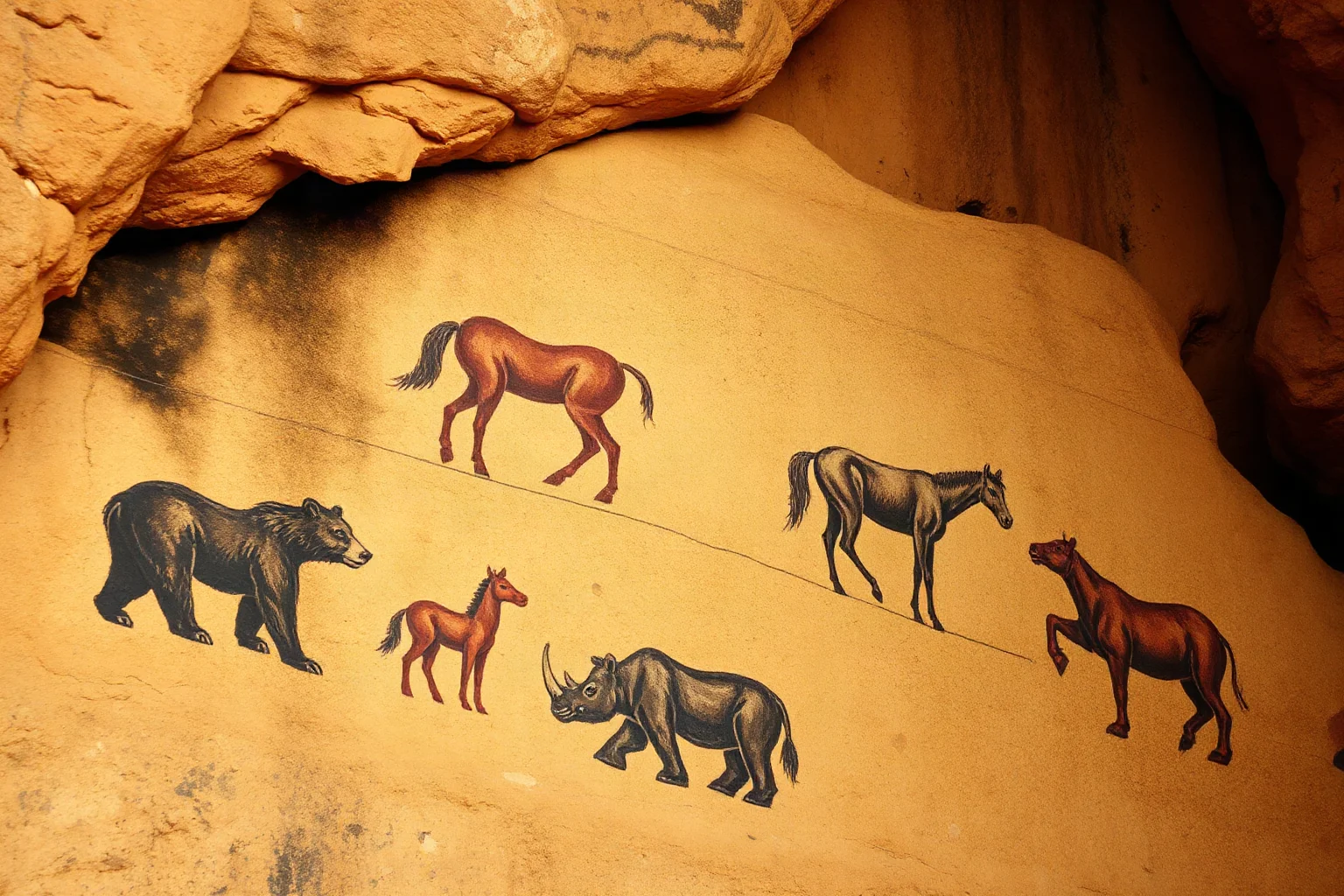
Deep within a Romanian cave system, paintings of bears, horses, and rhinoceroses were found in 2009 and later dated to around 32,000 years old. This makes Coliboaia the oldest known cave art in Central or Eastern Europe.
The painting style bears a strong resemblance to Chauvet’s animals, suggesting either a shared artistic tradition across early European populations or simply a common way of observing and depicting the same Ice Age megafauna.
12. Cussac Cave (France)
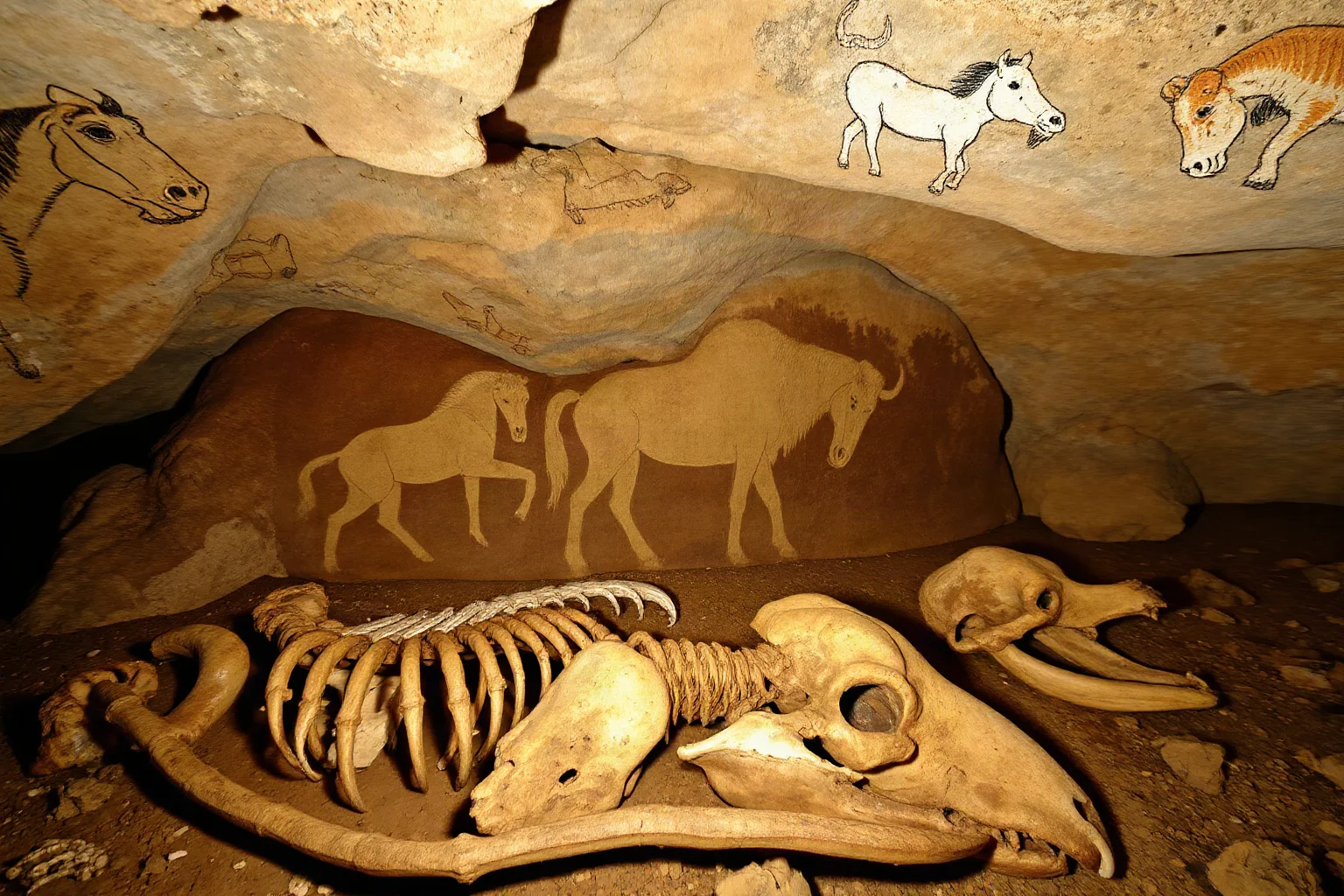
Cussac Cave in the Dordogne region contains engraved and painted images of horses, bison, and mammoths, alongside human skeletal remains, dated to somewhere between roughly 25,000 and 30,000 years old. Its combination of art and burials makes it archaeologically unique.
Access to Cussac is extremely restricted, even more so than Lascaux, because the cave floor still holds fragile, undisturbed human remains from the Gravettian period.
13. Apollo 11 Cave Stones (Namibia)
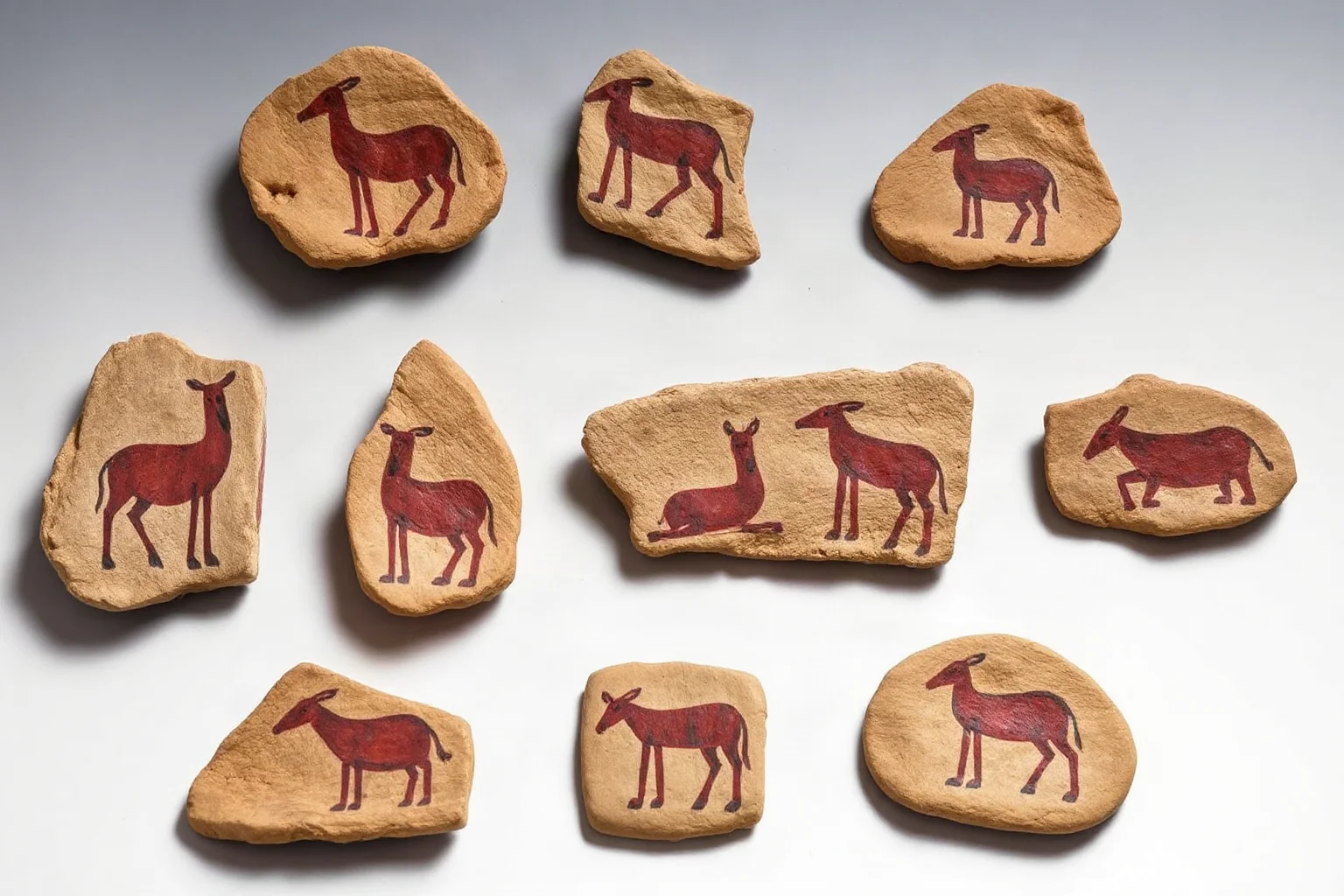
In a rock shelter in southern Namibia, archaeologists uncovered seven small painted stone plaques depicting animal figures, dated to between roughly 25,500 and 27,500 years old. These are considered the oldest known portable art objects found in Africa.
Unlike the large cave wall paintings of Europe, these were small enough to carry, suggesting a very different, more mobile relationship between early African communities and their art.
14. Nawarla Gabarnmung (Arnhem Land, Australia)
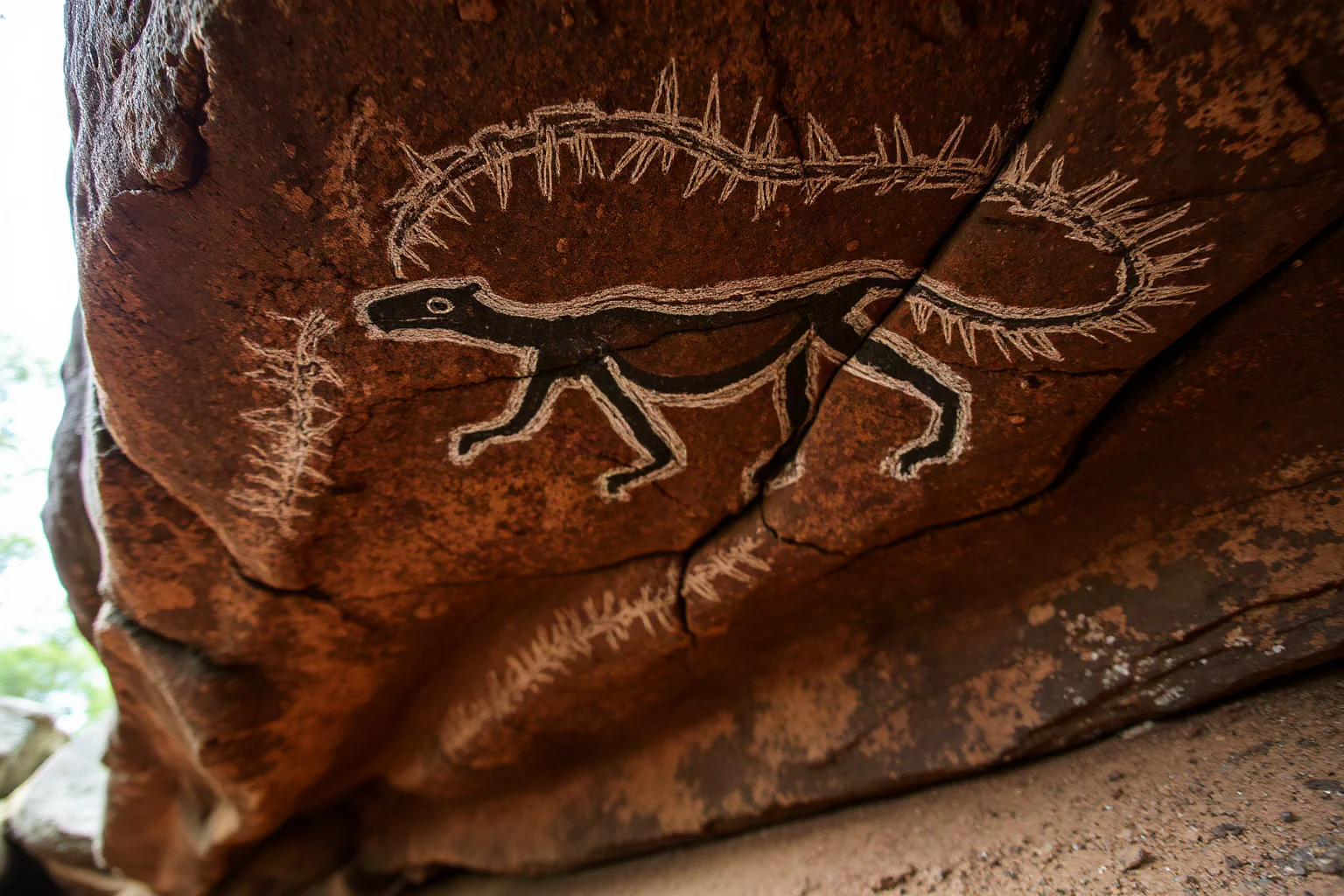
This rock shelter in Australia’s Northern Territory contains a charcoal drawing on a rock ceiling that was directly radiocarbon dated to around 28,000 years old, making it one of the oldest directly dated pieces of rock art in the world. Arnhem Land’s broader rock art tradition is believed to stretch back even further, though much of it can’t be precisely dated.
This site is significant for Aboriginal Australian heritage, and it underscores that Australia’s rock art traditions are every bit as ancient as Europe’s better-known cave paintings.
15. Cosquer Cave (France)
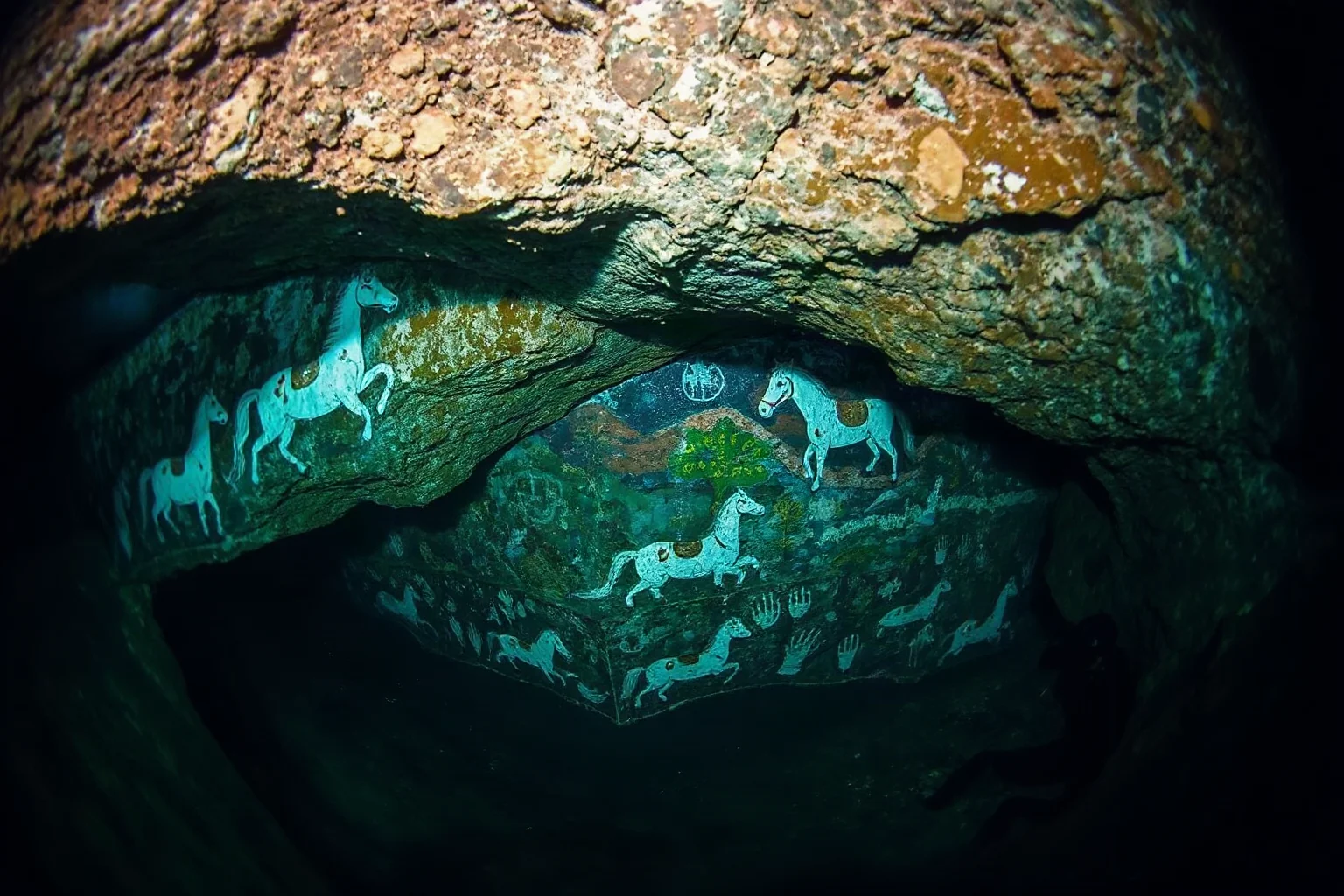
Cosquer Cave sits on the Mediterranean coast near Marseille, with its entrance now submerged underwater due to rising sea levels since the Ice Age. Its paintings of horses, seals, and auks, along with hand stencils, are dated to around 27,000 years old.
Divers first discovered the cave in 1985, and it remains accessible only by diving through a long underwater tunnel, making it one of the most physically inaccessible ancient art sites on Earth.
16. Pech Merle Cave (France)
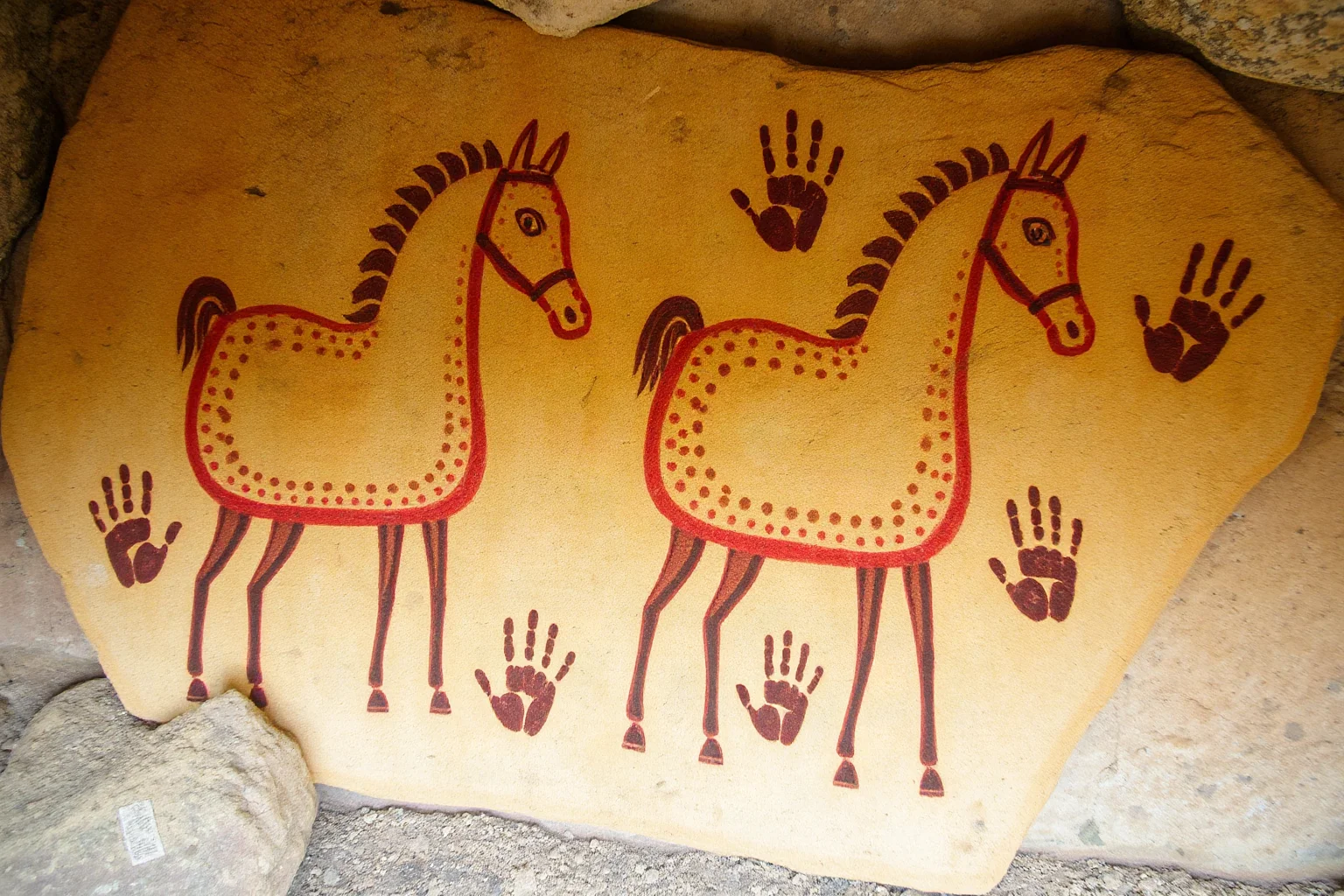
Famous for its “spotted horses” panel, Pech Merle in southern France features two horses covered in painted dots, along with hand stencils, dated to roughly 25,000 years old. Unlike many caves, Pech Merle has been open to the public for over a century.
The spotted horse motif appears at other French sites too, suggesting it may have carried specific symbolic or ritual meaning for Paleolithic communities, rather than being a literal depiction of horse coat patterns.
17. Altamira Cave (Spain)
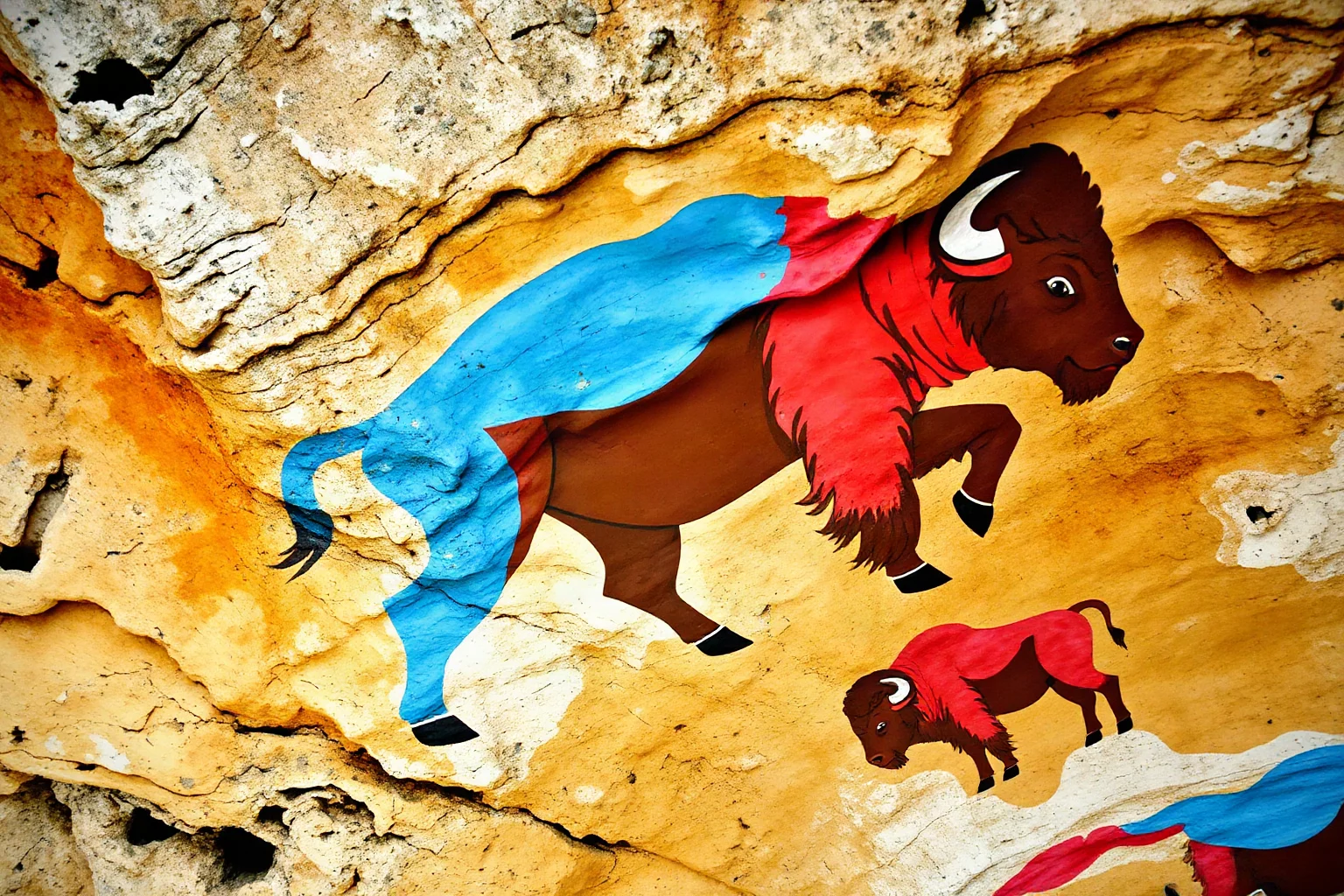
Altamira, in northern Spain, is often called the “Sistine Chapel of Paleolithic art” for its vivid polychrome ceiling of bison, painted using multiple colors and the natural contours of the rock to add depth. Different sections of the cave were painted at different times, with some marks dating back roughly 36,000 years and the famous bison ceiling closer to 14,000–20,000 years old.
When Altamira was discovered in 1879, many experts refused to believe prehistoric humans could have created such sophisticated art, and it took decades for the scientific community to accept its authenticity.
18. Lascaux Cave (France)
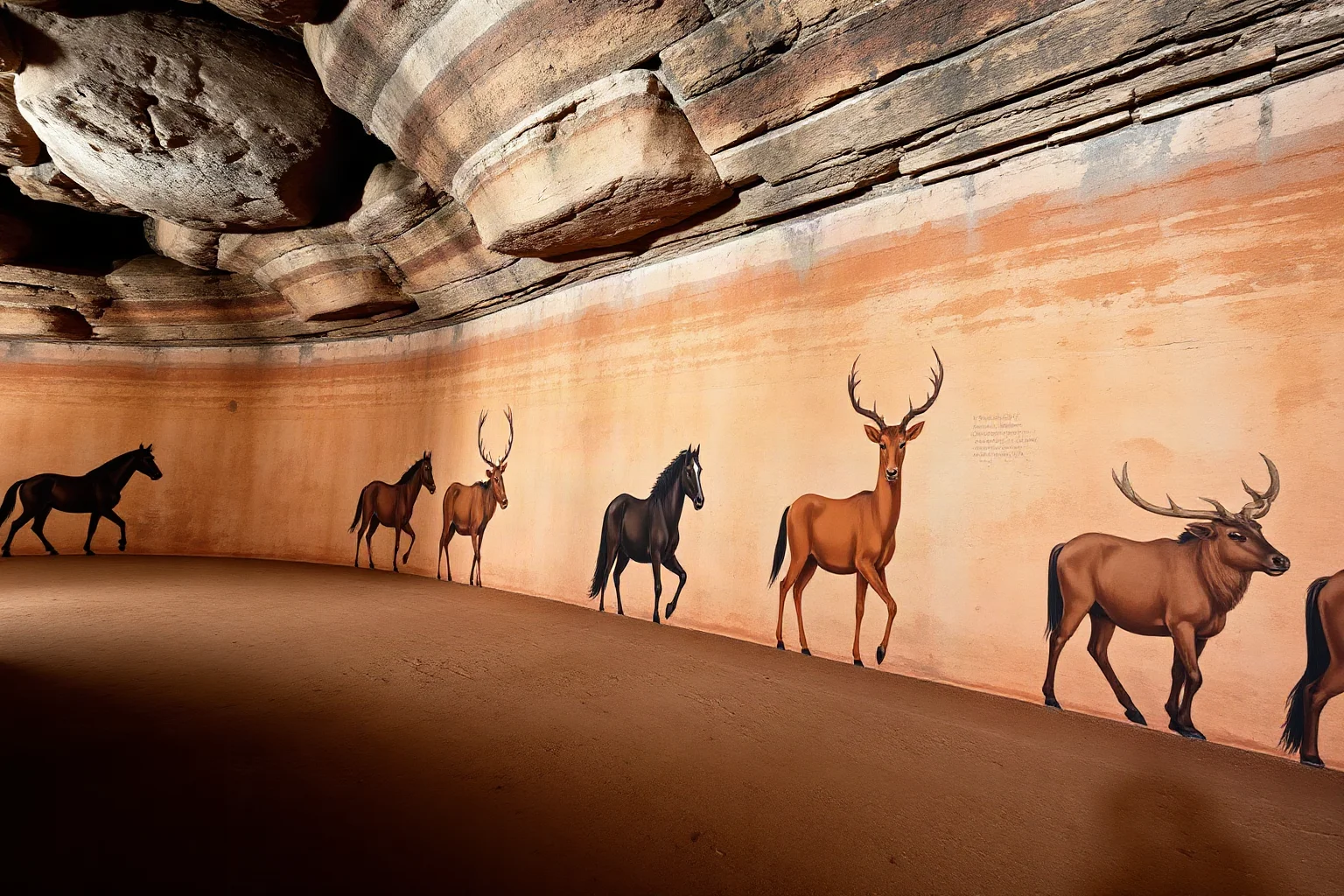
Lascaux is probably the single most famous prehistoric art site in the world, discovered in 1940 by teenagers exploring a hole left by a fallen tree. Its sprawling galleries of painted horses, deer, and aurochs (an extinct wild cattle species) are dated to roughly 17,000 years old.
Despite its fame, Lascaux is not the oldest cave art on this list — not even close. The original cave has been closed to visitors since 1963 due to damage from humidity and mold, and a detailed replica, Lascaux IV, now lets the public see the images safely.
19. Font-de-Gaume (France)
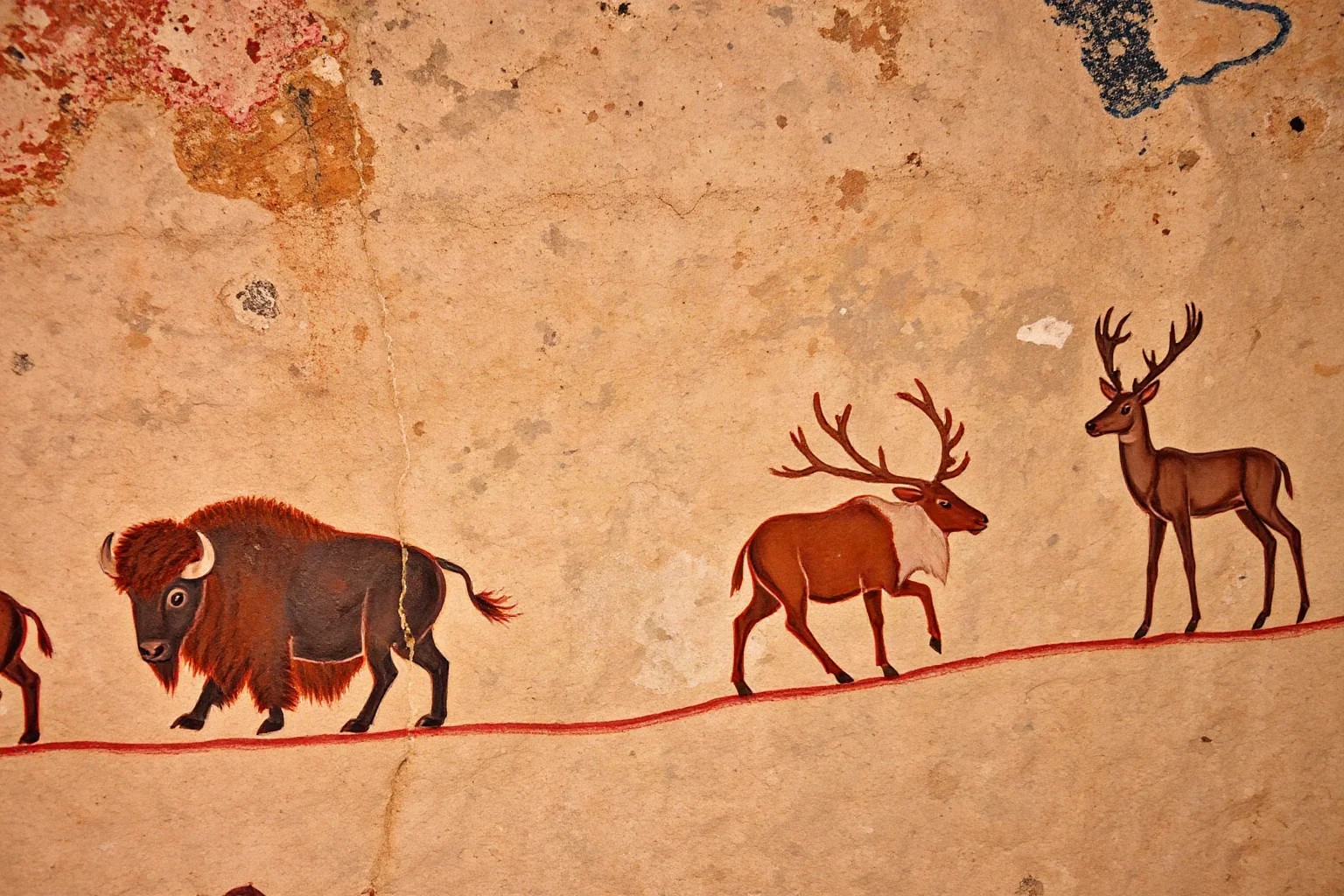
Located in the Dordogne region, Font-de-Gaume contains painted bison, mammoths, and reindeer dated to around 17,000 years old, roughly contemporary with Lascaux. It’s one of the few original decorated caves of this age still open to limited public visits.
Its polychrome bison paintings are considered some of the finest surviving examples of Magdalenian-period art, a later phase of the Upper Paleolithic known for increasingly refined technique.
20. Bhimbetka Rock Shelters (India)
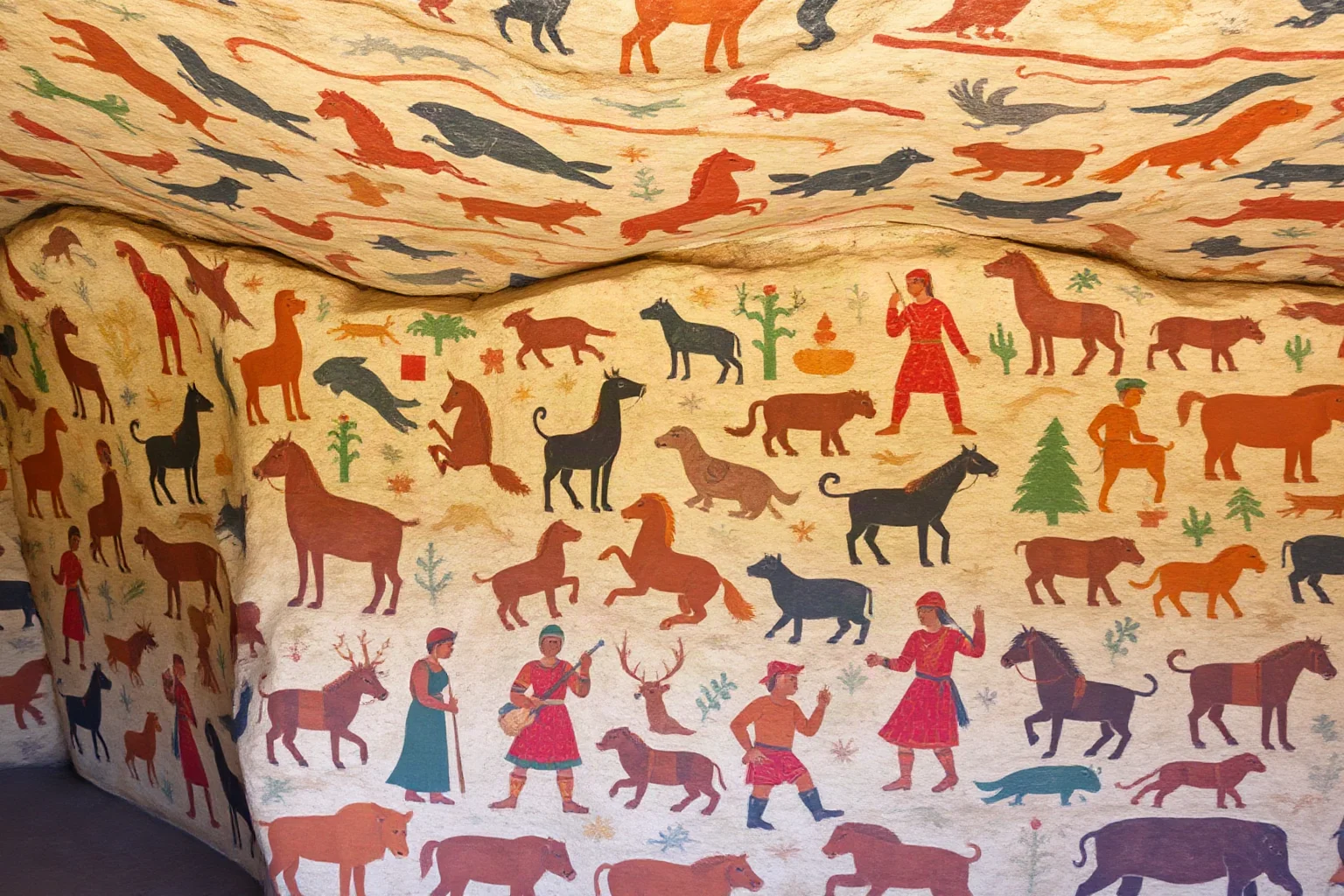
The Bhimbetka rock shelters in central India contain thousands of paintings spanning an enormous time range, from the Mesolithic through historic periods. Some of the earliest layers are believed to date back roughly 10,000 years or more, though precise dating for the oldest paintings here is difficult and still debated among researchers.
It’s worth noting that Bhimbetka is also home to stone cupules (small carved depressions) that some researchers have controversially suggested could be far older, but those are engravings, not paintings, and the claims remain far from settled.
21. Tassili n’Ajjer (Algeria)
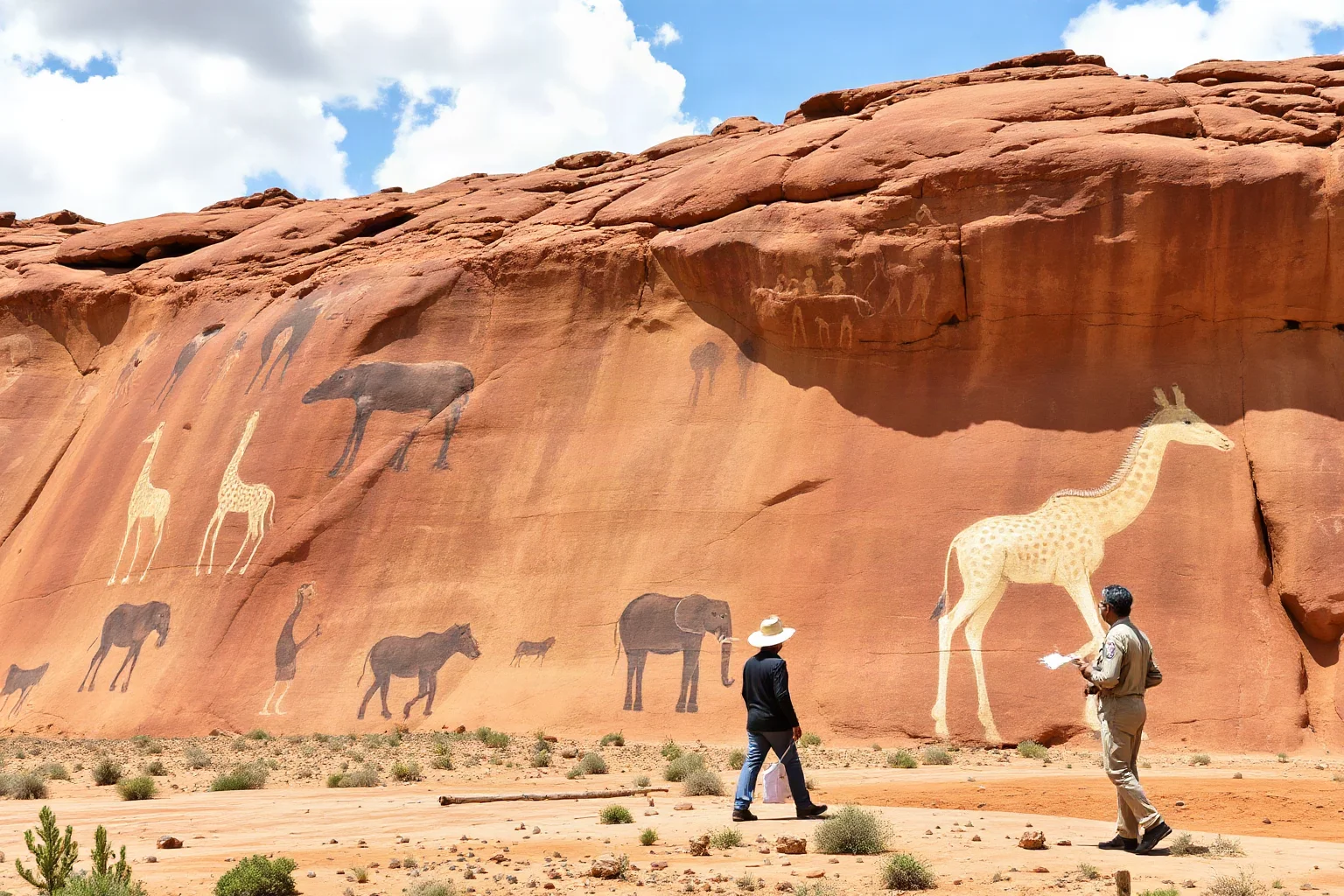
High in the Sahara Desert’s sandstone plateaus, Tassili n’Ajjer holds thousands of rock paintings and engravings depicting animals, human figures, and daily life, spanning roughly from 10,000 to 6,000 BCE and continuing later. Remarkably, the images include animals like giraffes and hippos, evidence that the Sahara was once a green, water-rich landscape.
It’s now a UNESCO World Heritage Site and one of the largest collections of prehistoric rock art anywhere in the world, offering a visual record of a dramatically different African climate.
22. Çatalhöyük Murals (Turkey)
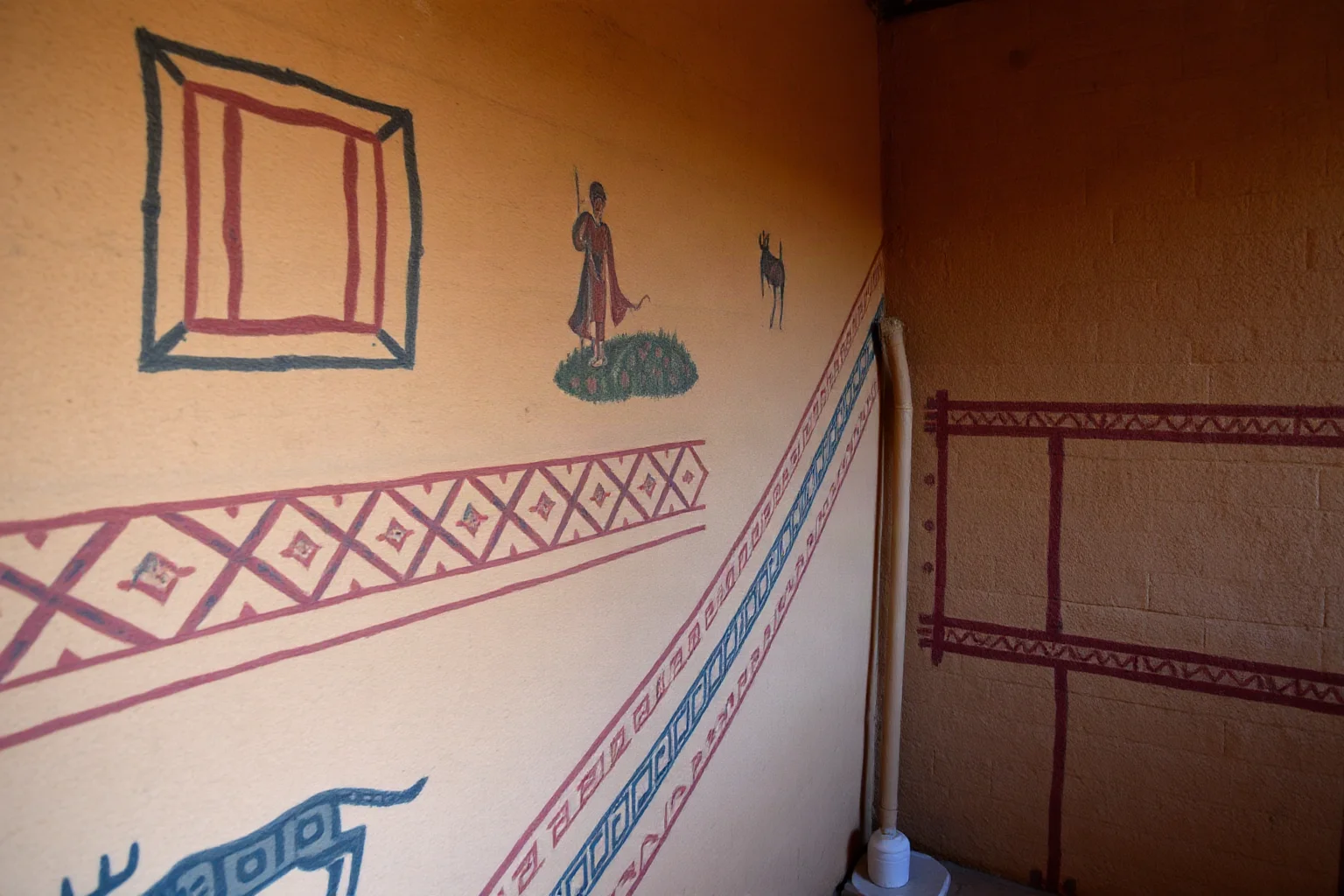
Çatalhöyük, one of the world’s earliest large farming settlements, contains wall murals painted directly onto plastered mudbrick walls, dated to around 7,000 BCE. These include geometric patterns, hunting scenes, and what may be one of the earliest known landscape or town-plan images.
This matters because it represents a shift: painting was moving off natural cave walls and onto human-made architecture, a step toward the kind of painted surfaces we’d recognize as murals today.
23. Egyptian Painted Linen Shroud from Gebelein (Egypt)
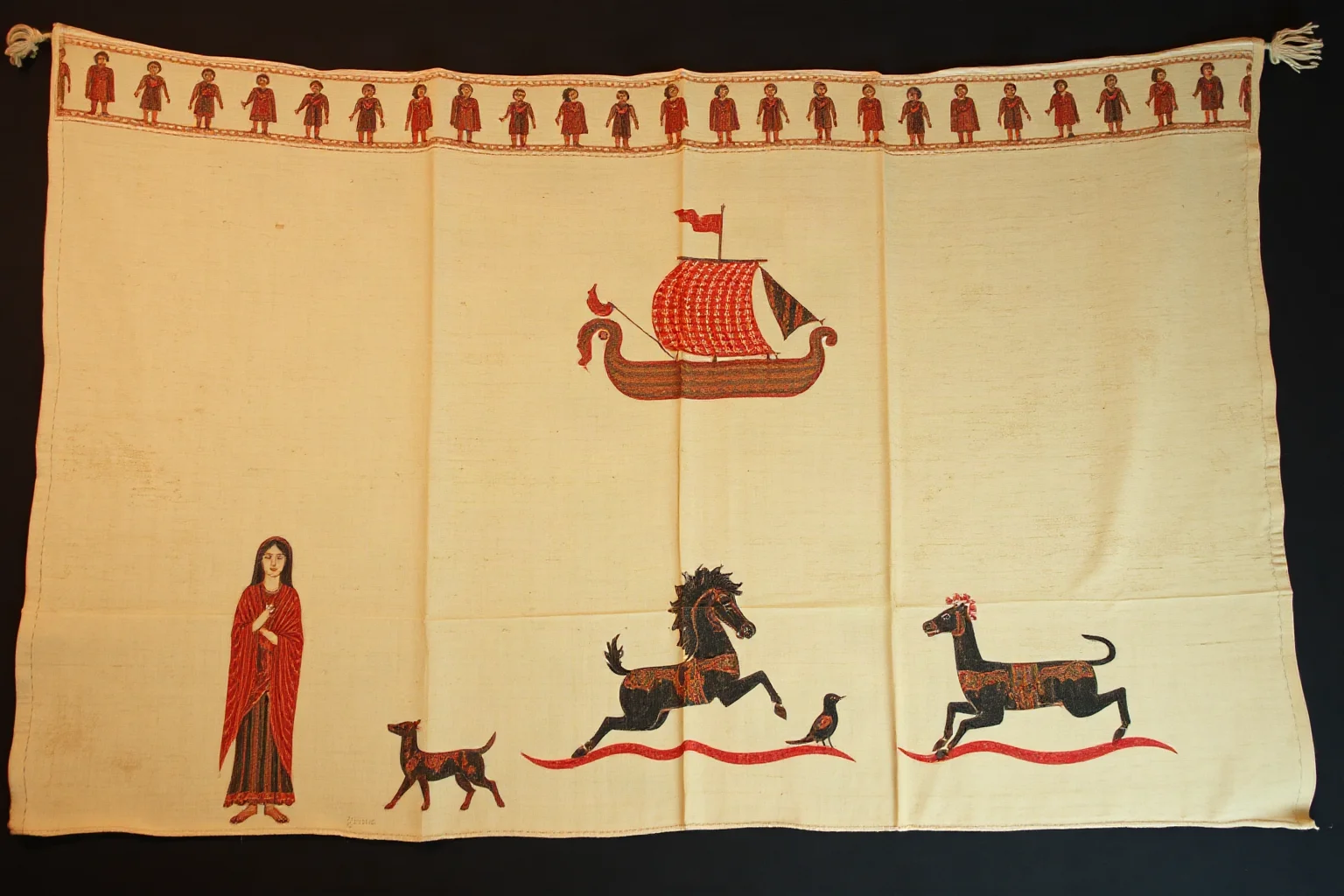
Held in the British Museum, this painted linen shroud from Gebelein, Egypt, dates to roughly 4,000 BCE and depicts figures, boats, and animals in red and black pigment on cloth. It’s frequently cited as one of the oldest surviving examples of a painting on a textile surface, which matters a lot when people ask about the oldest painting on canvas.
True woven canvas as we know it (heavy cotton or linen cloth stretched on a frame) is a much later invention, arriving centuries later with formal panel and canvas painting traditions. This shroud is closer to an ancestor of that idea than a true canvas painting.
24. Bamiyan Cave Murals (Afghanistan)

In the cliffs of Bamiyan, Afghanistan, Buddhist cave murals dated to roughly the 5th to 7th centuries CE were found to contain oil-based binders mixed with pigment, predating the well-known rise of European oil painting by nearly a thousand years. Researchers identified drying oils, possibly walnut or poppy seed oil, used to bind pigments to the cave walls.
This discovery, published by conservation scientists in the 2000s, complicates the popular idea that oil painting was invented in 15th-century Flanders. It’s a great myth-busting example: the technique of oil painting is far older than the famous European artists usually credited with inventing it — including whoever painted the world’s most famous painting, the Mona Lisa centuries later — even if the medium wasn’t yet being used on stretched canvas.
Why the “Oldest Painting” Keeps Changing
If you’ve read “oldest painting in the world” articles from a few years ago, you may have seen different names entirely, like Lascaux or Chauvet holding the top spot. That’s not because those articles were sloppy; it’s because dating technology and fieldwork keep advancing.
Uranium-thorium dating of cave mineral deposits, first widely applied to art in the mid-2010s, pushed several European dates back by tens of thousands of years almost overnight. Expect this list to keep shifting as more remote caves in Southeast Asia, Africa, and South America are properly surveyed and dated.
A Word on Contested and Unverified Claims
A few sites deserve a caution label. Claims about Neanderthal authorship at Ardales, La Pasiega, and Maltravieso are backed by credible peer-reviewed research, but they remain actively debated within archaeology, and not every specialist accepts the dating or the attribution to Neanderthals rather than early Homo sapiens.
Similarly, some rock art sites in Australia and Brazil have had extremely old ages proposed (in some cases, tens of thousands of years beyond what’s listed here), but those claims often rest on indirect dating of surrounding sediment rather than the pigment itself, so they’re treated with more caution by mainstream researchers. When in doubt, this list favors sites with published, peer-reviewed dating evidence over sensational headlines.
The Bigger Picture
What’s striking about this list isn’t just the ages involved, it’s the geography. The oldest confirmed art wasn’t made in the famous caves of France that dominate textbooks, but in Africa and Southeast Asia, tens of thousands of years before Lascaux’s painters were even born. That alone should reshape how we think about who “started” art, and where human creativity truly began — much like debates over the oldest countries in the world, the answer often depends on how you define the question in the first place.
Ancient painting, in every form on this list, tells the same underlying story: humans (and quite possibly Neanderthals too) have been driven to mark, depict, and narrate the world around them for tens of thousands of years. That impulse didn’t start with the Renaissance, or even with Egypt — it started in caves, on stones, and on cave ceilings long before anyone thought to call it “art” at all.
Frequently Asked Questions
What is the oldest painting in the world?
Based on current evidence, the oldest known figurative painting is a life-sized image of a Sulawesi warty pig in Leang Tedongnge cave, Indonesia, dated to at least 45,500 years old. If you count non-figurative pigment markings, a red pigment application in Spain's Cave of Ardales, potentially made by Neanderthals, may be over 65,000 years old, though that attribution is still debated.
What is the oldest piece of art in the world?
The oldest widely accepted piece of deliberate symbolic art is an engraved ochre fragment from Blombos Cave in South Africa, dated to roughly 73,000 years old. It's not a painting in the traditional sense, but it's considered strong evidence of early abstract, intentional mark-making.
Is Lascaux really the oldest cave painting?
No, this is a common myth. Lascaux's paintings are roughly 17,000 years old, which is genuinely ancient, but at least a dozen other sites, including Chauvet Cave (36,000 years) and cave art in Indonesia and Spain (40,000 to over 60,000 years), are significantly older.
What is the oldest painting on canvas in the world?
True stretched canvas painting is a relatively recent invention, dating mainly to the Renaissance era in Europe. The oldest known painted textile that predates canvas by thousands of years is a painted linen shroud from Gebelein, Egypt, dated to around 4,000 BCE, though it's more accurately described as a painted cloth than a canvas in the modern sense.
What is the oldest oil painting in the world?
Buddhist murals in the Bamiyan caves of Afghanistan, dated to roughly the 5th to 7th centuries CE, contain oil-based pigment binders, making them the oldest known use of oil painting techniques, predating famous European oil painters by centuries. However, these were painted on cave walls, not canvas.
Did Neanderthals really make cave art?
Some researchers argue yes, based on uranium-thorium dating of paintings in Spanish caves like La Pasiega, Ardales, and Maltravieso that predate the arrival of Homo sapiens in the region by tens of thousands of years. This remains a genuinely contested topic in archaeology, and not every expert accepts the dating or the conclusion.
Why do dates for the oldest paintings keep changing?
New dating technology, especially uranium-thorium dating of mineral deposits that form over pigment, has allowed scientists to date art far more precisely than older methods. As more remote sites in Africa, Asia, and Australia are surveyed and re-dated, the list of the world's oldest known paintings continues to shift.

Alex Warren
Related Articles