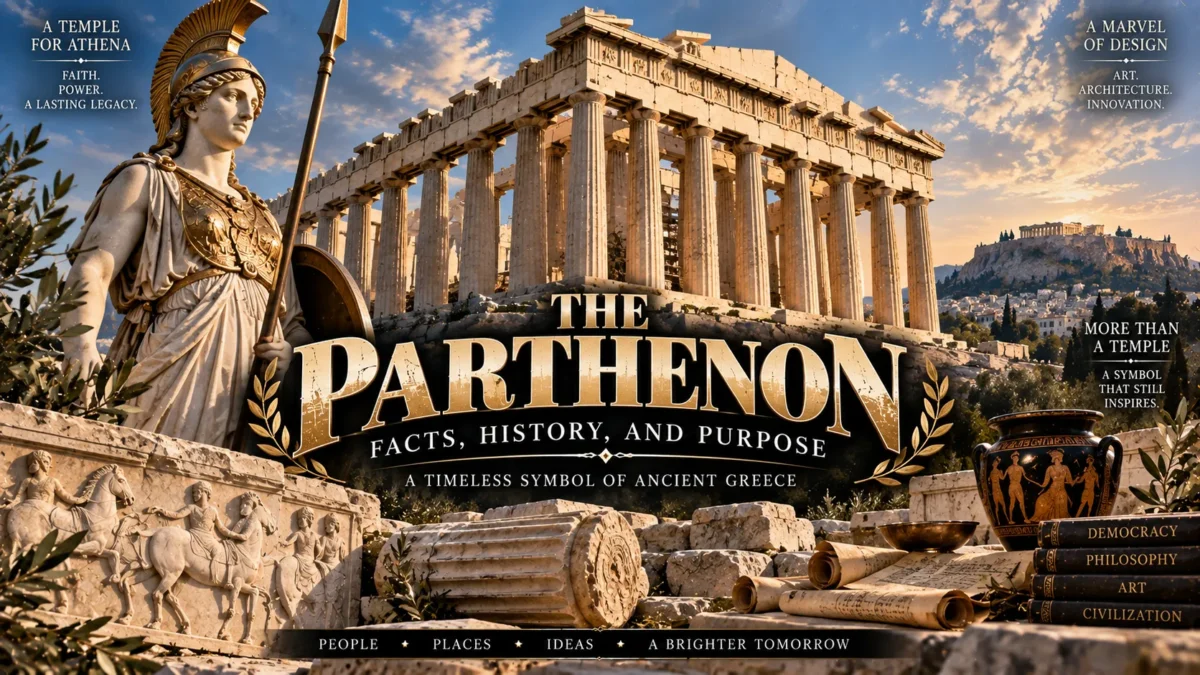
Perched high above modern Athens on the rocky Acropolis, the Parthenon has survived wars, explosions, weathering, and nearly 2,500 years of history.
It’s one of the most photographed buildings on Earth, ranking among the oldest buildings in the world, yet many visitors only know it as “that old Greek temple with columns.” There’s a lot more going on beneath that marble surface.
This guide digs into the real history behind the Parthenon — why it was created, how it was built, and the special features that made it an engineering marvel of the ancient world. Along the way, we’ll gently bust a few popular myths that tend to get repeated as fact.
TL;DR: The Parthenon was built in the 5th century BCE as a temple to Athena and a symbol of Athenian power, and its clever architecture, turbulent history, and ongoing restoration still fascinate historians today.
Origins and Purpose
1. It was built to honor the goddess Athena
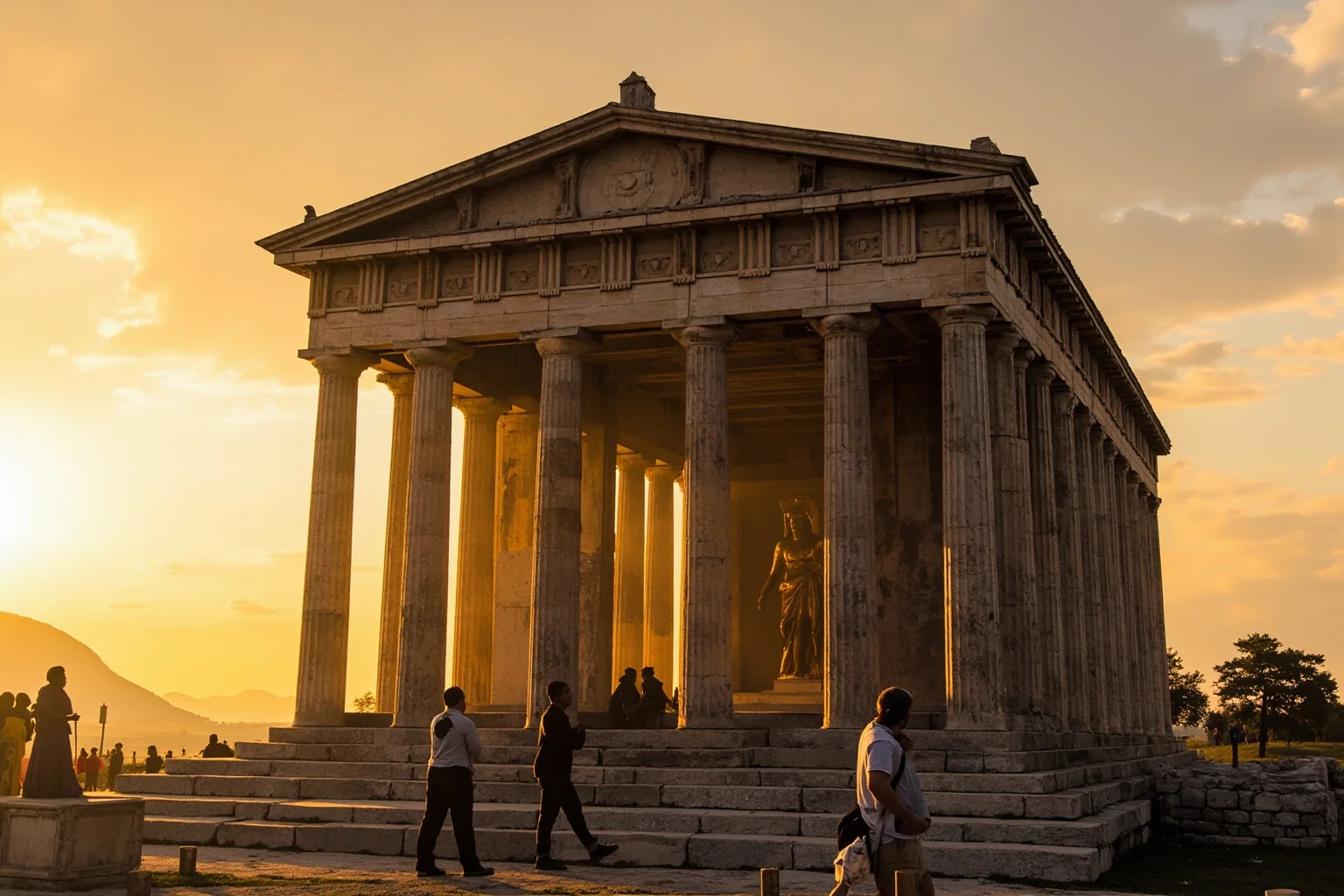
The Parthenon’s primary purpose was religious: it was dedicated to Athena Parthenos, the virgin goddess of wisdom and warfare, who was also the patron deity of Athens. The temple housed a colossal statue of her and served as the centerpiece of her cult on the Acropolis. This is the core answer to why the Parthenon was created — it was, first and foremost, an act of devotion.
2. It was also a powerful political statement
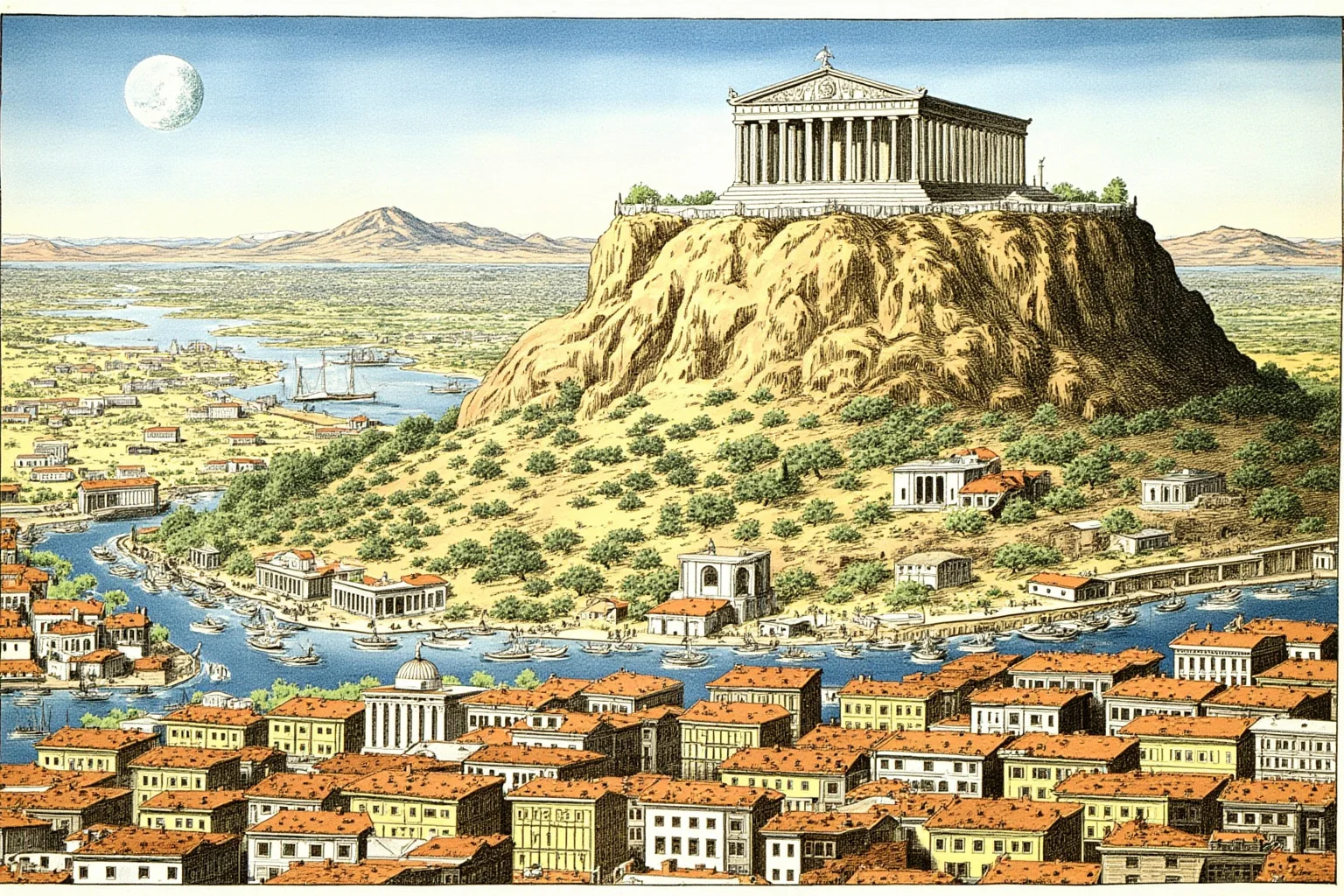
Beyond religion, the Parthenon’s purpose was tied closely to Athenian identity and pride. It was constructed in the decades after Athens helped repel Persian invasions, and the temple became a visible symbol of the city’s wealth, culture, and leadership among Greek city-states, rivaling the ambitions of other greatest empires in history. In that sense, the Parthenon was as much a monument to Athenian power as it was a house of worship.
3. Construction began in 447 BCE
Work on the Parthenon started in 447 BCE under the political leadership of Pericles, one of ancient Athens’s most influential statesmen. This answers a commonly searched question — what year was the Parthenon built — though it’s more accurate to say construction spanned roughly a decade rather than happening in a single year.
4. The main structure was finished by 438 BCE
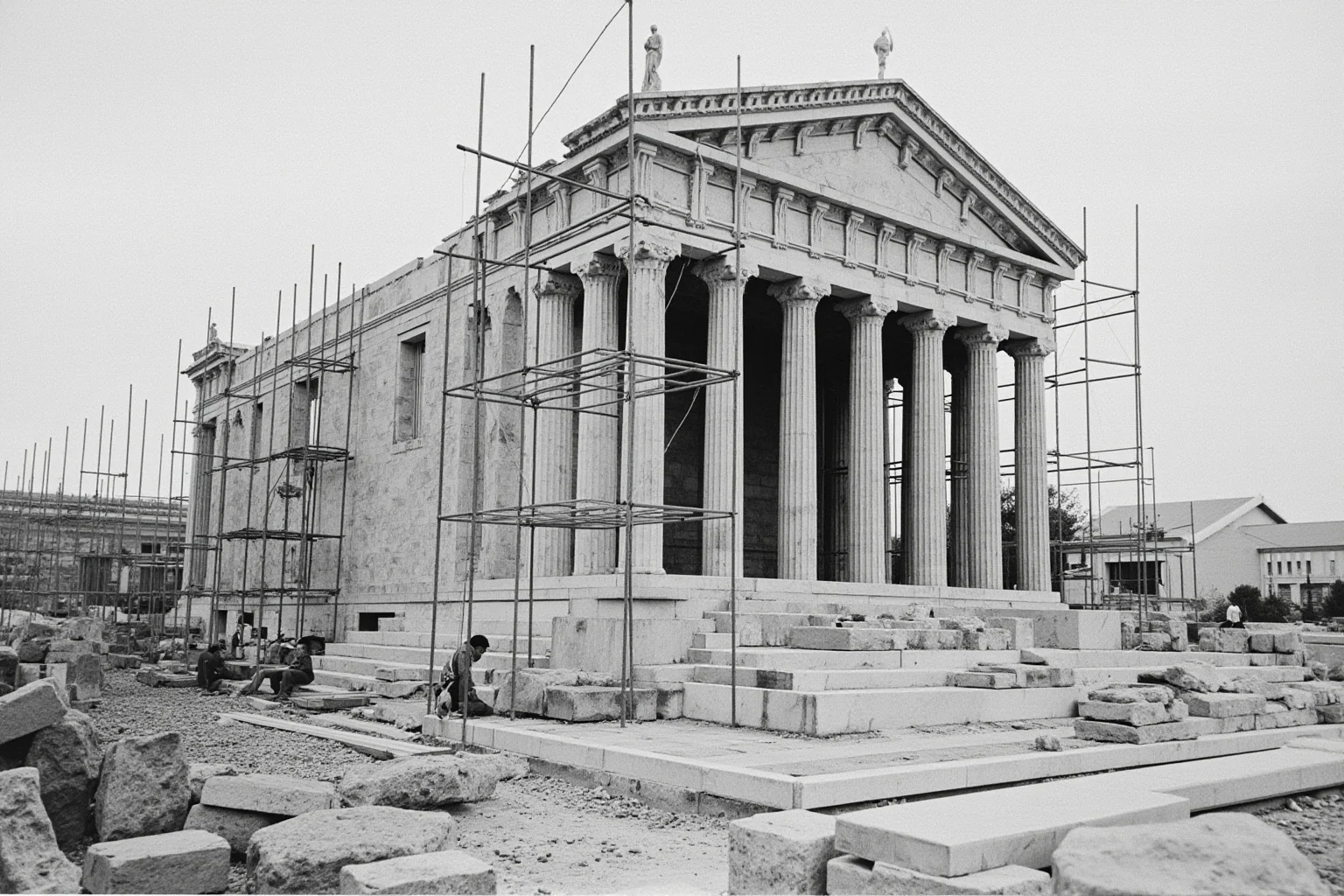
The temple’s main building was completed in about 438 BCE, but decorative sculptural work continued for several more years afterward. This means the full Parthenon we imagine today, with all its carved friezes and statues, wasn’t truly finished until around 432 BCE. Ancient construction projects, much like modern ones, often ran behind their original scope.
5. It replaced an earlier, unfinished temple
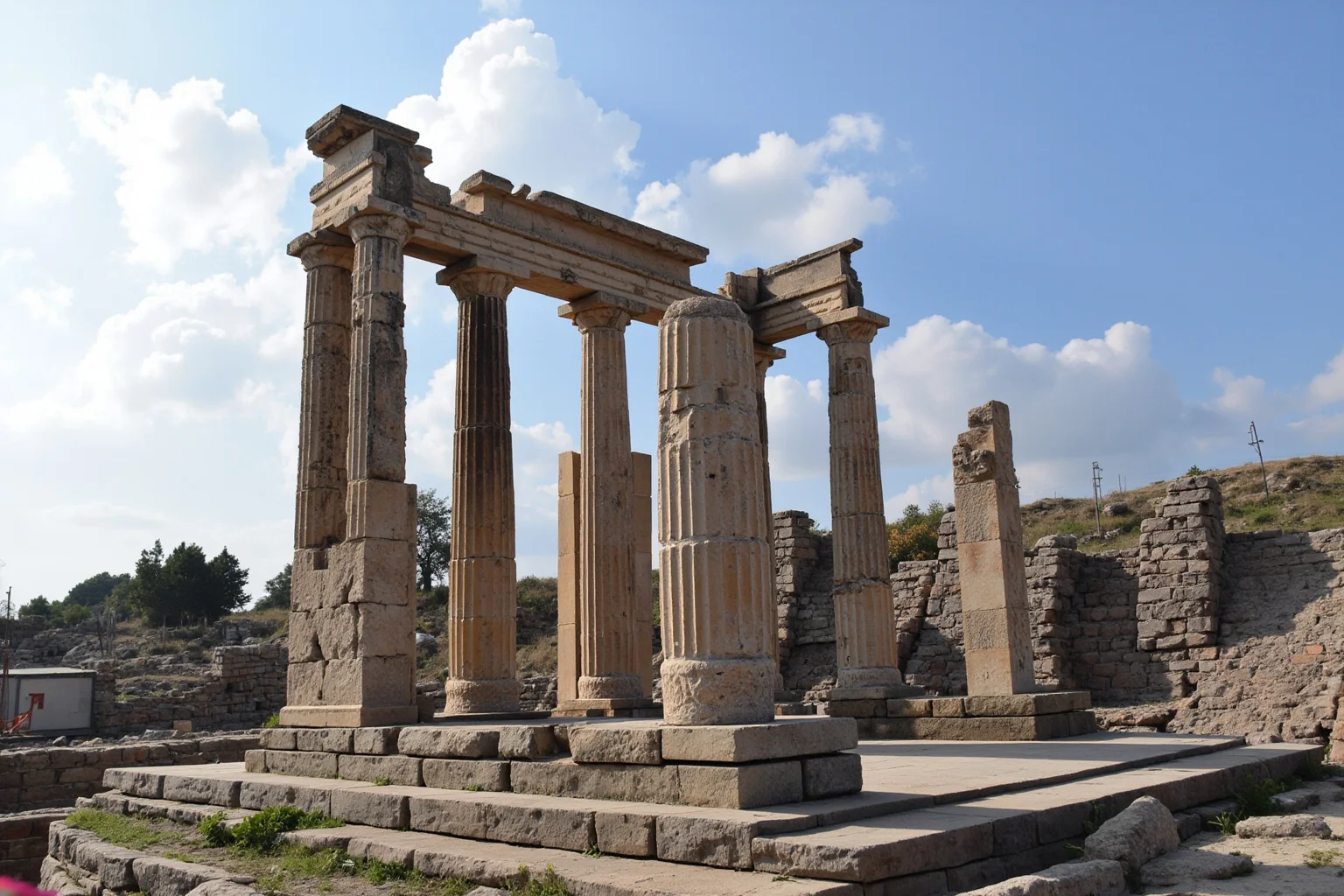
Before the Parthenon we know today, an earlier marble temple was being built on the same site. That structure, sometimes called the “Older Parthenon,” was still under construction when Persian forces destroyed much of the Acropolis in 480 BCE. The later Parthenon rose from those ashes, both literally and symbolically, as part of a broader rebuilding effort.
Design, Architecture and Special Features
6. Two architects and one legendary sculptor led the project
The building itself was designed by the architects Ictinus and Callicrates, while the sculptor Phidias oversaw the overall artistic program. Phidias is also credited with creating the enormous statue of Athena that once stood inside. Their combined work made the Parthenon a showcase of both engineering skill and artistic ambition.
7. It’s built almost entirely from Pentelic marble
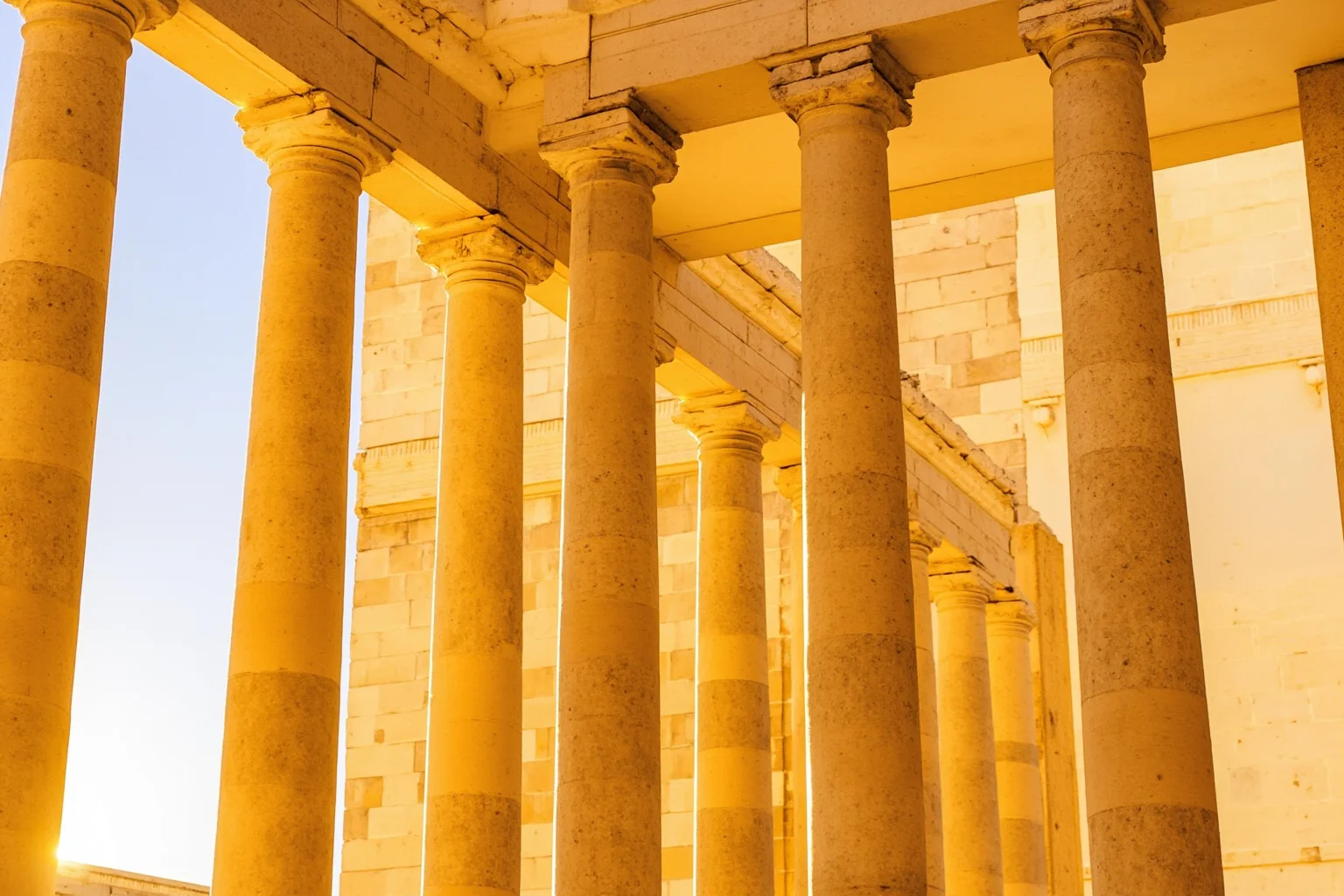
The Parthenon was constructed using marble quarried from nearby Mount Pentelicus, prized for its fine grain and warm, honey-like color that develops over time. Transporting this heavy stone up to the Acropolis was itself a major logistical achievement for the era. This marble is one of the defining special features that gives the Parthenon its luminous appearance in changing daylight.
8. The columns aren’t perfectly straight — on purpose
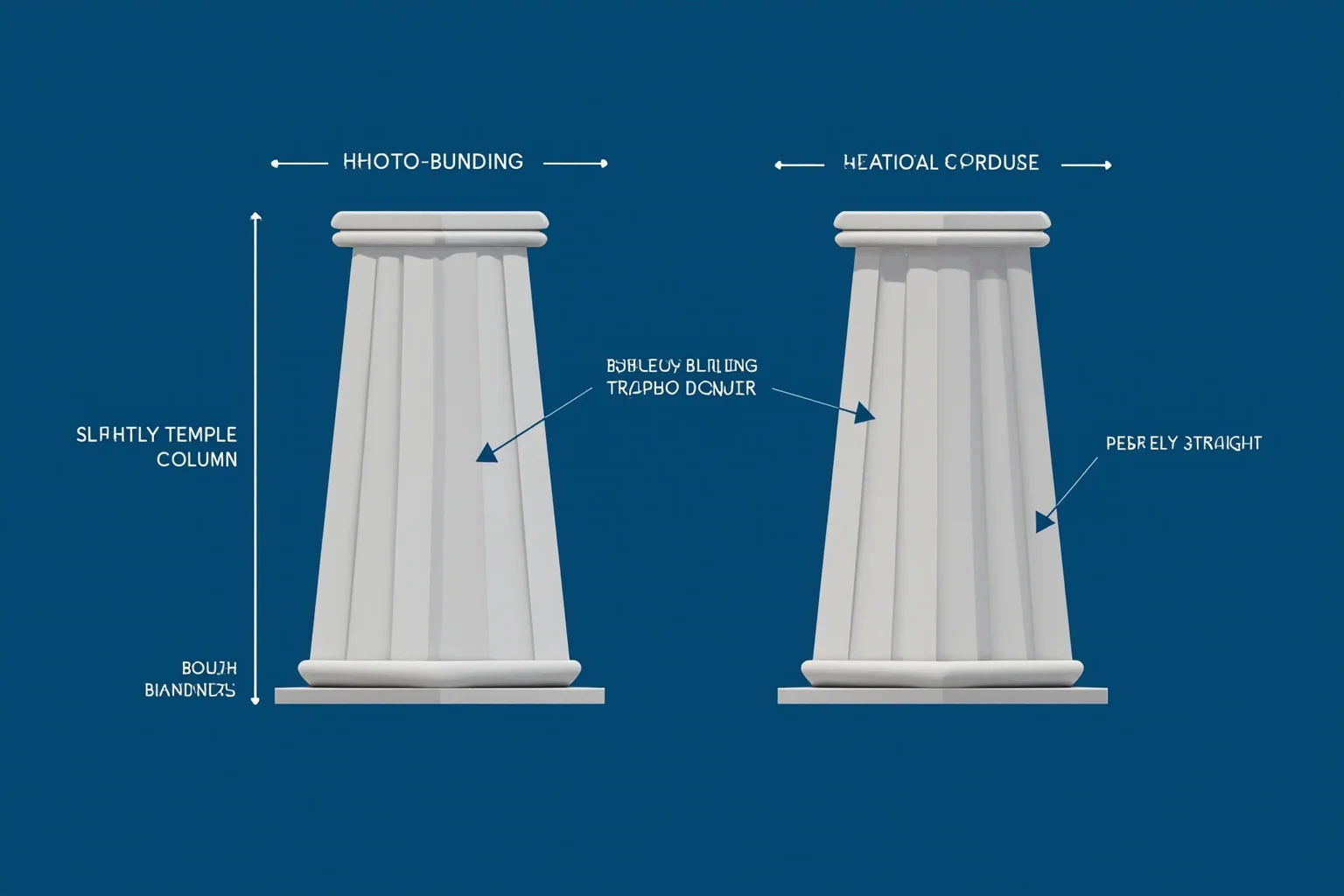
One of the Parthenon’s cleverest design tricks is called entasis, a slight outward bulge in the middle of each column. This subtle curve corrects an optical illusion that would otherwise make straight columns appear to sag inward when viewed from a distance. It’s a small detail, but it reflects a remarkably sophisticated understanding of visual perception.
9. There are almost no truly straight lines in the building
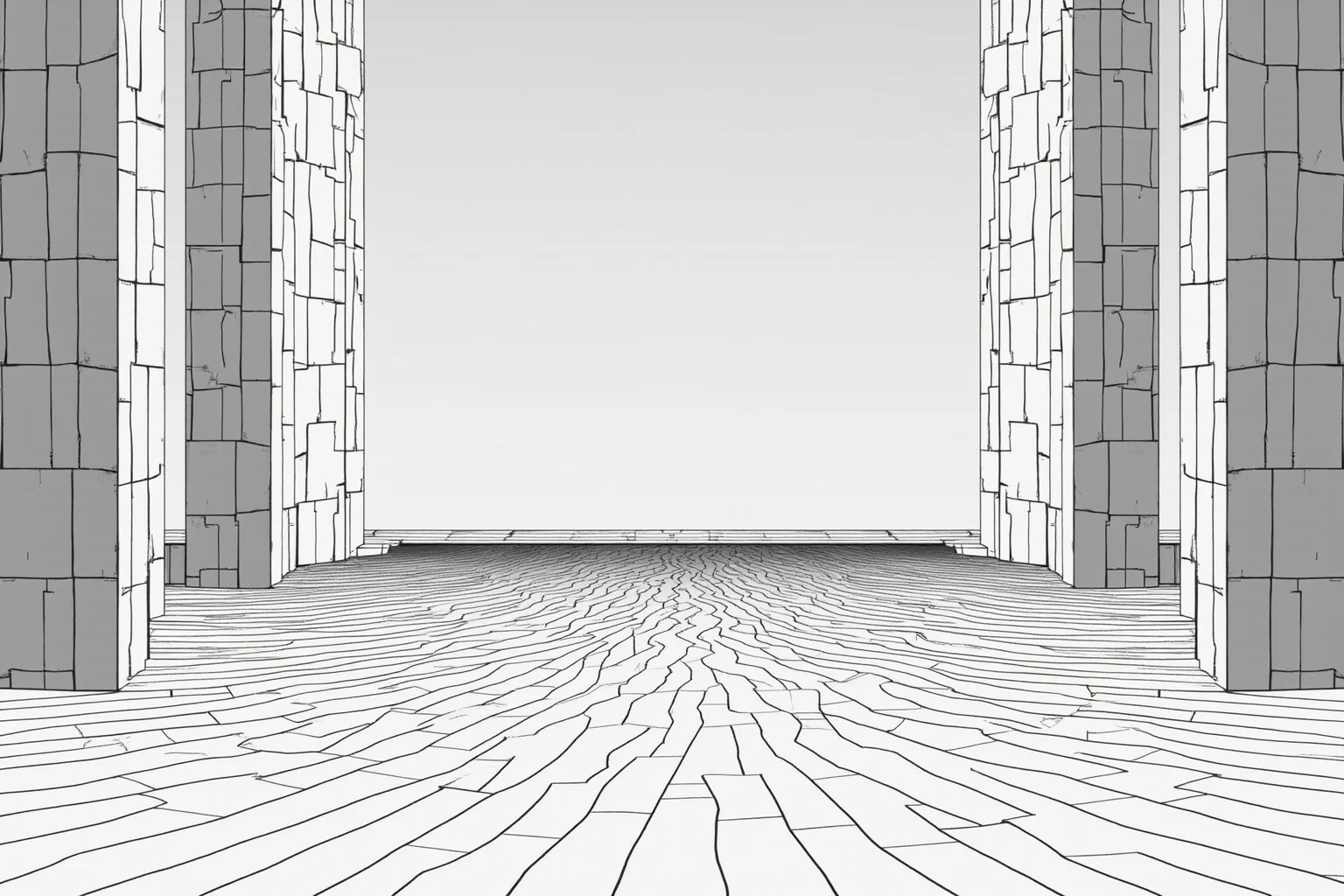
Beyond the columns, the Parthenon’s floor, entablature, and corner columns all include tiny intentional adjustments. The floor actually curves upward slightly toward the center, and the corner columns lean inward almost imperceptibly. These refinements are among the Parthenon’s most impressive special features, since they’re invisible to casual observers yet essential to how balanced the building looks.
10. It follows the Doric architectural order
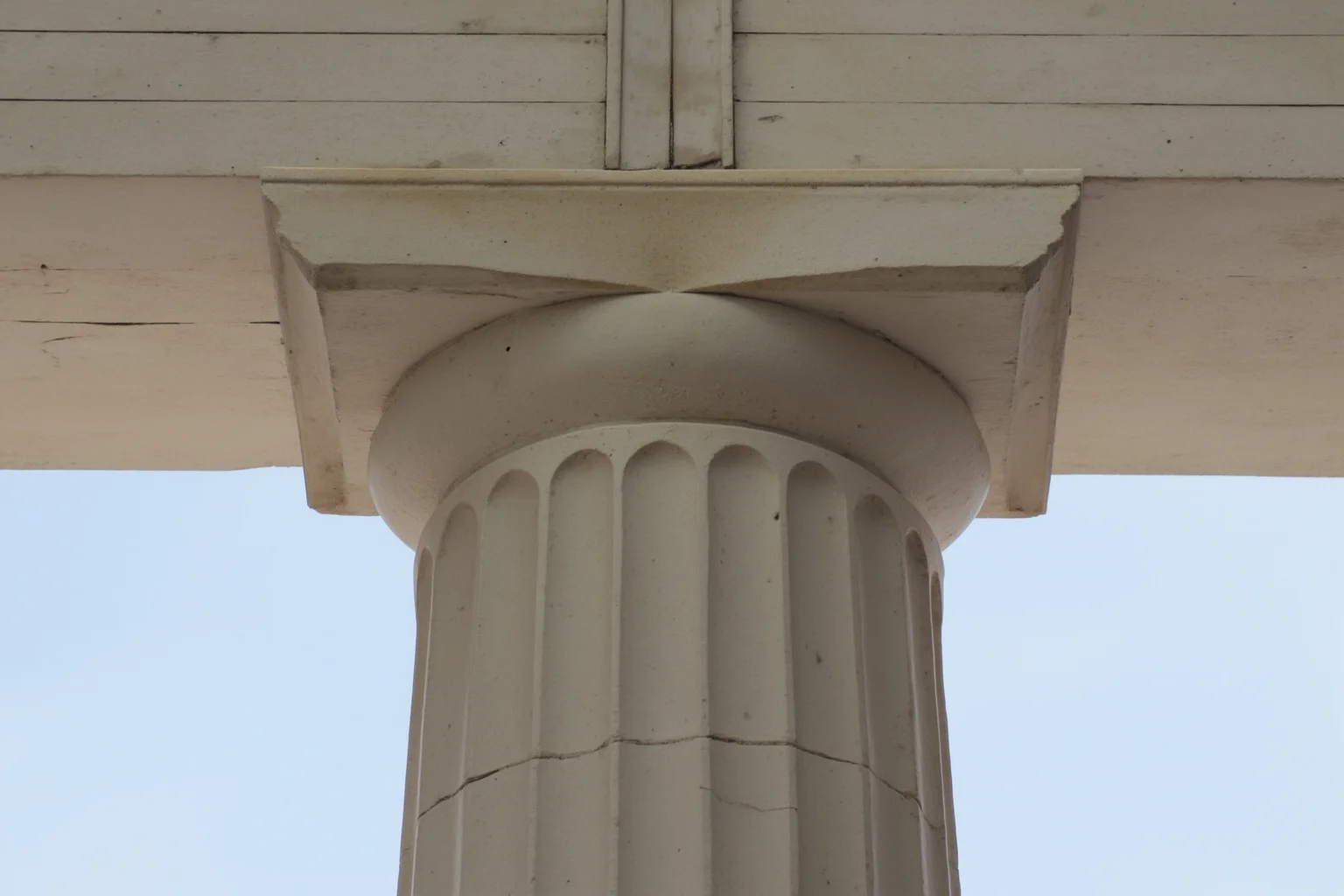
The Parthenon uses the Doric order, recognizable by its plain, sturdy column capitals without elaborate decoration. This style was associated with strength and simplicity, fitting for a temple meant to project civic confidence. Later Greek and Roman buildings would borrow heavily from this same architectural vocabulary.
11. The temple measures roughly 30.9 by 69.5 meters
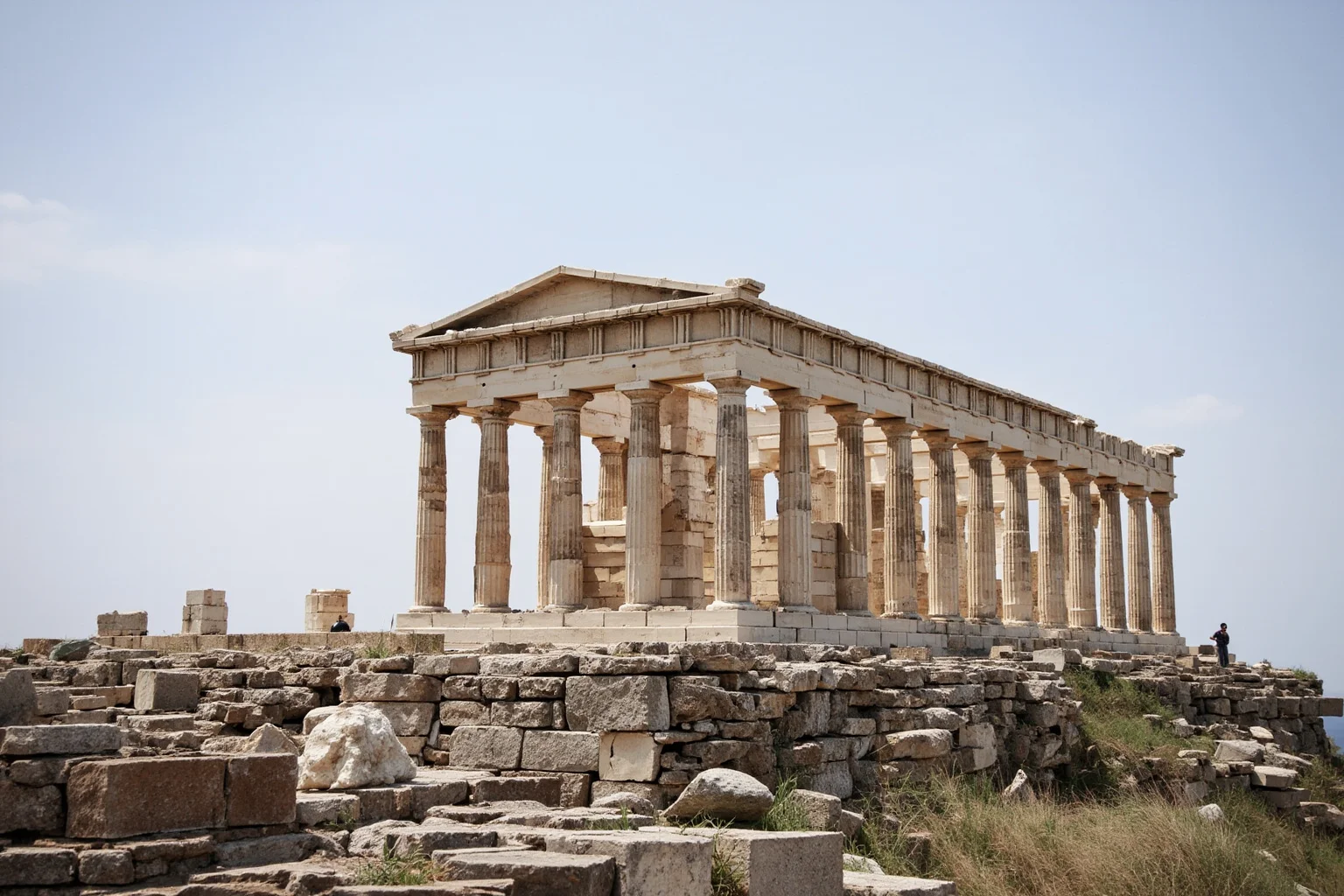
At its base, the Parthenon spans about 101 feet by 228 feet, making it large for a Greek temple of its time. It originally featured 46 outer columns, eight along each short end and seventeen along each long side. Its scale alone made it one of the most ambitious building projects in the ancient Greek world.
12. The roof was covered in marble tiles

Originally, the Parthenon had a wooden roof structure covered with overlapping marble tiles rather than the terracotta more commonly used elsewhere. This added considerable weight but also durability and a more prestigious finish. Much of this roofing was lost over the centuries through fire, war damage, and natural decay.
13. It was oriented to face the rising sun
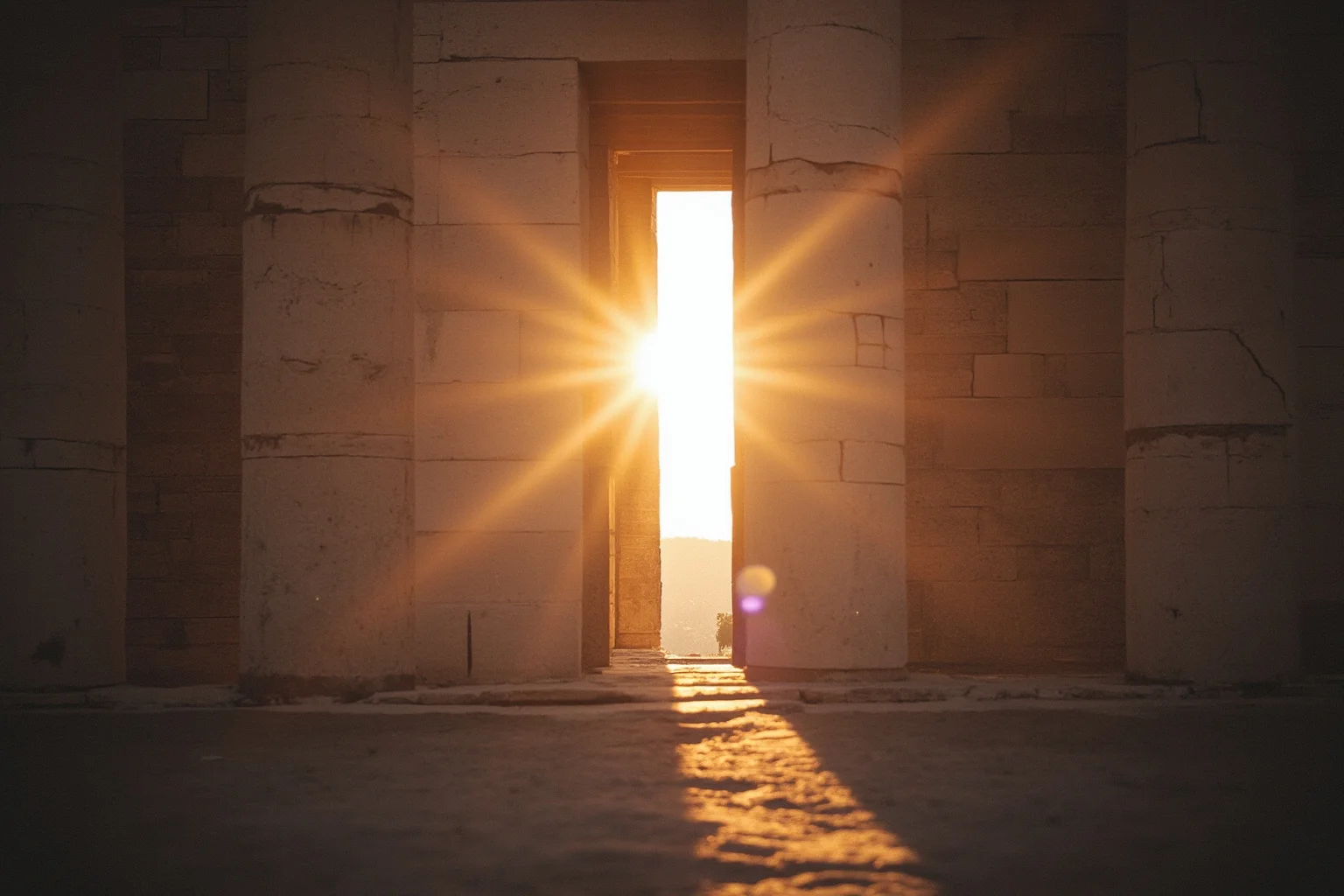
Like many ancient Greek temples, the Parthenon was aligned along an east-west axis, with its main entrance facing east. This meant that at dawn, sunlight would stream directly into the entrance and toward the cult statue inside. This orientation wasn’t unique to the Parthenon, but it reflects how deliberately Greek builders integrated astronomy and religion into architecture.
Art, Statues, and Symbolism
14. A massive gold-and-ivory statue of Athena once stood inside
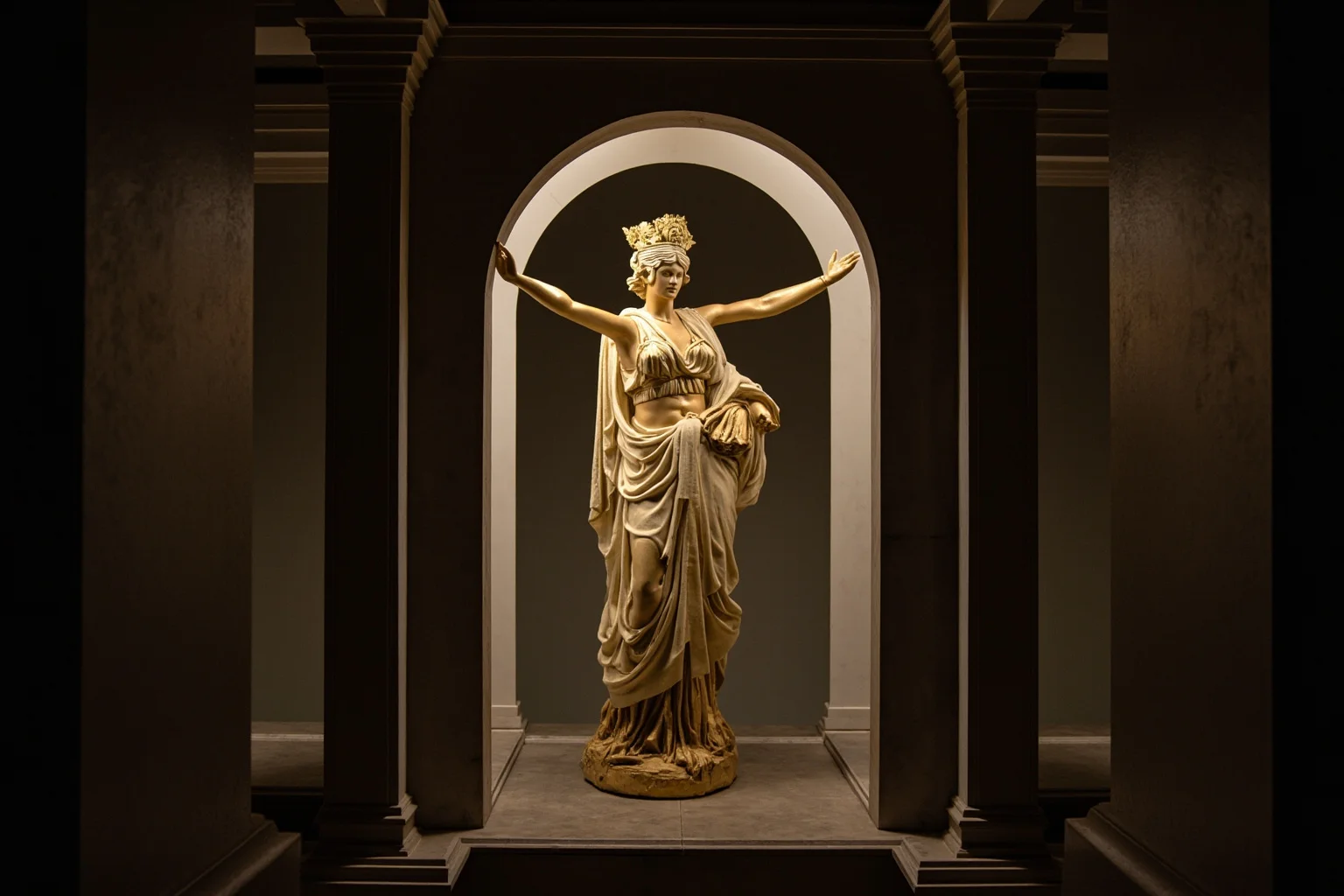
Phidias’s statue of Athena Parthenos stood nearly 12 meters (about 40 feet) tall and was constructed around a wooden core covered in gold plates and ivory detailing. It depicted Athena fully armed, holding a small statue of Nike in one hand. The original statue no longer survives, but ancient writers described it as one of the wonders of the classical world.
15. The frieze told stories from mythology and Athenian life
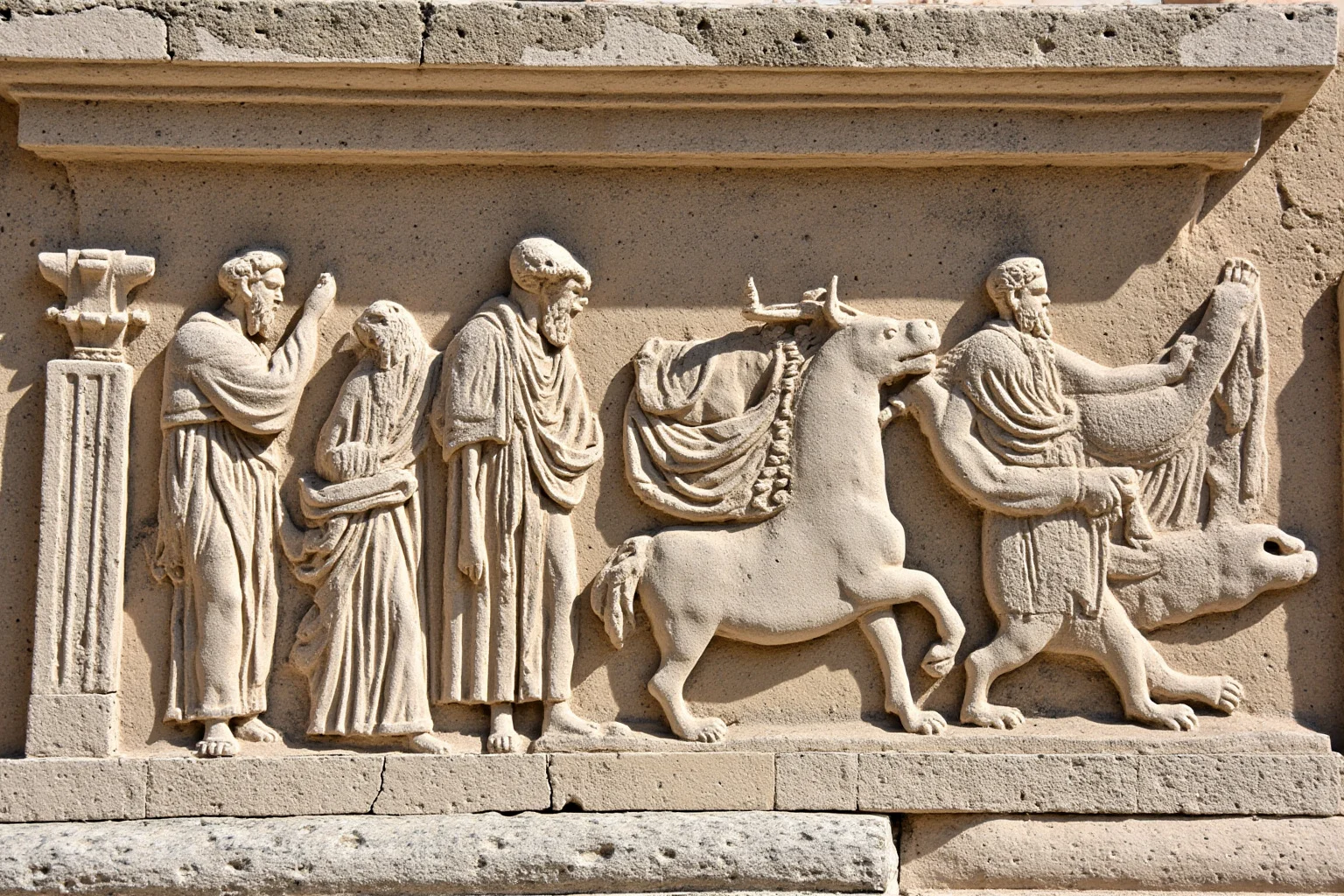
Running around the temple was a continuous sculpted frieze depicting scenes such as the battle between gods and giants, the Trojan War, and the mythical fight between Lapiths and centaurs. One section famously showed the Panathenaic procession, a real religious festival held in Athens to honor Athena. This combination of myth and civic ritual made the temple’s decoration deeply meaningful to the people who worshipped there.
16. The metopes each showed a self-contained mythological scene
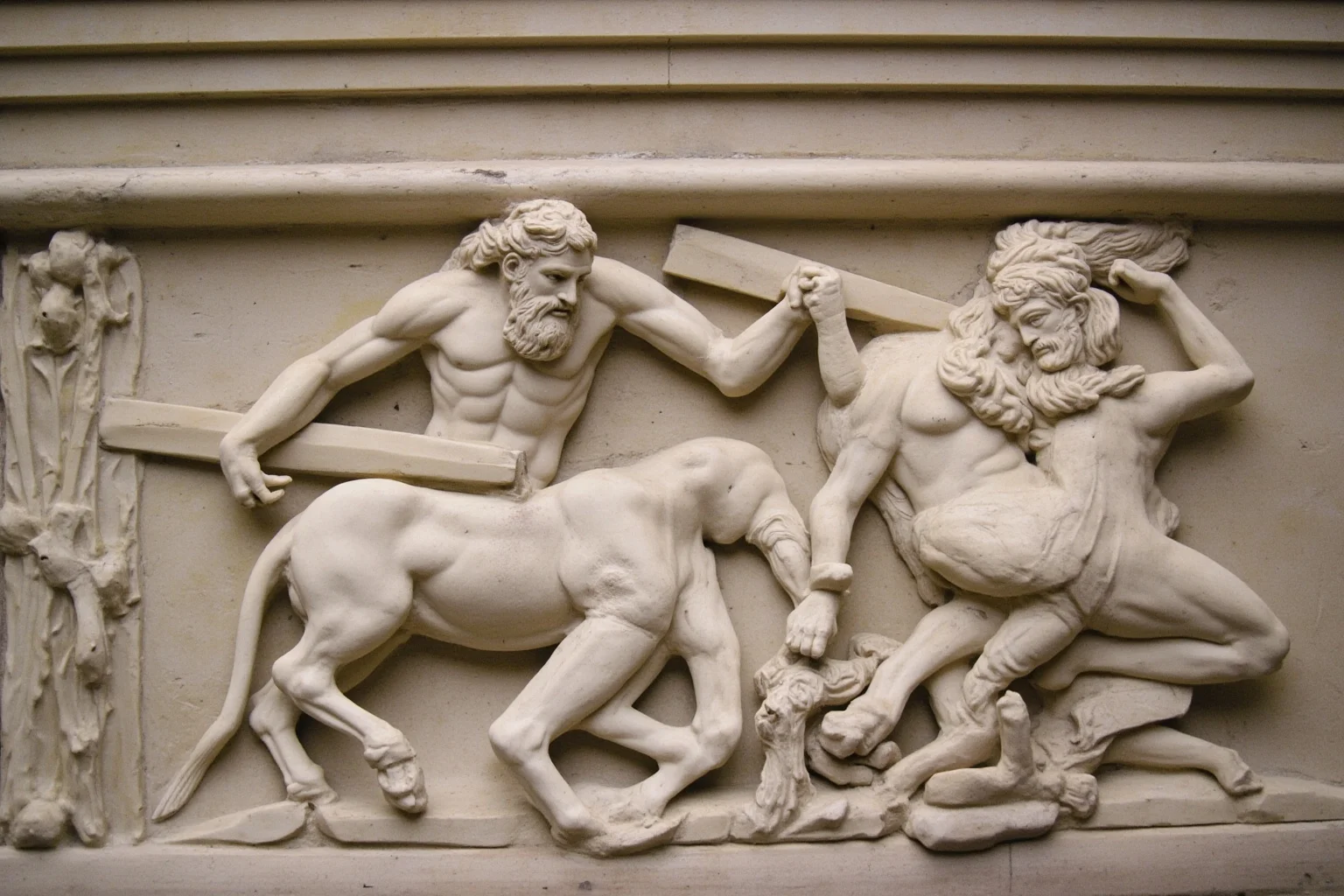
Above the columns, 92 carved panels called metopes depicted battles between civilization and chaos, mythologically represented through gods, giants, centaurs, and Amazons. Each metope worked almost like a snapshot from a larger story. Together, they reinforced the idea of Athens as a defender of order and reason.
17. It was funded partly through allied tribute money
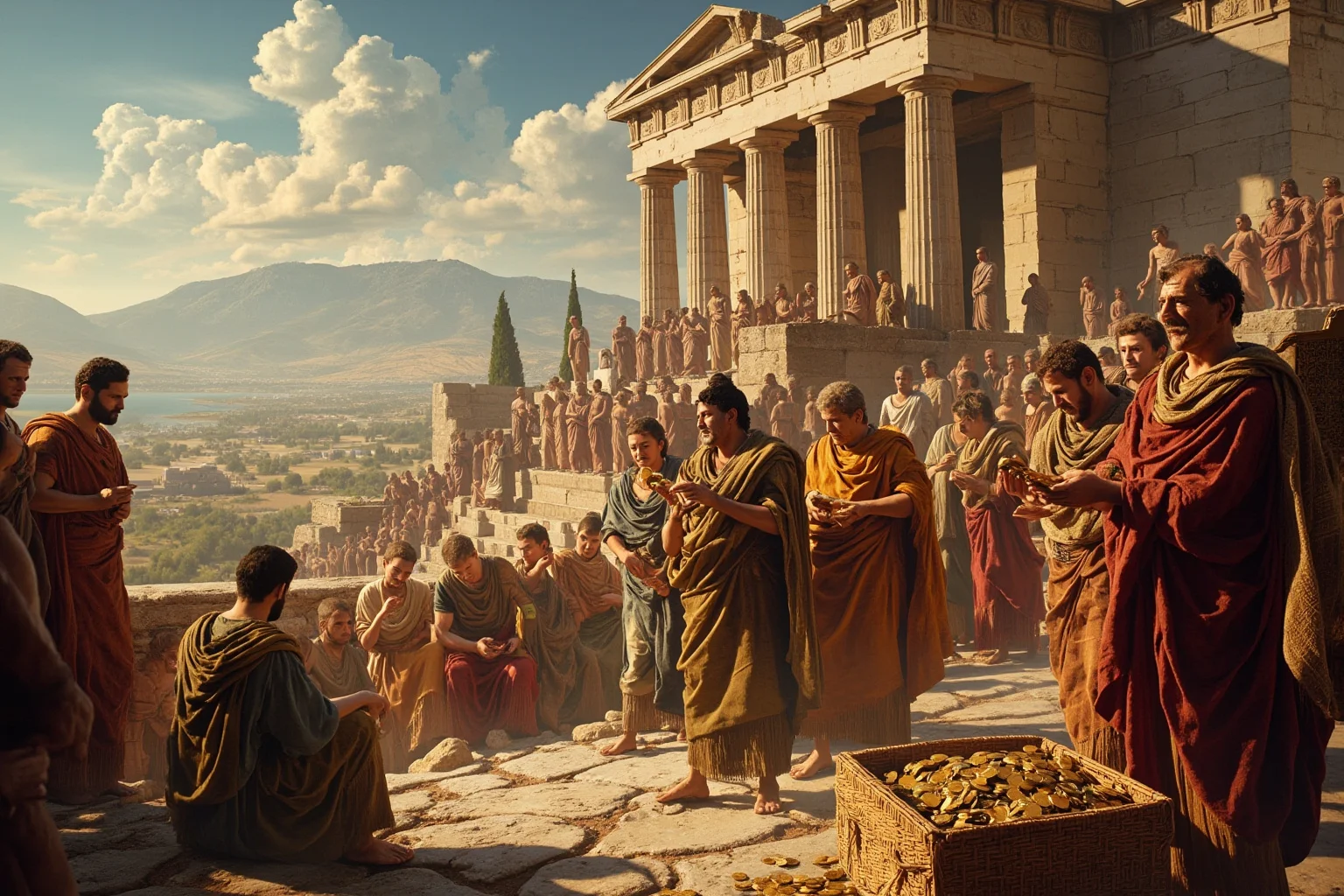
The Parthenon’s construction was expensive, and part of the funding came from the treasury of the Delian League, an alliance of Greek city-states originally formed to defend against Persia. Athens controlled this treasury and redirected some of its funds toward building projects on the Acropolis. This decision was controversial even in its own time, since some allies felt their contributions were being used for Athenian glorification rather than shared defense.
18. The building doubled as a treasury
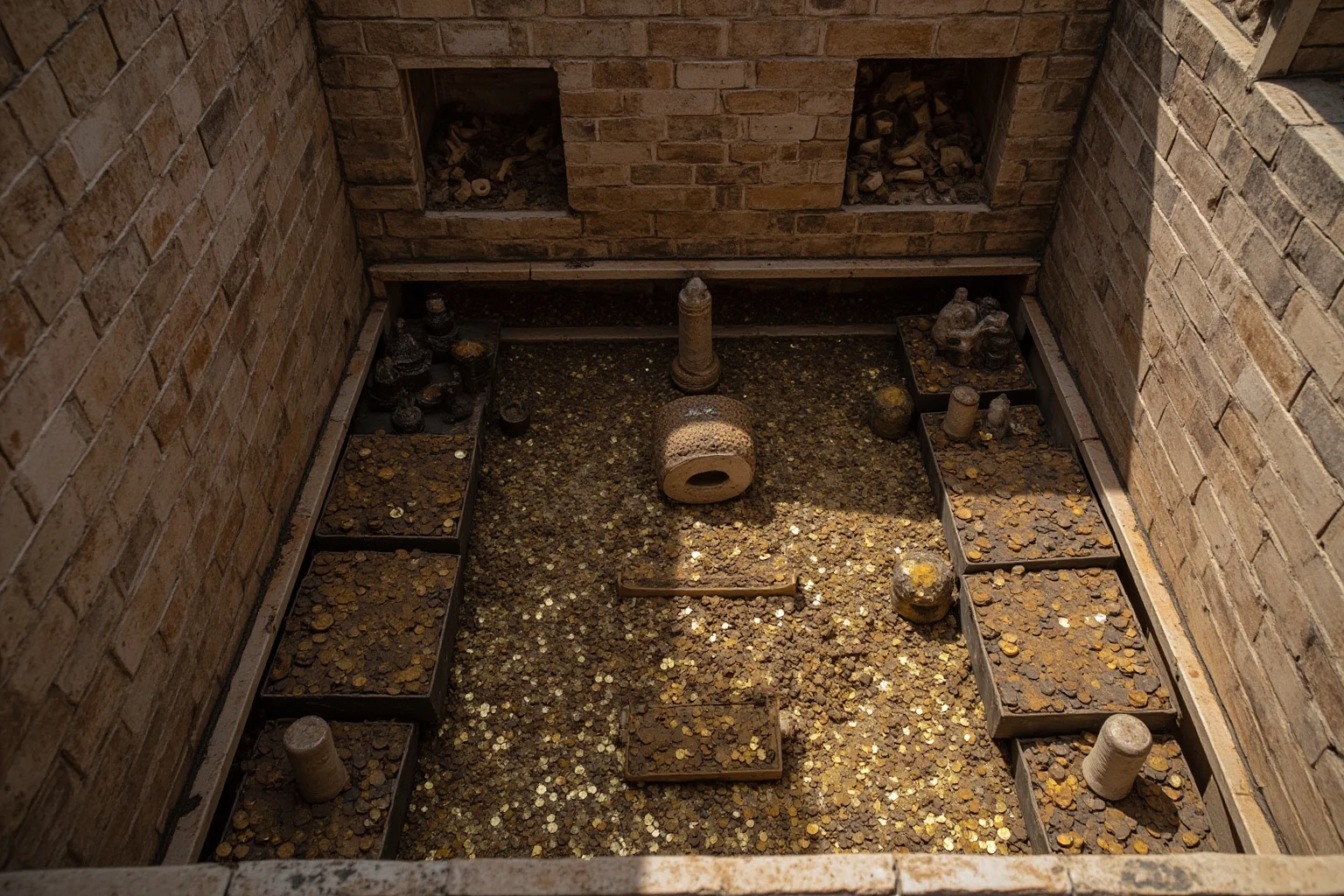
Beyond its religious role, the Parthenon physically stored valuable offerings, precious metals, and civic funds within its inner chambers. This dual purpose as both sacred space and secure treasury was common for major Greek temples. It’s a detail that often gets left out of simplified explanations of Parthenon purpose, but it mattered enormously to how the building functioned in daily Athenian life.
A Turbulent History Through the Ages
19. It became a Christian church centuries later
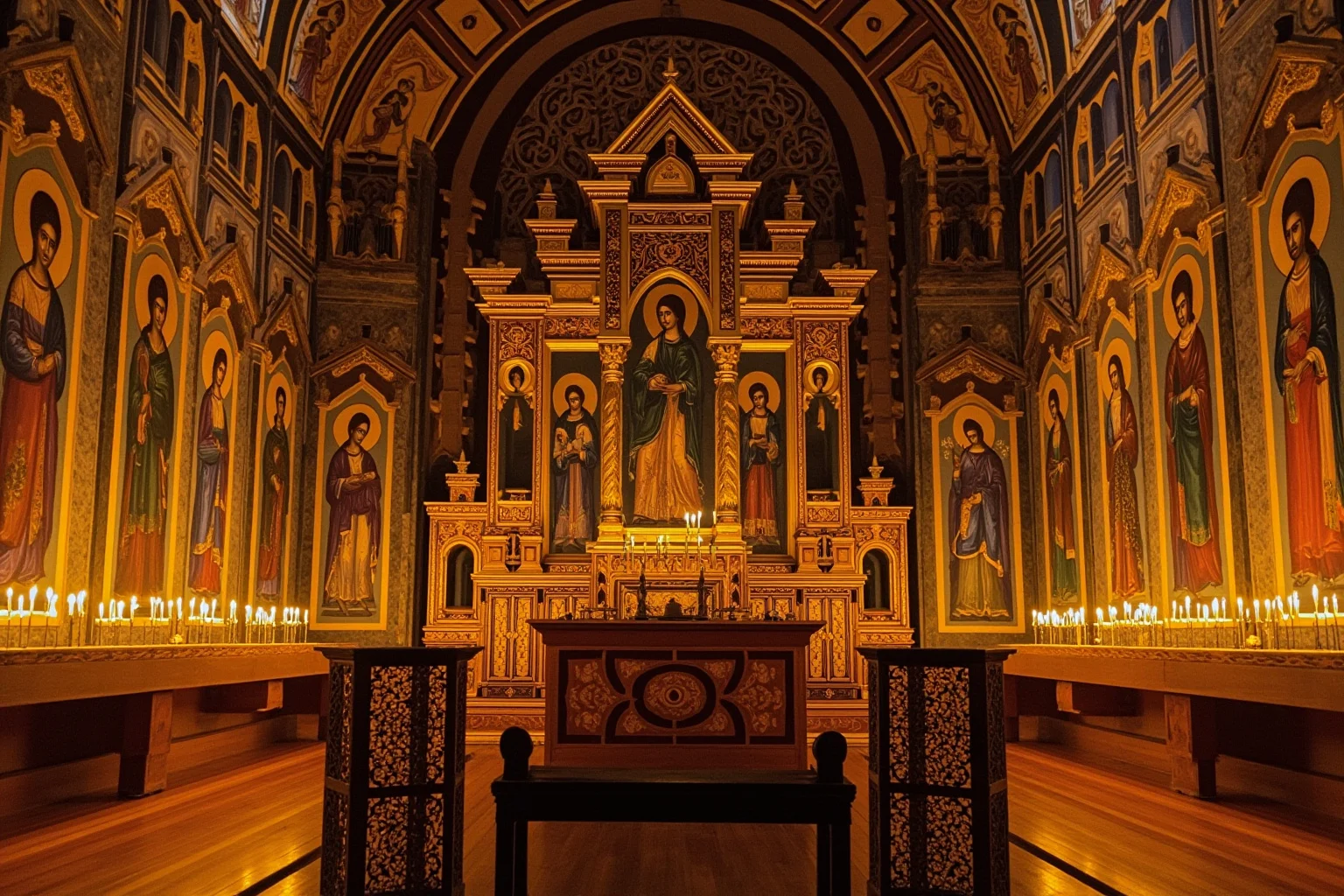
In the late antique and Byzantine periods, the Parthenon was converted into a Christian church dedicated to the Virgin Mary. This transformation involved altering some of its interior structure and removing or reinterpreting pagan imagery. The building’s adaptability across religions is part of why it survived as long as it has.
20. It later served as an Ottoman mosque
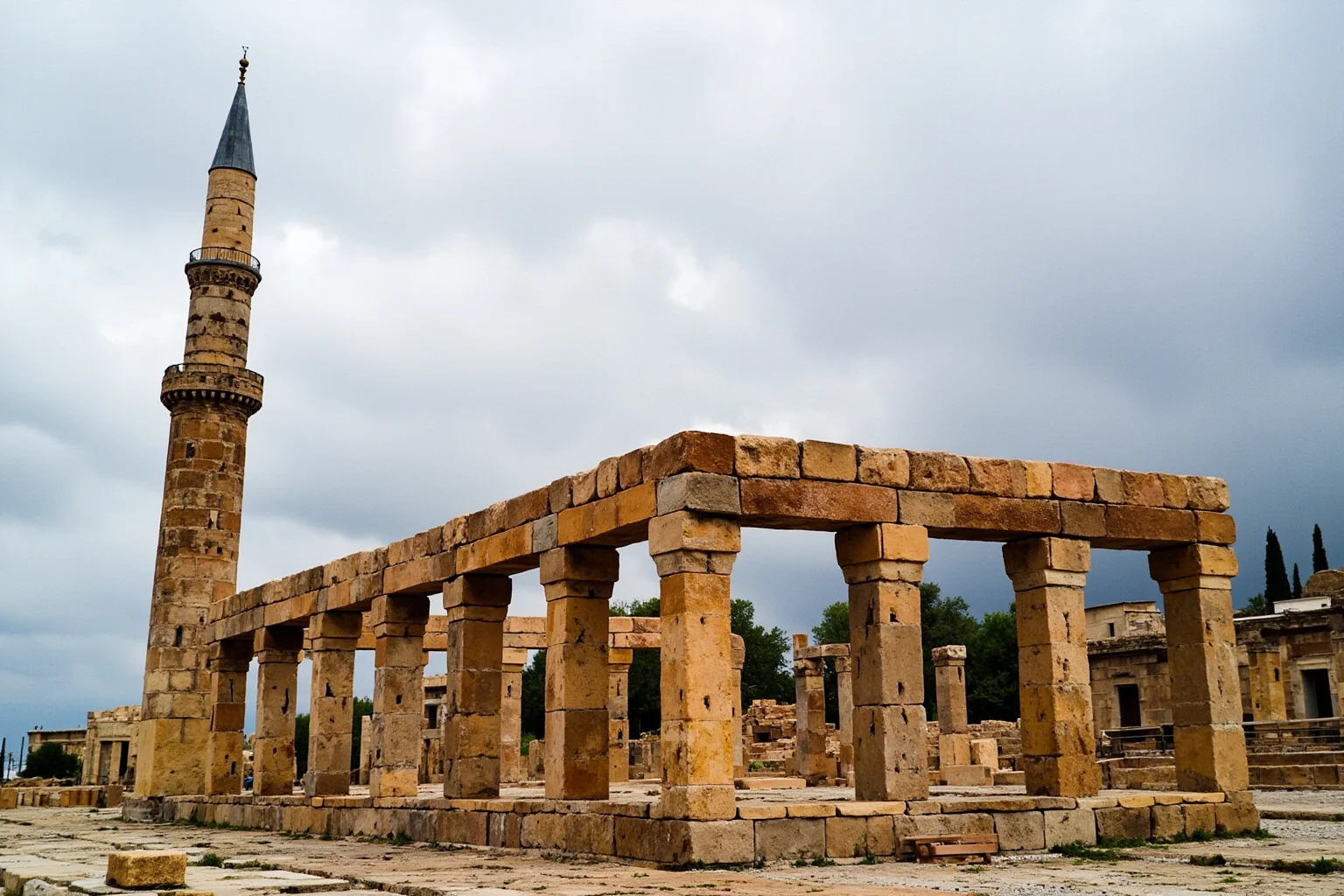
When the Ottoman Empire took control of Athens, the Parthenon was converted again, this time into a mosque, with a minaret added to the structure. This period lasted for centuries and left its own mark on the building’s later appearance, not unlike the layered, shifting uses documented in 20 facts about the Colosseum. Traces of these transformations remind us that the Parthenon’s story isn’t only ancient Greek history — it’s also medieval and early modern history.
21. A massive explosion in 1687 caused catastrophic damage
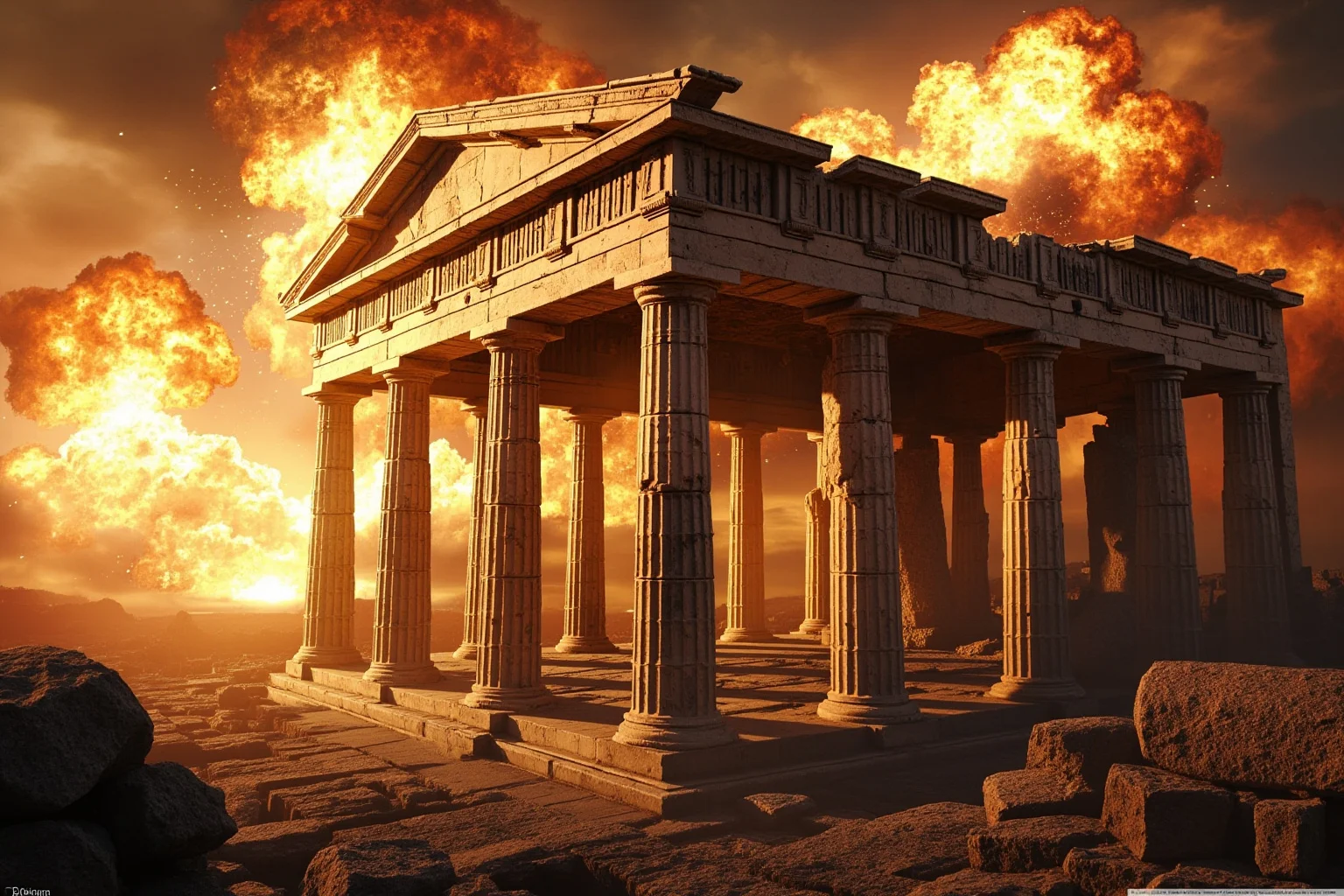
During a Venetian siege of Ottoman-controlled Athens in 1687, the Parthenon was being used to store gunpowder. A mortar shell struck the building, triggering an explosion that blew out much of the central structure and roof. This single event caused more structural damage than centuries of previous wear, and its effects are still visible today.
22. Many sculptures were removed in the early 1800s
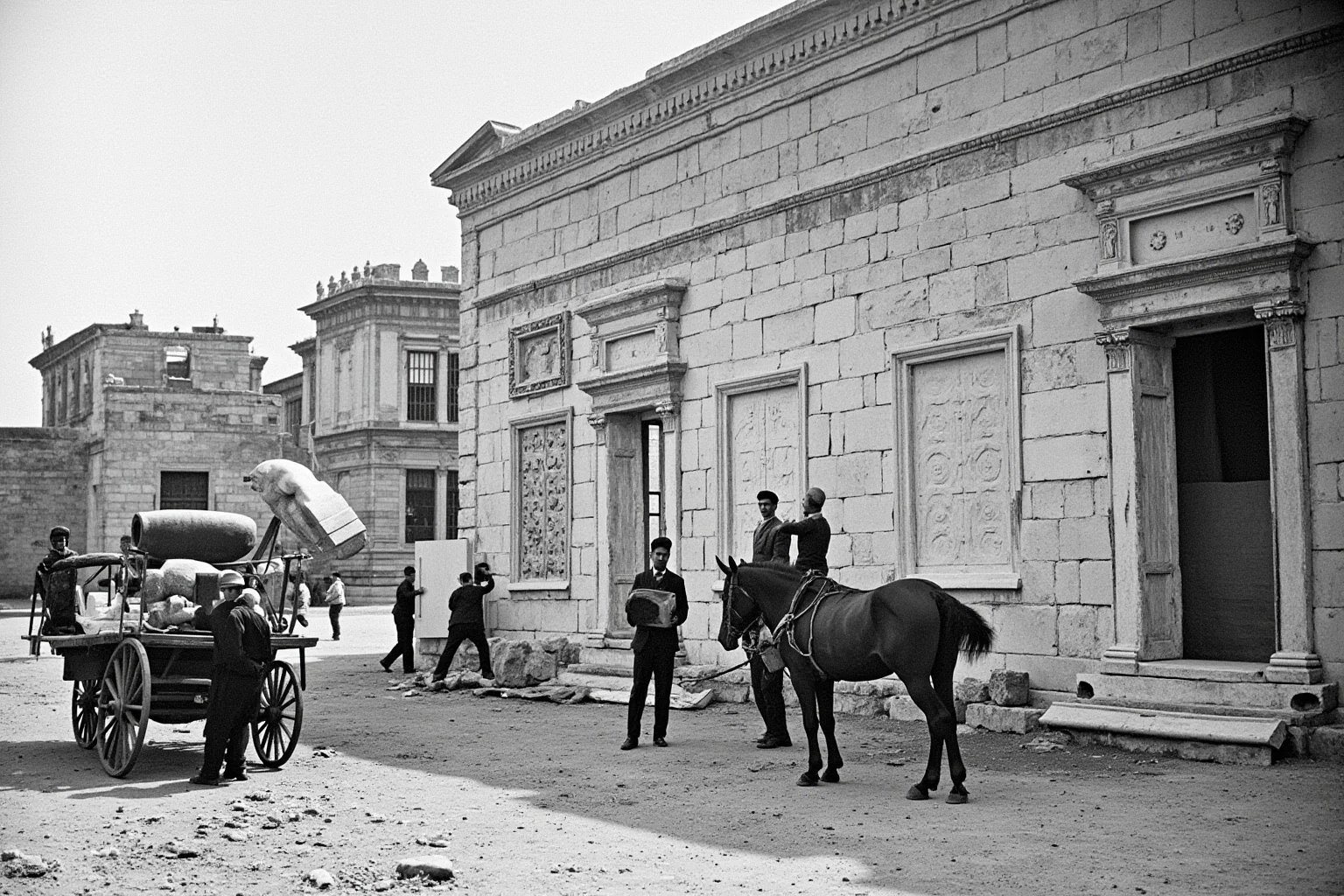
In the early 19th century, Lord Elgin, a British diplomat, arranged for a large number of the Parthenon’s surviving sculptures and friezes to be removed and shipped to Britain. These pieces, now known as the Elgin Marbles or Parthenon Marbles, are currently held in the British Museum. Greece has long called for their return, and the debate remains an active, unresolved cultural and legal issue.
23. Restoration work has been ongoing since the 1970s
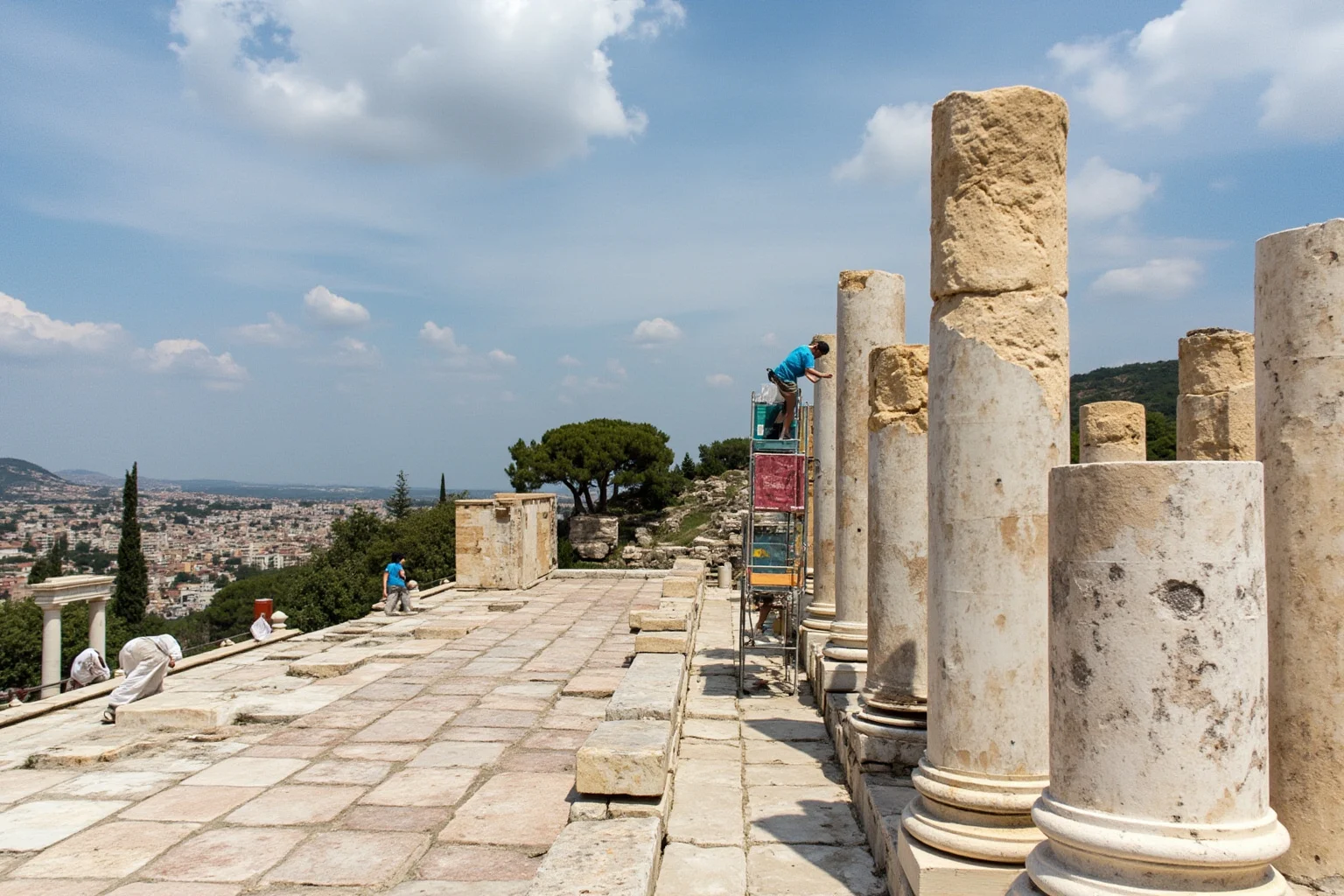
Modern conservation efforts began in earnest in 1975, aiming to stabilize the structure, reverse damage from earlier poor-quality restorations, and protect the marble from pollution erosion. Teams of architects, engineers, and archaeologists have carefully documented and repositioned original stones wherever possible. This careful, decades-long project continues today, making the Parthenon something of a living restoration site rather than a finished museum piece.
Its Legacy Today
24. It was never actually pure white
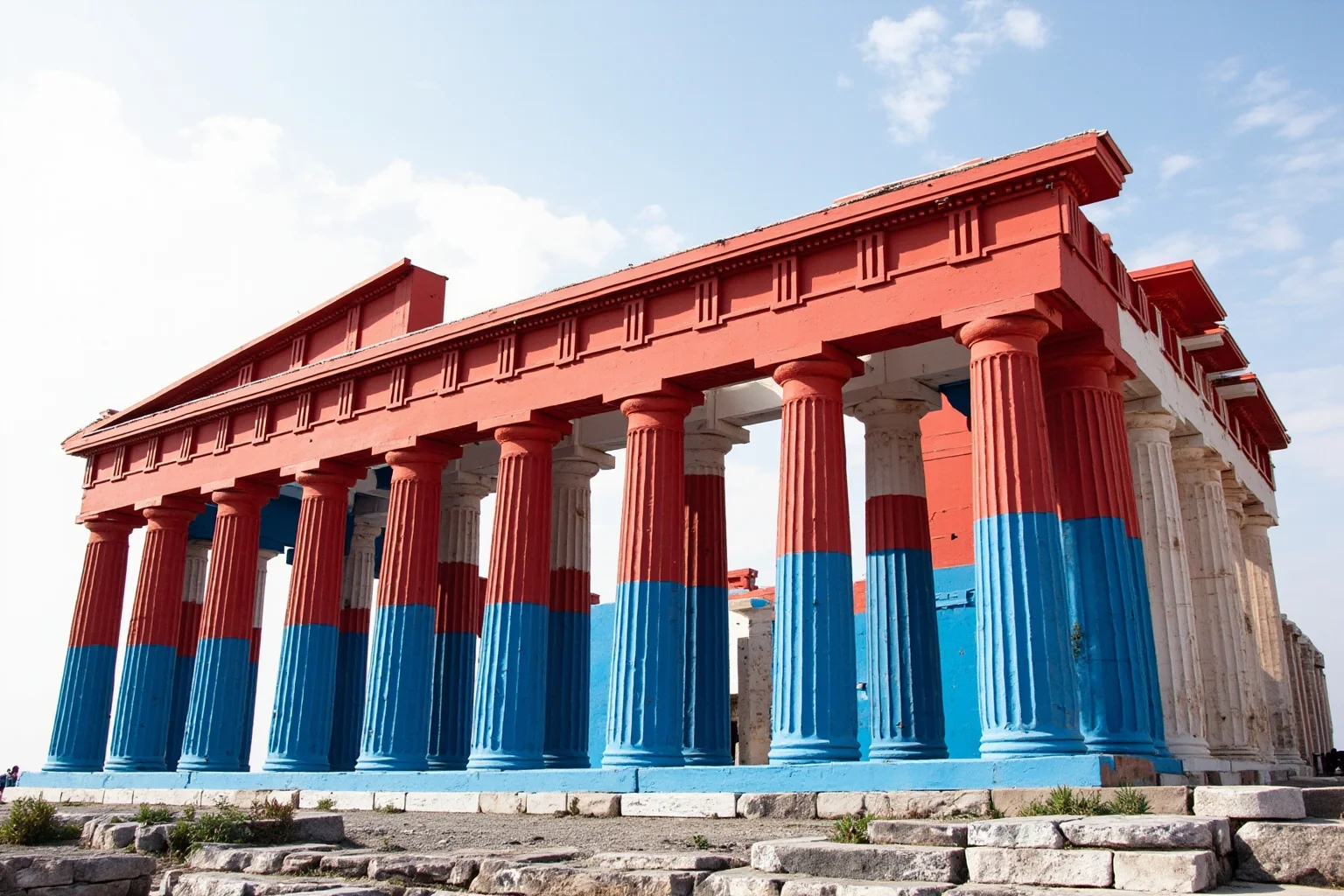
A persistent myth is that ancient Greek temples were always gleaming white marble, but much like some of the myths surrounding the Taj Mahal’s creation, the Parthenon was originally painted in vivid colors, including reds and blues on parts of the frieze and architectural details. Traces of pigment have been detected by researchers using specialized imaging techniques. The weathered, pale stone we see today is a result of thousands of years of exposure, not the original design intent.
25. It inspired replica buildings around the world
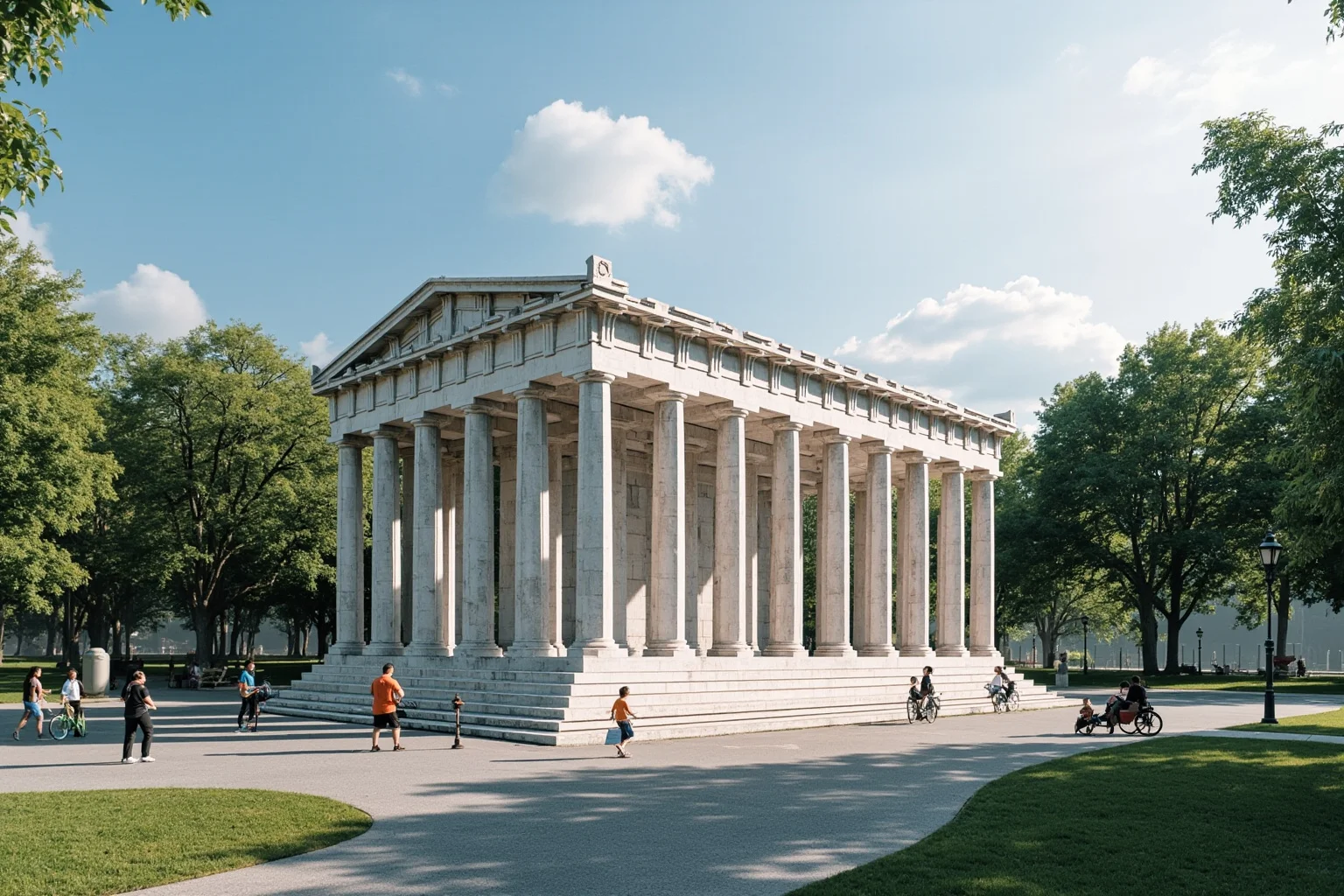
The Parthenon’s fame has led to full-scale replicas and homages, most notably the Parthenon in Nashville, Tennessee, built in the early 20th century as part of a cultural exposition. Its architectural language also echoes through countless government buildings, banks, and museums that borrowed Doric columns and classical proportions. Few ancient buildings have influenced global architecture as consistently as this one.
Why the Parthenon Still Matters
The Parthenon isn’t just an old ruin — it’s a physical record of ancient Greek religion, politics, art, and engineering all layered into one structure. Its purpose shifted over the centuries, from Athena’s temple to church, to mosque, to powder magazine, to the UNESCO World Heritage landmark it is today. Each phase left its own mark on the stones.
What makes the Parthenon endlessly fascinating isn’t just its scale or its marble, but the sheer number of stories embedded in it. Facts about the Parthenon in Greece reveal a building that was fought over, reshaped, damaged, and repaired again and again — and somehow still stands as one of the most recognizable structures in human history.
Frequently Asked Questions
What are some interesting facts about Parthenon Greece?
Some of the most interesting facts about Parthenon Greece include that it was built between 447 and 438 BCE to honor the goddess Athena, its columns use a subtle curve called entasis to look perfectly straight, it once housed a 12-meter gold-and-ivory statue of Athena, and it has served as a temple, church, mosque, and gunpowder store over its long history.
Why was the Parthenon created?
The Parthenon was created primarily as a temple dedicated to Athena Parthenos, the patron goddess of Athens, but it also served as a symbol of Athenian wealth and power in the years following the Persian Wars, and it functioned as a treasury for valuable offerings and civic funds.
What year was the Parthenon built?
Construction on the Parthenon began in 447 BCE and the main structure was largely completed by 438 BCE, though decorative sculptural work continued for several more years, meaning the fully finished temple dates to around 432 BCE.
What was the original purpose of the Parthenon?
The Parthenon's original purpose was religious and civic: it housed a monumental statue of Athena, hosted offerings tied to her worship, and doubled as a secure treasury for Athens, all while symbolizing the city's power and cultural achievements.
What are the Parthenon’s special features?
The Parthenon's special features include its use of Pentelic marble, subtly curved columns and floors designed to correct optical illusions, an intricately carved frieze depicting mythology and the Panathenaic procession, and a Doric architectural style that became a model for classical buildings worldwide.
Is the Parthenon still standing today?
Yes, the Parthenon still stands on the Acropolis in Athens, though it has suffered significant damage over the centuries, including a devastating 1687 gunpowder explosion, and it has been undergoing careful restoration and conservation work since 1975.

Alex Warren
Related Articles