

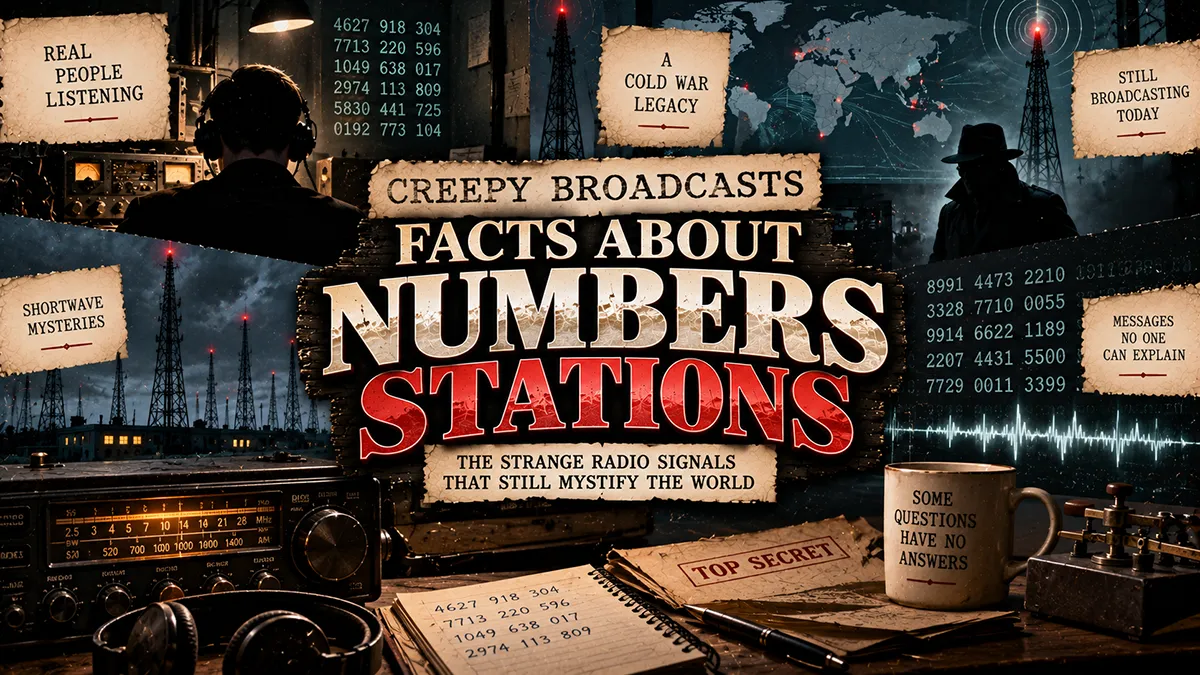
Somewhere on the shortwave dial, right now, a flat, emotionless voice may be reading strings of numbers into the static. No introduction, no sign-off, no explanation. Just digits, or sometimes letters, recited in little groups over and over until the transmission simply stops.
These broadcasts are known as numbers stations, and they’ve haunted shortwave radio listeners since at least the mid-20th century. Nobody has ever officially claimed responsibility for one, which is exactly what makes them so fascinating. Below are 22 facts that separate what’s actually documented from what’s just spooky internet legend.
TL;DR: Numbers stations are real, decades-old shortwave radio broadcasts widely believed to relay coded instructions to spies, but almost none of their actual messages have ever been decoded or officially explained.
What Is a Numbers Station, Exactly?
A numbers station is a radio broadcast, almost always on shortwave, that transmits spoken sequences of numbers, letters, or both in a monotone voice. There’s typically no station identification, no host, and no advertising, which immediately sets them apart from ordinary AM or FM programming. That absence of any normal broadcasting purpose is precisely why so many people ask what number stations actually are.
Most researchers and former intelligence officials who have spoken about the topic believe these broadcasts serve as a one-way communication method between intelligence agencies and undercover operatives in the field. Because shortwave signals can travel thousands of miles and be received on a cheap, untraceable radio, they offer a strikingly simple way to pass instructions without leaving a digital trail. No government has ever confirmed this, so it remains an educated theory rather than settled fact.
1. They Usually Follow the Same Eerie Script
Most numbers station broadcasts follow a recognizable pattern. First comes an “interval signal,” often a repeating tone, tune, or musical loop that helps listeners find the right frequency at the right time.
After that, a voice announces a callup, sometimes a station name or a short code, followed by long strings of numbers or letters read aloud in groups of four or five. The sequence is often repeated twice for accuracy before the broadcast abruptly ends.
2. Most Experts Believe They Broadcast Spy Messages
The leading explanation, supported by declassified intelligence history and a handful of real espionage prosecutions, is that numbers stations transmit coded instructions to intelligence operatives. A one-way broadcast is ideal for this because the agent only needs to listen; they never have to transmit anything back that could be traced.
This setup gives whoever is operating the station total deniability. Since anyone with a radio can technically receive the signal, there’s no way to prove who the intended recipient actually is.
3. The Voices Read in “Groups” of Numbers or Letters
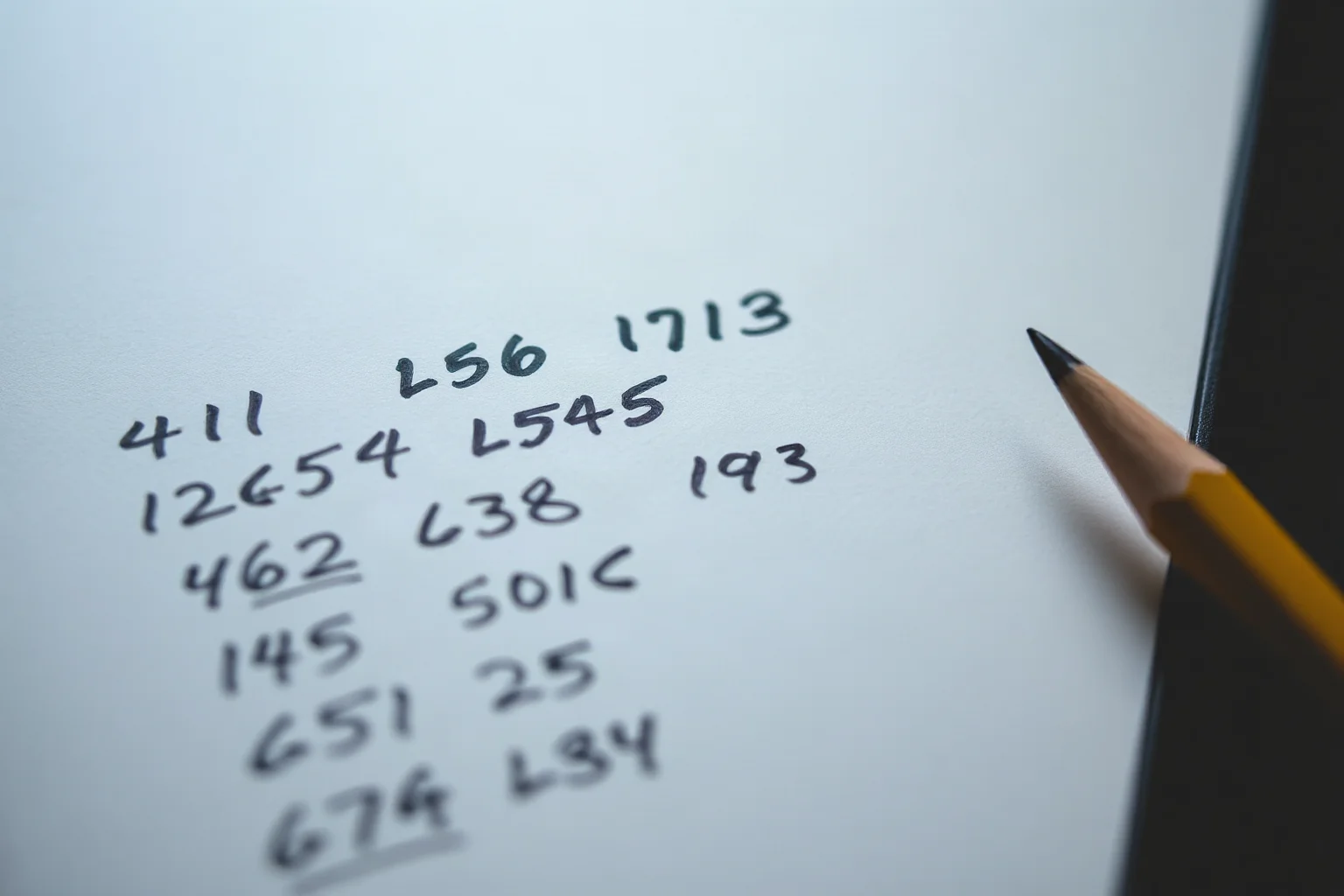
The content itself is almost always organized into small clusters, commonly called “five-figure groups” or “four-figure groups.” Some stations use spoken digits, while others use phonetic letters similar to a military alphabet.
This grouping isn’t random. It mirrors classic manual cryptography techniques, where operators would write down each group and later run it through a decoding process by hand.
4. One-Time Pad Encryption Makes Them Nearly Unbreakable
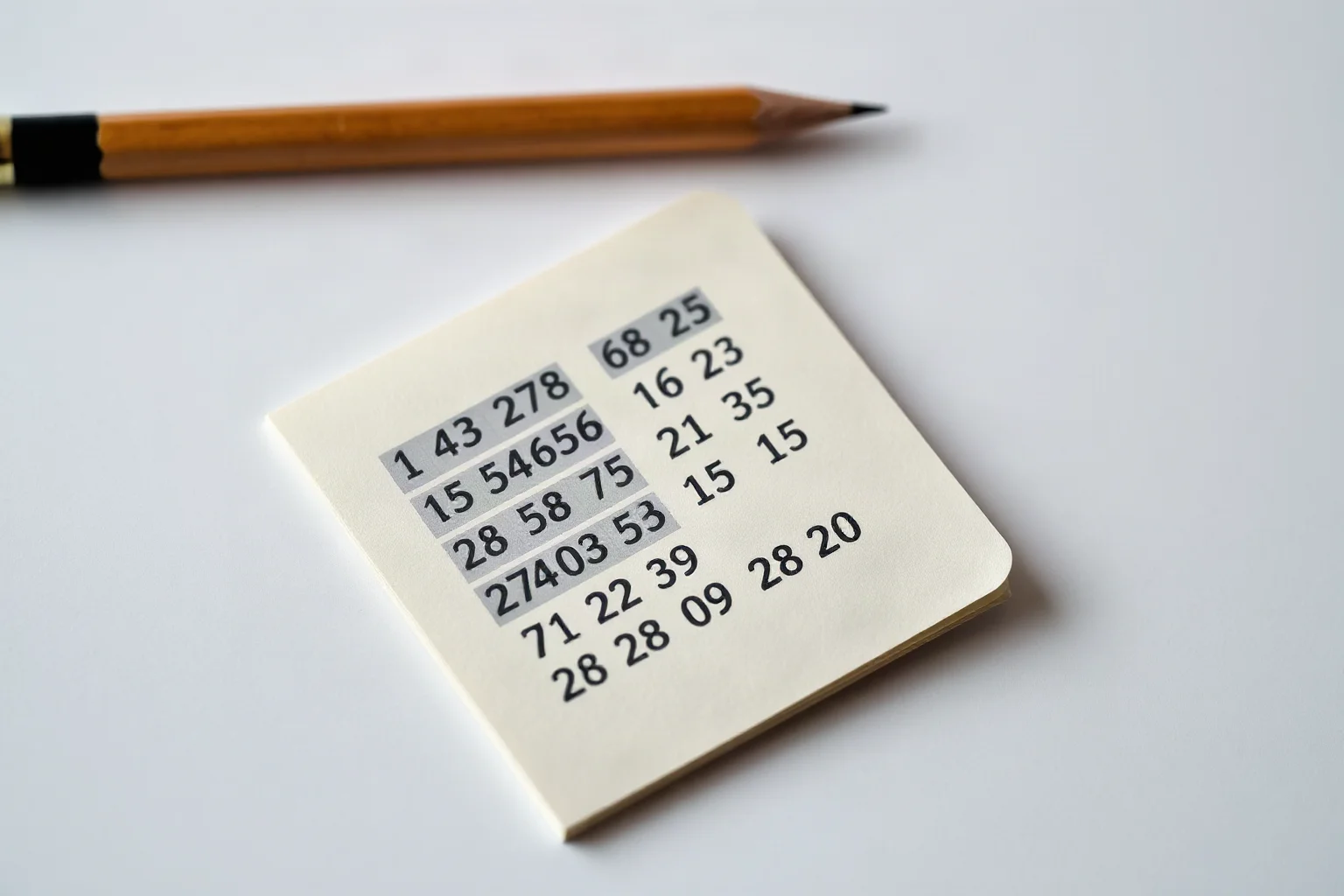
Many cryptographers believe numbers stations pair their broadcasts with a one-time pad, a cipher system using a unique, randomly generated key that is used only once and never reused. When applied correctly, a one-time pad is mathematically unbreakable because there’s no pattern or repetition for codebreakers to exploit.
The catch is that both the sender and the receiver need an identical physical copy of the pad in advance. This is one reason investigators in real espionage cases have occasionally found small pads of random numbers hidden among a suspect’s belongings.
5. They Live on Shortwave and AM Radio Bands
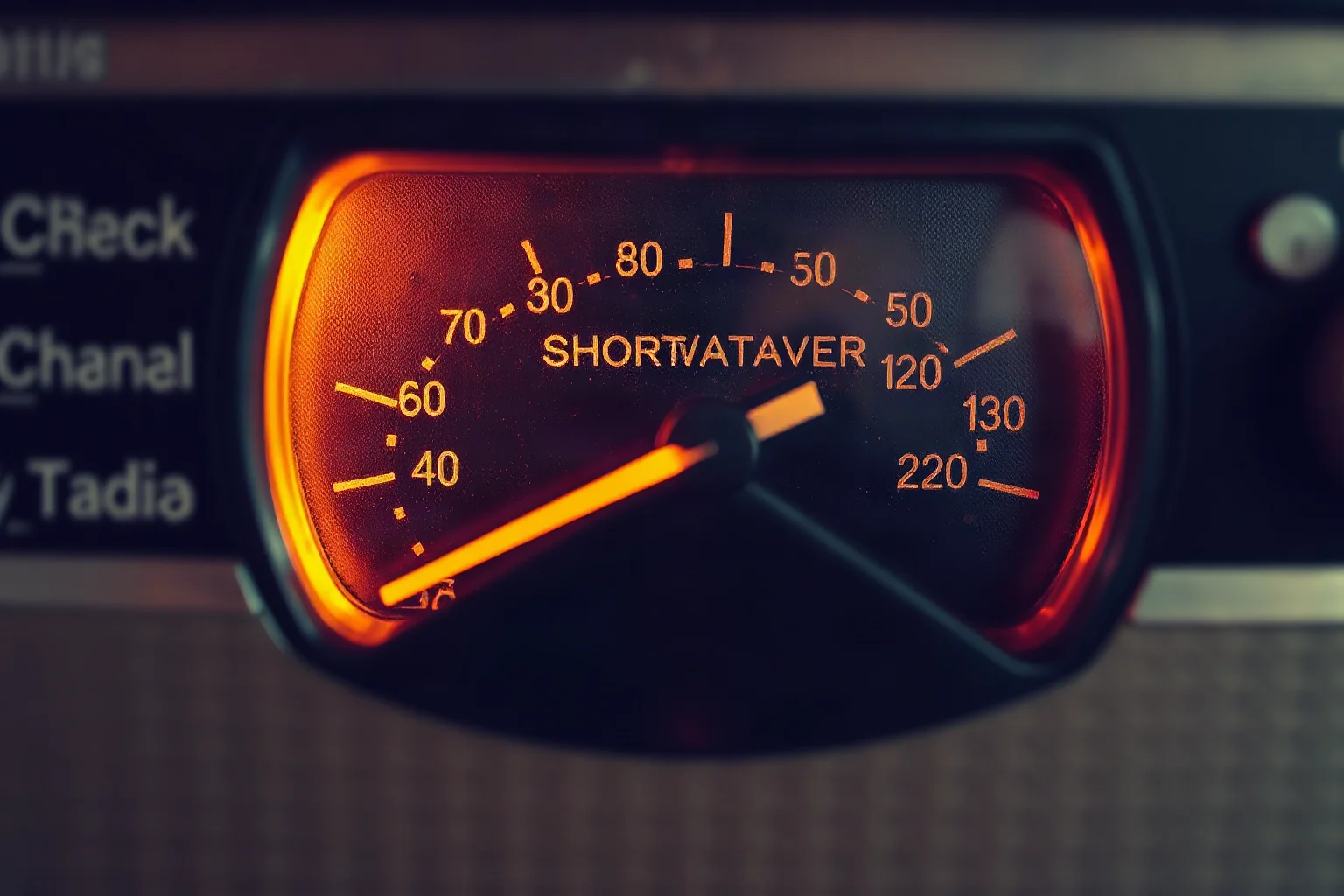
Numbers stations are overwhelmingly a shortwave radio phenomenon rather than a normal AM broadcast band phenomenon, though the two are sometimes confused. Shortwave signals bounce off the ionosphere and can travel across continents, which makes them ideal for reaching an agent anywhere in the world with a portable receiver.
Searches for “numbers station AM radio” usually reflect this mix-up, since shortwave sets and AM radios often share similar tuning dials. Either way, all you technically need is a basic radio capable of picking up the right frequency.
6. The Lincolnshire Poacher Was One of the Most Famous
Named by listeners after the English folk tune it used as an interval signal, the Lincolnshire Poacher was one of the most heavily monitored numbers stations of the late 20th century. Enthusiasts traced its transmissions to Cyprus, and many researchers linked it to British intelligence activity, though this was never officially confirmed by the UK government.
The station reportedly went silent around 2008, sparking years of speculation among hobbyists about whether its operations simply moved elsewhere.
7. UVB-76 (“The Buzzer”) Has Buzzed for Decades
UVB-76 is a Russian shortwave station famous for broadcasting a repetitive buzzing tone almost continuously since it was first logged by Western listeners in the 1970s and 1980s. Occasionally, the buzzing is interrupted by a voice reading Russian words and numbers, which has fueled endless speculation online.
What makes UVB-76 unique is that it’s still monitored live today by a global community of hobbyists who track every change in its pattern. No official explanation for its purpose has ever been published.
8. Swedish Rhapsody Used a Child’s Voice
One of the more unsettling numbers stations, nicknamed Swedish Rhapsody, opened with a delicate music-box melody before a woman’s voice began reading number groups in German. Some recordings also reportedly included a child’s voice, which added to its unnerving reputation among shortwave listeners.
Its origin was never confirmed, though its European target audience and language led researchers to suspect it was connected to Cold War-era intelligence operations in the region.
9. Cuba’s “Atención” Stations Tied to Real Spy Cases
Spanish-language numbers stations, often opening with the repeated word “Atención,” have been directly linked to real espionage convictions in the United States. In the case of convicted spy Ana Montes and in the prosecution of the so-called Cuban Five, U.S. investigators presented evidence involving shortwave numbers broadcasts and one-time pad materials found among the defendants’ possessions.
These cases remain some of the strongest publicly available evidence connecting numbers stations to actual intelligence operations, rather than pure speculation.
10. The Cold War Supercharged Numbers Station Traffic
While some numbers stations may predate World War II in concept, monitoring activity exploded during the Cold War, a tense era that also fueled America’s Red Scare, as both NATO-aligned nations and the Eastern Bloc, home to some of the largest militaries in the world, were suspected of running extensive networks. Shortwave listeners in the 1960s through 1980s logged dozens of distinct stations broadcasting in Russian, German, Spanish, English, and other languages.
The sheer volume of activity during this period is part of why numbers stations became such an enduring symbol of Cold War espionage culture.
11. The Conet Project Preserved Thousands of Recordings
In 1997, a small London-based label called Irdial-Discs released The Conet Project, a four-CD compilation of numbers station recordings gathered by hobbyists over roughly two decades. It remains the single most important public archive of this strange corner of radio history.
Without dedicated shortwave listeners recording these broadcasts on cassette tape long before the internet existed, much of this audio evidence would likely have been lost entirely.
12. No Government Has Ever Officially Claimed One
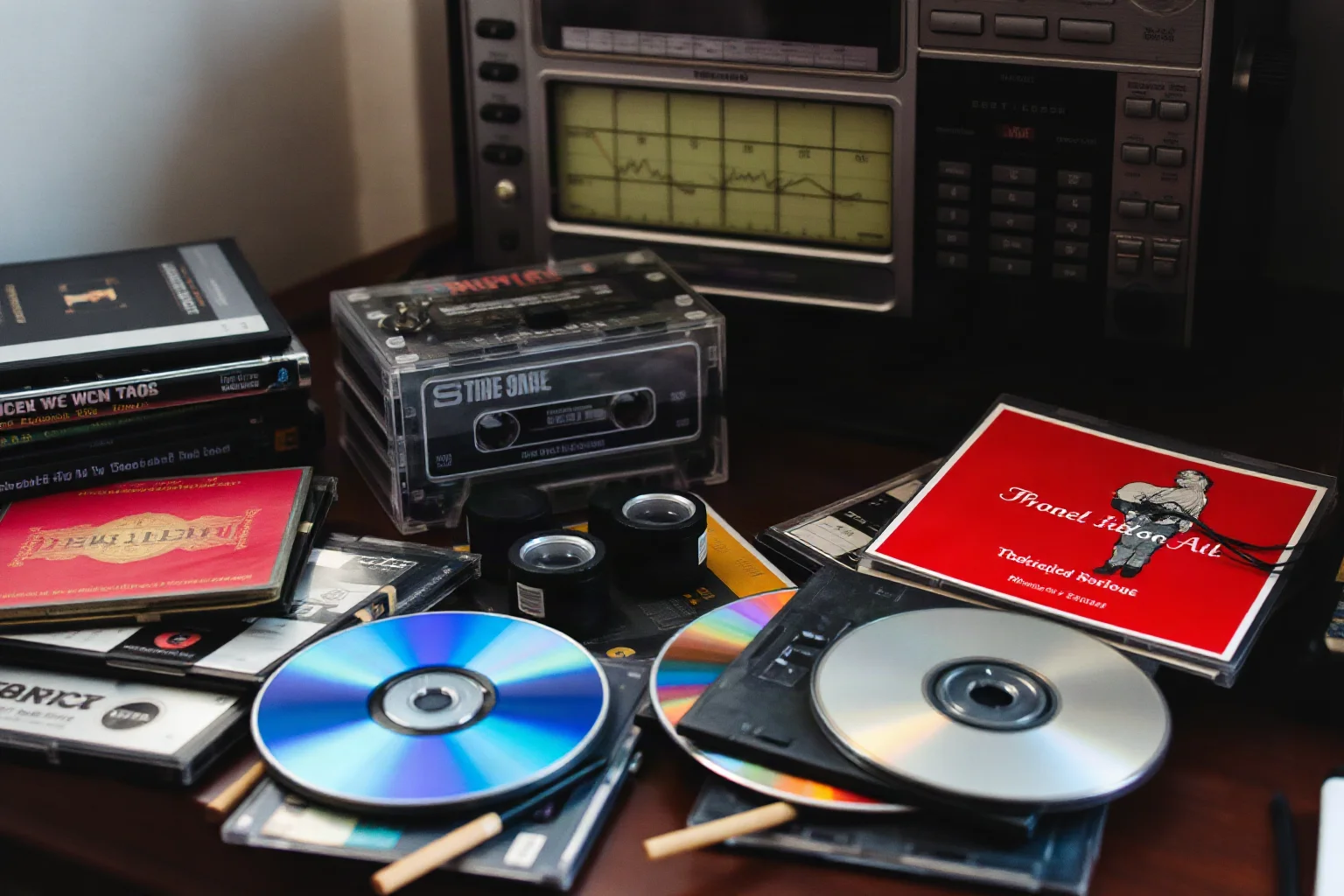
Despite mountains of circumstantial evidence and a few court cases touching on the subject, no government has ever formally acknowledged operating a numbers station. This silence is arguably the whole point, since plausible deniability is baked into the format from the start.
Anyone asking what a numbers station is in an official capacity is likely to get a polite non-answer, which has only deepened public fascination with the topic.
13. Interval Signals and Music Act as “Station IDs”
Borrowing a trick from ordinary international broadcasters like the BBC World Service, many numbers stations use a distinct musical loop or tone pattern as an interval signal. This isn’t just atmospheric spookiness; it serves a practical function, helping an operative confirm they’ve tuned to the correct frequency before the real message begins.
Hobbyists have used these unique interval signals to nickname and catalog individual stations for decades, since no official names were ever provided.
14. Some Stations Used Children’s or Synthesized Voices
A number of stations have used voices that sound distinctly like children reciting the number groups, which understandably unsettles first-time listeners. Later transmissions, especially from the 1990s onward, increasingly relied on computer-generated speech instead of live human readers.
The shift to synthesized voices likely made broadcasts easier and cheaper to produce, but it did little to make them less eerie.
15. Ana Montes and the Cuban Five Show Numbers Stations in Action

It’s worth returning to these cases because they offer some of the only courtroom-verified links between numbers station broadcasts and actual espionage tradecraft. FBI investigators described how Cuban intelligence assets received instructions via shortwave broadcasts, which they then decoded using one-time pads hidden in everyday objects.
These prosecutions didn’t reveal the content of specific decoded messages to the public, but they did confirm that this method of communication was genuinely used by at least one intelligence service.
16. They Operate in a Legal Gray Zone
Under International Telecommunication Union regulations, broadcasters are generally required to identify themselves and operate within licensed parameters. Numbers stations violate this on a technical level constantly, broadcasting unidentified content on frequencies without clear registration.
In practice, nothing happens, because tracking down and holding accountable whoever is actually running an unmarked shortwave transmitter is extraordinarily difficult, especially across international borders.
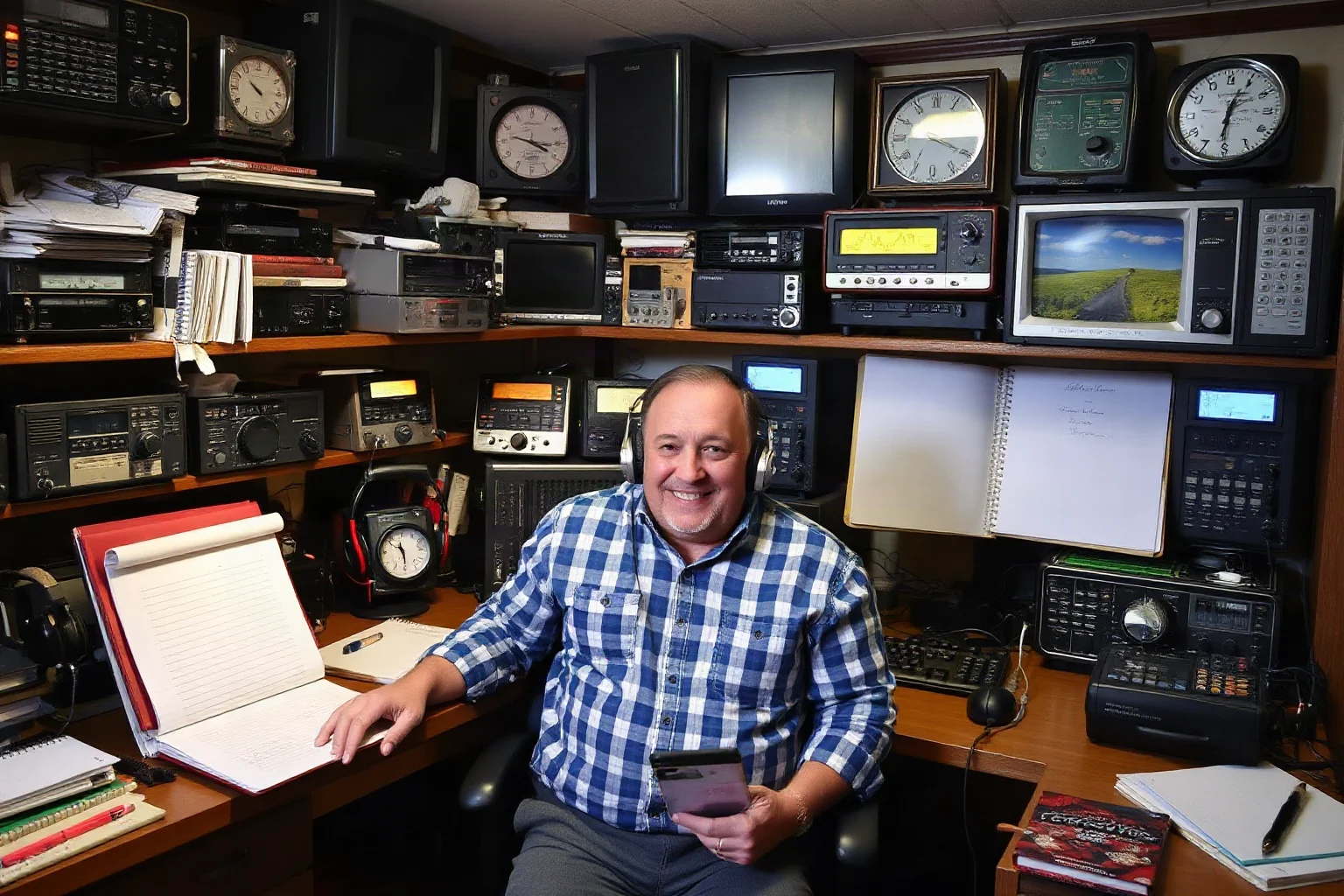
17. A Dedicated Hobbyist Community Tracks Them Worldwide
Groups like ENIGMA 2000 and websites such as priyom.org have spent years cataloging what enthusiasts call “numbers channels,” logging frequencies, schedules, and voice characteristics of stations around the globe. This community effectively created the informal naming system used throughout this article, since none of these stations ever named themselves.
Modern software-defined radios have made this hobby far more accessible than it was in the cassette-tape era, allowing anyone with an internet connection to listen in.
18. Numbers Station Decoded Messages Are Extremely Rare
This is one of the most searched questions about the topic, and the honest answer is disappointing to conspiracy fans: verified numbers station decoded messages are almost nonexistent in the public record. If a station truly uses a proper one-time pad, the encrypted content is designed to be mathematically unbreakable without the matching physical key.
The rare exceptions come from law enforcement cases, like those involving Cuban intelligence assets, where investigators physically recovered a suspect’s one-time pad and could then work backward to decode specific past messages. Outside of those narrow legal contexts, no credible, publicly verified transcript of a numbers station’s actual content has ever been widely confirmed.
19. They’ve Inspired Music, TV, and Film
Numbers stations have left a real mark on pop culture. The band Wilco named their acclaimed 2002 album Yankee Hotel Foxtrot after a phrase heard in a numbers station recording, and the electronic duo Boards of Canada has sampled similar shortwave audio in their work.
The concept also inspired the 2013 thriller The Numbers Station, along with numerous references in television shows exploring espionage themes. The format’s inherent creepiness translates easily to fiction, even when the fictional plots take considerable liberties with the reality.
20. Some Stations Are Still Broadcasting Today
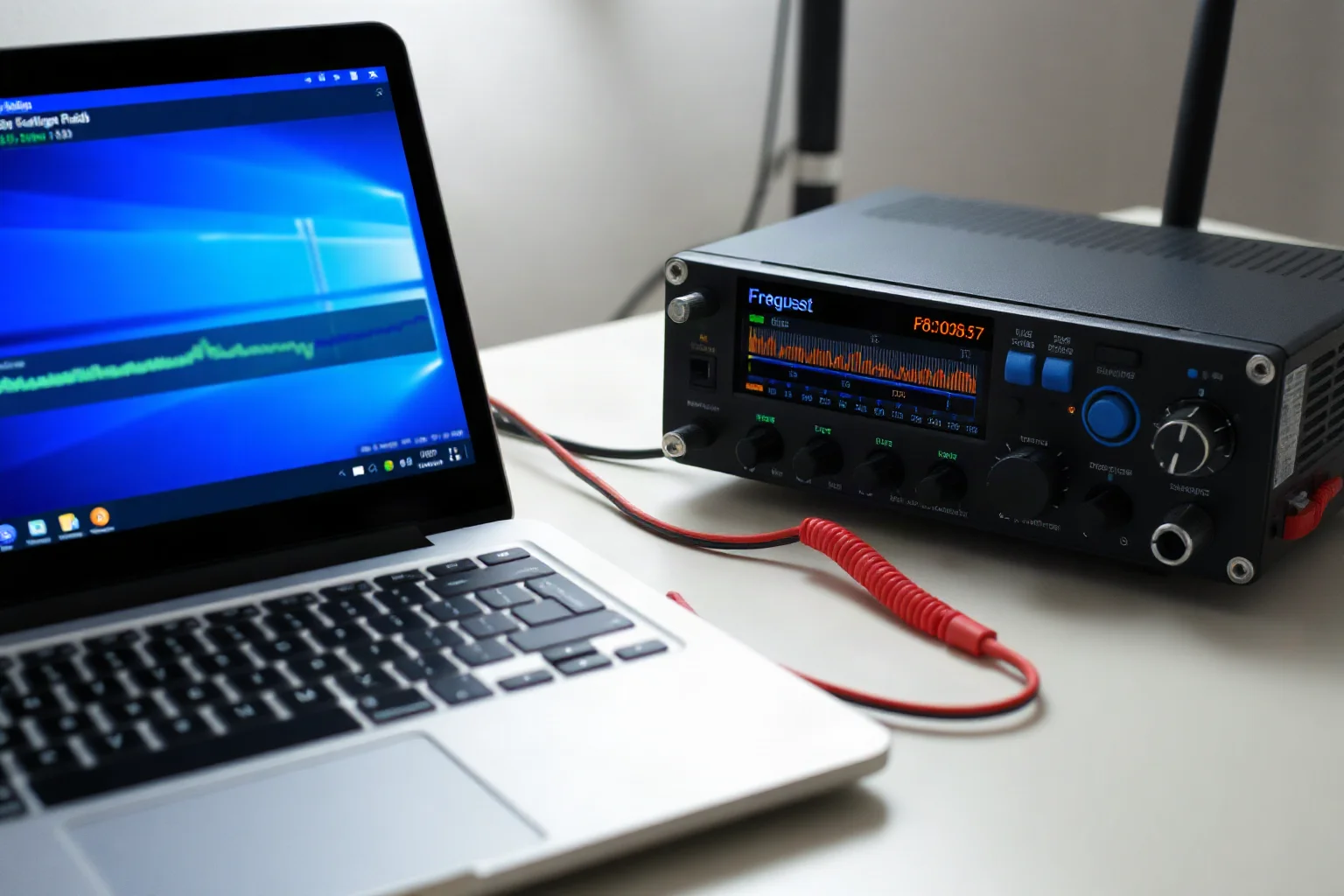
Despite the rise of encrypted internet communication, numbers stations have not disappeared. UVB-76 continues to buzz, and hobbyists using software-defined radios regularly log new, unidentified stations that fit the classic pattern.
This persistence suggests that whoever operates these broadcasts still sees value in a method that predates the smartphone era by decades.
21. Digital Spy Tech Hasn’t Fully Replaced Them
It might seem strange that anyone would still use shortwave radio in an age of encrypted messaging apps, but the format has genuine tactical advantages. Listening to a shortwave broadcast leaves no digital footprint, requires no internet connection, and can’t easily be traced back to a specific receiver.
For an operative in a hostile or remote environment, a cheap radio and a printed one-time pad may still be safer than a smartphone that can be seized, hacked, or geolocated.
22. Myths About Aliens and Ghosts Don’t Hold Up
Given their unsettling atmosphere, numbers stations have attracted their fair share of far-fetched theories, from alien communication to haunted frequencies. None of these ideas are supported by any credible evidence, and they tend to fall apart under basic scrutiny of how shortwave radio actually works.
The far more mundane, well-supported explanation, that these are Cold War-style intelligence tools still used in limited form today, remains the only theory backed by court records, intelligence history, and decades of consistent technical observation.
The Mystery Continues
Numbers stations sit in a strange and compelling gap between confirmed history and open mystery. We know shortwave broadcasts of this type exist, we know real espionage cases have referenced similar methods, and we know dedicated listeners have documented them for generations.
What we still don’t know, and may never know, is the full scope of who is behind every single broadcast and exactly what most of those coded messages actually said. That unresolved tension is exactly why numbers stations remain one of the most enduringly creepy footnotes in modern history.
Frequently Asked Questions
What is a numbers station?
A numbers station is an unidentified radio broadcast, usually on shortwave, that transmits spoken sequences of numbers or letters in a flat, repetitive voice. Most researchers believe they are used to send coded instructions to intelligence operatives, though no government has ever officially confirmed this.
Have any numbers station decoded messages ever been made public?
Verified numbers station decoded messages are extremely rare in the public record. The few known exceptions came from espionage prosecutions, such as cases involving Cuban intelligence assets, where investigators physically recovered a one-time pad and could decode specific past transmissions.
Can you listen to a numbers station on AM radio?
Numbers stations are almost always found on shortwave frequencies rather than the standard AM broadcast band, though the two dials can look similar on older radios. A shortwave receiver or software-defined radio setup is the most reliable way to actually pick one up.
Are numbers stations illegal?
Broadcasting unidentified content without proper registration technically violates international radio regulations set by the ITU. In practice, enforcement is almost impossible because operators and their sponsoring organizations are rarely, if ever, publicly identified.
Are numbers stations still active today?
Yes, several numbers stations are still monitored today, including the Russian station nicknamed UVB-76, or 'The Buzzer.' Hobbyists using modern software-defined radios continue to log new, unidentified stations that follow the classic format.
Who actually operates numbers stations?
No government or organization has ever officially claimed responsibility for a specific numbers station. Circumstantial evidence from real espionage cases, like those involving Cuban intelligence, points to state intelligence agencies, but most stations' operators remain unconfirmed.

Alex Warren
Related Articles