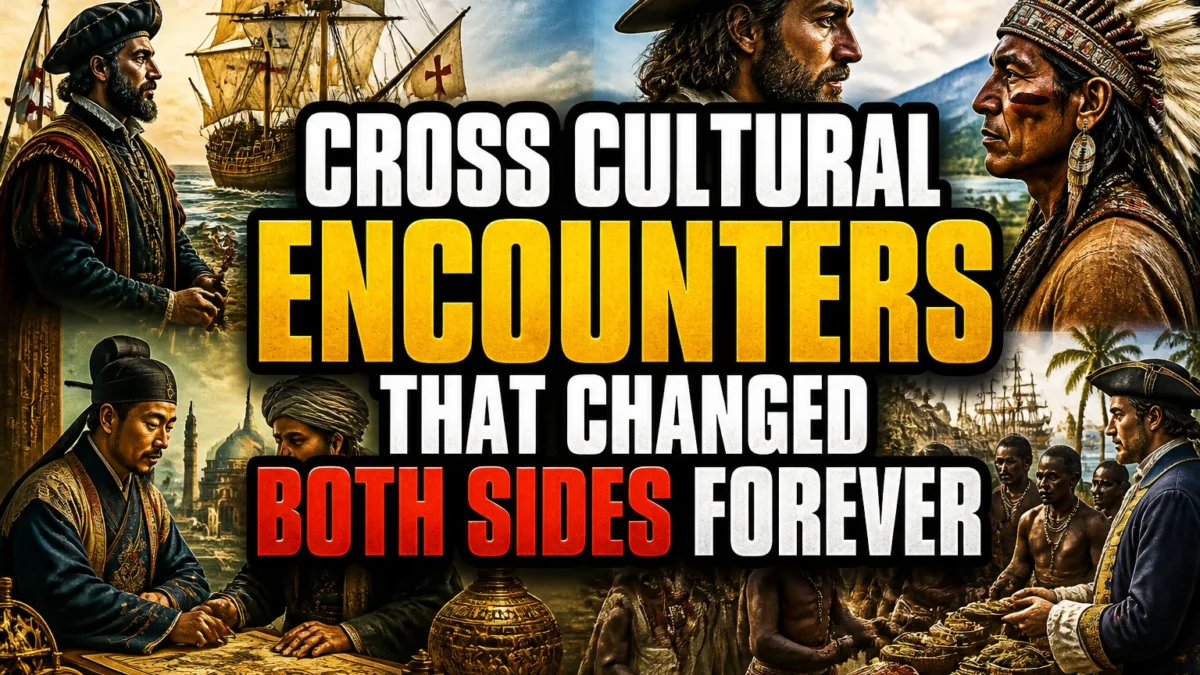
History textbooks often make the past look like a line of separate civilizations rising and falling on their own. In reality, many of the biggest turning points happened when different societies met, traded, fought, and borrowed from one another. Those meetings were rarely simple victories or defeats; they usually changed both sides in lasting ways.
Historians often call this approach traditions & encounters: a global perspective on the past. It shifts attention away from isolated nations and toward contact zones where languages, foods, faiths, and technologies actually mixed. This post explores twenty clear cases, from ancient routes to modern occupations.
TL;DR: Cross-cultural encounters rarely have a single winner or loser—they transform both sides through the exchange of goods, ideas, technologies, and people.
What These Encounters Share
A cross-cultural encounter is any sustained contact between societies with different languages, beliefs, or institutions. It can happen through trade, migration, conquest, or diplomacy. The meeting matters when it leaves evidence of borrowing, adaptation, or resistance on both sides.
Borrowing is rarely passive. People select, modify, and sometimes reject foreign ideas to fit local needs. That is why the same Buddhism looks different in Sri Lanka, Tibet, and Japan, and why Japanese baseball and American baseball are not identical.
Not all encounters are equal. Some were voluntary and peaceful; others were violent or forced. This list includes both kinds, because an honest global history has to.
Another pattern is that ideas often return in altered form. A technology that leaves one region as a practical tool may come back centuries later as something cultural or artistic. This is why many cultural exchange examples feel familiar and foreign at the same time.
Ancient and Classical Encounters
The earliest world-changing encounters often followed armies, trade caravans, and missionary routes. They show that even conquests could become two-way cultural exchanges.
1. Alexander’s Campaigns and the Hellenistic Mix
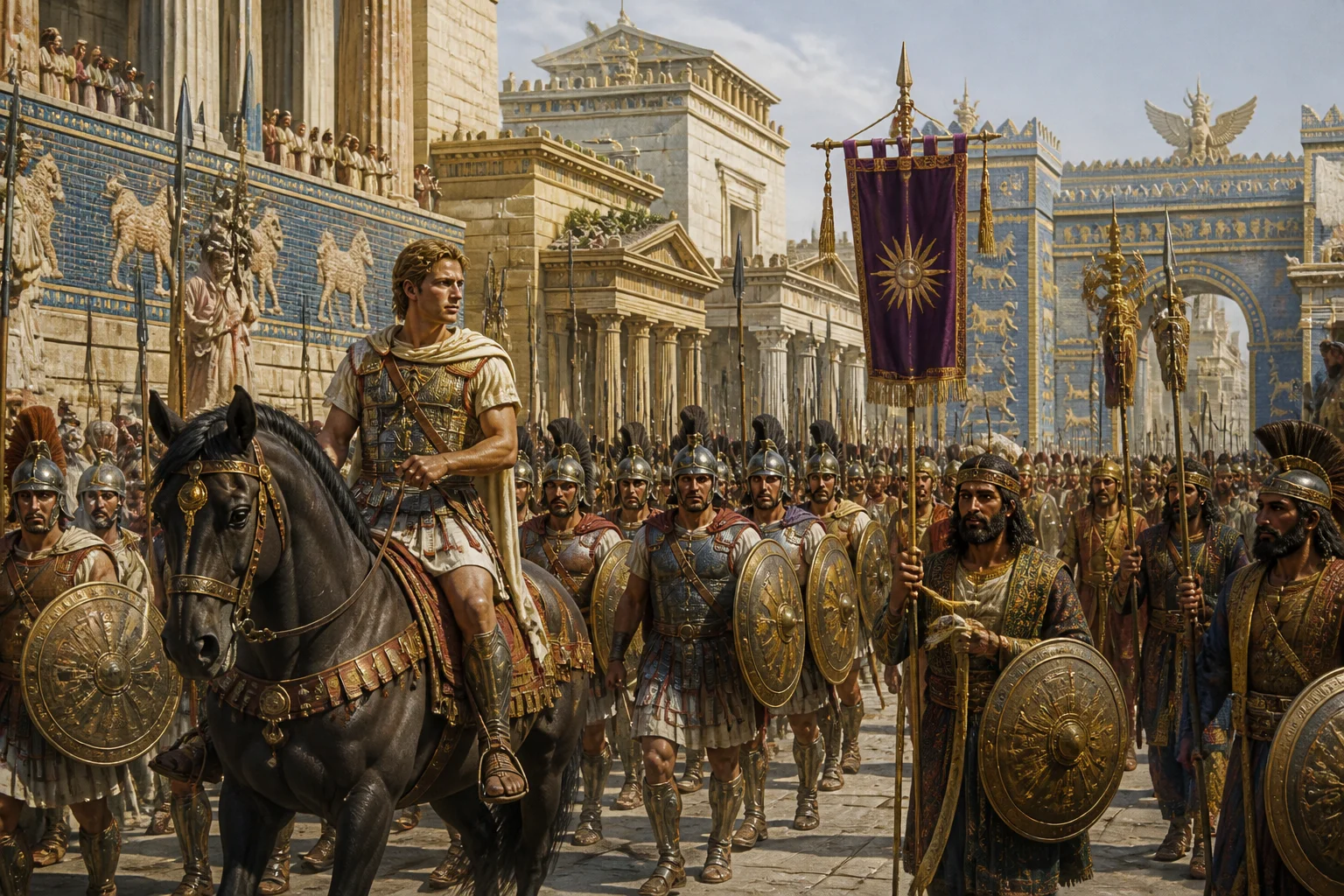
Alexander of Macedon marched his army from Greece through Egypt, Persia, and into the Indus Valley in the 330s and 320s BCE. He founded new cities, promoted marriages between his soldiers and local women at Susa, and left Greek-speaking officials in charge of distant regions. The result was not a pure Greek world but a dense network of cultural encounters.
Greek language, theater, and city planning spread across the eastern Mediterranean and western Asia. At the same time, Persian court ritual, Egyptian religion, and Indian ideas flowed back into Greek culture. The later Greco-Buddhist art of Gandhara is one of the clearest examples of cultural changes produced by this meeting.
2. Rome Absorbs the Greek East
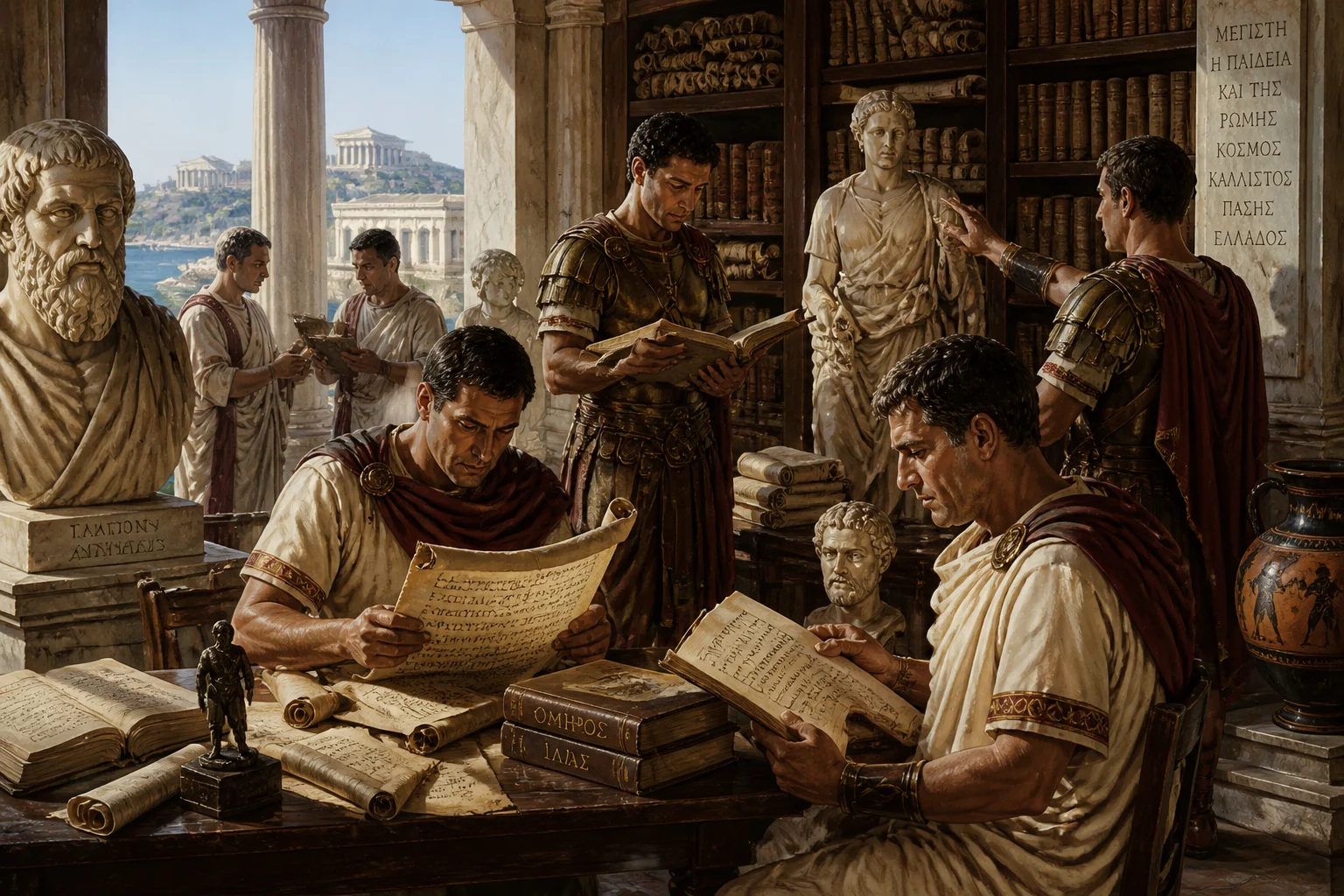
Rome’s conquest of the Greek world in the second and first centuries BCE looked like a one-way takeover. In practice, elite Romans learned Greek, collected Greek art, and modeled their literature on Greek forms. The poet Horace later wrote that captive Greece took her captor captive, a neat summary of an unequal but real exchange.
Greek cities under Roman rule gained roads, aqueducts, and legal order. In return, eastern cults such as Isis and Mithras spread through the empire, and Greek philosophy reshaped Roman education. This remains a classic cultural interaction example because the conquerors and the conquered both borrowed heavily from each other.
3. The Silk Roads Link Han China, Persia, and Rome
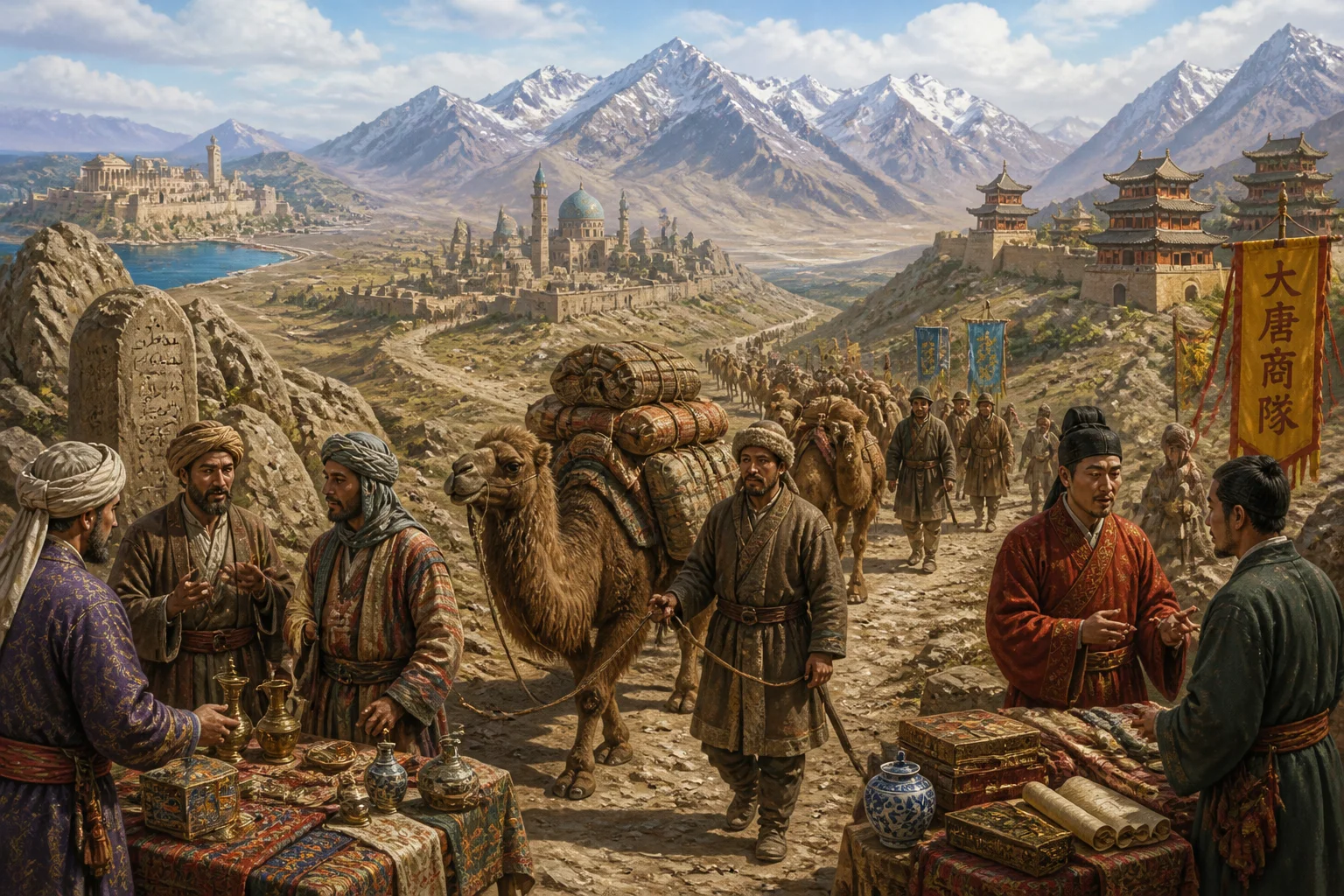
The Silk Roads were not a single highway but a shifting web of caravan routes connecting Chang’an to the Mediterranean. Silk, paper, glassware, horses, and spices moved along these routes for centuries. Just as importantly, religious ideas, artistic styles, and technologies traveled with the merchants.
Buddhism spread from India into China along these roads, while Chinese papermaking eventually reached the Islamic world and later Europe. China imported horses, grapes, and new musical instruments from Central Asia and Persia. These cultural exchange examples show that long-distance trade was never only about goods.
4. The Indian Ocean Trading World
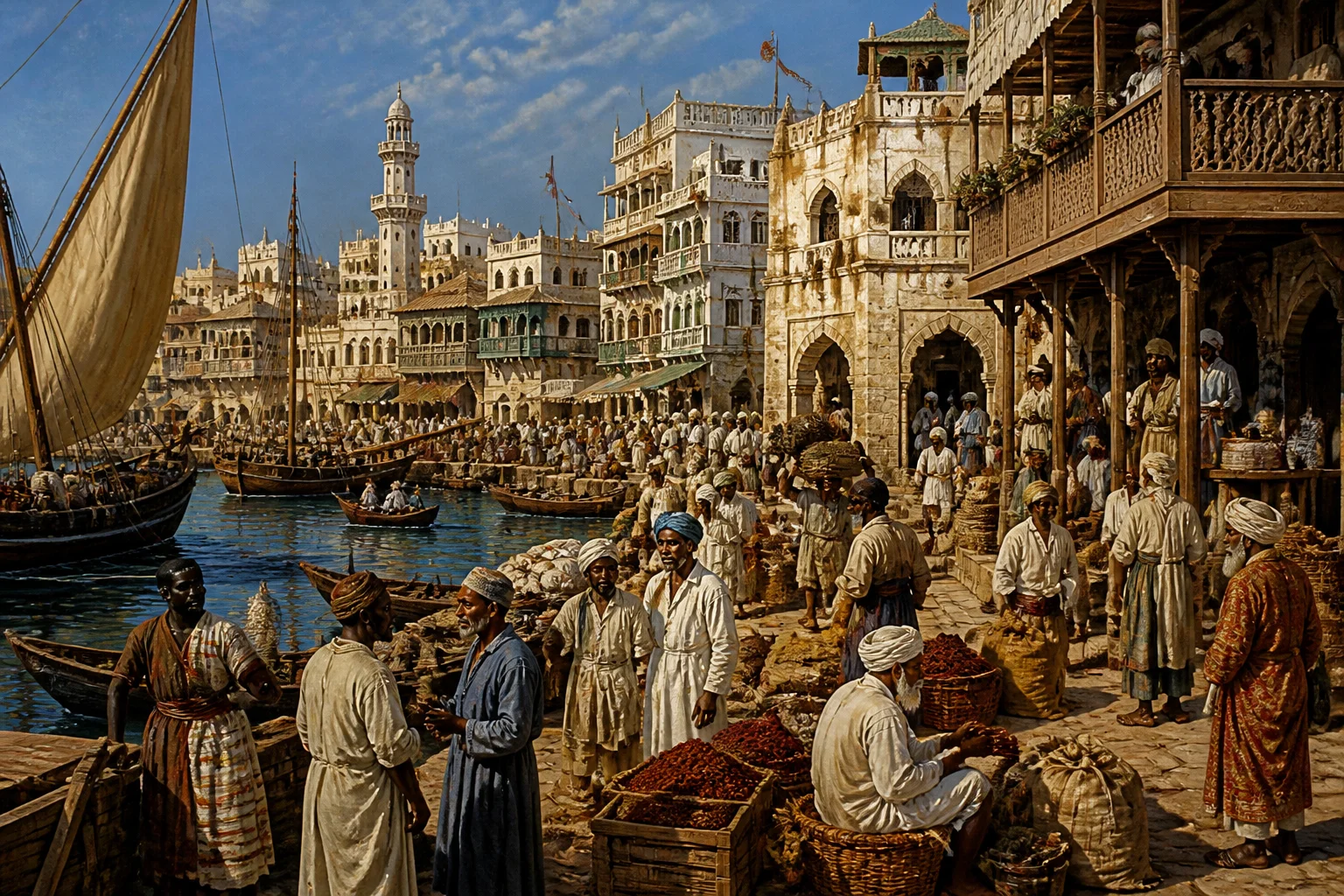
Monsoon winds allowed sailors from East Africa, Arabia, India, and Southeast Asia to cross the Indian Ocean with remarkable regularity. By the medieval period, this maritime network linked Swahili city-states, Persian Gulf ports, Indian merchants, and Indonesian sultanates. It created a shared trading culture without requiring a single empire.
Islam spread peacefully along these routes to coastal East Africa and island Southeast Asia. Coastal cities such as Kilwa blended African, Arab, and Persian architecture, language, and customs. The Indian Ocean world is one of the best cases in traditions and encounters: a brief global history because it shows how religious and commercial life moved together.
5. Buddhism Travels from India to East Asia
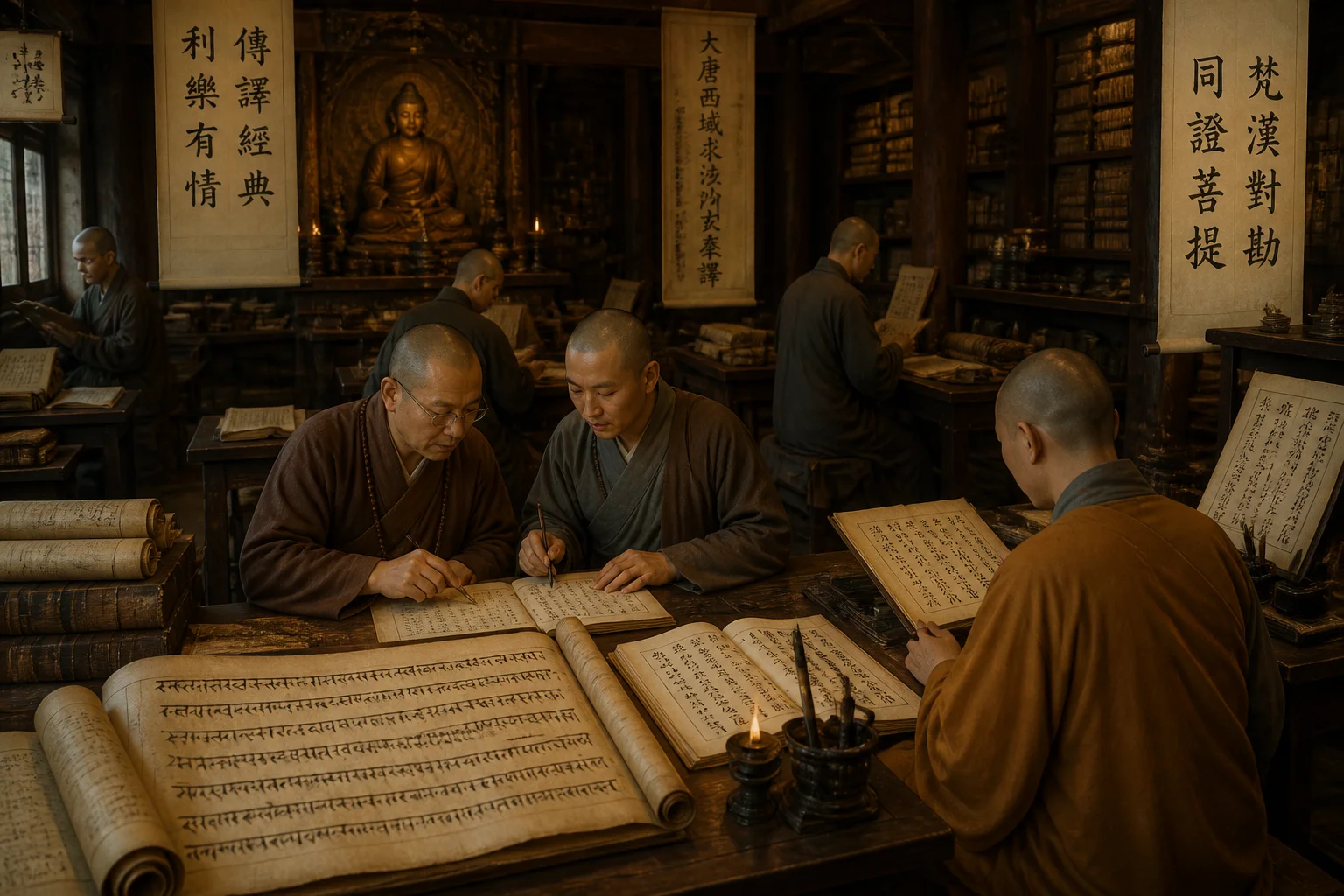
Buddhism began in India but became a world religion through centuries of slow transmission to China, Korea, and Japan. Missionaries, merchants, and pilgrims carried texts along Silk Road and Indian Ocean routes. Chinese monks such as Xuanzang traveled to India in the seventh century to study and collect scriptures.
Chinese translators preserved many Buddhist texts that were later lost in their original Sanskrit versions. As Buddhism adapted to East Asia, it produced new schools such as Chan, known in Japan as Zen. This is a powerful example of cultural change on both sides: Indian ideas survived and transformed, while East Asian societies gained new philosophy, art, and institutions.
Conquests and Cultures: An International History
Many decisive cultural encounters grew out of conquest, migration, and empire-building. Yet the conquerors seldom remained unchanged, as these medieval and early modern cases show.
6. The Islamic Conquests and the Abbasid Translation Movement
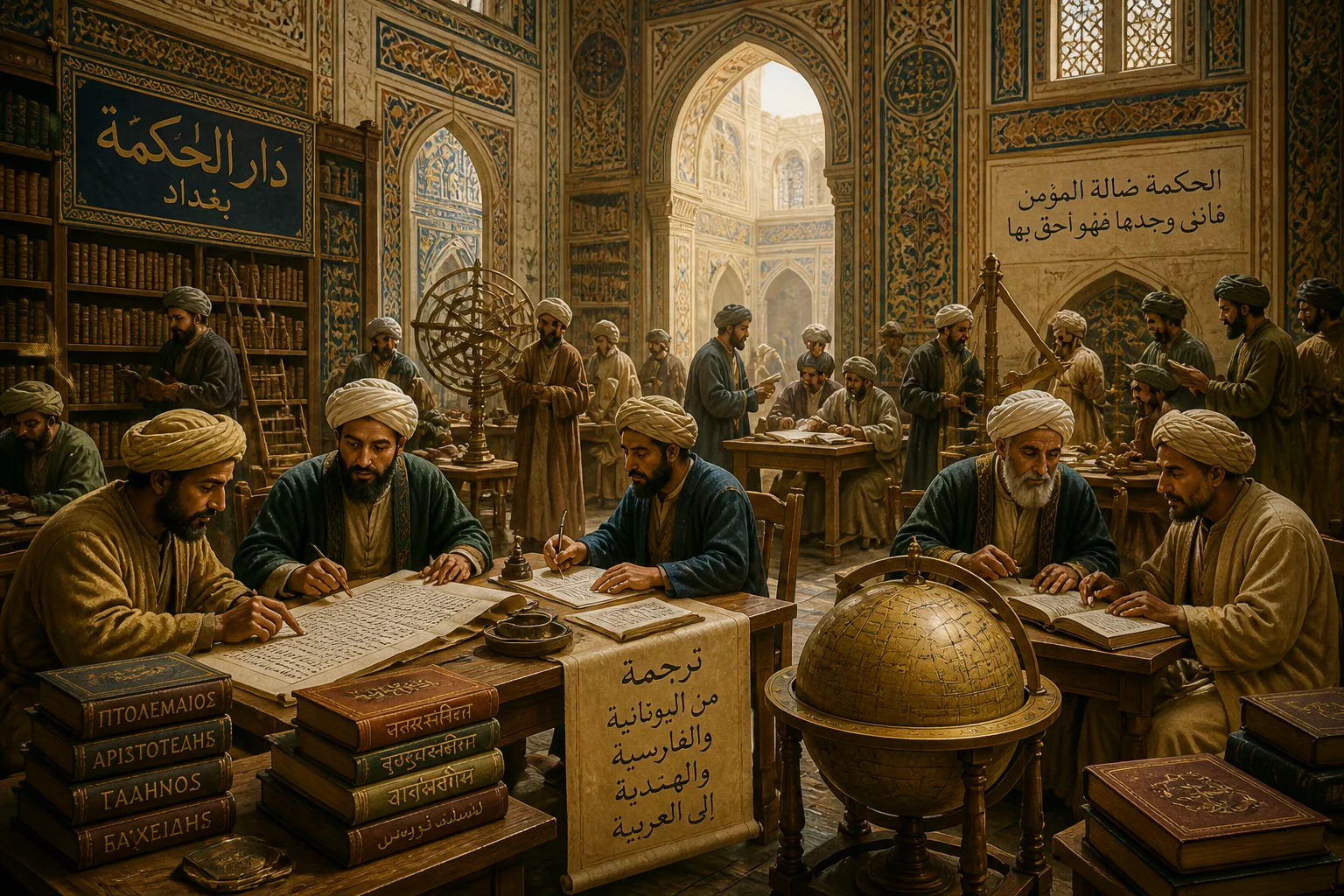
Arab armies conquered Byzantine and Sasanian territories in the seventh and eighth centuries, creating a vast Islamic caliphate. Rather than simply imposing one culture, the new rulers adopted Persian administrative methods and drew on Greek, Persian, and Indian learning. This is a central theme in any study of conquests and cultures: an international history.
Under the Abbasid caliphs, scholars in Baghdad translated Greek philosophy, Persian literature, and Indian mathematics into Arabic. Chinese papermaking helped make books cheaper and more common. The encounter transformed both sides: conquered populations gradually became Arabic-speaking and Muslim, while Islamic civilization became a global storehouse of knowledge.
7. The Crusades and the Medieval Mediterranean
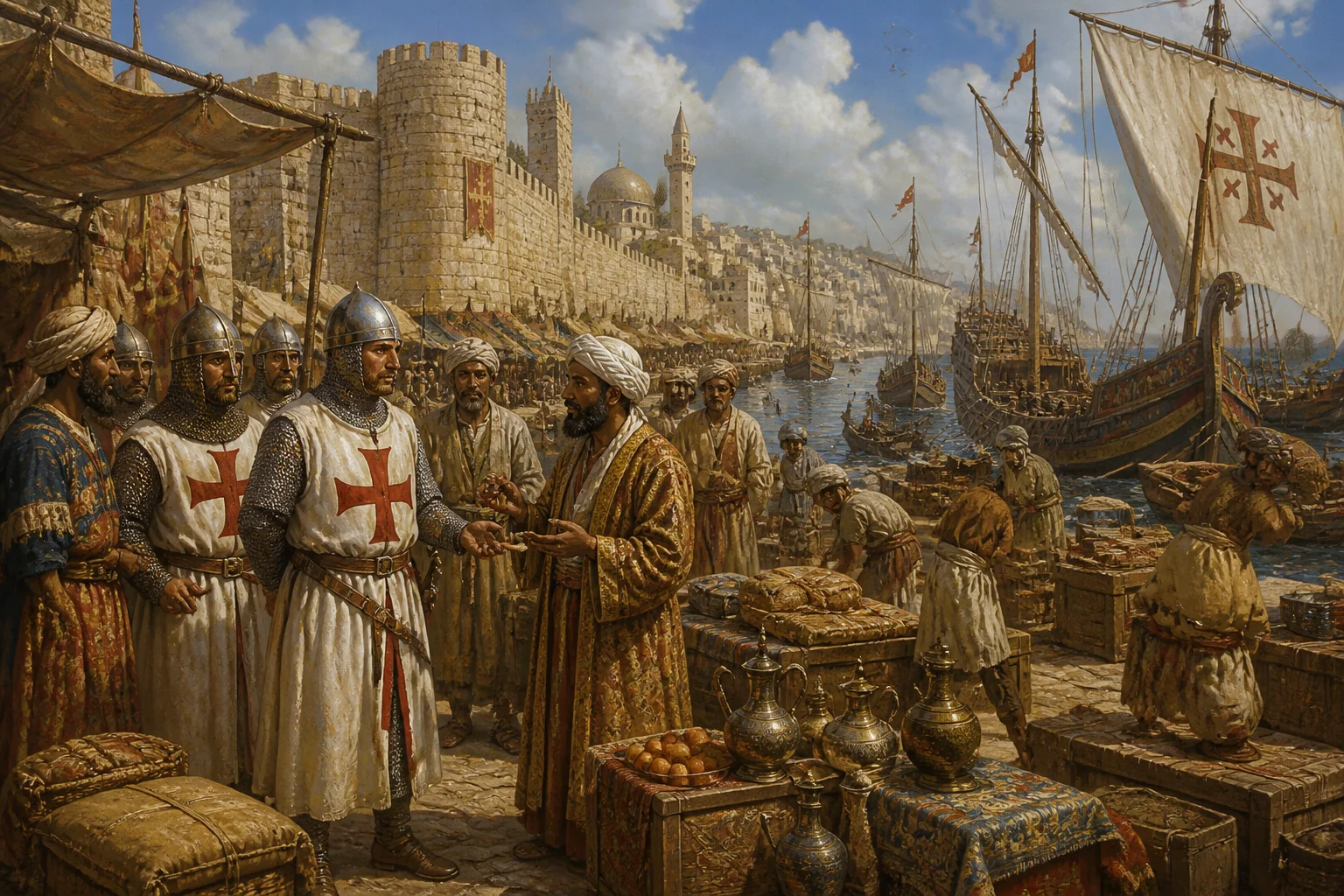
The Crusades brought Latin Christian armies into the Levant from 1096 onward, establishing small states in a mostly Muslim and Byzantine region. They were violent campaigns, but they also opened new channels for trade and knowledge. Italian cities such as Venice and Genoa grew rich moving goods between Europe and the eastern Mediterranean.
Europe gained access to Islamic medicine, mathematics, sugar, and luxury textiles, while the Islamic world faced renewed military pressure and new Italian commercial networks. Both sides also hardened stereotypes that still shape political language today. The Crusades show that cultural encounters can produce exchange and conflict at the same time.
8. The Mongol Empire and the Pax Mongolica
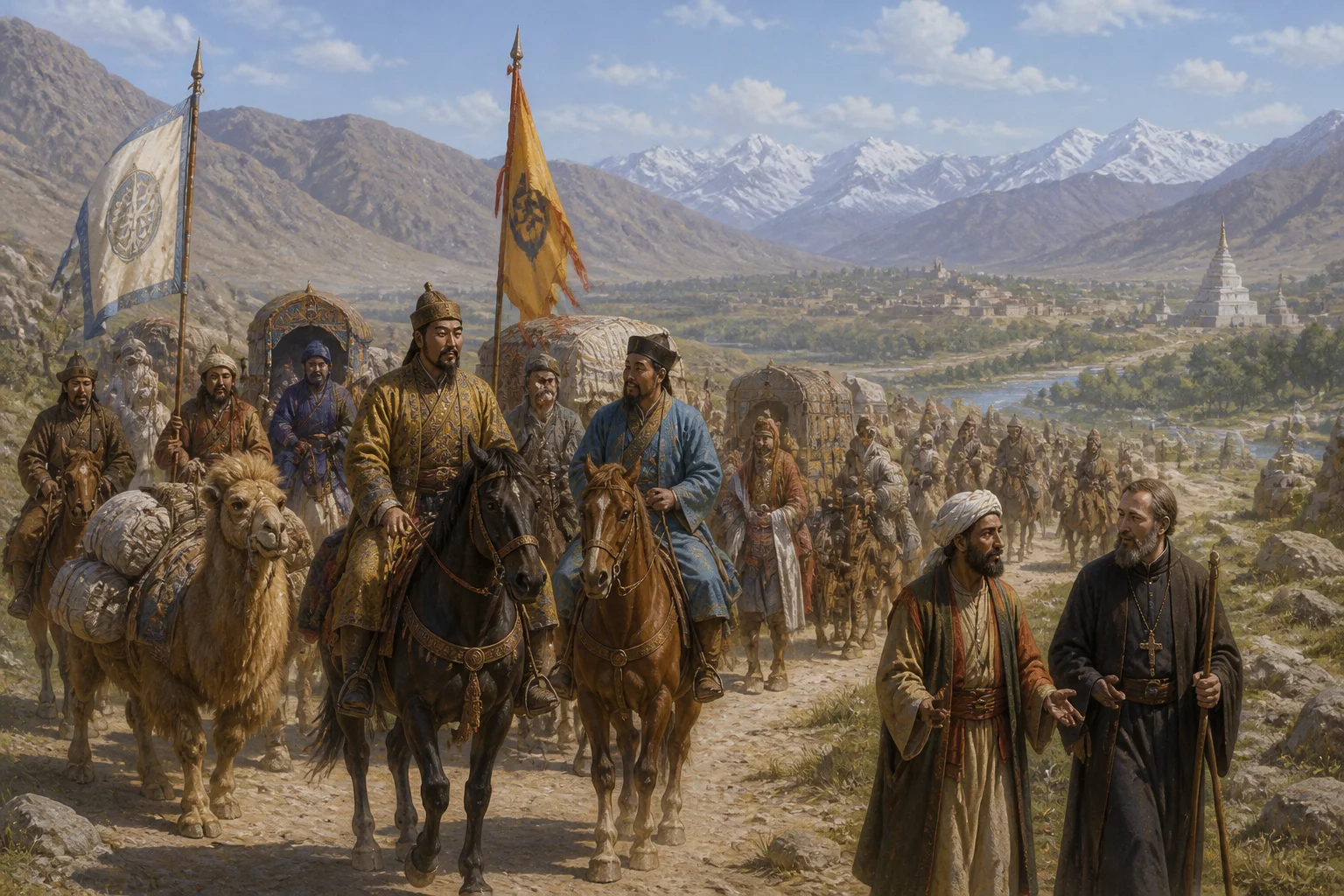
The Mongol conquests of the thirteenth century built the largest contiguous land empire in history. After the initial destruction, the Mongol peace, or Pax Mongolica, made overland travel across Eurasia safer for merchants, diplomats, and missionaries. People and ideas moved from China to Persia to Europe with unusual speed.
Mongol rulers adopted local religions and administrative practices, becoming Buddhist, Muslim, or Christian in different regions. They also transmitted technologies such as gunpowder and paper, and possibly the spread of plague that reached Europe in 1347. The Mongol case illustrates how conquests and cultures can reshape an entire hemisphere.
9. Al-Andalus and the Toledo Translation School
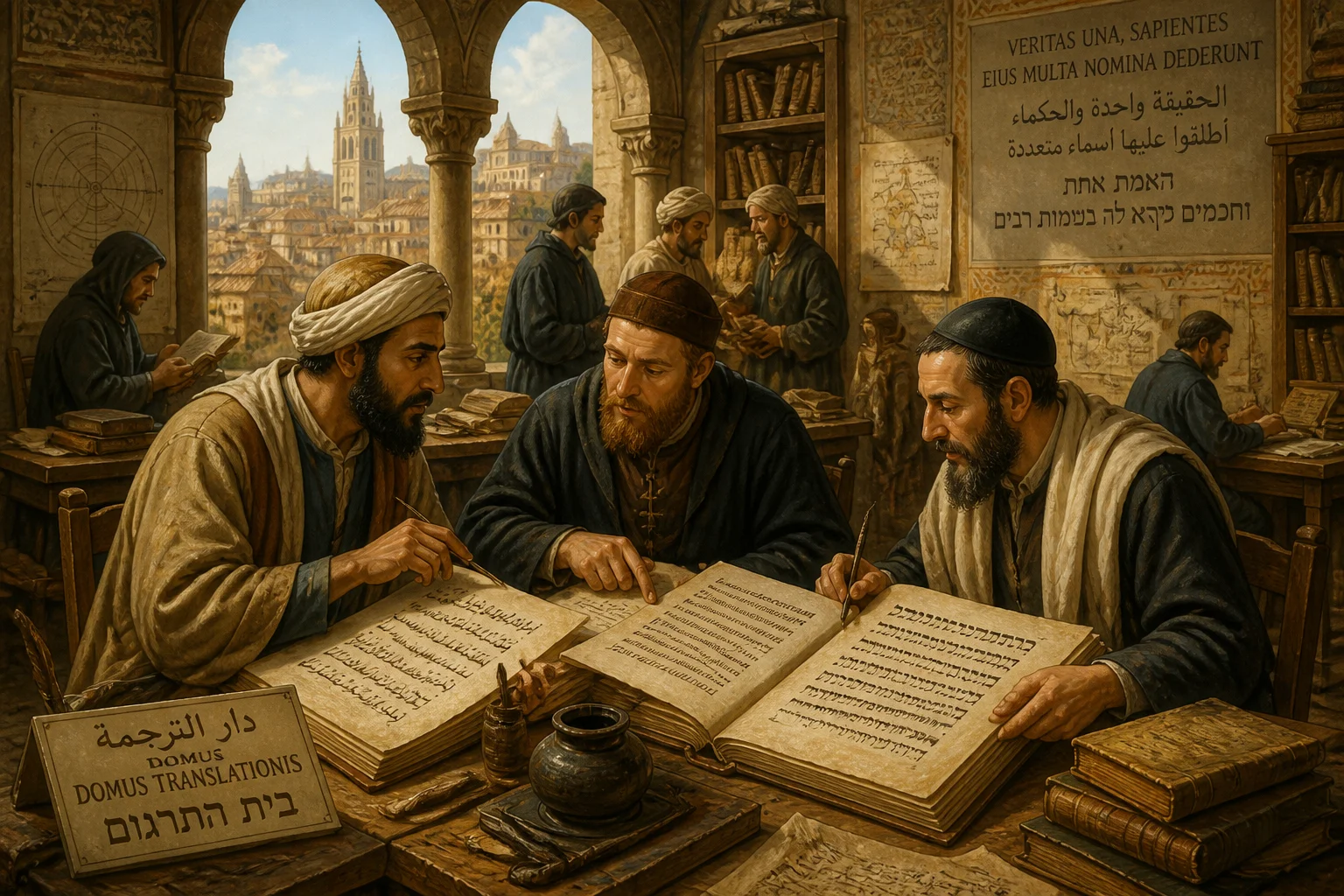
Muslim-ruled Iberia, known as al-Andalus, was a place where Muslim, Christian, and Jewish communities lived in close contact for centuries. Cities such as Córdoba became major centers of learning, preserving and expanding Greek, Arabic, and Hebrew scholarship. The relationship was not always peaceful, but it produced extraordinary cultural output.
After Christian rulers took Toledo in 1085, translators turned Arabic versions of Greek philosophy and science into Latin. These texts helped fuel the intellectual revival of medieval Europe. Al-Andalus remains one of the most studied cultural encounter zones because it changed both European and Mediterranean intellectual life.
10. The Columbian Exchange Transforms Two Hemispheres
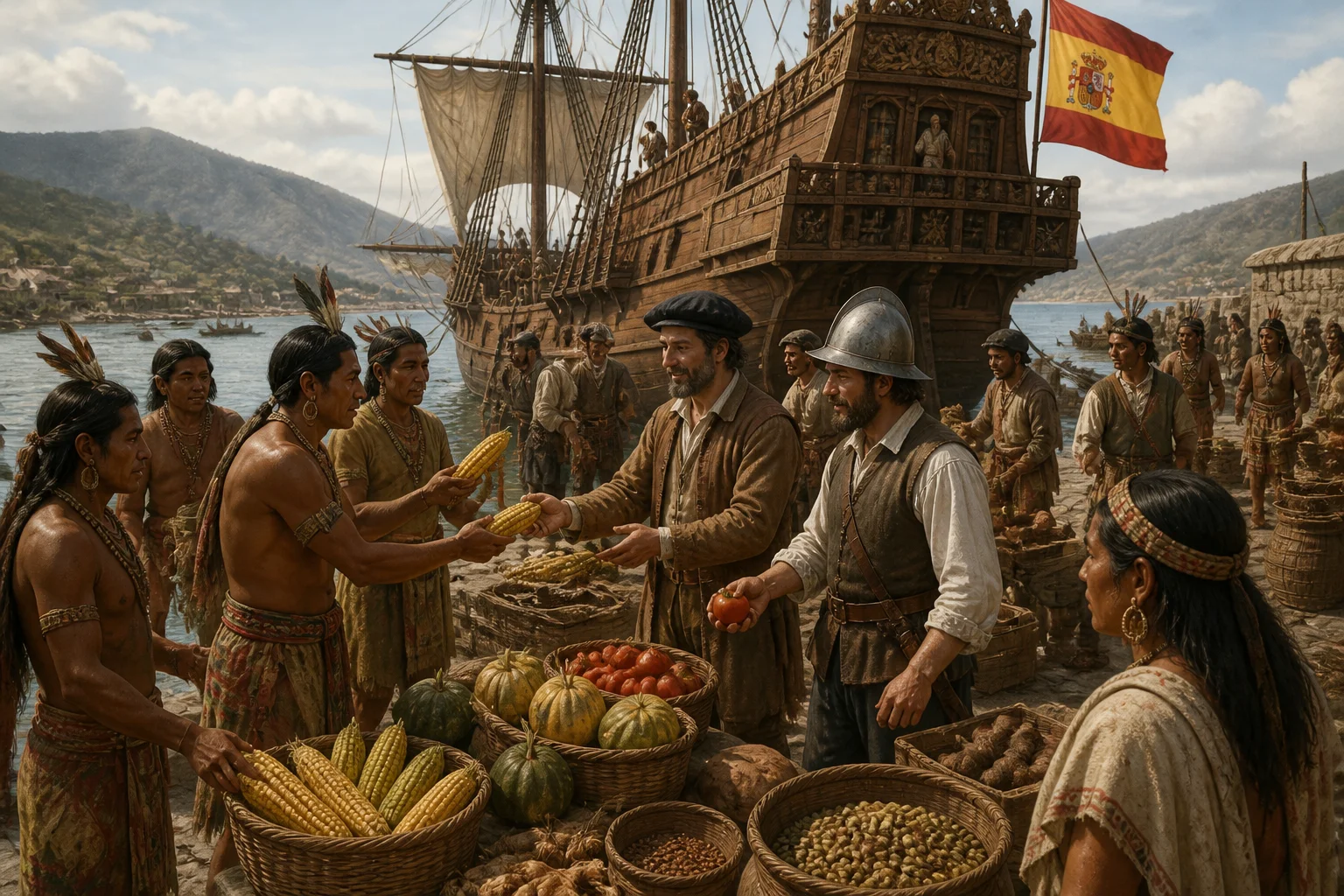
The voyages of Columbus in 1492 connected the Americas with Eurasia and Africa on a permanent basis. The resulting Columbian Exchange transferred plants, animals, germs, and people across the Atlantic in both directions. It is one of the greatest examples of cultural changes in world history.
Maize, potatoes, tomatoes, and cacao traveled to Europe, Asia, and Africa, reshaping diets and populations. Wheat, horses, cattle, and devastating diseases arrived in the Americas, where epidemic disease caused catastrophic population decline. This was not an equal exchange, but its biological and cultural consequences changed both sides forever.
11. The Ottoman Capture of Constantinople
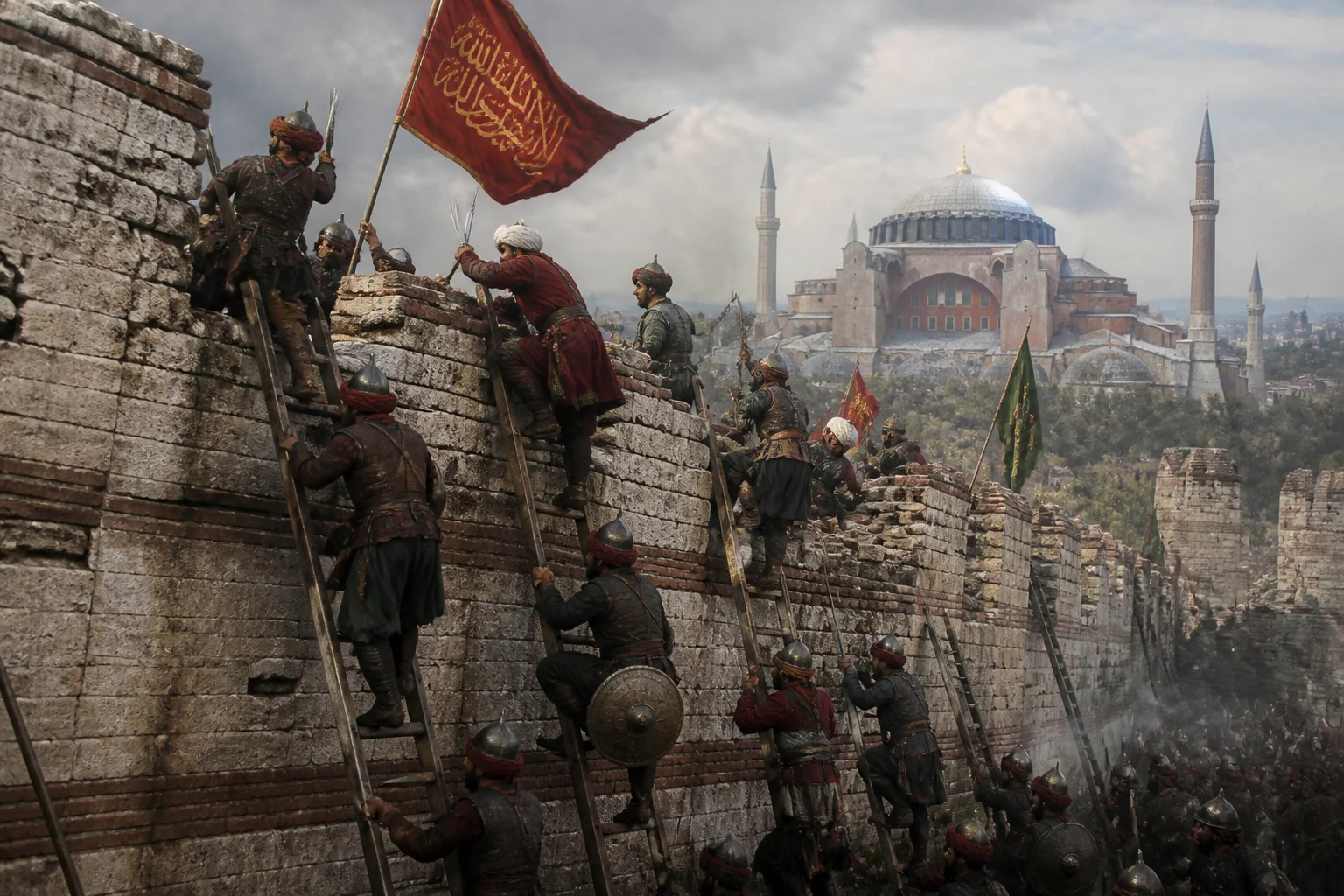
When Ottoman forces took Constantinople in 1453, one empire fell and another rose. The Ottomans inherited a city at the crossroads of Europe and Asia and adopted many Byzantine institutions, tax practices, and architectural forms. Hagia Sophia became a mosque, but its design influenced Ottoman architecture for centuries.
The conquest also pushed Greek scholars and texts westward, where they contributed to the Italian Renaissance. Ottoman society absorbed Christian administrators and artisans, who helped run the empire. It was a classic cultural encounter: the new rulers reused the old imperial machinery, while Europe gained fresh access to ancient learning.
12. The Mughal Encounter in India
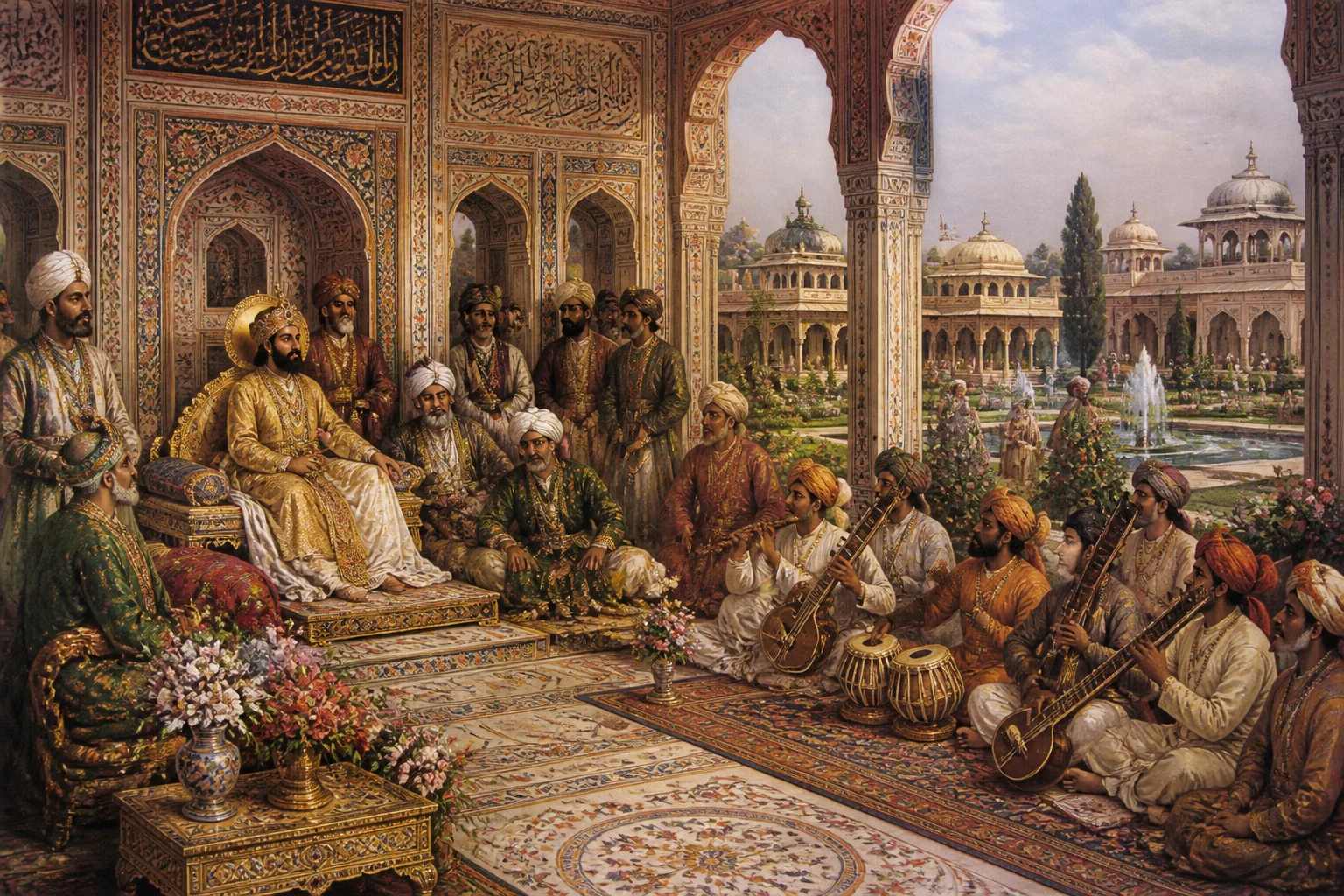
The Mughal Empire brought Persian-speaking Muslim rulers over a mostly Hindu population beginning in the sixteenth century. Persian art, poetry, and court culture blended with Indian painting, music, and architecture. The result included the Taj Mahal, but also a new language, Urdu, which mixed Persian, Arabic, and South Asian elements.
Emperor Akbar encouraged dialogue among Muslim, Hindu, Christian, and other scholars. Indian textiles, spices, and mathematical knowledge flowed into Persian and European networks. This is a strong example of cultural interaction in a setting where political power and cultural borrowing were closely tied.
Early Modern and Modern Cultural Exchanges
These later encounters often involved global sea routes, empires, and industrial technologies. They show that cultural exchange accelerated but never moved in only one direction.
13. The Manila Galleons Connect Asia and the Americas
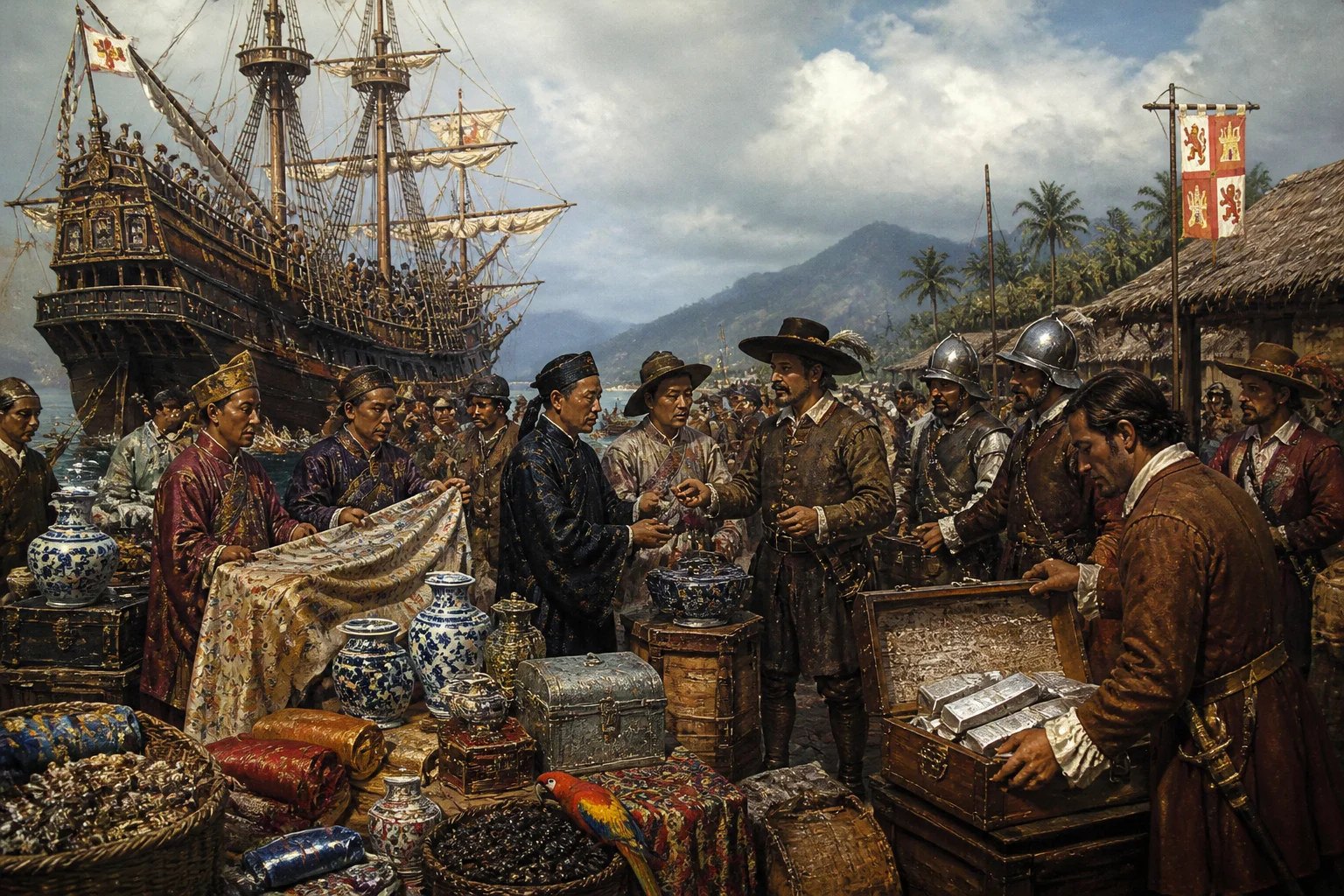
From 1565 to 1815, Spanish galleons sailed regularly between Manila and Acapulco, creating the first continuous Pacific trade route. Silver from the Americas moved west, while Chinese silk, porcelain, and spices moved east. This linked Asian, American, and European markets in a single system.
Chinese merchants settled in Manila, and Mexican silver became a common currency in China. Foods, words, and textile designs crossed the ocean in both directions. The Manila galleon trade is a superb cultural exchange example because it created a Pacific sphere that older land routes never reached.
14. Jesuit Missions at the Ming-Qing Court
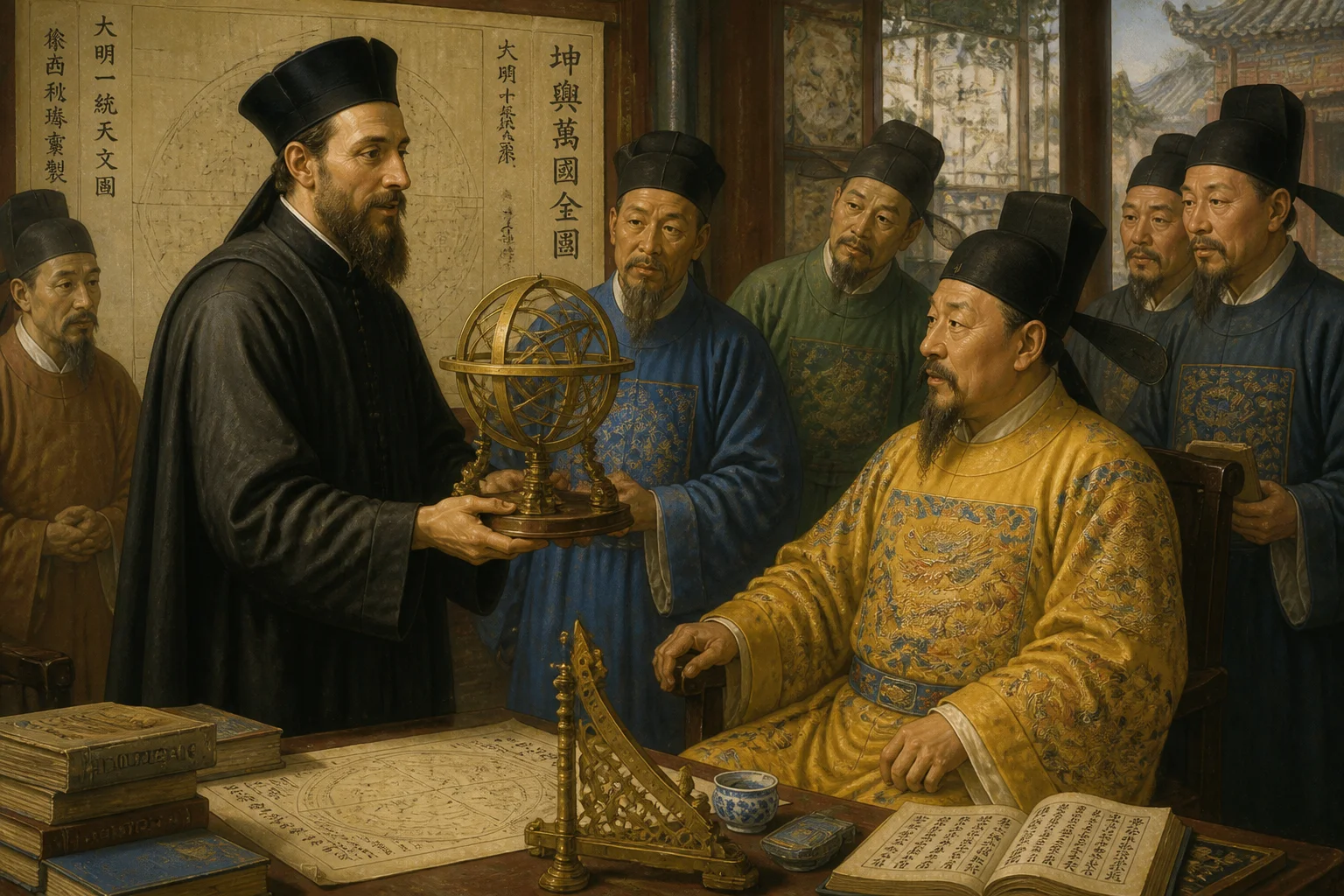
Jesuit missionaries such as Matteo Ricci entered China in the late sixteenth century and gained access to the Ming court by presenting Western clocks, maps, and astronomy. They learned Chinese, wore Confucian scholar dress, and translated scientific works. China gained new tools for calendar reform and geography.
Jesuit reports about Chinese government and Confucian ethics influenced Enlightenment thinkers in Europe. This was a selective cultural encounter: China adopted useful Western sciences without mass conversion, while Europe absorbed a highly idealized image of Chinese governance. Both intellectual traditions shifted.
15. Dejima and Rangaku: Dutch Learning in Japan
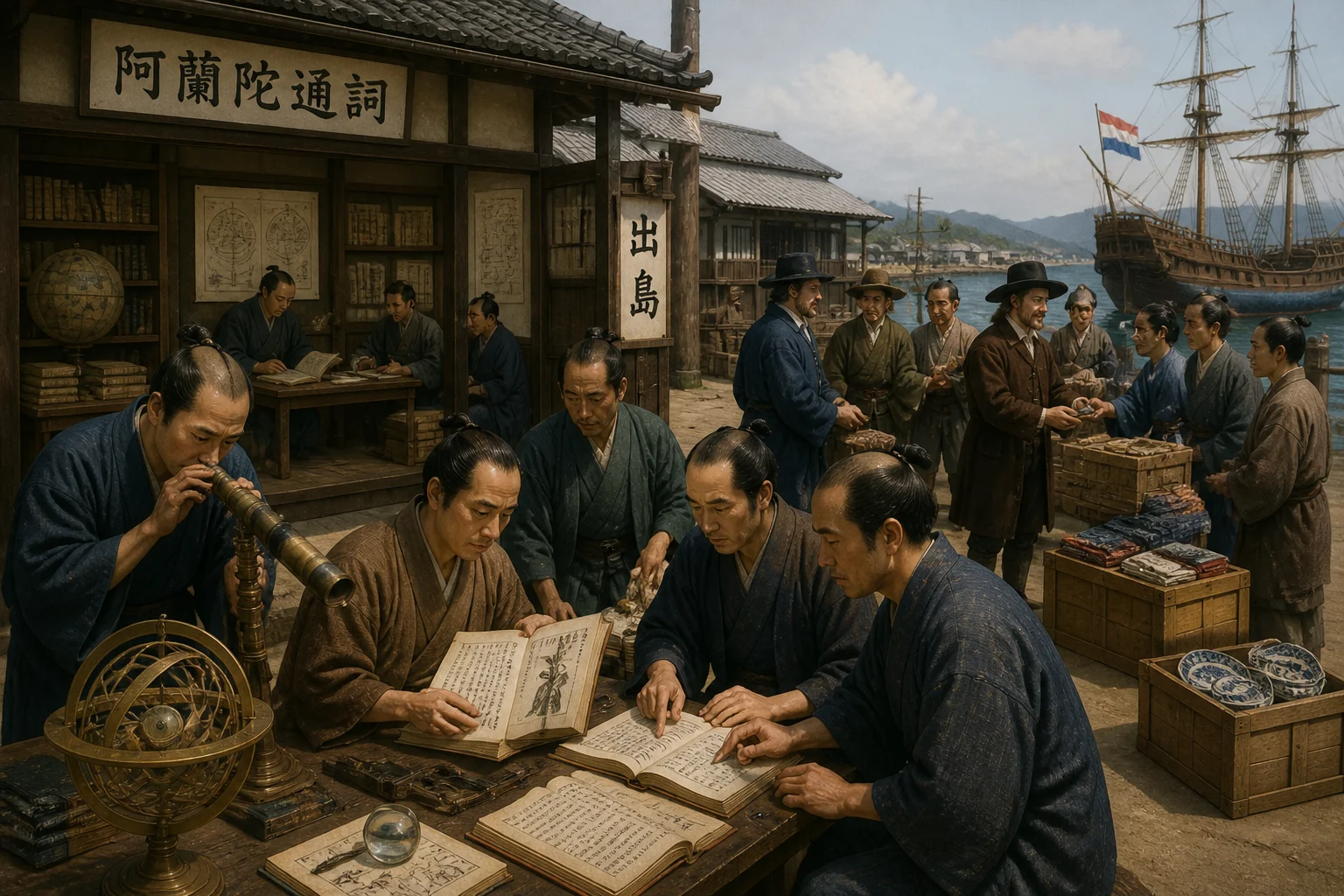
After the Tokugawa shogunate restricted foreign contacts in the seventeenth century, the Dutch were allowed to stay on the small island of Dejima in Nagasaki. Japanese scholars began studying Dutch books and the Dutch language. This body of knowledge became known as Rangaku, or Dutch learning.
Japanese doctors, astronomers, and engineers used Rangaku texts to understand Western anatomy, cartography, and technology before the country opened in the 1850s. In return, Japanese porcelain and lacquerware shaped European decorative arts. Even a tightly controlled port could generate lasting cultural changes on both sides.
16. The Atlantic Slave Trade and the African Diaspora
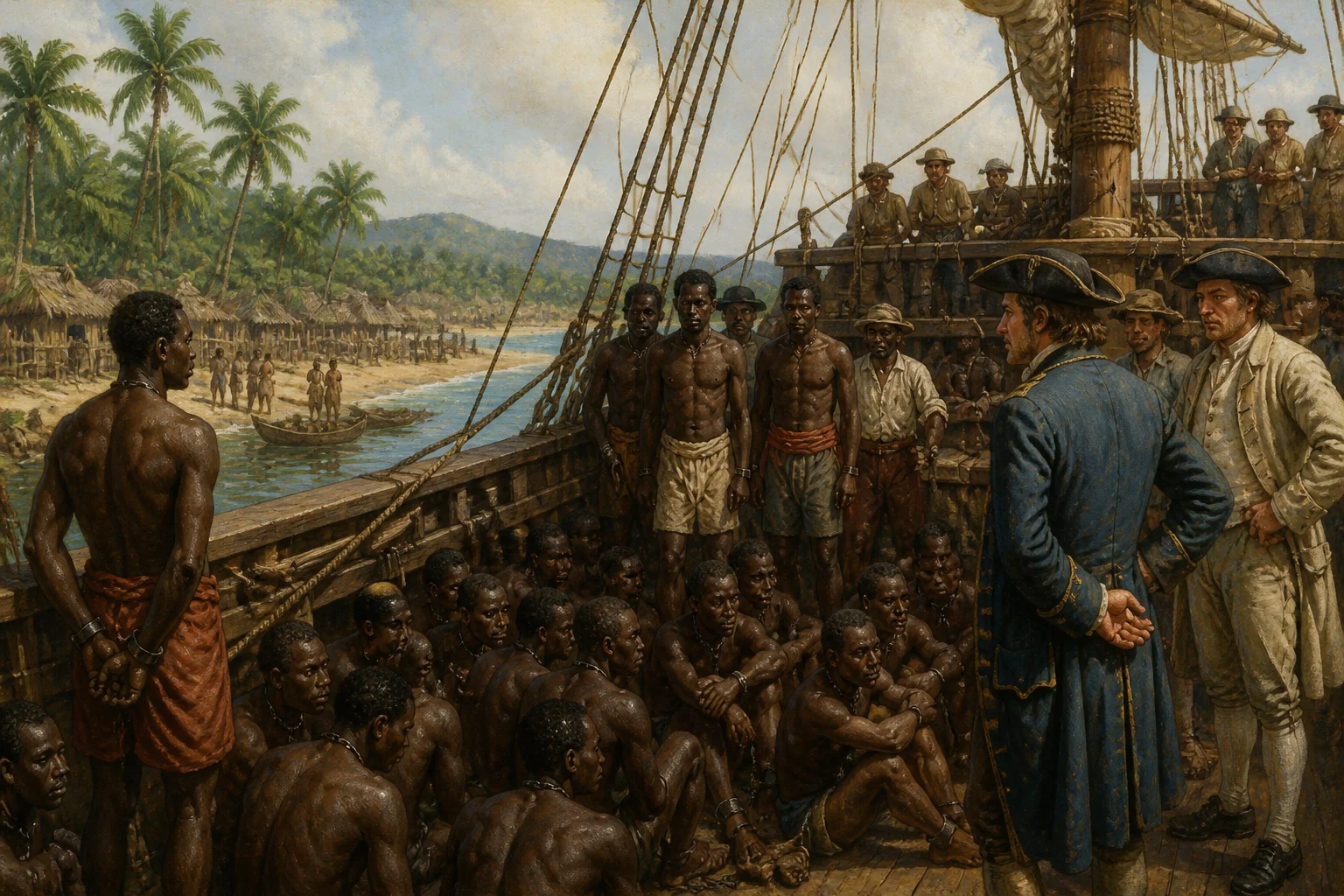
The Atlantic slave trade forcibly moved millions of Africans to the Americas from the sixteenth through the nineteenth centuries. It was not a voluntary exchange, and its violence must be stated plainly. Even so, enslaved Africans carried languages, religions, music, and farming knowledge that transformed the Americas.
African foods such as okra and rice, spiritual practices, and musical traditions shaped New World cultures in enduring ways. In Africa, the trade disrupted societies, altered political power, and shifted economies. This tragic encounter is central to understanding both modern cultural change and the deep inequality behind it.
17. Napoleon in Egypt and the Birth of Egyptology
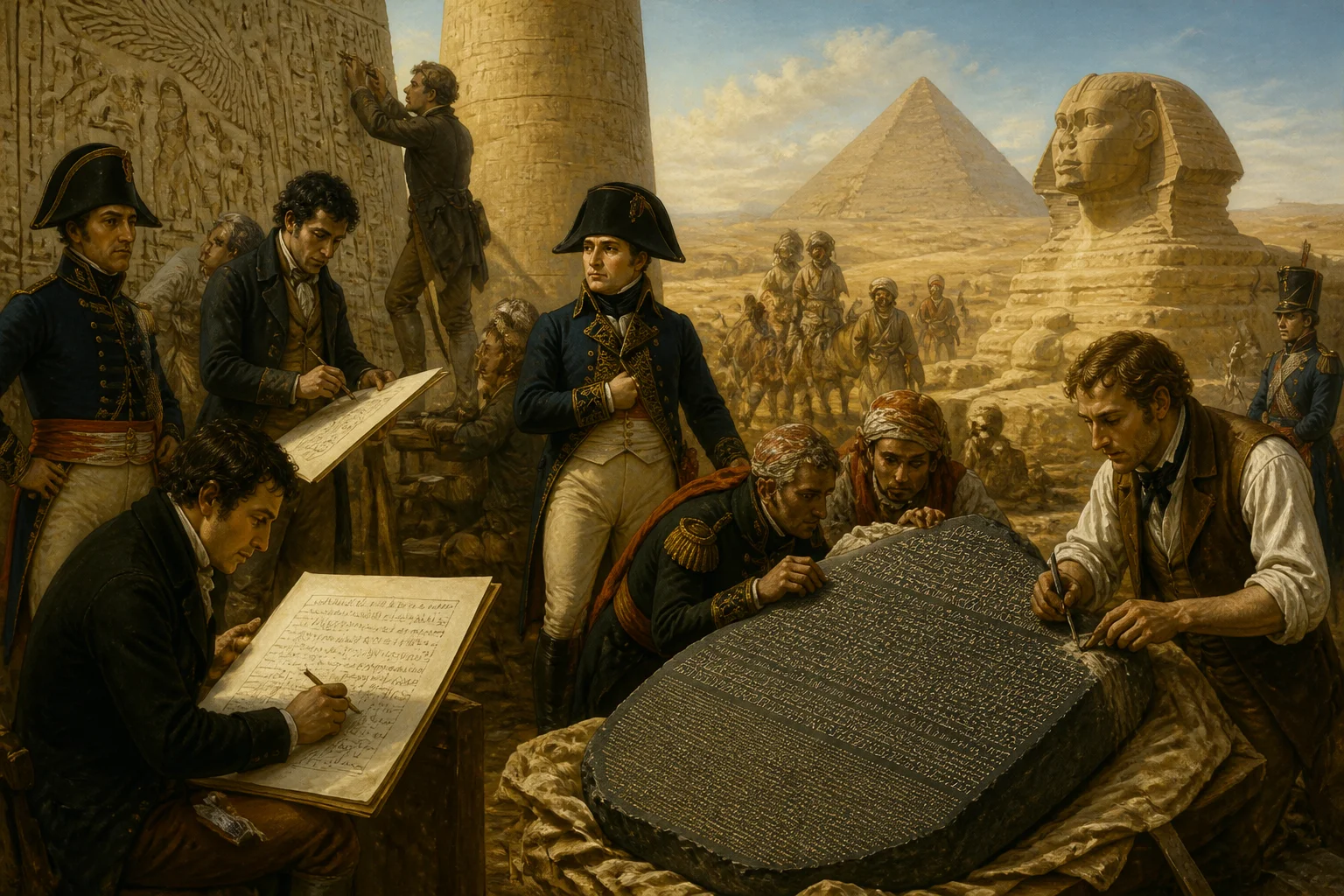
Napoleon’s 1798 invasion of Egypt was a military campaign, but it included a large team of scholars, engineers, and artists. They produced the Description de l’Égypte, a multi-volume record of ancient and modern Egypt that fascinated European readers. The discovery of the Rosetta Stone in 1799 later made the decipherment of hieroglyphs possible.
Europe experienced an Egyptomania that influenced architecture, furniture, and art. Egypt was exposed to European printing, cartography, and military methods, though under colonial pressure. This encounter changed European scholarship and Egyptian modernity alike.
18. British India and a Shared Imperial Culture
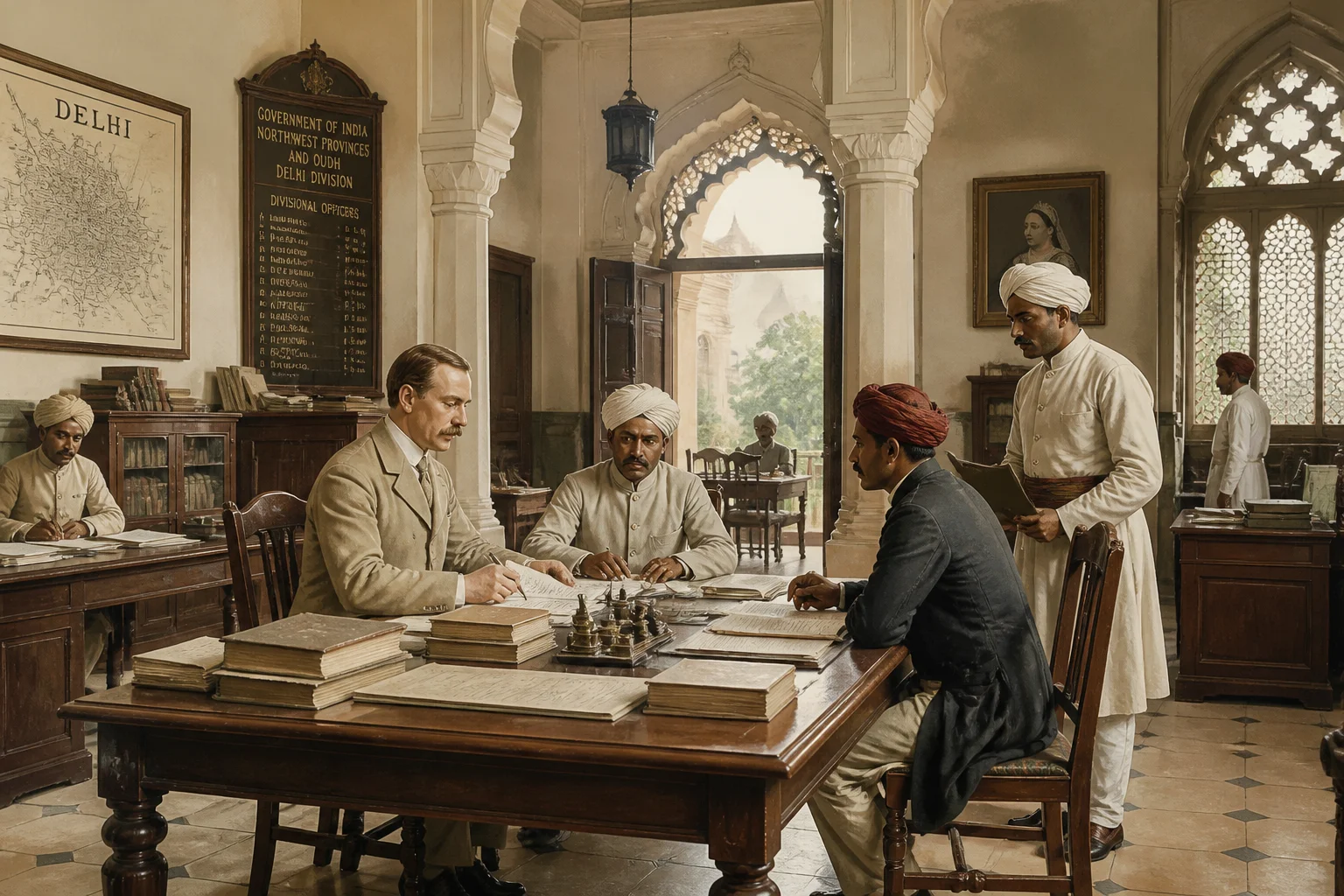
British rule in India, first through the East India Company and then the Crown, created an unequal but dense cultural connection. English became a language of administration and education, while Indian textiles, tea, and spices changed British daily life. Words such as bungalow, pajamas, and shampoo entered English from South Asian languages.
Indians adopted and transformed British legal, educational, and political ideas, which later fed nationalist movements. British art, literature, and food absorbed Indian influences in return. The relationship was far from equal, but it remains one of the clearest examples of cultural changes arising from empire.
19. Meiji Japan and Japonisme
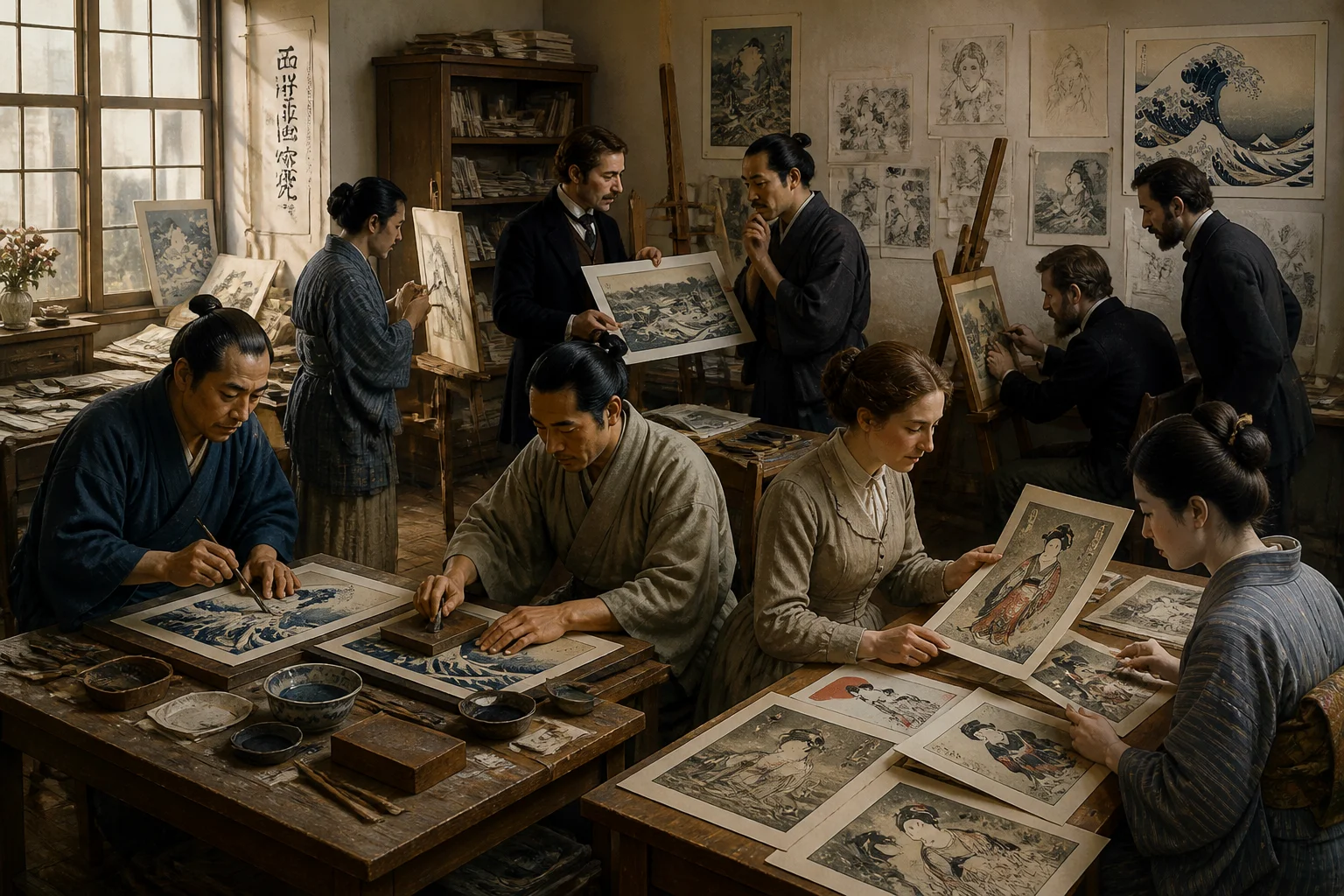
After the Meiji Restoration in 1868, Japan’s government adopted Western military organization, industry, education, and science at remarkable speed. Japanese students and officials traveled abroad, while Western experts came to Japan. This is often cited as a rapid program of cultural borrowing.
At the same time, Japanese woodblock prints, textiles, and design flooded European markets. Artists such as Van Gogh and Monet were deeply influenced by Japanese composition and color. Meiji Japan and Japonisme form a two-way cultural interaction example that modernized Japan while reshaping European art.
20. The American Occupation of Japan after World War II
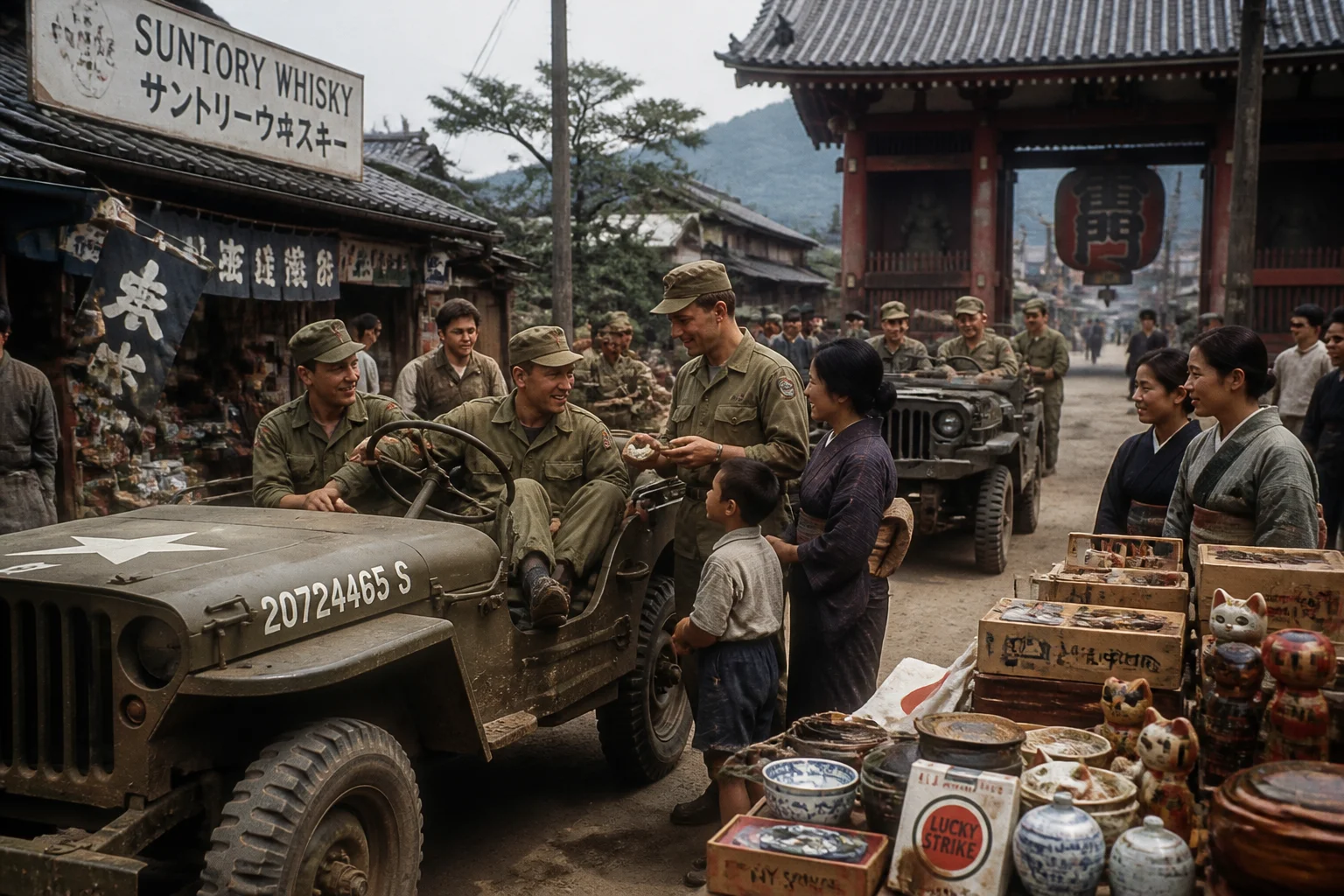
The U.S.-led occupation of Japan from 1945 to 1952 introduced a new constitution, land reform, and changes to education and industry. Baseball, jazz, and English loanwords became part of everyday Japanese life. These cultural changes occurred under military occupation, yet they were not simply imposed on a passive society.
Japan adapted and transformed American cultural forms, later exporting manga, anime, film, and design back to the United States. American interest in Zen, Japanese architecture, and food grew in turn. This modern encounter shows the same pattern as older ones: both sides borrowed, adapted, and changed.
Why These Encounters Still Matter
These cases are not just distant episodes. They explain why global history is better understood through traditions and encounters, a brief global history perspective rather than a story of separate nations. Every language, food, religion, and technology we inherit has a mixed past.
Some encounters were peaceful and voluntary, while others were violent and unequal. A balanced account must hold both truths together: contact can create innovation and loss at the same time. What these examples share is that no culture is a sealed room.
For readers who prefer a survey format, titles such as Traditions and Encounters: A Brief Global History organize world history around these very patterns. That packaging is not just academic convenience; it reflects the evidence from archaeology, linguistics, and written records.
The next time you drink tea, wear cotton, use a numeral, or hear a borrowed word, you are standing inside a long history of cross-cultural encounters. Recognizing that past does not erase conflict, but it does reveal how deeply human societies have always been connected.
Frequently Asked Questions
What does the phrase ‘traditions & encounters a global perspective on the past’ mean?
It refers to a way of studying world history that focuses on contact, exchange, and mutual influence between societies rather than treating civilizations as isolated. The phrase points to how trade, migration, conquest, and faith have repeatedly reshaped cultures on both sides.
What are some common cultural exchange examples in world history?
Common examples include the Silk Roads, the Columbian Exchange, the spread of Buddhism from India to East Asia, the Indian Ocean trading world, and Dutch learning in Japan. Each case shows goods, ideas, or technologies moving in more than one direction.
How do cultural encounters change both sides?
Cultures borrow, adapt, and sometimes resist foreign practices. A society may adopt a new crop, technology, or belief while modifying it to fit local conditions, and the source culture is often changed in return by what flows back.
What is the difference between cultural exchange and conquest?
Cultural exchange can be gradual, voluntary, or commercial, while conquest forces change through military or political power. In practice, many historical encounters blur the line because conquest often produces unintended borrowing on both sides.

Alex Warren
Related Articles