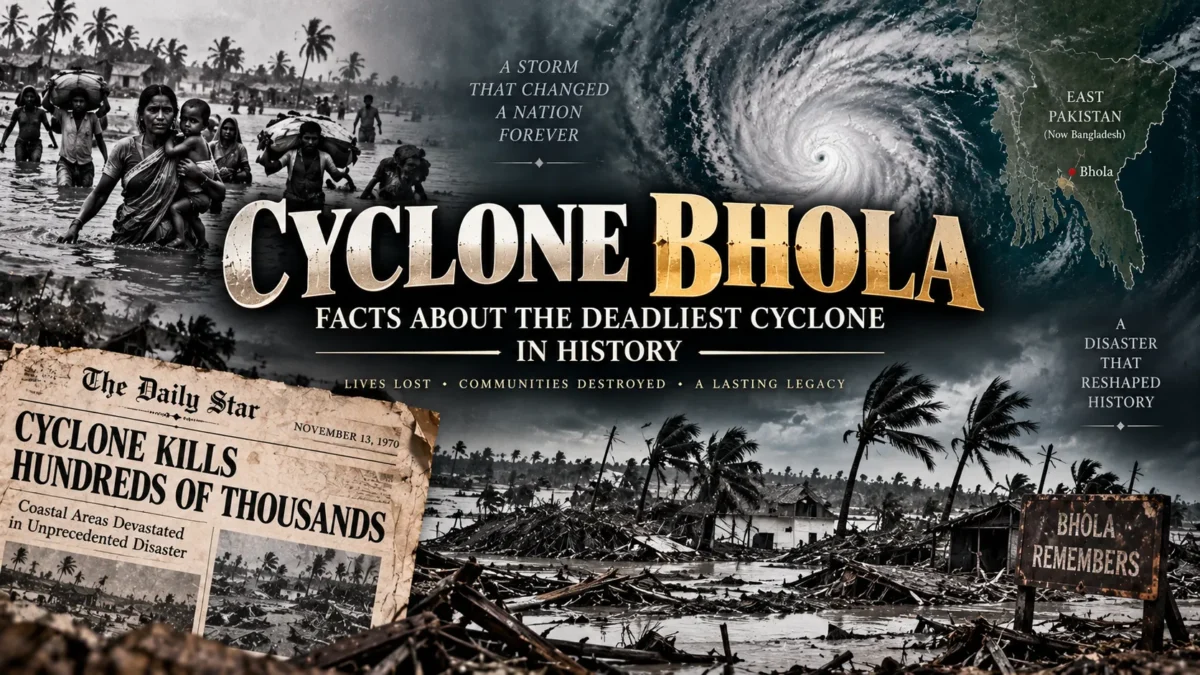
When people think of history’s worst natural disasters, they often picture famous hurricanes like Katrina or typhoons that dominate the news cycle for weeks.
But the single deadliest tropical cyclone ever recorded barely registers in most people’s memory, even though it killed more people than nearly any other natural disaster in modern history. That storm was Cyclone Bhola, and its story is as much about human failure as it is about meteorology.
In November 1970, this storm slammed into the low-lying delta of what was then East Pakistan (now Bangladesh), and the results were catastrophic beyond almost anything else on record. Below, we break down what actually happened, what caused the Bhola cyclone, and why its legacy still shapes disaster preparedness today.
TL;DR: Cyclone Bhola struck the Ganges Delta on November 12–13, 1970, killing an estimated 300,000 to 500,000 people through storm surge flooding, making it the deadliest cyclone in recorded history and a turning point in both disaster science and South Asian politics.
1. Cyclone Bhola Struck in November 1970
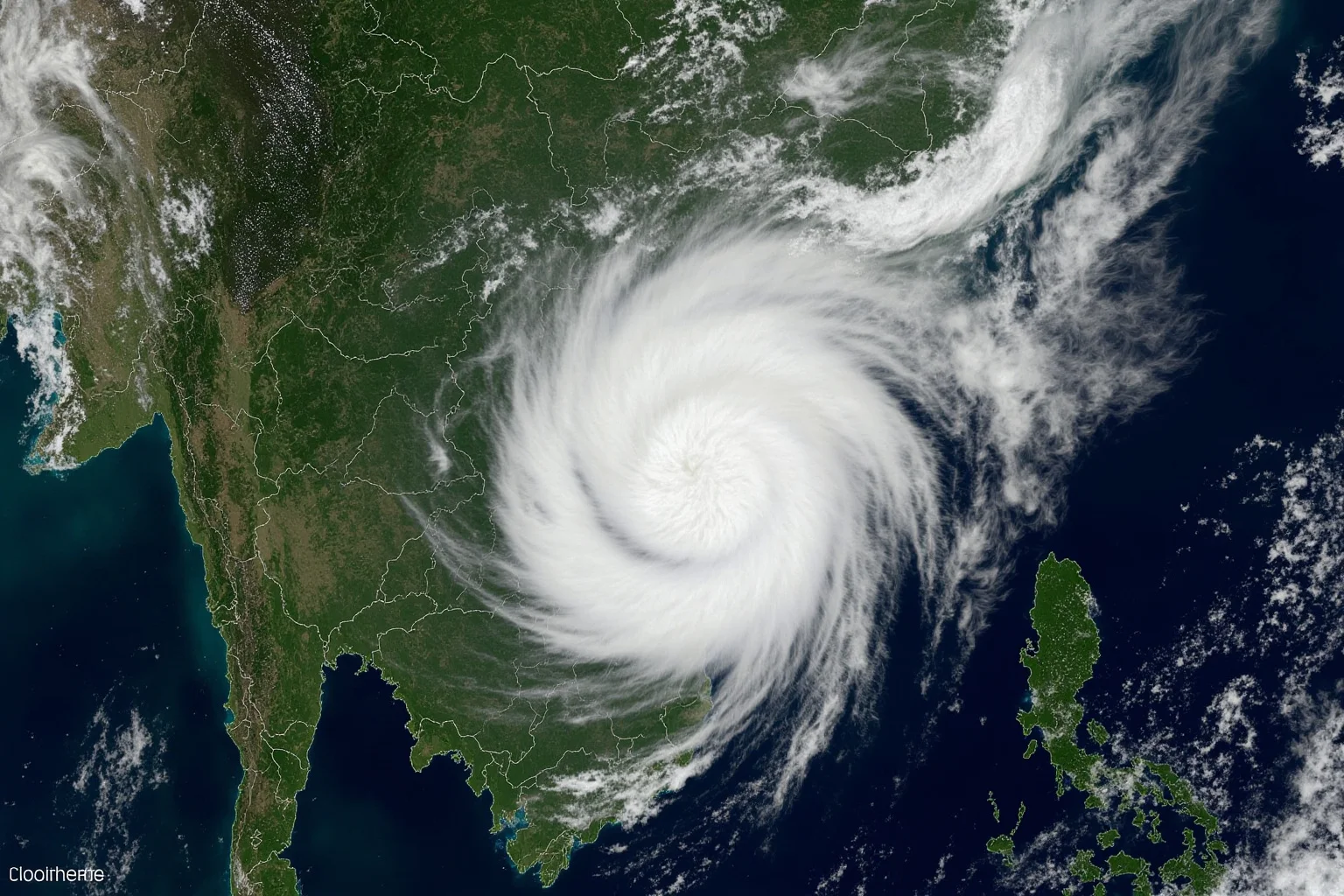
Cyclone Bhola made landfall on the night of November 12 into November 13, 1970. It hit the coast of what was then East Pakistan, a region that would become independent Bangladesh less than a year later.
The timing mattered enormously. Many coastal residents were asleep when the storm surge arrived, leaving little time to reach higher ground even where warnings had gotten through.
2. It Formed as a Modest Depression in the Bay of Bengal
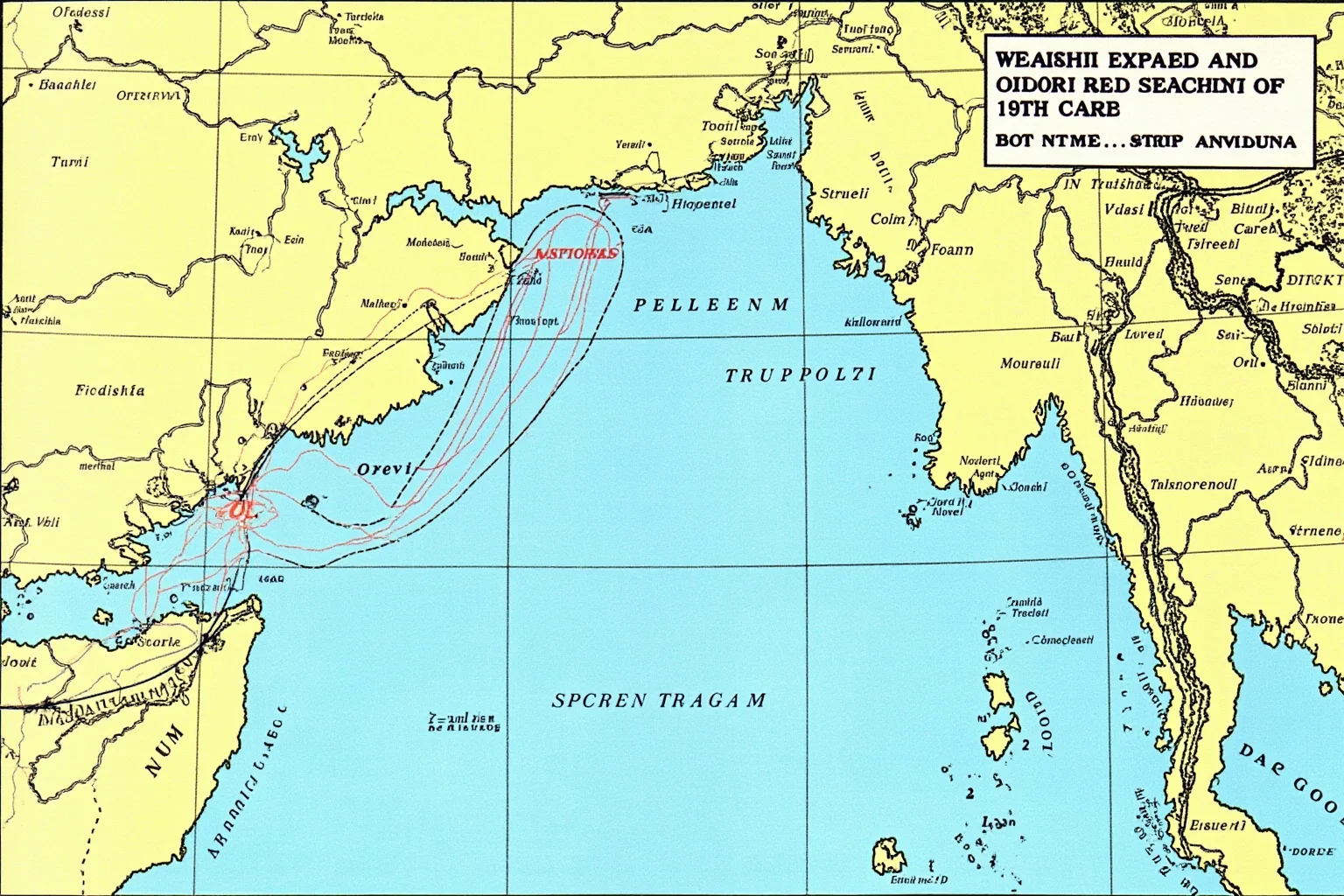
Like most tropical cyclones in the region, Bhola began as a low-pressure system over the Bay of Bengal in early November 1970. It intensified relatively quickly as it tracked northward over unusually warm waters.
Meteorologists at the time tracked it using early satellite imagery, which was still a relatively new tool for storm forecasting. That technology helped identify the storm, but it couldn’t solve the much harder problem of getting warnings to millions of rural villagers in time.
3. It Made Landfall on the Ganges-Brahmaputra Delta
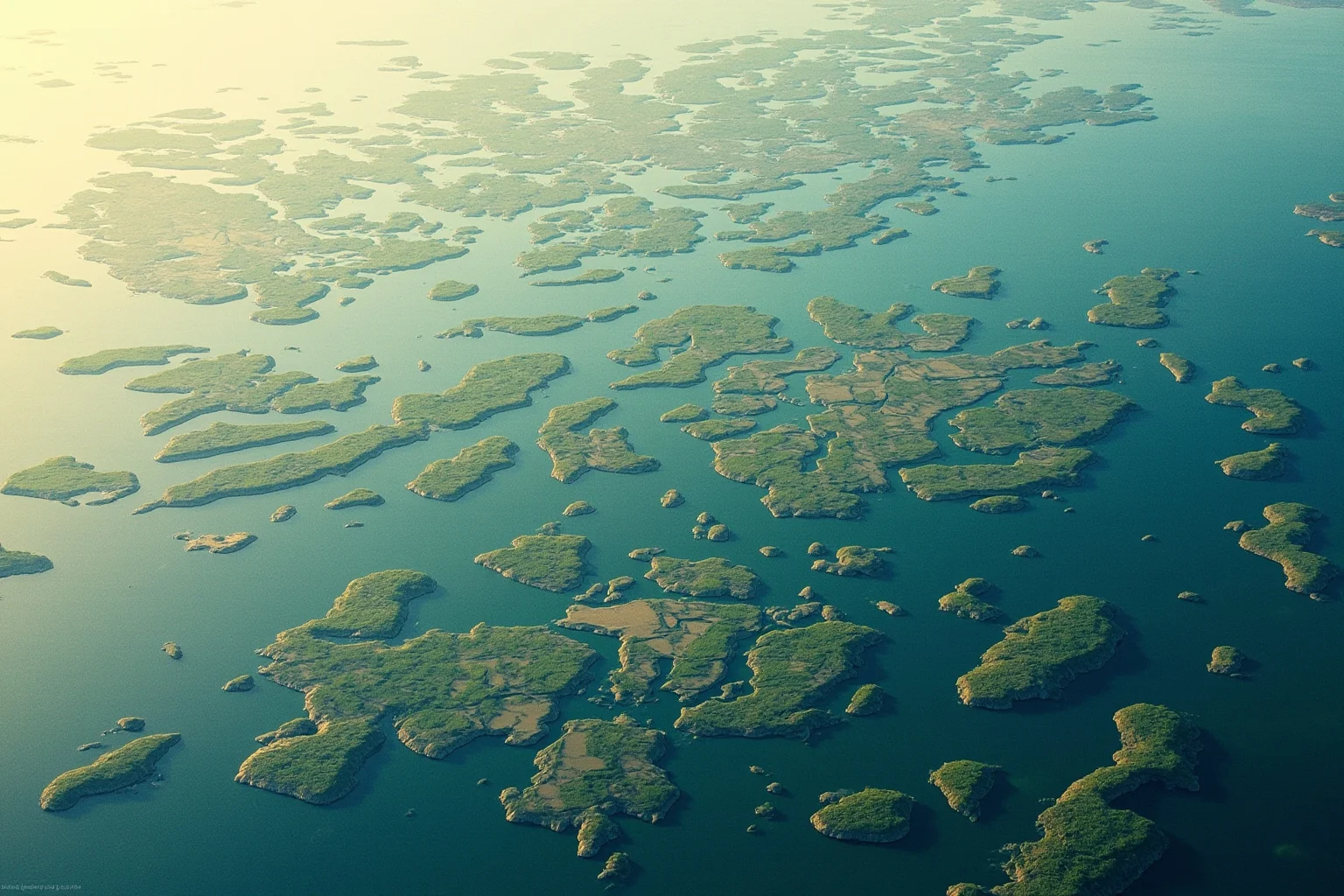
The storm came ashore across the vast, low-lying delta formed by the Ganges, Brahmaputra, and Meghna rivers. This delta is one of the largest and most densely populated river deltas on Earth, packed with small islands, mudflats, and farming communities.
Most of this land sits barely above sea level. That geography, combined with the storm’s timing, created the conditions for a uniquely devastating flood.
4. The Storm Surge Coincided With High Tide

One of the cruelest details of the 1970 Bhola cyclone is that its peak storm surge arrived at almost the same time as a normal high tide. This combination pushed sea water even further inland than the storm’s winds alone would have caused.
Witness accounts and later scientific reconstructions describe surge heights reaching roughly 10 meters, or about 33 feet, in the hardest-hit coastal areas. For flat, densely settled islands just a few feet above sea level, that kind of wall of water left almost nowhere to escape.
5. It Was Named After Bhola Island
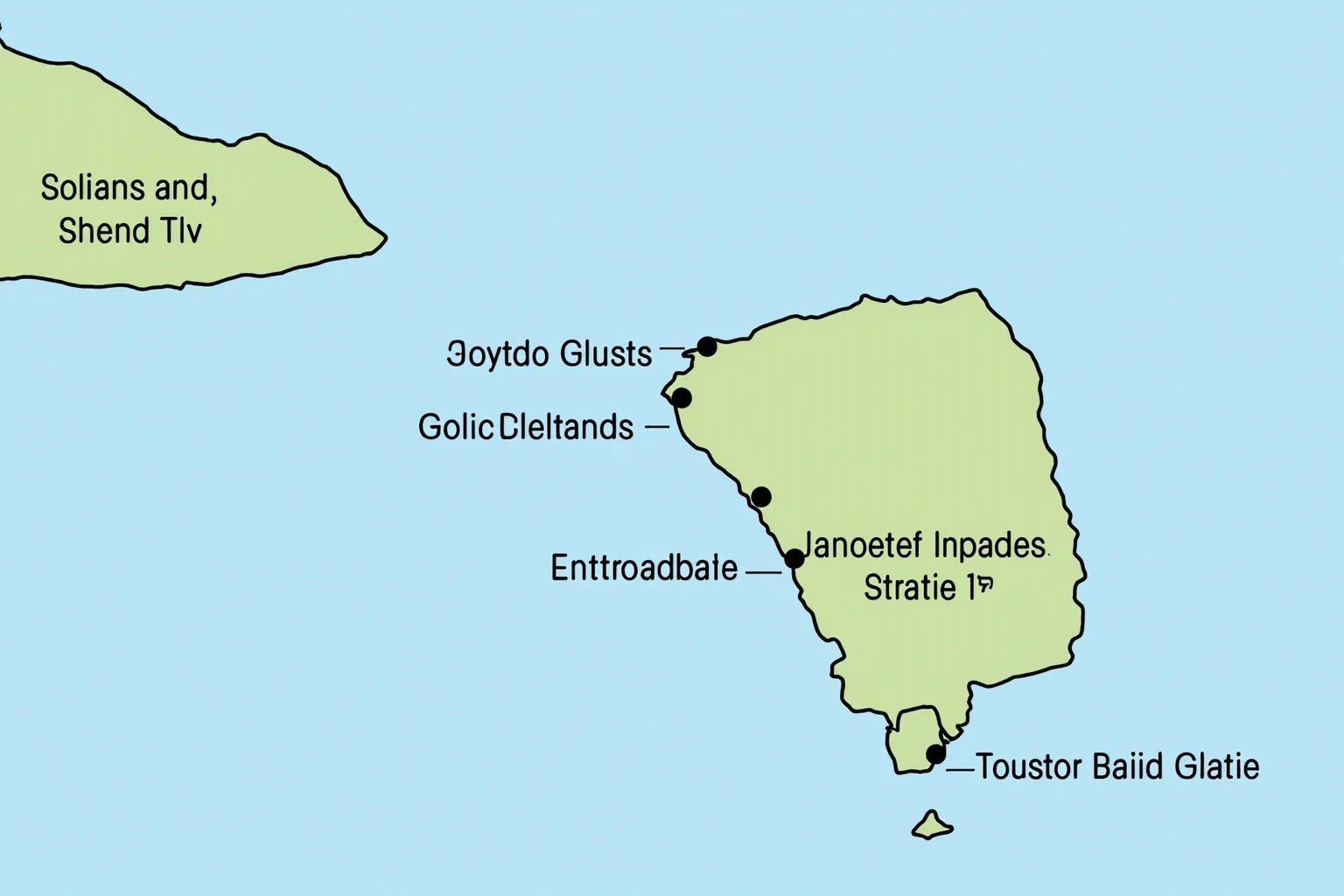
The storm takes its name from Bhola Island, one of the areas that suffered the heaviest losses. Bhola is one of the largest islands in the Ganges Delta, and it sits directly in the path that the surge took inland.
Cyclone naming conventions in the Bay of Bengal at the time didn’t always follow a strict formal list the way modern Atlantic hurricane names do. In this case, the name stuck because of how closely the disaster became associated with that specific place.
6. It Is the Deadliest Tropical Cyclone Ever Recorded
No other tropical cyclone in recorded history has killed as many people as the Great Bhola Cyclone. That grim distinction has held for more than five decades, even as global population and coastal development have both grown substantially.
For comparison, the 1991 Bangladesh cyclone, itself one of the deadliest storms of the twentieth century, killed roughly 138,000 people. Bhola’s toll was several times higher.
7. Death Toll Estimates Vary Widely

Here’s where a myth-busting note is important: there is no single, universally agreed-upon death toll for Cyclone Bhola. Estimates from different sources range from around 300,000 to as many as 500,000 deaths, with some older figures cited even higher.
This wide range exists because the disaster struck remote, poorly mapped rural areas where record-keeping was already difficult, and where the storm itself destroyed much of the local infrastructure needed to count the dead. Any specific number you see cited should be treated as an estimate rather than an exact count.
8. Storm Surge, Not Wind, Killed Most Victims

It’s tempting to imagine a cyclone’s destructive power coming mainly from its winds, but in Bhola’s case the surge of sea water was overwhelmingly the deadlier hazard. Most victims drowned as the surge swept across flat farmland and small islands with little warning.
This is a pattern seen in many of history’s deadliest disasters, from cyclones to floods far from the coast, like the wave of molasses that swept through Boston’s North End in 1919. Wind causes damage to structures, but water, or in that case a dense liquid, is what tends to kill people in large numbers, especially when there’s little warning and nowhere to run.
9. Roughly 3.6 Million People Were Directly Affected
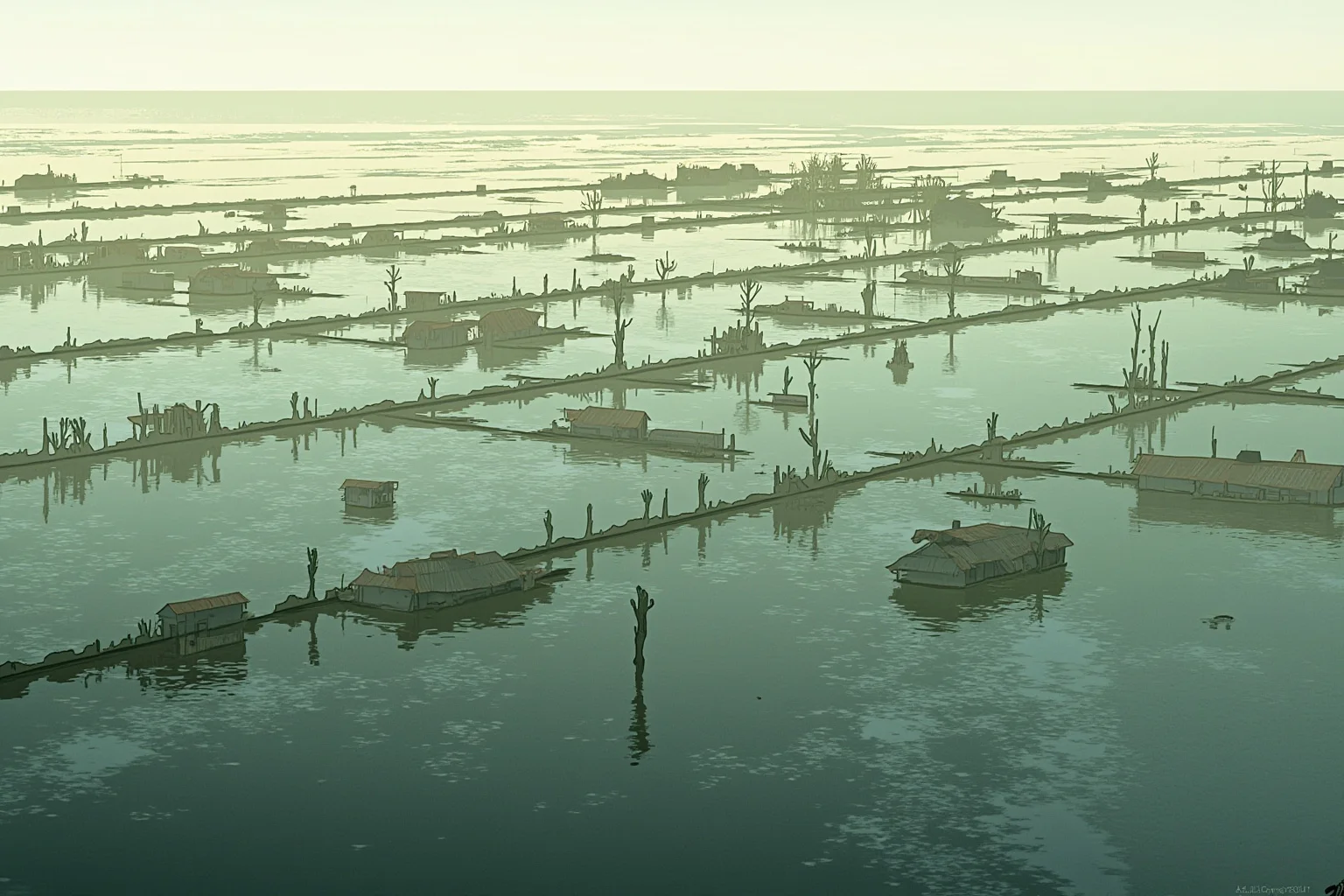
Beyond the death toll, humanitarian assessments at the time estimated that around 3.6 million people were directly affected by the storm in some way. That includes survivors who lost homes, farmland, livestock, and family members.
The scale of displacement alone would have strained even a wealthy, well-resourced government. East Pakistan’s regional administration was neither, and the strain showed almost immediately.
10. Close to a Million People Were Left Homeless
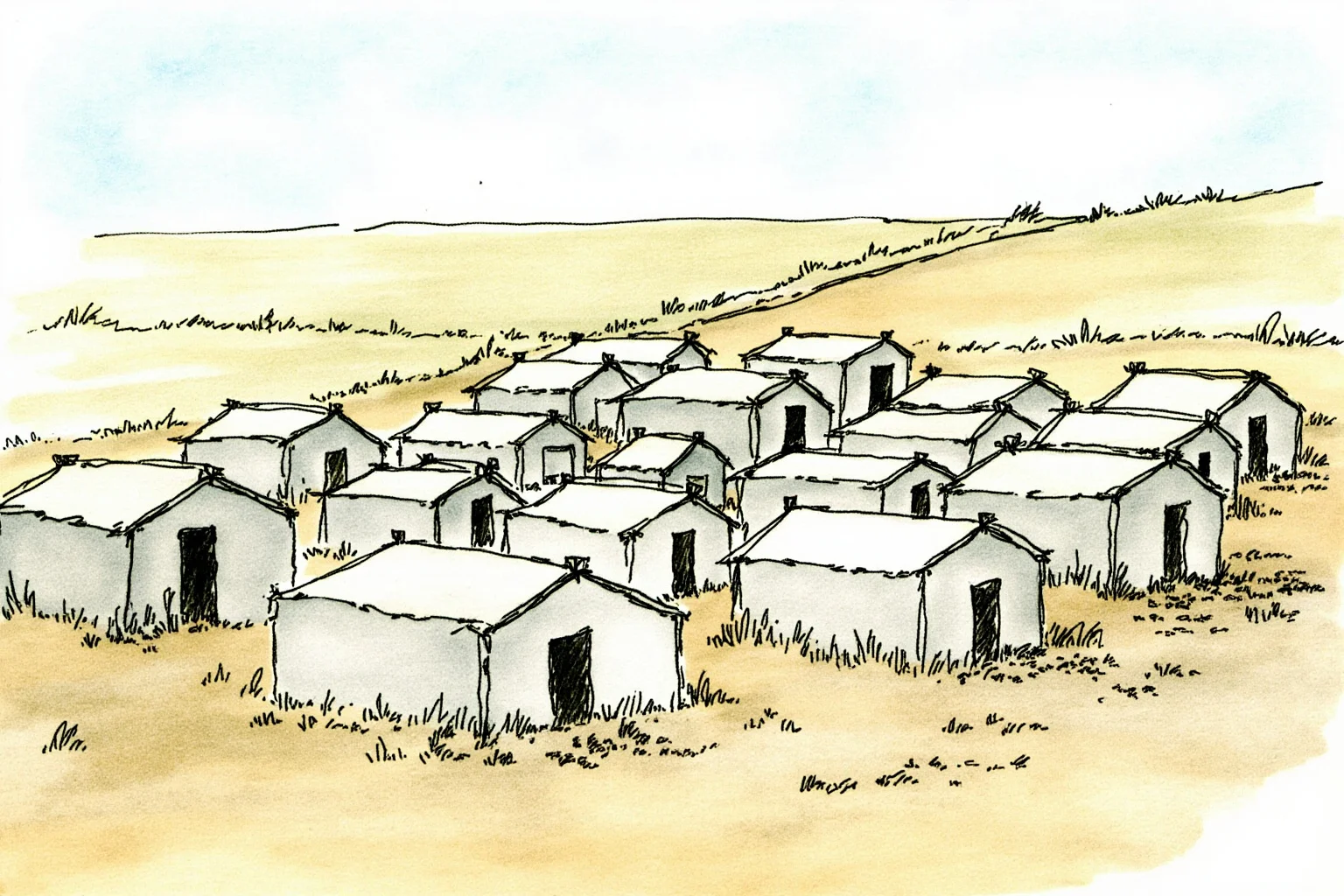
Estimates suggest close to one million people lost their homes entirely. Entire villages built from mud, bamboo, and thatch were simply washed away by the surge.
Rebuilding was slow and complicated by damaged roads, destroyed boats, and the sheer remoteness of many delta communities. Some areas went weeks without meaningful outside contact.
11. It Was Roughly Equivalent to a Category 3 Hurricane
Using the wind-speed scale applied to hurricanes, meteorologists generally classify Cyclone Bhola as equivalent to a strong Category 3 storm at landfall, with sustained winds estimated around 185 km/h (115 mph). That’s powerful, but notably weaker than history’s strongest storms by wind speed alone.
This is actually one of the most important myth-busting points about Bhola. It wasn’t the strongest cyclone ever measured by wind. Its catastrophic death toll came from geography, timing, and poor warning systems, not from having record-breaking winds.
12. The Bay of Bengal’s Shape Amplifies Storm Surges
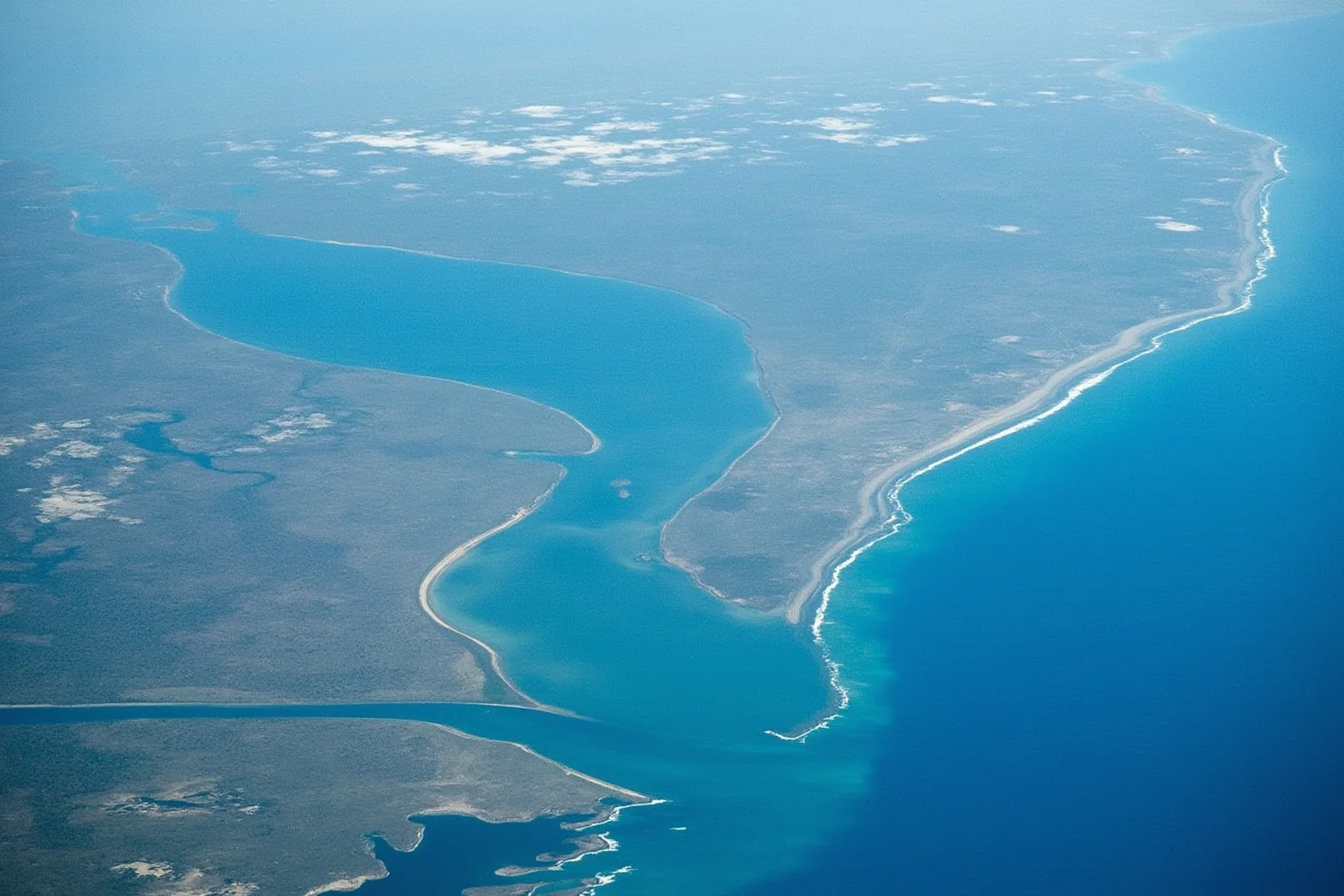
The Bay of Bengal has a funnel-like shape that narrows toward its northern end, right where the Ganges Delta sits. As a cyclone pushes water northward, that funnel effect can concentrate and heighten the surge dramatically.
Combine that geography with a shallow continental shelf and thousands of low-lying islands, and you get a region uniquely vulnerable to surge-driven disasters. This is part of the scientific answer to what caused the Bhola cyclone to be so lethal, even without record winds.
13. Warnings Existed, but Many Never Reached Coastal Villages

Forecasters did issue storm warnings ahead of landfall. The problem was less about prediction and more about communication and follow-through in remote coastal communities.
Many villagers received little or no effective warning, and even those who did often had no safe higher ground nearby to reach. Radios were scarce, roads were poor, and there was no organized system for evacuation on the scale the disaster required.
14. What Caused the Bhola Cyclone, Meteorologically Speaking

At its core, Bhola formed the way most Bay of Bengal cyclones do: warm sea surface temperatures, low wind shear, and a pre-existing area of disturbed weather allowed a tropical depression to organize and intensify. November sits within the region’s secondary cyclone season, after the summer monsoon retreats.
What made Bhola exceptional wasn’t an unusual formation process. It was the deadly combination of a strong storm surge, high tide timing, extremely low-lying and densely populated land, and inadequate evacuation infrastructure.
15. Why It’s Sometimes Called “Hurricane Bhola”
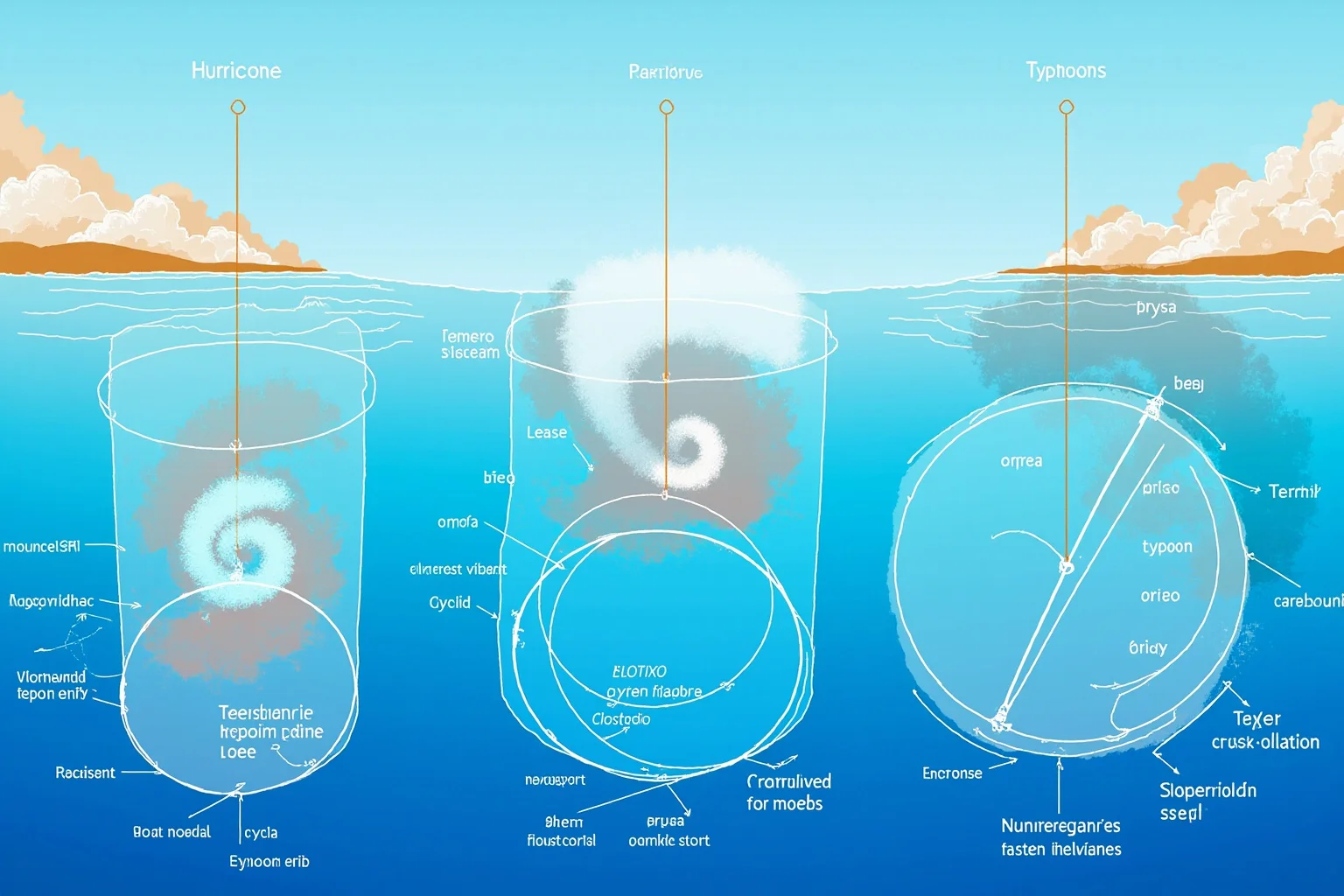
You may see this storm referred to online as Hurricane Bhola, even though “hurricane” and “cyclone” describe the same basic weather phenomenon. The difference is purely regional naming convention: the same storm type is called a hurricane in the Atlantic and Northeast Pacific, a typhoon in the Northwest Pacific, and a cyclone in the South Pacific and Indian Ocean, including the Bay of Bengal.a
So whether you search for “Bhola cyclone,” “hurricane Bhola,” or “the 1970 Bhola cyclone,” you’re looking at the same historical event. There’s no separate storm hiding under a different name.
16. The Disaster Response Sparked Political Outrage

East Pakistan was governed at the time from West Pakistan, over a thousand miles away, under President Yahya Khan’s military government. The relief response was widely criticized as slow, poorly coordinated, and dismissive of the scale of suffering in the delta.
Many East Pakistanis felt abandoned by a central government that seemed more focused on West Pakistan’s interests. That resentment didn’t appear out of nowhere, but the cyclone response became a powerful symbol of a much longer-standing political grievance.
17. The Aftermath Helped Fuel the Push for Bangladeshi Independence
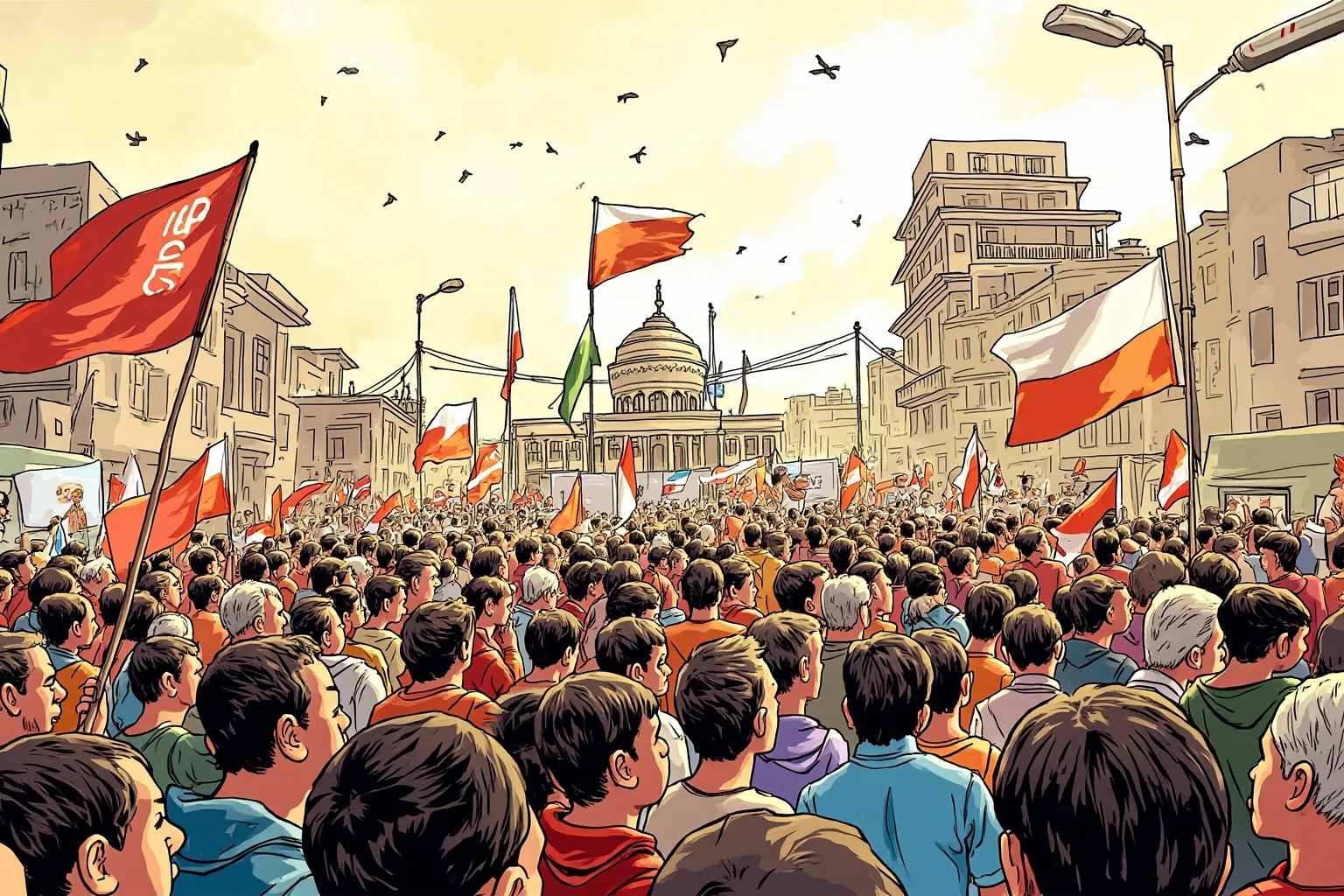
Just weeks after the cyclone, Pakistan held general elections in December 1970. The Awami League, led by Sheikh Mujibur Rahman and based in East Pakistan, won a decisive victory partly on the strength of public anger over the disaster response.
When the central government resisted transferring power, tensions escalated rapidly through 1971 into the Bangladesh Liberation War, one of the historical events that quietly reshaped the entire world. Historians generally treat the cyclone as one contributing factor among several deeper political and economic grievances, rather than the sole cause of the independence movement.
18. International Relief Efforts Were Massive, but Faced Heavy Criticism
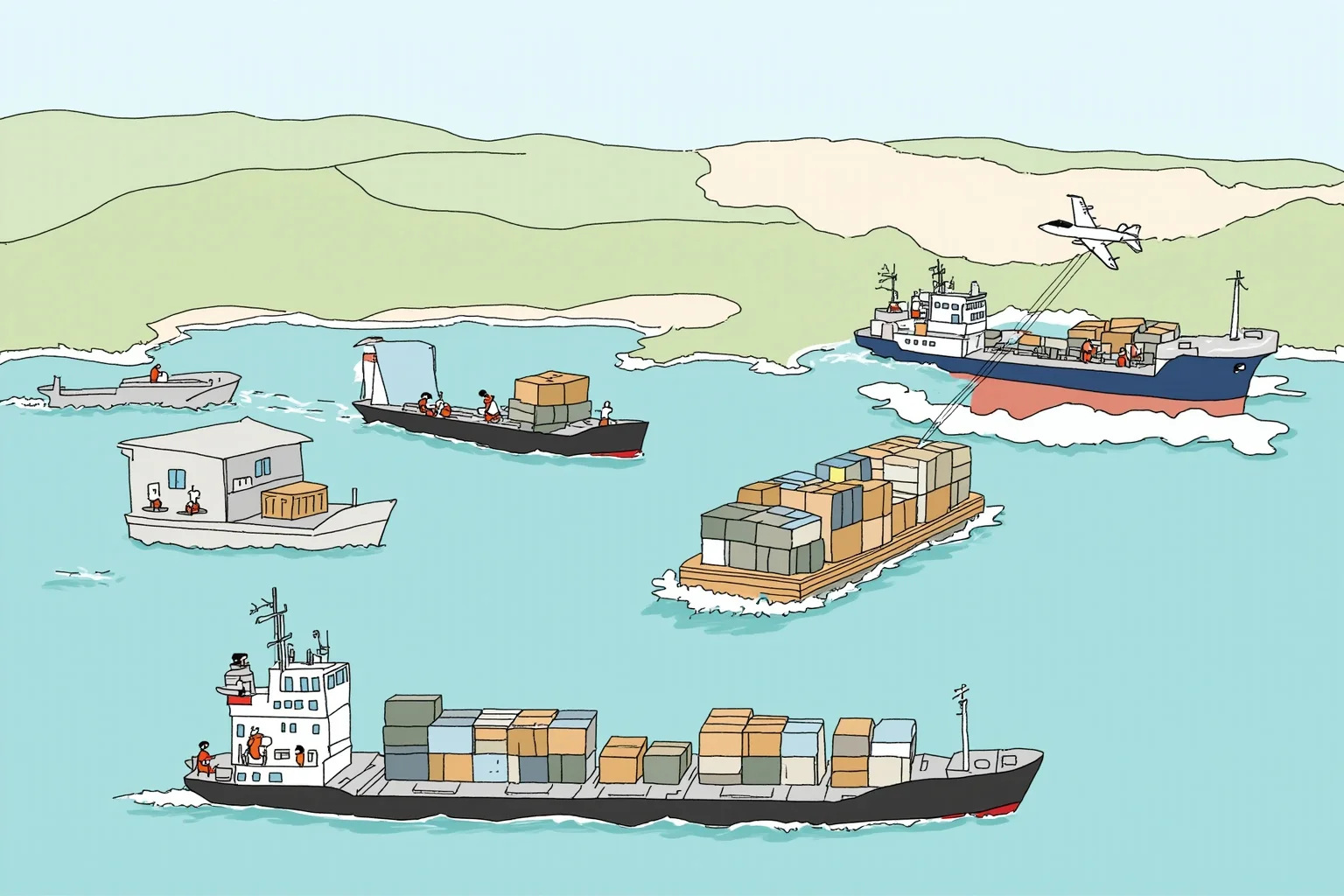
Once news of the disaster’s scale reached the wider world, the United Nations, the United States, the United Kingdom, and numerous aid organizations mobilized relief supplies and personnel. Ships, aircraft, and medical teams were deployed to reach the delta.
Even so, logistical hurdles, damaged infrastructure, and political friction with the Pakistani government slowed aid delivery in many areas, the kind of criticism later leveled at other disaster responses, including how the Deepwater Horizon oil spill was handled decades later. International commentators at the time openly questioned whether the response matched the scale of need.
19. The Disaster Drew Global Attention to the Region’s Suffering

The cyclone, followed within months by the war and a massive refugee crisis, helped put the region’s humanitarian crisis on the world stage. This broader wave of attention contributed to events like the 1971 Concert for Bangladesh, organized by George Harrison and Ravi Shankar to raise relief funds.
It’s worth being precise here: that concert was primarily a response to the refugee crisis caused by the Liberation War, not the cyclone itself. But the cyclone was part of the chain of hardship that made Bangladesh a focus of international humanitarian concern that year.
20. It Led to Major Cyclone Preparedness Reforms
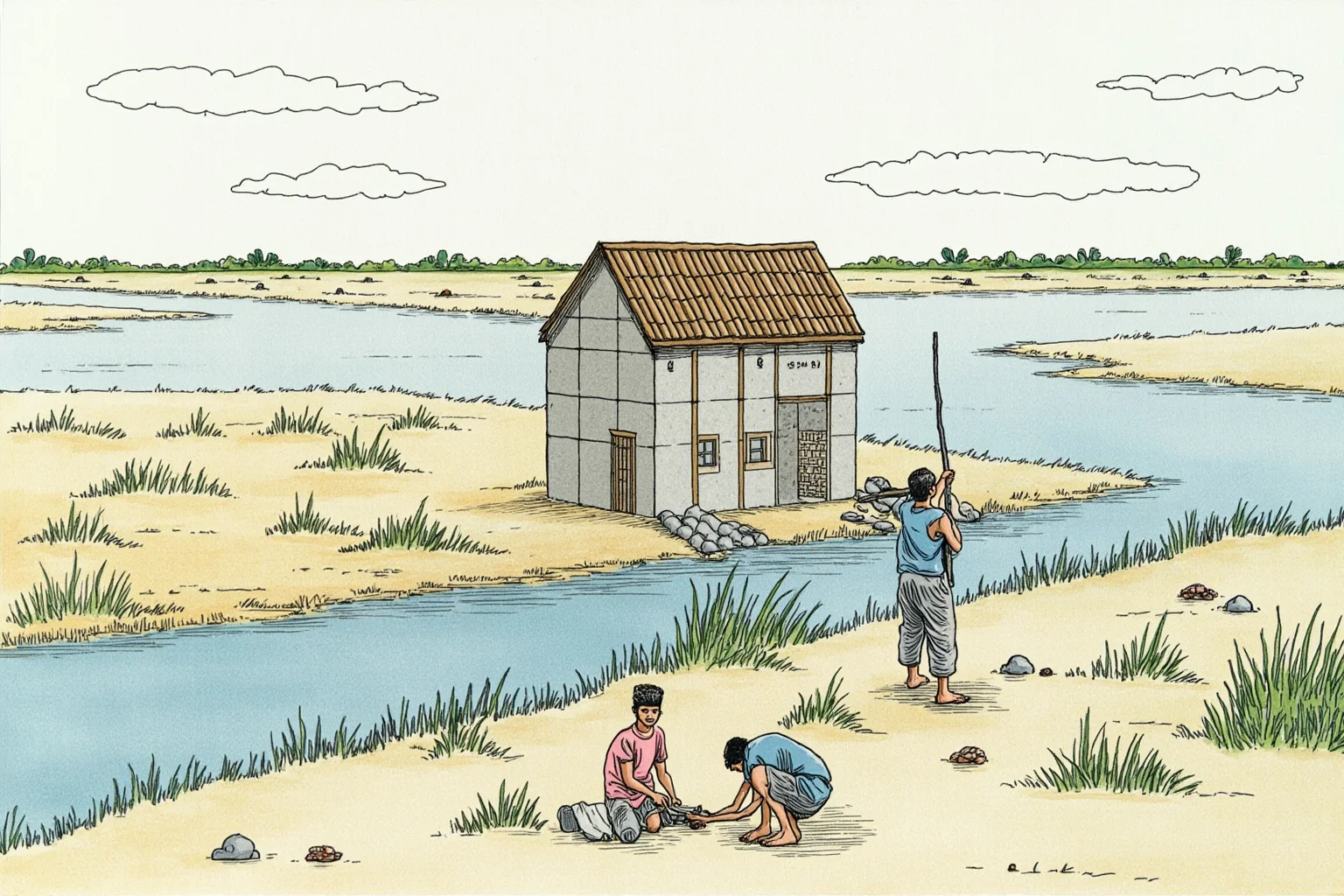
In the years following the disaster, and especially after Bangladesh’s independence in 1971, the country worked with international partners to build a far more robust warning and shelter system. The Cyclone Preparedness Programme, launched in 1972, trained volunteers to spread warnings and organize evacuations at the village level.
Bangladesh also invested heavily in concrete cyclone shelters along its coast in the decades since. These reforms are credited with dramatically reducing death tolls from later storms, even ones with comparable or greater wind strength.
21. Later Cyclones Killed Far Fewer People, Thanks in Part to Bhola’s Lessons
The 1991 Bangladesh cyclone was similarly powerful and struck a similarly vulnerable coastline, yet its death toll of roughly 138,000, while still catastrophic, was well below Bhola’s estimated range. Improved warnings and shelters made a measurable difference.
More recent storms, like Cyclone Sidr in 2007 and Cyclone Amphan in 2020, have caused death tolls in the hundreds or low thousands rather than hundreds of thousands. That trend reflects decades of hard-won disaster preparedness progress that traces directly back to the lessons of 1970.
22. Cyclone Bhola Remains a Benchmark for Measuring Disaster Severity

More than fifty years later, disaster researchers, meteorologists, and historians still use the Great Bhola Cyclone as the reference point for the worst-case scenario in tropical cyclone risk. It’s frequently cited in scientific papers and disaster-preparedness planning documents around the world.
Its legacy is a strange mix of tragedy and progress: an enormous, largely preventable loss of life that ultimately pushed governments and aid organizations to take coastal disaster preparedness far more seriously. That shift has almost certainly saved hundreds of thousands of lives in the decades since.
Why Bhola’s Story Still Matters
Cyclone Bhola isn’t as widely known as it should be, given that it remains the deadliest cyclone in recorded history. Part of that may be because it struck a region far from major Western media centers, and part of it may simply be the passage of time.
But its story offers a genuinely important lesson about disaster risk. The strength of a storm’s winds matters, but geography, timing, government preparedness, and communication infrastructure often matter just as much, if not more, in determining how many lives are lost.
Understanding what happened in 1970 helps explain why coastal nations like Bangladesh have invested so heavily in shelters and early-warning systems ever since. It’s a somber piece of history, but also one with a genuinely hopeful throughline: the world got better at preventing this exact kind of tragedy from repeating at the same scale.
Frequently Asked Questions
What caused the Bhola cyclone?
The Bhola cyclone formed from a tropical depression over the Bay of Bengal in early November 1970, fueled by warm sea temperatures and low wind shear typical of the region's secondary cyclone season. Its catastrophic death toll wasn't due to record-breaking winds, but to a severe storm surge that coincided with high tide, striking a densely populated, extremely low-lying delta with inadequate evacuation infrastructure.
How many people died in the 1970 Bhola cyclone?
Estimates for the 1970 Bhola cyclone's death toll range widely, generally cited between 300,000 and 500,000 people, with some older sources citing even higher figures. The exact number is unknown because the storm struck remote, poorly documented rural areas and destroyed much of the local infrastructure needed to conduct an accurate count.
Why is Cyclone Bhola sometimes called Hurricane Bhola?
"Hurricane," "typhoon," and "cyclone" all describe the same type of storm, just with different regional names depending on where they occur. Because the storm formed in the Bay of Bengal, it's technically a cyclone, but it's occasionally referred to informally as Hurricane Bhola in casual usage.
Where did Cyclone Bhola make landfall?
Cyclone Bhola made landfall on the night of November 12 into November 13, 1970, striking the Ganges-Brahmaputra Delta in what was then East Pakistan, now Bangladesh. The hardest-hit areas included Bhola Island and other low-lying islands in the delta, which is where the storm gets its name.
How did the Bhola cyclone influence Bangladesh’s independence?
The slow and widely criticized relief response from Pakistan's central government deepened existing political resentment in East Pakistan, contributing to the Awami League's decisive win in the December 1970 elections. When the central government resisted transferring power afterward, tensions escalated into the 1971 Bangladesh Liberation War, though the cyclone was one of several long-building factors rather than the sole cause.
What is the difference between a cyclone and a hurricane?
There is no meteorological difference; both terms describe the same type of rotating tropical storm system. The name used simply depends on where the storm forms, with "hurricane" used in the Atlantic and Northeast Pacific, "typhoon" in the Northwest Pacific, and "cyclone" in the South Pacific and Indian Ocean, including the Bay of Bengal where Bhola formed.

Alex Warren
Related Articles