
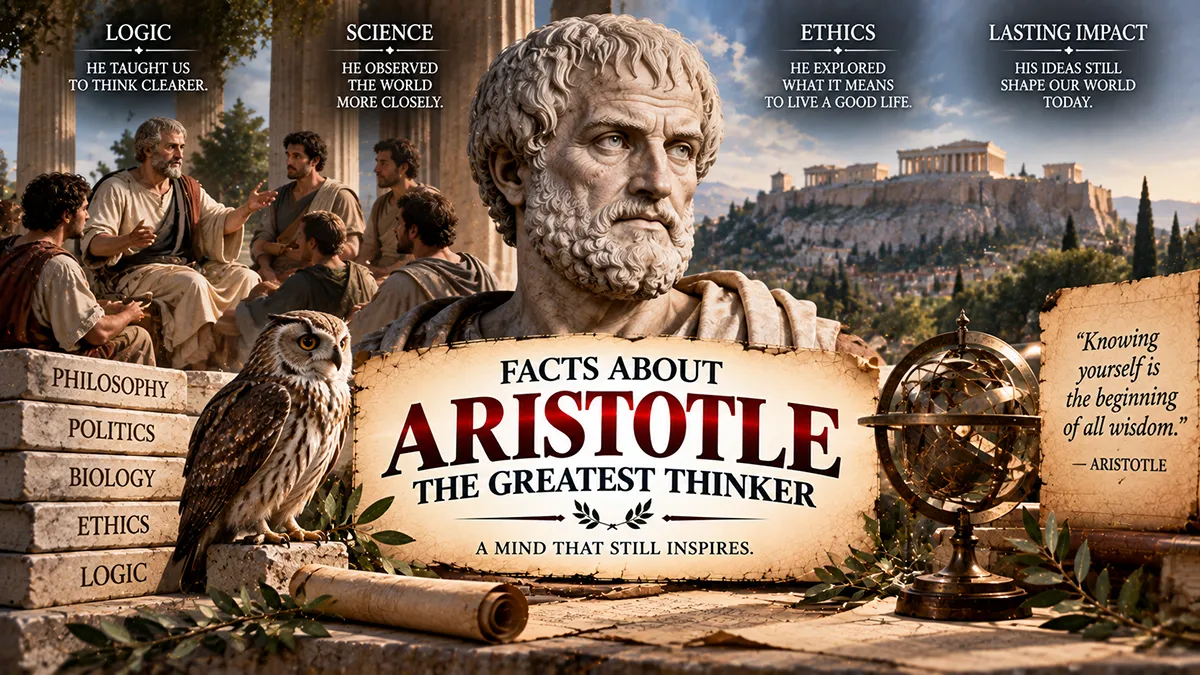
Few names carry as much intellectual weight as Aristotle’s. More than 2,300 years after his death, he’s still credited as the father of logic, a founder of biology, a pioneer of political theory, and the guy who tutored one of history’s most famous conquerors. But separating the real Aristotle from the legend takes a little digging.
This fact file cuts through the myth-making to give you the real story: what Aristotle actually discovered, what he got surprisingly wrong, and why his ideas still shape how we think today — the same myth-busting approach we take with figures like Joan of Arc and Saint Patrick.
Whether you need a handful of highlights or the full deep dive, these facts about Aristotle the philosopher cover the essentials and then some.
TL;DR: Aristotle’s work in logic, biology, ethics, and politics laid foundations for Western thought that still influence science, law, and philosophy today.
Aristotle Fact File: The Quick Version
If you only need the essentials, here’s the short version. Aristotle was born in 384 BCE in Stagira, a small town in northern Greece, and died in 322 BCE on the island of Euboea. He studied under Plato in Athens for roughly twenty years and later tutored a young Alexander the Great.
He founded his own school, the Lyceum, and wrote on an almost absurd range of subjects, including logic, biology, ethics, politics, poetry, and physics.
Many of his ideas dominated Western and Islamic scholarship for well over a thousand years. That’s the five-second summary, but the details are where things get genuinely interesting.
What Is Aristotle Known For?
So what is Aristotle known for, exactly? Most historians point to three things: inventing formal logic, laying the groundwork for the scientific study of biology, and shaping Western ethical and political philosophy through works like the “Nicomachean Ethics” and “Politics.”
He’s also known for being spectacularly wrong about a few things, which we’ll get to honestly rather than sweeping under the rug. What Aristotle discovered wasn’t always correct by modern standards, but his method of systematic observation and classification was genuinely groundbreaking for his time. That combination of brilliance and blind spots is exactly what makes him such a fascinating historical figure.
1. He Was Born in 384 BCE in Stagira, Not Athens

Aristotle wasn’t an Athenian by birth, even though the city defined most of his career. He was born in Stagira, a coastal town in the region of Chalcidice in northern Greece, in 384 BCE.
This mattered more than it might seem. As a non-citizen resident of Athens later in life, Aristotle could never fully participate in Athenian civic life, and that outsider status shaped several key moments in his story.
2. His Father Was a Royal Physician

Aristotle’s father, Nicomachus, served as a physician to the Macedonian royal court. Growing up around medicine likely exposed young Aristotle to careful observation and hands-on examination of living things.
Some historians suggest this early exposure planted the seeds for his later obsession with biology and anatomy. It’s a plausible connection, even if we can’t know for certain how much it shaped his thinking.
3. He Studied Under Plato at the Academy for Two Decades
At around age 17, Aristotle traveled to Athens and joined Plato’s Academy, the most prestigious school of philosophy in the Greek world. He remained there for about twenty years, first as a student and later as a teacher himself.
Despite the deep respect between them, Aristotle eventually diverged sharply from his teacher’s ideas. Where Plato emphasized abstract, unchanging Forms, Aristotle increasingly favored empirical observation of the physical world.
4. He Left Athens After Plato’s Death — Twice, Actually

When Plato died around 347 BCE, leadership of the Academy passed to Plato’s nephew rather than Aristotle. Soon after, Aristotle left Athens, eventually spending time in Assos and on the island of Lesbos, where he conducted extensive biological research.
He would later return to Athens to found his own school, only to flee the city again near the end of his life. That’s twice he had to leave the city that made his career, both times for reasons tied to politics rather than philosophy.
5. He Tutored a Teenage Alexander the Great

Around 343 BCE, Macedonian King Philip II invited Aristotle to tutor his son, the future Alexander the Great. Aristotle taught the young prince subjects ranging from rhetoric and poetry to science and philosophy for several years at the royal court.
It’s tempting to imagine Aristotle shaping Alexander’s later conquests directly, but historical evidence for that influence is thin and mostly speculative. What we know for certain is that the two maintained some level of connection into Alexander’s adult life, though the relationship reportedly cooled over time.
6. He Founded His Own School: The Lyceum
Around 335 BCE, Aristotle returned to Athens and established his own school, known as the Lyceum. It became a rival center of learning to Plato’s Academy and attracted students from across the Greek world.
Aristotle’s followers were sometimes called “Peripatetics,” supposedly because of his habit of walking around while lecturing. The Lyceum functioned as both a school and an early research institution, complete with a library and collections of specimens.
7. He Invented Formal Logic (The Syllogism)
One of Aristotle’s most enduring contributions is the syllogism, a form of logical argument built from a major premise, a minor premise, and a conclusion. His work “Organon” systematized rules for valid reasoning that dominated logic for over two thousand years.
This is genuinely one of the biggest answers to “what did Aristotle discover,” since formal logic as a discipline essentially starts with him. Modern symbolic logic has moved well beyond his framework, but his basic insight, that arguments have structures that can be evaluated independently of their content, remains foundational.
8. He Was One of History’s First True Polymaths
Aristotle wrote on logic, physics, biology, astronomy, ethics, politics, rhetoric, poetry, and psychology. Ancient sources credit him with an enormous body of work, though only a portion has survived to the present day.
This range is part of why he’s often called history’s greatest thinker rather than simply a great philosopher. Few individuals before or since have made lasting contributions across so many distinct fields of study.
9. He Practically Founded the Science of Biology
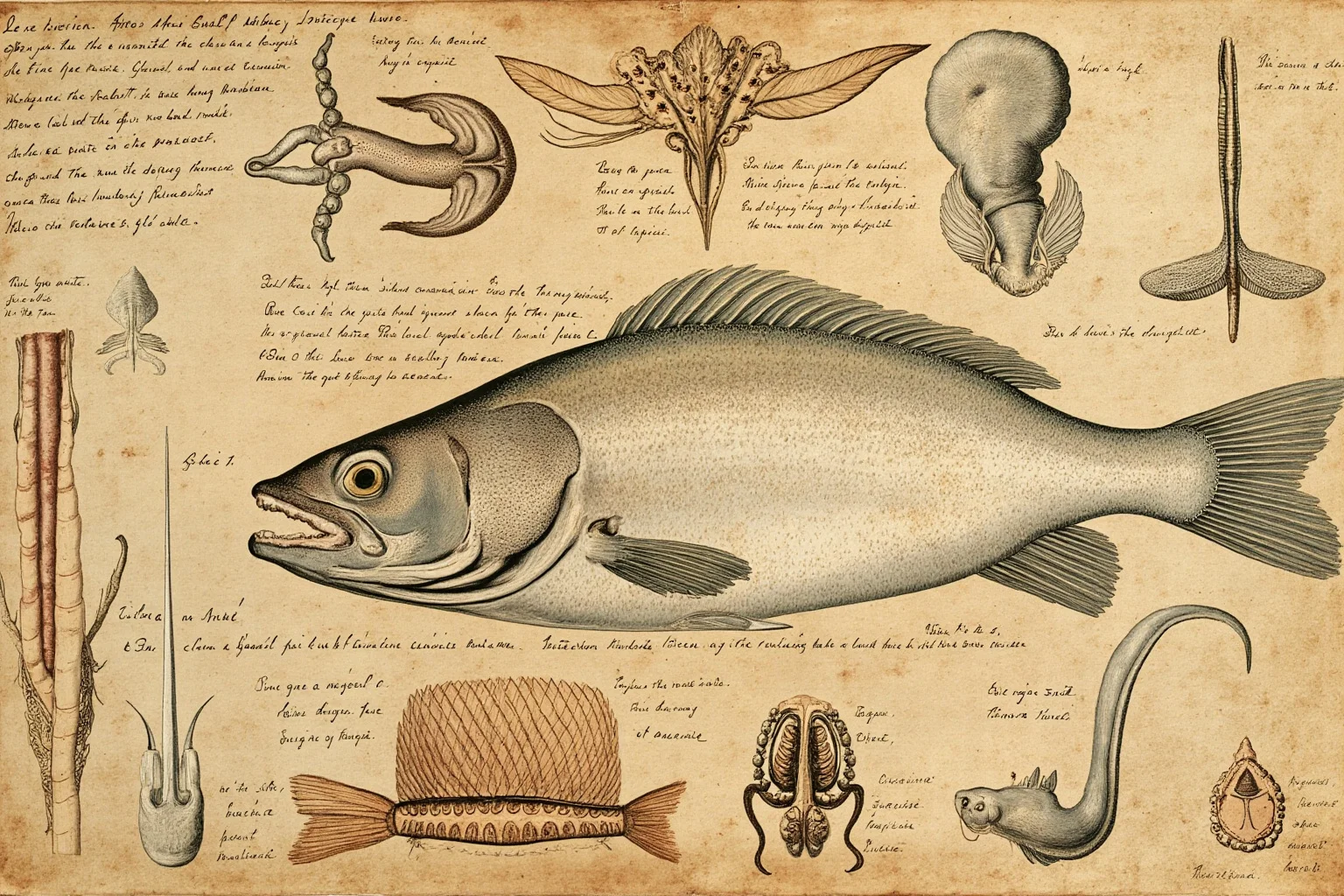
During his time on Lesbos, Aristotle dissected and classified hundreds of animal species, documenting anatomy, reproduction, and behavior in remarkable detail. His biological works, including “History of Animals,” represent some of the earliest systematic zoology in the Western tradition.
He correctly identified that whales and dolphins were different from fish, a distinction that seems obvious now but wasn’t universally recognized at the time. Charles Darwin himself reportedly praised Aristotle’s biological observations centuries later, calling him one of the greatest naturalists who ever lived.
10. His Four Causes Shaped Science for Two Millennia
Aristotle proposed that everything could be explained through four types of causes: material, formal, efficient, and final. This framework, laid out in his “Physics” and “Metaphysics,” became the standard way of explaining causation in the Western world for centuries.
The idea of a “final cause,” or purpose, was especially influential and controversial. It shaped everything from medieval theology to early modern science before being largely set aside by the mechanistic worldview that emerged in the 1600s.
11. He Got Some Big Things Wrong
In the spirit of myth-busting — the same honest look we gave George Washington and his own share of legends — it’s worth being honest: Aristotle made several significant errors by modern scientific standards. He believed in spontaneous generation, the idea that some living creatures could arise from non-living matter, and he thought the heart, not the brain, was the seat of thought and intelligence.
He also endorsed a geocentric model of the universe, placing Earth at the center of the cosmos, an idea that persisted until Copernicus and Galileo challenged it many centuries later. None of this erases his genuine contributions, but a complete picture of Aristotle means acknowledging where his conclusions simply didn’t hold up.
12. He Wrote the Nicomachean Ethics and Gave Us the “Golden Mean”
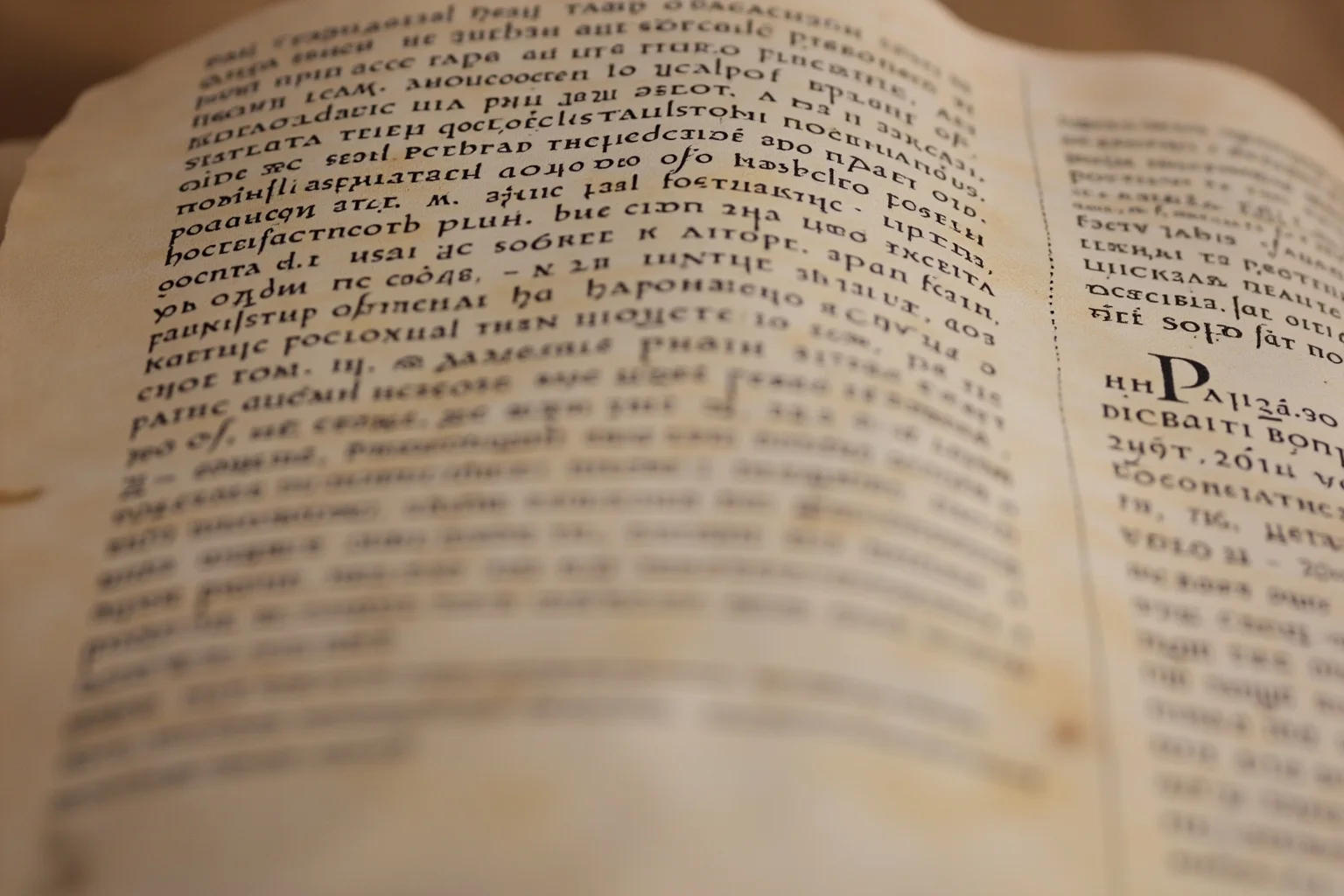
Aristotle’s “Nicomachean Ethics,” likely named after his son Nicomachus, remains one of the most influential works in moral philosophy. In it, he argued that virtue lies in finding a balanced middle ground between extremes, a concept often called the “golden mean.”
Courage, for example, sits between recklessness and cowardice. This practical, everyday approach to ethics contrasts with more rigid moral systems and still gets taught in philosophy classrooms today.
13. He Shaped Western Political Theory in “Politics”
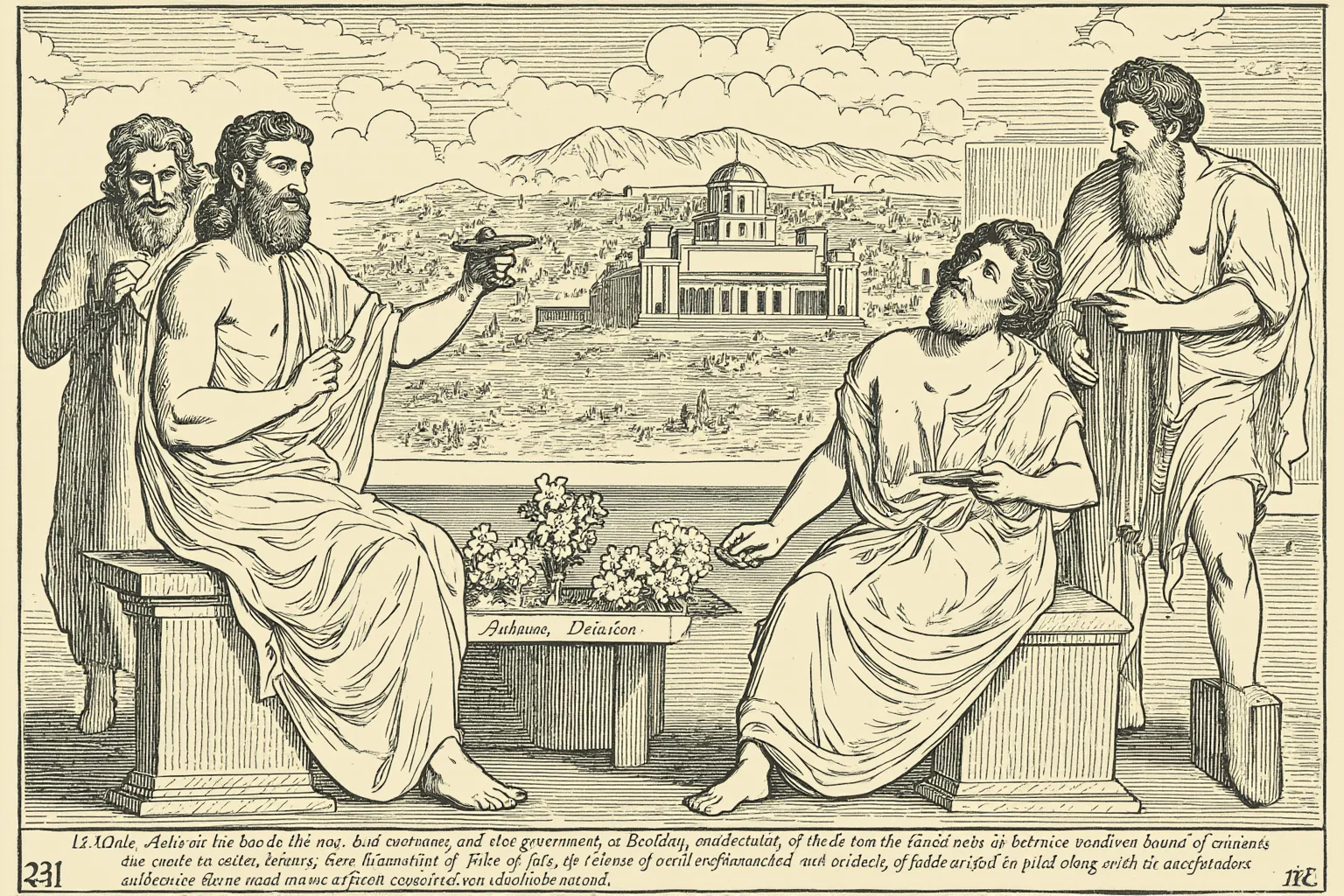
In his work “Politics,” Aristotle analyzed and classified different forms of government, from monarchy and aristocracy to democracy and their corrupted counterparts. He famously described humans as inherently social creatures, sometimes translated as “political animals,” who naturally form communities.
His comparative approach to studying actual city-states, rather than purely theorizing about an ideal one, was a notable departure from Plato’s method. That empirical streak shows up again and again across his work, regardless of subject.
14. He Basically Invented Literary Criticism with “Poetics”
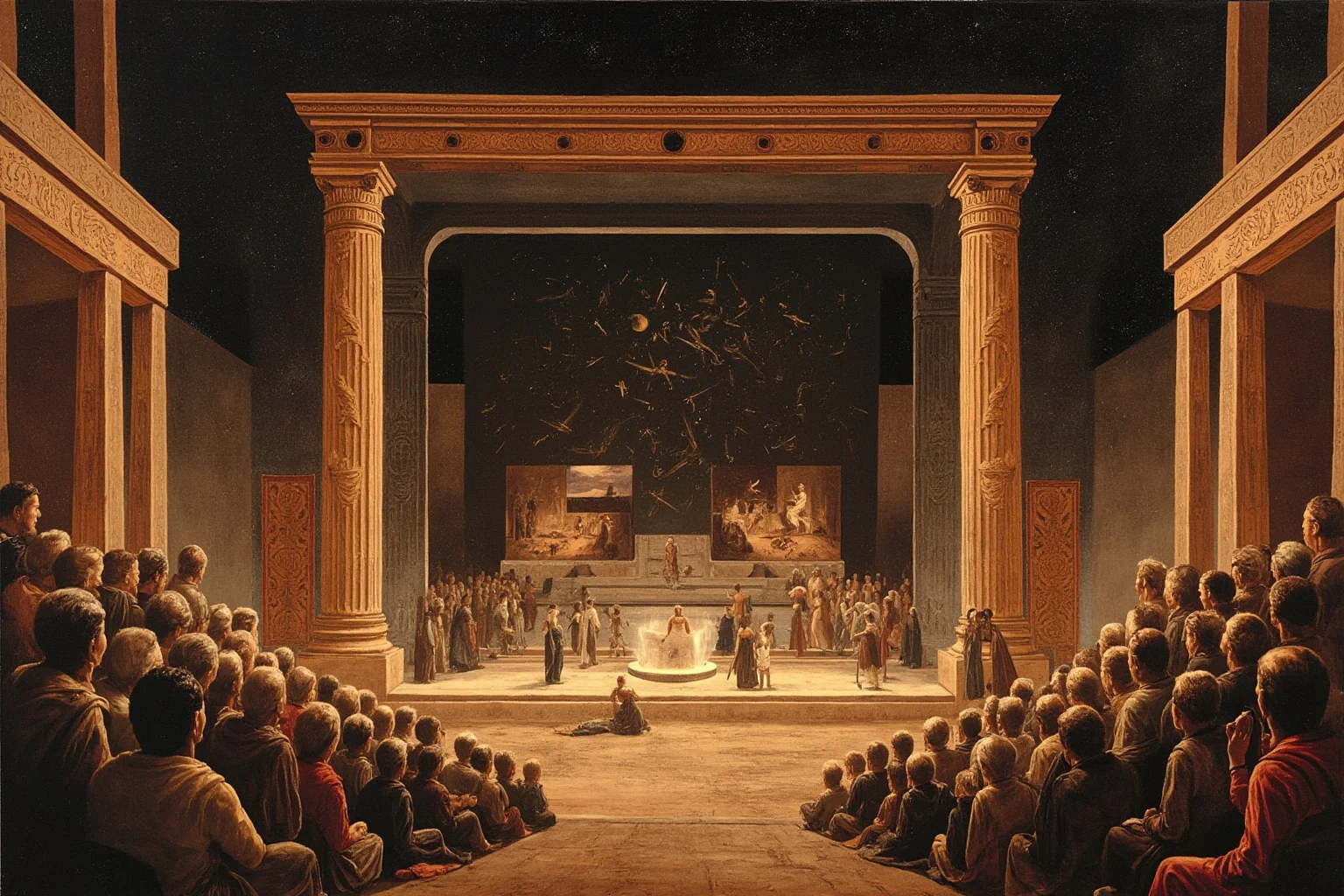
Aristotle’s “Poetics” is one of the earliest surviving works of literary theory in the Western tradition. In it, he analyzed the structure of Greek tragedy, introducing concepts like catharsis and the importance of plot, character, and unity of action.
His ideas about dramatic structure influenced playwrights and critics for centuries afterward, and echoes of his framework still show up in modern screenwriting guides. It’s a strange kind of legacy for a philosopher, but it’s a real one.
15. The Word “Metaphysics” Wasn’t Actually His

Here’s a fun myth-busting detail: Aristotle never used the word “metaphysics” himself. The term came from later editors who organized his writings and simply placed a set of works “after the Physics” (meta ta physika in Greek), and the name stuck.
The content of those works, dealing with existence, substance, and causation, is genuinely Aristotle’s. The label itself, though, is a historical accident rather than his own invention.
16. He Studied the Soul, Long Before Psychology Existed

In his treatise “De Anima” (“On the Soul”), Aristotle explored what animates living things, distinguishing between the capacities for nutrition, sensation, and reasoning. He treated the soul less as a mystical entity and more as the functional principle that makes a living being what it is.
This approach makes “De Anima” an early ancestor of what we’d now call psychology and philosophy of mind. It’s a good reminder that many modern academic disciplines trace their roots back to questions Aristotle was already asking.
17. He Was a Pioneer of Rhetoric as a Formal Discipline
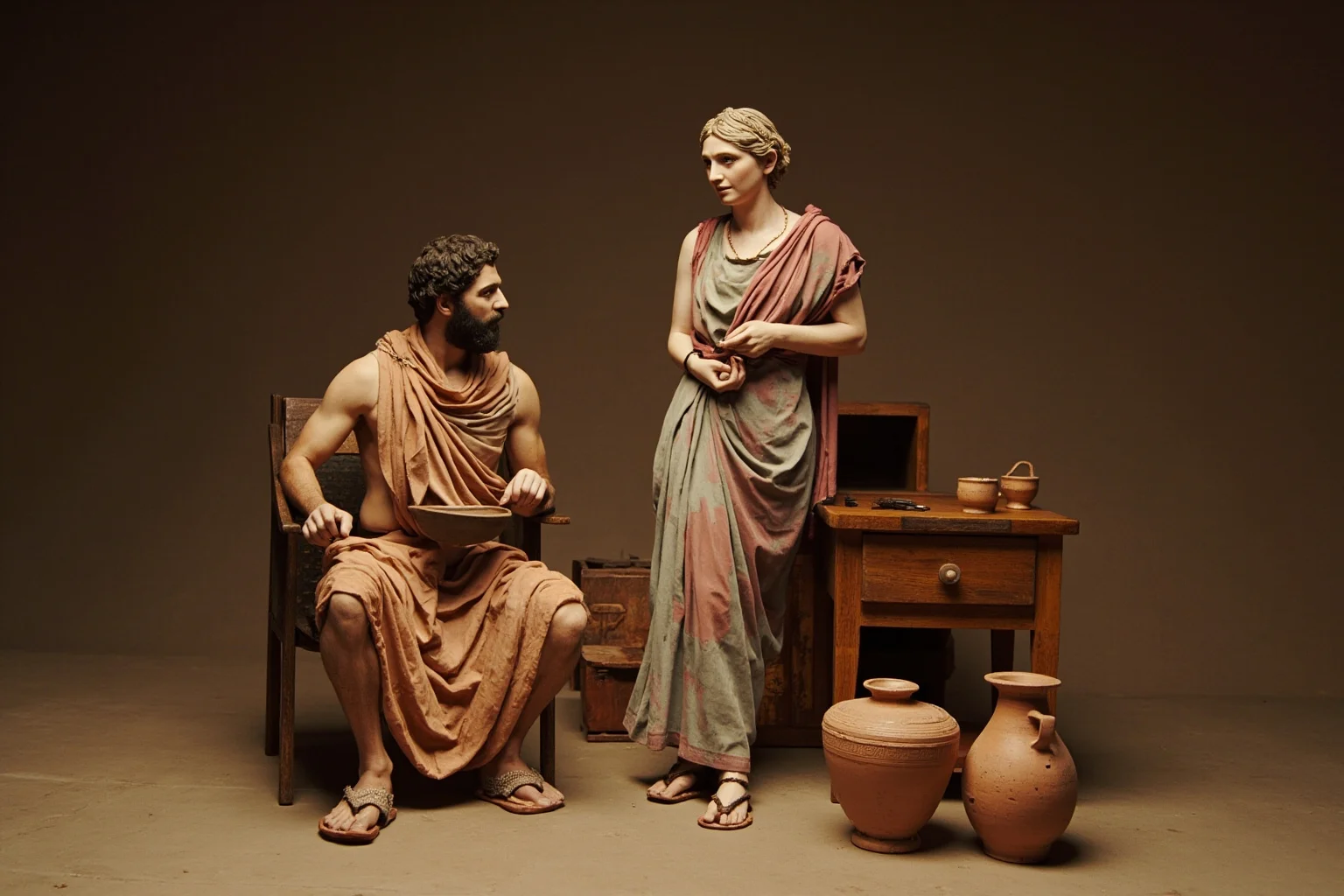
Aristotle’s “Rhetoric” treated persuasive speaking as a subject worthy of systematic study, rather than just a practical skill. He identified three modes of persuasion: ethos (credibility), pathos (emotional appeal), and logos (logical argument), terms still used in writing and communication classes today.
This wasn’t Aristotle inventing public speaking, obviously, but he was among the first to analyze why certain arguments actually work. That analytical approach became a template for rhetorical study for centuries afterward.
18. Most of His Original Writings Are Lost

Here’s a fact that surprises a lot of people: much of what survives under Aristotle’s name likely consists of lecture notes, either his own or compiled by students, rather than polished works intended for publication. Ancient sources suggest he wrote far more than what has come down to us.
This helps explain why some of his surviving texts feel dense, repetitive, or unfinished in places. We’re reading study notes from a working philosopher, not a tidy final draft meant for a general audience.
19. Islamic Scholars Saved His Work for the West
After the fall of Rome, much of Aristotle’s work was largely forgotten in Western Europe for centuries. It survived and flourished instead in the Islamic world, where scholars like Avicenna and Averroes translated, studied, and expanded on his ideas.
Those Arabic translations and commentaries eventually made their way back into medieval Europe, sparking a revival of Aristotelian thought in universities. Without that chain of preservation, a huge portion of his legacy might have been lost entirely.
20. He Was Twice Married, Not a Solitary Bachelor
Aristotle isn’t usually thought of in terms of his personal life, but he was married at least once, to a woman named Pythias, with whom he had a daughter. After Pythias’s death, he had a long-term relationship with a woman named Herpyllis, with whom he had a son, Nicomachus, the same name later attached to his famous ethics text.
Details about his domestic life are sparse compared to his philosophical output, which isn’t surprising given how ancient biographical records typically work. Still, it’s a small human detail worth remembering behind all the theory.
21. He Fled Athens Again — And Died Soon After
After Alexander the Great’s death in 323 BCE, anti-Macedonian sentiment surged in Athens, and Aristotle’s earlier ties to the Macedonian court made him a target. Facing charges that echoed the impiety accusations once leveled at Socrates, Aristotle chose to leave the city rather than risk trial.
He retreated to Chalcis, on the island of Euboea, where he died in 322 BCE, reportedly of natural causes, at around 62 years old. It was a quiet end for someone whose ideas would go on to dominate Western thought for the next two thousand years.
22. Dante Called Him “The Master of Those Who Know”
Aristotle’s reputation only grew after his death, especially during the medieval period when his works were rediscovered and absorbed into Christian, Jewish, and Islamic scholarship. The poet Dante Alighieri, writing in the 14th century, referred to Aristotle as “the master of those who know” in his “Divine Comedy.”
That kind of reverence explains why he’s still commonly described as one of history’s greatest thinkers centuries later. Few figures have earned that level of lasting respect across so many different cultures and eras.
Why Aristotle Still Matters Today
Aristotle’s fingerprints are all over modern life in ways most people never notice. Scientific classification, formal logic, ethical reasoning, and even screenwriting structure all owe something to his systematic approach to knowledge.
He wasn’t infallible, and pretending otherwise would be its own kind of myth-making. But the sheer range and rigor of his thinking is exactly why students, scholars, and curious readers keep coming back to these facts about Aristotle more than two millennia after he lived.
Frequently Asked Questions
What is Aristotle known for?
Aristotle is best known for founding formal logic, pioneering the systematic study of biology, and shaping Western ethical and political philosophy through works like the "Nicomachean Ethics" and "Politics." He's also remembered for tutoring Alexander the Great and founding the Lyceum, a school of learning in Athens.
What did Aristotle discover?
Aristotle developed the syllogism, a foundational tool of formal logic, and made detailed biological discoveries through dissection and classification of hundreds of animal species. He also outlined the theory of the four causes and produced foundational texts in ethics, politics, rhetoric, and literary theory.
What was Aristotle best known for in his own lifetime?
In his own lifetime, Aristotle was primarily known as a leading philosopher at Plato's Academy and later as the tutor of the young Alexander the Great. His fame as a founder of logic, biology, and political theory grew largely in the centuries after his death.
Did Aristotle get everything right?
No. Aristotle believed in a geocentric universe, thought the heart controlled thought and reasoning, and endorsed the now-debunked idea of spontaneous generation. His scientific method of careful observation was groundbreaking even when some of his specific conclusions were later proven wrong.
Was Aristotle a student of Plato?
Yes, Aristotle studied at Plato's Academy in Athens for around twenty years, first as a student and later as a teacher. He eventually developed his own philosophical views that diverged significantly from Plato's, particularly around the importance of empirical observation.
How did Aristotle die?
Aristotle died in 322 BCE in Chalcis, on the island of Euboea, reportedly of natural causes. He had fled Athens shortly before his death due to rising anti-Macedonian sentiment following the death of his former student, Alexander the Great.

Alex Warren
Related Articles