

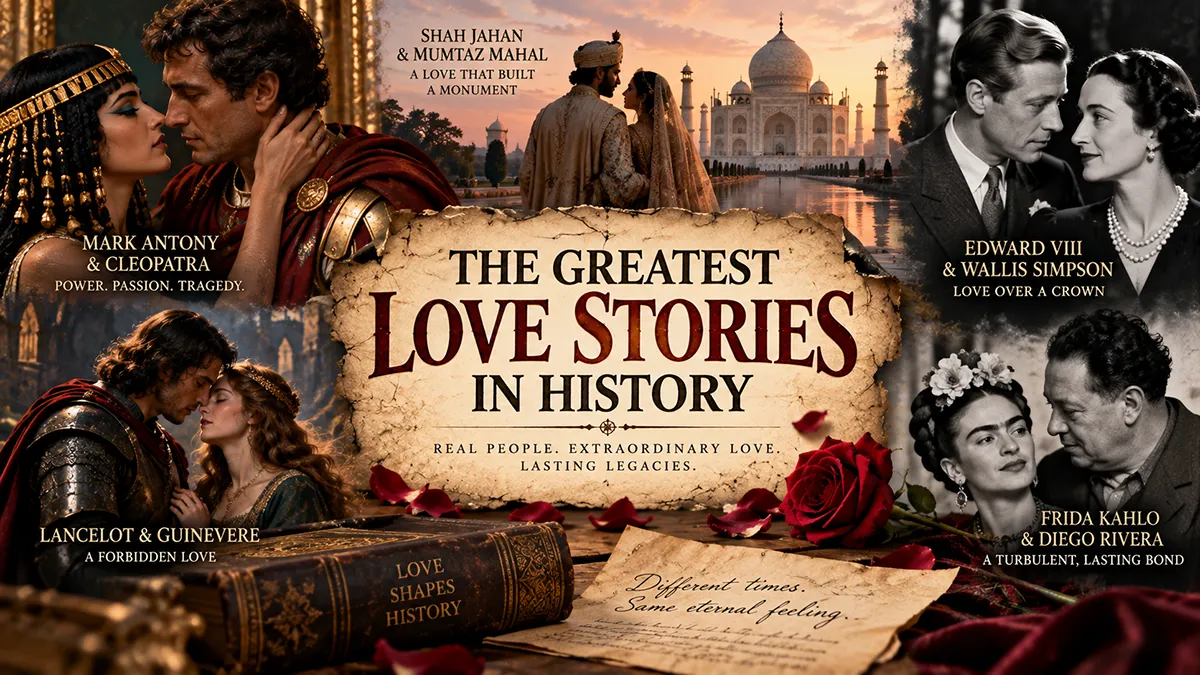
Every generation likes to think it invented romance, but history disagrees. Long before anyone coined the term “relationship goals,” real people were writing love letters by candlelight, building monuments out of grief, and risking crowns for a chance at happiness. Some of these stories are meticulously documented by historians; others have been polished into legend over centuries, which means the truth is often more interesting than the myth.
This list blends verified history with a few beloved legends and literary romances, because when people search for the greatest love stories, they usually mean both. We’ll flag clearly which is which along the way, so you get the real story about love, not just the retelling.
TL;DR: From Cleopatra and Mark Antony to Johnny Cash and June Carter, history’s greatest love stories mix real devotion, political ambition, and a fair amount of myth that’s worth untangling.
What Actually Makes a Love Story “Great”?
Before diving in, it helps to define terms. A truly great love story usually has a few ingredients: real emotional stakes, some kind of obstacle, and evidence — letters, records, or credible testimony — that the affection was genuine rather than invented after the fact.
An example of romantic love that holds up to scrutiny tends to survive the boring parts, not just the dramatic ones. That’s why this list includes long, quiet marriages alongside the famous tragic romances, because devotion sustained over decades is arguably rarer than a grand gesture.
It’s also worth separating documented history from legend. Some of the stories below, like Tristan and Isolde or Orpheus and Eurydice, are myths and medieval tales rather than real biography, and we’ll say so plainly rather than blur the line.
1. Cleopatra and Mark Antony
Cleopatra VII of Egypt — still counted among the most recognized historical figures of all time — and the Roman general Mark Antony formed one of antiquity’s most consequential alliances, both political and personal. Ancient sources like Plutarch describe genuine passion between them, though much of what survives was written by their enemies in Rome, so some details are almost certainly propaganda.
Their story ended in defeat at the Battle of Actium in 31 BCE, followed by their deaths in Alexandria. The popular image of Cleopatra dying from an asp bite is widely repeated but historically disputed, since ancient accounts vary and no definitive proof exists.
2. Napoleon and Josephine Bonaparte
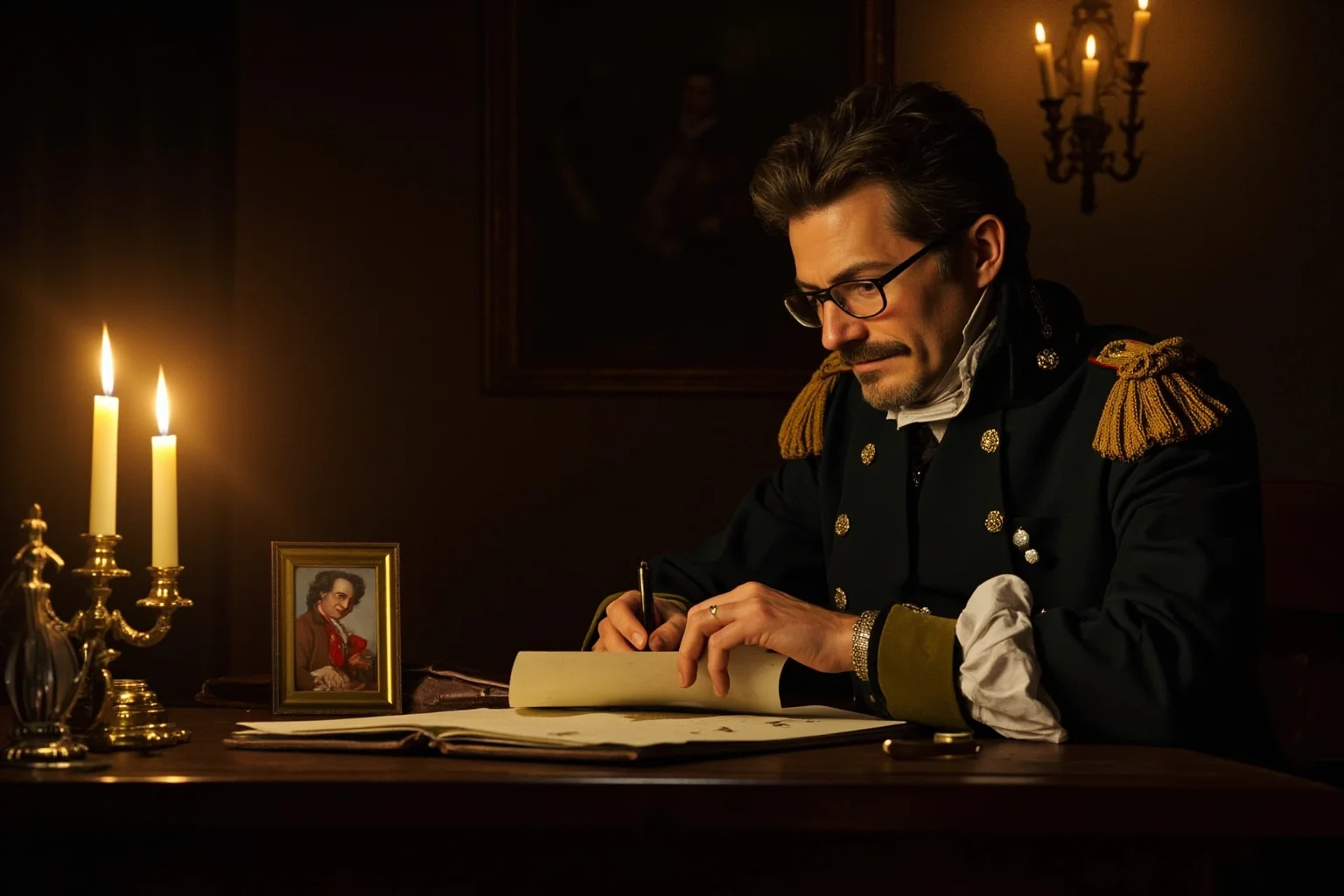
Napoleon Bonaparte’s letters to Josephine from his early military campaigns are strikingly intense, full of longing and jealousy. They married in 1796, and by most accounts he was far more infatuated with her than she initially was with him.
The marriage later became a matter of state when Napoleon divorced Josephine in 1810 because she couldn’t produce an heir. Even so, historical letters suggest real affection lingered between them for the rest of their lives.
3. Shah Jahan and Mumtaz Mahal
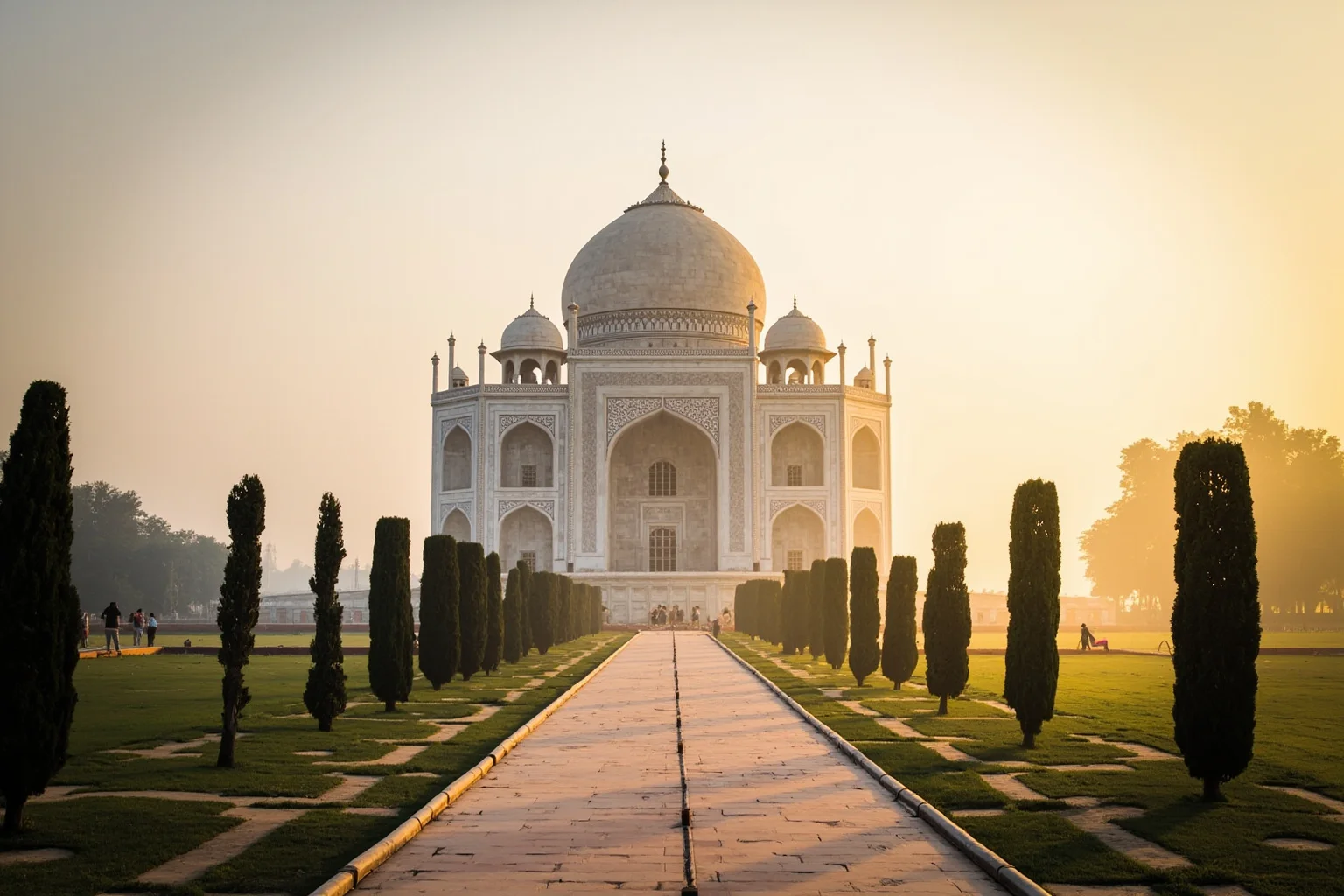
The Mughal emperor Shah Jahan built the Taj Mahal in Agra as a mausoleum for his wife Mumtaz Mahal, who died in 1631 during childbirth. Construction reportedly took over a decade and involved thousands of workers and craftsmen.
It’s often called the greatest love story ever built in marble, and the grief behind it does appear genuine in historical records. It’s worth noting, though, that Shah Jahan had other wives, which complicates the simple “one great love” narrative often told today.
4. Abelard and Héloïse
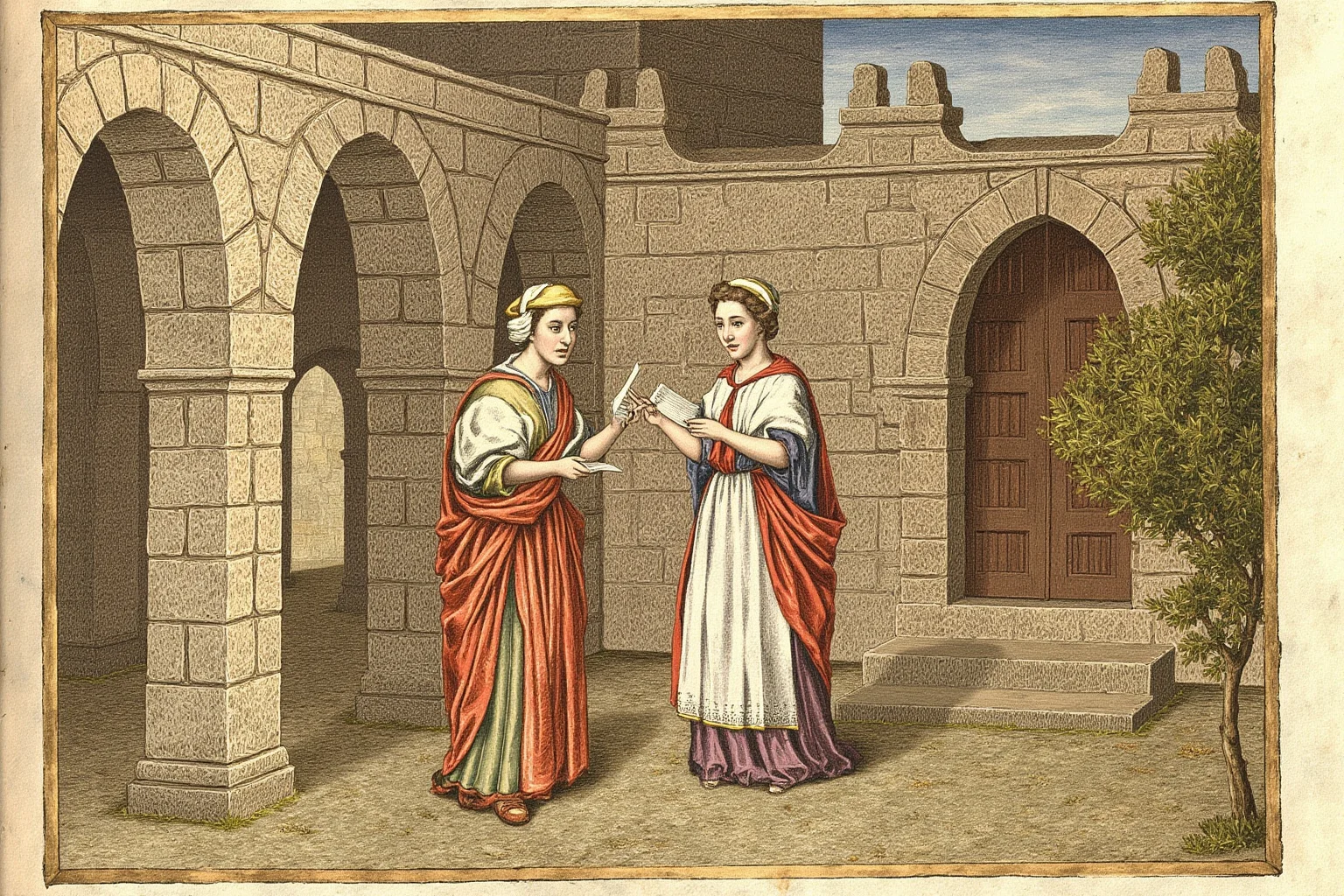
In 12th-century Paris, philosopher Peter Abelard and his brilliant student Héloïse fell into a secret relationship that scandalized medieval society. After Héloïse’s family discovered the affair, they had Abelard castrated in retaliation, and both eventually entered religious life.
What makes this one of history’s best-documented real love stories is their surviving correspondence, written years later as monastics. Their letters are remarkably candid about desire, regret, and intellectual partnership, which is rare for the period.
5. Queen Victoria and Prince Albert
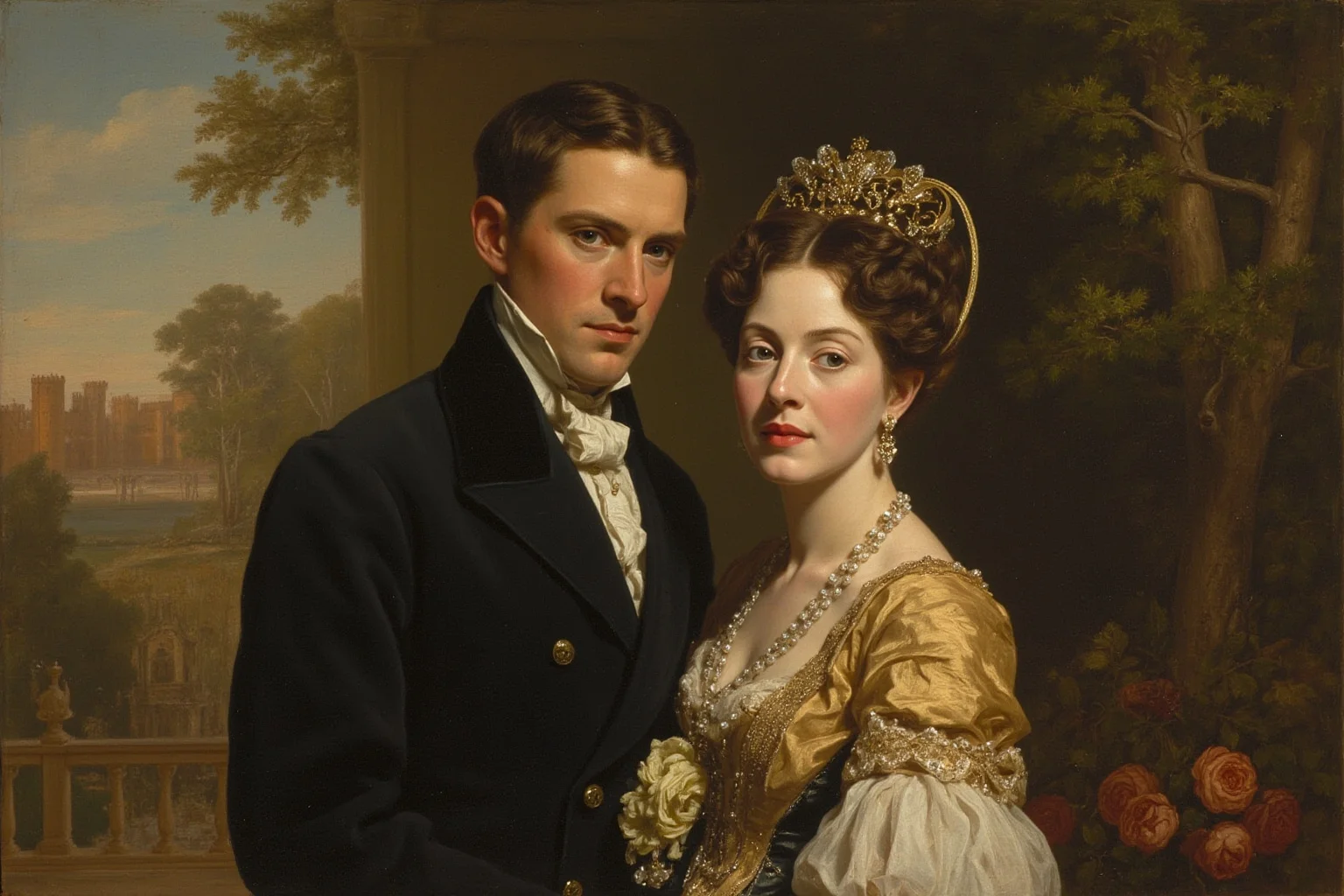
Queen Victoria, unusually for a woman of her era, proposed to Prince Albert herself in 1839, since royal protocol required the monarch to do the asking. Their marriage is well documented as a genuine partnership, both romantic and intellectual.
When Albert died in 1861, Victoria wore mourning black for the remaining 40 years of her life. It’s one of the more extreme, and best-verified, examples of long-term grief in royal history.
6. Elizabeth Barrett and Robert Browning
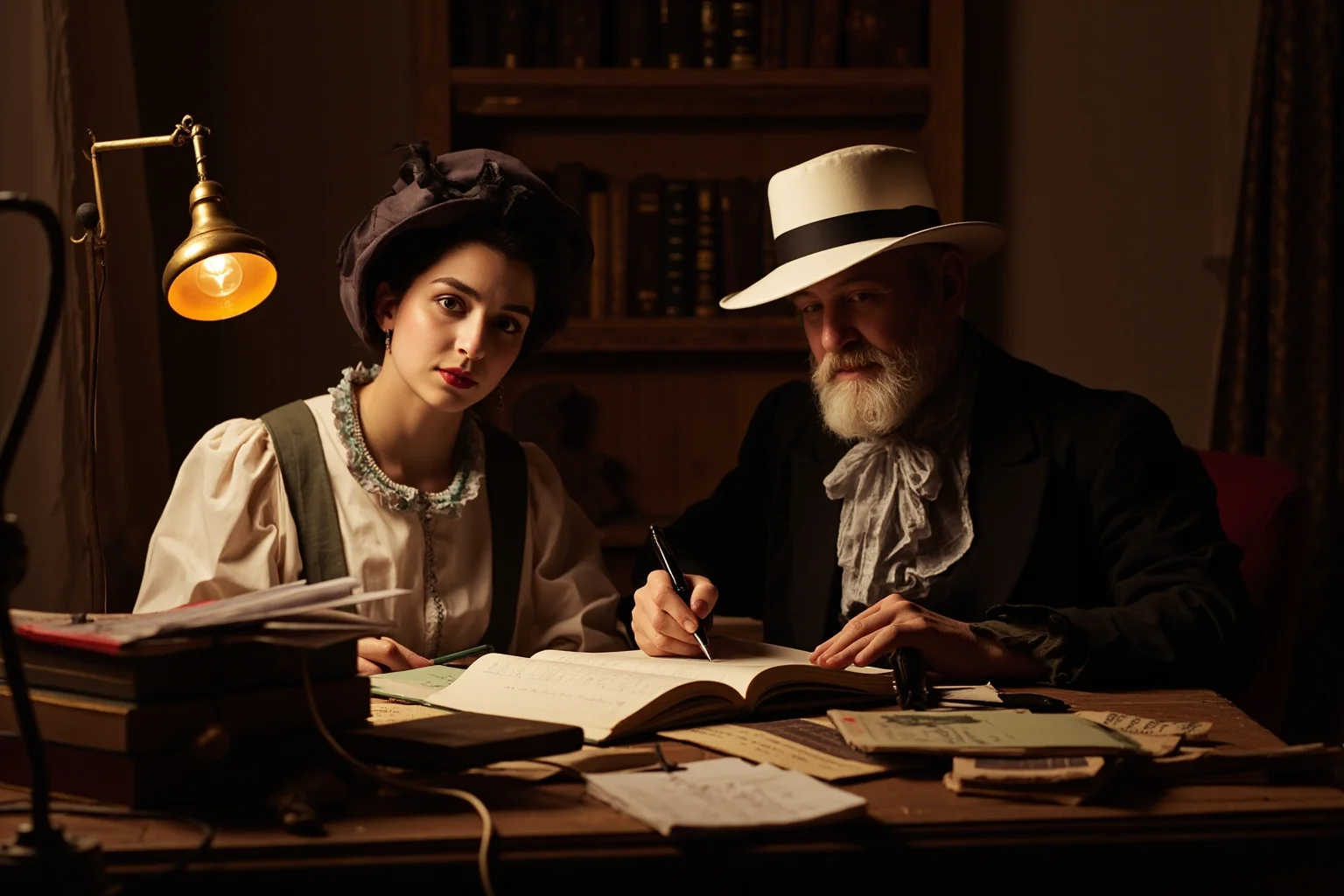
Poets Elizabeth Barrett and Robert Browning began corresponding in 1845 after he admired her poetry, and their courtship unfolded largely through letters. Elizabeth’s father disapproved of marriage for his children, so the couple eloped to Italy in 1846.
Her sonnet sequence, including the famous line “How do I love thee? Let me count the ways” — now counted among the amazing quotes said by legendary historical figures — was inspired directly by their relationship. It remains one of literature’s most quoted examples of romantic love grounded in real biography.
7. John and Abigail Adams
John Adams and his wife Abigail exchanged more than a thousand letters over their decades-long marriage, many written while he served in the Continental Congress and later as president. Their correspondence gives historians an unusually intimate record of a real partnership.
Abigail’s letters also show her as a political advisor in her own right, most famously urging John to “remember the ladies” while drafting new laws. It’s a true love story built on equal footing, which was rare for its time.
8. Emperor Justinian and Empress Theodora
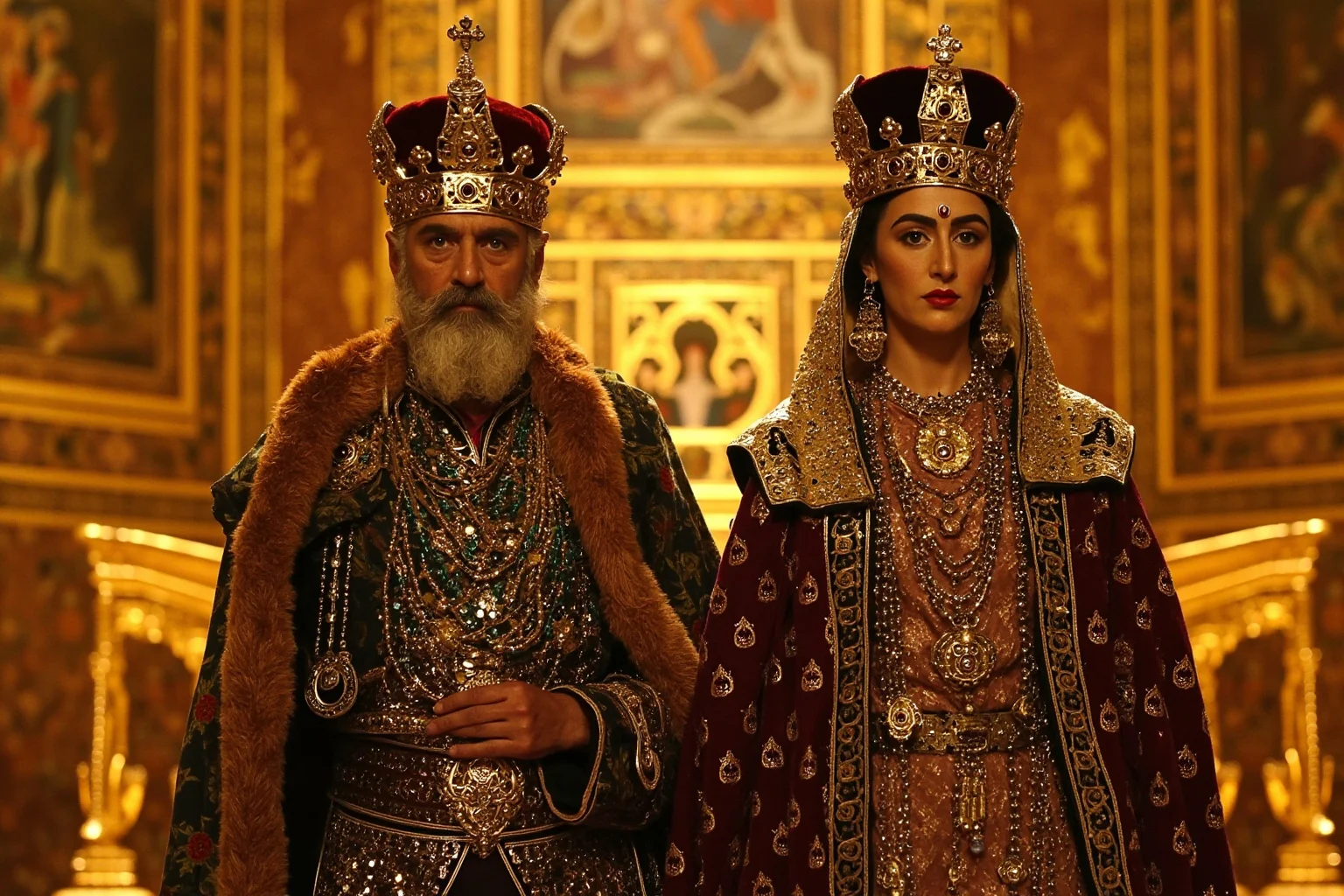
Theodora rose from a working-class background in the Byzantine entertainment world to become empress alongside Justinian I in the 6th century. Roman law at the time barred senators from marrying women of her former profession, so Justinian had the law changed to marry her.
Historian Procopius, admittedly a hostile source in some of his writings, still documents Theodora as a powerful co-ruler who shaped policy. Their partnership is a strong historical example of love intertwined with real political power.
9. Frida Kahlo and Diego Rivera
Mexican artists Frida Kahlo and Diego Rivera married in 1929, divorced in 1939, and remarried in 1940, making their relationship one of art history’s most turbulent. Both had affairs, and their letters and diaries show a bond that was passionate but often painful.
Kahlo reportedly called Rivera the great accident of her life, second only to a serious tram accident she survived as a teenager. Their story is less a fairy tale and more a real, messy example of love that endured despite itself.
10. Marie and Pierre Curie
Marie and Pierre Curie met in a Paris laboratory in 1894 and married the following year, building a scientific partnership that led to shared Nobel Prize–winning discoveries in radioactivity — the kind of work that places Marie among the smartest people in history. Their relationship was famously described as a meeting of equals, unusual for the era.
Pierre died suddenly in a street accident in 1906, and Marie continued their research alone, eventually winning a second Nobel Prize. Letters between them, published later, reveal deep mutual respect alongside romantic devotion.
11. Pocahontas and John Rolfe
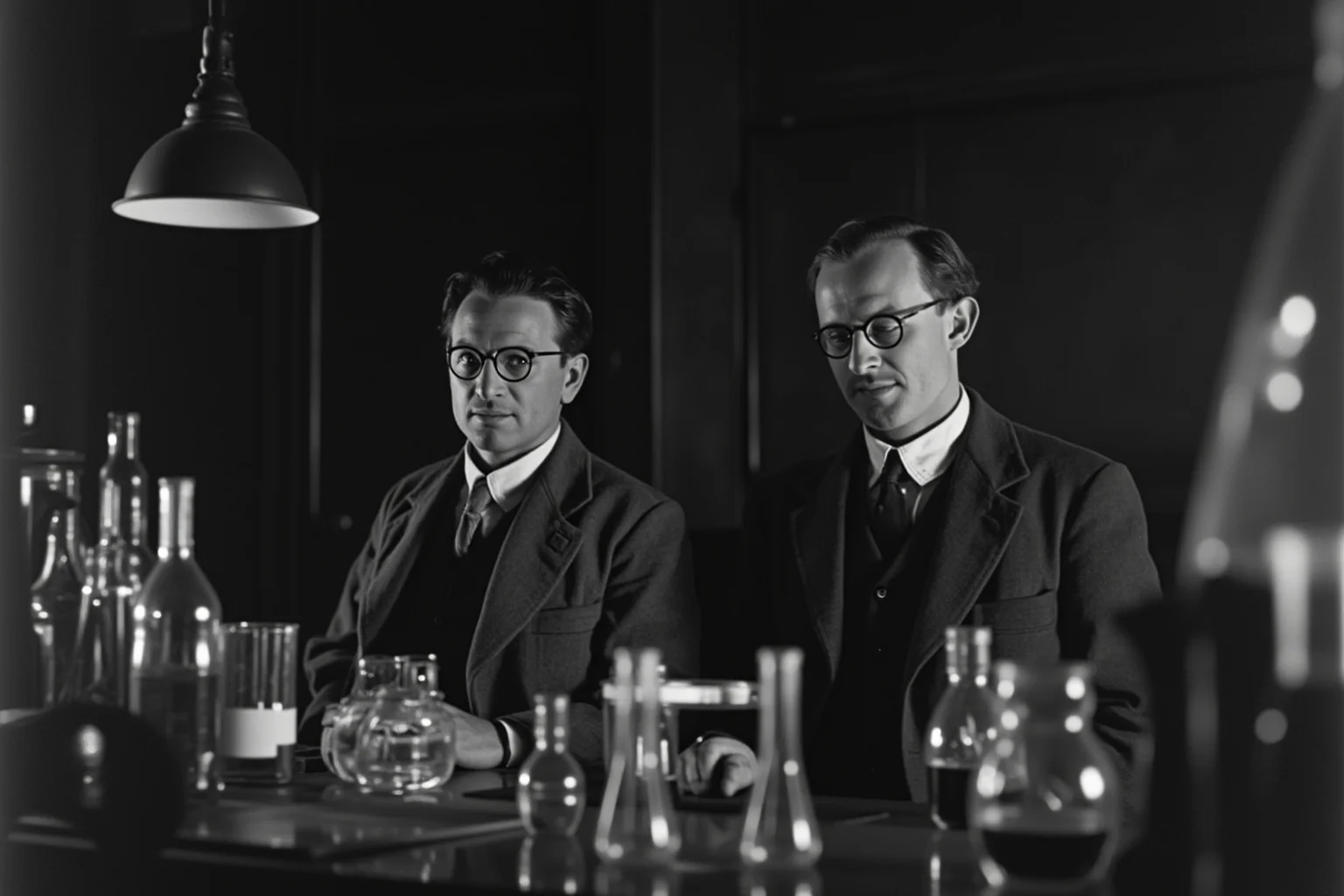
Here’s a genuine myth-bust: the popular romance between Pocahontas and John Smith, familiar from films, has little solid historical support and Smith himself was significantly older — the real story of Pocahontas looks quite different from the movie version. What’s actually documented is her 1614 marriage to English tobacco planter John Rolfe.
That marriage helped temporarily ease tensions between Jamestown colonists and the Powhatan people. Whether it was a genuine romance or largely a political and diplomatic arrangement is still debated by historians, so it’s best treated as a real historical event rather than a confirmed love story.
12. Wallis Simpson and King Edward VIII
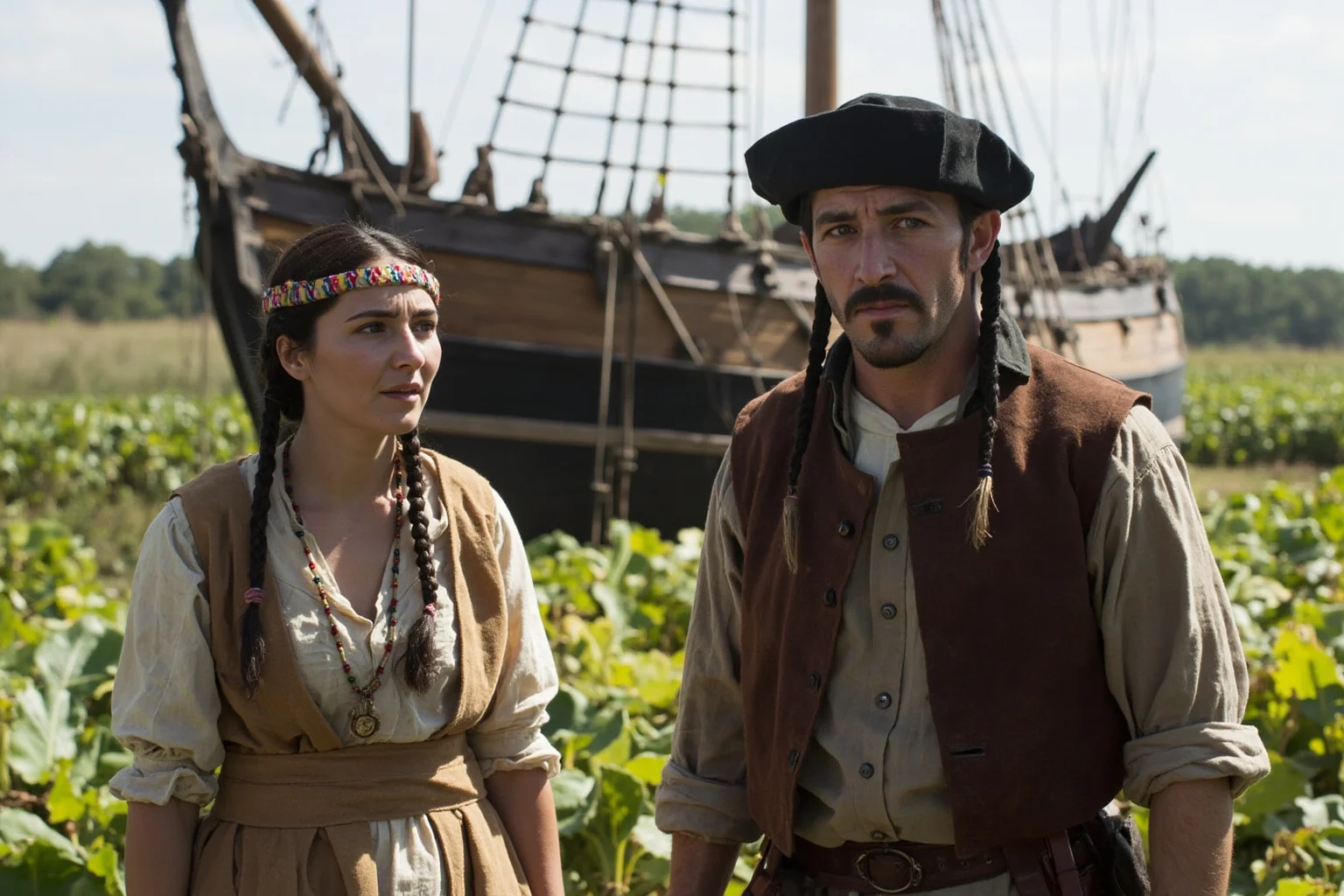
King Edward VIII abdicated the British throne in 1936 to marry Wallis Simpson, an American divorcée, famously saying he found it impossible to carry the heavy burden of responsibility “without the help and support of the woman I love” — a line that’s become one of the famous quotes everyone knows by heart. The couple married in 1937 and remained together until his death in 1972.
It’s often called one of the 20th century’s greatest royal love stories, though historians note the relationship was also entangled with political controversy at the time. Whatever the politics, the couple’s own devotion to each other over 35 years of marriage is well documented.
13. Grace Kelly and Prince Rainier III
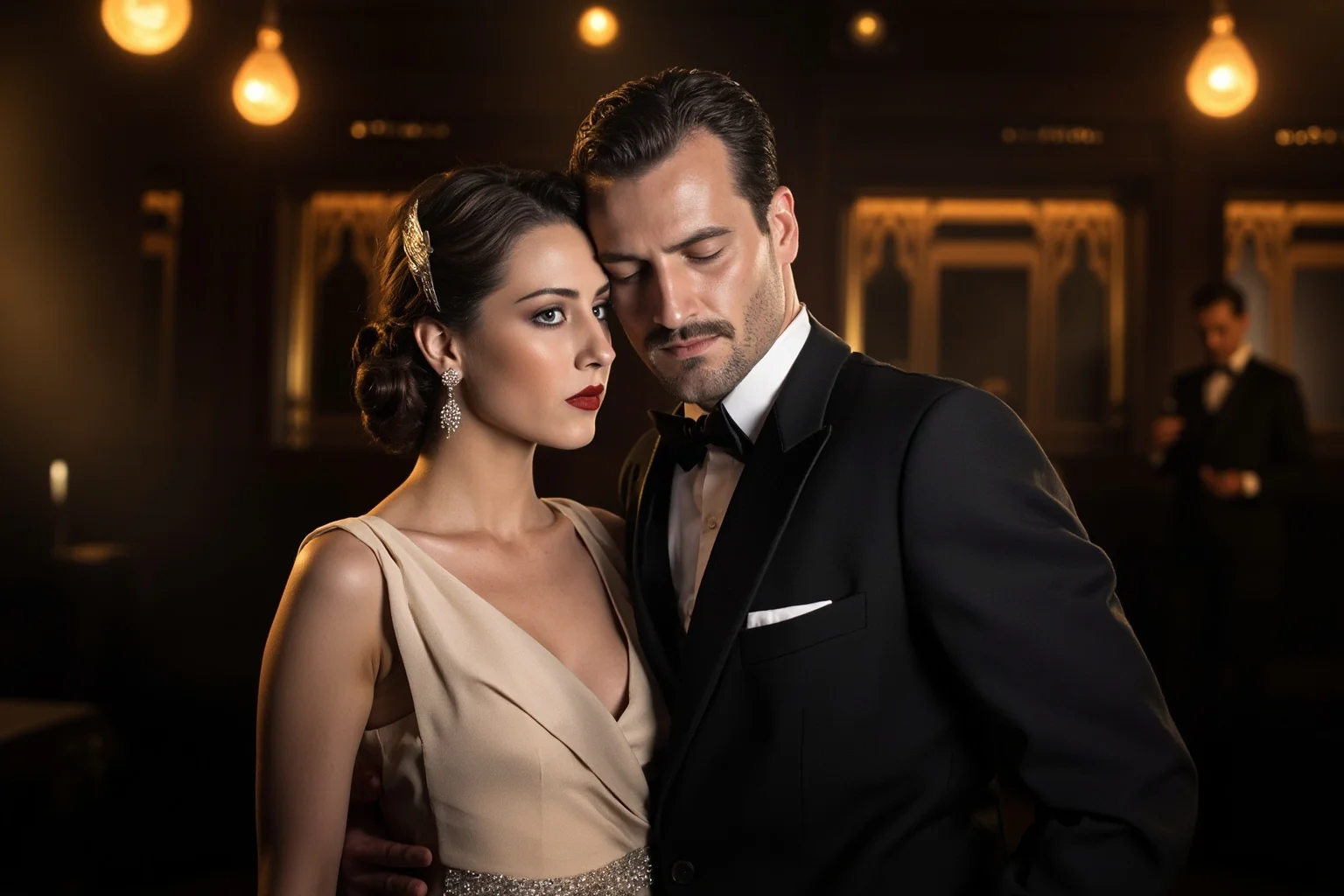
Hollywood actress Grace Kelly married Prince Rainier III of Monaco in 1956, in a wedding covered by media worldwide as a real-life fairy tale. She gave up her acting career to become a full-time princess and mother.
The couple remained married until Grace’s death in a car accident in 1982. Their romance genuinely began at the Cannes Film Festival, one of the more charming and verified origin stories on this list.
14. Johnny Cash and June Carter
Country musicians Johnny Cash and June Carter knew each other for over a decade before marrying in 1968, after both had gone through earlier marriages. Their song “Ring of Fire,” co-written by June, is widely believed to reflect the difficulty and intensity of falling for each other while still married to other people.
They performed together for decades and remained married until June’s death in May 2003. Johnny died just four months later, and many biographers describe his final months as a real example of love that didn’t survive separation.
15. Ulysses S. Grant and Julia Dent Grant
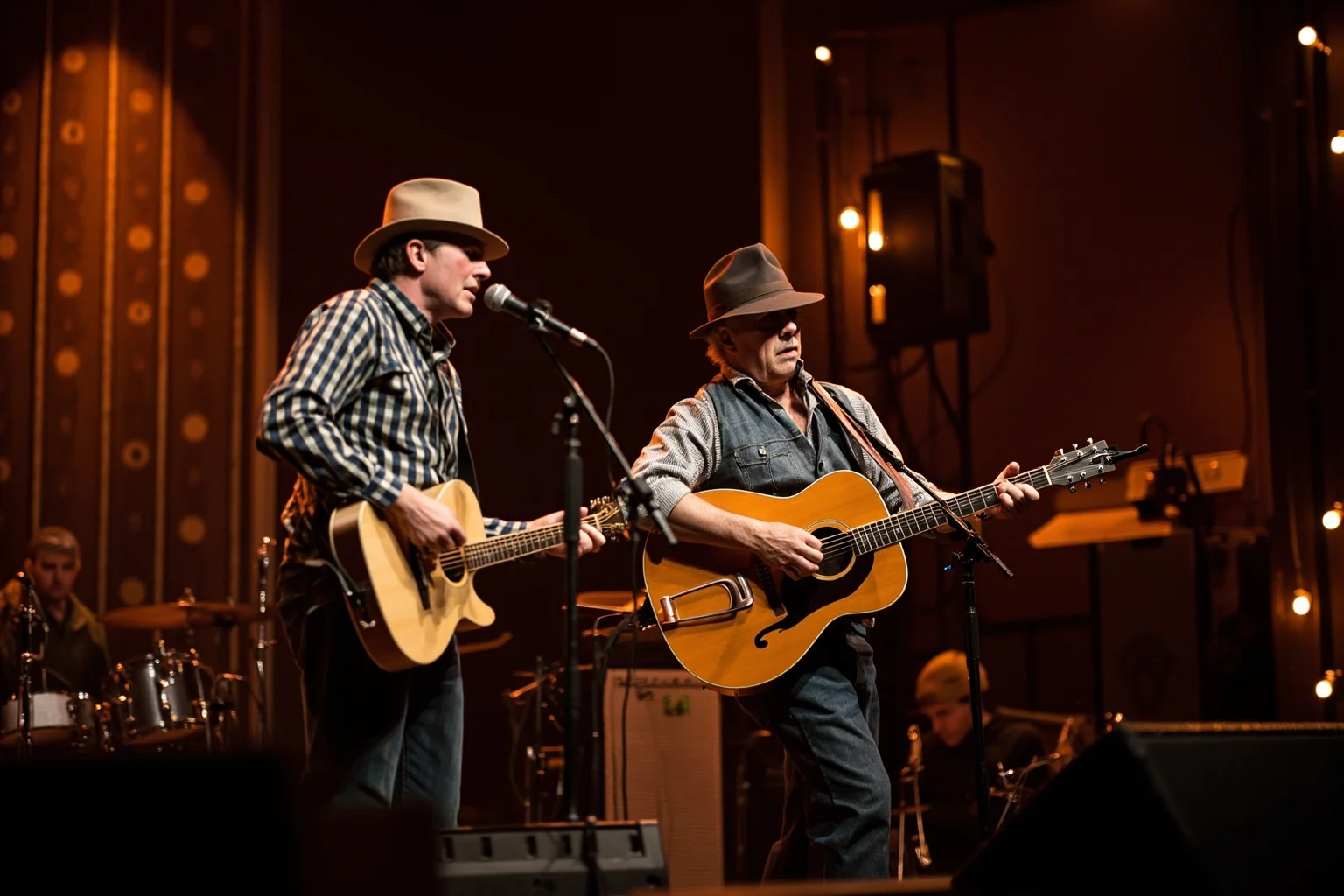
Ulysses S. Grant and Julia Dent married in 1848 and remained devoted through his Civil War command and two presidential terms. Julia was famously by his side through financial hardship both early and late in life.
When Grant was dying of throat cancer in 1885, he raced to finish his memoirs specifically to leave Julia financially secure. It’s a quieter, less mythologized story than most on this list, but historians consider it one of the era’s most genuine partnerships.
16. Orpheus and Eurydice
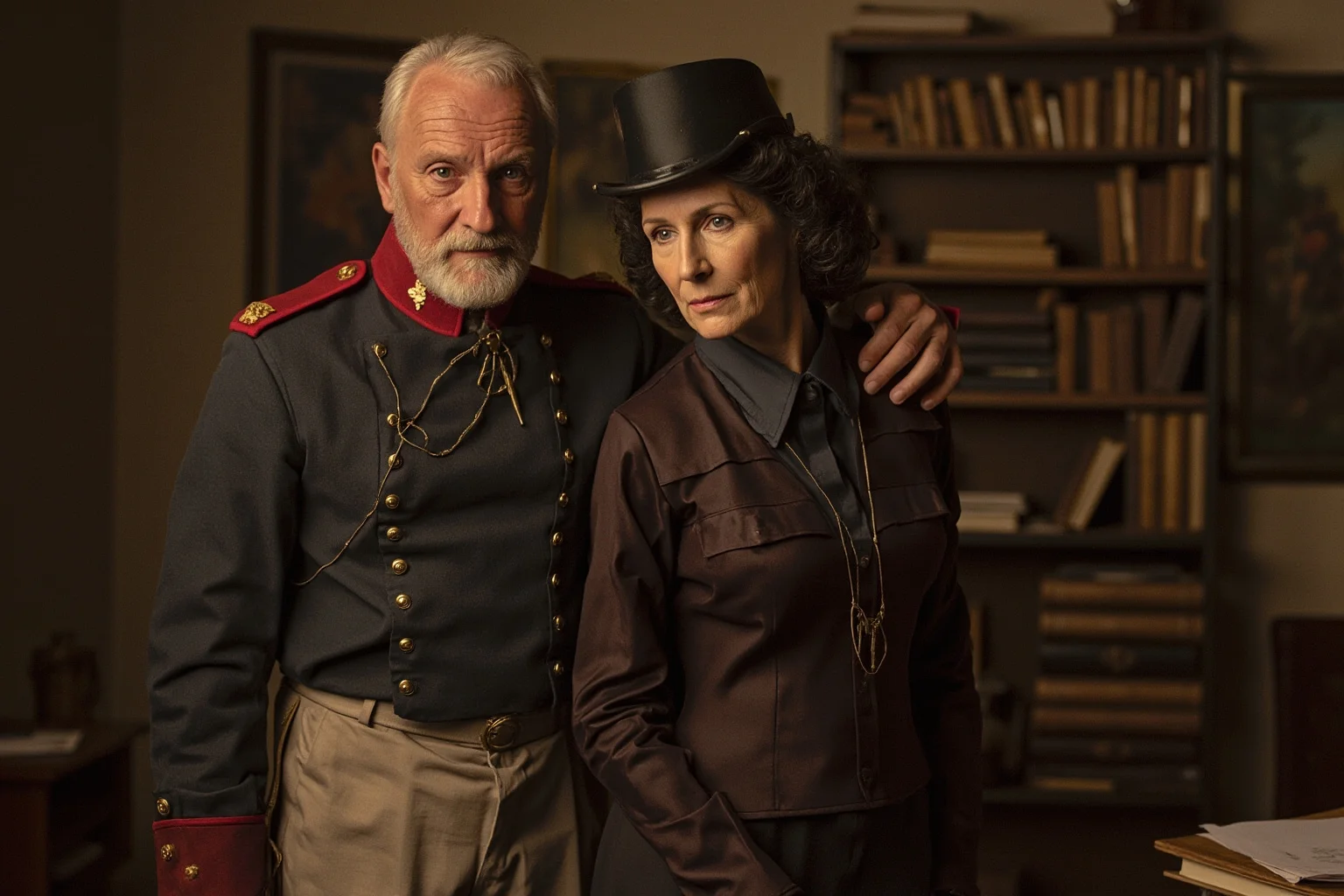
This one is Greek mythology rather than history, so it belongs among literature’s greatest love stories, not verified biography. Orpheus, a legendary musician, journeys into the underworld to bring his dead wife Eurydice back to life, only to lose her again when he breaks the rule against looking back.
The myth has inspired operas, poems, and paintings for over two thousand years. It endures because it captures something true about grief and hope, even though the characters themselves are legendary.
17. Tristan and Isolde
Tristan and Isolde is a medieval legend, likely with Celtic roots, about a knight and a queen bound together by a love potion and doomed by conflicting loyalties. It later became one of the most influential romantic tragedies in European literature, inspiring Wagner’s famous opera.
Like Orpheus and Eurydice, this is legend rather than documented history. It’s included here because it shaped how medieval and modern audiences imagine tragic, epic love stories.
18. Romeo and Juliet
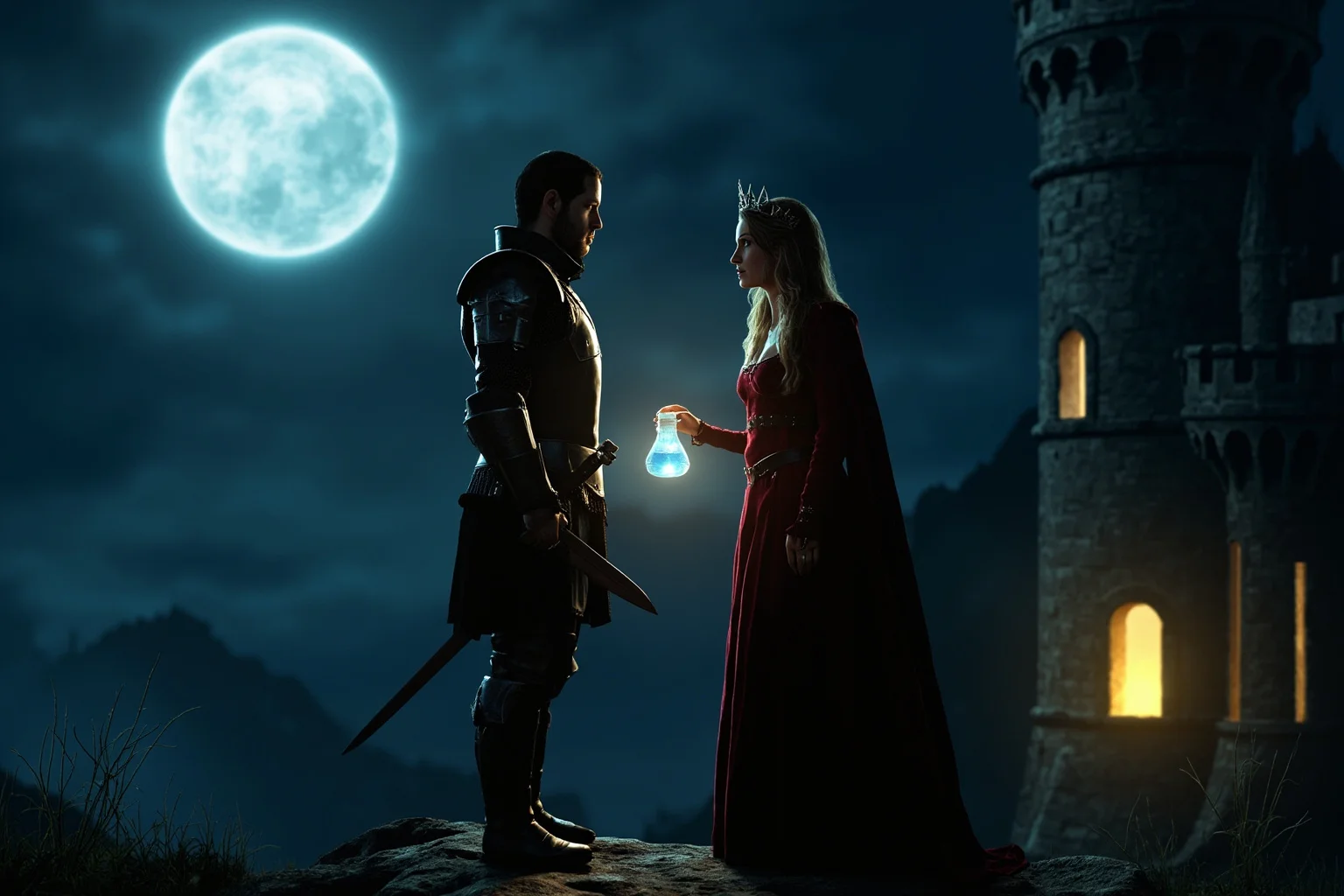
Shakespeare’s Romeo and Juliet, written around 1595, is entirely fictional, though it drew on earlier Italian tales of feuding families and doomed young lovers. It’s arguably the most famous love story ever written, and the phrase “star-crossed lovers” comes directly from its text.
Because it’s fiction, it’s not a real love story in the historical sense, but its cultural influence is undeniable. It remains the default answer many people give when asked for the greatest love story ever, even though no historical Romeo or Juliet existed.
19. Odysseus and Penelope
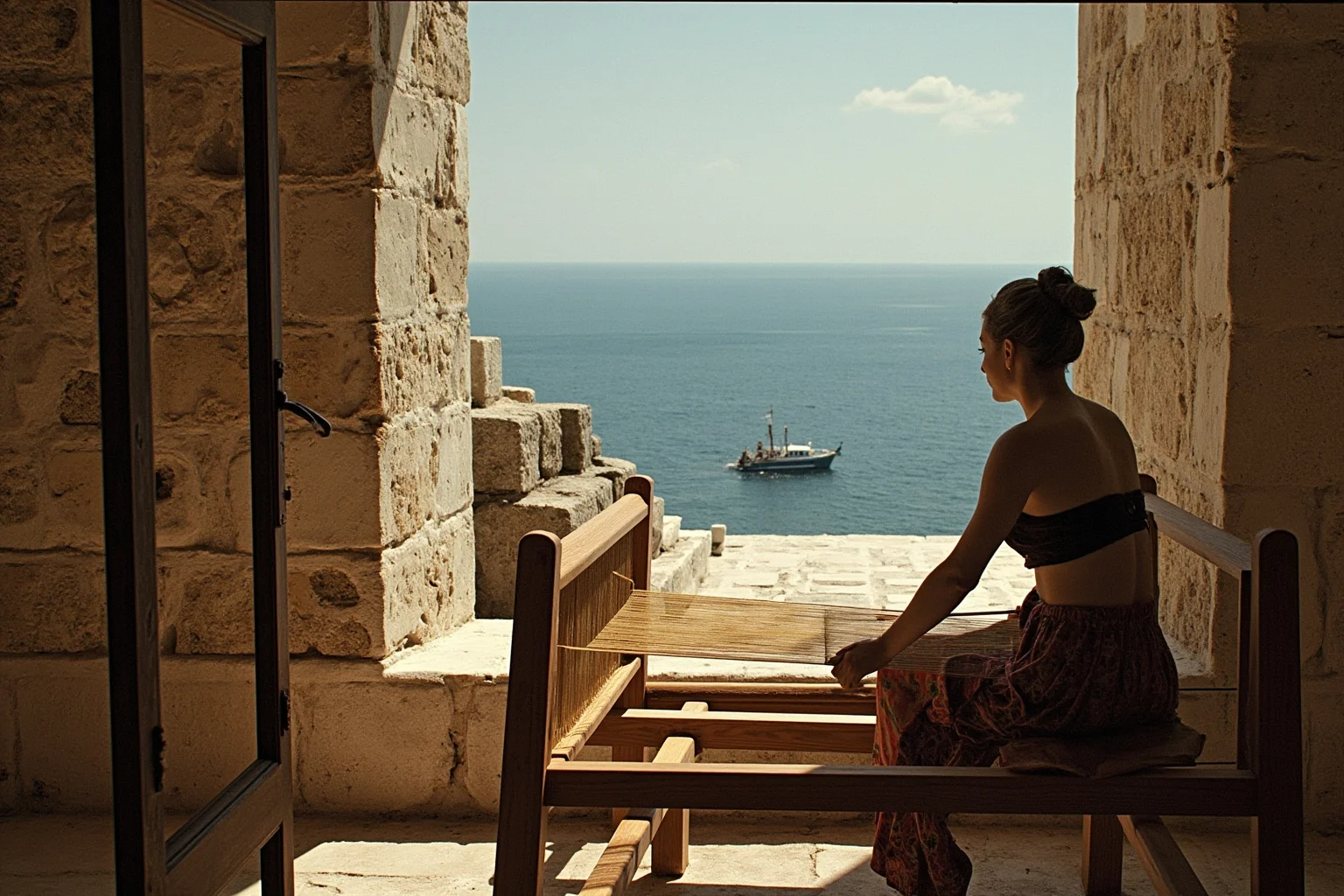
In Homer’s Odyssey, Penelope waits roughly twenty years for her husband Odysseus to return from the Trojan War, fending off suitors with clever delays. Their reunion is treated in the epic as a triumph of loyalty and patience over time and doubt.
As with the other ancient myths here, there’s no historical evidence these two existed as real people. Still, their story is often cited as one of literature’s earliest and most enduring templates for real love stories about faithfulness.
20. Lancelot and Guinevere
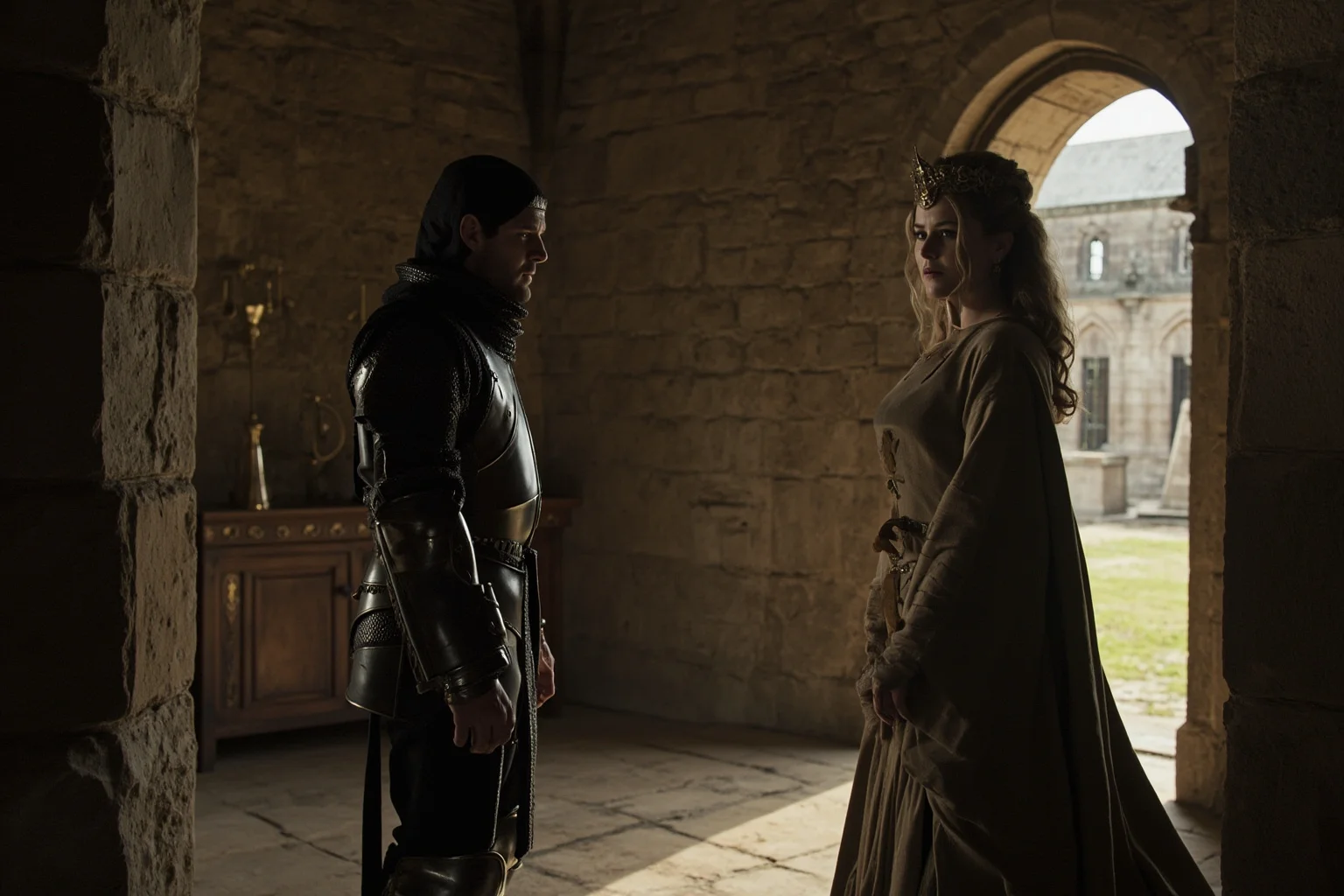
In Arthurian legend, the knight Lancelot and Queen Guinevere’s forbidden love ultimately helps unravel King Arthur’s kingdom. The tale developed over centuries across French and English medieval literature rather than originating from a single verified source.
It’s a foundational story in the courtly love tradition, which shaped European ideas about romance for generations. Like Tristan and Isolde, it belongs firmly in the category of legend rather than history.
21. Franklin and Eleanor Roosevelt
Franklin and Eleanor Roosevelt’s marriage doesn’t fit the fairy-tale mold, and that’s precisely why historians find it compelling. Franklin’s affairs, including a long relationship with Lucy Mercer, strained the marriage badly, yet the couple stayed together and built an extraordinary political partnership.
Eleanor became one of the most influential First Ladies in American history, largely on her own terms. Their story is a real example that great love doesn’t always look like romance from the outside, sometimes it looks like loyalty, respect, and shared purpose.
22. Ronald and Nancy Reagan
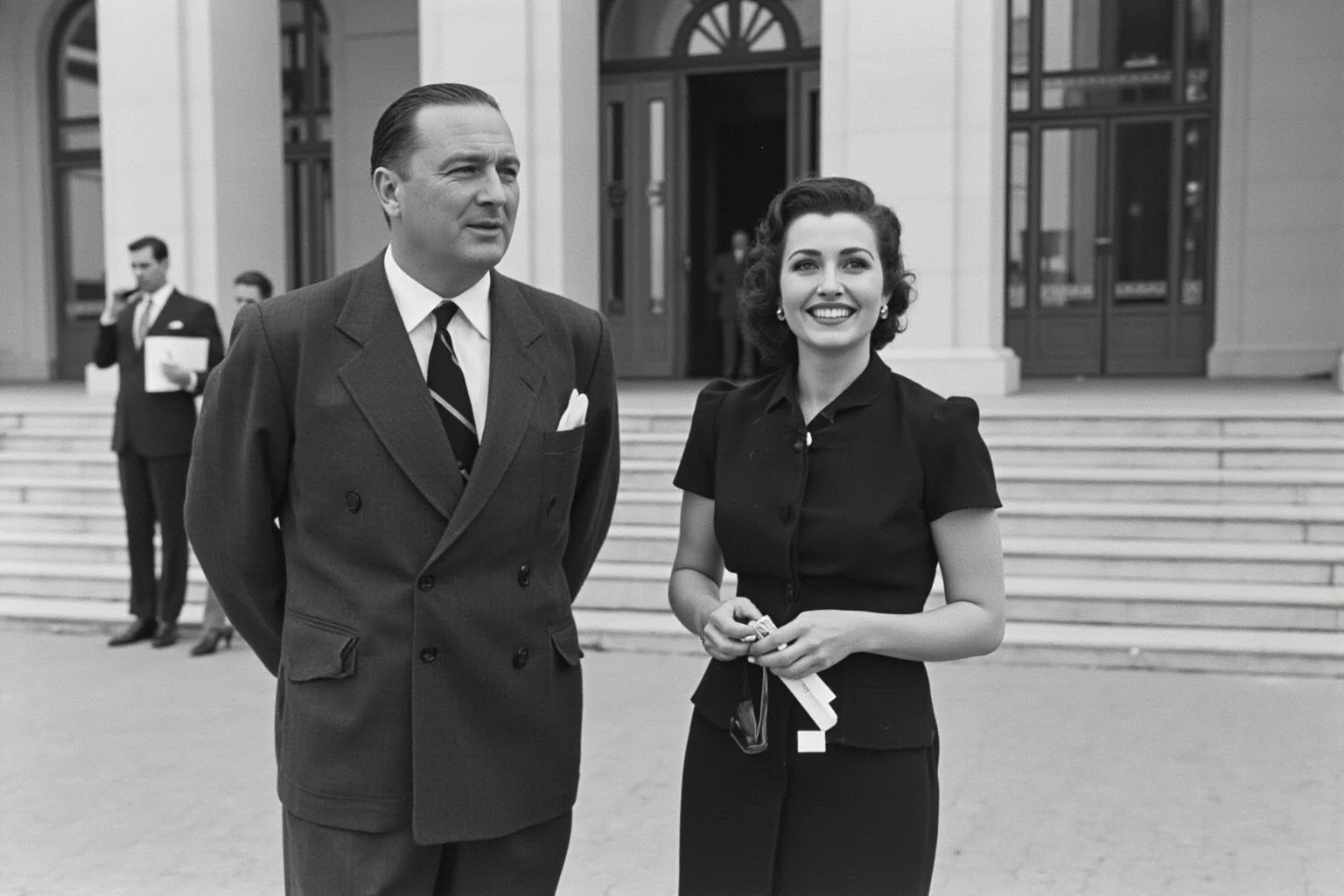
Ronald and Nancy Reagan married in 1952 and were known for an unusually visible devotion throughout his acting career and presidency, including affectionate looks and letters that biographers have cited as evidence of genuine attachment. Ronald reportedly wrote Nancy love letters for their entire marriage, including during his time in the White House.
After his 1994 Alzheimer’s diagnosis, Nancy became his primary caregiver and public advocate for related research. It’s one of the more recent entries on this list, but historians treat their decades-long devotion as well documented rather than just political image-making.
Story Title Ideas Inspired by These Romances
If you’re a writer looking for story title ideas for your own love story, history’s greatest romances are a genuinely good source of inspiration. Titles that borrow their imagery tend to feel timeless without sounding generic.
A few ideas drawn from the stories above: “Letters Across an Ocean,” “The Queen Who Waited,” “Built From Grief,” “Ring of Fire Between Us,” and “The Vow They Rewrote.” Each nods to a real historical detail, whether it’s Abigail Adams’s letters, Penelope’s patience, or the Taj Mahal’s origins.
The best titles for a love story, real or fictional, usually hint at the obstacle rather than just the romance itself. That’s the pattern across nearly every story on this list, from banned marriages to wartime separation.
Why These Stories Still Matter
What ties these stories of great love together isn’t just romance, it’s evidence of people choosing each other despite real cost. Some paid with reputation, some with political power, and some simply with time spent waiting.
It’s worth remembering that not every famous love story is equally documented. Ancient and medieval tales often blur into legend, while more recent couples like the Curies or the Reagans left letters, diaries, and records that historians can actually verify.
That mix of solid history and enduring myth is exactly why this topic never gets old. Whether you’re drawn to the true real love story of John and Abigail Adams or the tragic legend of Tristan and Isolde, each one still says something honest about what people are willing to risk for love.
Frequently Asked Questions
What are some of the best stories of great love in history?
Historians generally point to well-documented relationships like John and Abigail Adams, Marie and Pierre Curie, and Robert and Elizabeth Barrett Browning as some of the best-verified stories of great love, since their surviving letters and records confirm real, sustained devotion rather than legend.
What is considered the greatest love story ever?
There's no single agreed-upon answer, since it depends on whether you mean documented history or literature. Many people point to Shah Jahan and Mumtaz Mahal for real history, or Romeo and Juliet for fiction, though Shakespeare's play is entirely invented rather than based on real people.
Were Pocahontas and John Smith actually in love?
There's little credible historical evidence for a romance between Pocahontas and John Smith, and the age gap and available records make it unlikely. What is documented is her later marriage to John Rolfe in 1614, which historians view as tied to diplomacy as much as romance.
How can I tell if a love story is a true, real love story rather than legend?
Look for primary sources like letters, diaries, or contemporary official records, which is what separates documented couples such as the Curies or the Adamses from legendary pairs like Tristan and Isolde, whose stories exist only in medieval literature rather than verified biography.
What makes an example of romantic love historically significant?
The most historically significant examples usually combine genuine documented affection with real stakes, whether political, social, or personal, such as Justinian changing Roman law to marry Theodora or Elizabeth Barrett Browning defying her father's wishes to marry Robert Browning.
Are any of the famous couples on this list purely fictional?
Yes. Romeo and Juliet, Orpheus and Eurydice, Tristan and Isolde, Odysseus and Penelope, and Lancelot and Guinevere are all literary or mythological rather than historical figures, though they've shaped how later generations describe epic love stories.

Alex Warren
Related Articles





