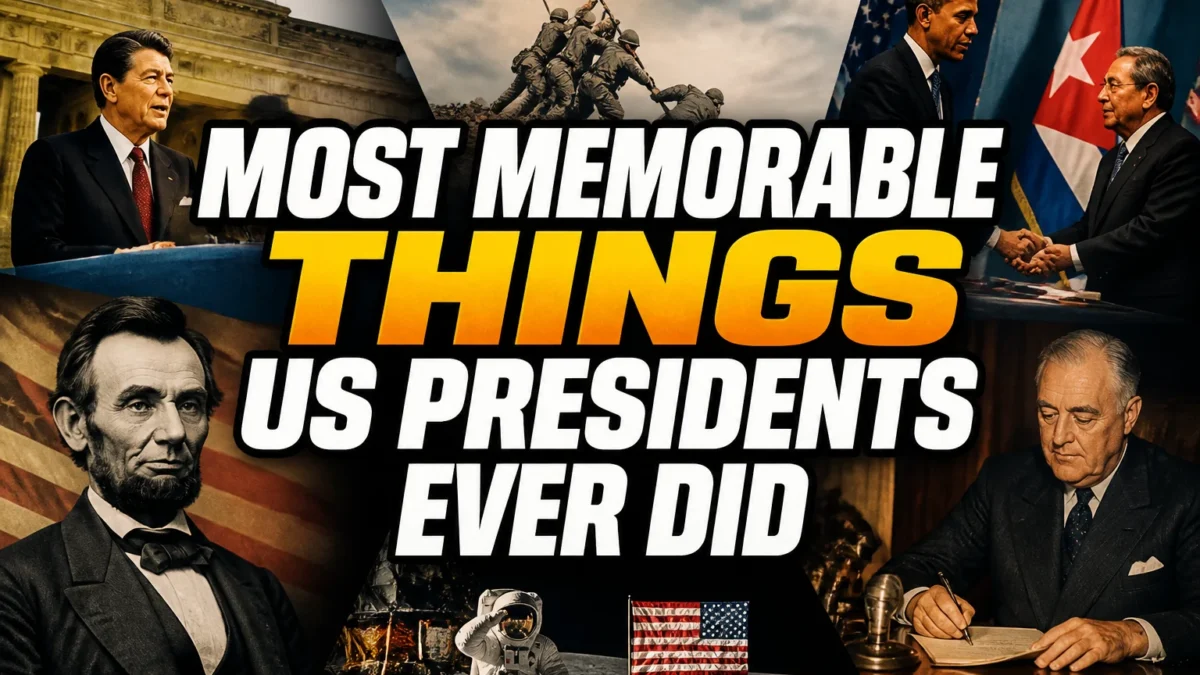
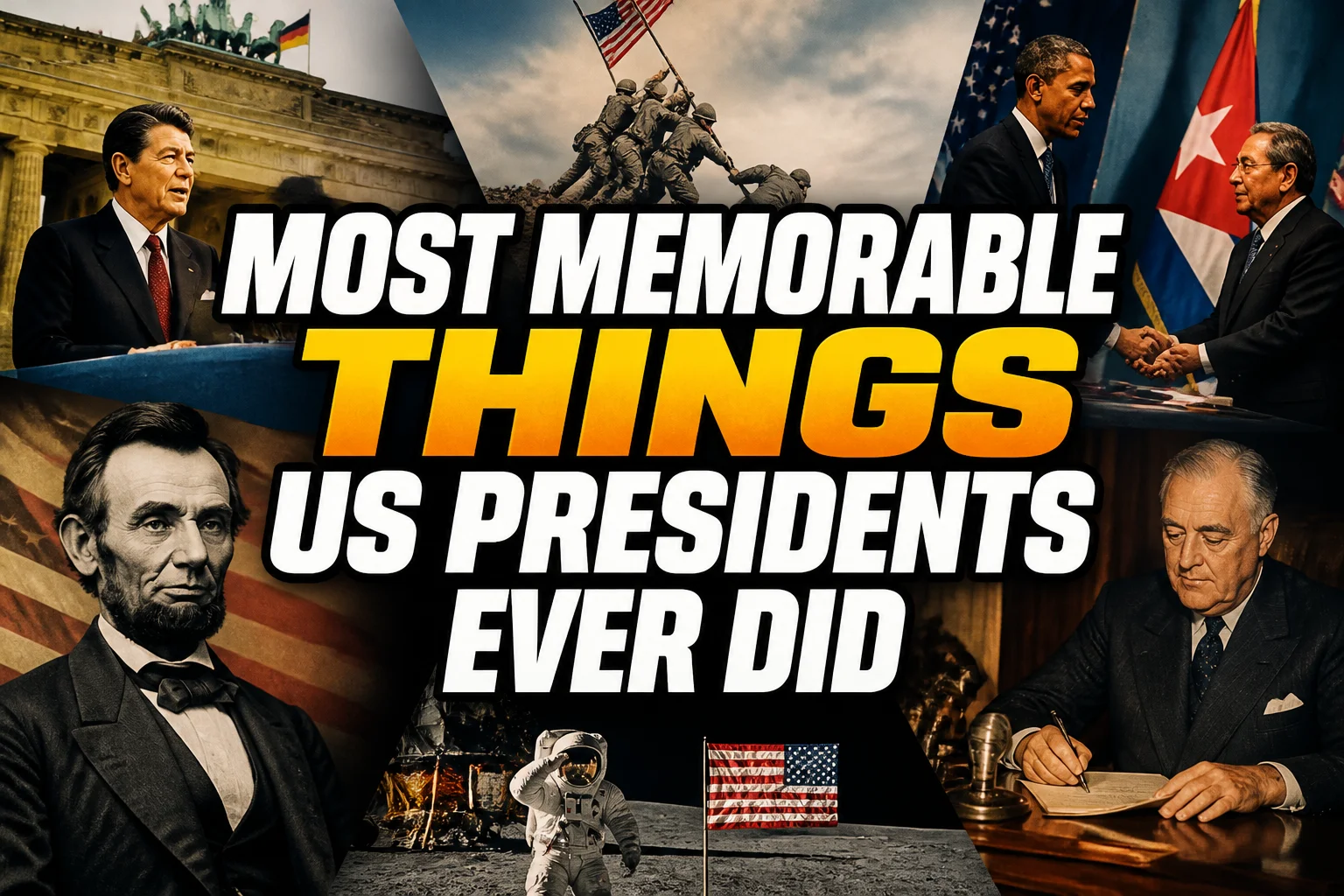
When Americans debate the greatest president in American history, they usually end up talking about a handful of specific moments rather than whole administrations. A single veto, speech, treaty, or scandal can outweigh four years of routine work in public memory.
A close look at presidents and accomplishments shows that memorable does not always mean popular. Sometimes the most consequential acts are also the most controversial.
TL;DR: America’s most memorable presidents are defined less by full term records than by a few enormous decisions—purchases, wars, reforms, and resignations—that still shape the country.
Why One Decision Can Define a Presidency
The American president combines two roles that many countries keep separate: ceremonial chief of state and working head of government. That fusion means presidential deeds carry both practical consequences and symbolic weight.
Chief of state examples include hosting foreign leaders, leading national mourning, and standing above daily politics in a crisis. But because the same person also commands the military and signs laws, those symbolic moments can quickly become policy.
The most memorable presidents usually made choices that operated on both levels at once. Washington's resignation, Lincoln's proclamation, and Reagan's Berlin speech were executive acts that also became national symbols.
How This List Was Made
There are enough interesting facts about U.S. presidents to fill a library, but this list focuses on turning points rather than trivia. The goal is to show how specific decisions changed the direction of the country.
Several of these stories are drawn from the same kind of material explored in PBS American Experience: The Presidents and similar documentary histories. The standard here is not moral perfection; it is lasting impact.
Each entry below examines one moment that made a president historically notable. Some are triumphs, and others are warnings.
1. George Washington Refused a Third Term—and Set an Unwritten Rule
George Washington could have held the presidency for life, and many supporters expected him to do exactly that. Instead, he announced in 1796 that he would not seek a third term and published a farewell address to the nation.
That voluntary surrender of power stunned observers around the world and established an informal two-term limit. The precedent lasted until Franklin D. Roosevelt won a third term in 1940, after which the Twenty-Second Amendment made the limit binding.
Washington’s choice is often listed among the most important accomplishments as president because it showed the office belonged to the country. It still shapes public expectations about the peaceful transfer of power.
2. Thomas Jefferson Doubled the Map with the Louisiana Purchase
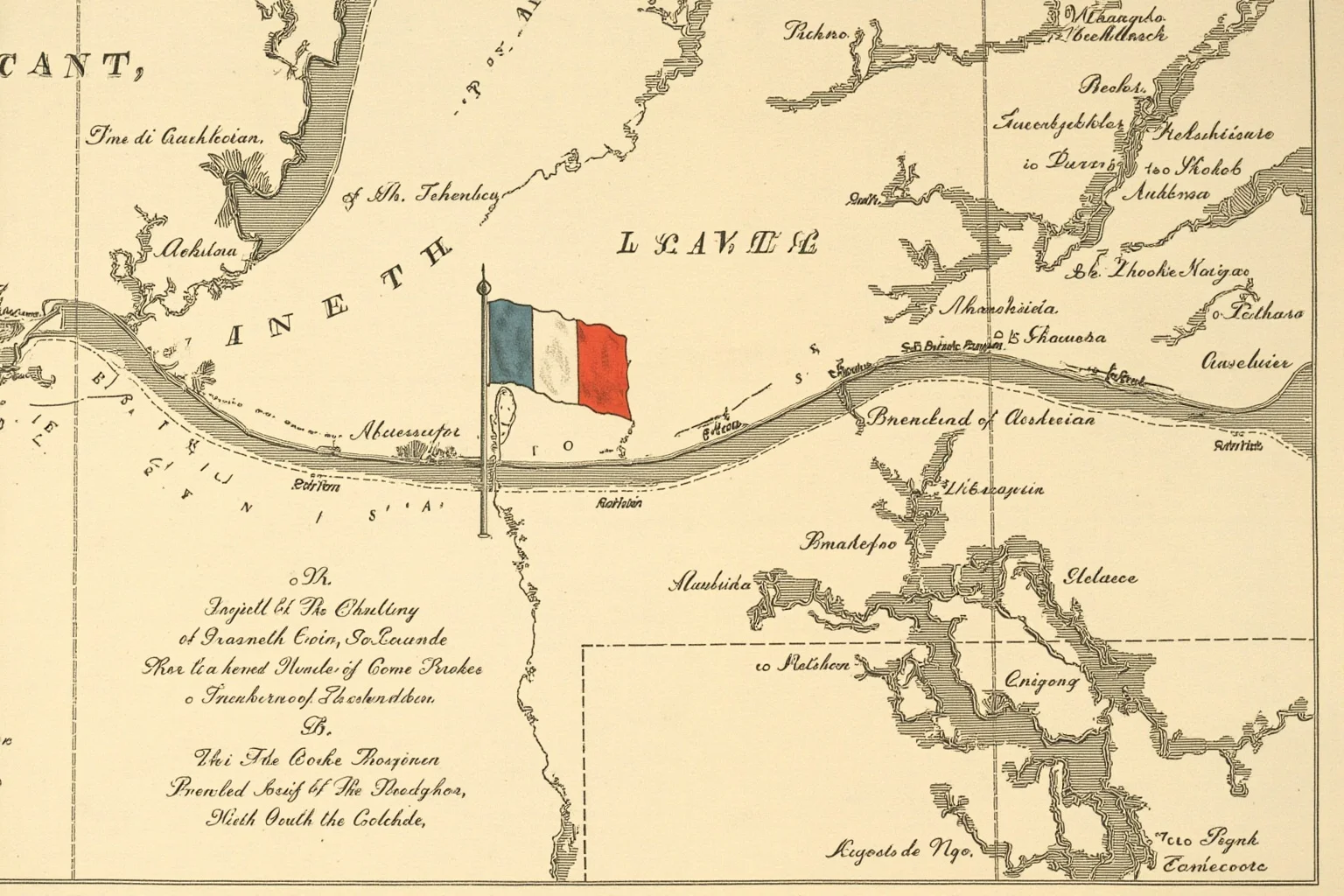
In 1803, Thomas Jefferson authorized the Louisiana Purchase from France for roughly 15 million dollars. The transaction doubled the size of the United States almost overnight.
Jefferson privately worried that the Constitution did not clearly grant him the power to acquire so much territory. He set those doubts aside because control of the Mississippi River and the port of New Orleans was too valuable to lose.
The purchase opened vast lands to settlement and removed a major European power from the western border. It remains one of the most consequential territorial presidential accomplishments in U.S. history.
3. James Monroe Put a Doctrine Behind American Diplomacy
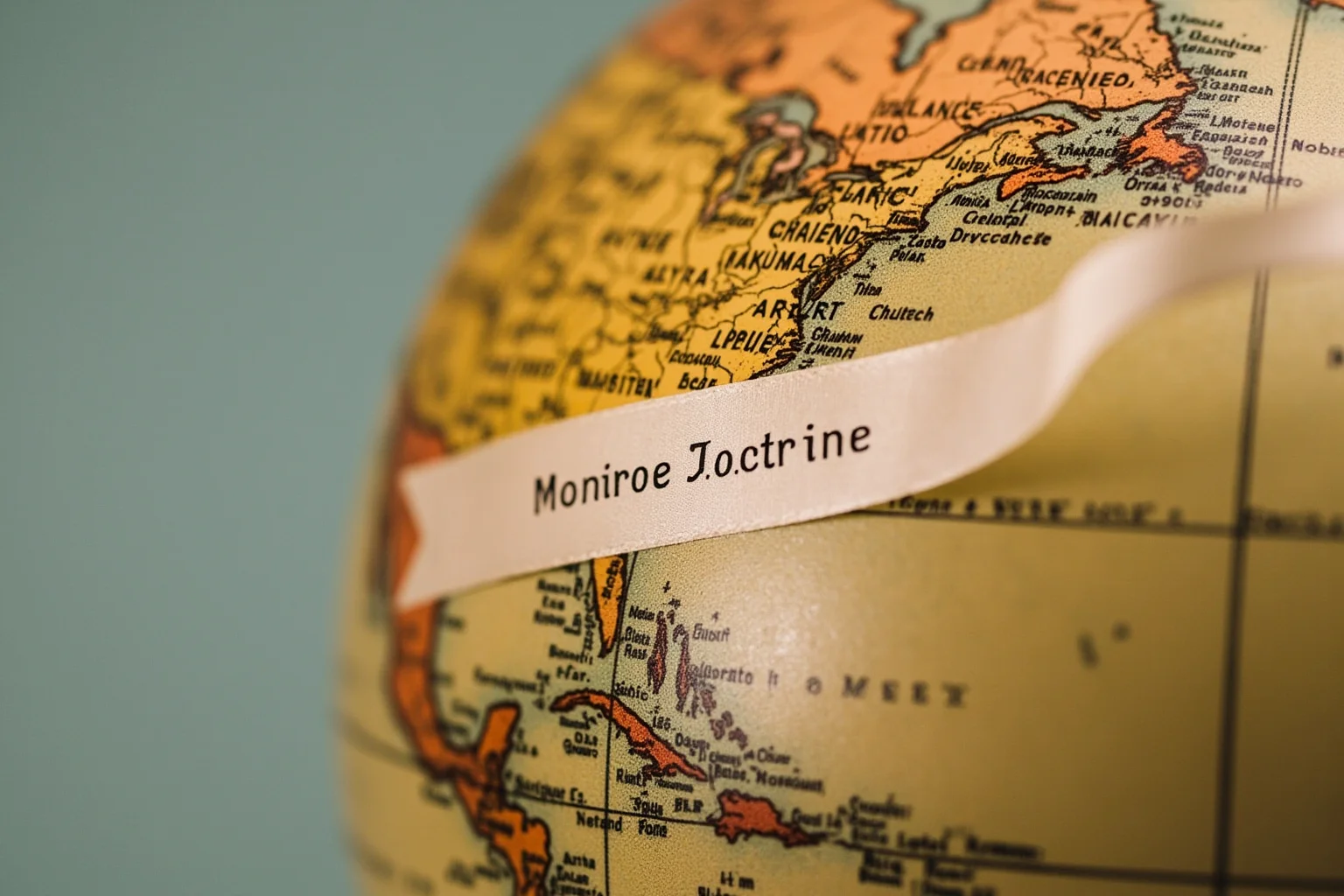
James Monroe’s 1823 message to Congress warned European powers against further colonization or interference in the Western Hemisphere. The idea became known as the Monroe Doctrine.
Monroe could not enforce the doctrine on his own, and British naval power did much of the early deterring. Even so, the declaration became a lasting pillar of American foreign policy.
Later presidents from Theodore Roosevelt to John F. Kennedy applied the doctrine in ways Monroe never imagined. That flexibility helps explain why Monroe remains one of the most memorable presidents in diplomacy.
4. Andrew Jackson Signed the Indian Removal Act—a Tragic Milestone
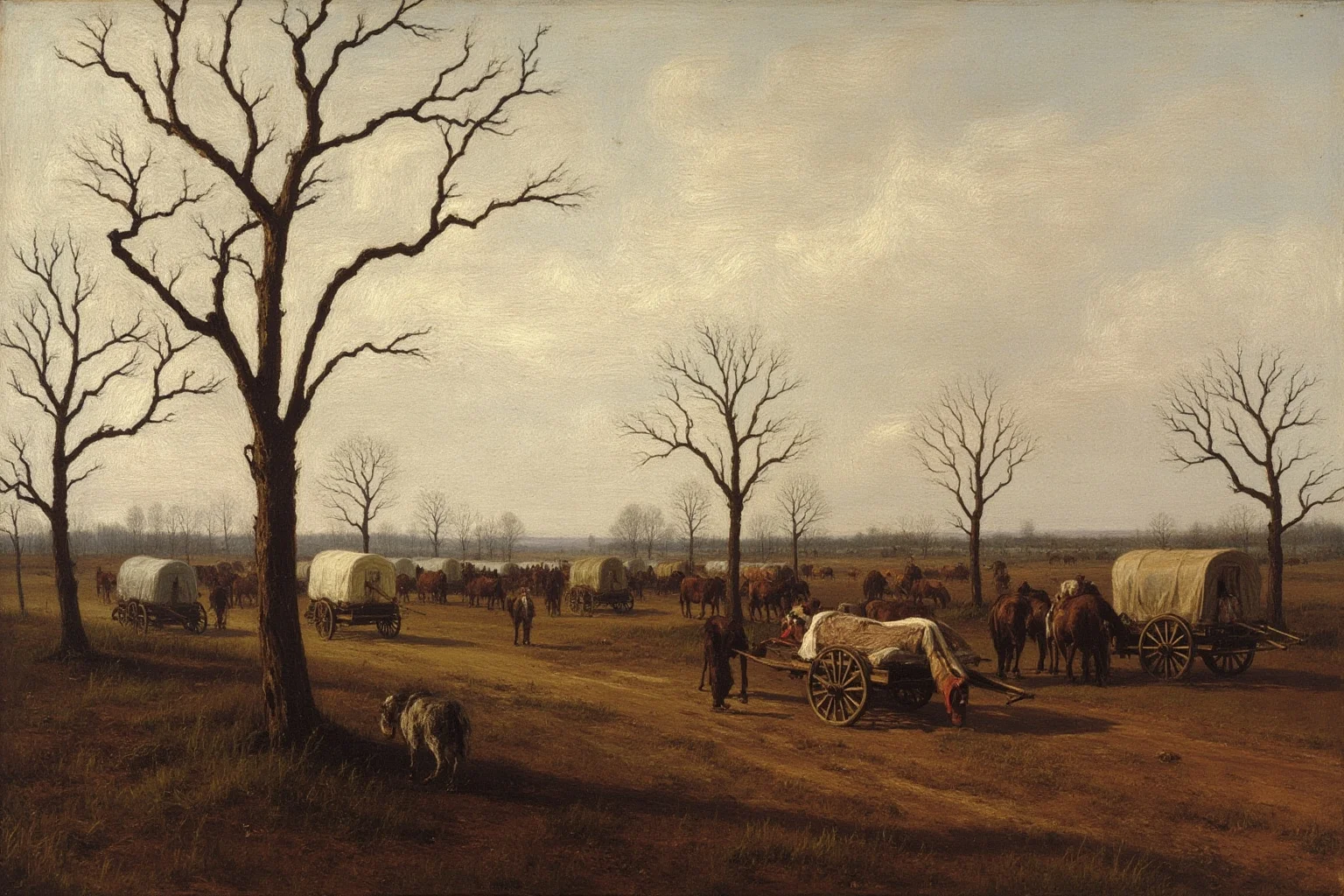
Andrew Jackson signed the Indian Removal Act in 1830, giving the federal government authority to negotiate removal of Native nations from lands east of the Mississippi. The policy led to forced marches that became known as the Trail of Tears.
Thousands of Cherokee, Choctaw, Muscogee, Chickasaw, and Seminole people died from exposure, disease, and starvation. Jackson’s action is remembered as one of the most tragic decisions by a U.S. president.
It is a reminder that memorable does not mean admirable. The removal opened land for white settlement at an immense human cost.
5. James K. Polk Expanded the Country to the Pacific
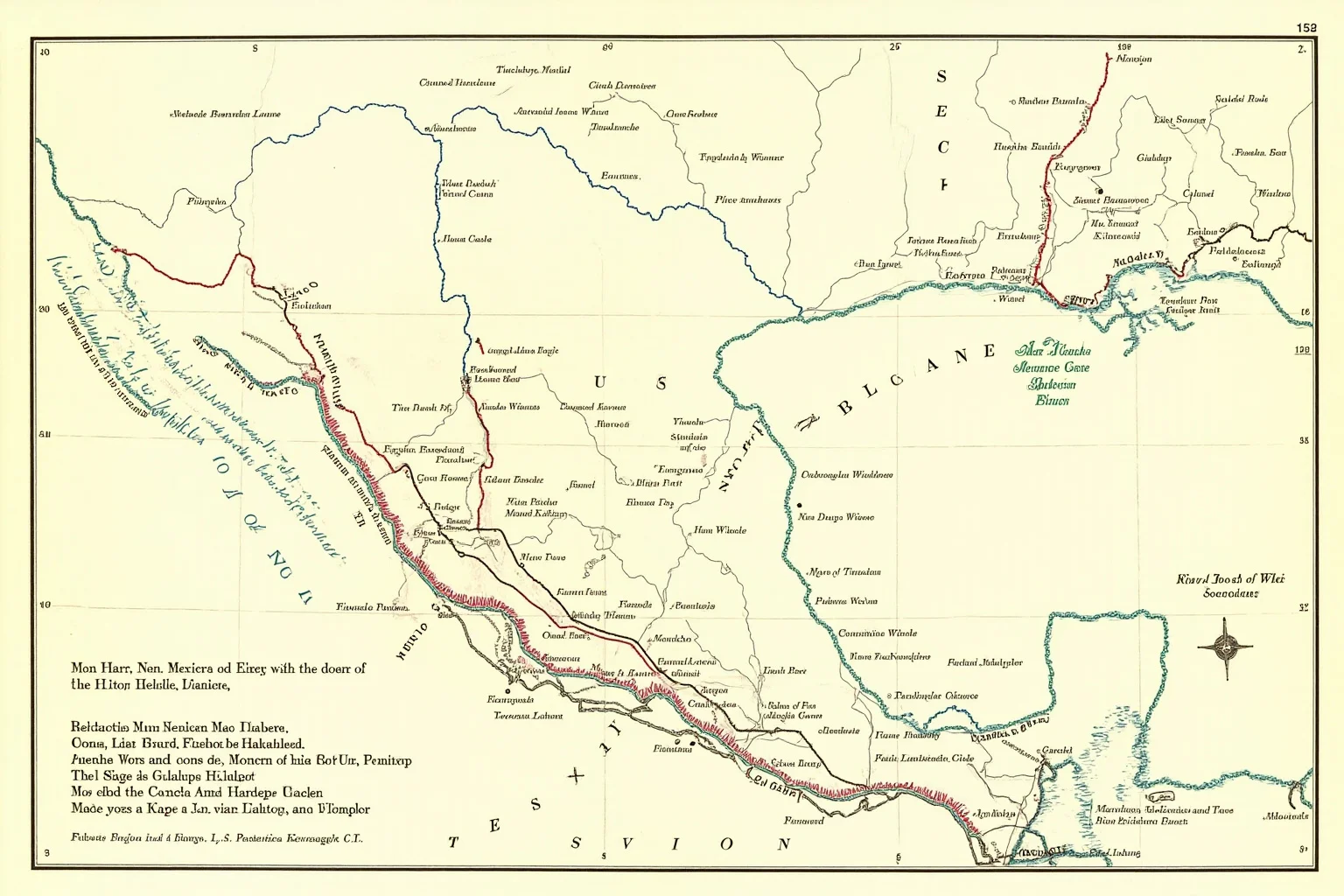
James K. Polk entered the White House in 1845 with an ambitious expansionist agenda. In 1846, he ordered troops into disputed territory, and war with Mexico soon followed.
The Treaty of Guadalupe Hidalgo in 1848 transferred present-day California, Nevada, Utah, and parts of several other states to the United States. It fulfilled much of Polk’s vision of continental expansion.
The new territories also inflamed the national argument over slavery. In that sense, Polk’s success helped accelerate the crisis that led to the Civil War.
6. Abraham Lincoln Turned a War into a Fight to End Slavery
Abraham Lincoln issued the Emancipation Proclamation on January 1, 1863, declaring enslaved people in Confederate-held territory free. It turned the Civil War into an explicit fight against slavery as well as a struggle to preserve the Union.
The proclamation did not immediately free every enslaved person, but it made emancipation a central war aim and opened the path to the Thirteenth Amendment. Lincoln also held the country together through four years of devastating war.
Many historians and public polls place Lincoln at or near the top of any list of the greatest president in American history. His combination of moral clarity, political patience, and personal resolve remains a benchmark for the office.
7. Andrew Johnson Faced Impeachment While Alaska Became American
Andrew Johnson became the first U.S. president to be impeached after repeated clashes with Congress over Reconstruction. The House approved articles of impeachment in 1868, though the Senate fell one vote short of removing him.
During the same period, Secretary of State William Seward negotiated the purchase of Alaska from Russia in 1867. Critics called it “Seward’s Folly,” but the territory later proved rich in timber, gold, and oil.
Johnson’s term shows how a president can be remembered for both political survival and an accidental legacy. The Alaska purchase remains one of the more unexpected significant presidential accomplishments.
8. Theodore Roosevelt Built a Canal and Made Conservation National
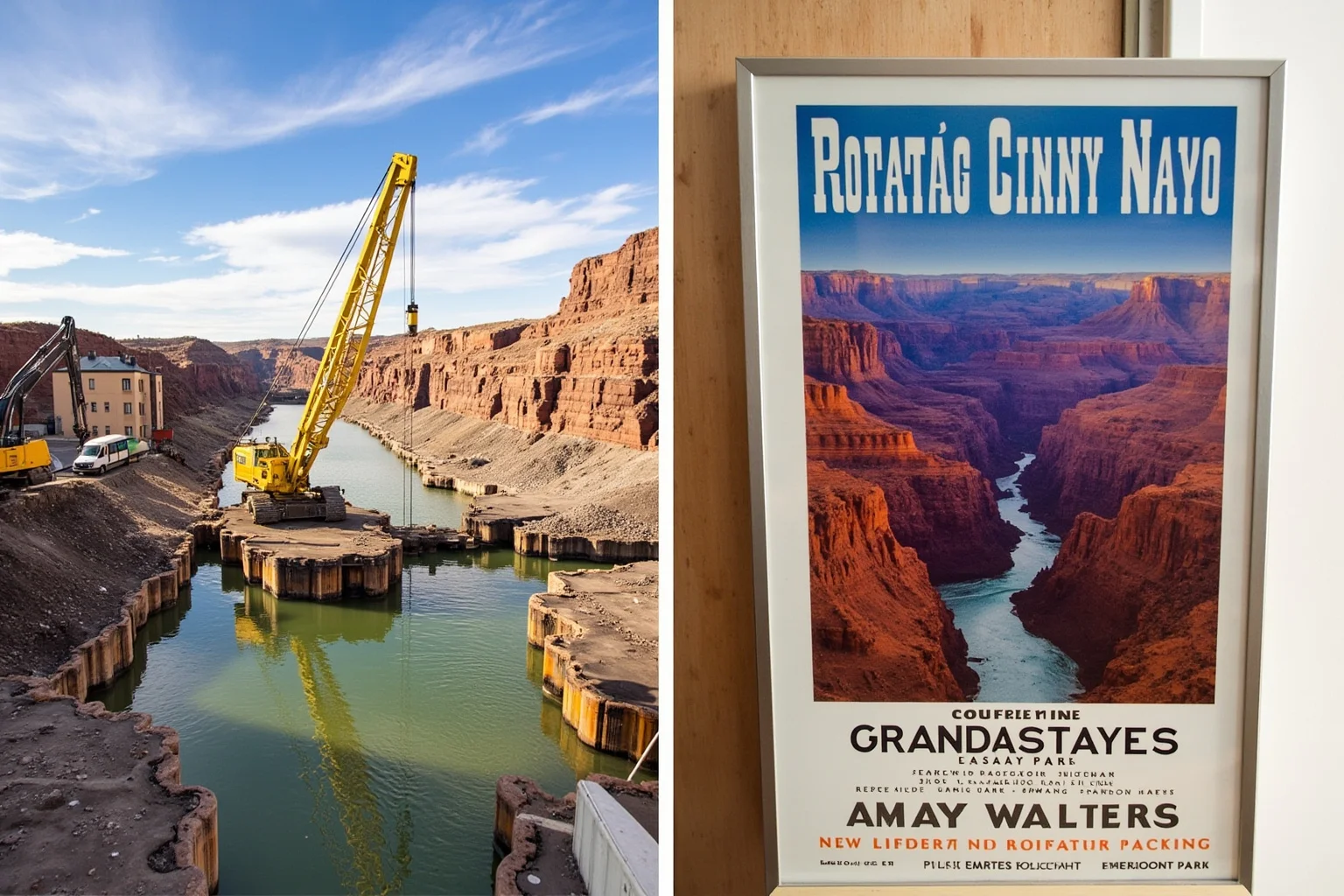
Theodore Roosevelt dramatically expanded presidential power in foreign policy and conservation. He helped clear the way for construction of the Panama Canal after supporting Panama’s break from Colombia.
At home, Roosevelt used the Antiquities Act to protect places like the Grand Canyon and championed the creation of the U.S. Forest Service. These moves made conservation a permanent part of the federal government’s work.
Roosevelt considered the Panama Canal one of his greatest achievements because it transformed global shipping and naval power. His larger-than-life style also made him one of the most memorable presidents in popular historical memory.
9. Woodrow Wilson Fought a War and Lost the Peace He Wanted
Woodrow Wilson tried to keep the United States out of World War I but eventually asked Congress to declare war in 1917. He framed the conflict as a fight to make the world safe for democracy.
After the war, Wilson poured his energy into creating the League of Nations and a system of collective security. The U.S. Senate rejected the treaty, and Wilson’s health collapsed during a national speaking tour.
Wilson’s international vision still influenced later institutions such as the United Nations. His experience is a classic case of a president whose big idea outlived his own political defeat.
10. Franklin D. Roosevelt Built the New Deal and Led Through World War II

Franklin D. Roosevelt responded to the Great Depression with the New Deal, a series of banking reforms, public works programs, and social safety net laws. His radio fireside chats brought his voice into millions of homes.
Asked what were his accomplishments, historians often point to Social Security, the Securities and Exchange Commission, and the Federal Deposit Insurance Corporation. Roosevelt also led the nation through most of World War II after Pearl Harbor.
His presidency also included the internment of Japanese Americans, a decision now widely condemned. FDR’s long tenure reshaped the federal government’s role so thoroughly that it prompted the Twenty-Second Amendment.
11. Harry Truman Authorized the Atomic Bomb and Set the Cold War’s Terms
Harry Truman authorized the atomic bombings of Hiroshima and Nagasaki in August 1945. The attacks helped bring World War II in the Pacific to an end, but they opened the nuclear age.
Truman also established the Truman Doctrine and backed the Marshall Plan, committing the United States to containing Soviet influence in Europe. Those policies helped shape the early Cold War order.
The atomic decision remains one of the most debated actions by any American president. It is a sobering example of presidential power at its absolute limit.
12. Dwight D. Eisenhower Built the Highway System and Warned the Nation
Dwight D. Eisenhower signed the Federal-Aid Highway Act of 1956, which created the Interstate Highway System. It transformed American travel, commerce, and suburban life.
Eisenhower also sent federal troops to Little Rock, Arkansas, to enforce school desegregation after Brown v. Board of Education. In his 1961 farewell address, he warned Americans to guard against the influence of the military-industrial complex.
That warning has become one of the most quoted presidential farewell messages. The highway system meanwhile became so routine that it is easy to forget how profoundly it changed daily life.
13. John F. Kennedy Managed the Cuban Missile Crisis and Set a Moonshot Goal

In October 1962, John F. Kennedy learned that the Soviet Union had placed nuclear missiles in Cuba. His handling of the Cuban Missile Crisis helped avoid a direct superpower war.
Kennedy also committed the United States to landing astronauts on the moon before the end of the 1960s. The Apollo program achieved that goal in 1969, after his assassination.
Kennedy’s short presidency is often remembered for image and rhetoric. The missile crisis and the moonshot, however, remain substantive acts that still define his legacy.
14. Lyndon B. Johnson Signed Civil Rights Landmarks and Escalated Vietnam

Lyndon B. Johnson signed the Civil Rights Act of 1964 and the Voting Rights Act of 1965, landmark laws that dismantled much of the legal framework of segregation. He used his considerable legislative skill to move those bills through Congress.
Johnson also launched the Great Society, expanding Medicare, Medicaid, and federal education programs. At the same time, his escalation of the Vietnam War divided the country and badly damaged his presidency.
Johnson’s record is a stark mix of domestic reform and foreign policy failure. That tension makes him one of the most complex important presidents of the United States.
15. Richard Nixon Opened China and Then Resigned
Richard Nixon’s 1972 visit to the People’s Republic of China ended more than two decades of diplomatic isolation. The opening shifted the Cold War balance and created new leverage with the Soviet Union.
Nixon also pursued détente and signed legislation creating the Environmental Protection Agency. But the Watergate scandal, involving a break-in at Democratic National Committee headquarters and an attempted cover-up, destroyed his presidency.
Nixon resigned in August 1974, the only U.S. president ever to do so. His fall became a lasting cautionary tale about executive power and accountability.
16. Jimmy Carter Brokered the Camp David Accords

Jimmy Carter personally brokered the Camp David Accords in 1978 between Egyptian President Anwar Sadat and Israeli Prime Minister Menachem Begin. The agreement led to the first peace treaty between Israel and an Arab neighbor.
Carter’s presidency also faced severe inflation, energy shortages, and the Iran hostage crisis. Those struggles often overshadowed his diplomatic success in public memory.
The Camp David Accords remain a rare example of a president directly negotiating a lasting peace agreement. Carter’s post-presidency humanitarian work later expanded what Americans expect from former presidents.
17. Ronald Reagan Demanded the Wall Come Down

Ronald Reagan took a hard rhetorical line against the Soviet Union, famously calling it an “evil empire.” In 1987, standing near the Berlin Wall, he demanded, “Mr. Gorbachev, tear down this wall.”
The wall fell in 1989, after Reagan had left office, and historians still debate how much his defense buildup and rhetoric caused the Soviet collapse. Reagan’s image as a Cold War communicator, however, remains central to his legacy.
The Berlin speech shows how a single line can summarize an entire presidency. It also illustrates the symbolic power of the chief of state role when it is used on the world stage.
18. George H.W. Bush Won the Gulf War and Signed the ADA
George H.W. Bush assembled a broad international coalition to expel Iraqi forces from Kuwait in 1991. The Gulf War was short and widely regarded as a military success.
Bush also signed the Americans with Disabilities Act in 1990, a landmark civil rights law affecting workplaces and public spaces. He described the law as a way to tear down the barriers that kept millions of Americans from full participation.
His single term combined foreign policy strength with meaningful domestic legislation. That combination makes him a notable case study in presidential accomplishments.
19. Bill Clinton Presided Over Surpluses and Was Impeached

Bill Clinton presided over a period of economic growth that produced federal budget surpluses and signed welfare reform into law. His administration also pushed through the North American Free Trade Agreement.
In 1998, the House impeached Clinton on charges of perjury and obstruction of justice related to his relationship with Monica Lewinsky. The Senate acquitted him in 1999, but the scandal reshaped his second term.
Clinton’s legacy remains divided between economic prosperity and personal scandal. Both elements still influence how historians and the public evaluate the 1990s.
20. George W. Bush Reordered National Security After 9/11

After the September 11, 2001, attacks, George W. Bush declared a global war on terror and ordered the invasion of Afghanistan. He also created the Department of Homeland Security and expanded surveillance programs.
In 2003, Bush ordered the invasion of Iraq, citing intelligence that Saddam Hussein possessed weapons of mass destruction. Those weapons were not found, and the war became deeply controversial.
Bush’s response to 9/11 reshaped American foreign policy, national security, and civil liberties. It remains one of the most debated presidential accomplishments of the early twenty-first century.
21. Barack Obama Expanded Health Care and Ordered the bin Laden Raid

Barack Obama signed the Affordable Care Act in 2010, the largest expansion of health care coverage since Medicare and Medicaid. The law extended insurance to millions of Americans and reshaped health policy.
In 2011, Obama authorized the raid that killed Osama bin Laden in Pakistan. The operation was a major moment in the post-9/11 era.
Obama’s election as the first Black president made his tenure historically significant before he took any policy action. His health care law and national security decisions remain central to his legacy.
The Pattern Behind the Most Memorable Presidential Accomplishments
Most of the acts on this list share a few traits. They were irreversible, highly visible, and connected to a broader change in American life.
Territory, war, civil rights, economic reform, and scandal recur because those categories affect millions of people. A president’s ceremonial role as chief of state amplifies those moments into national memories.
It is also worth noting that many of these deeds were controversial at the time. Public memory often simplifies complex events, which is why historical context matters.
The Limits of Ranking Presidents
Ranking presidents is popular, but it can flatten nuance. A leader like Lyndon Johnson can be both a champion of civil rights and a failed war manager.
The debate over the greatest president in American history usually depends on which values people prioritize. Some prize moral leadership, others prize legislative effectiveness, economic growth, or crisis management.
A better approach is to ask what changed because a president acted. That question leads to sharper historical understanding than a simple numbered list ever can.
Final Takeaway
The most memorable things U.S. presidents ever did are not always the ones taught as simple triumphs. They include purchases and wars, reforms and scandals, speeches and silences.
Studying presidents and accomplishments can feel like watching the country argue with itself across time. Each decisive act on this list is still shaping American institutions, borders, and expectations.
Frequently Asked Questions
What are chief of state examples?
Chief of state examples include a president welcoming a foreign leader to the White House, laying a wreath on Veterans Day, or speaking to the nation after a disaster. In the United States, the president also serves as head of government, so these symbolic duties share one office with executive power.
Who is considered the greatest president in American history?
Abraham Lincoln, George Washington, and Franklin D. Roosevelt most often rank at the top of historian and public surveys. There is no official ranking, but Lincoln is frequently cited for preserving the Union and issuing the Emancipation Proclamation.
What were his accomplishments as president?
When people ask what were his accomplishments, historians usually look for legislation, foreign policy decisions, and institutional changes that lasted beyond the term. Examples include Social Security, the Civil Rights Act of 1964, and the creation of the Interstate Highway System.
Which U.S. presidents are the most memorable presidents?
Washington, Lincoln, and Franklin D. Roosevelt are among the most consistently remembered, along with Theodore Roosevelt, Kennedy, Reagan, and Obama. Memorability often comes from a single crisis or reform rather than an entire term.
How does a chief of state differ from a head of government?
A chief of state handles ceremonial and symbolic functions, while a head of government manages the day-to-day executive work. In the American system, both jobs are fused in the presidency, which makes presidential actions unusually visible.

Alex Warren
Related Articles