
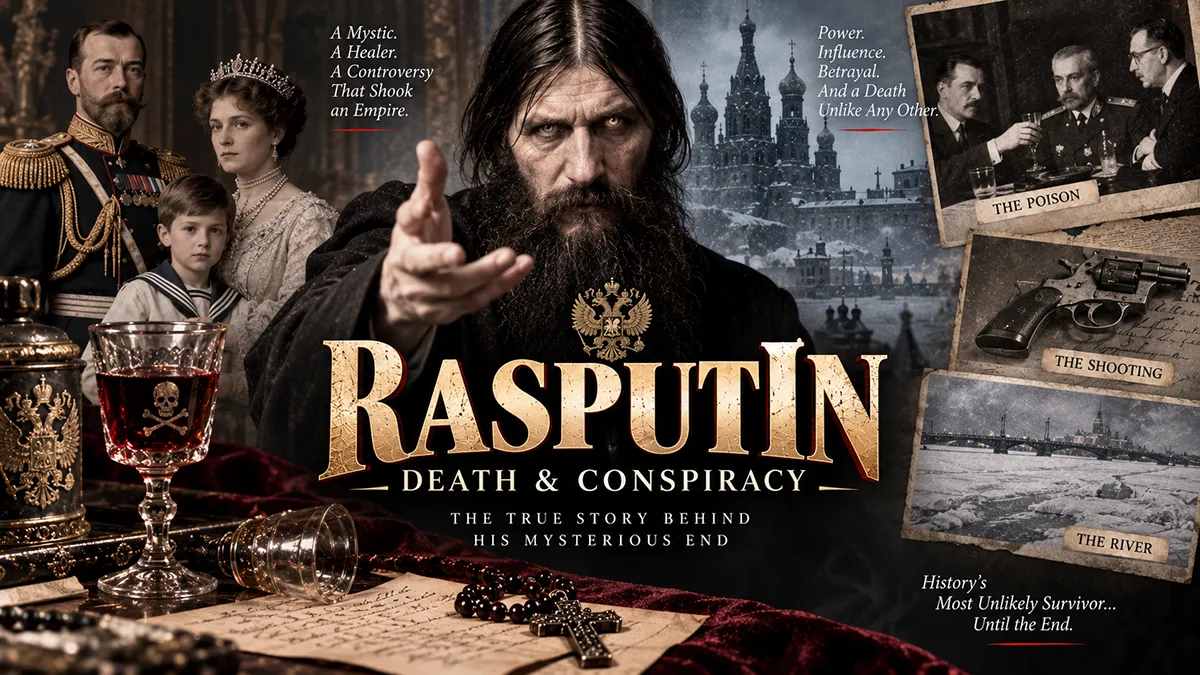
Few deaths in modern history have generated as much myth as the killing of Grigori Rasputin. Poisoned, shot, beaten, and drowned — or so the legend goes — the self-styled Russian mystic supposedly refused to die no matter what his killers threw at him. It’s a story that has been retold in movies, songs, and pub trivia nights for over a century.
But how much of it is actually true? The real history of Rasputin’s death is stranger, more political, and more human than the campfire version, and it says as much about a crumbling empire as it does about one extraordinary man.
TL;DR: Rasputin was murdered by a small group of Russian aristocrats in December 1916 who feared his influence over the royal family, and while he was almost certainly poisoned, shot, and beaten before dying, many of the more theatrical details of his death are exaggerated legend rather than verified fact.
Was Rasputin Real? Setting the Record Straight
Before diving into his death, it’s worth answering a question a lot of people genuinely search for: was Rasputin real? Yes — Grigori Yefimovich Rasputin was a real historical figure, born around 1869 in the Siberian village of Pokrovskoye. He wasn’t a monk or an ordained priest, despite the popular image, but a wandering religious pilgrim (often called a “strannik”) who developed a reputation as a faith healer and holy man.
Rasputin’s real fame came from his connection to Tsar Nicholas II and Tsarina Alexandra of Russia. Their son, Alexei, suffered from hemophilia, a life-threatening blood disorder, and Rasputin appeared to bring the boy relief during his medical crises. That single relationship gave an outsider from rural Siberia extraordinary access to the innermost circle of the Russian monarchy.
Because so much myth has piled up around him — hypnotic powers, endless scandal, near-supernatural resilience — it’s understandable that people question whether he was even a real person, much the same way people ask whether Saint Patrick was a real historical figure or whether the real story of Pocahontas resembles the legend at all. He was very real, but the man was quickly buried under legend even before he died, and especially afterward.
Why Was Rasputin Killed? The Political Backdrop
To understand why was Rasputin murdered, you have to understand the pressure cooker that was Russia in 1916 — a country with a long history of deadly palace intrigue, as the chilling facts about Ivan the Terrible make clear. World War I was going badly, the economy was collapsing, and Tsar Nicholas II had left the capital to take personal command of the army at the front. That left Tsarina Alexandra effectively running domestic affairs, and she leaned heavily on Rasputin’s advice.
Rasputin’s growing influence over government appointments, combined with lurid rumors about his personal conduct, made him deeply unpopular among the nobility. Many aristocrats believed he was manipulating the royal family and steering Russia toward disaster. Whether or not that was fair, it became the accepted narrative in St. Petersburg’s elite circles.
So why was Rasputin assassinated rather than simply dismissed? Part of the answer is that Alexandra refused to let him go, viewing him as essential to her son’s health and to divine protection of the dynasty. His opponents concluded that removing him from the picture entirely was the only way to save the monarchy’s reputation, and possibly the monarchy itself.
Did Rasputin Kill Anyone?
It’s a fair question, since Rasputin is so often painted as a sinister, almost villainous figure. But there is no credible historical evidence that Rasputin himself killed anyone. His scandals were about alleged drunkenness, womanizing, and corrupt influence-peddling, not violence.
The violence in this story runs in the other direction — it was Rasputin who was killed, by men who believed they were saving Russia. Any image of him as a murderer belongs more to fiction and folklore than to the historical record.
The Men Behind the Plot
The conspiracy to kill Rasputin was led by Prince Felix Yusupov, a wealthy young aristocrat married into the extended imperial family. He was joined by Grand Duke Dmitri Pavlovich, a first cousin of Tsar Nicholas II, giving the plot direct royal-family involvement. Ultra-nationalist politician Vladimir Purishkevich rounded out the core group, along with a couple of other associates whose roles are less firmly documented.
These weren’t revolutionaries trying to topple the monarchy. They were monarchists who believed Rasputin was actively damaging the crown from the inside, and that killing him could restore the tsar’s standing. That’s an important nuance often lost in retellings that frame his death as some grand, shadowy underworld hit.
Setting the Trap at the Yusupov Palace
The plotters lured Rasputin to the Yusupov Palace in St. Petersburg on the night of December 29–30, 1916 (December 16–17 on the Julian calendar Russia used at the time). Yusupov invited him under the pretext of introducing him to his wife, Princess Irina, who was, in reality, away from the city at the time. Rasputin, by most accounts, had no idea he was walking into an ambush.
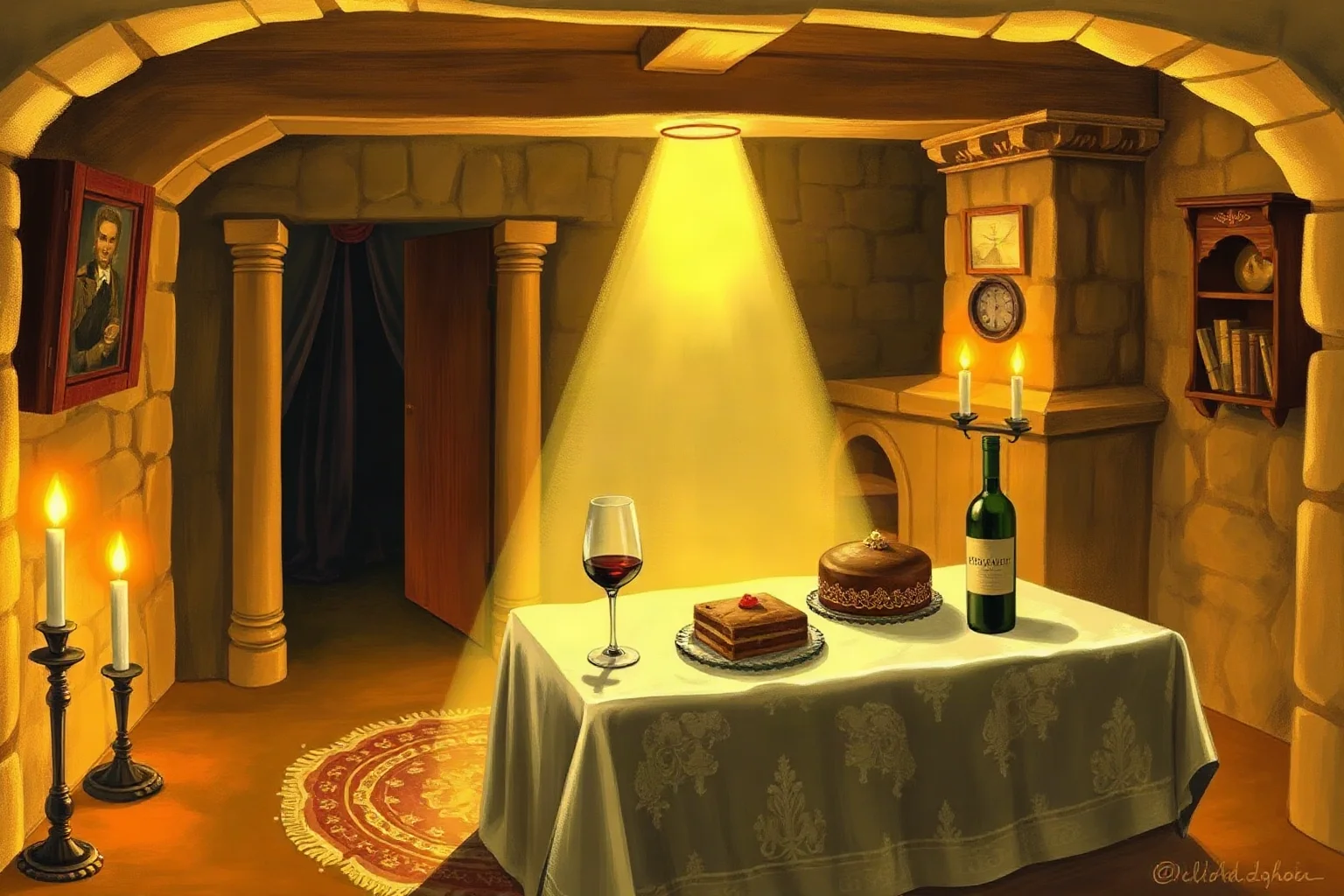
The group had prepared a basement room where Rasputin was served wine and cakes said to be laced with cyanide. Upstairs, the other conspirators waited, reportedly playing music to mask the sounds of the plan unfolding below.
The Poison That (Maybe) Didn’t Work
This is where the legend really takes off. According to Yusupov’s own later account, Rasputin ate the poisoned cakes and drank the poisoned wine without any visible effect, leaving his would-be killers stunned and increasingly desperate. It’s a dramatic detail — and it comes almost entirely from Yusupov himself, who wrote his memoirs years after the fact.
Historians have long been skeptical of this part of the story. Yusupov had every incentive to embellish his tale into something more mythic, and there’s no independent forensic confirmation that cyanide was actually used or that it failed the way he described. Some researchers argue the poisoning may not have happened as dramatically as claimed, or that the “poison” was less potent or improperly prepared.
The Shooting Begins
Whatever happened with the poison, the conspirators eventually turned to more direct methods. Yusupov shot Rasputin, and by most versions of the story, Rasputin collapsed and appeared to be dead. The group reportedly left the room believing the job was done.
According to the most-repeated (though unverifiable in full) version of events, Rasputin then stirred, got up, and attempted to flee across the palace courtyard. Purishkevich, in his own memoir, claimed he shot Rasputin again as he tried to escape. This is the moment that cemented Rasputin’s reputation as almost impossible to kill.
Fact-Checking the “Impossible to Kill” Legend
It’s worth pausing here, because this is exactly the kind of detail that turns real history into folklore — the same mythmaking process that turned Wyatt Earp into a legendary gunslinger far larger than the real lawman. The idea that Rasputin survived poison, multiple gunshots, and a savage beating before finally drowning has been repeated so often that it’s often presented as settled fact. In reality, the primary sources for these dramatic details come almost entirely from the killers themselves, telling their own story after the fact.
That doesn’t mean Rasputin wasn’t shot multiple times or beaten — the autopsy evidence does support serious violence. It means the theatrical, almost supernatural framing of his resistance to death is largely a narrative constructed by Yusupov and Purishkevich, not something confirmed by independent witnesses or contemporary forensic analysis.
Into the Neva River
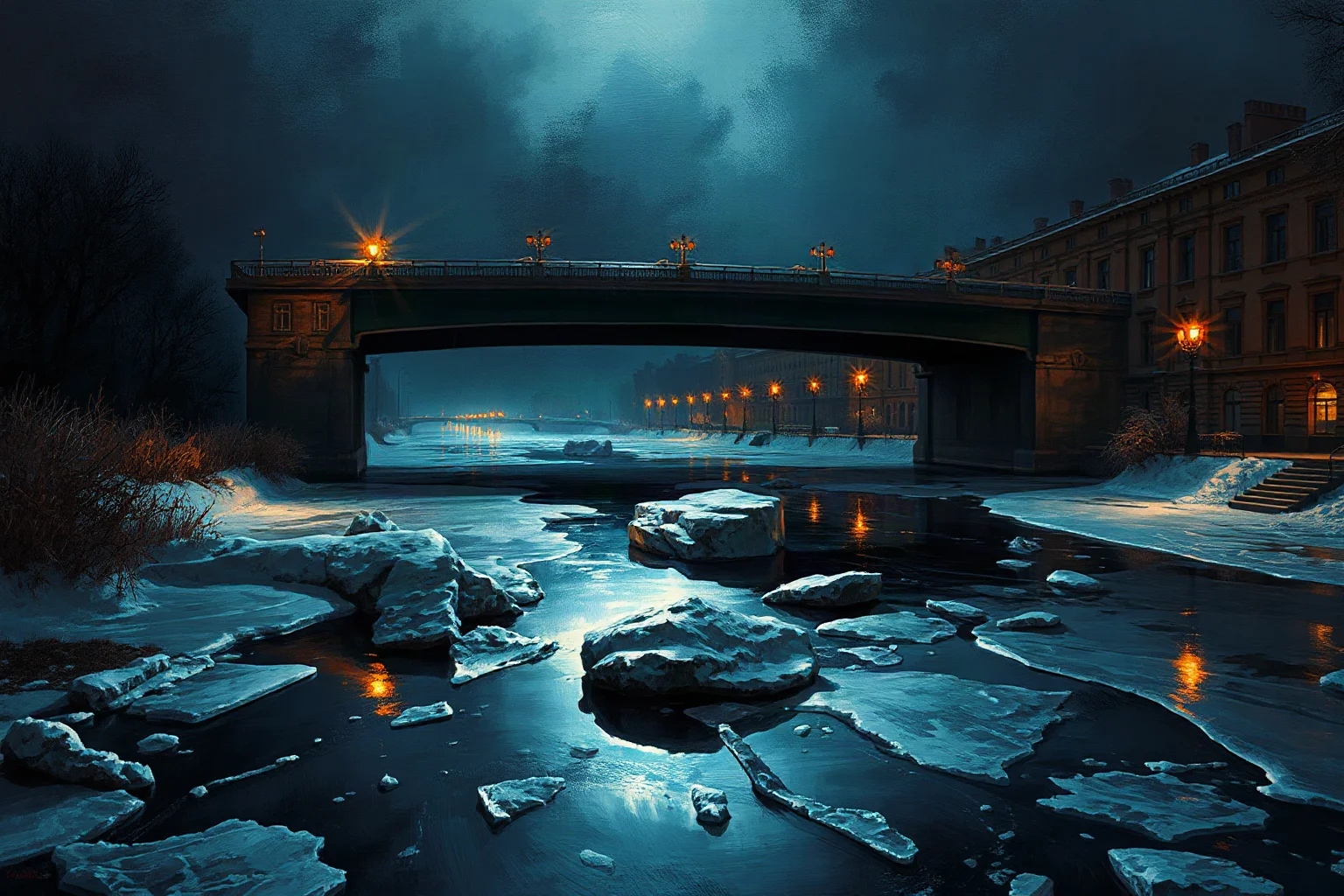
However the final moments actually played out, the conspirators eventually wrapped Rasputin’s body and transported it to the Malaya Nevka River (part of the Neva River delta), where they pushed it through the ice into the freezing water. This was almost certainly an attempt to dispose of the evidence and make his disappearance look accidental or unrelated to any of them.
It didn’t work particularly well as a cover-up. Rasputin had been seen going to the Yusupov Palace that night, and suspicion fell on the group almost immediately once his absence was noticed.
The Search and Discovery of the Body

Rasputin’s body was found in the river a few days later, once search parties broke through the ice near the bridge where he’d been dumped. The delay between the murder and the discovery only fueled rumor and speculation in a city already primed for scandal. By the time the body was recovered, the story of his final night had already begun mutating into legend.
Tsarina Alexandra insisted on a proper burial, and Rasputin was interred with some ceremony, though not for long — his grave would later be desecrated and his remains reportedly burned after the 1917 revolution swept away the monarchy he had served.
What the Rasputin Autopsy Actually Found
A post-mortem examination was carried out shortly after the body was recovered, though records of it are incomplete and have been debated by historians and forensic experts ever since. The Rasputin autopsy reportedly documented multiple gunshot wounds and significant blunt trauma, consistent with a violent, chaotic struggle rather than a single clean killing.
What the autopsy notably does not clearly establish is the popular claim that Rasputin died from drowning, still alive and struggling, after everything else failed to kill him. Some accounts of the original examination mention water in the lungs, which has been used to support the drowning theory, but later historians examining the surviving records have questioned how reliable or complete that examination really was. Given the chaotic circumstances and the amateur handling of the body, a fully modern, conclusive forensic picture simply isn’t available.
So, How Did Rasputin Actually Die?
Stripping away the embellishment, here’s the most defensible version: Rasputin was very likely poisoned (though the effectiveness and even certainty of this is debated), shot at least once and probably more than once, beaten, and ultimately ended up in the icy waters of the Neva River, where he died. Whether he was still alive when he entered the water is the single most mythologized detail of the entire story, and it rests almost entirely on the say-so of the men who killed him.
In short, how was Rasputin killed is really a story of multiple, overlapping methods rather than one clean cause of death. That messy, multi-method reality is part of why the murder became so legendary in the first place — it reads like fiction because the surviving accounts were shaped by people who had a reason to make it sound larger than life.
What Happened to Rasputin’s Killers?

Despite murdering a man closely tied to the imperial family, the conspirators faced remarkably light consequences. Grand Duke Dmitri Pavlovich was exiled to Persia to serve with Russian forces there, largely sparing him harsher punishment thanks to his royal blood. Prince Felix Yusupov was exiled to one of his family estates, and Purishkevich faced no serious formal punishment at all.
Tsar Nicholas II, though reportedly disturbed by the killing, was in a politically delicate position; publicly punishing his own cousin and members of the aristocracy risked further destabilizing an already fragile regime. Ironically, killing Rasputin did nothing to save the monarchy the conspirators claimed to be protecting — within about two and a half months, the February Revolution of 1917 would force Nicholas II to abdicate entirely.
The Legacy of Rasputin’s Death
Rasputin’s death became one of the most retold stories of the twentieth century, partly because it’s genuinely dramatic and partly because the people who told it first — his own killers — had every reason to make it unforgettable. Songs, films, and countless articles have leaned into the image of an unkillable mystic, because it’s a far better story than a messy, badly planned political murder carried out by panicked aristocrats.
The truth, as usual, is less cinematic but arguably more interesting. It’s a story about a fading empire, a royal family isolated by war and illness, and a group of insiders convinced that killing one man could fix a crisis that was actually much bigger than Rasputin himself.
Final Thoughts
The death of Rasputin sits at that fascinating intersection where real history and enduring myth blur together almost completely. The core facts — the lure to the Yusupov Palace, the poison, the shooting, the river — are well documented enough to trust. The embellishments, especially the idea of a man who simply refused to die, come largely from unreliable narrators with obvious motives to exaggerate.
Understanding Rasputin’s death this way doesn’t make the story less compelling. If anything, knowing that the myth was manufactured, and by whom, makes the real history of Russia’s final imperial years even more revealing.
Frequently Asked Questions
How did Rasputin die?
Rasputin was killed on the night of December 29–30, 1916, by a group of Russian aristocrats led by Prince Felix Yusupov. Historical accounts, mostly from the killers themselves, describe him being poisoned, shot, and beaten before his body was dumped into the icy Neva River, though the exact sequence and whether he was still alive at each stage remains debated by historians.
Why was Rasputin killed?
Rasputin was killed because a group of nobles believed his influence over Tsarina Alexandra and the royal court was damaging the monarchy's reputation during World War I. They saw removing him as a way to protect the crown, though his death ultimately did nothing to prevent the monarchy's collapse a few months later.
Was Rasputin a real historical person?
Yes, Grigori Rasputin was a real person, a Siberian-born wandering religious figure who gained influence with the Russian royal family in the early 1900s. Much of what people know about him today is exaggerated legend, but he was a genuine historical figure, not a fictional character.
What did Rasputin’s autopsy reveal?
The surviving autopsy records indicate Rasputin suffered multiple gunshot wounds and significant blunt trauma. Some notes reference water in the lungs, which has fueled the popular drowning theory, but historians consider the original examination incomplete and not fully reliable by modern forensic standards.
Did Rasputin kill anyone?
There is no credible historical evidence that Rasputin killed anyone. He was known for scandal, influence-peddling, and controversial behavior, but violence in his story runs the other way — he was the victim of a politically motivated murder, not a perpetrator of one.
What happened to Rasputin’s body after he died?
Rasputin's body was recovered from the Neva River several days after his death and buried with a ceremony arranged by Tsarina Alexandra. After the 1917 Russian Revolution, his grave was reportedly desecrated and his remains destroyed, though exact details of this final disposal are not fully documented.

Alex Warren
Related Articles