
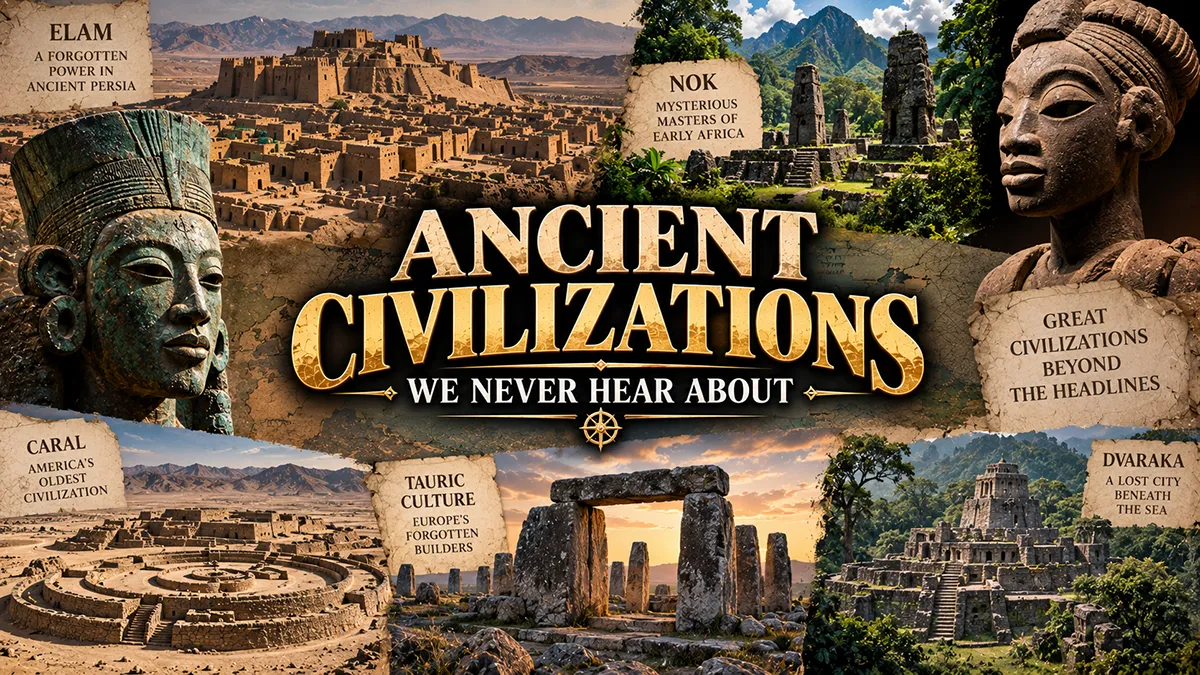
When most people picture ancient civilizations, they picture the same greatest hits: Egypt’s pyramids, Rome’s legions, Greece’s philosophers, maybe the Maya or China’s dynasties. Those are legitimately some of the best ancient civilizations in history, and they’ve earned every bit of their fame. But that familiar highlight reel leaves out dozens of remarkable ancient societies that shaped trade routes, art, language, and technology just as profoundly.
This list of ancient cultures digs into the ones history class usually skips — the old civs whose cities, inventions, and trade networks quietly influenced the world we know today. Think of it as an alternate ancient civilizations list, the deep cuts rather than the usual greatest hits.
Whether you’re hunting for cool ancient civilizations to research, names of ancient peoples for a school project, or you just want a genuinely surprising list of ancient societies, this guide walks through 24 of them, organized by region.
TL;DR: Beyond Egypt, Rome, and Greece lie dozens of overlooked ancient civilizations — from Nubia’s Kushite pharaohs to Peru’s Caral-Supe builders — whose innovations shaped world history just as much.
What Actually Counts as an “Ancient Civilization”?
Historians generally use “civilization” to describe a society with cities, some form of centralized organization, specialized labor, and usually a writing or record-keeping system. “Ancient culture” is a looser term that can include smaller-scale societies that never built empires but still left behind distinctive art, technology, or belief systems. Not every group on this list checks every box, and that’s part of the point.
The line between a full “civilization” and a regional “culture” is genuinely blurry, and archaeologists argue about it constantly. Some of the historical civilizations below ran empires that rivaled Rome; others were smaller, but still innovated in ways that changed how people farmed, traded, or built. Either way, they all belong on any serious list of ancient civilizations.
Why These Ancient Societies Get Overlooked
A lot of it comes down to what got written down, and by whom. Ancient Egypt, Greece, and Rome left enormous archives, monuments, and later Renaissance-era scholars who obsessed over them, so Western education systems built entire curricula around those three. Civilizations without a deciphered script, or ones excavated only in the last few decades, simply didn’t make it into textbooks.
Geography plays a role too. Sites in the Sahara, the Andes, or the Central Asian steppe are harder to excavate and less accessible to tourists than the Nile Valley or the Roman Forum. That doesn’t make these other ancient civilizations any less significant — it just means they need a bit of introduction.
Africa & the Nile World
Egypt wasn’t the only power on the African continent, and it wasn’t even always the strongest one along its own river.
1. The Kingdom of Kush
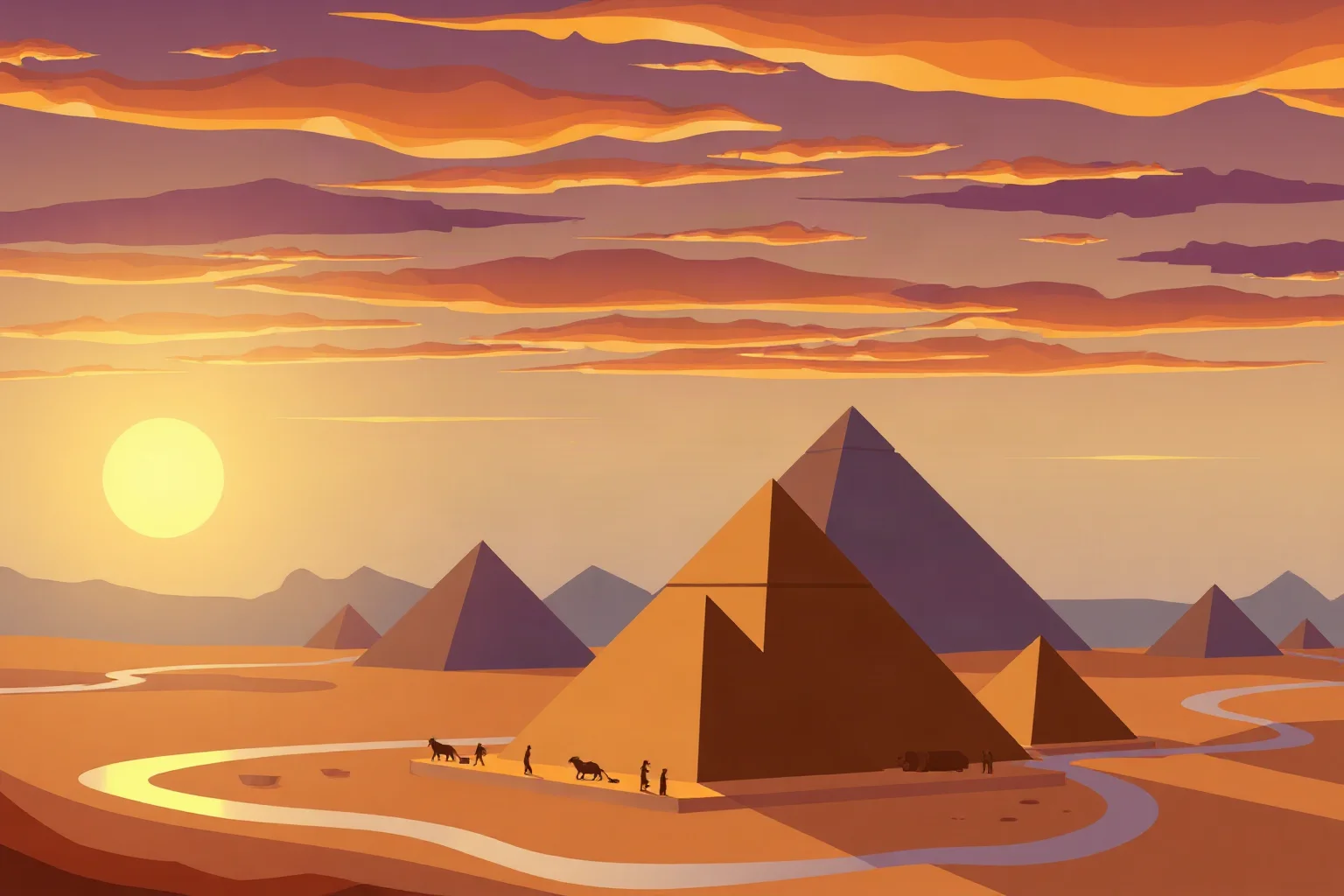
South of Egypt, along the Nile in what’s now Sudan, the Kingdom of Kush built its own tradition of pyramid-building that actually outnumbers Egypt’s. Kushite kings even conquered and ruled Egypt as its 25th Dynasty of pharaohs, roughly from 747 to 656 BCE.
Their capital at Meroë later became a major center of iron production, earning it the nickname “the Birmingham of Africa” among some archaeologists. Kush lasted for well over a thousand years, making it one of the longest-running ancient societies in African history.
2. The Aksumite Empire
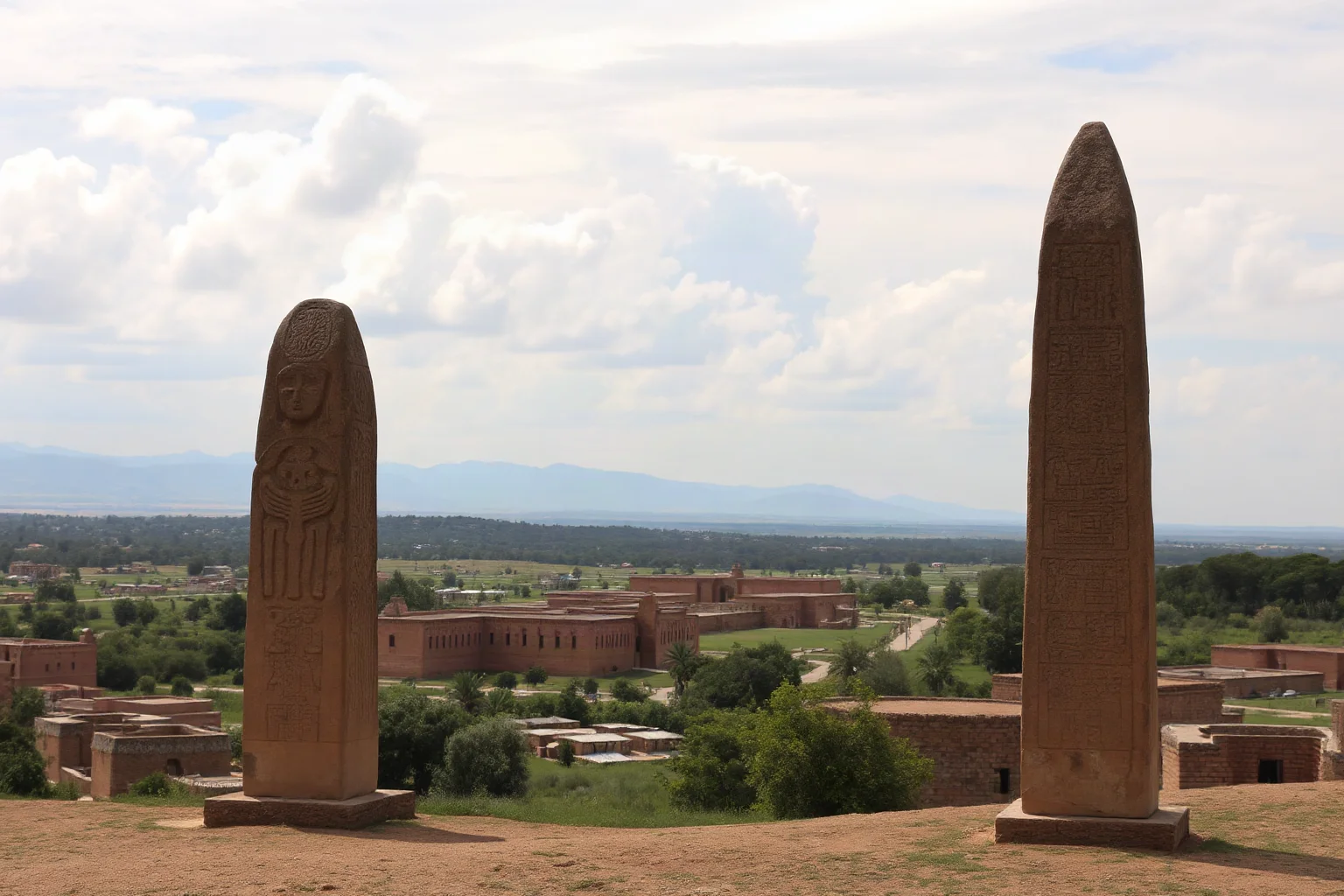
Centered in what’s now Ethiopia and Eritrea, Aksum grew into a major trading empire between roughly 100 and 940 CE. It minted its own gold coinage, developed the Ge’ez writing system still used liturgically today, and raised massive carved stone obelisks that still stand in the city of Axum.
Aksum was also one of the earliest states in the world to officially adopt Christianity, doing so in the 4th century CE. Its ships connected Roman Egypt to India, making it a genuine crossroads of the ancient world.
3. The Garamantes
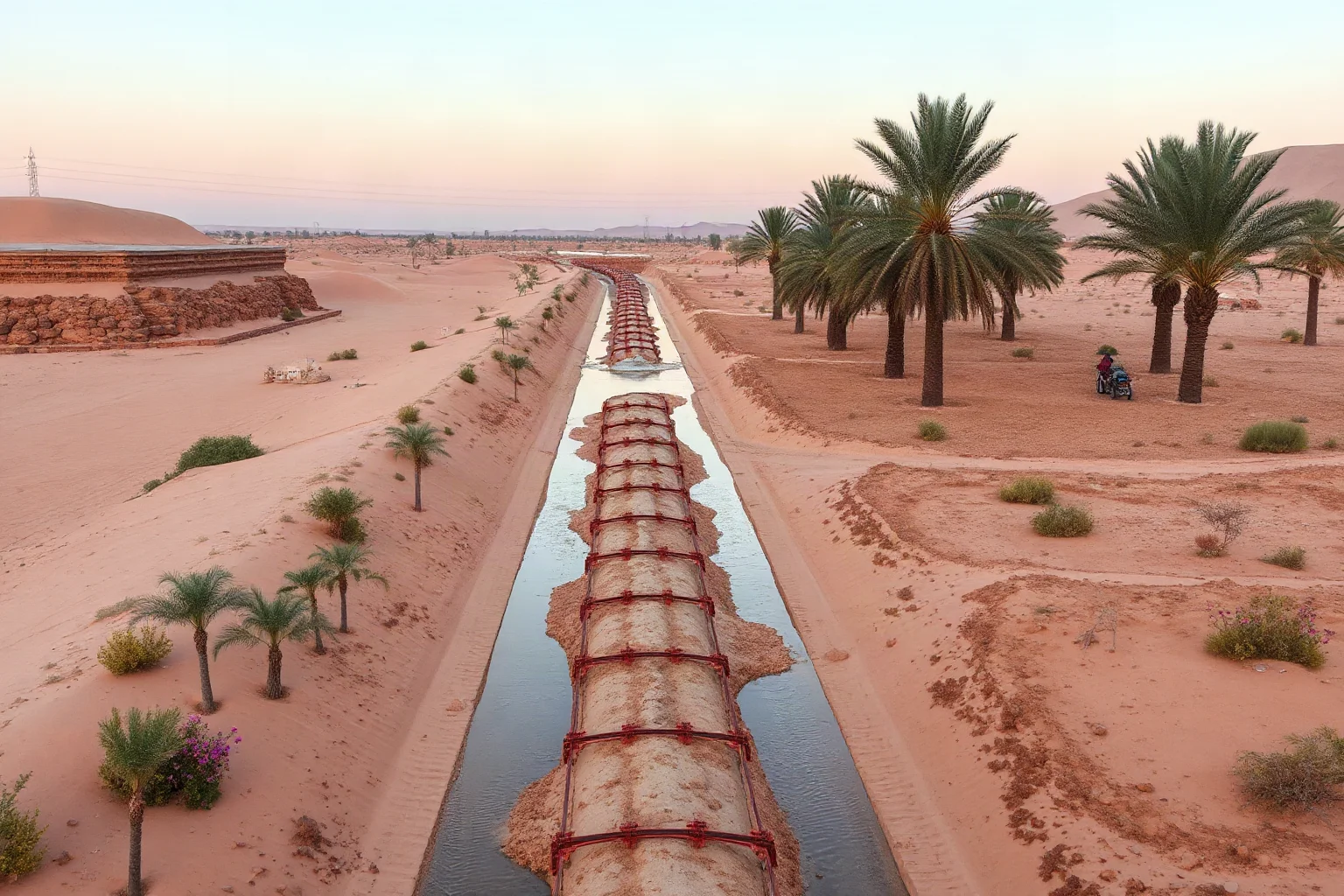
Deep in the Sahara Desert of modern Libya, the Garamantes built a civilization that seems almost impossible for its location. Between roughly 500 BCE and 700 CE, they engineered vast underground irrigation channels called foggaras to pull water from underground aquifers and farm in the middle of the desert.
They built walled towns, forts, and controlled a chunk of the trans-Saharan trade routes long before camel caravans became legendary. Some archaeologists call them the Sahara’s first true urban civilization.
4. The Nok Culture
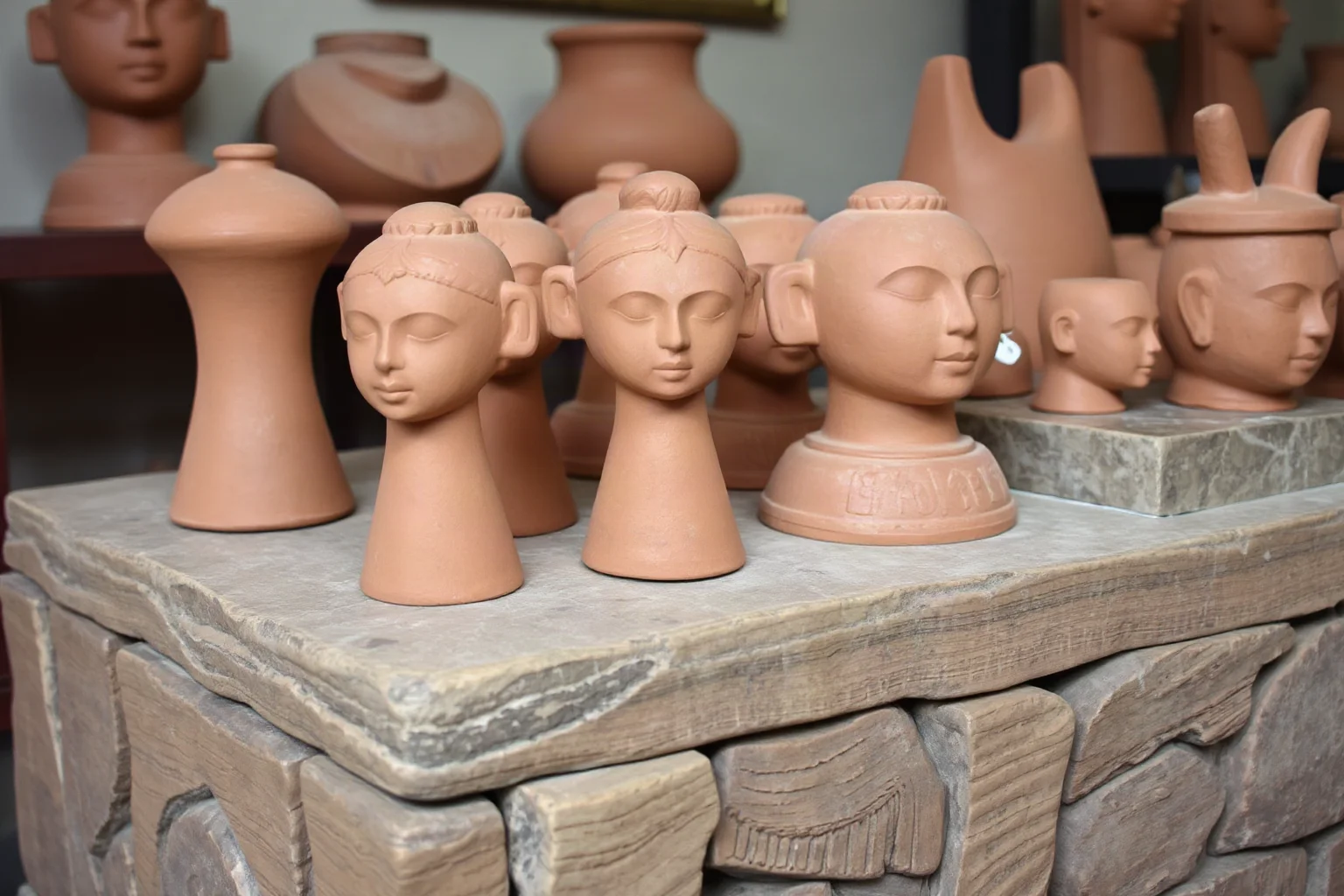
In what’s now Nigeria, the Nok culture flourished from roughly 1500 BCE to 500 CE, leaving behind striking terracotta sculptures of human and animal figures. These works are some of the earliest known figurative art in sub-Saharan Africa.
Evidence from Nok sites also points to some of the earliest ironworking in the region. Very little is known about their language or political structure, since most of what survives is the art itself.
The Fertile Crescent & Ancient Arabia
Mesopotamia and Egypt get the spotlight, but the wider Near East was full of competing, trading, and warring civilizations.
5. The Elamites
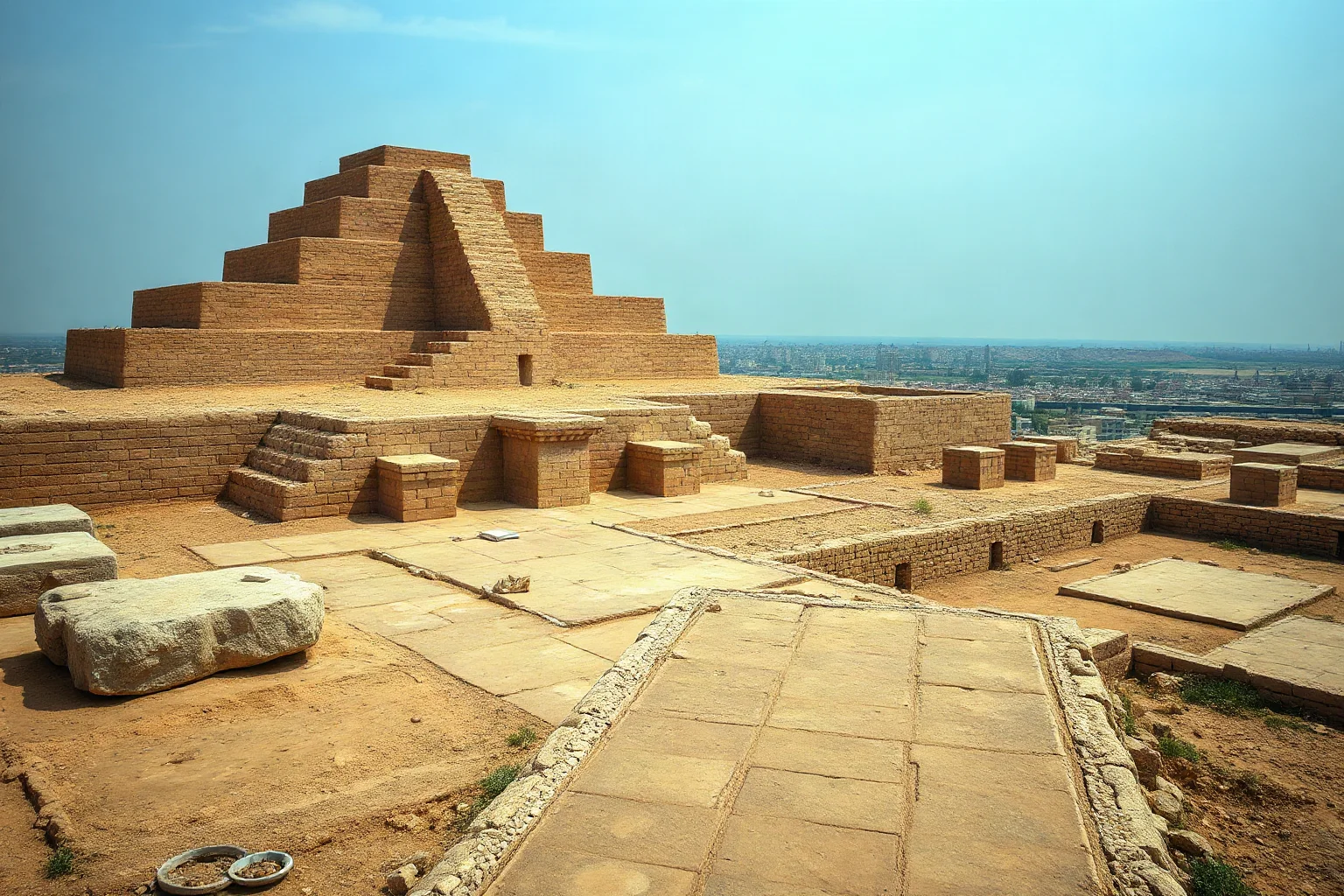
Based around the city of Susa in what’s now southwestern Iran, the Elamites were rivals and neighbors to Sumer, Babylon, and Assyria for roughly two thousand years, from around 2700 to 539 BCE. They developed their own writing systems, including Elamite cuneiform.
Elam repeatedly clashed with and influenced Mesopotamian powers, and Elamite language and administrative practices later fed into the Persian Empire that eventually absorbed the region. Despite that long run, Elam rarely gets mentioned outside specialist courses.
6. The Nabataeans

The Nabataeans are the people behind Petra, the famous rock-carved city in modern Jordan. This Arab trading civilization grew wealthy controlling incense and spice routes across the desert from roughly the 4th century BCE until Rome annexed their kingdom in 106 CE.
They were remarkable hydraulic engineers, building cisterns and channels that let a city thrive in an arid canyon. Petra’s carved facades remain one of the most photographed ruins on Earth, even when most visitors don’t know who actually built them.
7. Dilmun
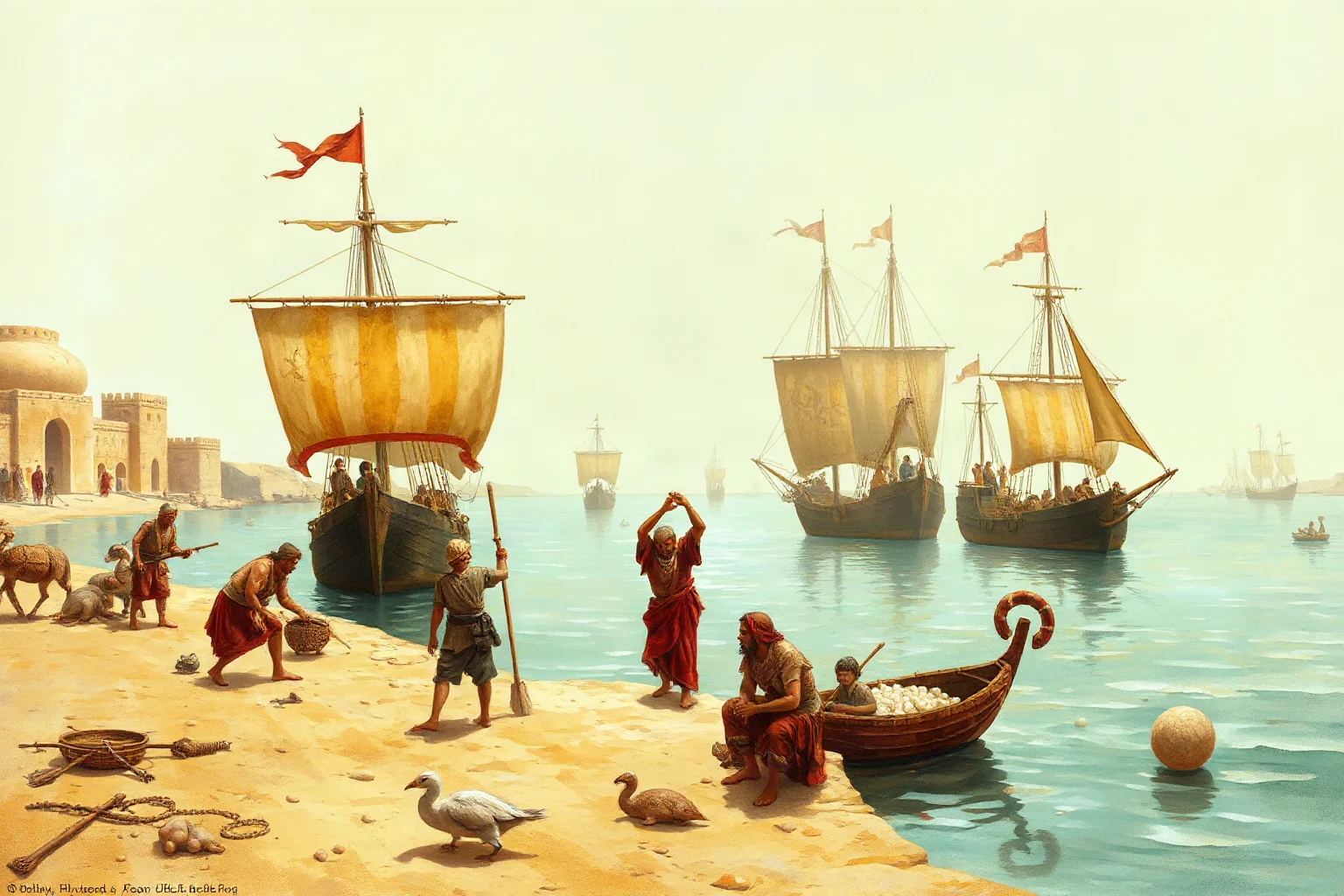
Centered around modern Bahrain in the Persian Gulf, Dilmun served as a crucial Bronze Age trading link between Mesopotamia and the Indus Valley. Sumerian texts describe it almost as a paradise-like land, and it grew wealthy on the pearl trade and its position along Gulf shipping lanes.
Archaeological digs have uncovered burial mounds, temples, and trade goods confirming Dilmun’s role as a genuine commercial hub rather than just a myth mentioned in Sumerian poetry. It’s a great example of how much ancient trade shaped civilizations that never built an empire of their own.
8. The Sabaeans
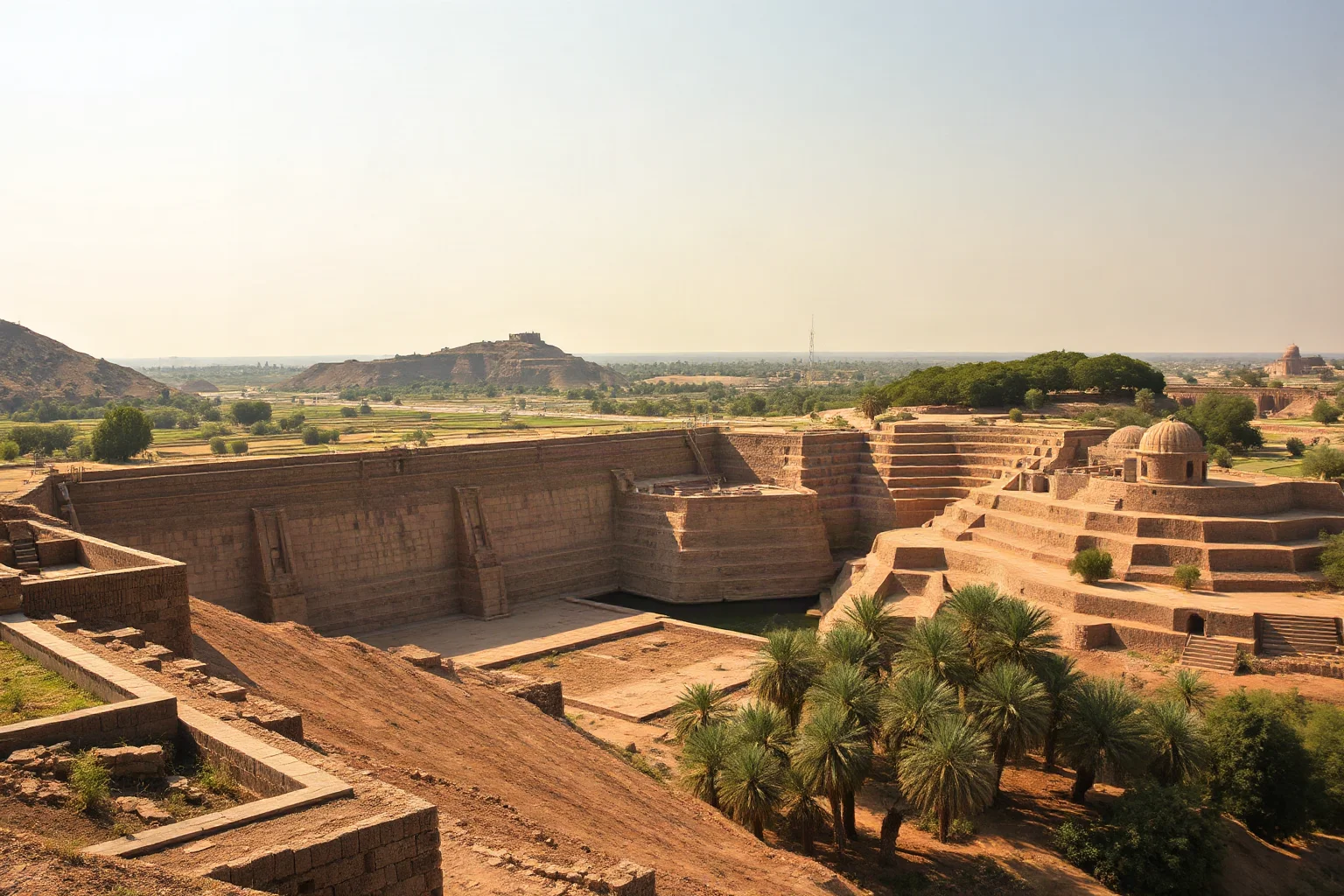
The Sabaean kingdom of ancient Yemen is widely associated with the biblical land of Sheba. From roughly 1200 BCE to 275 CE, the Sabaeans grew rich controlling the frankincense and myrrh trade moving up from the Arabian Peninsula.
They also built the Great Dam of Marib, a major feat of ancient engineering that supported irrigation for centuries. Their kingdom eventually gave way to other South Arabian states, but their trade networks left a lasting mark on the ancient economy.
9. Urartu
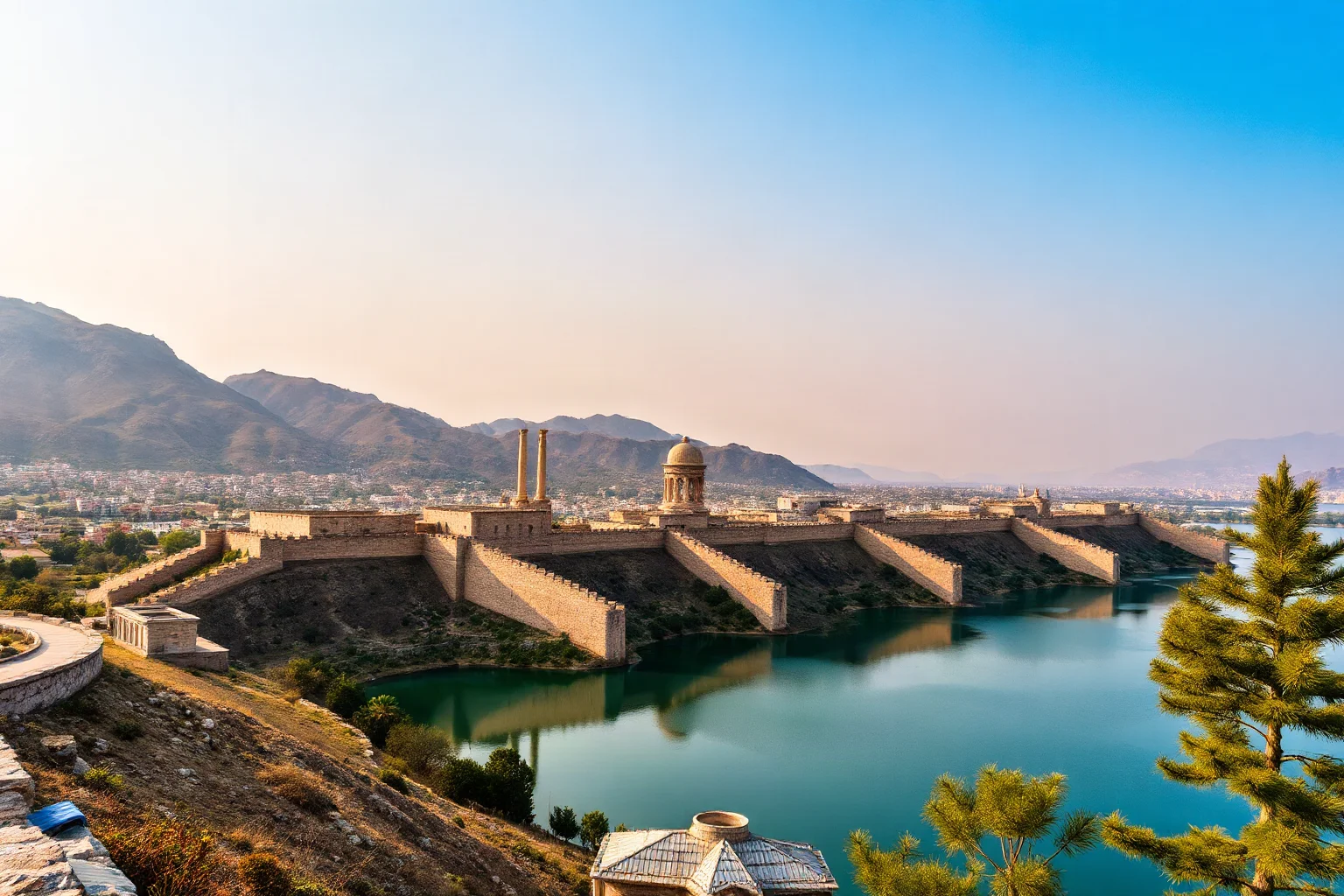
Tucked into the mountains around Lake Van in what’s now eastern Turkey and Armenia, the kingdom of Urartu was a serious rival to the Assyrian Empire between roughly 860 and 590 BCE. They’re often overshadowed by Assyria simply because Assyria left more surviving records.
Urartu built impressive fortress cities and complex irrigation canals, some of which are still traceable in the landscape today. Their metalworking, especially in bronze, was highly advanced for the period.
The Mediterranean & Prehistoric Europe
Greece and Rome didn’t emerge from nowhere. Several older or parallel cultures shaped the Mediterranean and European world long before either became famous.
10. The Minoans
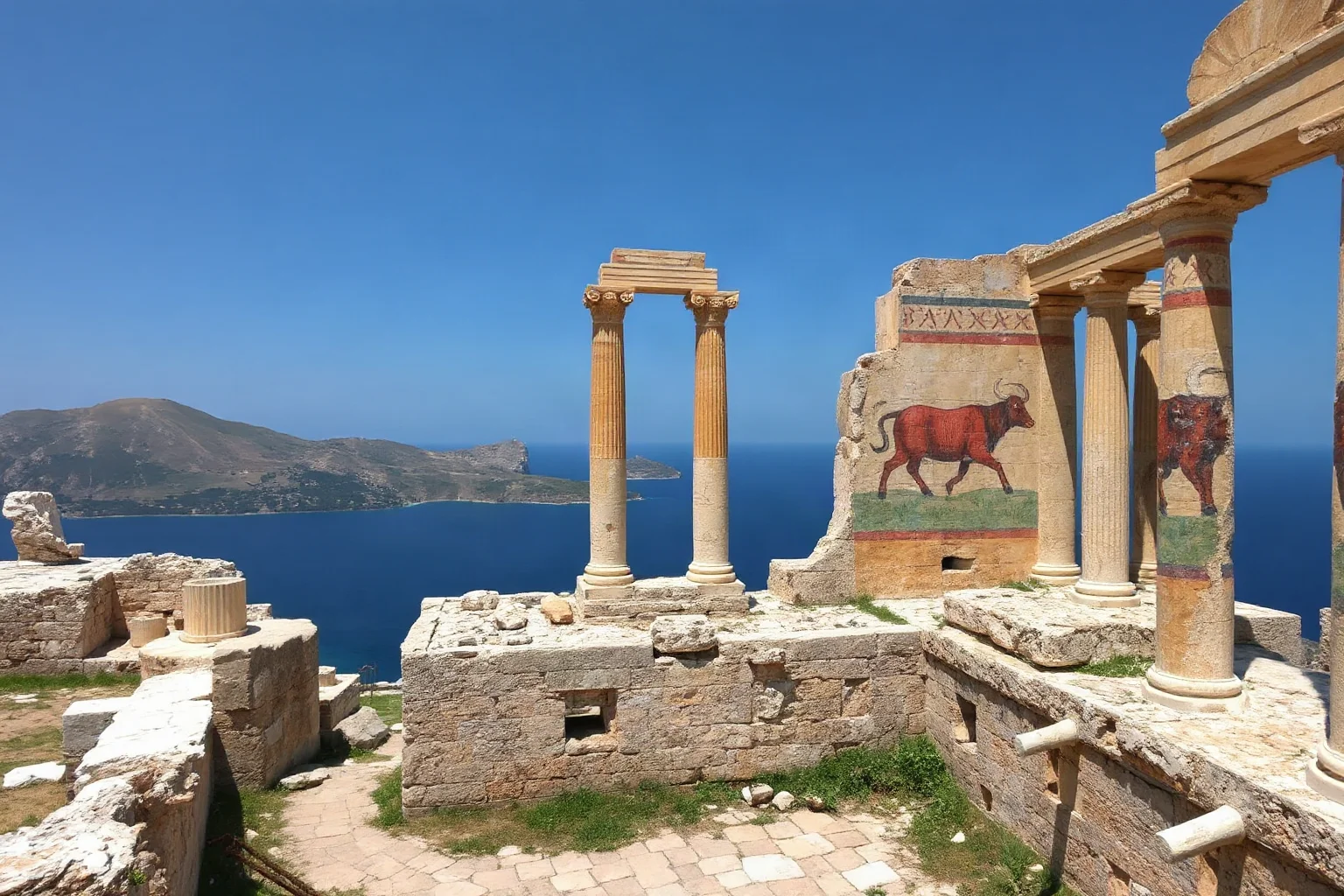
Based on the island of Crete, the Minoan civilization flourished from roughly 3000 to 1100 BCE and left behind the sprawling palace complex at Knossos, likely the inspiration for the Greek myth of the labyrinth. They developed a still-undeciphered script called Linear A.
Earlier popular accounts sometimes painted the Minoans as an unusually peaceful, matriarchal utopia, but more recent archaeology has found weapons, fortifications, and depictions of combat that complicate that romantic picture. Like most ancient cultures, the reality was more layered than the myth.
11. The Etruscans
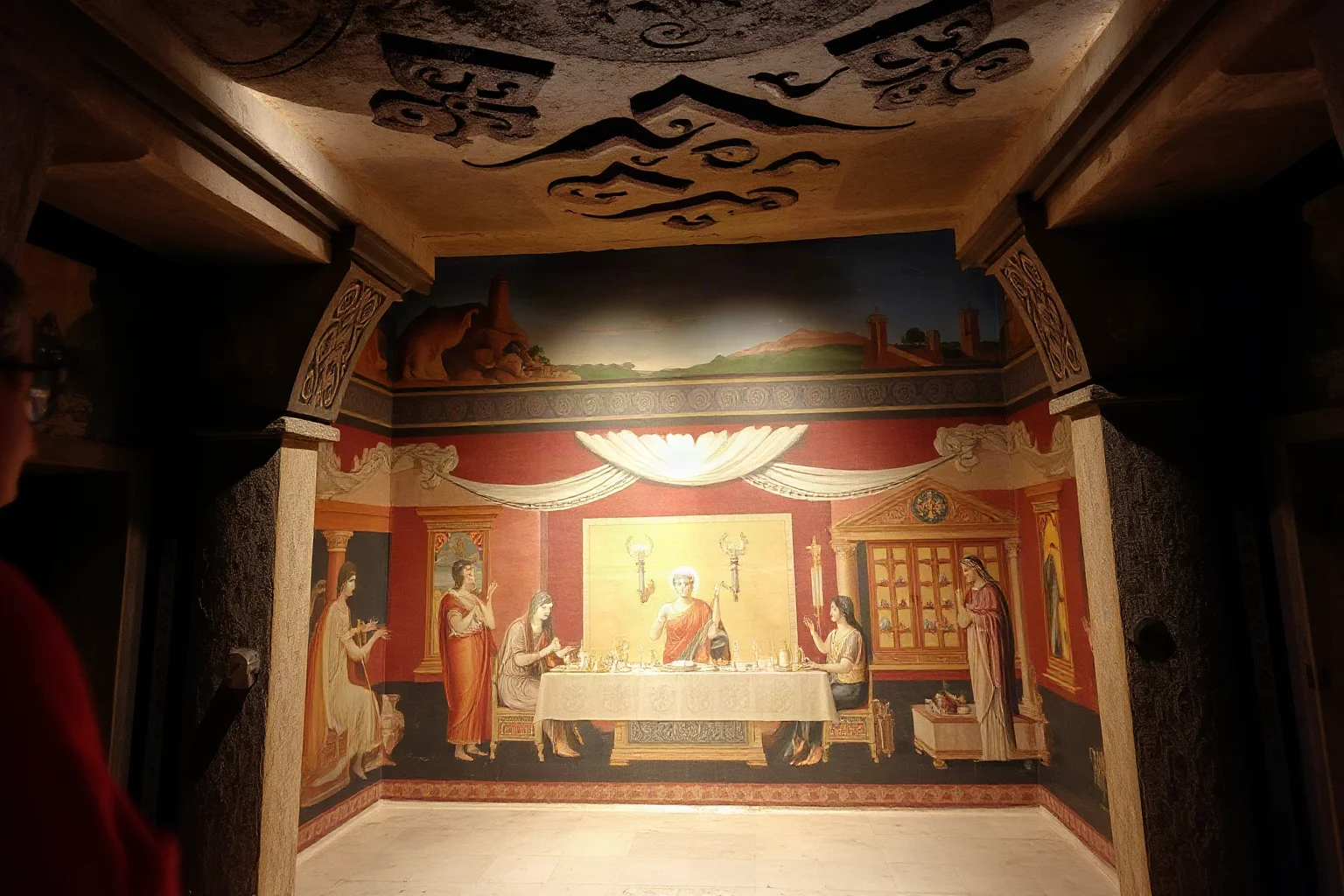
Before Rome dominated Italy, the Etruscans ran a network of city-states across the central peninsula from roughly 900 to 27 BCE. Roman religion, architecture, and even the alphabet Rome used all owe a debt to Etruscan traditions.
Roman writers themselves credited the Etruscans with introducing certain religious rituals and possibly early forms of gladiatorial contests. Much of what we know about them comes from their elaborate tombs, since their language remains only partly understood.
12. The Cucuteni-Trypillia Culture
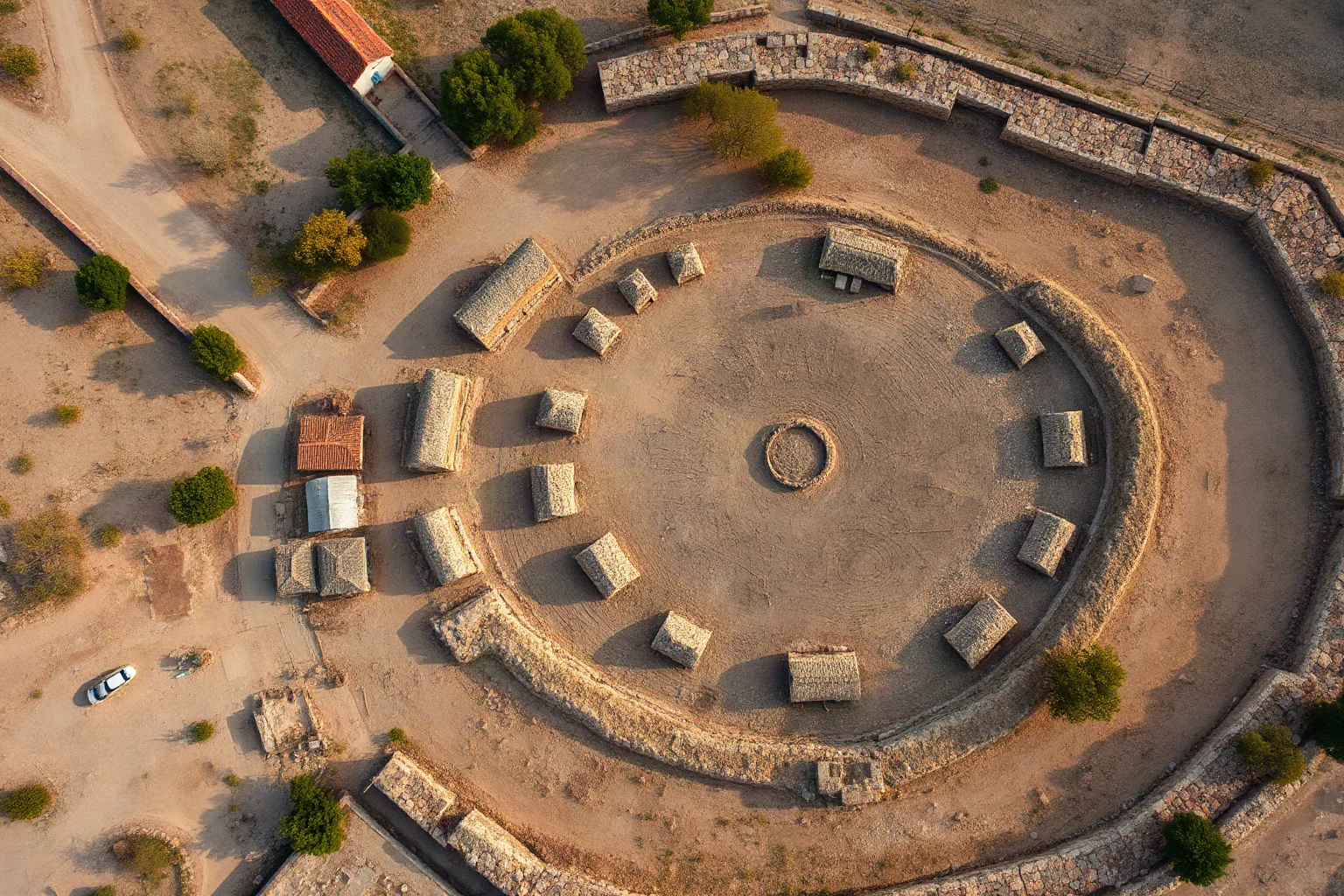
Spread across what’s now Ukraine, Moldova, and Romania, the Cucuteni-Trypillia culture built some of the largest settlements in the world during its peak, roughly 5500 to 2750 BCE. Some of these settlements may have housed thousands of people, predating better-known Bronze Age cities.
They’re known for intricate painted pottery and, in their earlier phases, an apparent lack of evidence for large-scale warfare, which has made them a subject of ongoing academic debate. This is a genuinely underrated entry on any list of ancient cultures of the world.
13. The Vinča Culture
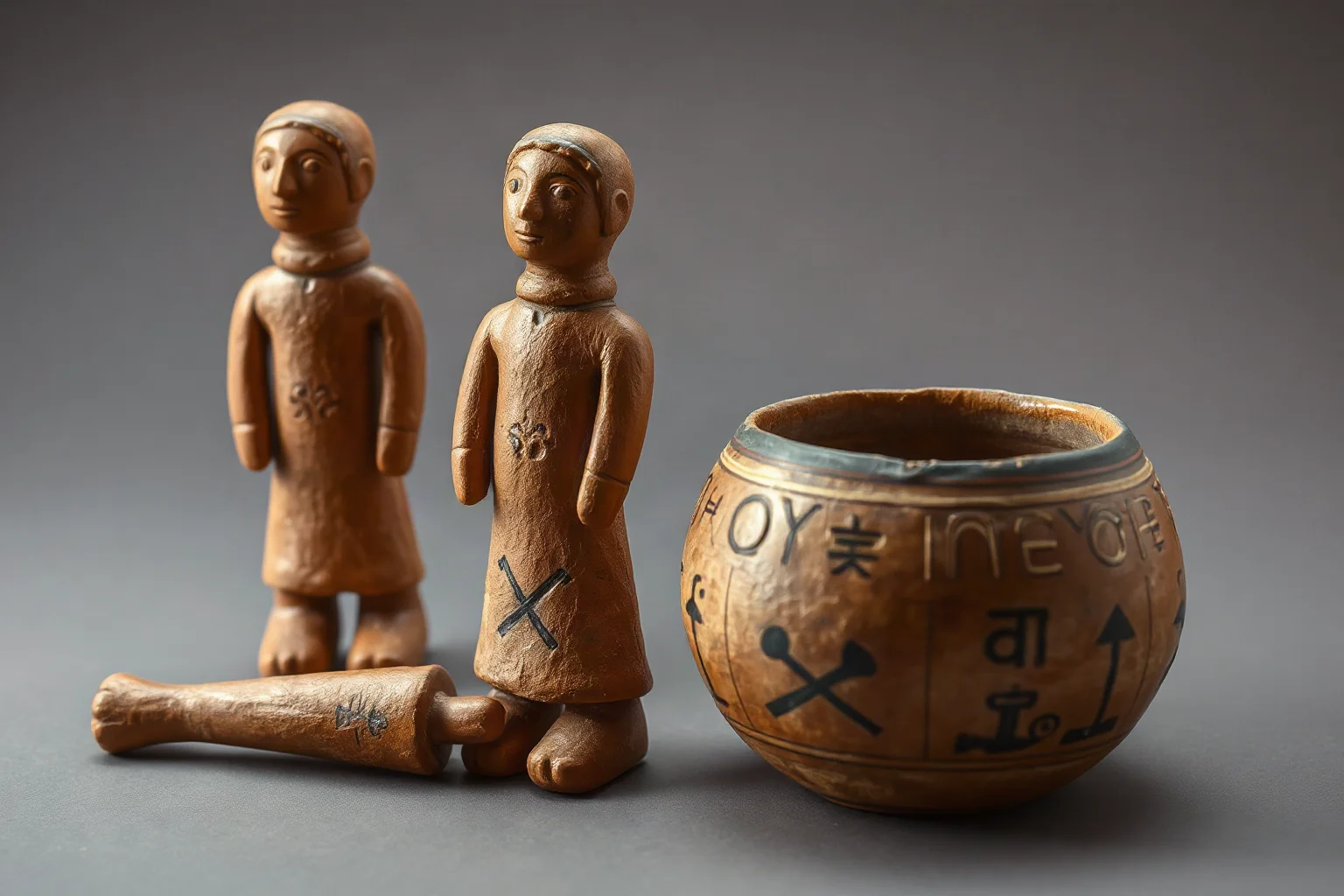
Centered in the Balkans, the Vinča culture thrived from roughly 5700 to 4500 BCE and produced some of the earliest known copper metallurgy in Europe. They also left behind mysterious symbols carved into pottery and figurines.
Some researchers have speculated these Vinča symbols represent an early proto-writing system, though this remains genuinely unverified and debated among linguists. It’s a good reminder to treat bold claims about “the first writing” with healthy skepticism.
14. The Yamnaya Culture
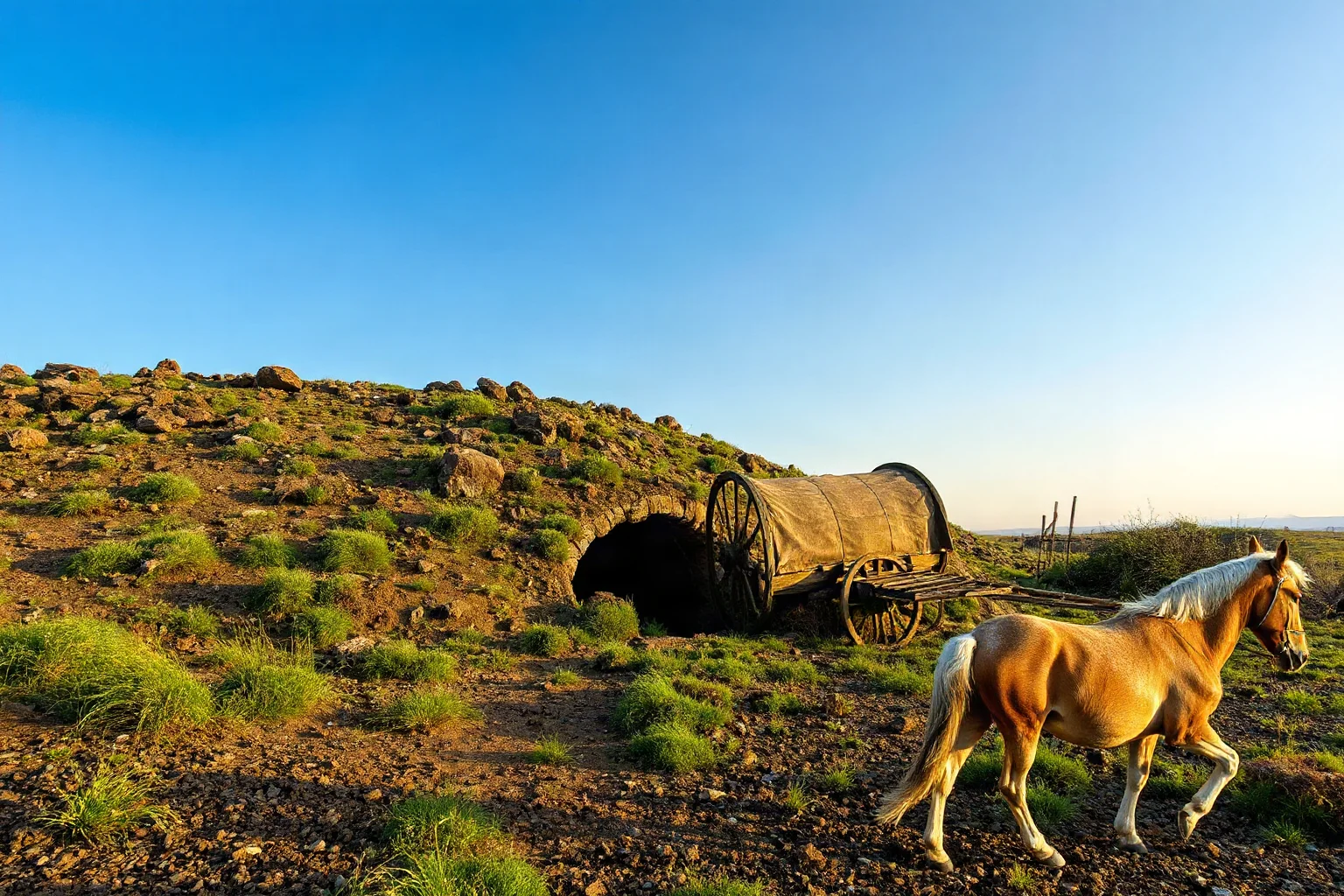
The Yamnaya were pastoralist herders who roamed the Pontic-Caspian steppe, roughly spanning modern Ukraine and southern Russia, around 3300 to 2600 BCE. Genetic and linguistic evidence links them closely to the spread of Indo-European languages across much of Europe and Asia.
They buried their dead beneath earthen mounds called kurgans, often alongside wagons and wheeled carts. Their migrations are a major piece of the puzzle behind why so many modern languages, from English to Hindi, share deep roots.
Asia & the Eurasian Steppe
Asia’s ancient world stretched far beyond the dynasties of China, and the steppe produced some of history’s most consequential nomadic powers.
15. The Indus Valley Civilization
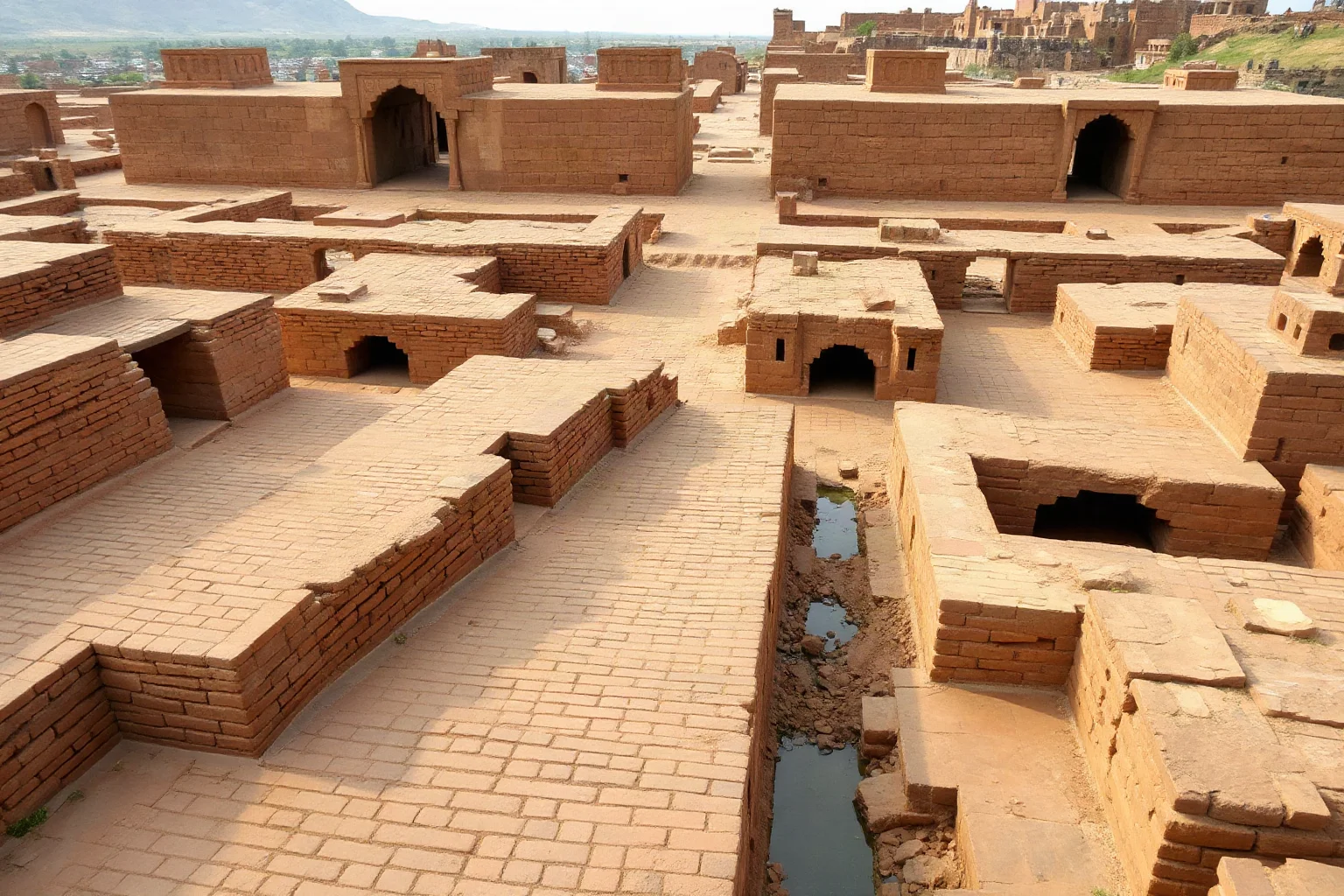
Spanning parts of modern Pakistan and northwest India, the Indus Valley Civilization built sophisticated cities like Harappa and Mohenjo-daro between roughly 3300 and 1300 BCE. These cities had standardized weights, planned street grids, and advanced drainage systems well ahead of their time.
Despite being one of the largest Bronze Age civilizations by population, it gets far less coverage in Western education than Egypt or Mesopotamia. Its script also remains undeciphered, which limits how much we can say for certain about its politics or beliefs.
16. The Xiongnu Confederation
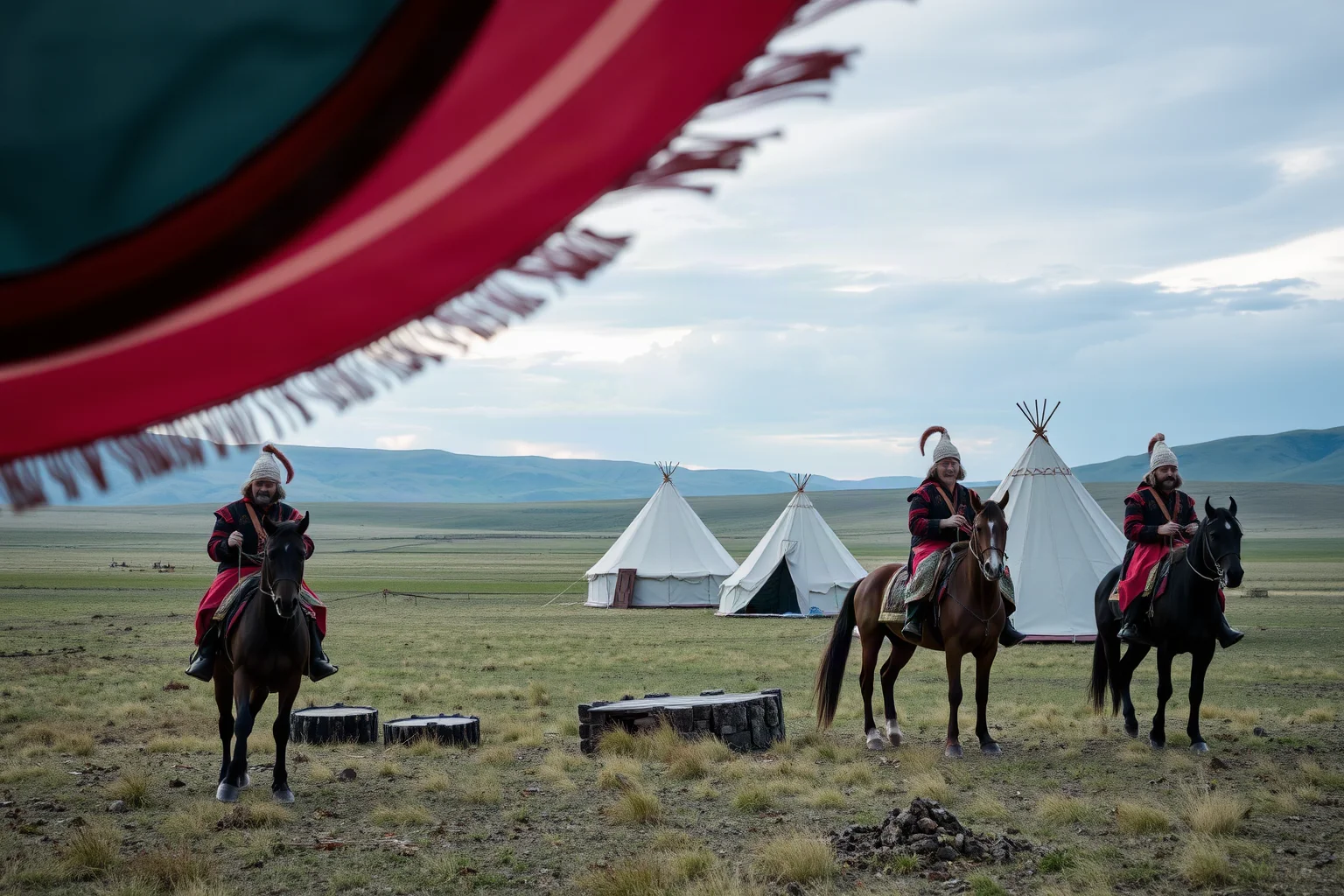
The Xiongnu were a nomadic confederation dominating Mongolia and Central Asia from around the 3rd century BCE to the 2nd century CE. They were persistent rivals of Han China, and their raids were a major reason China extended and reinforced the Great Wall.
Some historians have proposed possible links between the Xiongnu and the later Huns who appeared in Europe, though this connection remains debated rather than settled. Either way, the Xiongnu were a major force shaping Central Asian history.
17. The Scythians
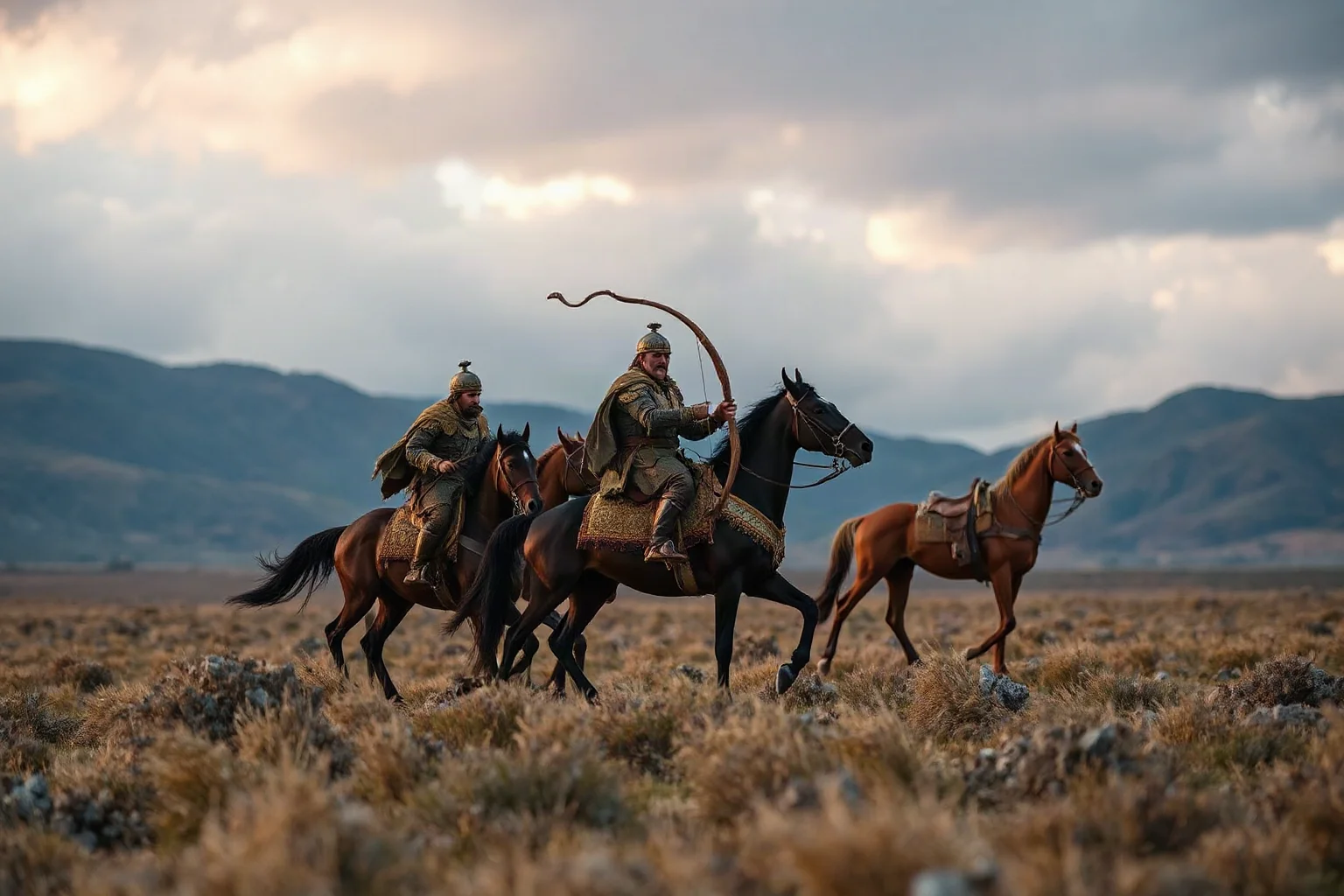
The Scythians were horse-mounted warrior nomads who dominated the Eurasian steppe from roughly the 9th to the 4th century BCE. The Greek historian Herodotus wrote extensively about them, describing their customs, though modern historians treat some of his more colorful claims cautiously.
Scythian burial mounds, called kurgans, have produced extraordinary gold artifacts showing remarkable craftsmanship. Their mobile, cavalry-based way of life influenced steppe warfare for centuries after their decline.
18. The Sanxingdui Culture
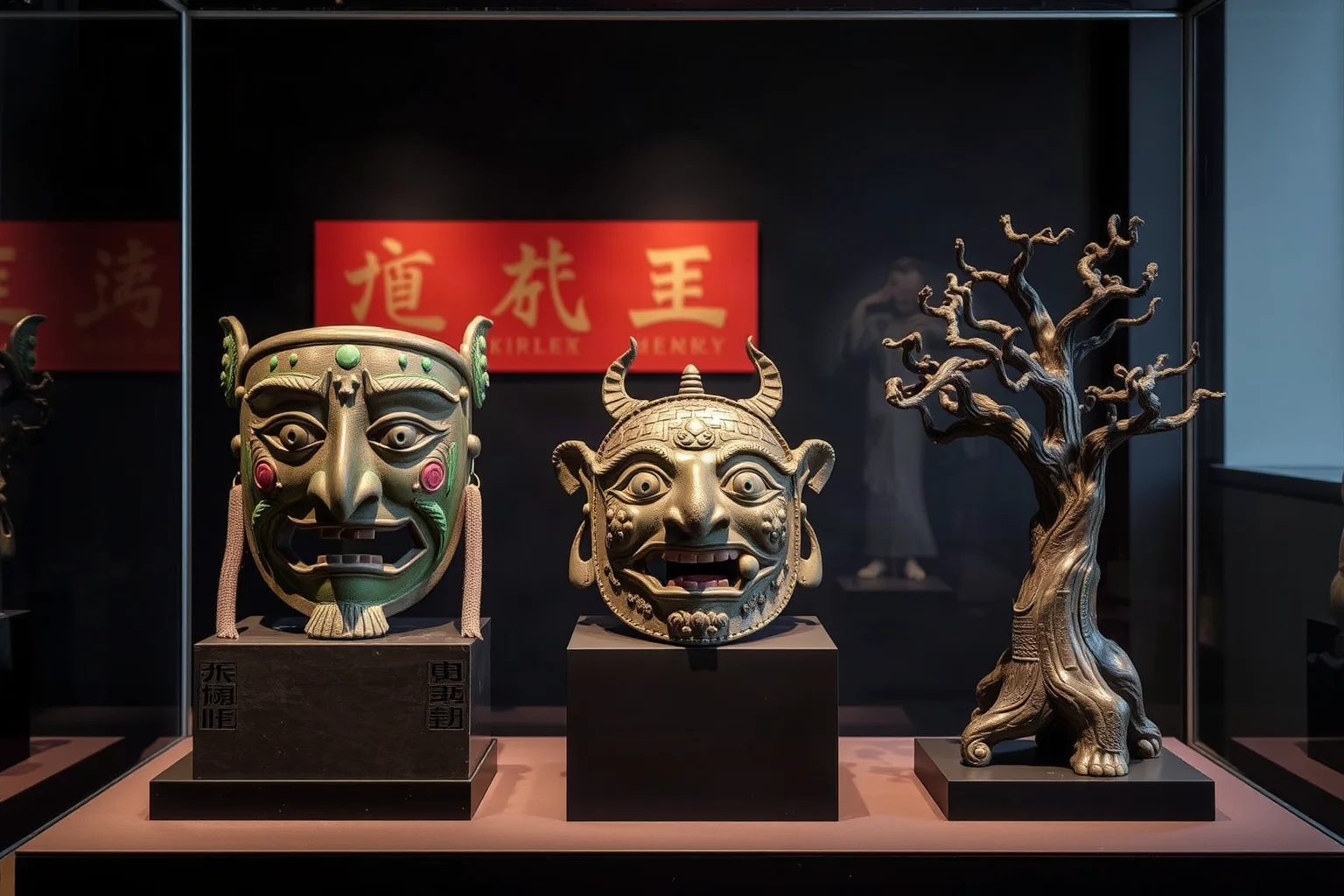
Discovered only in 1986 in China’s Sichuan province, the Sanxingdui culture dates to roughly 1200 to 1000 BCE and doesn’t fit neatly into the traditional Yellow River-centered story of early Chinese civilization. Excavators found giant bronze masks, life-sized bronze figures, and bronze “trees” unlike anything found elsewhere in Bronze Age China.
Because the discovery is so recent, Sanxingdui is still reshaping how historians think about the origins of Chinese civilization. It’s proof that even well-studied regions can hide entirely unknown ancient societies.
19. The Jōmon Culture
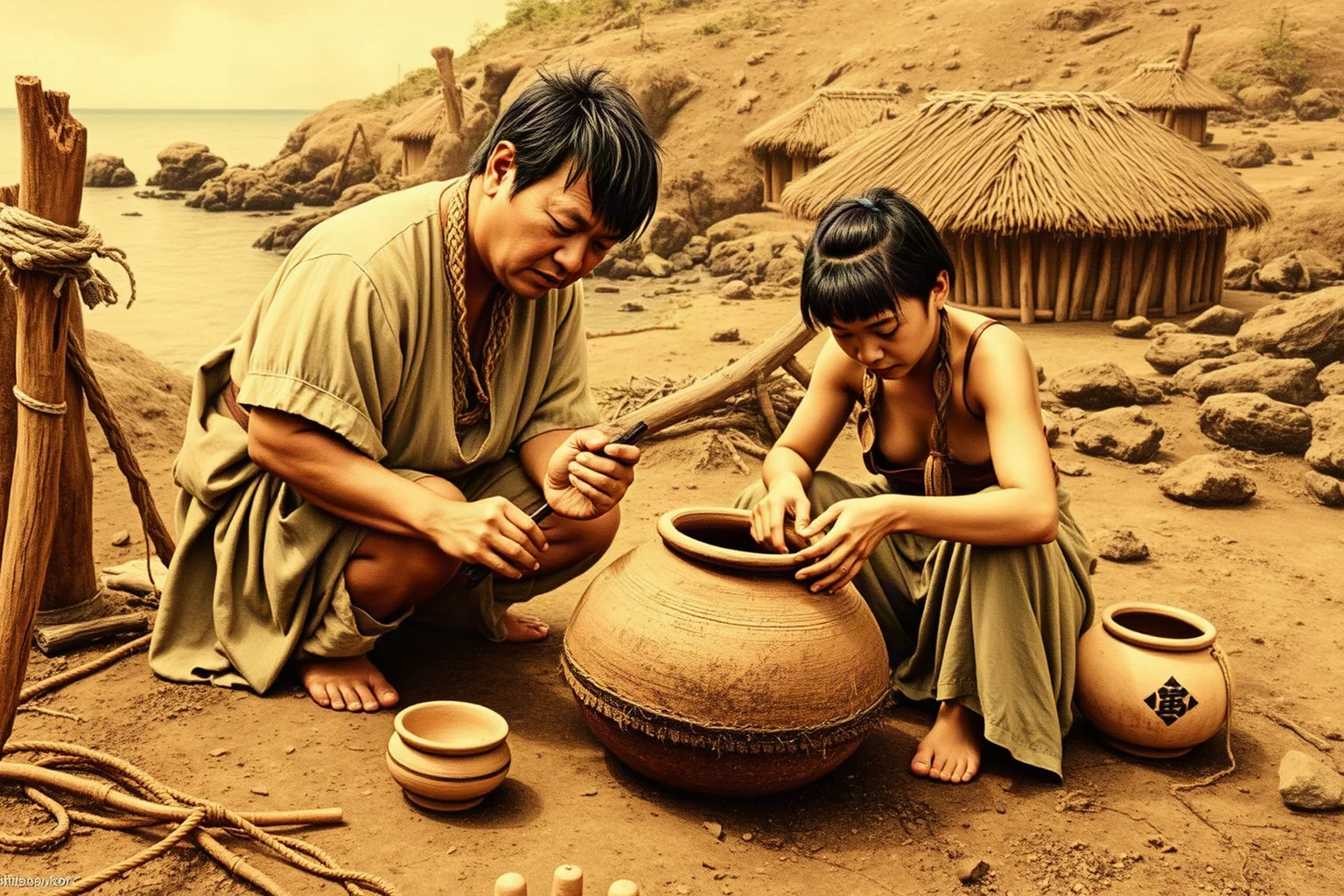
Japan’s Jōmon culture spanned an extraordinarily long period, roughly 14,000 to 300 BCE, and produced some of the oldest pottery in the world. Remarkably, they achieved this while remaining largely hunter-gatherers rather than full-scale farmers.
Their cord-marked pottery style, which gives the culture its name, shows a level of artistic sophistication rarely associated with pre-agricultural societies. Jōmon sites offer a genuinely different model of how complex culture can develop without cities or farming.
The Americas
Mesoamerica and South America produced complex urban societies thousands of years before European contact, several of them older than most people realize.
20. The Caral-Supe (Norte Chico) Civilization
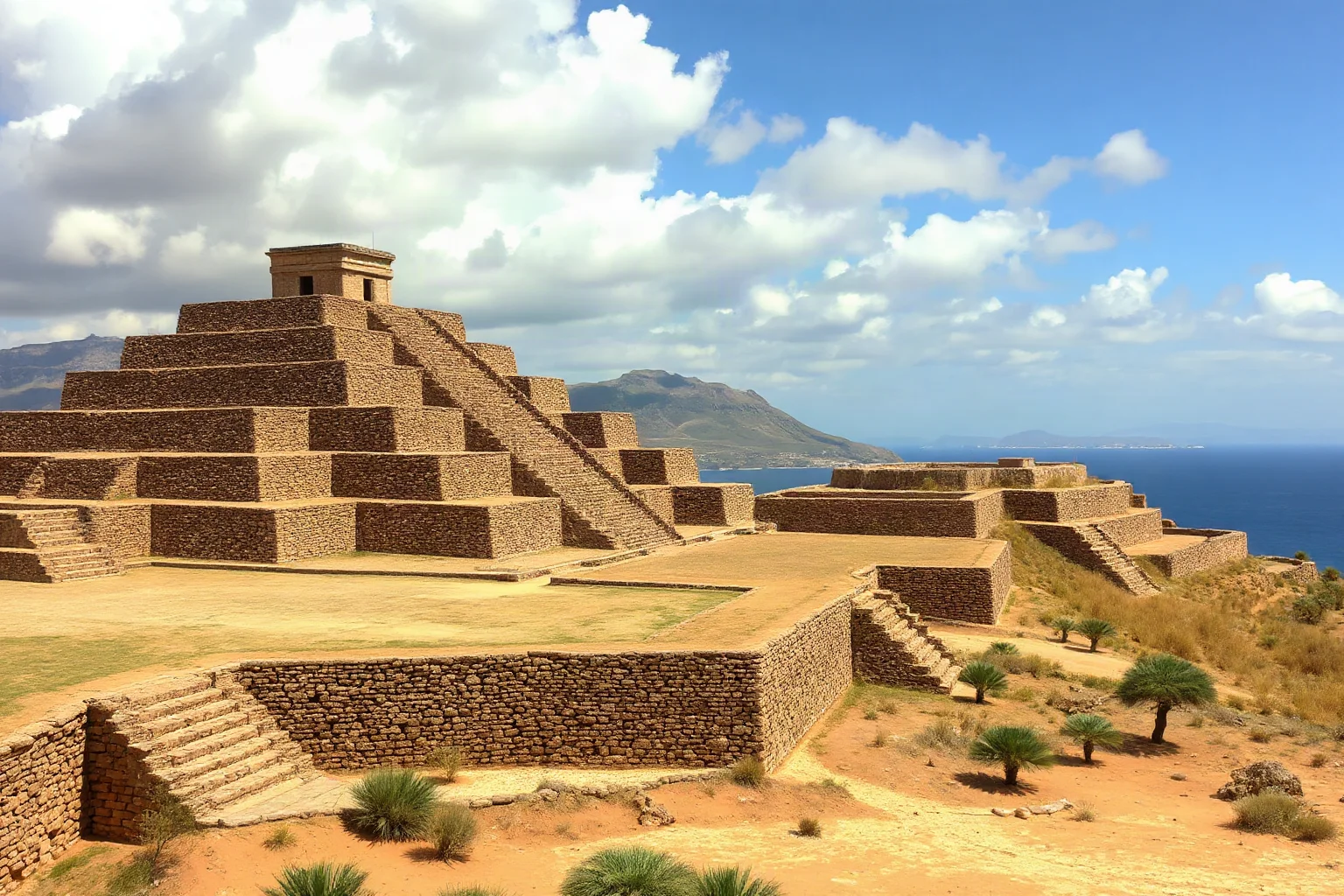
Along the coast of Peru, the city of Caral was thriving between roughly 3000 and 1800 BCE, making the Norte Chico civilization the oldest known complex society in the Americas. Its pyramids were being built around the same time as Egypt’s Old Kingdom pyramids, entirely independently.
Archaeologists have found remarkably little evidence of weapons or warfare at Caral, which has made it a frequently cited example in debates about whether large societies require conflict to form. It remains one of the coolest ancient civilizations for exactly that reason.
21. The Olmec Civilization
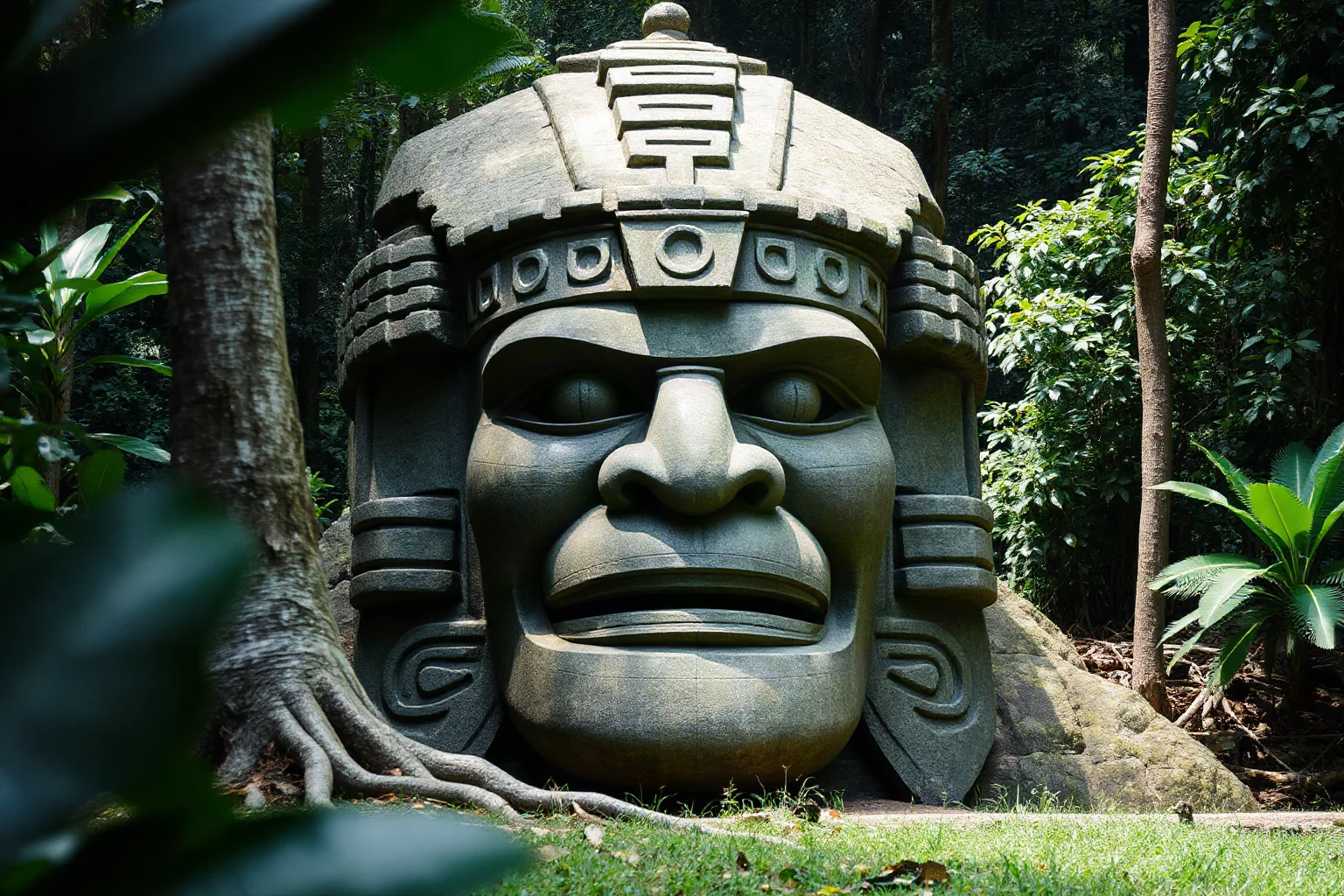
Often called Mesoamerica’s “mother culture,” the Olmec flourished in what’s now Mexico from roughly 1600 to 400 BCE. They’re best known for the colossal carved stone heads found at sites like San Lorenzo and La Venta.
Many scholars believe Olmec traditions, including early calendar systems and religious concepts, influenced the later Maya and Aztec civilizations. Their writing system, if they had one, hasn’t survived clearly enough to be fully deciphered.
22. The Chavín Culture
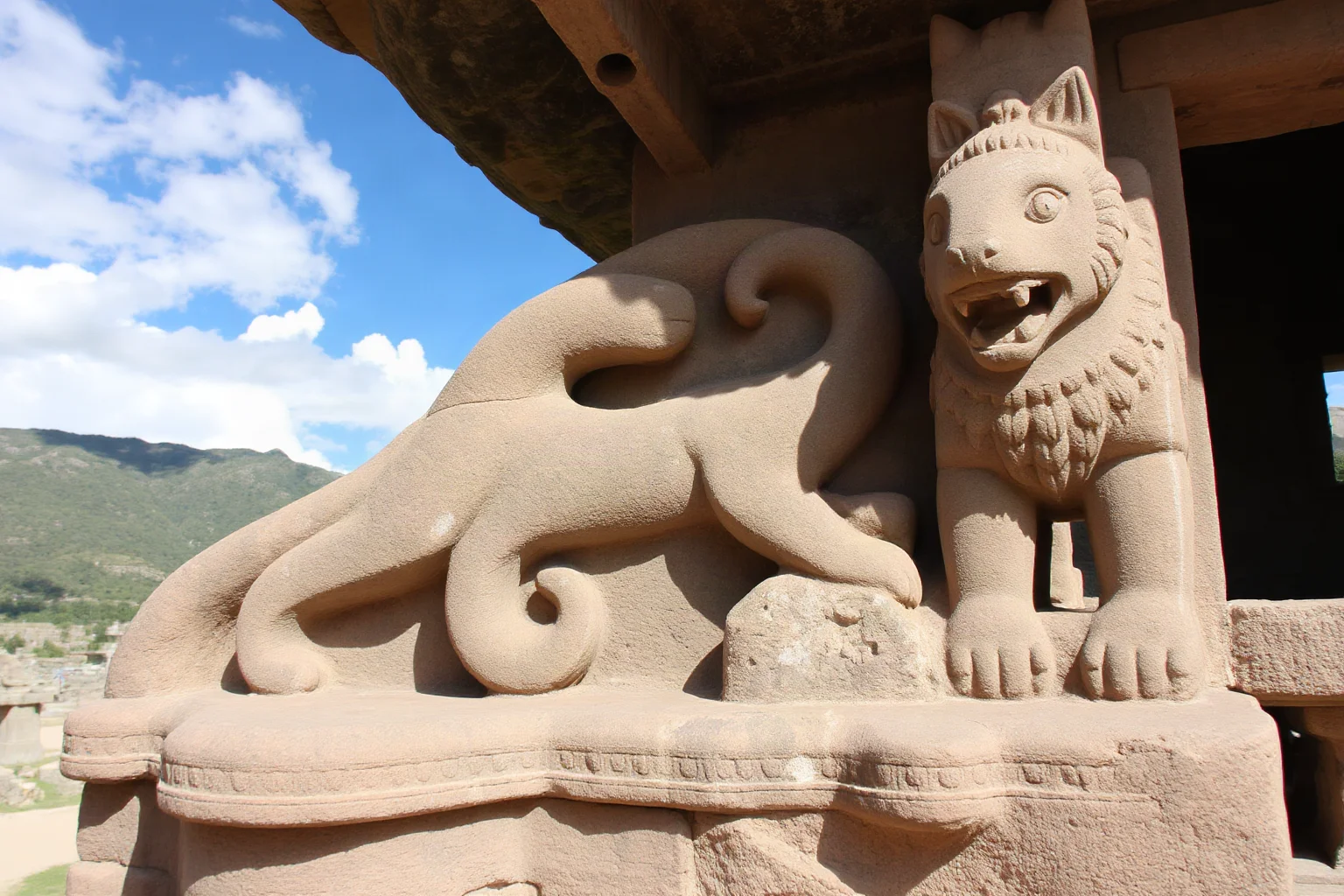
High in the Peruvian Andes, the Chavín culture built a major ceremonial and religious center at Chavín de Huántar between roughly 900 and 200 BCE. Rather than functioning as a military empire, Chavín seems to have spread its influence primarily through religion, art, and trade.
Its iconography, especially feline and serpent motifs, shows up in later Andean cultures including the Inca. Chavín is a strong example of an ancient culture that shaped a whole region without conquering it.
23. The Zapotec Civilization
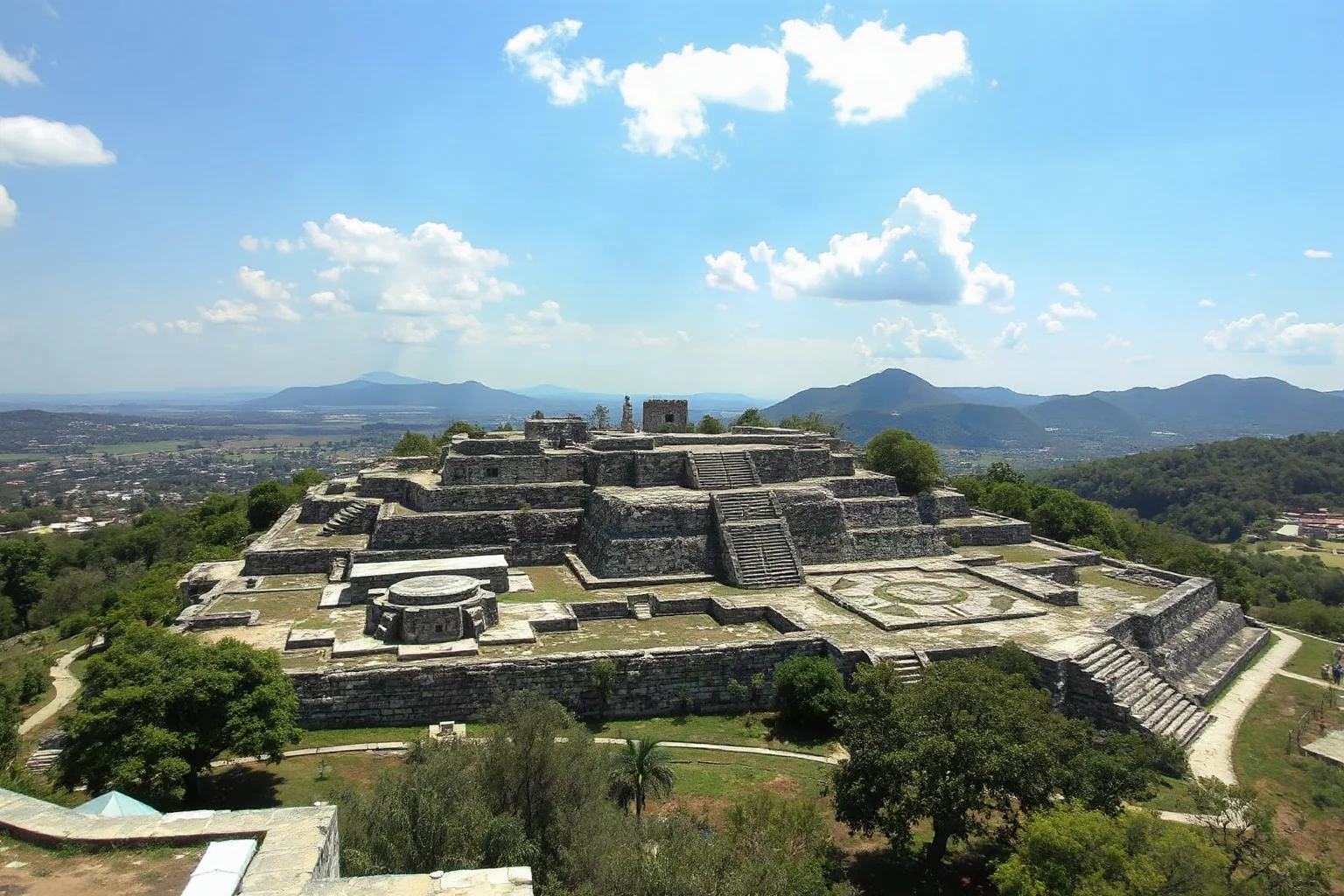
Centered in Oaxaca, Mexico, the Zapotec civilization lasted from roughly 700 BCE all the way to Spanish contact in 1521 CE. They built the hilltop city of Monte Albán and developed one of the earliest writing systems known in the Americas.
Zapotec calendrical and hieroglyphic systems likely influenced later Mesoamerican scripts, including those used by the Maya. Their long continuity, spanning more than two thousand years, makes them one of the more durable entries on this list.
24. The Mississippian Culture (Cahokia)
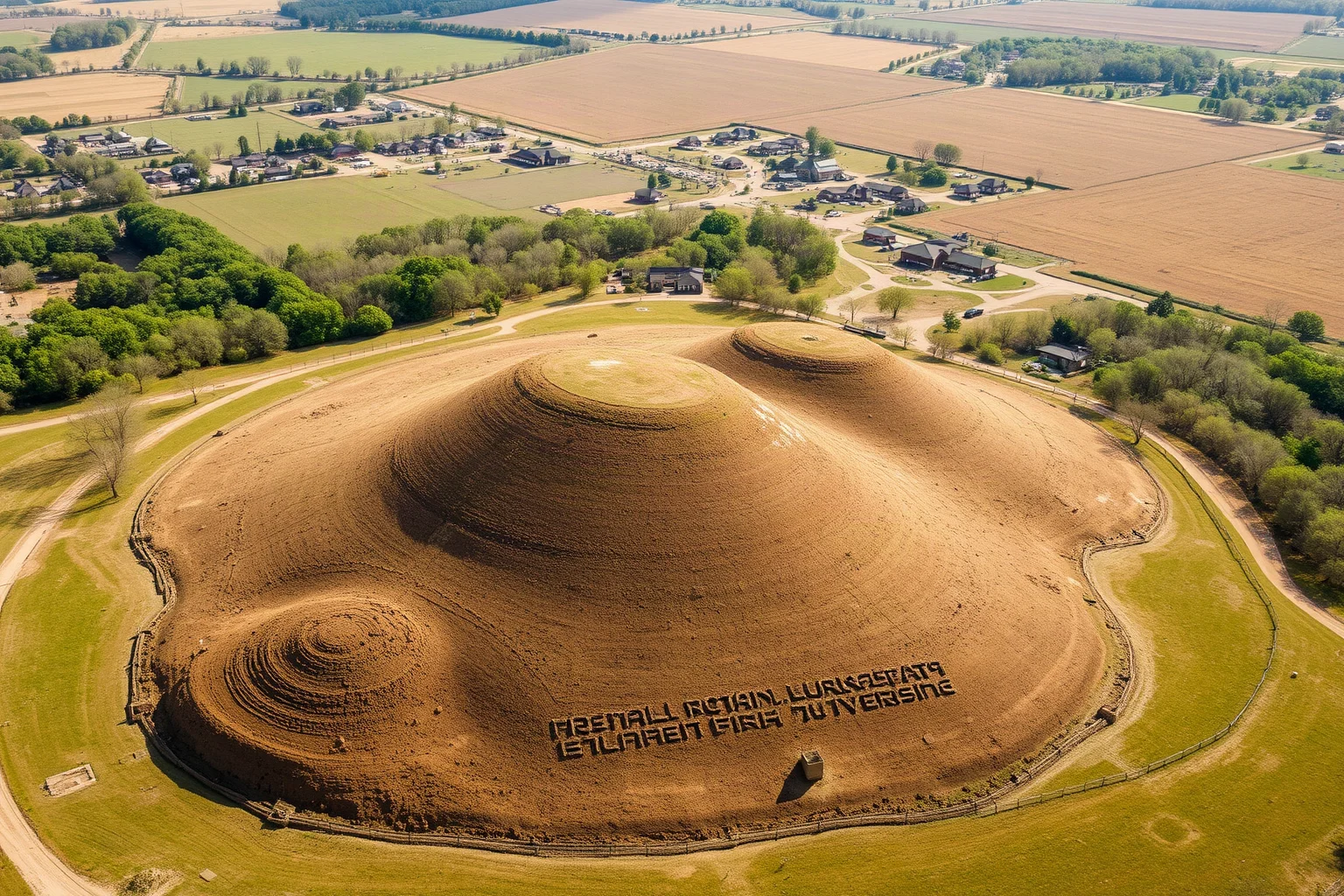
In what’s now Illinois, the city of Cahokia was the heart of the Mississippian culture and, at its peak around 1050 to 1200 CE, may have been larger in population than London at the time. Its builders raised massive earthen mounds, some rivaling Mesoamerican pyramids in scale.
Cahokia sat at the center of a trade network reaching across much of North America, moving copper, shells, and other goods over huge distances. Its decline remains only partly understood, but its scale alone challenges outdated assumptions about pre-Columbian North America.
Ancient Cultures, Modern Lessons
Looking at this list of ancient civilizations side by side, a few patterns stand out. Trade, not just conquest, built plenty of these societies, and engineering ingenuity showed up everywhere from the Sahara to the Andes, not just in the classic centers of power.
It’s also worth remembering that this is far from a complete list of ancient cultures of the world. Dozens more, from the Hittites to the Maya to the Phoenicians, deserve their own deep dives, and archaeologists are still uncovering new ones. The story of great cultures of the world is nowhere near finished being written.
If anything, that’s the real takeaway. Every generation of archaeologists finds more names of civilizations that quietly rewrite what we thought we knew, which means the next entry on a list like this one might not even have a name we recognize yet.
Frequently Asked Questions
Is there a complete list of ancient cultures?
No single list of ancient cultures is truly complete, since archaeologists continue discovering new sites and societies every year. Broad overviews usually group them by region — Mesopotamia, Egypt, the Indus Valley, East Asia, the Americas, sub-Saharan Africa, and the Eurasian steppe — but within each region there were often dozens of distinct cultures, many still being studied or only partially understood.
What are considered the greatest ancient civilizations?
Ancient Egypt, Rome, Greece, China's early dynasties, Mesopotamia, and the Maya are usually named among the greatest ancient civilizations because of their scale, surviving records, and lasting influence. That said, greatness is partly a matter of what got documented and preserved, so plenty of other historical civilizations, like Kush, the Indus Valley, and Caral-Supe, arguably deserve equal recognition.
What is the oldest known civilization in the world?
Sumer in Mesopotamia is typically credited as the oldest civilization with cities and writing, emerging around 3500 BCE. However, the Caral-Supe civilization in Peru built complex urban centers around the same era without contact with the Old World, and older cultures like Jōmon Japan show sophisticated development even earlier without full urbanization.
What’s the difference between a civilization and a culture?
A civilization generally refers to a society with cities, centralized government, specialized labor, and often writing, while a culture is a broader term covering shared customs, art, language, and beliefs that don't necessarily require cities or empires. Many ancient societies on any historical list blur this line, since they show clear cultural sophistication without meeting every technical criterion for a civilization.
Why haven’t I heard of civilizations like the Garamantes or Cucuteni-Trypillia?
Many of these ancient societies left behind less written material than Egypt, Rome, or Greece, or their sites were only excavated recently, so they never made it into standard textbooks. Geography plays a role too, since sites in deserts, steppes, or dense forests are often harder to access and study than the well-mapped Mediterranean world.

Alex Warren
Related Articles