
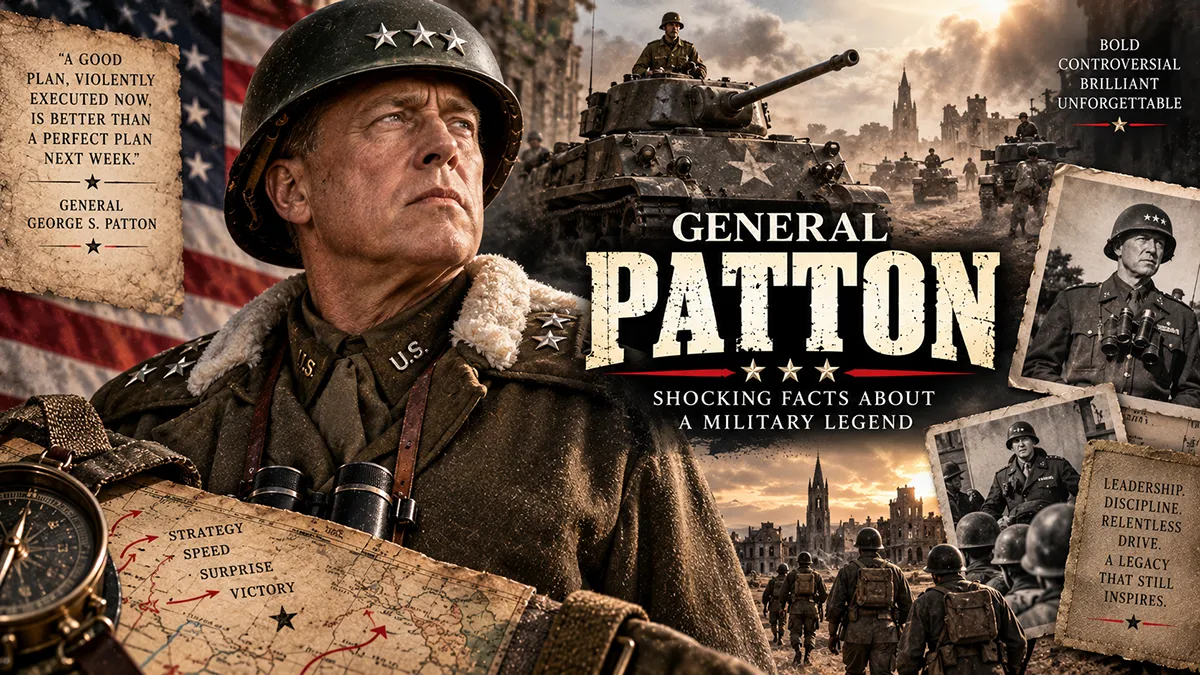
George S. Patton is one of those historical figures everyone thinks they know. He’s the swaggering general in the polished helmet, the man George C. Scott played in a movie decades ago, the guy whose name gets slapped on everything from tanks to tough-guy motivational posters.
But peel back the Hollywood gloss, and the real Patton is stranger, more contradictory, and more human than the legend suggests.
He was a dyslexic kid who became one of history’s most decisive commanders. He was a devout believer in fate who also happened to be a foul-mouthed showman. This list digs into the facts, the myths, and the murky middle ground where most of the Patton legend actually lives.
TL;DR: General Patton was a brilliant, deeply flawed commander whose real story—from Olympic athlete to reincarnation believer to controversial wartime remarks—is far stranger than the Hollywood myth.
1. A Dyslexic Boy Who Became a Master of the Battlefield

Long before he was barking orders at the Third Army, young George Patton struggled to read. Historians and biographers widely believe he had dyslexia, a condition not even named yet during his California childhood in the 1890s.
His family compensated by reading epic tales of warfare and heroism aloud to him constantly, feeding an imagination that never really let go of the battlefield. He eventually taught himself to read through sheer stubbornness, a trait that defined pretty much everything else he did in life.
2. Born Into a Family of Warriors
Patton didn’t stumble into military life by accident. His grandfather and several relatives fought for the Confederacy in the Civil War, and the family also had ties to soldiers going back to the American Revolution, part of a long martial lineage echoed by legendary warrior-kings like Richard the Lionheart.
Growing up surrounded by stories of battlefield sacrifice gave Patton an almost mythic sense of destiny. He genuinely believed, from a young age, that he was born to be a great warrior, and he spent his whole life trying to prove it.
3. An Olympic Athlete Before He Was a General

Here’s a fact that surprises a lot of people: Patton competed in the 1912 Summer Olympics in Stockholm. He represented the United States in the modern pentathlon, a grueling event combining shooting, swimming, fencing, horseback riding, and running.
He finished fifth overall, an impressive result against Europe’s best military athletes. It’s a strange footnote for a man later known almost exclusively for tanks and profanity-laced speeches.
4. He Helped Pioneer American Tank Warfare

During World War I, Patton was among the first American officers to lead tank units into combat. He helped establish and train the U.S. Army’s fledgling Tank Corps, essentially building American armored warfare doctrine from scratch.
This early obsession with tanks would define the rest of his career. It’s a big reason why, decades later, actual tank models would carry his name.
5. Wounded in Action During World War I

Patton wasn’t just a planner sitting behind the lines. During the Meuse-Argonne Offensive in 1918, he was shot in the leg while leading tanks forward under fire.
He kept directing his men even after being hit, a detail that cemented his reputation for personal bravery early in his career. That reputation would follow him, for better and worse, for the rest of his life.
6. Did Patton Believe He Was Reincarnated?

This is one of the most persistent Patton legends, and it’s actually well documented rather than pure myth. Patton did express, to family and colleagues, a belief that he had lived past lives as a soldier in earlier eras, including ancient Greece, Rome, and Napoleonic France.
He reportedly felt a strange, personal familiarity when visiting old battlefields, as though he had fought there before. Whether this was genuine spiritual conviction, a poetic way of describing his passion for history, or theatrical flourish is something historians still debate, so it’s fair to treat it as a well-attested belief rather than a settled fact about the afterlife.
7. His Famous Pistols Weren’t Actually Pearl-Handled

Pop culture loves the image of Patton’s gleaming “pearl-handled” revolvers. In reality, his signature sidearms had ivory grips, not pearl.
Patton himself reportedly hated the pearl-handled description and corrected people who used it, pointing out that only “a pimp from a Louisiana whorehouse” would carry pearl-handled guns. It’s a small detail, but it says a lot about how much Patton cared about his own image and legend.
8. The Slapping Incidents That Nearly Ended His Career

In 1943, during the Sicily campaign, Patton slapped two American soldiers hospitalized for what was then called combat fatigue, now recognized as combat-related PTSD. He accused them of cowardice, believing they were faking injury to avoid the front lines.
The incidents became public and caused a major scandal back home. General Eisenhower reprimanded Patton privately and forced a public apology, and Patton was sidelined from a major command role for nearly a year as a result.
9. He Commanded a Fake Army to Fool the Nazis

After the slapping scandal, Patton was given an unusual assignment ahead of D-Day: command of the fictitious First United States Army Group. This phantom force existed mostly on paper and through fake radio traffic, inflatable tanks, and decoy equipment.
German intelligence took the bait, convinced Patton would lead the main invasion force through Calais rather than Normandy. It’s a strange twist that one of history’s most famous field commanders spent weeks essentially playing a convincing double, and the deception genuinely helped protect the real D-Day landings.
10. Third Army’s Blitz Across France

Once unleashed in August 1944, Patton’s Third Army tore across France at a pace that stunned Allied commanders. In just a few weeks, his forces advanced hundreds of miles, liberating vast stretches of territory faster than almost any army in modern military history.
This rapid, aggressive style of warfare is exactly what Patton had trained for his entire career. He believed constant motion and relentless pressure, not caution, won wars.
11. The Race to Bastogne
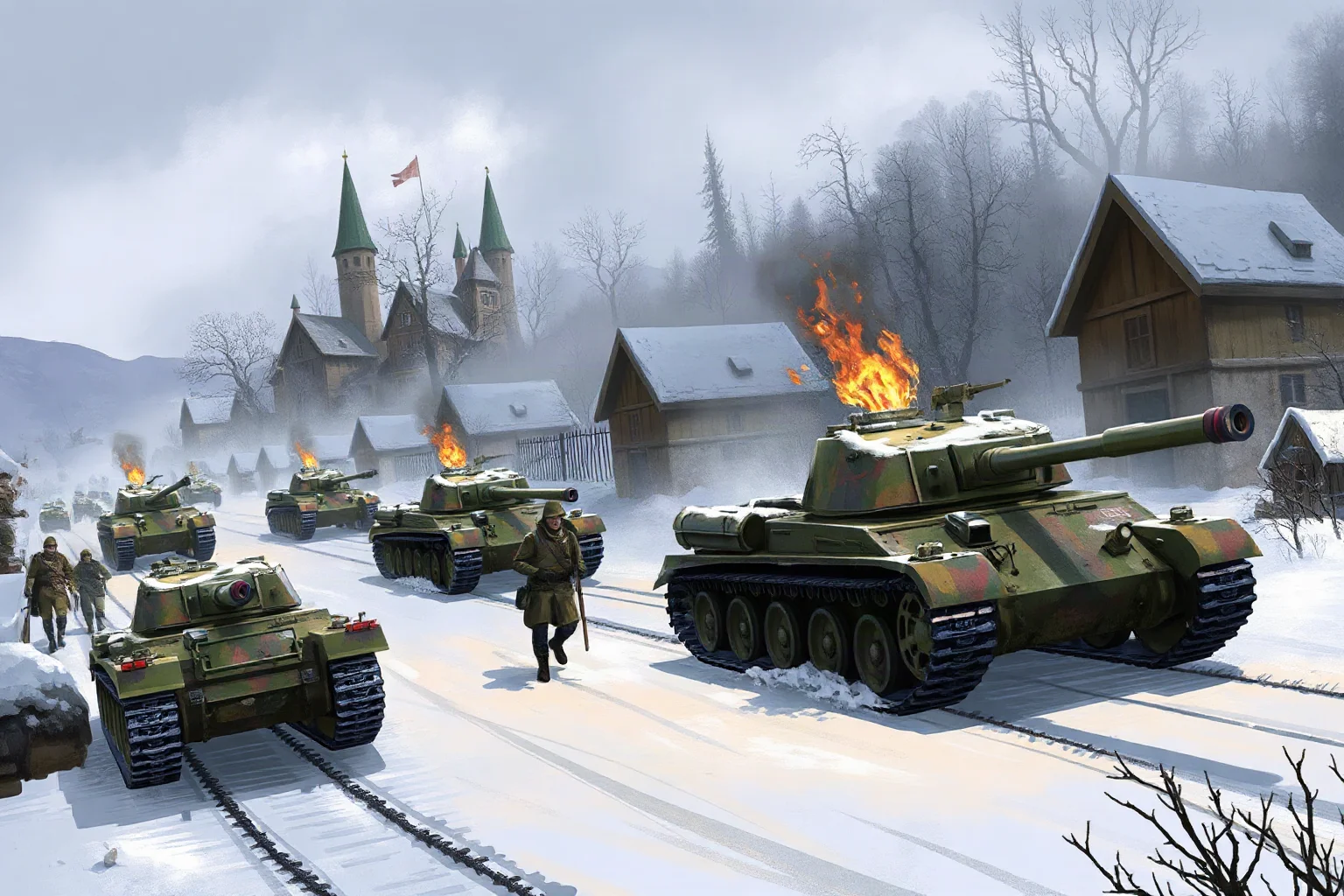
During the Battle of the Bulge in December 1944, German forces surrounded American troops at Bastogne, Belgium. Patton famously turned his entire Third Army ninety degrees and marched it over 100 miles through winter conditions in about 48 hours to relieve the siege.
Most commanders considered this logistically impossible on such short notice. Patton pulled it off, and it remains one of the most studied maneuvers in modern military planning.
12. Did George Patton Say “We Fought on the Wrong Side”?

This is one of the murkiest Patton legends, and it deserves a careful, honest answer. After the war, Patton did grow increasingly vocal and controversial about the emerging Soviet threat, reportedly telling colleagues that the Allies should have kept fighting to push the Soviets back rather than stopping at the war’s end.
However, the specific, dramatic quote “we fought on the wrong side” is not reliably documented in verified primary sources. It circulates widely online, but historians caution that it’s likely an exaggerated or invented version of Patton’s genuine, well-documented anti-Soviet sentiments rather than an exact quote. The safest conclusion is that Patton distrusted the Soviets deeply and said provocative things about it, but that specific phrase should be treated as unverified.
13. A Tank Was Literally Named After Him
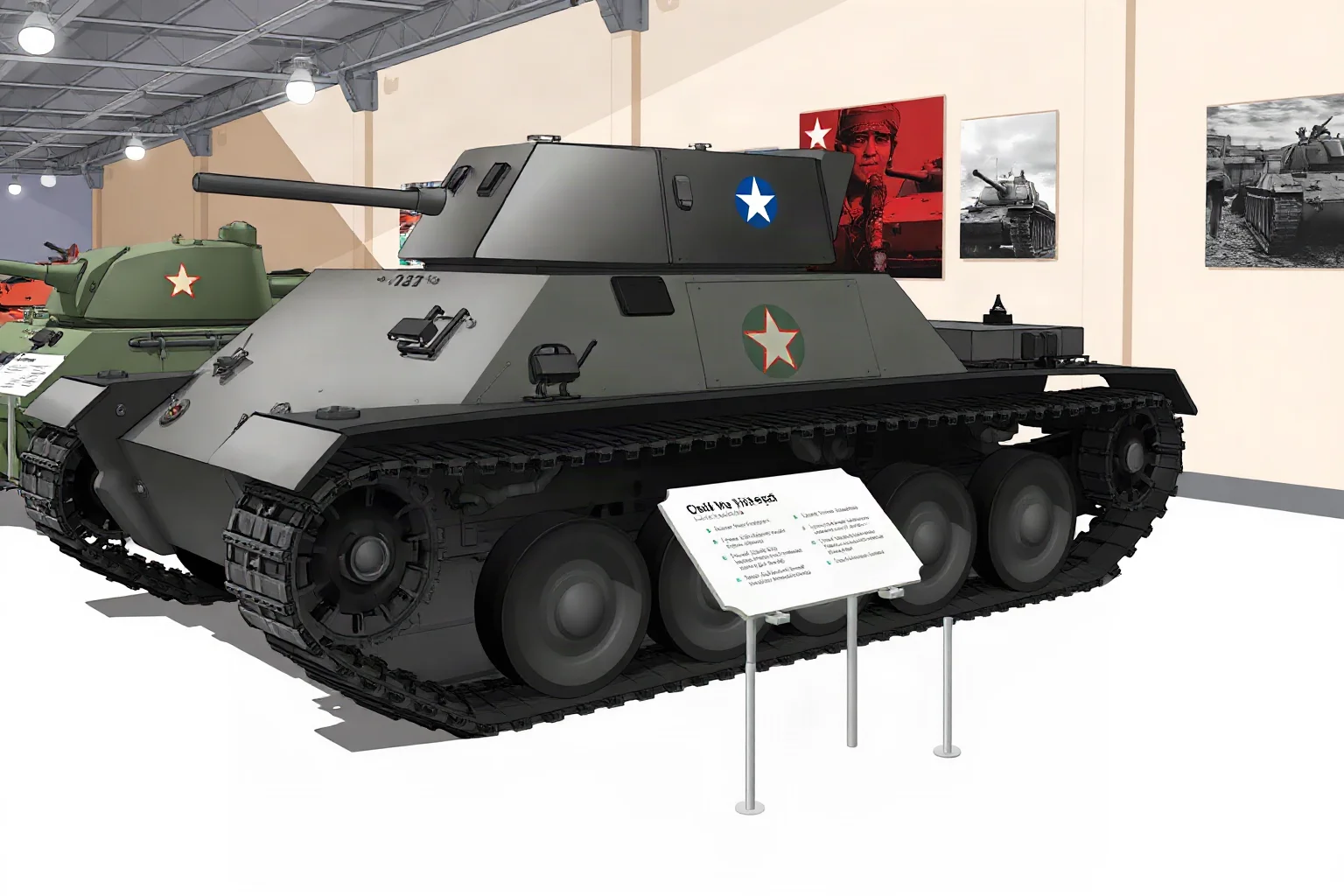
Here’s a fun answer to anyone searching for Patton on a product: the U.S. Army named an entire line of tanks after him. The M46 Patton, M47 Patton, M48 Patton, and later the M60 Patton series were all officially designated in his honor during the Cold War.
It’s a rare honor for any military commander, and it reflects just how closely Patton’s name became tied to American armored warfare. Model kit companies and toy manufacturers have sold Patton tank replicas for decades, meaning his name has literally appeared on countless products around the world.
14. His Famous Speech to the Third Army
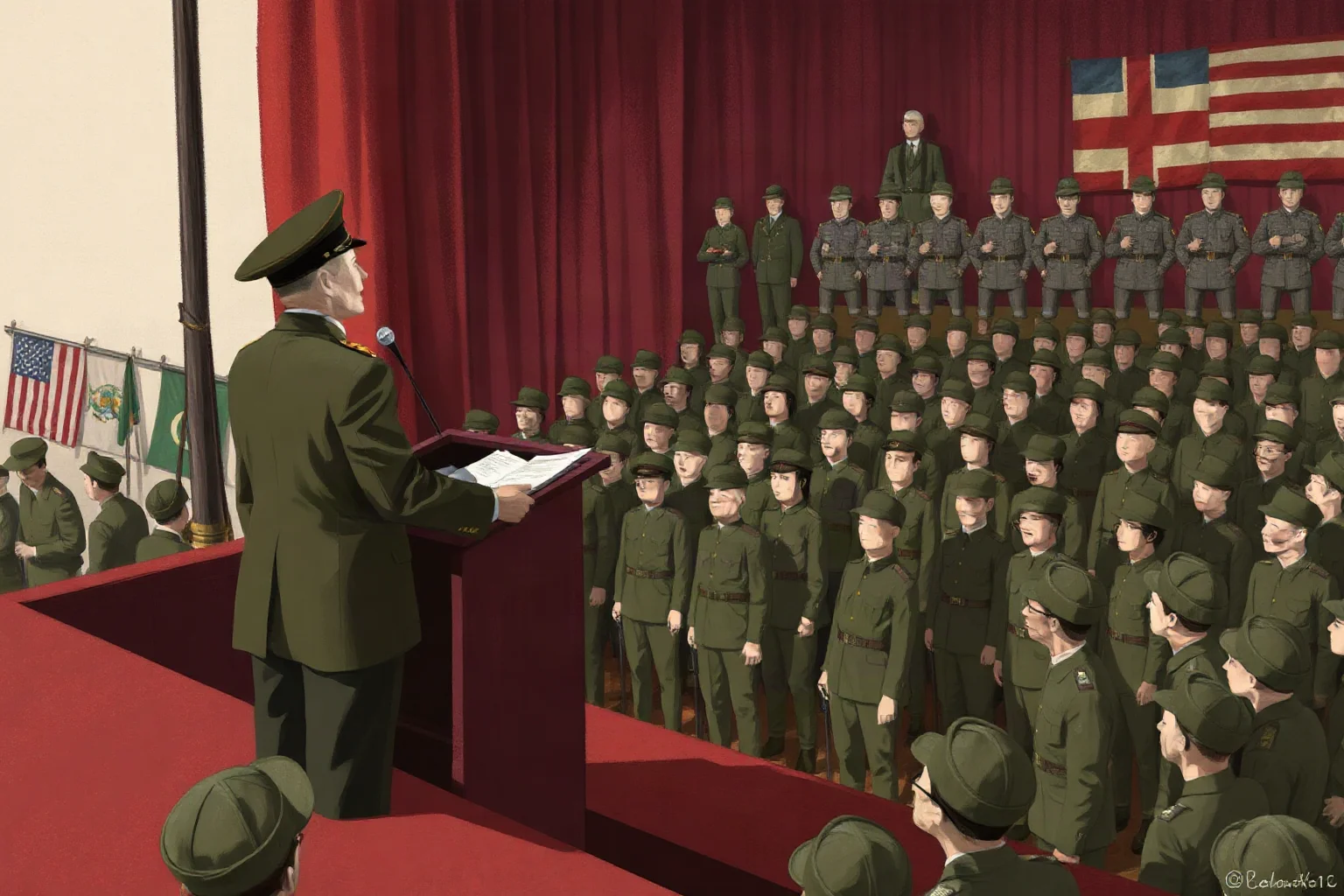
Patton delivered a legendarily blunt, profanity-filled speech to his troops before the Normandy campaign, full of colorful lines about fighting and winning. It’s one of the most quoted military speeches in American history.
However, no single verified transcript exists, and several different versions circulate with varying wording. Most historians agree the speech happened and captured Patton’s real voice and philosophy, but exact quotes should be treated as reconstructions rather than word-for-word transcripts.
15. He Prayed for Good Weather

During the brutal winter fighting of the Battle of the Bulge, Patton asked his chaplain, James O’Neill, to compose a prayer asking God for clear weather so Allied air support could operate. The prayer was printed and distributed to Third Army troops.
Shortly after, the weather did clear, and Patton reportedly awarded the chaplain a Bronze Star. Whether it was coincidence, meteorology, or something else, the episode became part of Patton’s larger reputation as a man who blended hard-nosed pragmatism with genuine superstition.
16. His Complicated Friendship With Eisenhower
Patton and Dwight Eisenhower had known each other since the 1919 Tank Corps days, and their relationship stayed close but tense throughout the war, a dynamic shared by many of the era’s wartime commanders who had to balance personal rivalries with the demands of the front. Eisenhower respected Patton’s battlefield genius but constantly had to manage the political fallout from Patton’s temper and public remarks.
Eisenhower defended Patton multiple times when others wanted him removed, but also wasn’t afraid to discipline him when necessary. It was a friendship built on mutual respect, real affection, and constant frustration.
17. Willie the Bull Terrier

Patton’s beloved dog, a bull terrier named Willie, became almost as famous as the general himself. Willie traveled with Patton, appeared in photographs, and reportedly softened the general’s otherwise fierce public image.
After Patton’s death, Willie reportedly became withdrawn and never fully recovered emotionally, according to accounts from those who cared for him afterward. It’s a small, human detail that humanizes a man often remembered mostly for bravado.
18. He Believed His Fate Was Already Written

Patton had a lifelong fascination with destiny, fate, and the idea that his life and death were preordained, not unlike the sense of divine purpose historians describe in figures such as Joan of Arc. He often spoke about wanting to die a heroic death in battle, ideally from the “last bullet of the last battle of the last war.”
This belief shaped how he approached risk on the battlefield, often exposing himself to danger that other commanders would have avoided. It’s part of what made him such an effective, if reckless, wartime leader.
19. A Fatal Car Accident, Not a Battlefield Death

Despite surviving multiple wars and constant battlefield exposure, Patton didn’t die in combat. In December 1945, after the war in Europe had ended, he was seriously injured in a car accident near Mannheim, Germany, when his vehicle collided with a truck.
He was paralyzed from the injury and died from complications, including a pulmonary embolism, on December 21, 1945. The irony that a man who craved a glorious battlefield death instead died from a mundane car accident has struck historians and biographers ever since.
20. Hollywood Turned Him Into a Cultural Icon

Much of the modern public image of Patton comes from the 1970 film “Patton,” starring George C. Scott in an Academy Award-winning performance. The movie dramatized real events but also took creative liberties, blending fact and Hollywood flair into a single unforgettable character.
That film is largely responsible for cementing Patton’s swagger, his speeches, and his larger-than-life persona in American popular memory. It’s worth remembering that the movie is a dramatization, not a documentary, even though it’s remarkably well researched for its era.
21. His Legacy Is Still Being Fought Over

Patton remains a genuinely controversial figure, not just a straightforward hero. Critics point to his harsh treatment of shell-shocked soldiers, some troubling postwar remarks about denazification, and his sometimes brutal command style.
Supporters point to his undeniable battlefield brilliance and the lives saved by his rapid advances and decisive leadership. This tension is exactly why he’s remembered as one of America’s most controversial heroes rather than a simple, uncomplicated legend.
22. So, Who Is Patton, Really?

After all the myths, movies, and merchandise, the real answer to “who is Patton” is more layered than either his critics or his fans usually admit. He was a brilliant, aggressive battlefield tactician who genuinely helped win World War II in Europe faster than it might otherwise have ended.
He was also a deeply flawed, often reckless man whose temper and remarks caused real harm and real controversy. Understanding Patton means holding both truths at once, rather than flattening him into either a flawless hero or a cartoon villain.
The Real Patton Was Never Simple
George Patton’s story resists easy summary, and that’s exactly what makes him such an enduring subject of fascination nearly eighty years after his death. He was an Olympic athlete, a battlefield genius, a superstitious believer in fate, and a man whose temper repeatedly threatened to derail his own career.
The myths surrounding him, from pearl-handled pistols to disputed quotes about fighting the wrong enemy, tend to simplify a much messier and more interesting reality. The next time you see his name on a tank model, a movie poster, or a motivational meme, it’s worth remembering the complicated, contradictory man behind the legend.
Frequently Asked Questions
Who is General Patton?
George S. Patton (1885–1945) was a U.S. Army general best known for commanding the Third Army during World War II, particularly for his rapid armored advances across France and his relief of Bastogne during the Battle of the Bulge. He was also an early pioneer of American tank warfare, an Olympic athlete, and one of the most controversial and colorful commanders in American military history.
Did Patton believe he was reincarnated?
Yes, according to well-documented accounts, Patton expressed a belief that he had lived past lives as a soldier in earlier historical eras, including ancient Rome and Napoleonic France. He reportedly felt an eerie familiarity when visiting old battlefields. Whether this reflects a literal spiritual belief or a dramatic way of expressing his passion for military history is still debated by historians.
Did George Patton say “we fought on the wrong side”?
This exact quote is not reliably verified in primary historical sources, so it should be treated as unconfirmed rather than fact. What is well documented is that Patton grew increasingly vocal after the war about distrusting the Soviet Union and reportedly felt the Allies should have confronted Soviet expansion more aggressively. The dramatic "wrong side" phrasing appears to be a popular exaggeration of those genuine, but less quotable, sentiments.
Is there a product named after General Patton?
Yes. The U.S. military officially named several Cold War-era tanks after him, including the M46 Patton, M47 Patton, M48 Patton, and M60 Patton. His name and image have also appeared on countless model kits, books, and pop culture merchandise inspired by his career and the 1970 film "Patton."
What are some surprising George Patton facts?
Beyond his military career, Patton competed in the modern pentathlon at the 1912 Olympics, struggled with dyslexia as a child, was wounded in World War I, and had his beloved bull terrier, Willie, by his side for much of the war. He also survived a scandal after slapping two soldiers suffering from combat fatigue, which nearly ended his career before D-Day.
How did General Patton die?
Patton died on December 21, 1945, from complications after a car accident near Mannheim, Germany, in which his vehicle collided with a truck. He was paralyzed from the crash and died of a pulmonary embolism less than two weeks later, just months after the war in Europe had ended.

Alex Warren
Related Articles