
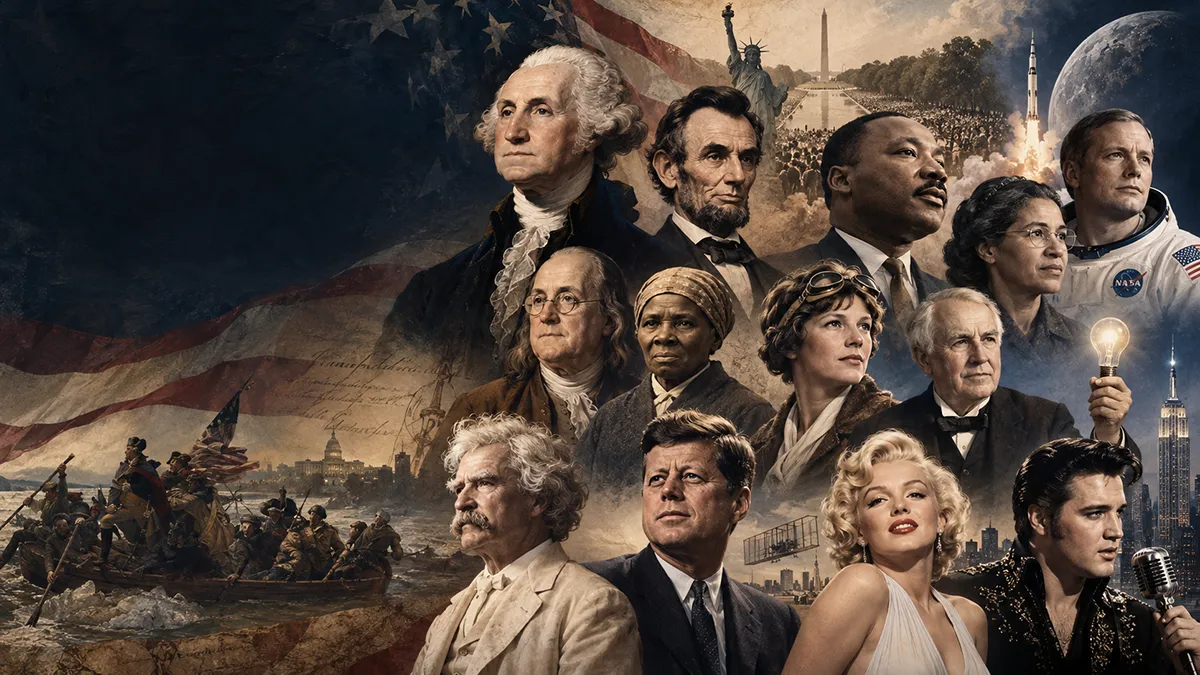
Mention a handful of names — Lincoln, Einstein, Elvis — almost anywhere on the planet, and people nod in recognition even if they’ve never set foot in the United States.
That’s the strange power of certain historical figures of the united states: their stories have traveled far beyond American classrooms and into global memory, shaping how the world understands democracy, innovation, and pop culture itself.
This list rounds up the American historical figures whose fame genuinely crosses borders, from the founding generation through the 20th century’s cultural icons. Along the way, we’ll gently correct a few popular myths, because even legends deserve accuracy.
TL;DR: These 24 figures of american history — from Washington and Lincoln to Einstein and Elvis — became globally recognizable because their ideas, struggles, or inventions reshaped life far beyond U.S. borders.
Why These Names Cross Borders
Not every important person in US history becomes a household name overseas. The ones who do usually share something in common: they were tied to an idea, invention, or movement big enough to matter outside America too, whether that’s democracy, civil rights, powered flight, or rock and roll.
Some earned their global fame through politics and war, others through science, and others through sheer cultural charisma. Together, they offer a surprisingly complete tour of American history people actually remember, and why.
The Founding Generation
1. George Washington
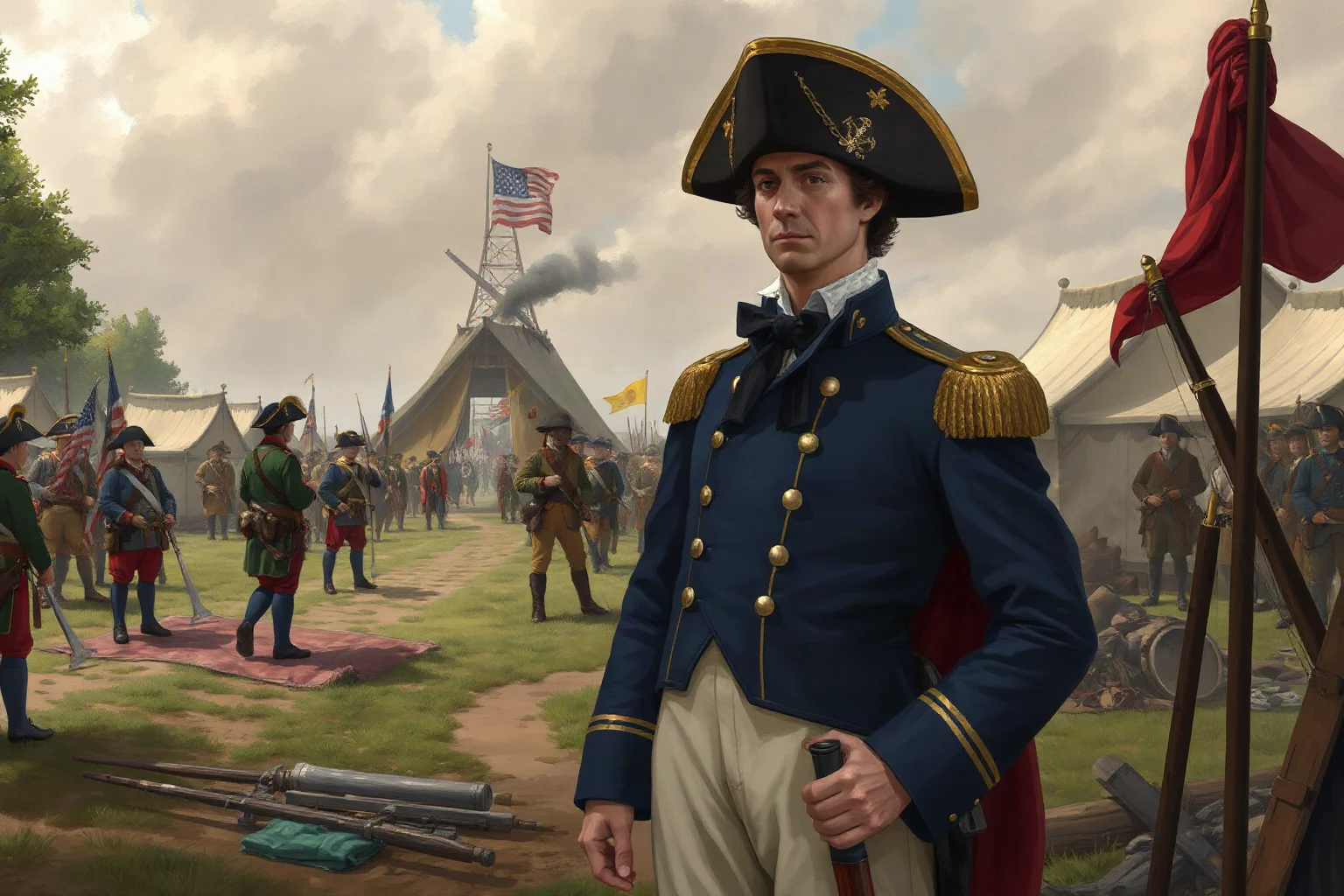
George Washington led the Continental Army to victory in the Revolutionary War and became the first President of the United States in 1789. His decision to step down after two terms set a precedent for peaceful transfers of power that still shapes how the world judges democratic leadership.
A popular myth claims Washington had wooden false teeth. In reality, his dentures were made from materials like ivory, gold, and human or animal teeth, not wood at all.
2. Benjamin Franklin
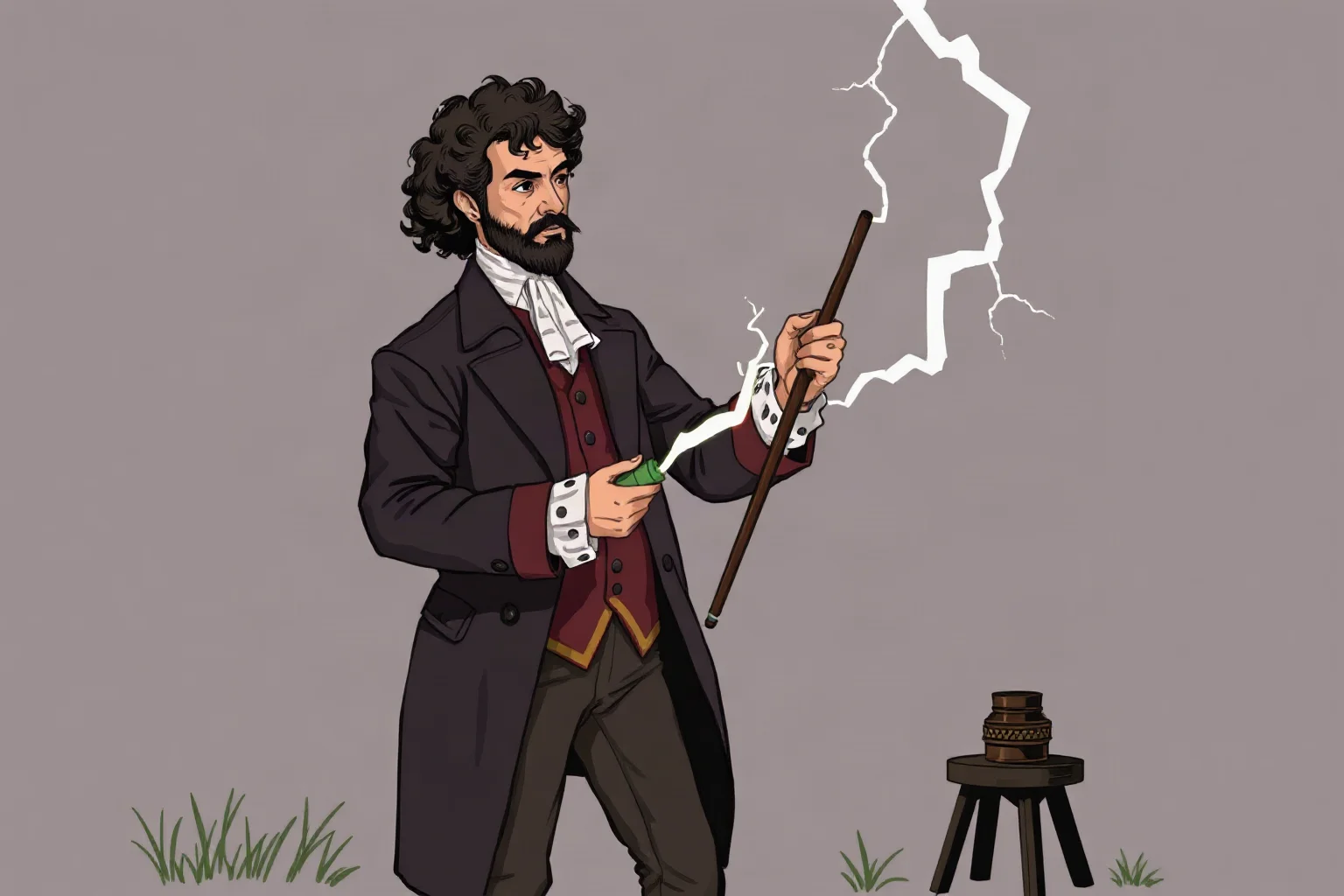
Franklin was a printer, scientist, diplomat, and Founding Father whose face appears on the $100 bill worldwide. His experiments with electricity, plus practical inventions like bifocal glasses and the lightning rod, made him one of the era’s most internationally respected American thinkers.
The famous kite experiment is real in broad outline, but many dramatic details about it were added later and can’t be fully verified. Franklin’s genuine legacy as a diplomat who secured French support during the Revolution is arguably more historically significant.
3. Thomas Jefferson
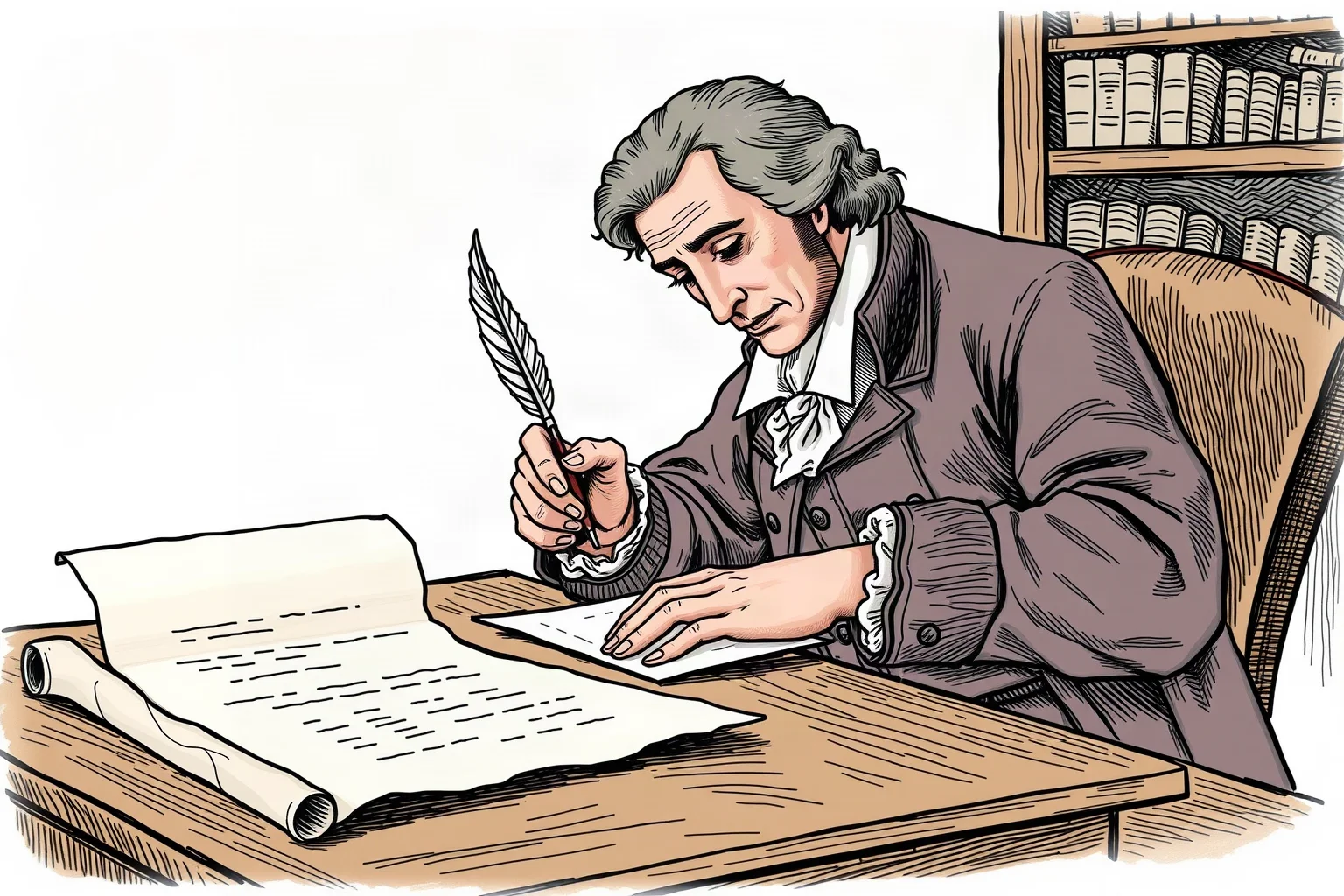
As the primary author of the Declaration of Independence, Jefferson helped articulate ideals about liberty that influenced revolutions and constitutions far beyond America. He later served as the third U.S. president and oversaw the Louisiana Purchase, which doubled the young nation’s size.
Jefferson’s legacy is genuinely complicated: he wrote about equality while enslaving hundreds of people, including Sally Hemings, with whom he fathered children. Honest history holds both truths at once rather than smoothing them over.
4. Alexander Hamilton
Hamilton built the young nation’s financial system as the first Secretary of the Treasury, establishing the national bank and public credit system still echoed in modern finance. He died in 1804 after a duel with Vice President Aaron Burr, a story so dramatic it needed no exaggeration.
His global profile got a modern boost thanks to the hit musical bearing his name, which introduced his story to audiences from London to Manila. Few historical american men have had quite that kind of pop-culture revival.
Leaders Who Redefined the Nation
5. Abraham Lincoln
Lincoln guided the United States through the Civil War and issued the Emancipation Proclamation in 1863, declaring enslaved people in Confederate-held territory free. Full abolition across the entire country wasn’t achieved until the 13th Amendment passed in 1865, a nuance often flattened in popular retellings.
His assassination just days after the war’s end, in April 1865, turned him into a global symbol of martyred leadership. Statues and streets named after Lincoln exist on nearly every continent.
6. Franklin D. Roosevelt
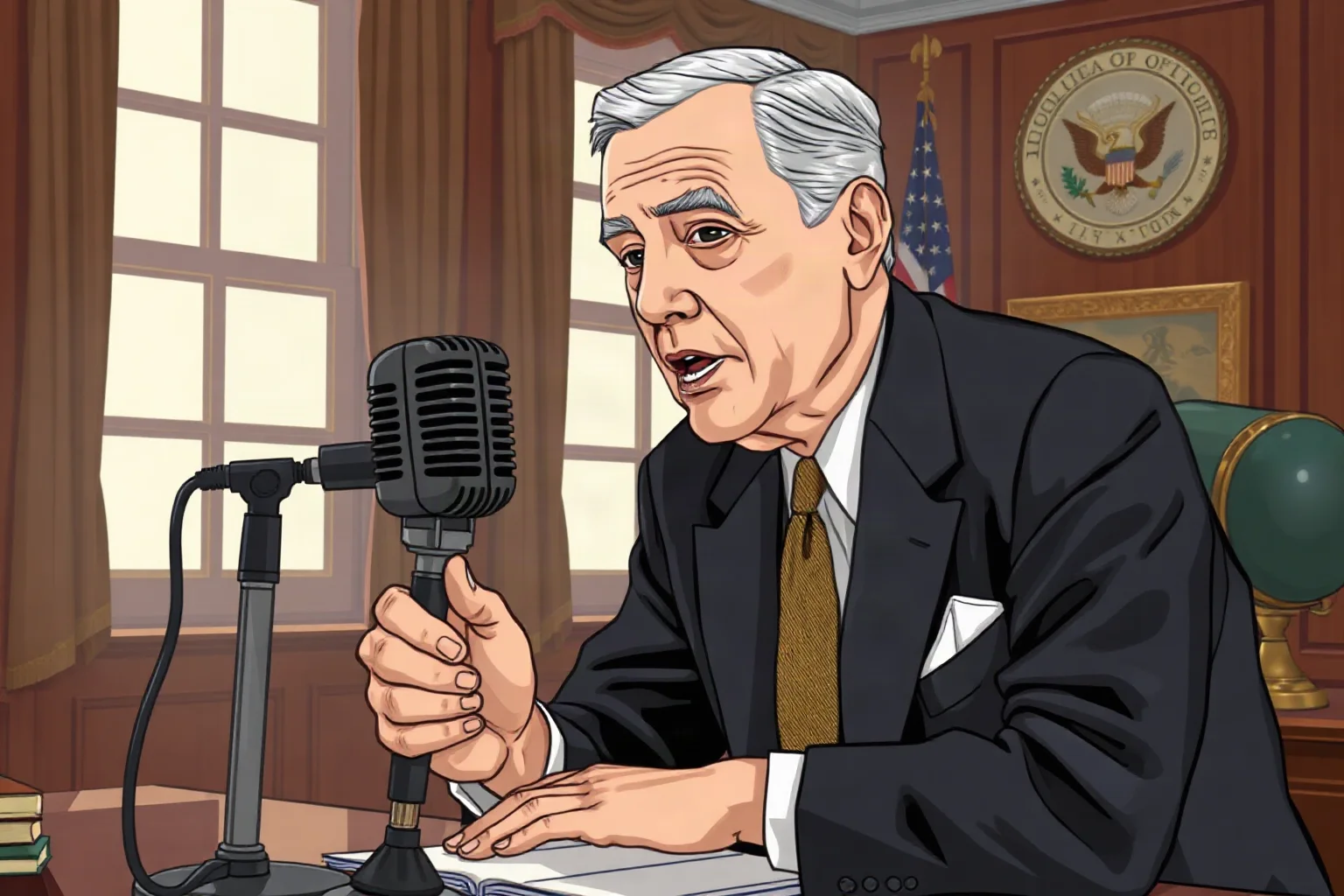
FDR is the only U.S. president elected four times, steering the country through the Great Depression with his New Deal programs and later through most of World War II, working alongside other wartime leaders of World War II who shaped the conflict’s outcome. His fireside radio chats and wartime alliances made him a familiar figure to people well outside America.
He contracted a paralytic illness in 1921, widely understood at the time as polio, and used a wheelchair for the rest of his life. He largely kept this hidden from the public, a fact that still surprises many people today.
7. John F. Kennedy
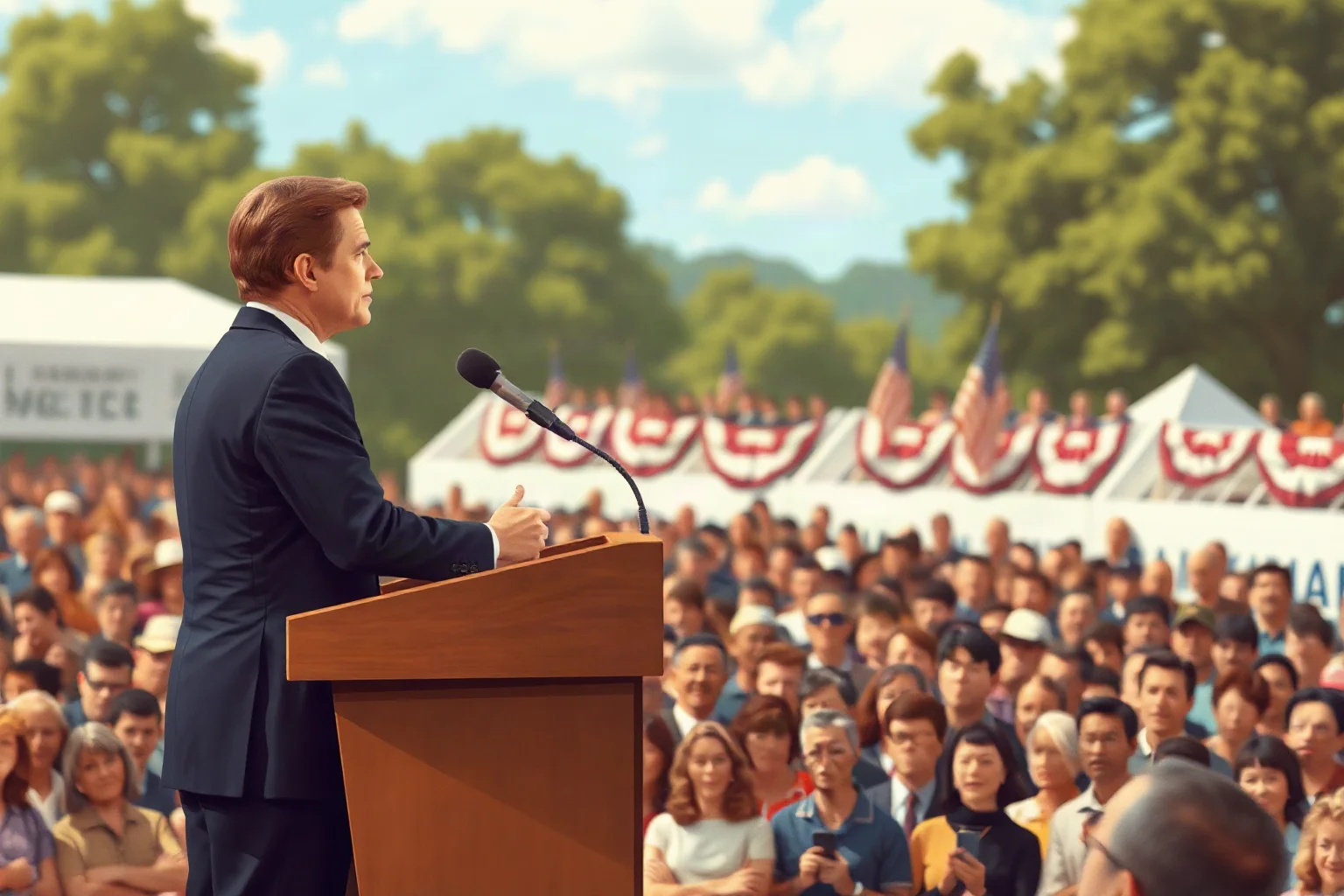
Kennedy’s presidency lasted less than three years, but his handling of the 1962 Cuban Missile Crisis and his push for the space program left a lasting global impression. His assassination in Dallas in 1963 remains one of the most examined events in modern history.
Kennedy’s charisma and youth made him a media-age icon in a way earlier presidents never experienced. That image, more than any single policy, is why his name still resonates internationally.
Voices for Freedom and Equality
8. Frederick Douglass
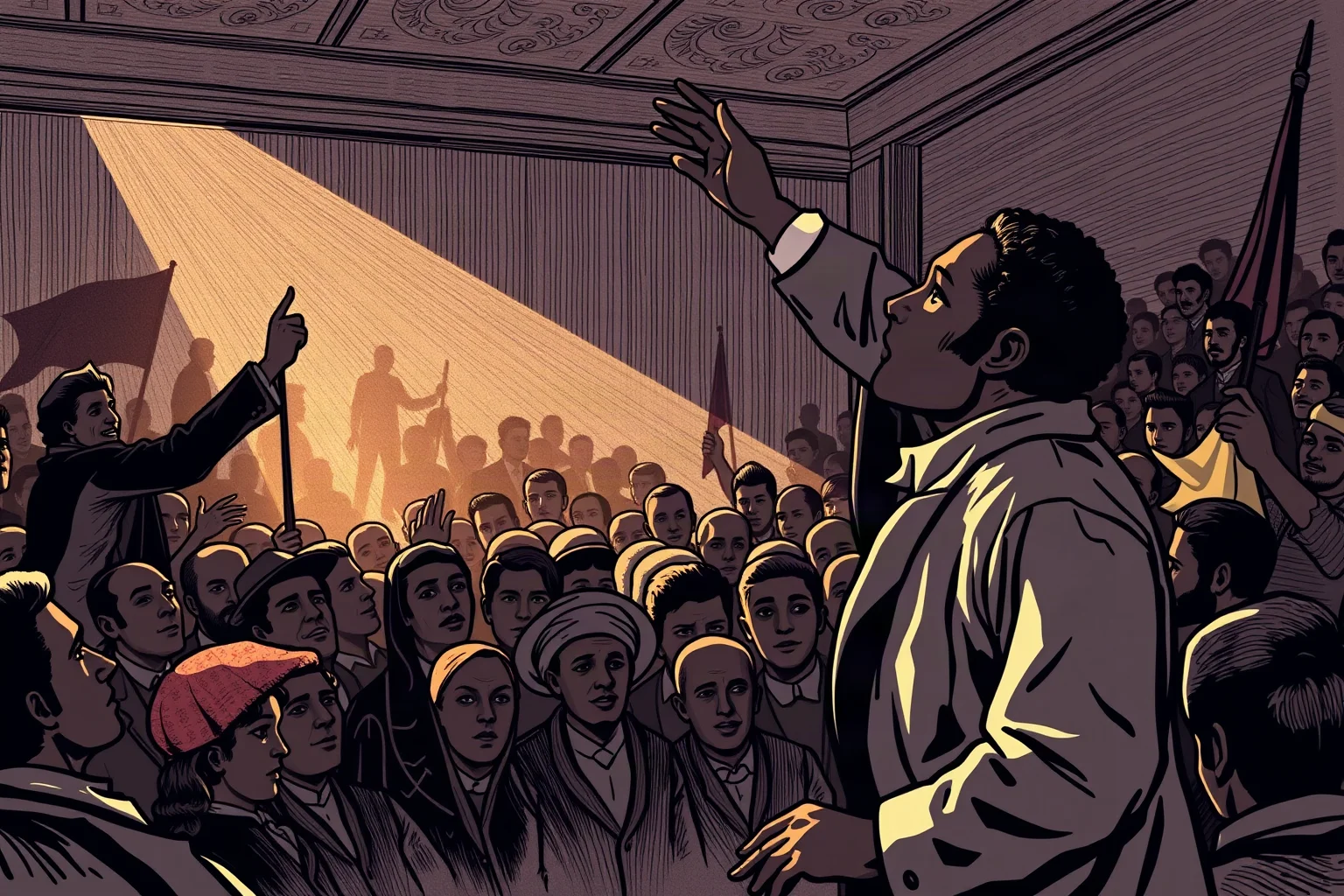
Born enslaved, Douglass escaped to freedom and became one of the era’s most powerful abolitionist writers and orators. His autobiography exposed the brutal realities of slavery to readers across the U.S. and Europe, making him a recognized figure in american history for both his eloquence and courage.
He also advised presidents and worked internationally as a diplomat later in life. Few historical figures in american history moved so far from enslavement to genuine influence on national policy.
9. Harriet Tubman
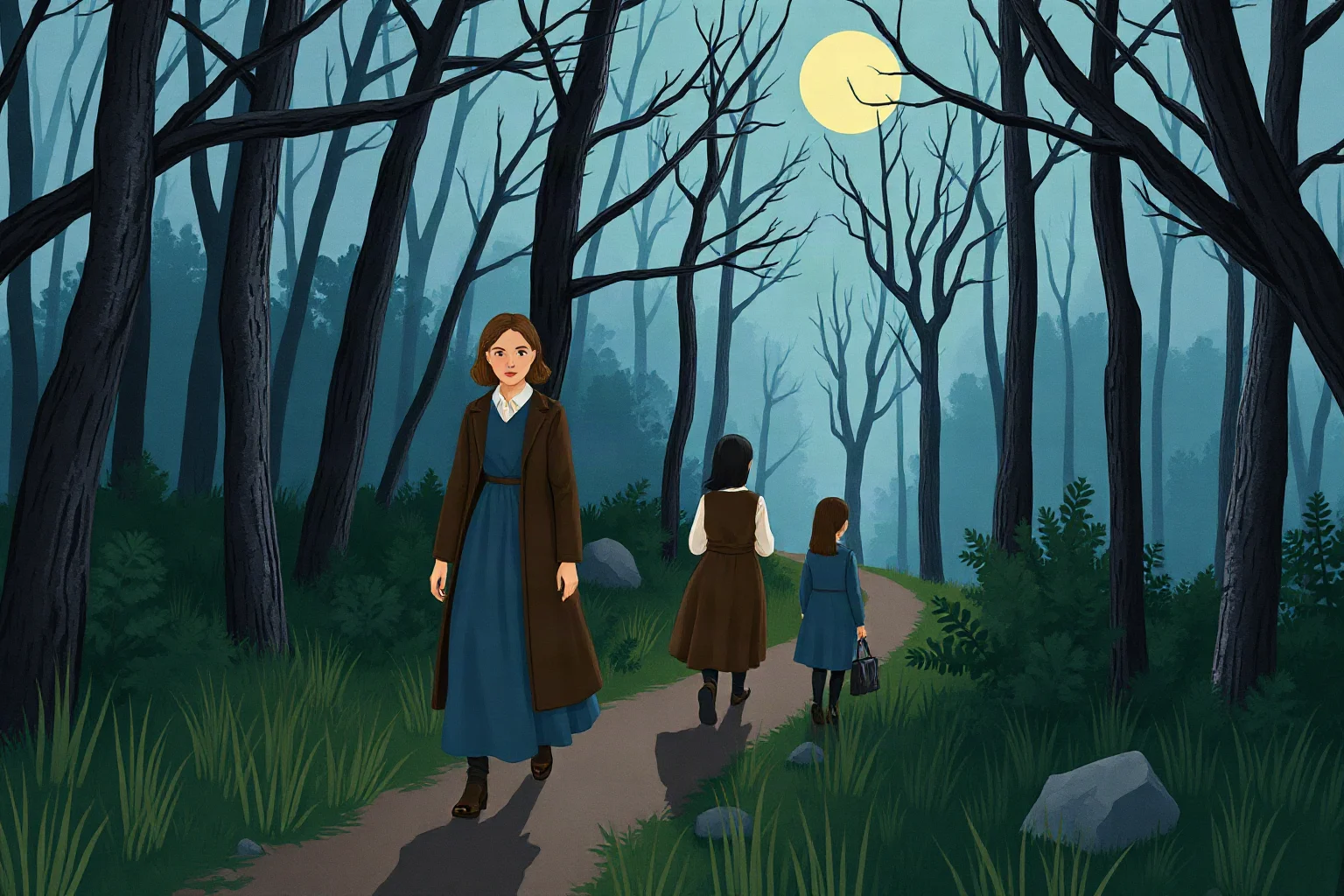
Tubman escaped slavery herself, then returned to the South repeatedly to guide others to freedom via the Underground Railroad network. During the Civil War, she also served as an armed scout and spy for Union forces, a role often underemphasized in popular retellings.
Her bravery has made her a global symbol of resistance against oppression, referenced in movements well beyond U.S. borders — one of many Black women who were historical trailblazers whose courage reshaped science, politics, and civil rights. Plans to feature her on U.S. currency have kept her story in ongoing public conversation.
10. Susan B. Anthony
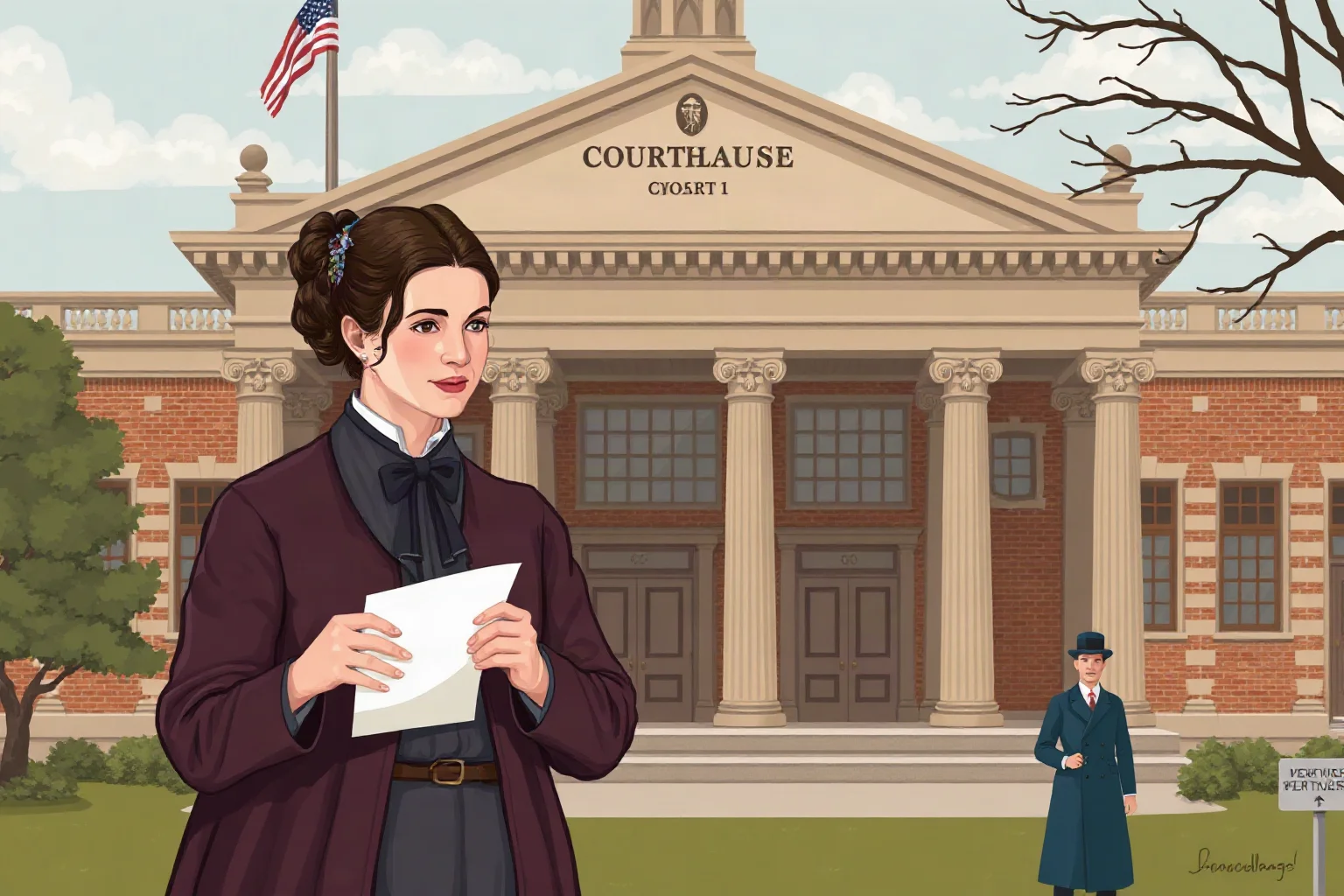
Anthony dedicated decades to the women’s suffrage movement, co-founding organizations that pushed for voting rights. She was arrested in 1872 for casting a vote in a presidential election, a deliberate act of civil disobedience rather than an accident.
She didn’t live to see the 19th Amendment ratified in 1920, which finally guaranteed women’s suffrage nationally. Her name is still shorthand internationally for the long fight toward voting equality, placing her among history’s most powerful women who changed the world for future generations.
11. Martin Luther King Jr.
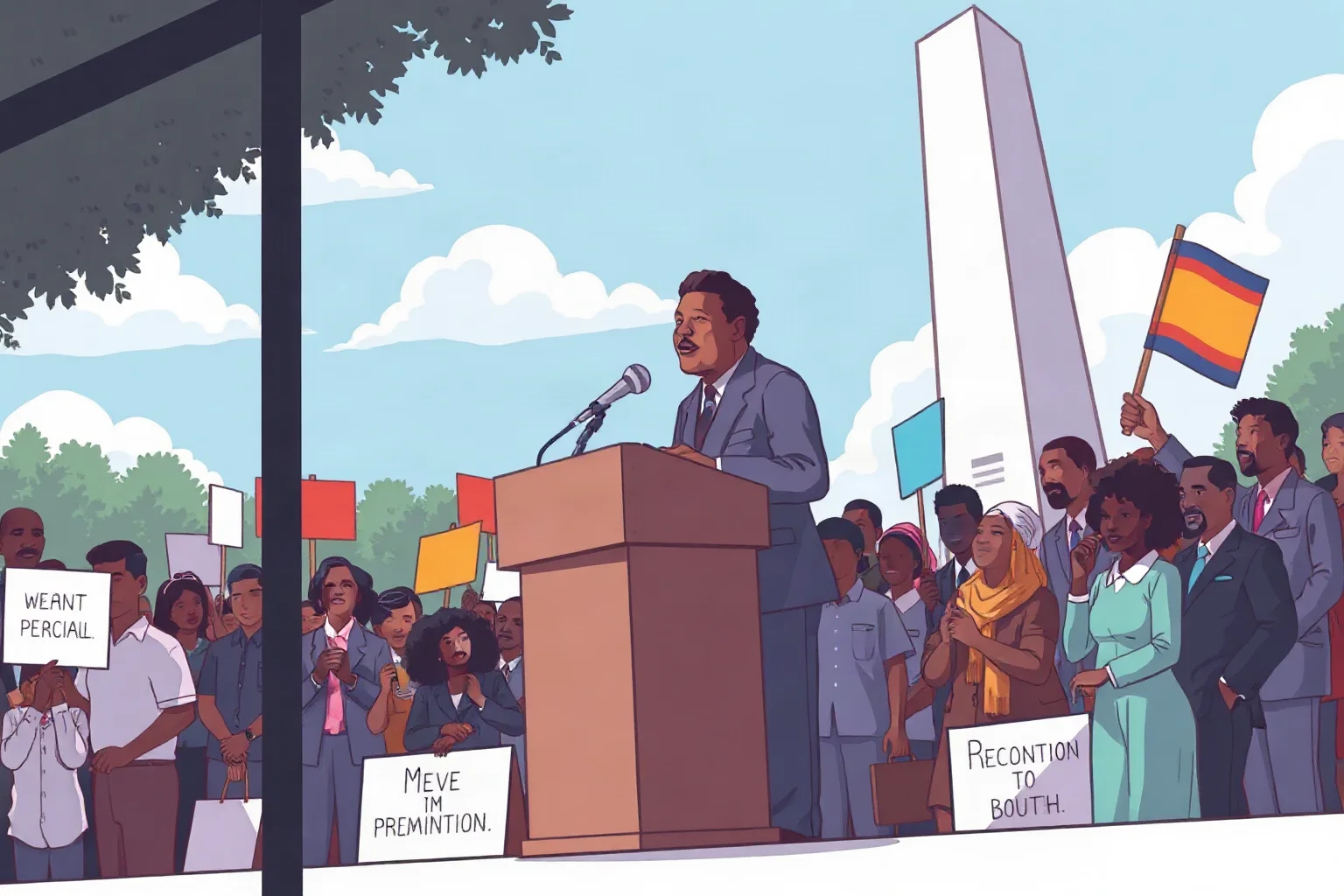
King led the civil rights movement through nonviolent protest, famously delivering the “I Have a Dream” speech during the 1963 March on Washington. He received the Nobel Peace Prize in 1964, a recognition that cemented his status well beyond the United States.
His assassination in 1968 shocked the world and intensified calls for racial justice internationally. Today his name is invoked in human rights movements from South Africa to Eastern Europe.
12. Rosa Parks
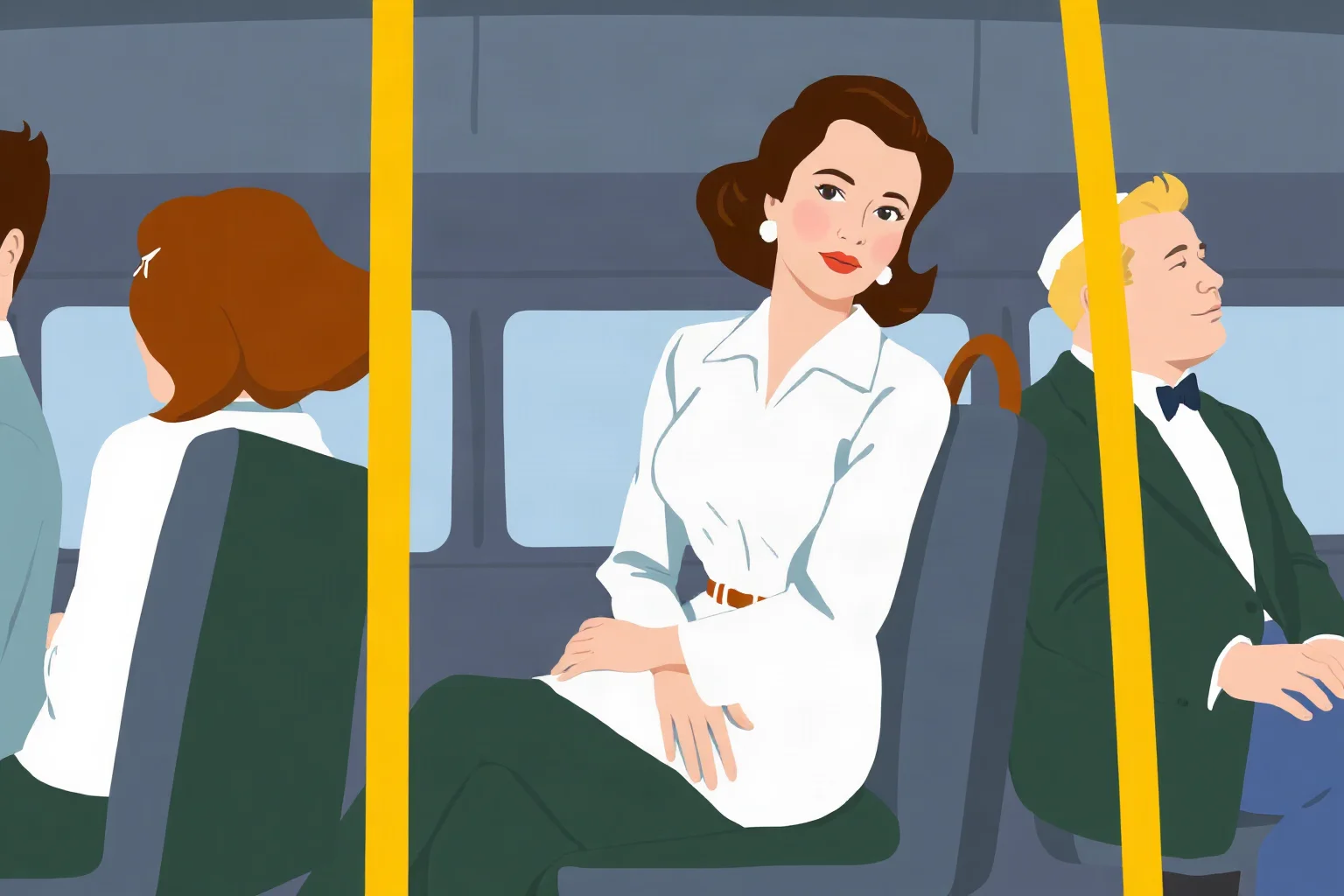
Parks refused to give up her bus seat in Montgomery, Alabama, in 1955, sparking a boycott that became a turning point in the civil rights movement. The common myth that she was simply a tired seamstress ignores her long history as an active NAACP organizer who understood exactly what her refusal would trigger.
Her quiet defiance became one of the most recognized acts of protest in modern history. It’s still taught internationally as a case study in nonviolent resistance.
Innovators Who Changed Daily Life
13. Thomas Edison
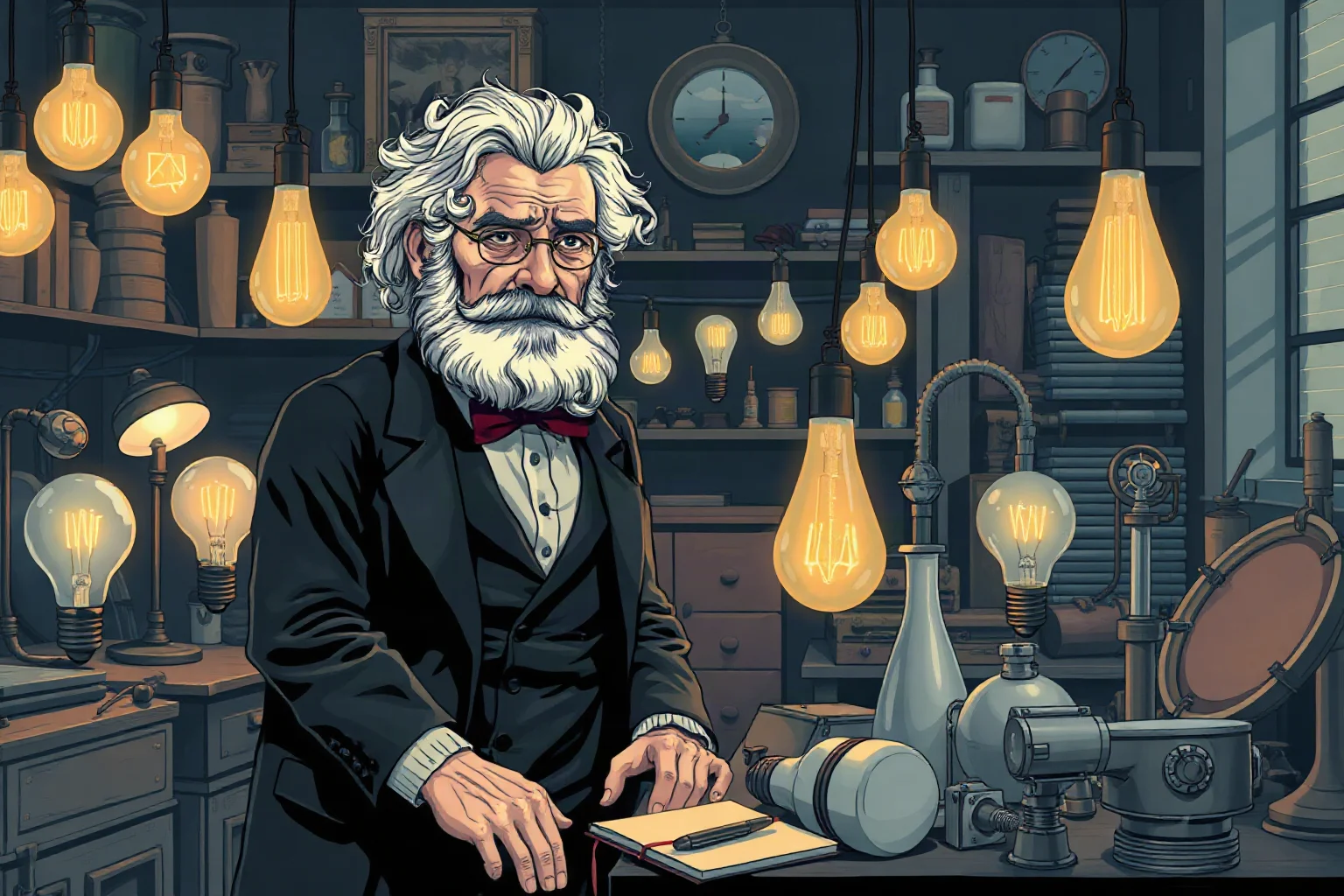
Edison held over a thousand patents, including major improvements to the incandescent light bulb, the phonograph, and early motion picture technology. His Menlo Park laboratory is often called the first true industrial research lab, a model copied worldwide.
Edison didn’t invent the light bulb from scratch — earlier inventors had built working versions — but his team made it practical and commercially viable. His rivalry with Nikola Tesla over AC versus DC power is often oversimplified into a clean hero-versus-villain story, when the real history is more tangled.
14. Henry Ford
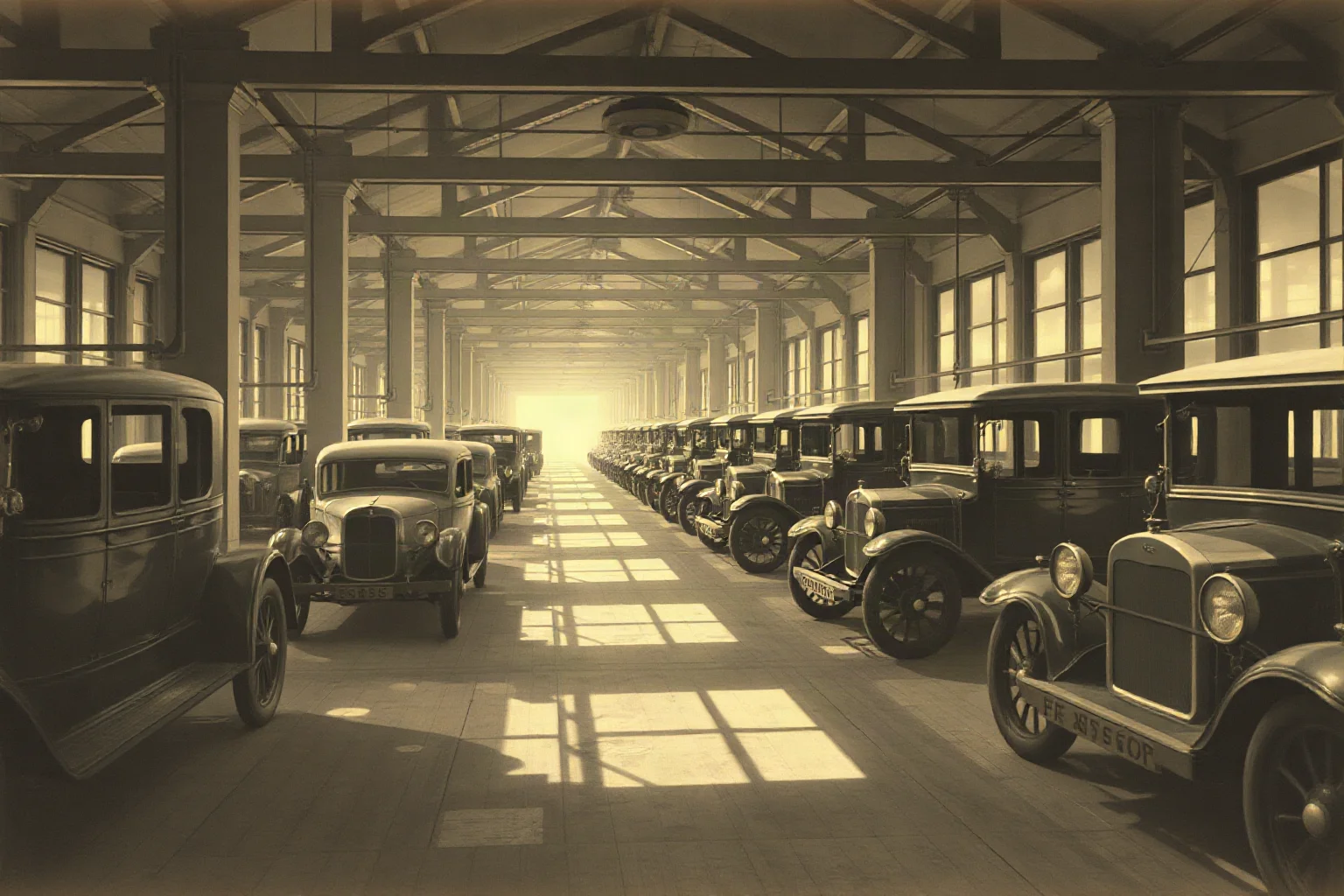
Ford didn’t invent the automobile, but his moving assembly line made cars affordable for ordinary American families for the first time. The Model T became a global symbol of mass production and industrial modernity.
His legacy is genuinely mixed: alongside his manufacturing innovations, Ford promoted antisemitic views later in life that are well documented and worth acknowledging honestly. History remembers both the industrialist and the controversy.
15. Orville and Wilbur Wright
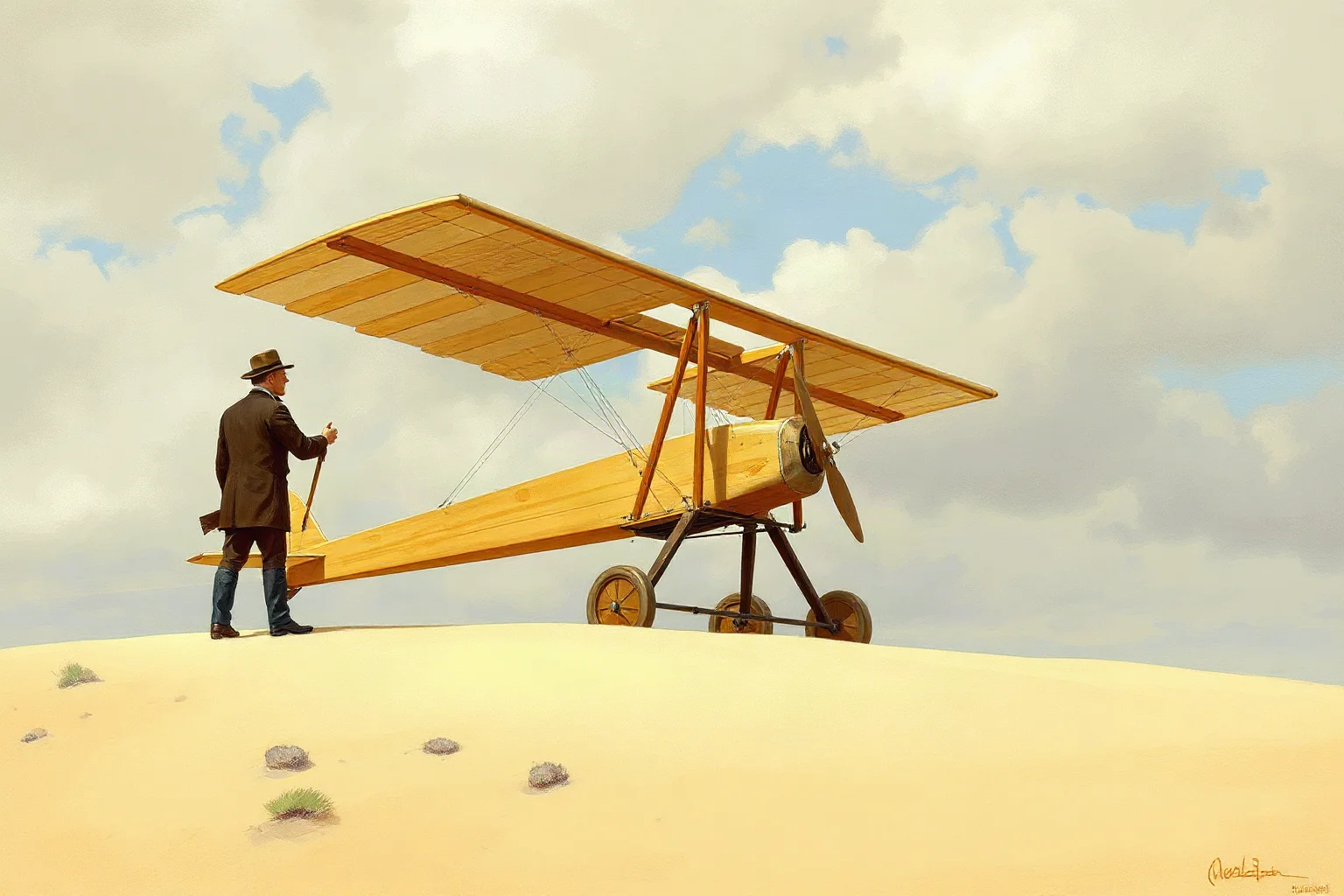
The Wright brothers achieved the first sustained, controlled, powered flight at Kitty Hawk, North Carolina, in 1903. Their bicycle-shop background and methodical testing turned a childhood fascination into a breakthrough that changed transportation forever.
Aviation’s rapid global spread over the following decades traces directly back to their twelve-second flight. Few inventions have reshaped world travel and warfare quite as fast.
16. Steve Jobs

As co-founder of Apple, Jobs helped popularize the personal computer, then later transformed music, phones, and computing again with the iPod, iPhone, and iPad. His design-forward approach to technology influenced companies and consumers well outside the U.S.
His presentations became global media events in their own right, imitated by tech companies everywhere. Few modern business figures have achieved such recognizable international status.
Explorers and Scientists
17. Amelia Earhart

Earhart became the first woman to fly solo across the Atlantic Ocean in 1932, cementing her status as an aviation pioneer. Her disappearance in 1937 while attempting a round-the-world flight remains unsolved.
Several theories exist about her fate, but none have been conclusively proven, so it’s worth treating them as theories rather than settled history. Her mysterious ending only deepened her lasting global fame.
18. Neil Armstrong
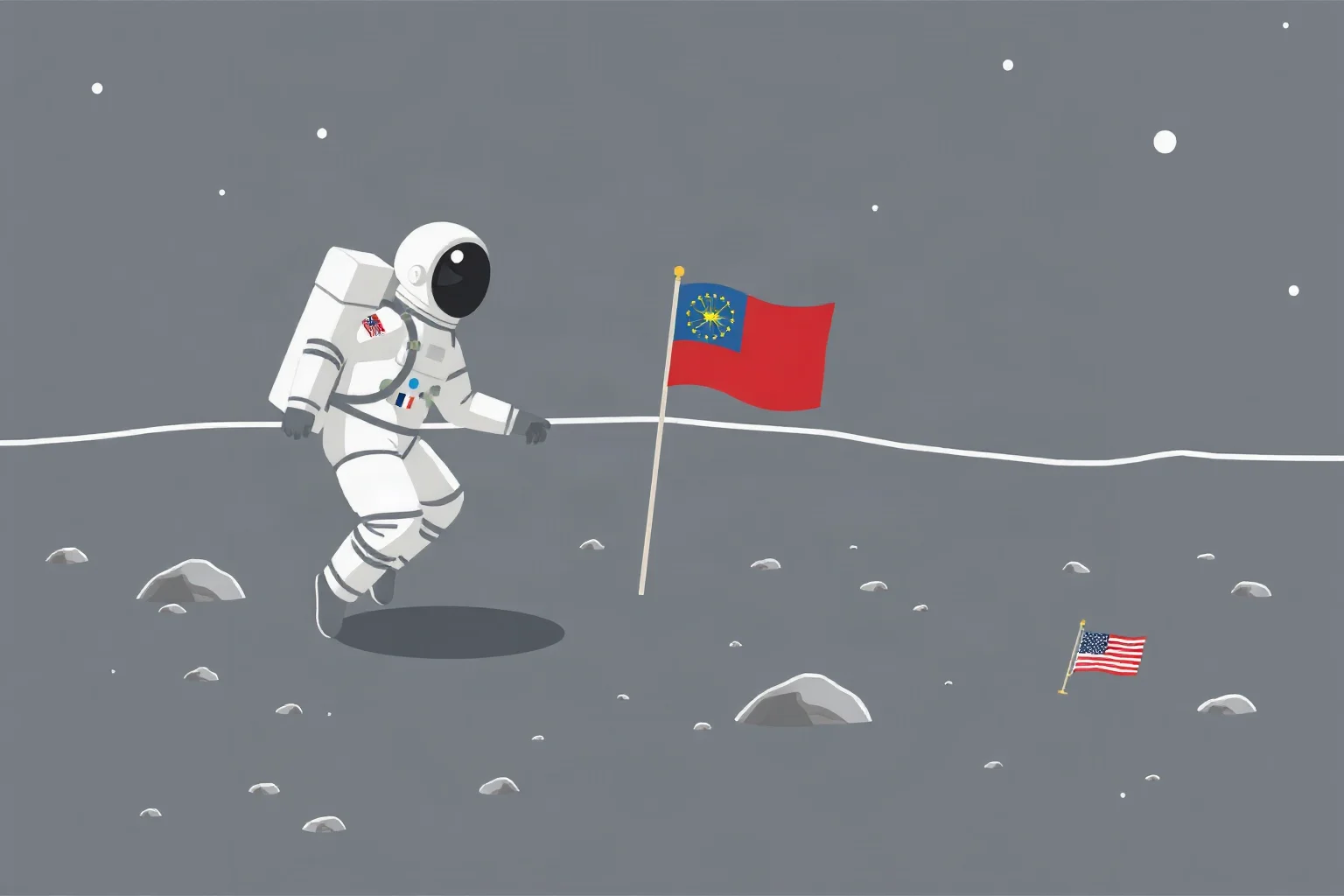
Armstrong became the first person to walk on the Moon on July 20, 1969, during the Apollo 11 mission. His radioed words, “That’s one small step for man, one giant leap for mankind,” were heard by an estimated global audience of hundreds of millions.
The moon landing remains one of the most universally recognized American achievements in history. It’s hard to find a country where the Apollo program isn’t taught in some form.
19. Albert Einstein (Adopted American)

Einstein was born in Germany and developed his groundbreaking theories of relativity in Europe, but he became a U.S. citizen in 1940 after fleeing Nazi persecution. He spent his later career at Princeton, making him a genuinely important part of American scientific history even though his early work happened abroad.
The popular myth that Einstein failed math in school is false; school records show he actually excelled in math and physics from a young age. His name has since become global shorthand for genius itself, placing him firmly among the smartest people in history and how they changed the world.
Cultural Icons the World Instantly Recognizes
20. Mark Twain

Samuel Clemens, writing as Mark Twain, gave the world “The Adventures of Tom Sawyer” and “Adventures of Huckleberry Finn,” novels still read in translation across dozens of countries. His sharp wit and distinctly American voice made him one of the most quoted writers in history.
When a newspaper mistakenly reported his death, Twain reportedly quipped that the reports were greatly exaggerated, a line that has stayed famous for good reason. His work remains a fixture of literature curricula worldwide.
21. Walt Disney
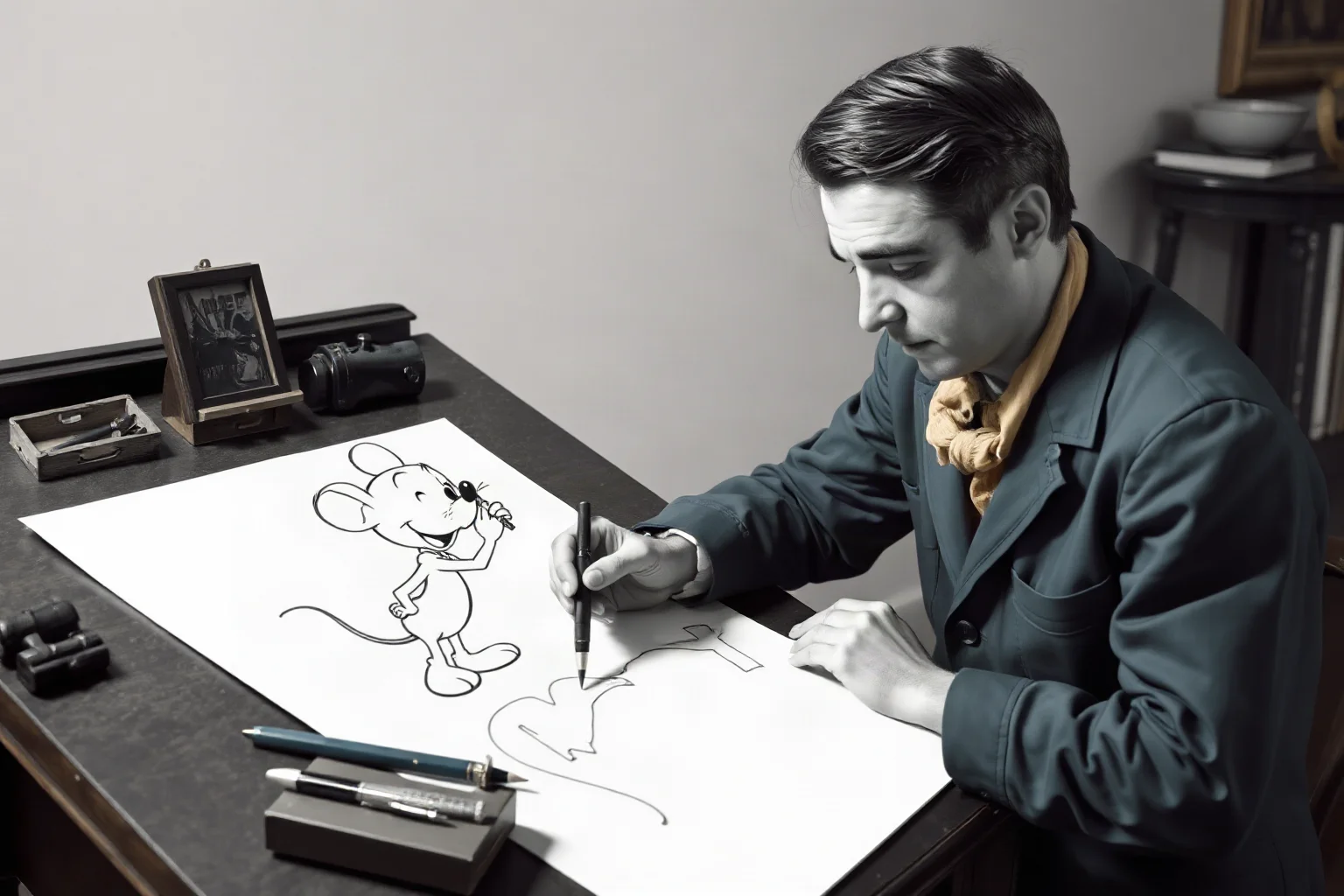
Disney co-created Mickey Mouse and built an entertainment empire that expanded from short animated films into feature-length movies and theme parks. Disneyland’s 1955 opening in California set a template for theme parks copied on nearly every continent.
His studio’s characters became genuinely global cultural shorthand, recognized by children who have never watched an American film otherwise. Few american history icons have this kind of universal reach.
22. Elvis Presley

Elvis fused rhythm and blues, country, and gospel into a sound that helped define rock and roll in the 1950s. His energetic performances and instantly recognizable style made him a global superstar well beyond American borders.
Decades after his death in 1977, Elvis impersonators and tribute events still take place on multiple continents. His image remains one of the most reproduced in modern pop culture.
23. Marilyn Monroe

Monroe became one of Hollywood’s most recognizable stars in the 1950s, appearing in films like “Some Like It Hot” and “Gentlemen Prefer Blondes.” Her image, from the platinum hair to the iconic white dress scene, has been endlessly reproduced in art and advertising worldwide.
Her life story, including her difficult childhood and early death in 1962, has been examined and mythologized so often that separating fact from speculation takes real care. What’s certain is that her cultural footprint still hasn’t faded.
24. Muhammad Ali
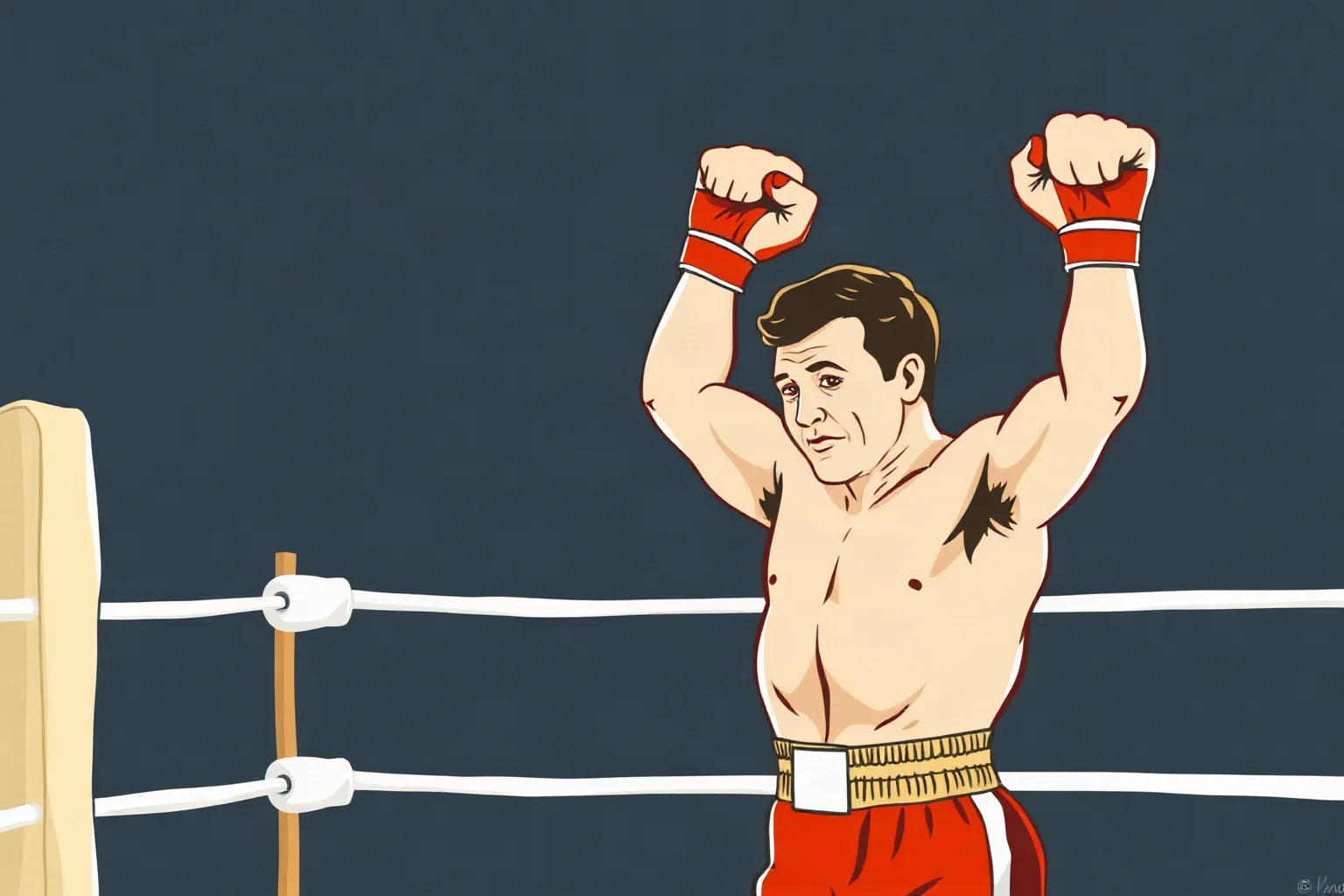
Ali won Olympic gold in boxing before becoming a three-time heavyweight champion known for his speed, showmanship, and outspoken personality. His refusal to be drafted for the Vietnam War in 1967, on religious and moral grounds, cost him his boxing title for years but earned him global respect as a man of principle.
He later became a widely admired humanitarian, lighting the Olympic torch in Atlanta in 1996 despite living with Parkinson’s disease. Ali remains one of the most recognized American historical heroes anywhere sports are followed.
What Ties These Stories Together
Looking across this list, a pattern emerges: the historical figures in american history who achieve true global recognition usually did something that transcended national borders entirely, joining the broader roster of the most recognized historical figures of all time. Ideas about liberty, breakthroughs in science, or new forms of entertainment don’t stay contained within one country for long.
It’s also worth noticing how many of these stories carry corrected myths alongside real achievements. Good history isn’t about tearing icons down; it’s about understanding them accurately, flaws and all, so their real impact is clearer rather than muddier.
Keep Exploring American History
This list of important us historical figures barely scratches the surface of the people who shaped, and continue to shape, how the world sees the United States. Every name here connects to dozens of other lesser-known figures whose stories deserve just as much attention.
Whether you’re drawn to founding-era politics, civil rights history, science, or pop culture, there’s always another thread worth pulling. That’s really the appeal of history in the first place: the more you learn, the more you realize how connected these stories actually are.
Frequently Asked Questions
Who are considered the most important historical figures of the United States?
There's no single official list, but figures like George Washington, Abraham Lincoln, Benjamin Franklin, Frederick Douglass, and Martin Luther King Jr. are consistently cited as historical figures of the United States who shaped the nation's founding, its fight to end slavery, and its civil rights progress. Their influence is widely taught both in the U.S. and internationally.
Why do some American historical figures become famous worldwide while others stay mostly domestic?
Global fame usually comes from a connection to something bigger than domestic politics, such as scientific breakthroughs, wartime leadership, civil rights movements, or entertainment that traveled well through film, music, or literature. Figures tied narrowly to local or regional issues tend to stay better known within the U.S. alone.
Is it true that George Washington had wooden teeth?
No, this is a common myth. Washington's dentures were actually made from materials including ivory, gold, and human or animal teeth, not wood, according to historical dental records and preserved artifacts.
Did Rosa Parks refuse to move because she was simply too tired?
Not exactly. While she was physically tired after a long workday, Parks was also a longtime NAACP activist who understood the significance of her refusal. Her act was a deliberate form of civil disobedience rather than a spontaneous decision.
Was Albert Einstein a failing student before becoming famous?
No, this is a persistent myth. Historical school records show Einstein performed very well in math and physics as a student; the failing-grades story is not supported by evidence.
What happened to Amelia Earhart?
Earhart disappeared in 1937 during an attempt to fly around the world, and her fate has never been conclusively confirmed. Several theories exist, but none have been proven, so her disappearance is best described as an unsolved historical mystery rather than a settled fact.

Alex Warren
Related Articles