Imagine waking up one morning and the sun looks wrong. Not gone, not eclipsed, just… dim, like someone slid a gray filter over the whole sky.
Now imagine that lasting for eighteen months, while crops die in the fields, snow falls in summer, and famine creeps across three continents. That, according to a growing body of historical and scientific evidence, is roughly what happened in the year 536.
Historians and climate scientists have spent decades piecing together why this single year — and the miserable decade that followed — left such a deep scar on written records from Ireland to China.
Some call it the worst year in history. Others argue that title is too simple for a disaster this complicated. Either way, the story of 536 AD is one of the most fascinating detective stories in all of ancient history — not unlike the enduring mystery of the Lost Colony of Roanoke.
TL;DR: A mysterious volcanic winter that darkened the sky for over a year triggered widespread famine starting in 536 AD, and it was followed by a devastating plague — making it one of the strongest contenders for the worst year in history.
The Year Nobody Wanted: Setting the Scene
Before diving into the list, it helps to understand why 536 stands out at all. Ancient and early medieval writers rarely agreed on much, but in this case, chroniclers on opposite sides of the known world independently described the same eerie phenomenon at the same time. That kind of coincidence is catnip for historians.
What follows is a rundown of the evidence, the science, and the human suffering behind what happened in the year 536 — along with an honest look at whether “worst year ever” is a fair label or just a catchy headline.
1. The Sun Went Dark for 18 Months
Across Europe, the Middle East, and parts of Asia, written sources describe a sun that shone without real warmth or brightness for well over a year. It wasn’t a single eclipse; it was a prolonged dimming that made daylight feel perpetually overcast. This alone would have been unsettling for people who relied entirely on the sky to plan planting, harvesting, and travel.
Modern researchers now believe this dimming was caused by a massive veil of volcanic aerosols high in the atmosphere. The effect would have been similar to a permanent thin haze blotting out the sun’s full intensity. For people living through it, there was no scientific explanation available — only fear.
2. Procopius’s Eyewitness Account of the Dimmed Sun
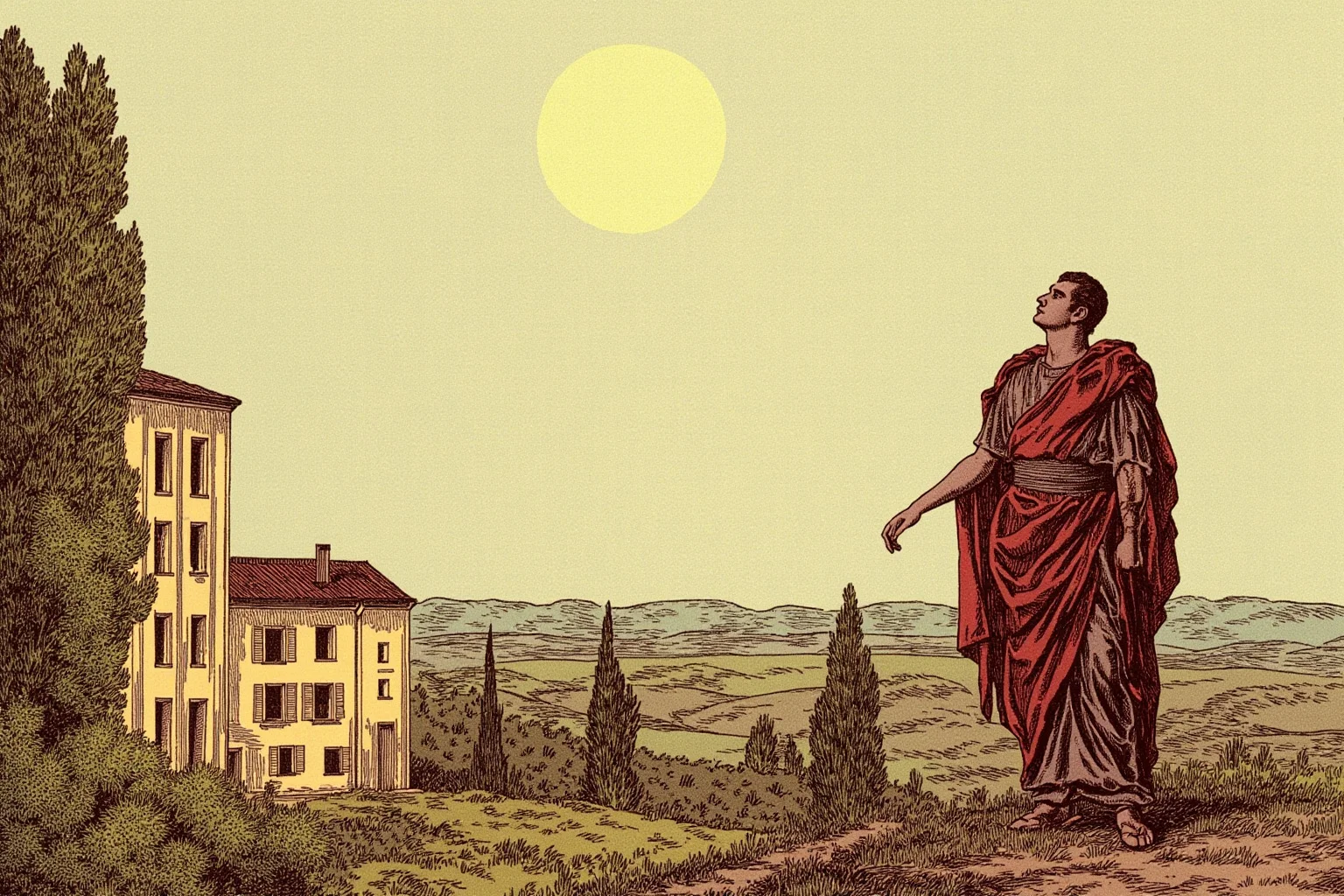
Our best contemporary source is the Byzantine historian Procopius of Caesarea, who lived through the event and wrote about it in his account of Emperor Justinian’s wars. He described the sun giving off light “without brightness,” comparing it to a partial eclipse that never seemed to end.
Procopius wasn’t given to exaggeration in most of his historical writing, which is part of why his account carries weight. He wasn’t trying to describe a myth or omen; he was recording something strange that he and everyone around him could plainly see.
3. Cassiodorus Noted the Same Eerie Gloom in Italy
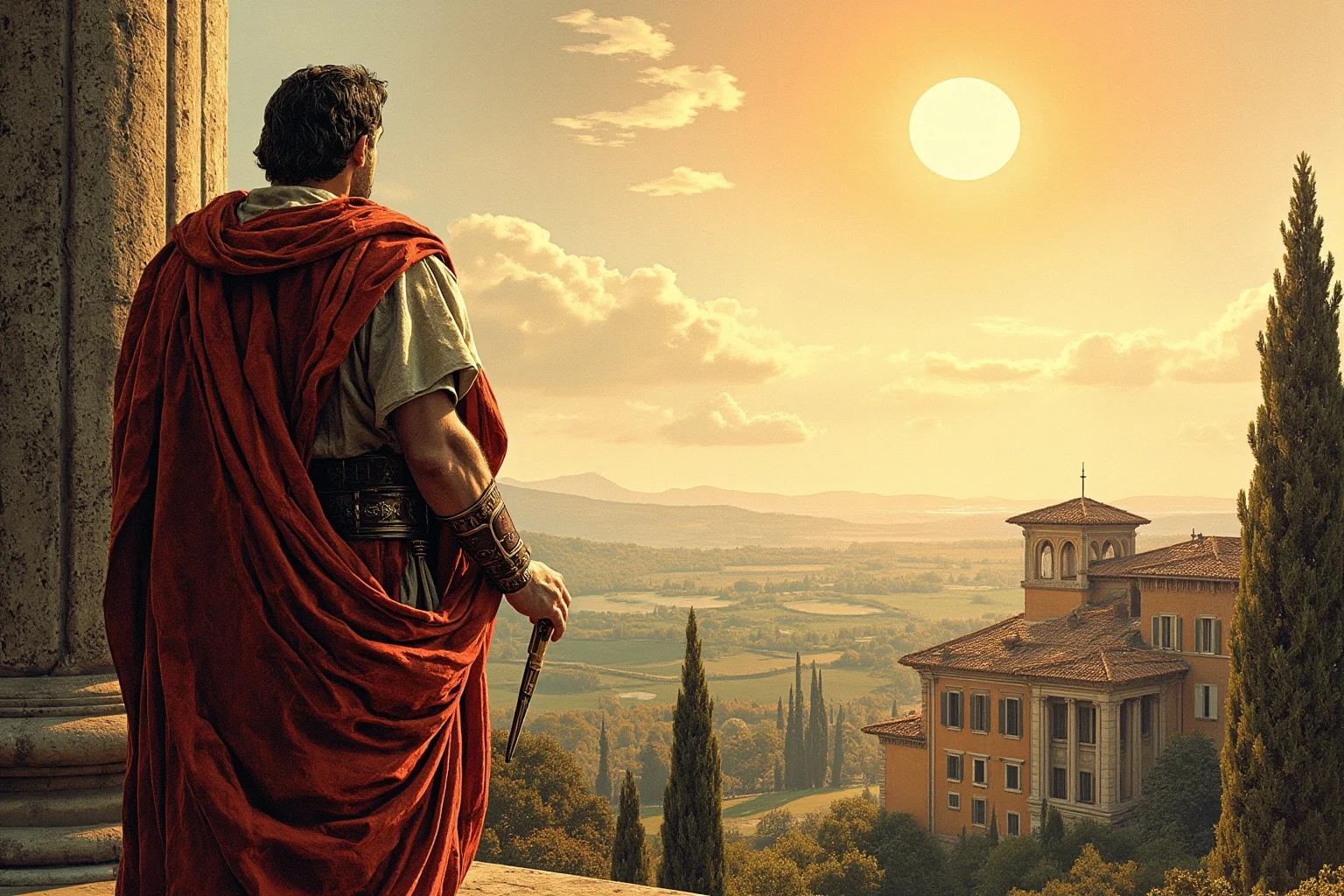
Independently, the Roman statesman Cassiodorus, writing from Italy, described a year with a “weak” sun, bluish moon, and shadows that barely fell at midday. He noted the sun seemed to have lost its normal strength, worried about the effect on crops.
Having two separate, credible writers in different regions describe the same unusual sky within the same rough timeframe is a big reason historians take the 536 AD event seriously rather than dismissing it as folklore.
4. Crops Failed Across the Northern Hemisphere
A dimmed, weakened sun meant less warmth reaching the ground, and less warmth meant shorter growing seasons. Sources from the Mediterranean world describe failed harvests and food shortages in the years immediately following 536. When crops fail broadly and repeatedly, famine isn’t far behind.
This wasn’t a localized bad harvest either. The pattern of failed crops shows up in records from regions that had no contact with one another, suggesting a truly hemispheric disruption to agriculture.
5. China Recorded “Yellow Dust” and Summer Snow
Chinese historical records from the Southern Dynasties describe yellow dust falling from the sky like snow in 536, along with drought and, in some regions, summer snowfall. Chinese chronicles also mention famine severe enough that, according to some accounts, it drove desperate population movements.
These records were compiled independently of anything happening in Europe, which makes them some of the strongest supporting evidence that whatever caused the dimming sky in the Mediterranean was a genuinely global atmospheric event.
6. Ireland’s Annals Describe Years of Bread Failure
The Irish Annals — chronicles kept by monks recording notable events year by year — describe a “failure of bread” starting around 536 and continuing for several years afterward. Ireland sat far from Byzantium and China, yet its records tell a strikingly similar story of hunger.
For early medieval Ireland, a run of failed harvests across several consecutive years would have been catastrophic for small farming communities with little buffer against shortage.
7. Global Temperatures Plunged by Several Degrees
Climate reconstructions suggest that summer temperatures across the Northern Hemisphere dropped significantly starting in 536, in some regions by as much as 1.5 to 2.5 degrees Celsius. That might sound modest, but for agricultural societies dependent on predictable growing seasons, a drop of that size can be the difference between a harvest and a famine.
The cooling wasn’t just a one-off dip, either. It set the stage for a much longer cold spell that scientists have only fully mapped out in recent years.
8. Tree Rings Confirm the Coldest Decade in 2,000 Years
Dendrochronology, the study of tree rings, has been crucial in confirming just how unusual this period was. Trees from Scandinavia, the Alps, Siberia, and even parts of North America show unusually narrow growth rings starting in 536, indicating severe cold stress.
When researchers compared these tree-ring records to two millennia of climate data, the 536-to-mid-540s stretch stood out as possibly the coldest decade in the entire record. That’s a remarkable finding for a period so far back in history.
9. Ice Cores Finally Solved the Mystery in 2015
For centuries, nobody could explain why the sun dimmed in 536. That changed with a landmark 2015 study led by researchers including Michael Sigl, which analyzed ice cores from Greenland and Antarctica. Ice cores trap volcanic ash and sulfate particles in yearly layers, acting like a frozen time capsule of Earth’s atmospheric history.
The sulfate spikes lined up precisely with the year 536, providing hard physical evidence of a massive volcanic event right when the historical accounts describe the sky going dark.
10. A Massive Volcanic Eruption Was the Trigger
The leading explanation for the volcanic winter of 536 is a colossal volcanic eruption, or possibly two closely timed eruptions, that pumped enormous quantities of sulfate aerosols into the stratosphere. These aerosols reflect sunlight back into space, cooling the surface below and dimming daylight for months or years.
This is the same basic mechanism behind smaller, well-documented events like the 1815 eruption of Mount Tambora, which caused 1816’s famous “Year Without a Summer.” The 536 event appears to have been considerably larger.
11. Scientists Now Suspect Iceland, Not Krakatoa
Earlier theories, popularized in the late 1990s, pointed to Krakatoa in Indonesia as the source of the eruption. More recent tephra analysis — matching microscopic volcanic glass shards found in ice cores to specific volcanic sources — has instead pointed toward an Icelandic eruption as the likely trigger for the initial 536 event.
This shift shows how much our understanding of this period has evolved with better scientific tools. It’s a good reminder that history and science both get refined as new evidence emerges.
12. A Second Eruption in 540 Made Things Worse
Just as the world might have started recovering, ice core data shows another major eruption around 540. This second event dumped a fresh load of sulfates into the atmosphere, prolonging the cold conditions rather than letting the climate rebound.
For communities already weakened by years of poor harvests, a second wave of cooling arriving on top of the first would have been devastating rather than merely inconvenient.
13. A Third Eruption Around 547 Extended the Misery
Researchers identified evidence of yet another eruption around 547, further extending the unusually cold conditions. Three major volcanic events within roughly a decade is an extraordinary cluster, even by the standards of Earth’s long volcanic history.
This triple-hit pattern helps explain why the effects of the 536 AD disaster lingered for so long rather than fading after a single bad year.
14. The “Late Antique Little Ice Age” Lasted Over a Century
Climate scientists, including Ulf Büntgen and colleagues, coined the term “Late Antique Little Ice Age” to describe the extended cold period running from roughly 536 into the 600s. This wasn’t just one rough winter; it was a climate shift that reshaped growing seasons across Europe and Asia for generations.
Some researchers connect this prolonged cold period to broader social and political upheaval across late antiquity, including migrations and the reshuffling of power in post-Roman Europe, a pattern of disruption you can see echoed across many of the major revolutions throughout history. The links are debated, but the timing is striking.
15. Then Came the Plague: Justinian’s Pandemic
As if a decade of cold and famine weren’t enough, the Justinianic Plague struck the Byzantine Empire starting around 541. Caused by the bacterium Yersinia pestis — one of the deadliest infectious diseases in human history — it’s considered the first recorded pandemic of the plague later responsible for the Black Death.
Procopius, again our eyewitness, described the disease tearing through Constantinople, reportedly killing thousands per day at its peak. Modern estimates suggest tens of millions may have died across the Mediterranean world and beyond over the following decades.
16. The Byzantine Empire Buckled Under Justinian
Emperor Justinian I, who was in the midst of ambitious military campaigns to reconquer lost Roman territory — campaigns that would have relied on mobilizing forces on the scale seen among the largest militaries in the world today — found his empire hit by famine, economic strain, and then plague almost simultaneously. Tax revenues fell, military campaigns stalled, and the empire’s population is thought to have dropped significantly.
Some historians argue this one-two punch of climate disaster and pandemic permanently weakened Byzantine power at a critical moment, though this remains a subject of ongoing academic debate rather than settled fact.
17. Scandinavia May Have Lost Most of Its Population
Archaeological surveys in parts of Scandinavia, particularly Sweden, show a dramatic drop in occupied settlements dating to the mid-6th century — in some regions, the abandonment rate is strikingly high. Researchers like archaeologist Bo Gräslund have proposed that failed harvests from the volcanic winter caused a demographic collapse in the region.
This theory is still debated among specialists, and not every abandoned settlement necessarily traces back to 536. Still, the timing lines up closely enough that many scholars consider it a compelling piece of the puzzle.
18. Norse Mythology’s Fimbulwinter May Echo the Real Event
Norse mythology describes Fimbulwinter, a catastrophic, multi-year winter that precedes the apocalyptic events of Ragnarök. Some scholars have speculated that oral memories of the real 536 climate disaster may have influenced this legend, passed down through generations before being written down centuries later.
This connection is intriguing but unproven, and it’s important to treat it as an interesting hypothesis rather than a confirmed historical link. Myths often blend real memory with symbolism, and untangling the two is genuinely difficult.
19. Trade and Economies Collapsed Across Eurasia
Beyond the human toll, the 536 event disrupted trade networks that connected the Mediterranean, Middle East, and Asia. Coin production and circulation, key indicators economists use to gauge activity in ancient economies, show noticeable dips in various regions during this period.
When agriculture fails on this scale, everything downstream suffers too — markets, taxation, construction, and long-distance trade all slow when there simply isn’t enough surplus to move around.
20. A Harvard Historian Called It “The Worst Year to Be Alive”
Medieval historian Michael McCormick of Harvard University became one of the most widely quoted voices behind the “worst year in history” framing. In comments to Science magazine, he described 536 as marking the start of one of the worst periods to be alive in recorded history.
This is where the popular “worst year ever” framing largely comes from. It’s a punchy, quotable line from a respected historian, but it’s worth remembering it’s a characterization, not a scientific measurement with a universally agreed formula.
21. The Event Inspired a Landmark Book and Documentary
Long before ice cores confirmed the volcanic trigger, British journalist David Keys explored this mystery in his 1999 book “Catastrophe: An Investigation into the Origins of the Modern World,” often referenced today by readers searching for a 536 AD book on the subject. Keys originally pointed to Krakatoa as the likely culprit, a theory later revised by subsequent volcanic and ice-core research.
The book remains a readable, if partly outdated, entry point into the mystery for general readers. Just be aware that newer studies have shifted the scientific consensus on the eruption’s likely source since it was published.
22. Was 537 AD Even Worse Than 536?
Because the volcanic winter’s effects didn’t simply end after one calendar year, some writers frame 537 AD as an equally strong candidate for history’s worst year. Crop failures, cold, and social disruption continued well past 536 itself, meaning the disaster is really better understood as a period than a single date.
Whether you point to 536, 537, or the whole grim decade that followed, the underlying cause remains the same chain of volcanic eruptions and their long climate aftershocks.
So, Was 536 Really the Worst Year in History?
Here’s where a little myth-busting is due. Calling 536 “the worst year in history” makes for a great headline, but historians are generally more careful with absolute superlatives. Other years have strong claims too, and any ranking of the worst disasters in history tends to include 1348 during the Black Death, 1918 with its flu pandemic layered atop a world war, or 79 AD when Vesuvius buried Pompeii.
What makes 536 unusually compelling isn’t that it’s provably the single worst year for every human on Earth. It’s that we have independent written testimony from multiple civilizations, plus hard physical evidence from ice cores and tree rings, all pointing to the same global disaster window. That combination of documentary and scientific evidence is rare for events this ancient.
So rather than crowning 536 the definitive worst year ever, it’s more accurate to say it’s one of the best-documented climate disasters of the ancient world, with a genuinely strong case for the title. That’s still a remarkable story, even without the absolute superlative.
Final Thoughts
The year 536 offers a rare glimpse into how a single natural event, playing out across the atmosphere of an entire hemisphere, could ripple into famine, migration, economic collapse, and possibly even mythology — joining the ranks of historical events that changed the world more than people realize. It’s a humbling reminder of how connected human societies have always been to forces far beyond their control.
Whether or not you’re ready to crown it the single worst year in human history, 536 AD deserves its reputation as one of the most consequential and thoroughly documented disasters of the ancient world. The sky really did darken — and the world really did feel the consequences for years afterward.
Frequently Asked Questions
What happened in the year 536?
In 536 AD, a mysterious dimming of the sun was reported by writers across Europe, the Middle East, and Asia, lasting roughly 12 to 18 months. Modern research links this to one or more massive volcanic eruptions that sent sulfate aerosols into the atmosphere, causing global cooling, widespread crop failures, and famine that lasted for years afterward.
What caused the volcanic winter of 536?
Ice core studies point to a major volcanic eruption, likely from Iceland, that released large amounts of sulfate particles into the stratosphere in early 536. These particles reflected sunlight away from Earth's surface, cooling the climate and dimming daylight for well over a year, with additional eruptions around 540 and 547 extending the cold period.
Was 536 really the worst year in history?
Many historians consider 536 a strong candidate for the worst year in history because it triggered widespread famine, was followed by the devastating Justinianic Plague, and is unusually well-documented across multiple independent civilizations. However, other years, such as 1348 or 1918, also have strong claims, so it's more accurate to call 536 one of the worst rather than the definitive worst.
What was Fimbulwinter, and is it related to 536?
Fimbulwinter is a catastrophic, multi-year winter described in Norse mythology as a precursor to Ragnarök. Some scholars have speculated that this legend may preserve a distorted memory of the real climate disaster around 536, though this connection is a hypothesis rather than a confirmed historical fact.
Is there a good book about the 536 AD event?
David Keys' 1999 book, 'Catastrophe: An Investigation into the Origins of the Modern World,' is a widely referenced popular account of the mystery, though it points to Krakatoa as the cause, a theory largely revised by later ice-core research pointing to Iceland instead. It remains a useful, if partly outdated, introduction for general readers.
Did 537 AD also count as a disaster year?
Yes, the effects of the volcanic winter that began in 536 continued well into 537 and beyond, so some accounts describe 537 AD as equally disastrous. The crisis is better understood as a multi-year period of cold, famine, and disruption rather than a single isolated year.

Alex Warren
Related Articles